 Kerala Backwaters Escape
Luxury South India Tours
Chennai – Pondicherry – Tanjore – Madurai – Munnar – Kumarakom – Kochi
At a glance
Fourteen days is the length at which South India stops feeling like a sampler and starts making sense. Our luxury South India tour 14 days crosses the peninsula by road, Bay of Bengal to Arabian Sea, so Tamil temple country melts slowly into Kerala's hills and backwaters through the car window. Chennai comes first, then the Pallava shore at Mahabalipuram and French-flavored Pondicherry, before the route bends inland to the Chola masterpieces of Tanjore and the painted towers of Madurai, with a long Chettinad lunch somewhere in between.
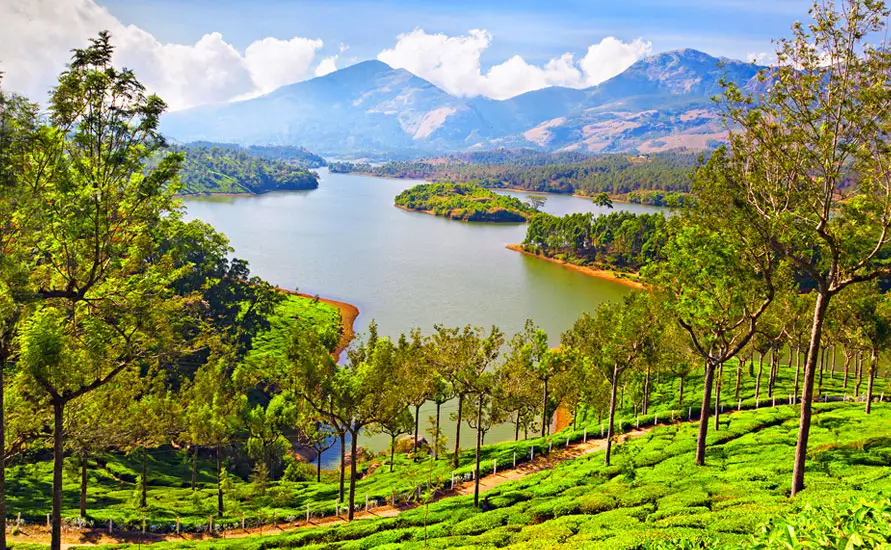
Week two climbs the Western Ghats into Munnar tea country, drops down to a lakeside resort in Kumarakom on Vembanad Lake and finishes in Fort Kochi, a port shaped by Portuguese, Dutch and British traders. Every overnight stop is two nights except the first, so this luxury South India tour never feels like a race. Stays are chosen for character: a heritage villa in the French Quarter, a palace-style hotel in Tanjore, a hilltop resort above the tea slopes and a restored warehouse hotel on Kochi's waterfront. A chauffeur and private guides handle everything.
We designed this South India luxury tour package for Americans, Canadians, Britons, Europeans and Australians who prefer depth to box-ticking, and for NRI parents eager that their children see both Tamil Nadu and Kerala in a single holiday. No road leg runs beyond five hours, and longer drives are split by sightseeing stops. Temple dress codes, closing days and festival dates are planned in advance. Late October through early March suits this route best: both coasts are dry, and Munnar feels crisp without real cold.
Flights from London, Frankfurt, Dubai and Singapore tend to reach Chennai in the small hours, so step one is simply bed. Look for our representative in a navy company shirt just beyond the international exit; a premium sedan then covers the half hour or so to a five-star hotel near the Adyar River. Because we pre-book the previous night, your key is handed over the moment you arrive, even at 3 am. Tucked into your welcome folder are emergency numbers, a printed fortnight plan and a one-page guide to temple etiquette. Nothing at all is scheduled before lunch.
Mid-afternoon your guide arrives to show you where British India really began. In 1644 the East India Company finished Fort St. George on a strip of beach, and Tamil Nadu's legislature still meets inside its walls today. A small museum in the old exchange building holds Company-era portraits, coins and regimental colors; opening days vary, so we confirm locally. Within the ramparts is St. Mary's Church, dating from 1680, which no Anglican building in Asia predates; there Robert Clive married Margaret Maskelyne and worn tombstones pave the floor. Your guide explains how a fishing village called Madraspatnam became the seat of a presidency stretching across the south.
As light fades, the car follows the coast road south through tree-lined Adyar to Elliot's Beach at Besant Nagar, a calmer cousin of Marina Beach that local families prefer for evening strolls. Near the sand sit the small Velankanni shrine, a memorial to a Dutch sailor named Karl Schmidt who drowned trying to rescue a swimmer, and rows of cafés and corn-roasting carts. For dinner, choose a full vegetarian banana-leaf meal at a famous Mylapore institution or Chettinad seafood back at your hotel. Your guide previews the next two weeks over coffee, so tomorrow's early start holds no surprises. Overnight in Chennai.
Bags go into the car at 7:30, and the East Coast Road delivers you to Mahabalipuram, 60 km south, while the granite is still cool. Pallava sculptors worked here in the seventh and eighth centuries, and UNESCO protects the whole group of monuments. Begin with Arjuna's Penance, a rock wall teeming with over a hundred carved figures. Ask your guide to find the small jokes hidden among the gods: a skinny cat on one leg pretending to meditate while mice bow before him, or the central fissure that the artists turned into a river full of serpent beings. Morning sun raking from the east sharpens every chisel mark.
Close by, the Shore Temple rises above the surf on a low mound, its paired towers softened by twelve hundred years of salt wind. Today a breakwater and a belt of casuarina trees keep the waves away. With time in hand, you also see the Pancha Rathas, a cluster of five chariot-shaped shrines each hewn whole from living rock, plus the cave shrines on lighthouse hill. Lunch is grilled squid, tiger prawns or a vegetarian thali at a beach resort, with the catch landed only hours earlier by boats you can see from your table. Then the car rolls south again along the coast.
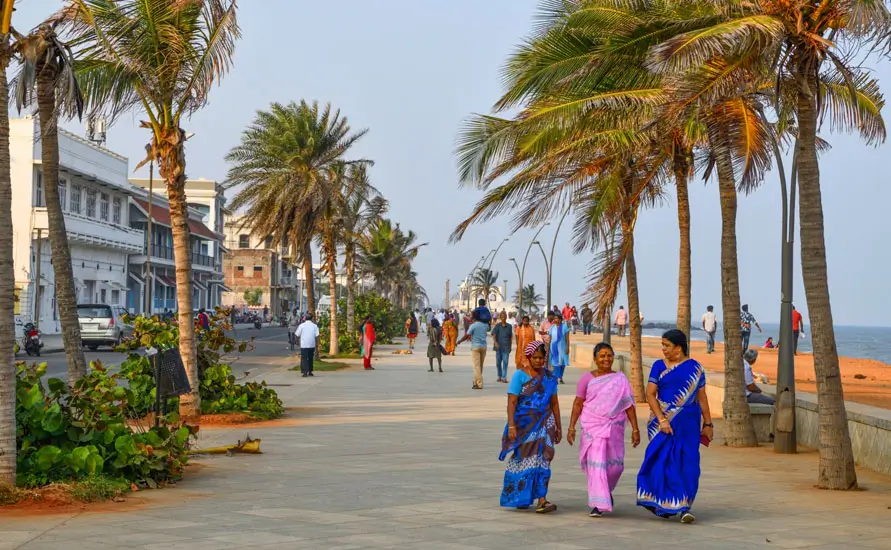
Salt pans glitter beside the road for much of the remaining hundred kilometers, broken by lagoons and fishing hamlets, and your chauffeur will stop for green coconuts at any stall you like. By late afternoon the car stops outside a restored heritage villa in the French Quarter of Pondicherry, all tall ceilings, louvered shutters and a frangipani courtyard. When the heat breaks, stroll Goubert Avenue, the seafront boulevard closed to cars each evening, among walkers, joggers and ice-cream sellers. A French-Tamil bistro a few streets inland makes a good first taste of the town's hybrid kitchen, perhaps fish in a Creole sauce. Overnight in Pondicherry.
A drainage canal once divided Pondicherry into two towns, and today's guided stroll crosses back and forth between them. East of it, toward the sea, lies the French Quarter: ochre and cream villas, street signs reading rue Romain Rolland, and the Hotel de Ville, reminders of French government that lasted until 1954. West of it is the Tamil Quarter, where homes have a raised front platform called a thinnai, carved wooden pillars and an inner courtyard open to the sky. Your guide shows you restored houses on both sides and explains how local campaigners rescued many from the bulldozer.
Late morning brings a silent visit to the Sri Aurobindo Ashram; in its courtyard, devotees arrange new flower patterns every day on the founders' shared tomb, and cameras remain packed. A few lanes away stands Manakula Vinayagar Temple, sacred to Ganesha, its walls carrying dozens of painted panels showing his many forms. Lunch can be crêpes and salads in a garden café or a Creole curry that marries French and Tamil cooking. Then comes a deliberate pause: an hour or two of rest in the cool of your villa before the afternoon outing, since midday in Pondicherry can be fierce even in winter.
Around three you drive twelve kilometers north to Auroville, born in 1968 as a place where people of every nation might live together. Inside the visitor center, a film and display panels lay out the founders' ideas, and a shaded footpath leads to the viewpoint for the Matrimandir, the gold-disc sphere at the township's center. Places in the inner chamber are limited and must be booked well ahead, so tell us at booking if you hope to go in. Afterward the boutiques sell handmade paper, pottery, incense and organic food. Back in town, a rooftop table above the old quarter is reserved for dinner. Overnight in Pondicherry.
Two great temples break up today's road time, so the five hours pass easily. Seventy kilometers south lies Chidambaram, where Shiva is adored as Nataraja, the dancing king whose steps keep the universe turning. The complex fills around 40 acres, and inside its gopurams the stone is cut with the 108 karanas, the classical movements of Bharatanatyam, pose after pose like frames of film. Only Hindus may approach the gold-roofed inner hall, yet the outer courtyards and pillared corridors are open, and your guide introduces the Dikshitar priests, hereditary custodians whose families have served Nataraja here for many centuries.
Leaving the coast behind, you cut inland across the rice bowl of the Kaveri delta to Gangaikonda Cholapuram. Rajendra Chola I raised this capital and its temple around 1035 after his troops marched north to the Ganges, and the name proudly records that feat. The temple, part of the UNESCO Chola group, has a tower with slightly concave sides, more graceful than its older sibling at Tanjore. Few visitors come here, so you can circle the shrine in peace and study carvings such as Shiva garlanding his devotee Chandesha. Lunch is either a simple local meal or a hamper prepared by your Pondicherry hotel.
The remaining ninety minutes to Tanjore, or Thanjavur, cross rice paddies, coconut groves and villages where each doorstep carries a fresh kolam drawn in rice flour at dawn. Your hotel is a luxury property built in traditional Tamil style, with colonnaded courtyards and pools of water lilies. Swim before supper, or perhaps visit a studio producing Thanjavur paintings, which glow with gold foil and inlaid glass beads, or a workshop where veenas, the classical string instruments, are carved by hand from a single jackwood log. Dinner is in the hotel garden. Overnight in Tanjore.
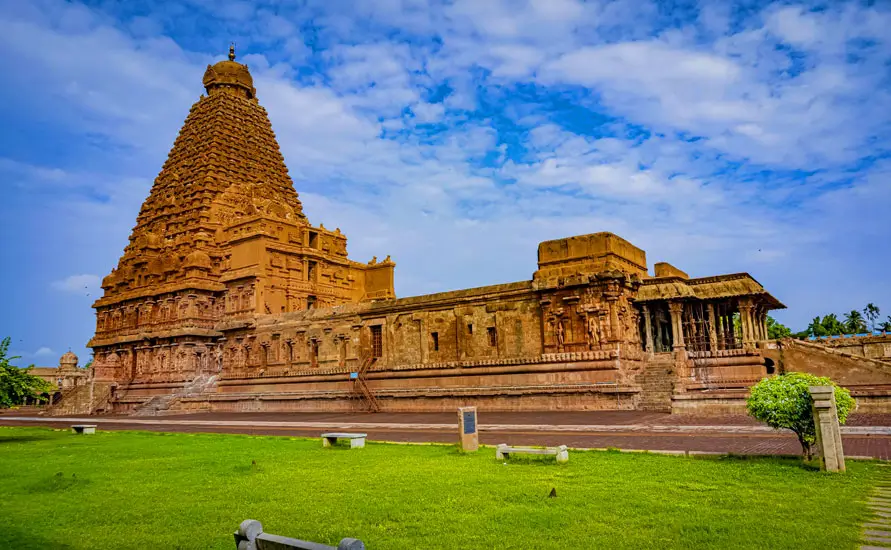
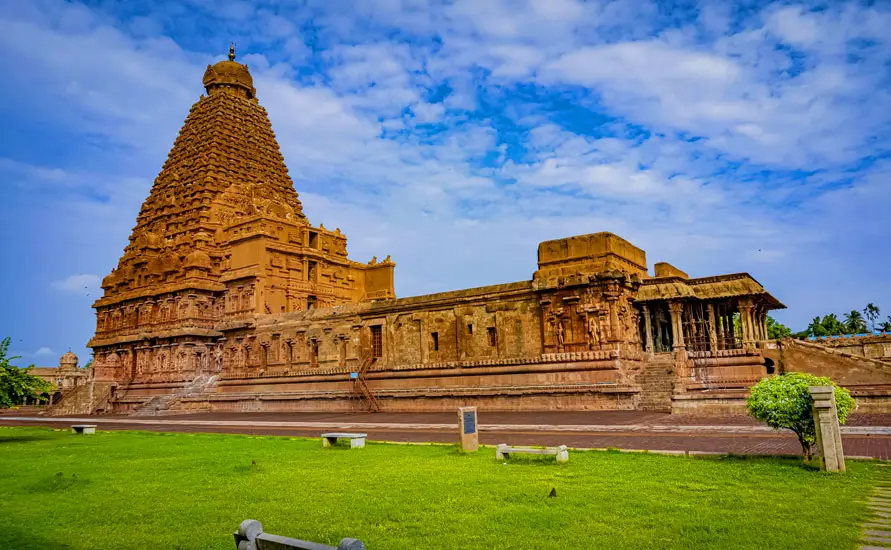
Go early to the Brihadeeswarar Temple, dedicated in 1010 by Raja Raja Chola I and the anchor of UNESCO's listed trio of Chola shrines. Its vimana soars roughly 66 meters, built from granite carried in from quarries well beyond the flat delta. Barefoot on the courtyard flagstones before they warm, you look at the monolithic Nandi, the Chola frescoes hidden in the dark circumambulatory passage and long inscriptions naming the hundreds of dancers, drummers and craftsmen who were paid by the temple. Non-Hindus stay outside the sanctum, but the courtyard alone repays a full morning.
Next you tour the Thanjavur Royal Palace, sprawling halls added by the Nayak and Maratha dynasties who succeeded the Cholas. Within it, the Saraswathi Mahal Library guards a vast hoard of palm-leaf manuscripts and rare European books gathered by the scholar-king Serfoji II. The palace art gallery holds a superb set of Chola bronzes, including a Nataraja and a slender Parvati poured over a millennium ago. After lunch, your chauffeur covers about 35 km to Swamimalai, home to hereditary sculptors who still follow the lost-wax technique laid down in the Shilpa Shastras.
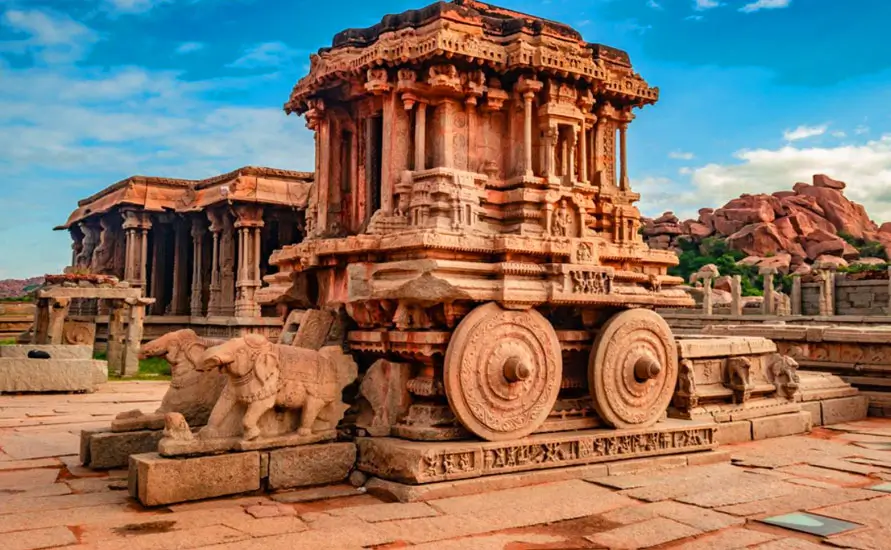
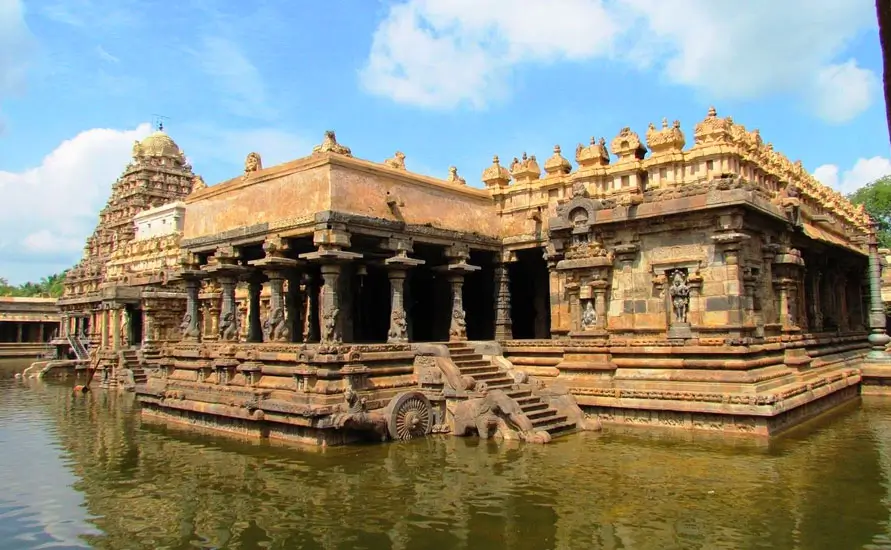
Inside a family foundry, artisans shape deities in beeswax, coat them with fine alluvial clay dug from the Kaveri bank, and pour glowing bronze into the fired molds. One medium-size idol can take a month. Returning toward Tanjore, you stop at Darasuram, a few kilometers from Kumbakonam, for the Airavatesvara Temple, third of the UNESCO Chola trio. Its front steps ring with musical tones when tapped, and the entrance hall takes the form of a chariot, complete with carved wheels and rearing horses. Panels the size of a playing card are crammed with dancers and acrobats. Dusk sees you back in Tanjore. Overnight in Tanjore.
Two hours south of Tanjore the soil reddens and the paddies give way to scrub: this is Chettinad. Around Karaikudi and its neighboring villages lived the Nattukottai Chettiars, merchant bankers who made fortunes in Burma, Ceylon, Malaya and Saigon between about 1850 and 1940. Their profits came home as palatial houses lined with Italian marble, Burmese teak pillars, Belgian mirrors and Japanese tiles. Your guide opens the doors of one such mansion, where courtyard follows courtyard and the ancestors stare down from gilt frames. Many houses now stand empty, and some have been sold for their timber, but others are lovingly maintained.
In the village of Athangudi, you visit a workshop where colorful handmade floor tiles are produced using local sand and glass plates, a craft that developed to supply the Chettiar mansions. The artisans pour colored cement into molds and leave the tiles to set in water, and you can try making one yourself. Lunch is a highlight: a Chettinad meal served in a heritage mansion, known for its bold use of black pepper, star anise and kalpasi (black stone flower). Dishes like chicken chettinad, mutton chukka and vegetable kootu come in small bowls on a banana leaf.
Another two hours brings you to Madurai, where your five-star hotel sits on a hill above the city lights. Around nine in the evening, your guide can bring you back into Meenakshi Temple to witness the palliyarai ceremony: to nadaswaram pipes, drums and swaying oil lamps, priests lift the god in a silver palanquin and bear him shoulder-high to rest beside Meenakshi. Leave phones and cameras with the deposit counter first, and non-Hindus watch from the outer corridors only. It is a late night, so tomorrow's sightseeing starts at a gentle hour. Overnight in Madurai.
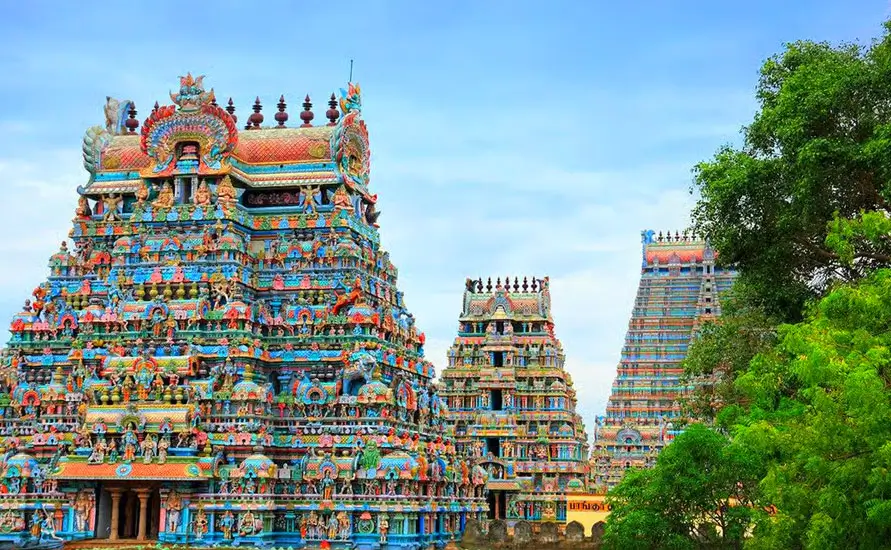
Greek and Roman writers mentioned Madurai two thousand years ago, and life here still orbits the Meenakshi Amman Temple. Daylight shows what last night's darkness hid: fourteen gopurams, the highest about fifty meters, crowded with brightly repainted gods, demons, musicians and animals. Your guide leads you through the Thousand Pillared Hall, past the Golden Lotus Tank where Tamil poets once had their verses judged, and along corridors where pilgrims buy jasmine, camphor and ghee lamps. Non-Hindus may not pass into the two main shrines, and phones again go into the deposit lockers. Cover shoulders and knees; a light scarf helps.
Late morning, the Thirumalai Nayak Palace shows the taste of Madurai's most ambitious ruler, who raised it in 1636. Much of it was later demolished, yet the main courtyard is ringed by massive white columns some twelve meters tall, carrying stucco arches and domes that blend Dravidian and Islamic ideas. After lunch, the Gandhi Memorial Museum occupies a seventeenth-century palace of Queen Mangammal, and one quiet room keeps the blood-marked dhoti he had on during the fatal Delhi prayer meeting of January 1948. Madurai matters in that story: it was here, in 1921, that he first adopted the simple loincloth.
Toward evening your guide brings you to the wholesale flower market, where jasmine, marigold, tuberose and roses change hands by the sackful for temples and weddings across the south. Madurai malli, the local jasmine, holds a GI tag thanks to its heavy, sweet scent. Near the temple, tailors in Pudhu Mandapam will stitch a cotton shirt or kurta from fabric you choose and deliver it to your hotel by evening. Before dinner, try jigarthanda, which stacks nannari root syrup, almond gum, thickened milk and a scoop of ice cream in one tall chilled glass, a Madurai invention. Overnight in Madurai.
West of Madurai the road runs through Theni district, grape and banana country where cardamom from the hills is traded in bulk. Sunflower fields and coconut groves give way to the dusty town of Bodinayakanur, sitting right against the wall of the Western Ghats. Beyond it the climb begins: a long staircase of hairpin bends rising to Bodimettu, where Tamil Nadu ends and Kerala begins. Each bend drops the temperature a little, thicker forest closes in, and cardamom plants appear under the shade trees. Your chauffeur pulls over at safe points where the plain below spreads out like a map.
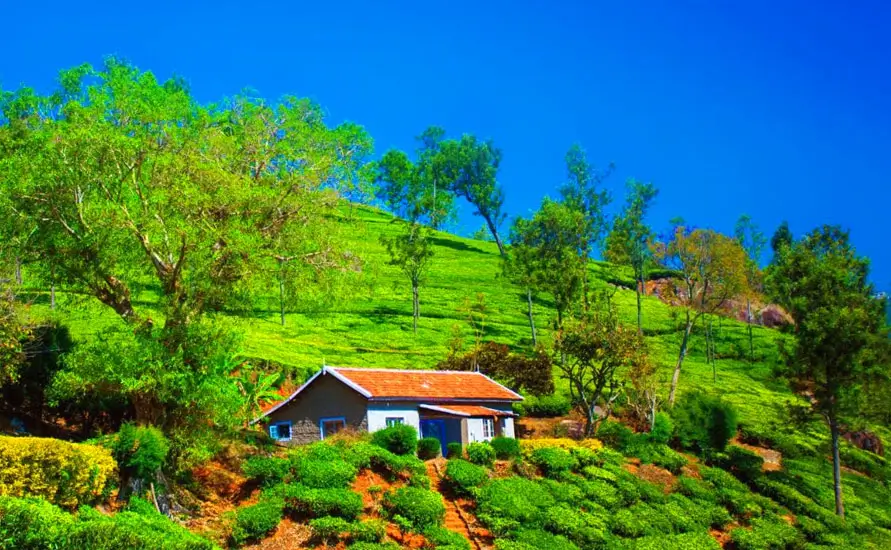
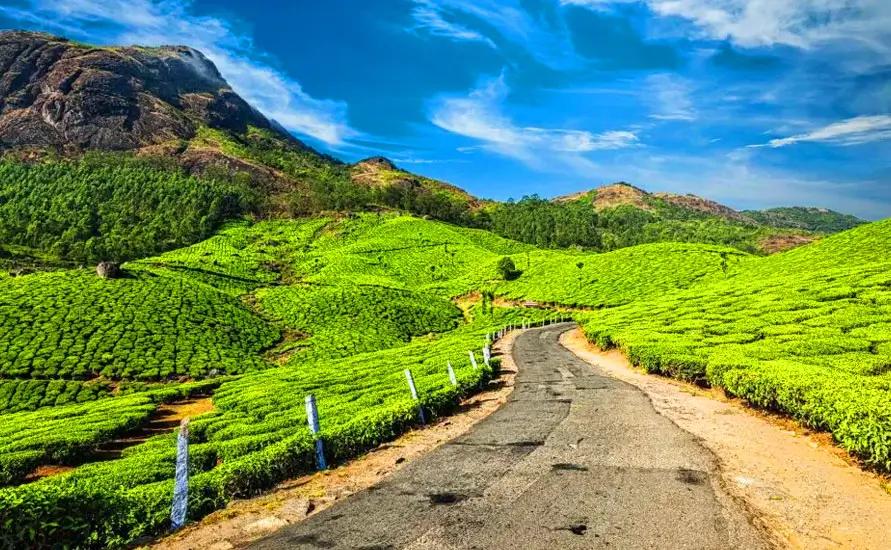
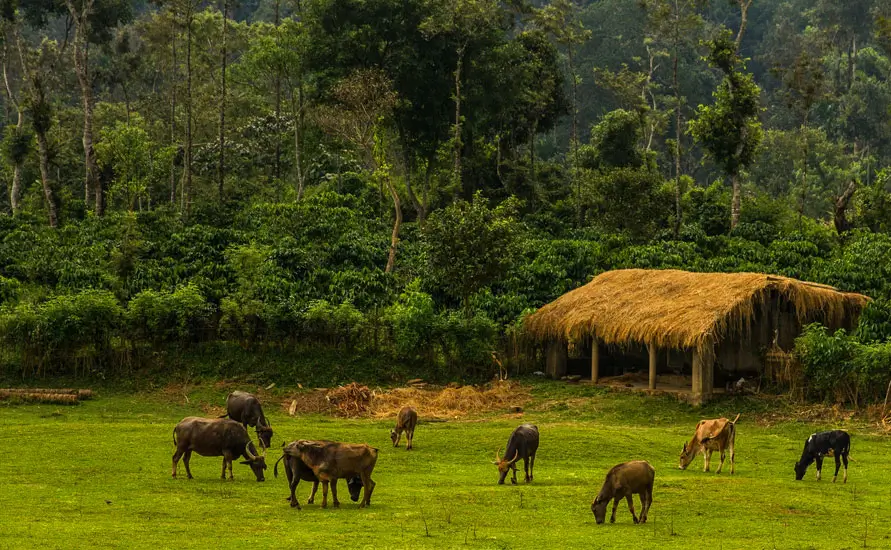
Over the border lies Idukki district, Kerala's cardamom and tea heartland. You skirt Pooppara and the blue water of the Anayirangal reservoir, with tea bushes trimmed like green hedges running to the skyline. Lunch is a simple Kerala meal at a restaurant with a valley view, where cardamom tea comes sweet and milky, followed by the last hour into Munnar. This hill station, about 1,600 meters up, was laid out by Scottish and English planters from the 1880s onward, and its Malayalam name refers to three rivers joining here: Mudrapuzha, Nallathanni and Kundala.
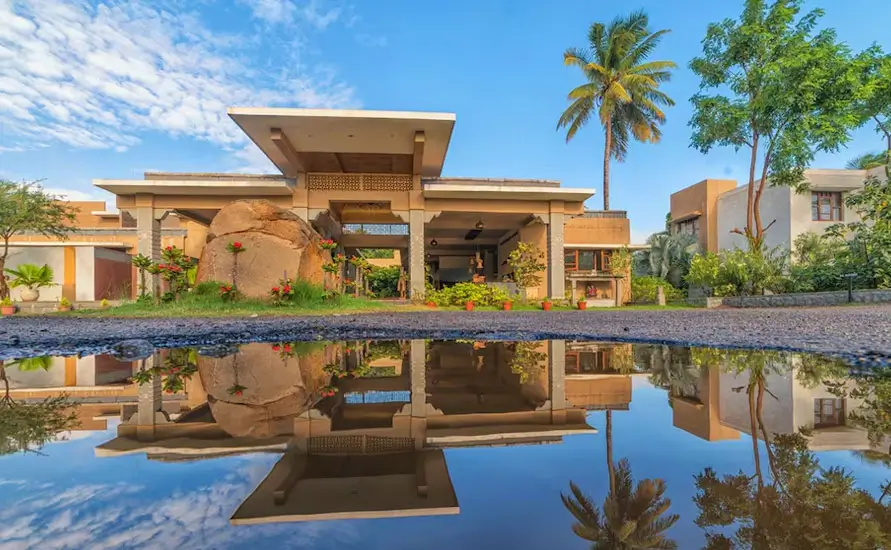
Two nights are spent at a hilltop luxury resort just outside town, with balconies looking across tea slopes to peaks that come and go in the cloud. After a long road day the afternoon is deliberately empty: a massage at the spa, a book beside the fire or a stroll through the resort's gardens. Munnar evenings are chilly, particularly in midwinter, so pack a fleece. Dinner mixes Kerala dishes with continental choices. End the evening with a cup of freshly brewed high-grown tea and a plate of crisp banana chips. Overnight in Munnar.
Early on, you drive to Eravikulam National Park, rolling upland grassland that shelters the largest remaining herd of Nilgiri tahr. From the entry gate, forest buses climb to Rajamala, where a paved track contours along the hillside with views of rocky summits and deep valleys. The tahr frequently feed right beside the track, though no one can promise an appearance, and cloud sometimes rolls in without warning. An annual calving closure falls across part of February and March, so if your dates land then we arrange a walk on one of the higher estates instead.
Next is the KDHP Tea Museum at Nallathanni, run by Kanan Devan Hills Plantations, which traces Munnar tea from its colonial clearing to today's worker-owned company. Faded photographs, a rolling machine from the early twentieth century and a brief documentary cover the history, while a working section takes leaf through withering, rolling, oxidizing and drying. At the end, cups of several grades are lined up for comparison. In the afternoon an estate guide walks you between the bushes, showing how pluckers work the slopes and describing life in the line houses where many estate families still live.
Still keen? Your chauffeur can continue to Mattupetty Dam and nearby Echo Point; there the reservoir lies between grassy hills, or to the flower gardens in town. Otherwise, go back to the resort for an Ayurvedic massage or a swim in the heated pool. Munnar is known for homemade chocolate, and a few small shops in the bazaar sell bars flavored with cardamom and pepper. Dinner is at the resort, perhaps beside a bonfire on the terrace, and when clouds clear, the hills fill with far more stars than any city allows. Overnight in Munnar.
Descending from Munnar, the road curls through tea and cardamom before dropping toward central Kerala's lowlands. Waterfalls such as Cheeyappara and Valara tumble right beside the highway near Adimali, at full force from June to November and thinner by spring, and your chauffeur stops for photographs. Lower down, rubber plantations, pineapple farms and church-dotted towns replace the hills, and humidity rises noticeably, so jackets go back into the suitcase. Lunch stops at a dependable roadside restaurant with banana-leaf Kerala meals or, if the spice has caught up with you, order North Indian dishes instead.
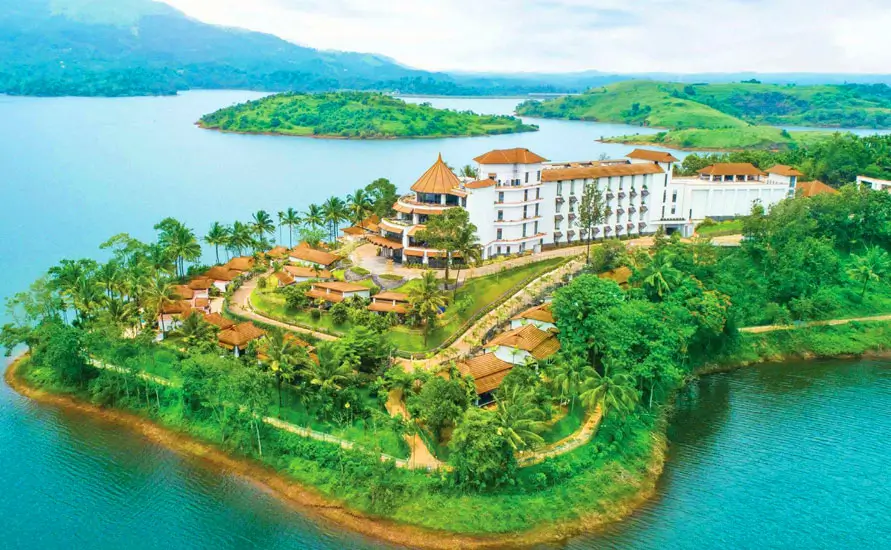
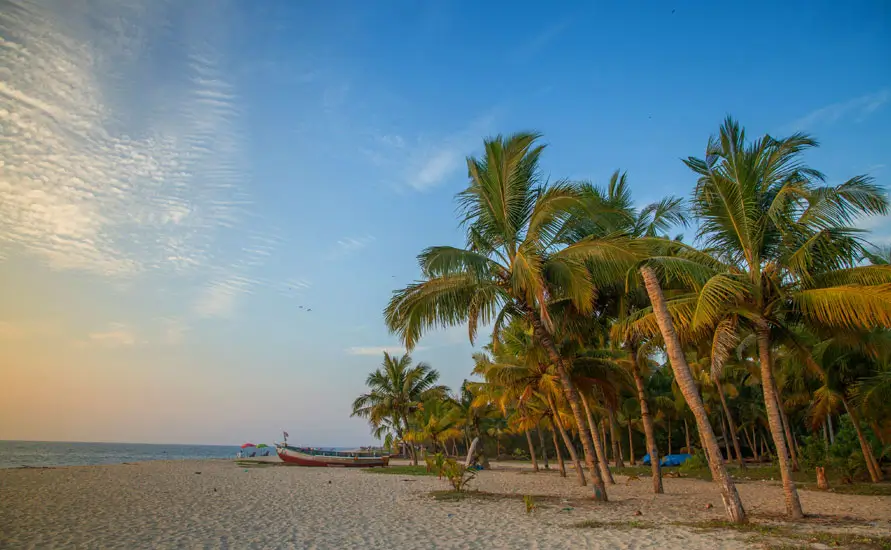
Mid-afternoon you arrive at Kumarakom, on the eastern bank of Vembanad Lake, a Ramsar-listed wetland and the longest lake in India. Your five-star resort is spread among coconut palms and its own little canals, with villas facing the lake and some offering a private pool. A tender coconut, cut open in front of you, is the welcome drink, and staff explain the Ayurveda center and its range of traditional therapies. The rest of the day stays open for a swim, a nap or an easy lakeside walk at golden hour, when the low sun turns the water copper.
At sunset, you can take a short ride in a traditional country boat along the narrow canals near the resort, watching village life along the banks: fishermen casting nets, children playing and ducks swimming in the water. The boatman knows the canals well and can point out kingfishers, herons and other birds. Tables for dinner are laid at the lakeside, with Kerala dishes such as karimeen (pearl spot fish) fried with spices, prawn curry and appam. Quiet water under the night sky makes a welcome change after the busy temple towns of Tamil Nadu. Overnight in Kumarakom.
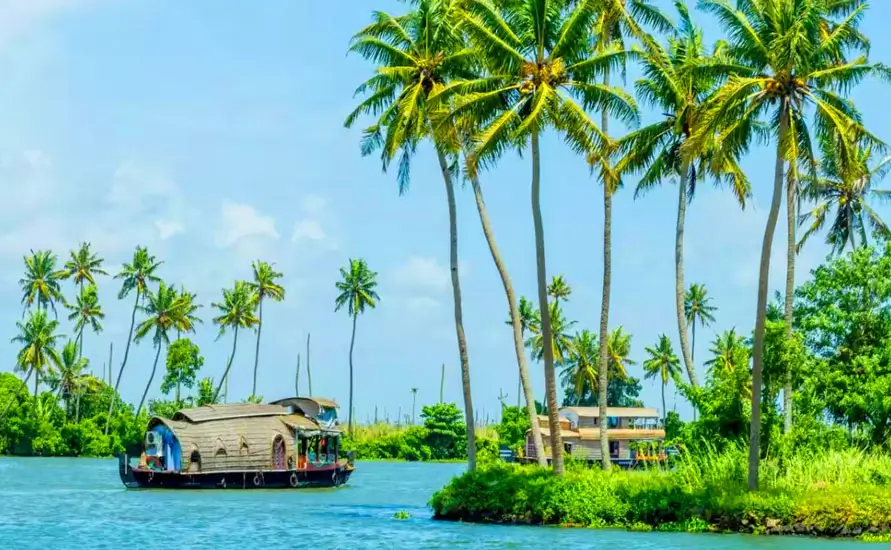
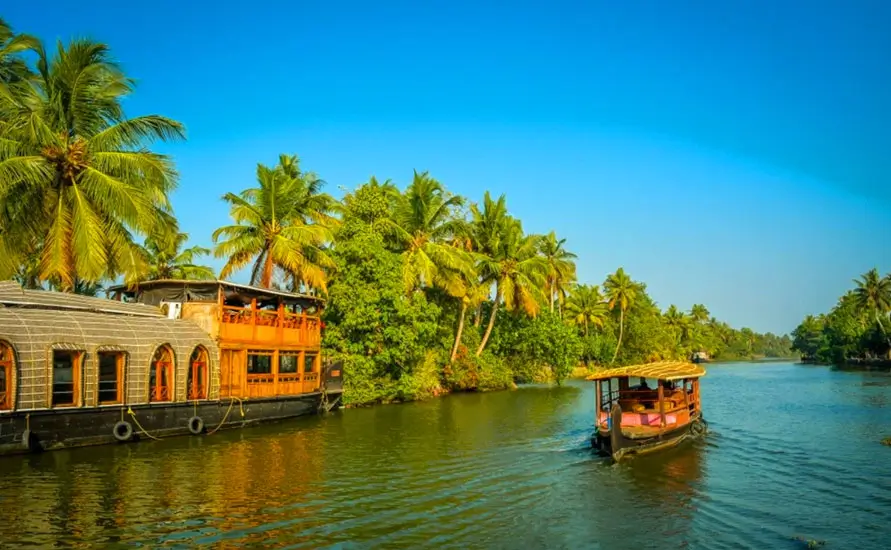
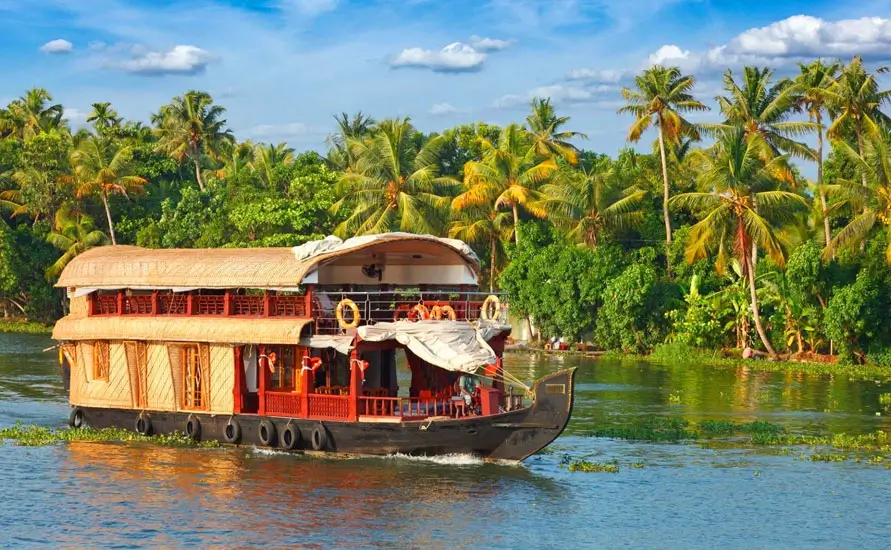
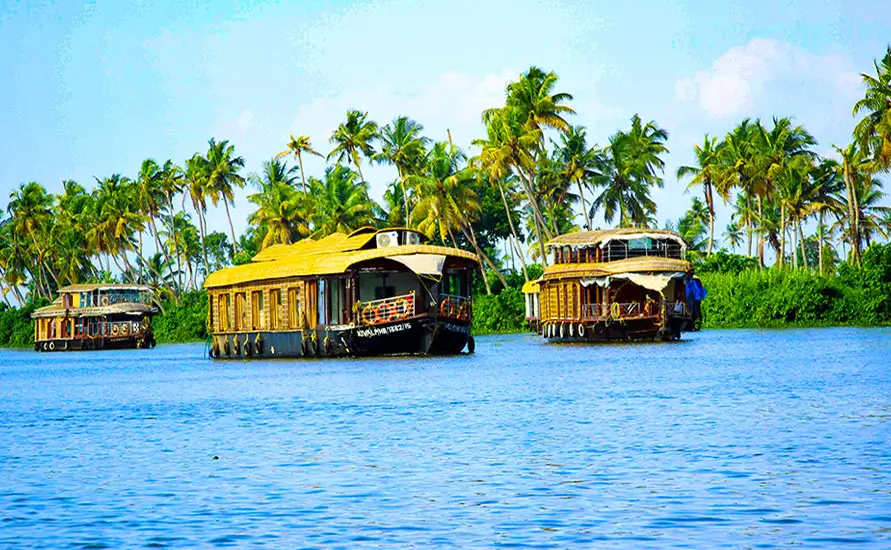
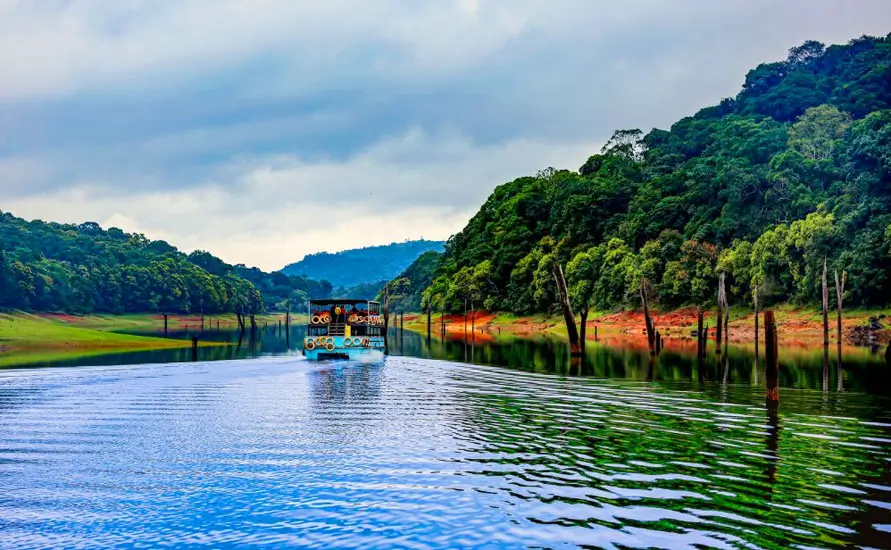
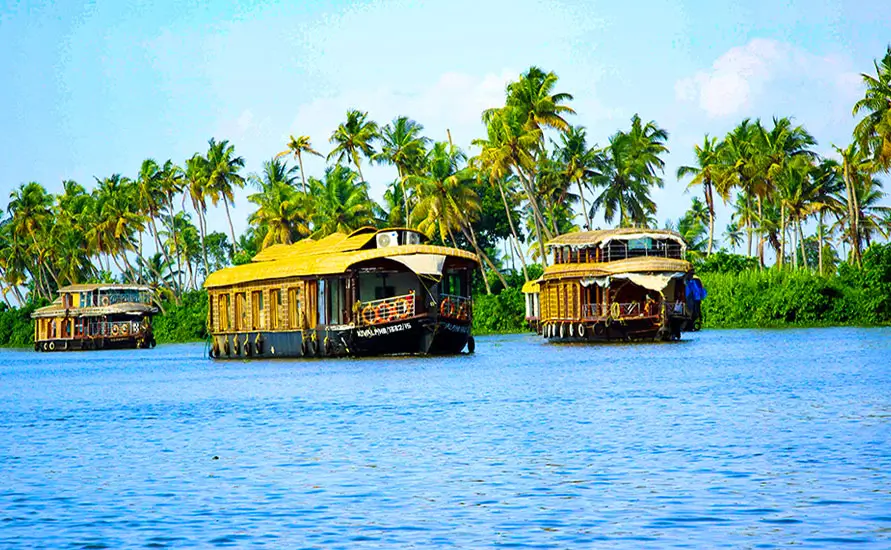
Birders can rise before dawn for a naturalist-led loop of the Kumarakom Bird Sanctuary, where darters, night herons and egrets crowd the mangroves; from November to February, winter migrants swell the numbers. After breakfast a private luxury houseboat pulls alongside the resort pier for a day on Vembanad Lake. A day cruise suits travelers who would rather sleep ashore in a resort villa than on a boat, and it still gives you the full backwater scene. Your boat has an air-conditioned lounge, an open upper deck, and a crew of three including a cook.
Leaving the open lake, the boat noses into canals barely wider than itself, past coconut palms, churches, temple steps and paddy fields kept below sea level by mud dikes. Children paddle to school, a postman delivers letters by canoe and women rinse pots at the water's edge. Lunch, cooked on board, arrives on deck in steel dishes: red rice, fish curry, a cabbage or beans thoran, pappadam and payasam. Ask the cook to tone down the chili or prepare a vegetarian spread. Afterward, doze on deck, or stop at a village to see coir rope made or a toddy tapper at work.
Houseboats must tie up by sunset under local rules, so you are back at the resort jetty in late afternoon. Spend the evening on an Abhyanga oil massage, a swim or a sundowner as fishing canoes glide past. Curious about the kitchen? Ask the chef for a short kitchen lesson in fish moilee or avial, the mixed vegetable dish bound with coconut and yogurt. Dinner tonight can be set up on your private deck, lit by brass lamps, with frogs and crickets supplying the soundtrack and the odd heron calling from the reeds. Overnight in Kumarakom.
A slow breakfast by the water comes before the short transfer to Fort Kochi, ninety minutes north-west across a string of bridges and islands. Your last hotel is a restored waterfront warehouse or trading house from the colonial era, where teak beams and old shipping ledgers decorate the lobby and container ships slide past the windows. Lunch is at the hotel or a garden café nearby. Then rest until late afternoon, when sea breezes start to cool the lanes and the old town is at its most walkable. Around four, your guide is waiting at the front steps.
Your walk threads through the grid of streets laid out under Dutch and British rule, past gabled houses, old churches and the open parade ground. At St. Francis Church, the oldest European church in India, a slab in the floor shows where Vasco da Gama was interred in 1524, until his son took the remains home to Portugal. The twin-spired Santa Cruz Basilica has a painted ceiling worth craning your neck for. You finish on the seafront by the Chinese fishing nets, whose crews still haul them on ropes balanced by stone weights, and silhouettes of the giant frames at sunset are the classic Kochi photograph.
Evening brings Kathakali in a small Fort Kochi theater. Come an hour early, because the dancers paint their own faces in front of you, building green, red and white layers of rice paste and pigment while a narrator explains the eye movements and hand signs that carry the plot. Once the drums begin, the story, usually from the Mahabharata or Ramayana, unfolds in mime and song. Dinner afterward is at a seafood restaurant where you pick fish, prawns or crab from the ice and decide how it should be cooked. Overnight in Kochi.
Spend your final full day in Mattancherry, Kochi's historic trading quarter. Mattancherry Palace was presented by the Portuguese to Kochi's ruler around 1555, restored afterward under Dutch rule, and its bedroom walls hold large Ramayana murals in ochre, green and black. Down the lane, the 1568 Paradesi Synagogue rests on blue willow-pattern tiles that sailed here from Canton and lit by Belgian glass lamps. Remember that Friday shuts the palace, and the synagogue stays locked on Saturdays and Jewish festivals as well; this is why Kochi's sightseeing day moves to fit your calendar.
Jew Town's narrow street is packed with antique dealers, galleries and old spice godowns. Your guide leads you into a wholesale spice hall where pepper, cardamom, cloves, cinnamon and nutmeg are weighed in sacks, and explains how this harbor controlled a large share of the world pepper trade for centuries. Spices, Kerala tea and Munnar coffee are easy to pack for home. Lunch is at a café inside a converted warehouse, followed by free time for shopping or rest. The boutiques along Princess Street sell handloom cotton, block-printed textiles and jewelry.
Late afternoon, you can book an optional harbor cruise around the harbor mouth and Bolgatty Island, or see the Kerala Folklore Museum, privately assembled inside a three-story wooden building on the Ernakulam side, filled with masks, costumes, puppets and temple carvings from across Kerala. For your farewell dinner, our team reserves a table at a restaurant known for modern Kerala cooking, perhaps duck mappas or a seafood platter with appam. Your guide then reviews tomorrow's departure plans with you, including pickup time and airport check-in rules for your airline. Overnight in Kochi.
Breakfast is your last chance for a plate of appam with egg roast or idiyappam with coconut milk. Checkout is usually at noon, and the pickup time is set so you reach Cochin International Airport well before international check-in opens, allowing ninety minutes for the drive through Ernakulam. With a night departure, we can extend your room or book a resting room near the terminal for an additional charge, and your chauffeur will happily stop at a spice shop or bakery on the way.
Kochi's airport, famous for drawing all its electricity from its own solar farm, offers onward links through the Gulf, Colombo, Singapore and Kuala Lumpur. In two weeks you have crossed the peninsula coast to coast, from Pallava rock carvings and Chola towers to Chettiar mansions, tea hills, backwaters and a spice port. When you are ready for another chapter, our team can plan Karnataka's palaces and forests, Goa's beaches or the islands of the Andamans. Until then, safe flights home.
Your Journey
N.S. Rathore & Mrs. Omlata Rathore · Managing Director
We still read every enquiry ourselves. Tell us the places you liked and our planners will send a day-by-day route with drive times and a clear price.
Every package can be customised and no pressure to book. A planner from our office replies within 24 hours with a route written for your group.
Fill this in and your planner will send a first draft itinerary.
Explore more
Kerala Backwaters Escape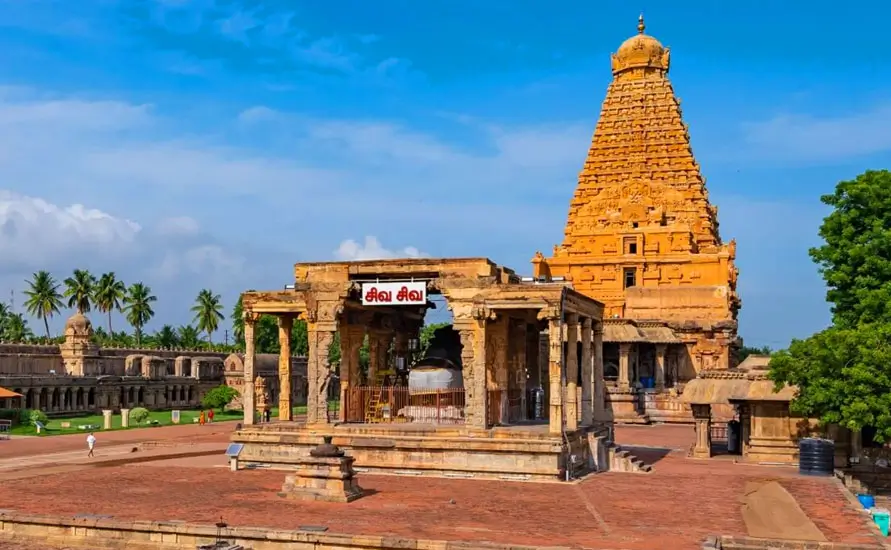 Kerala Backwaters Escape
 Kerala Backwaters Escape
 Kerala Backwaters Escape
 Kerala Backwaters Escape
 Kerala Backwaters Escape
 Kerala Backwaters Escape
 Kerala Backwaters Escape
 Kerala Backwaters Escape
 Kerala Backwaters Escape
 Kerala Backwaters Escape
 Kerala Backwaters Escape
 Kerala Backwaters Escape
 Kerala Backwaters Escape
 Kerala Backwaters Escape
 Kerala Backwaters Escape
 Kerala Backwaters Escape
 Kerala Backwaters Escape
 Kerala Backwaters Escape
 Kerala Backwaters Escape
 Kerala Backwaters Escape
 Kerala Backwaters Escape