 Kerala Backwaters Escape
Luxury South India Tours
Kochi – Kumarakom – Kovalam
At a glance
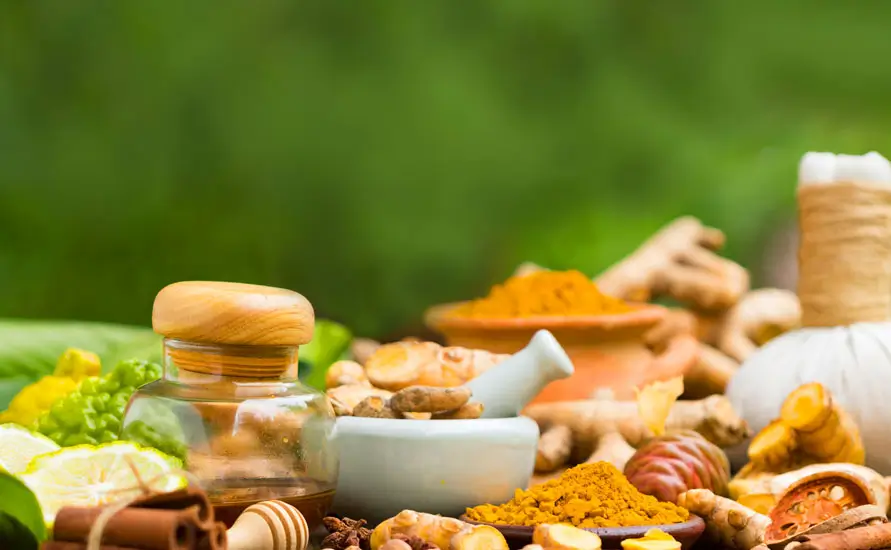
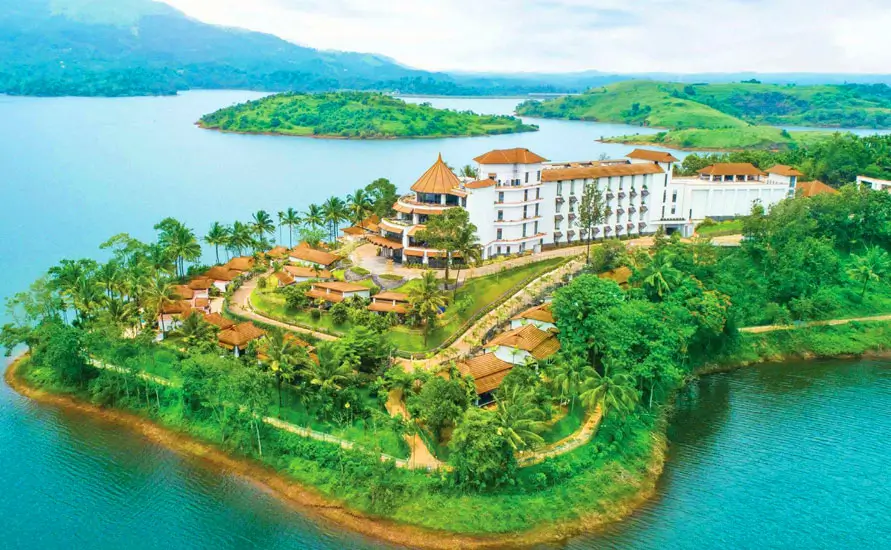
Ayurveda has been practiced in Kerala for well over a thousand years, passed down through families of physicians known as vaidyas, and the state remains the place most Indians themselves trust for it. Our luxury Ayurveda retreat Kerala program gives that tradition proper time. After four days of gentle sightseeing in Fort Kochi and on the lake at Kumarakom, you settle for ten nights at a luxury Ayurveda resort on the cliffs above Kovalam, where a qualified Ayurveda doctor designs a daily plan of treatments, diet and yoga around you.
Ten nights matter. Classical Kerala therapies are given as a course rather than as single spa sessions, and most resort doctors prefer guests to stay at least a week or two so that massage, herbal steam and diet can build on each other. We are clear about what this is: a traditional wellness program, not a medical cure, and not a substitute for care from your own physician. You are asked to share any health conditions and medications at the first consultation, and the doctor adjusts every treatment accordingly. Days are calm but not empty, with short, doctor-approved outings to fishing harbors, palaces and estuaries.
The luxury Ayurveda retreat Kerala itinerary suits solo travelers, couples and friends from abroad, as well as NRI guests who grew up hearing about Ayurveda from grandparents and want to try a full course in comfort. As a luxury South India tour, every transfer runs by chauffeur-driven premium car, guides are private and the resort provides an Ayurvedic vegetarian menu prepared to your doctor's advice. The best months are October to April, while the wet season from June onward, which classical texts favor for Ayurveda, are an option for travelers who do not mind the rain.
Cochin International receives long-haul connections through Doha, Dubai, Singapore and Colombo around the clock, and our arrival host waits outside the terminal with a placard bearing your name. Your chauffeur loads the bags into a premium SUV or sedan for a ninety-minute run south and west, across the bridges and islands of the harbor, to Fort Kochi. Your hotel is a restored heritage property, perhaps a former Dutch or Portuguese merchant house, with polished teak floors, a courtyard pool and rooms that open onto old trees. Booking the room from the previous evening means a dawn arrival can head directly to bed.
After a rest and a light lunch, your trip manager visits to go through the two weeks ahead and hands over the intake form sent by the Ayurveda resort in Kovalam. It asks about health history, current medicines, sleep, digestion and diet, and filling it in now gives the resort doctor a head start before your first consultation. We also suggest you begin easing into the routine you will follow later: lighter meals, less alcohol and coffee, and early nights. None of this is strict yet, but a slower start makes the change to resort life easier for most guests.
In the late afternoon, stroll with your guide along the waterfront road where the harbor mouth meets the Arabian Sea. Container ships and ferries pass a few hundred meters offshore, and the cantilevered fishing nets along the shore are being worked by their evening crews. Rather than linger, walk inland past Vasco da Gama Square to the shaded parade ground, where local boys play cricket under rain trees as the light turns soft. Dinner at the hotel can be a gentle Kerala meal of appam and vegetable stew, a good first taste of coconut-based cooking. Overnight in Kochi.
Kochi grew rich on pepper long before Europeans arrived, and the morning walk with your private guide starts where that trade still lingers: the warehouses of Mattancherry. Inside, workers sort ginger, turmeric and pepper on wide wooden floors, and agents still trade by the sack. Your guide traces the long line of buyers, from Roman-era sailors and Arab dhow captains to Portuguese and Dutch fleets, all chasing the same black berry, and how spices also sit at the root of Ayurveda, where turmeric, ginger and pepper appear in many classical formulations. You can buy small, fresh packs to take home, sealed for travel.
Close by, the Mattancherry Palace holds some of the best-preserved Kerala murals, painted with natural pigments in scenes from the Ramayana and Krishna stories, while Jew Town's Paradesi Synagogue, dating from 1568, has a floor laid with hand-painted porcelain squares, each one slightly different. Weekly closures shape the schedule here, since the palace stays shut every Friday while the synagogue adds Saturdays and Jewish holy days to its closures, and we order your sightseeing with that in mind. Afterward, you sit in on a short session at a mural painting studio, where a trained artist shows how the bold ochre, green and red lines are built up in layers, following rules laid down in old treatises.
The afternoon is unhurried. Many guests use it to rest by the pool or to book a light introductory massage at the hotel, which is a gentle preview of the therapies to come in Kovalam. If you prefer to stay out, your guide can show you the art galleries and cafés that fill the old godowns along Bazaar Road, some of which host the Kochi-Muziris Biennale in biennale years. At dusk, an optional Kathakali performance or a classical music recital can be arranged. Dinner is at a quiet restaurant serving fresh fish from the morning catch, cooked mildly at your request. Overnight in Kochi.
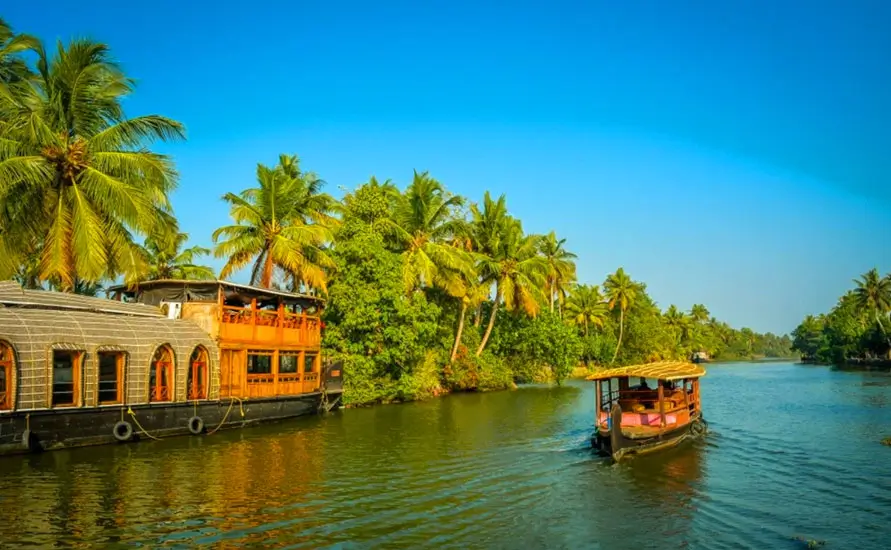
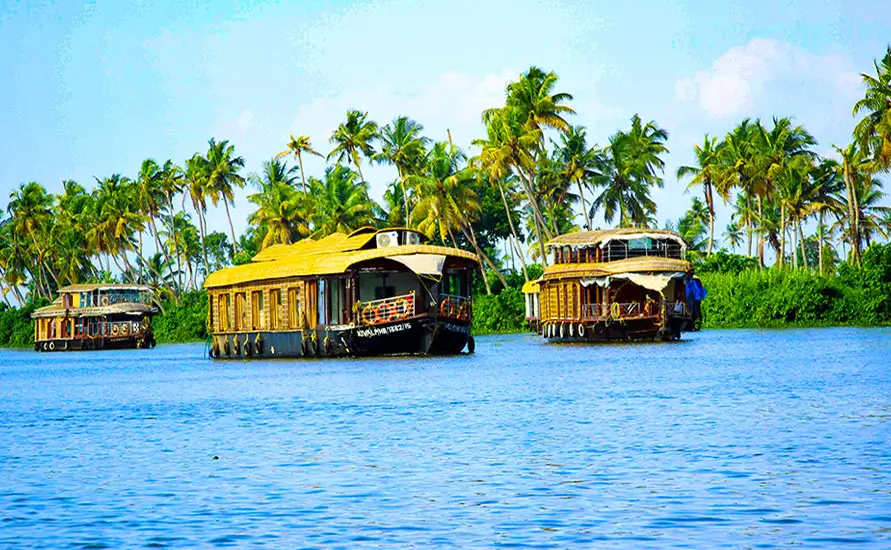
Your chauffeur leaves Fort Kochi after breakfast, crossing the city and heading south-east through Vaikom-side towns where church spires, temple roofs and minarets share the same few streets. The road narrows as you approach the backwater belt, and paddy fields and canals begin to appear between the coconut palms. Kumarakom looks west over Vembanad Lake, whose brackish expanse sits within a Ramsar-protected wetland system. You check in to a lakeside five-star resort laid out as cottages along private canals, with a lawn that runs down to the water and an infinity pool facing the lake.
Lunch is served by the water, followed by free time. Kumarakom resorts are built around the pace of the backwaters, and an afternoon spent in a hammock watching kingfishers dive is a good way to start shedding the habits of home. If you are curious, the resort's own Ayurveda center may offer a short consultation or foot massage, though we recommend saving full treatments for Kovalam, where the doctor will plan them as a course. Down at the resort jetty, your guide also shows you the traditional country boats, called vallams, still used by local farmers.
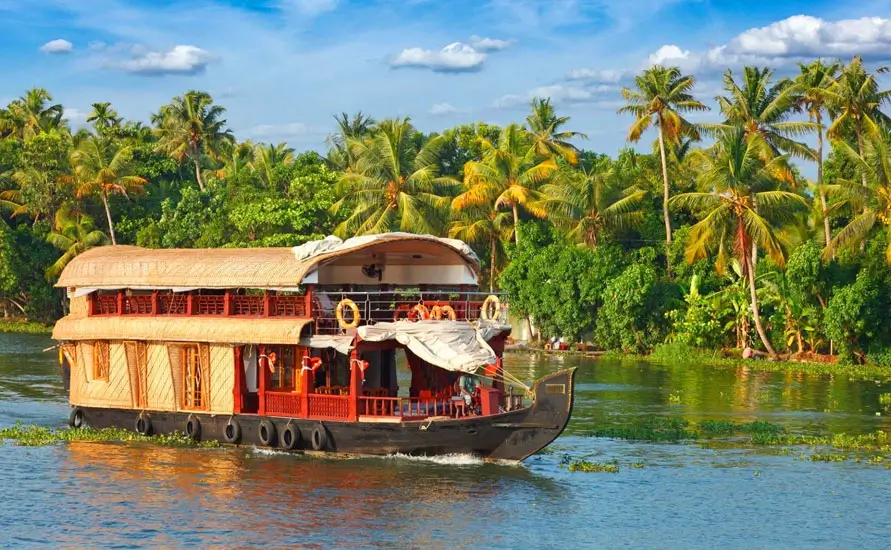
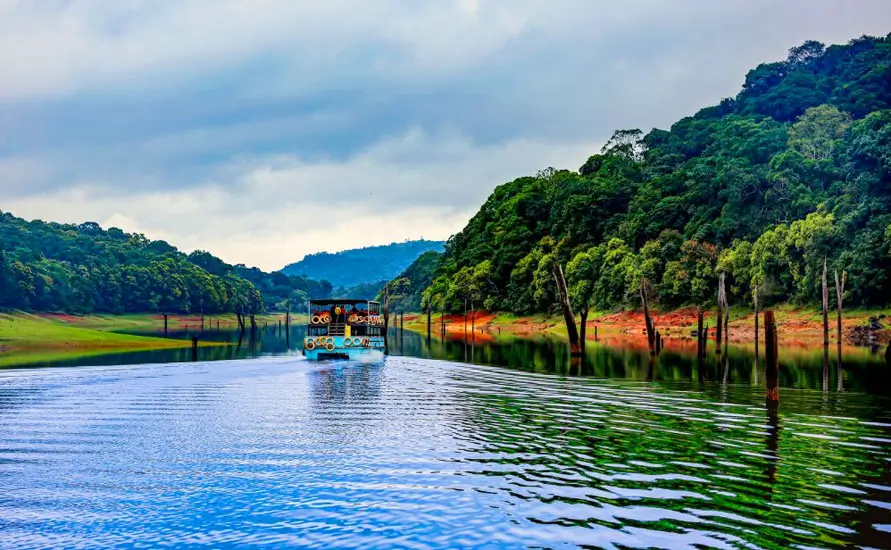
Toward evening you board a private motor launch or a canopied shikara for a two-hour cruise on Vembanad. As the boat moves out from the shore, the far side of the lake fades into a pale line of palms, and fishermen in narrow canoes set their nets for the night. The sun goes down slowly over the open water, painting the sky orange and then violet, and the boatman steers home through quiet canals as lamps are lit in waterside homes. Dinner back at the resort can be a lakeside candlelit table with karimeen, the prized lake fish, marinated in spices and grilled in a wrap of banana leaf. Overnight in Kumarakom.
Just after dawn, a naturalist walks with you into the Kumarakom Bird Sanctuary, a lakeside patch of mangrove, bamboo and old trees that was once a rubber estate. The best season for birds runs from about November to February, when migrants arrive from northern India and beyond, but resident species such as purple herons, darters, little cormorants and several kingfishers are present all year. The path is flat and shaded, and the early hour keeps it cool. With a spotting scope on a tripod, the naturalist helps match sounds to birds, from the loud whistle of the Asian koel to the chatter of babblers.
After breakfast at the resort, a short canoe ride takes you into the canals behind Kumarakom village. Life here moves at a different speed: laundry is beaten clean on stone ghats, schoolchildren wave from footbridges, and men climb coconut palms to tap the sap that becomes toddy, the local palm wine. Your guide arranges a stop at a coir workshop, where coconut husk fiber is soaked, beaten and spun into rope, and at a small farm growing paddy below lake level behind earth bunds. Some families will invite you in for a cup of black tea and a snack of banana chips.
The afternoon is for rest. Use the resort pool, read on your veranda or take a slow walk around the gardens, where staff can point out the medicinal plants used in Kerala homes, from tulsi to curry leaf and the bitter neem. In the evening, the resort sometimes arranges a Mohiniyattam recital, Kerala's swaying solo dance, or a chenda drumming group. Pack your bags tonight, keeping light cotton clothing at the top, as tomorrow you move to the Ayurveda resort, where loose, comfortable clothes are worn for most of the day. Overnight in Kumarakom.
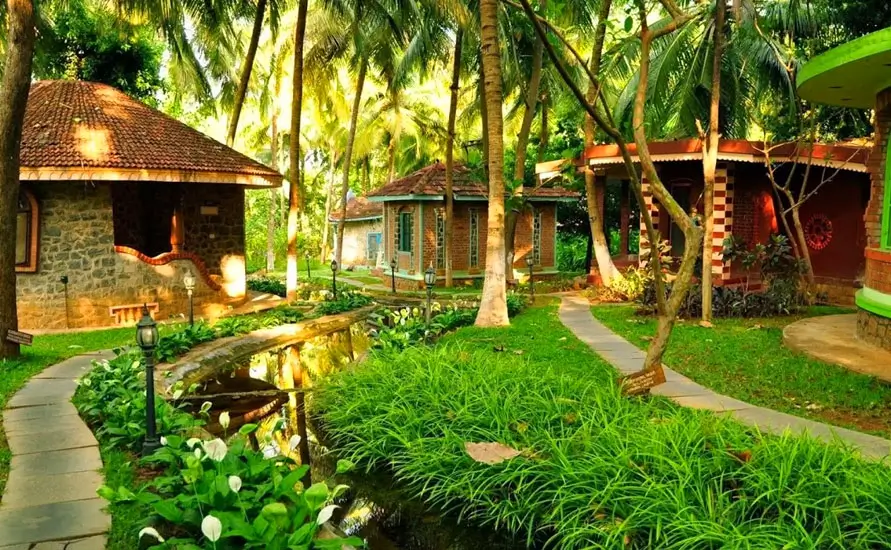
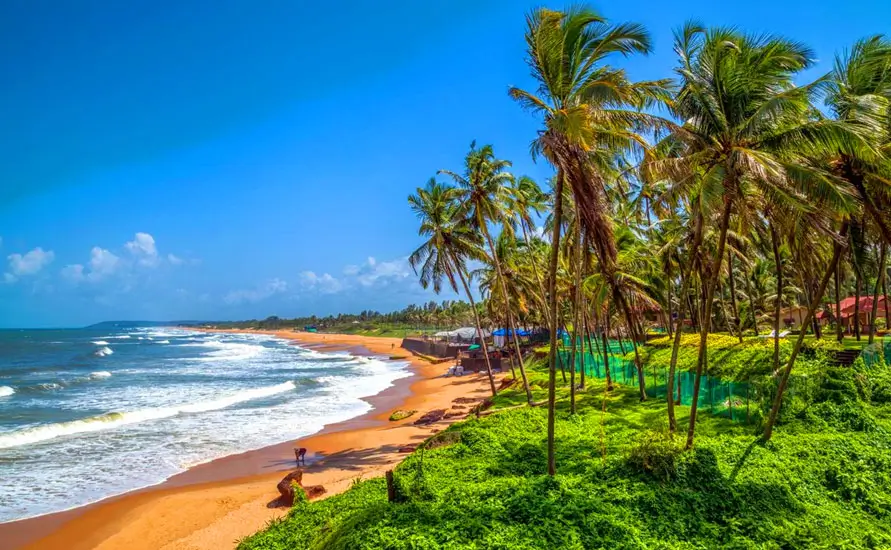
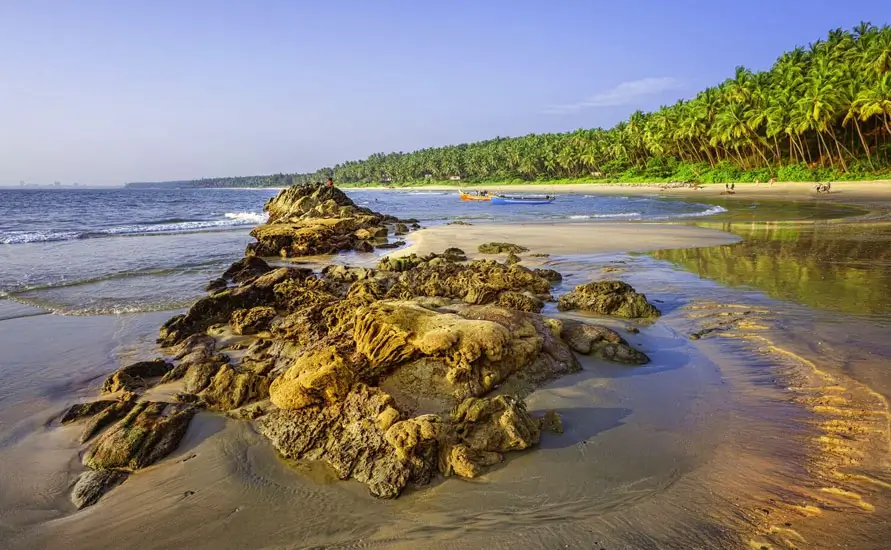
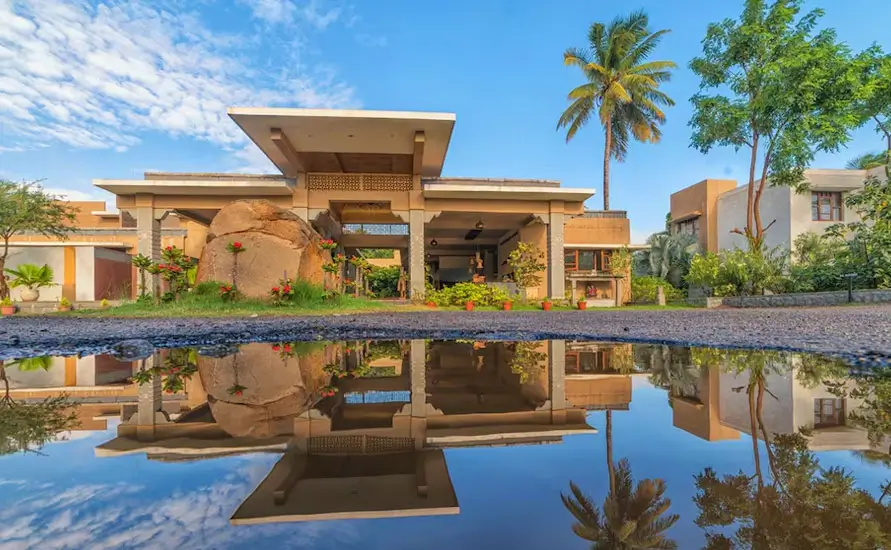
Today's drive runs south along Kerala's spine, via Kottayam and the main central road through rubber estates and hill towns, toward Thiruvananthapuram, the state capital also known as Trivandrum. Your chauffeur plans a comfortable break midway for a vegetarian lunch, and the route avoids the busiest coastal stretches. Beyond the city, the road drops toward the sea and the fishing village of Kovalam, whose curved beaches are cut by rocky headlands. Your resort for the next ten nights sits on the cliffs a little outside the busy center, its cottages scattered under coconut palms with long views across the Arabian Sea.
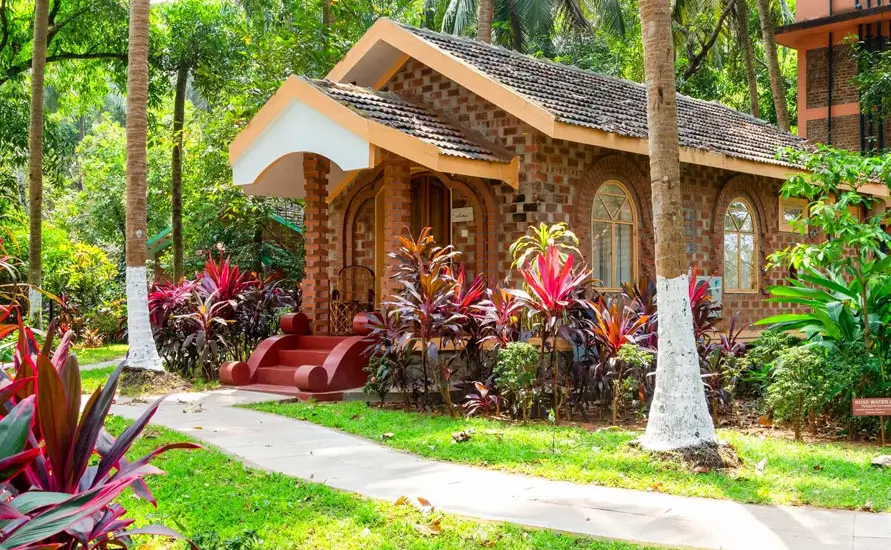
Check-in at a dedicated Kovalam Ayurveda resort is unlike a normal hotel. A staff member greets you with a cup of warm infused water, explains the daily rhythm of yoga, treatments and meals, and shows you the treatment rooms, the yoga pavilion and the dining hall where food is cooked fresh to Ayurvedic principles. Alcohol, smoking and heavy foods are not part of the program, and the resort may ask guests to keep phones away from shared areas. You have time to settle into your cottage, which typically has a sea-facing sit-out and a simple, uncluttered interior.
Toward evening comes your first sitting with the resort's Ayurveda doctor, a consultation which usually lasts around an hour. The doctor reads your pulse, asks about your lifestyle, sleep, digestion and diet, and reviews the intake form and any medical reports you bring. Based on this, the doctor identifies your body constitution, or prakriti, and sketches out which therapies to start with. This is the moment to ask questions and to be honest about health conditions, injuries or medications. Your first light dinner follows, served in the dining hall or on your veranda. Overnight in Kovalam.
A soft bell or a knock on the door around six signals the start of resort life. Sunrise yoga is held in an open pavilion facing the sea, led by a trained teacher who adapts each pose to your flexibility and to any notes from the doctor. The session usually moves through gentle stretches, sun salutations and slow breathing, and nobody is expected to be an expert. Afterward, a glass of warm herbal water and a light breakfast of steamed rice cakes, fruit and spiced porridge are served, with portions and ingredients matched to the dietary plan your doctor has set for you.
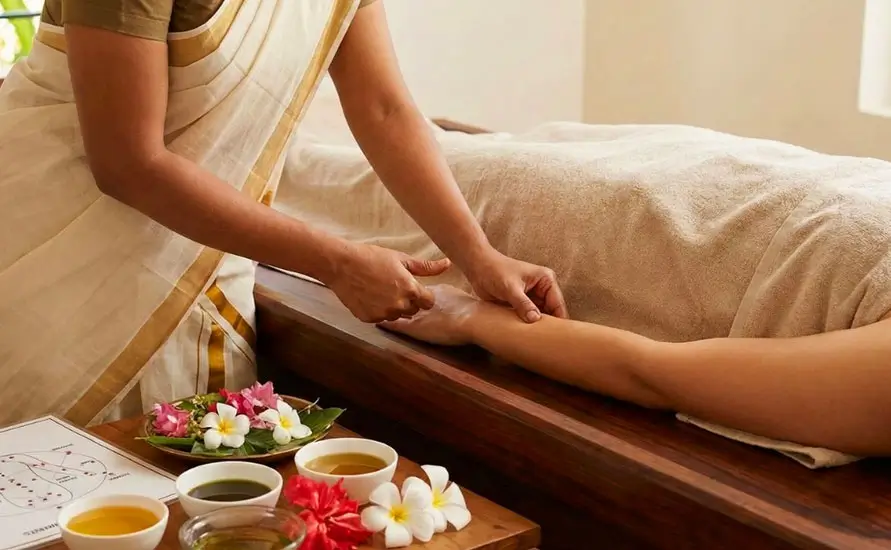
Your first full treatment comes mid-morning. Most programs begin with abhyanga, an all-over oil massage using a warmed blend selected for your constitution, given by one or two trained therapists working in rhythm. Kerala therapists traditionally work on a carved wooden table called a droni, and therapists of the same gender are the norm. Next comes a session in a wooden steam cabinet with your head outside, then a rest period before you shower with mild herbal powder instead of soap. It takes time to get used to the oil, so wear old, loose clothes after each session and allow the skin to absorb it slowly.
Lunch is the main meal of the day in Ayurveda, and the resort kitchen serves a balanced vegetarian spread with rice, lentils, seasonal vegetables and buttermilk, adjusted for each guest. Afternoons are kept quiet, and the doctor may suggest a nap, a walk along the cliff paths or reading in the library. Around sunset, a short guided meditation or chanting session is held in the pavilion, and dinner is light and early, usually finished by about eight. Most guests find they sleep heavily after the first day of oil treatments and steam. Overnight in Kovalam.
Breathing sits at the center of today's morning class. After a few warm-up poses, the yoga teacher introduces pranayama, controlled breathing exercises such as alternate nostril breathing and the humming breath known as bhramari. These are practiced seated, in short rounds, and the teacher explains how they are used in yoga to steady the mind before meditation. Your doctor may also visit at breakfast to ask how you slept and how your body responded to the first treatment, and small changes to oils or diet are made based on what you report.
If the doctor has prescribed it, today brings your first session of shirodhara, where warm medicated oil or buttermilk flows in an unbroken thread onto the forehead from a vessel suspended above you, moving slowly from side to side. It is one of the best-known Kerala therapies and many guests describe it as deeply calming, though responses vary from person to person. The session is followed by a head massage and rest, and you are asked to avoid wind, cold water and bright sun for some hours afterward, so the remaining hours stay shaded and quiet.
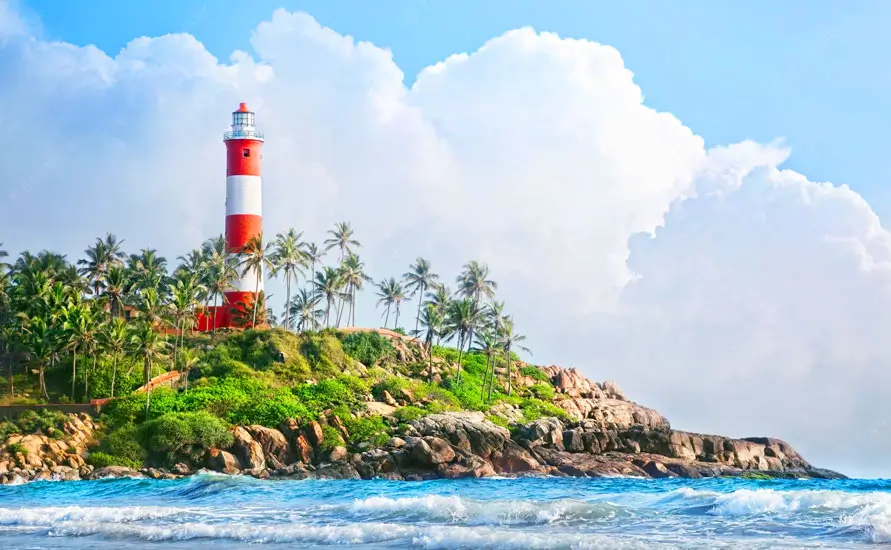
Late in the afternoon, once the sun has softened, your chauffeur drives you a few minutes to the red-and-white striped lighthouse above Lighthouse Beach at Vizhinjam. Visitors can usually climb the spiral stairs to a gallery at the top, where the whole Kovalam coastline opens up below: the curve of the beaches, the rocky headlands and fishing craft beached in neat rows. Down on the promenade, a tender coconut from a beach vendor is the only refreshment the doctor will approve before dinner. Avoid swimming on the days of oil treatments unless the doctor says otherwise. Overnight in Kovalam.
Fishing has shaped this coast for centuries, and the best time to see it is early. After yoga and a quick breakfast, the car covers the few kilometers to Vizhinjam, where one of the busiest traditional fishing harbors in southern Kerala comes alive in the morning. Wooden boats unload sardines, mackerel, tuna and squid onto the quay, and buyers bargain loudly as the catch is packed in ice. The local fishing community is largely Latin Catholic and Muslim, and the waterfront has a large church and a mosque facing each other across the bay. Visits are short and kept to the edges of the market.
Before heading back, your guide brings you to the Vizhinjam rock-cut cave temple, a small shrine thought to date from around the 8th century, when Vizhinjam was the capital of the Ay rulers. The single cell holds an image of Shiva, and the outer walls carry unfinished reliefs that historians link to Shiva and Parvati. It is a quiet, rarely visited site in a small garden, a reminder that this fishing village once had royal status. Your guide also points out the new deep-water port being built nearby, a contrast between old and new on the same stretch of coast.
Treatments shift to the afternoon today. Depending on your plan, you may receive elakizhi, a massage using warm cloth bundles filled with fresh medicinal leaves, grated coconut and lemon, pressed rhythmically over the body after an oil application. The leaves give off a sharp green scent as they warm, and the treatment is commonly used in Kerala for stiff joints and muscles. After the session, rest in your cottage with herbal tea. After dark, in the library, one of the senior physicians gives an informal talk that explains the basic ideas of Ayurveda, including the three doshas, in plain language. Overnight in Kovalam.
Most Ayurveda resorts in Kerala keep their own garden of medicinal plants, and this morning the resort's botanist or a senior therapist walks you through it after yoga. Plants are labeled with their Sanskrit, Malayalam and English names: ashwagandha, brahmi, aloe, the tall Indian gooseberry tree, vetiver grass used in cooling oils and many others. You learn which leaves go into the poultices you received yesterday, which roots are boiled into decoctions, and how oils are slowly cooked for hours in large copper vessels. Some resorts have a small pharmacy on site where medicines are prepared, and a visit can often be arranged.
Late morning, the head chef holds a cooking demonstration in the resort kitchen, showing how Ayurvedic principles shape the menu you have been eating. You see how spices such as cumin, coriander, fennel and turmeric are tempered in a little ghee, how lentil soups and vegetable thorans are kept light, and why ginger and pepper appear in many dishes. You hear how a vata, pitta or kapha guest would each get a different plate from the same pot, and you receive simple recipes to try at home. Lunch afterward is made from the dishes cooked in the session, eaten together with other guests in the dining hall.
The afternoon treatment may be udvartanam, a dry massage with herbal powder applied in brisk upward strokes, which is different in feel from the oil-based therapies of the earlier days. Afterward, a herbal steam and warm shower follow. In the evening, a guided meditation is held as the sun sets over the sea, focusing on body awareness and breathing. You might spend the hour before dinner writing in a journal, since many guests find the second week brings a change in sleep, appetite and energy that they want to note. Dinner is light and early again. Overnight in Kovalam.
With your doctor's approval, this morning includes a half-day outing to Thiruvananthapuram, about 30 minutes away. Your guide starts at East Fort, beside the Sree Padmanabhaswamy Temple, the vast temple of Vishnu lying on the serpent Anantha that gave the city its name, meaning the city of the sacred serpent. Entry is for Hindus only, with dhoti or sari required, but the temple tower and the sacred tank can be seen from the street outside. The Travancore maharajas, who governed this region until 1949, ruled in the deity's name as his servants, a detail your guide brings to life.
A short walk away stands the Kuthiramalika Palace, a timber-and-tile residence of Maharaja Swathi Thirunal, the 19th-century king still celebrated for his Carnatic compositions. Its name means horse mansion, a nod to the 122 prancing wooden steeds that hold up its roof eaves. Inside, a small museum shows royal portraits, ivory thrones and musical instruments, and photography may be restricted. You then drive to the gardens of the Napier Museum, an 1880 landmark in Indo-Saracenic style with red and black brick patterns, which holds bronzes, carvings and old temple chariots. Museums here have a weekly closing day, so we plan the date around it.
Lunch back at the cliffs is followed by an extra-long rest, as city outings are tiring during an Ayurveda course. In the late afternoon, your treatment may be a padabhyanga, a foot massage with warm oil, followed by a gentle face treatment with herbal pastes. The doctor checks in before dinner to see how the outing went and to make any changes for the days ahead. Evening chanting or a short yoga nidra session, a guided relaxation practiced lying down, closes the day. Many guests use these quieter evenings to call home or catch up on reading. Overnight in Kovalam.
Halfway through the program, your doctor holds a midpoint consultation after breakfast. Pulse, digestion, sleep and energy are reviewed again, and the plan for the second half is refined. Some guests are moved on to deeper therapies, while others are kept on gentler treatments if they are tired or have joint or back sensitivity. Bring up any wish for adjustments to the diet or the yoga practice. Our trip manager calls on the same day to check that everything at the resort is running well and to confirm the arrangements for your remaining outings.
If included in your plan, today's main treatment is pizhichil, sometimes called the king of Kerala treatments. Two to four therapists pour warm medicated oil continuously over the body from cloths dipped in a vessel, while massaging in a slow, coordinated rhythm. It is long, typically around an hour, and uses a large quantity of oil, which is why it is traditionally given as a short series. Other guests may receive njavarakizhi, a massage with cloth bundles of a medicinal rice called njavara, cooked in milk and herbal decoction, which leaves the skin soft and warm.
After a deep therapy, the hours that follow are quiet by design. You may be asked to stay indoors and avoid exertion, so the resort's library, a shaded hammock or simply your veranda become the focus. The sound of waves on the rocks below the cliff and the calls of drongos in the palms are the main soundtrack. Dinner is often a simple rice gruel called kanji with green gram and a little pickle, a classic Kerala meal for days of treatment. Lights go out early, and most guests are asleep long before the fishing boats head out at night. Overnight in Kovalam.
The morning follows the familiar rhythm of yoga, breakfast and treatment, which by now may include therapies such as nasya, the gentle application of herbal oil through the nose, or a head and shoulder massage. Your yoga teacher may extend today's class with longer holds in seated poses, or offer a one-to-one session focused on posture and breathing that you can repeat at home. Many guests notice that the routine feels natural by this point, and that the early starts no longer need an alarm. A light lunch is followed by a rest before the afternoon outing.
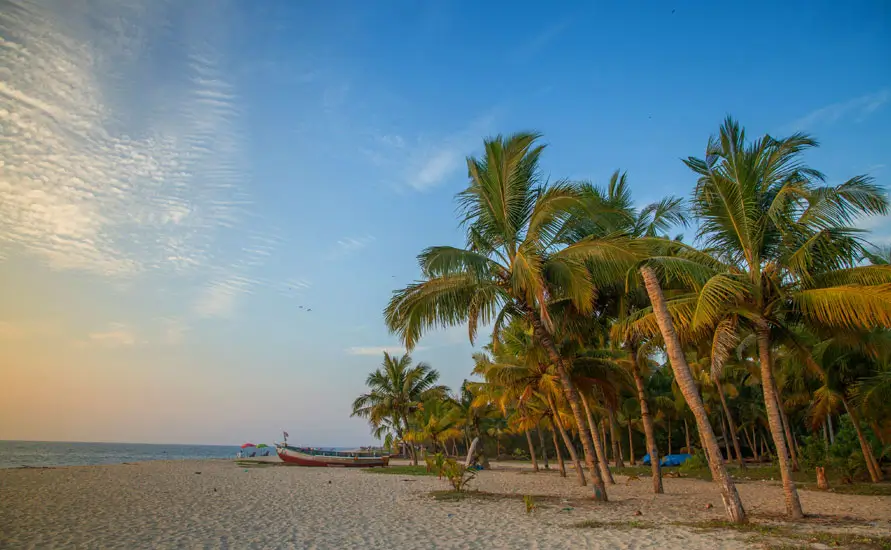
Around four, your chauffeur drives you about 45 minutes south to Poovar, close to the border with Tamil Nadu, where the Neyyar river meets the Arabian Sea. A private motorboat carries you through narrow channels lined with mangroves and screw pines, past small fishing hamlets and floating restaurants, toward a long sandbar of golden sand that separates the river from the sea. On one side the water is calm and green, on the other the surf rolls in. Birds such as egrets, cormorants and Brahminy kites are common, and fishermen cast their nets from small canoes.
The boat may stop at the sandbar for a short walk at the water's edge while the sun sinks toward the sea, though swimming here is not advised because of strong currents where river and sea meet. Low sun turns the mangroves bronze and the estuary pink, and the ride back upriver is slow and quiet. Back on the cliffs, a later-than-usual light dinner awaits, with herbal tea served on your veranda. Tomorrow evening holds a special cultural program at the resort, and your trip manager confirms the timing tonight. Overnight in Kovalam.
An early walk on the sand replaces yoga in the pavilion this morning, with your teacher leading a short, gentle practice on the beach below the resort as the fishing boats come in. The cool sand and the first light over the sea make it one of the most memorable sessions of the stay. Breakfast up on the terrace then leads into your treatment, which may be a repeat of one of the therapies that suited you best or, if the doctor advises, a session of kati vasti, in which warm oil is held in a ring of dough on the lower back for some minutes.
The afternoon is your own. Some guests book an extra session of yoga or meditation, others take a short guided walk with the resort's gardener to the coconut groves behind the property, and some simply read by the pool. If you have been keen to shop, your driver can take you for an hour to Kovalam's small shops for Kerala cotton saris and mundu, sandalwood soap and handmade herbal oils, within the limits your doctor sets. Lunch is light, as the evening includes a slightly later dinner and a special program in the resort's open-air courtyard.
At dusk, a troupe from a local school performs Kalaripayattu, Kerala's traditional martial art, in the courtyard. The performers move through high kicks, leaps and bends that grew out of the same body knowledge used in Kerala massage, then demonstrate combat with sticks, short swords and the flexible sword called urumi. Older Kalaripayattu masters were also healers, and many Kerala treatments for muscles and joints have roots in this tradition, a link your guide explains before the show. Afterward, tables are set among the oil lamps of the courtyard, a festive close to the stay. Overnight in Kovalam.
Your last full day at the resort begins with yoga, a final treatment and then the closing consultation with the Ayurveda doctor. The doctor reviews how your body responded through the program and gives you clear, simple advice on diet, daily routine, exercise and sleep to follow at home, written down so that you can keep it. Some guests are recommended a short course of herbal preparations to take home, which can be bought at the resort pharmacy at extra cost. The doctor will also tell you about any foods or activities to avoid for a few days after the last treatments, particularly long flights.
Your yoga teacher meets you late morning for a personal session to put together a short practice that you can follow at home in 20 to 30 minutes, including breathing exercises and a few key poses. Many resorts provide a printed sheet or a short video for this. The afternoon is free to rest, take a last walk along the cliff path or spend time on your veranda watching the sea. If there is a particular treatment you would like to repeat, ask early in the day so the resort can schedule it, subject to the doctor's approval.
In the evening, the resort staff may hold a small farewell gathering, with a lamp-lighting, herbal drinks and a light dinner served on the lawn as the stars come out over the Arabian Sea. Take the chance to thank the therapists, cook, gardeners and yoga teacher who have looked after you for ten days. Your trip manager calls to confirm your departure time, flight details and the transfer to the airport. Pack carefully tonight with the help of housekeeping if needed, keeping the doctor's notes and any herbal medicines in your hand luggage. Overnight in Kovalam.
A last light breakfast is served at the resort, and when the flight is not until afternoon or evening, you may join a final gentle yoga session or sit by the sea for an hour before check-out. Your chauffeur then drives you the short distance to Trivandrum International Airport, with nonstop services to several Gulf hubs, Singapore, Colombo and Male, as well as domestic connections through Bangalore, Chennai, Mumbai and Delhi. The doctor will have advised you on staying hydrated and eating lightly during the trip home.
Fifteen days have carried you from pepper godowns in Mattancherry and the flat calm of Kumarakom to ten unhurried days of yoga, treatments and sea air at Kovalam. Most guests leave with a simpler routine and a clearer sense of what suits their body. If you wish to return, many choose to repeat a luxury Ayurveda retreat Kerala stay every year or two, or to combine it with the hills of Munnar or Thekkady. Our team keeps in touch until your flight is airborne.
Your Journey
N.S. Rathore & Mrs. Omlata Rathore · Managing Director
We still read every enquiry ourselves. Tell us the places you liked and our planners will send a day-by-day route with drive times and a clear price.
Every package can be customised and no pressure to book. A planner from our office replies within 24 hours with a route written for your group.
Fill this in and your planner will send a first draft itinerary.
Explore more
Kerala Backwaters Escape Kerala Backwaters Escape
 Kerala Backwaters Escape
 Kerala Backwaters Escape
 Kerala Backwaters Escape
 Kerala Backwaters Escape
 Kerala Backwaters Escape
 Kerala Backwaters Escape
 Kerala Backwaters Escape
 Kerala Backwaters Escape
 Kerala Backwaters Escape
 Kerala Backwaters Escape
 Kerala Backwaters Escape
 Kerala Backwaters Escape
 Kerala Backwaters Escape
 Kerala Backwaters Escape
 Kerala Backwaters Escape
 Kerala Backwaters Escape
 Kerala Backwaters Escape
 Kerala Backwaters Escape
 Kerala Backwaters Escape
 Kerala Backwaters Escape