 Kerala Backwaters Escape
Luxury South India Tours
Chennai – Mahabalipuram – Pondicherry – Darasuram – Thanjavur – Karaikudi – Madurai – Kochi – Kumarakom
At a glance
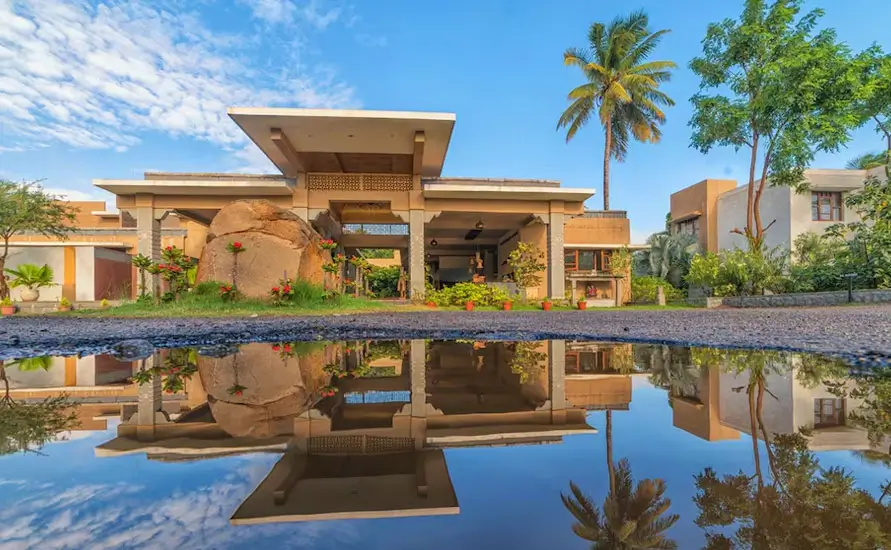
Some buildings tell a region's story better than any museum, and in South India many of the best of them now take overnight guests. Our luxury heritage hotels of South India tour is planned around those addresses: a garden-set colonial property in Chennai, a restored French villa in Pondicherry, a merchant's mansion in Chettinad, a hilltop colonial bungalow above Madurai, an old spice godown turned hotel in Kochi, and finally a cluster of rebuilt Kerala homes on the water at Kumarakom. Each stay is a sight in its own right, and the touring between them links temples, palaces and port towns.
Thirteen days give the route room to breathe. You spend two nights at every stop, so there is time to enjoy pools, courtyards and long breakfasts as well as the sightseeing, and road transfers between Tamil Nadu's heritage towns average two to four hours, with one fuller day across the Chola heartland broken by two UNESCO-listed temples. One chauffeur and one premium car handle the whole route, while at each stop a private guide trained in history, art or architecture takes over the storytelling. We avoid naming specific hotels here because the right choice depends on your dates and taste, but every property in this heritage hotel tour of South India is selected for its character and service.
Design lovers, architecture buffs and keen cooks from America, Canada, Britain, Europe and Australia tend to enjoy this South India heritage tour most, as do NRI visitors who want to stay in the kind of grand family homes their grandparents remember. Highlights include the Chola bronzes in Chennai, the Shore Temple at dawn, the painted Tamil Quarter of Pondicherry, the Athangudi tile makers of Chettinad, the nightly palliyarai ceremony at the Meenakshi Temple and a cooking session in a Kerala heritage kitchen. Aim for the cooler stretch from November through February, when every stop on the route is pleasant.
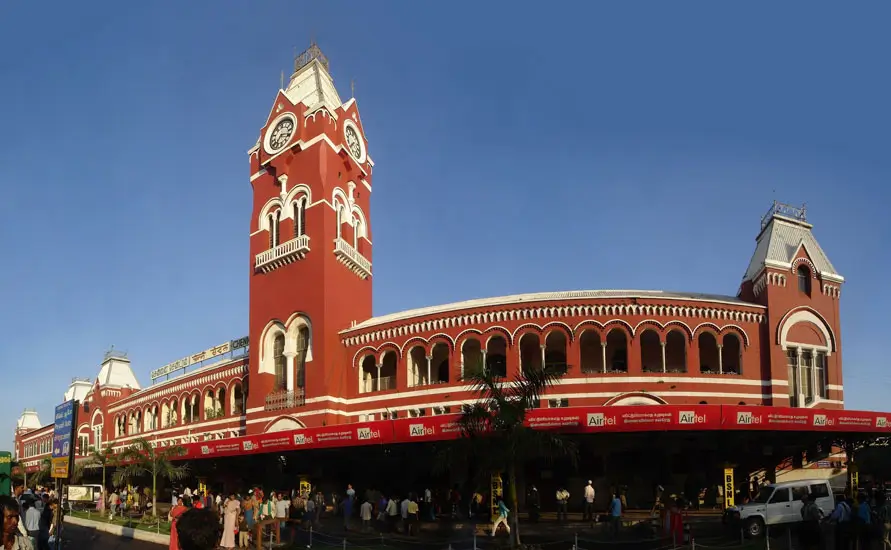
Long-haul arrivals into Chennai cluster around midnight and the early hours, and whatever the clock says, our host will be standing outside international arrivals with your name on a card. A premium sedan takes you across the city to your first heritage stay, a colonial-era property set in mature gardens, where the old wing has high ceilings, louvered windows and polished wooden staircases. Early check-in is reserved in advance, so you can go straight to your room and sleep. Breakfast is served late for overnight arrivals, and nothing is planned before the afternoon heat begins to soften.
Use the free hours to look around the hotel itself, which is a good introduction to the theme of this trip. Many Chennai heritage properties began life as the garden houses of British officials or wealthy Indian merchants in the nineteenth century, when Madras was the capital of a presidency stretching across much of South India. Look for the old portraits, the carved furniture and the wide verandas designed to catch any breeze off the Bay of Bengal. A swim in the pool, a cup of filter coffee on the lawn and an early lunch help reset your body clock before the evening outing with your guide.
Dusk is the hour for Mylapore, Chennai's oldest Tamil quarter, which grew up around the Kapaleeshwarar Temple. Wicks flicker in brass lamps, bells ring for the evening puja, and the painted gopuram hangs upside down in the still water of the tank. People of every religion can circle the outer courtyards, and your guide puts names to what you see, from the breaking of coconuts to the marking of foreheads with ash. Outside, the lanes fill with stalls selling jasmine garlands, brass lamps and silk, and you finish with a light dinner of crisp dosa at a much-loved vegetarian restaurant nearby. Overnight in Chennai.
In 1639 English merchants were granted a strip of sand here, and the settlement they fortified, Fort St. George, is where modern Chennai began, so it makes a logical first stop. Inside the old walls stands St. Mary's Church, whose 1680 walls make it the earliest Anglican church anywhere beyond Suez, with plaques to soldiers, governors and their families lining the walls. Robert Clive was married here, and the old register is still kept on site. Next door in the Fort Museum, glass cases hold regimental flags, sabers, Company-minted coins and a gallery of painted Madras worthies. Government business still goes on behind these ramparts, so bags are screened and some areas are off limits to cameras.
Late morning, the Government Museum at Egmore shows a different face of Tamil history. Few rooms anywhere hold as many Chola bronzes as its bronze gallery, including several dancing Nataraja figures in which Shiva balances inside a ring of flames, made using the lost-wax technique that craftsmen in Swamimalai still practice. Your guide, ideally an art historian, explains how to read the gestures and the symbols each figure holds. The museum also has a fine collection of Amaravati Buddhist sculpture. It is usually closed one day a week, currently Friday, so the order of today's visits may shift depending on your dates.
Later, the car heads down to the southern suburb of Besant Nagar and Kalakshetra, whose founder Rukmini Devi Arundale opened its doors in 1936 when Bharatanatyam was still struggling for respectability. The campus, shaded by banyan trees, has open-sided, thatch-roofed classrooms where dancers and Carnatic singers rehearse, and on weekdays visitors can often watch part of a class from the doorway, following the rules set by the academy. There is also a weaving center producing handloom saris in traditional designs. Should a recital fall on your dates, we will hold seats for you. Return to your hotel for a relaxed evening and dinner in its garden restaurant. Overnight in Chennai.
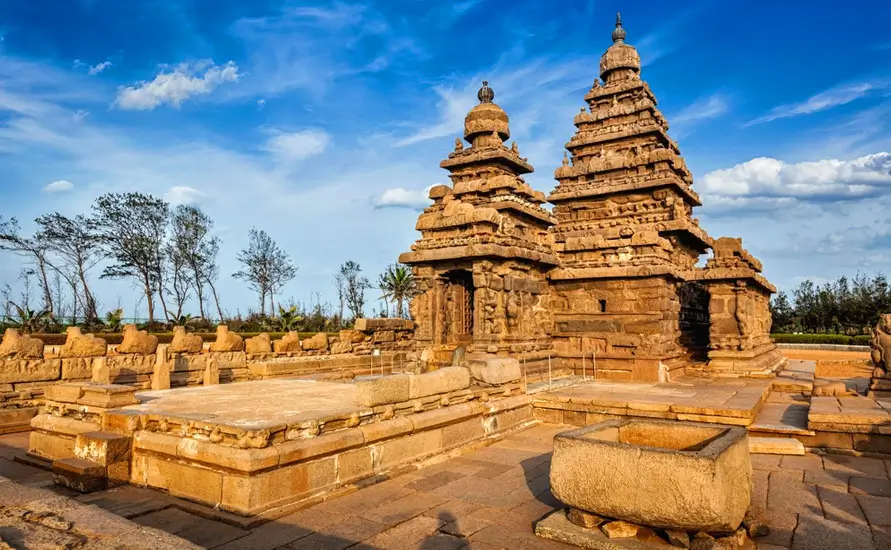
Leave Chennai very early so you reach Mahabalipuram in time for the low, golden light of sunrise on the Shore Temple. At this hour the granite shrines glow against the sea, and you share them with only a few walkers and fishermen. The temple was built in the early eighth century under the Pallava king Rajasimha and is part of the UNESCO-listed group of monuments here. Your guide shows you the small reclining Vishnu tucked between the two Shiva shrines, a line of seated Nandi bulls crowning the compound wall and the lion figures facing the waves. Breakfast follows at a beachside resort a short drive away.
Later in the morning, stand before the huge relief called Arjuna's Penance, crowded with gods, sages, animals and a pair of life-size elephants around a natural cleft once fed with water. Your guide points out the cat standing on one leg in imitation of a meditating sage, a witty detail many visitors miss. Nearby rise the Pancha Rathas, a set of five shrines cut from single boulders in five different styles, plus one or two of the rock-cut mandapas hollowed into the granite ridge above town. Sculpture workshops line the main road, and the clink of chisels on granite carries on the breeze as craftsmen shape new figures for temples across India.
Lunch over, the car sticks to the East Coast Road, with backwater lagoons, white salt pans and fishing hamlets on either side, and you pull into Pondicherry roughly 150 minutes after leaving. Your address in White Town is a heritage villa, typically a restored eighteenth- or nineteenth-century townhouse with tall shuttered windows, a central courtyard and a small pool among frangipani trees. Many such villas have only a handful of rooms, so service is personal and the atmosphere quiet. In the evening, walk with your guide to the seafront promenade, then return to the villa for dinner served in the courtyard by candlelight, with French and Tamil dishes on the menu. Overnight in Pondicherry.
Most visitors see only the pastel French side of Pondicherry, but the old town was always divided by a canal into two halves, and your heritage guide walks you through both. On the French side, a tidy grid of streets runs between colonial mansions behind high walls, the old town hall and a statue of Dupleix, the governor whose ambitions in the 1740s very nearly won India for France. Across the canal, the Tamil Quarter has its own architecture, where homes greet the street with thinnai, raised platforms where neighbors once sat to talk, plus carved doors and pillared halls, many of them restored through local conservation efforts in recent decades.
Along the way your guide explains how families on both sides of the canal lived, traded and worshipped, and how French, Tamil and Catholic traditions mixed over two centuries. You stop at Our Lady of Angels Church, an 1850s facade in pale pink and cream, and then at the ashram of Sri Aurobindo; its samadhi, heaped with fresh flowers, asks for quiet and no cameras. The Manakula Vinayagar temple nearby is known for its painted ceilings showing the many forms of Ganesha. For lunch, try a Creole meal combining French techniques with Tamil spices, a cuisine that is hard to find outside Pondicherry.
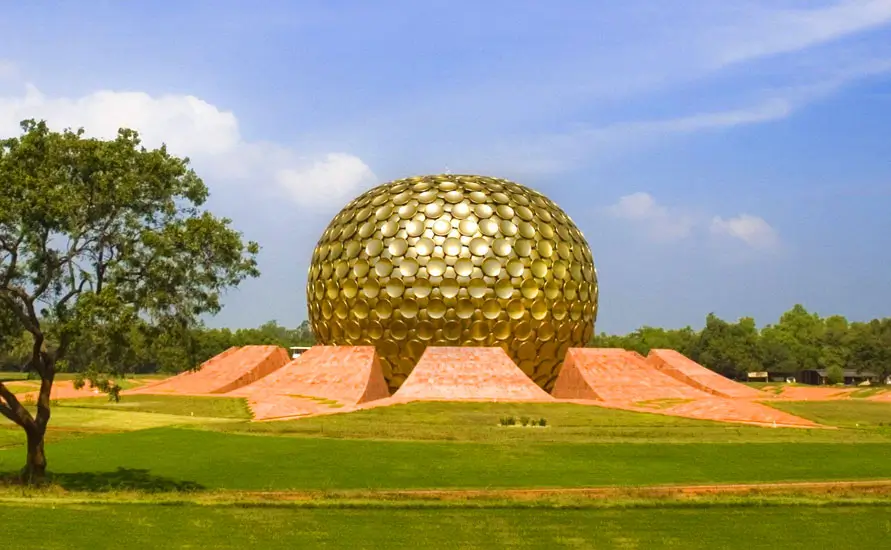
Afterwards, ride 12 km or so north to Auroville, begun in 1968 on barren red earth, where residents from dozens of countries have since planted whole forests. The visitor center screens a short introduction, and a footpath through planted forest leads to the viewpoint facing the Matrimandir, the golden sphere at the township's center. The meditation chamber within admits only visitors who have booked in advance, and places are few, so mention it when you confirm the trip. The Auroville boutiques sell organic food, handmade paper and natural fabrics. Back at your villa, you might book a massage in the courtyard spa before dinner. Overnight in Pondicherry.
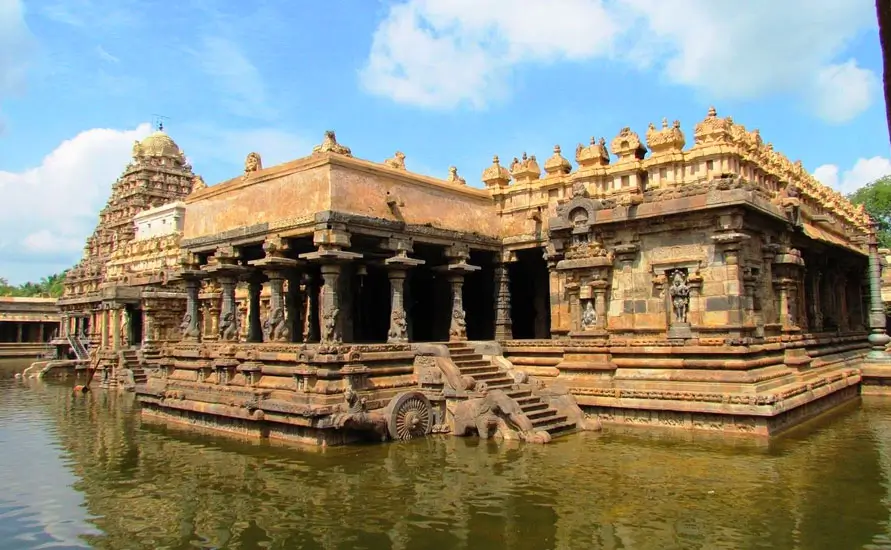
With roughly six hours of driving ahead, the car rolls out right after breakfast and heads south through the green Kaveri delta, which fed the Chola empire and still grows much of the state's rice. Three hours on, at Darasuram near Kumbakonam, stands the twelfth-century Airavatesvara Temple of Rajaraja Chola II, which UNESCO groups with Thanjavur and Gangaikonda Cholapuram as Great Living Chola Temples. Its stone surfaces are covered in miniature carvings of dancers, musicians and acrobats, some no larger than a hand, while the stone steps at the entrance give out distinct notes when struck lightly.
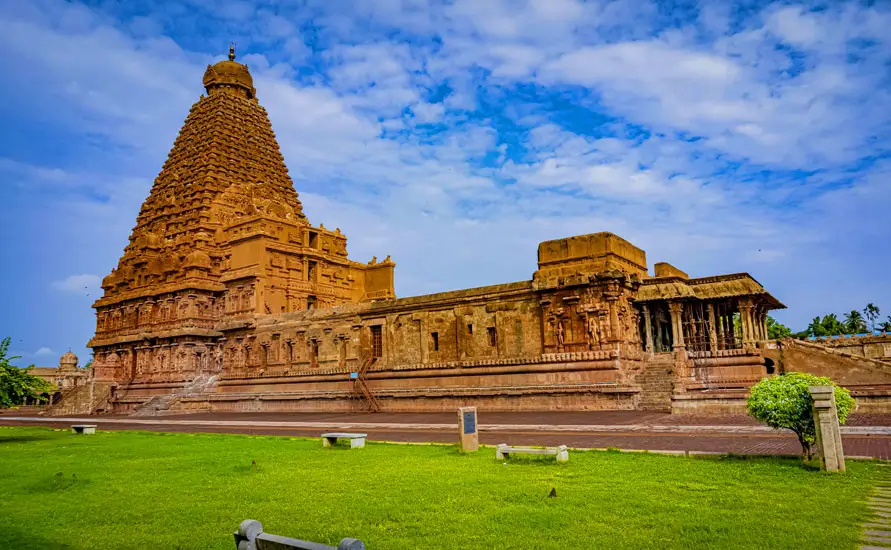
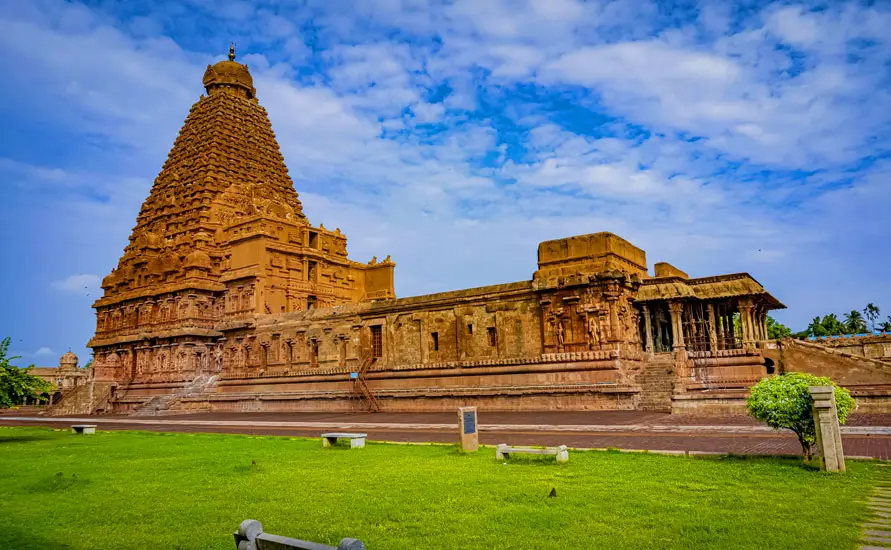
Another hour brings you to Thanjavur and the Brihadeeswarar Temple, which townspeople simply call Periya Kovil, the Big Temple, consecrated in about 1010 by the emperor Rajaraja Chola I. Some 66 meters of tapering granite rise over the sanctum, crowned by a huge capstone that historians believe was hauled up a long earth ramp. Look for the monolithic Nandi in its own pavilion, the faded fresco fragments in the corridors and the Tamil inscriptions that record, name by name, the hundreds of dancers and musicians on the payroll. Non-Hindus can enter the courtyards but not the sanctum. A late lunch at a good restaurant in town gives you a break before the final stretch of road south.
The last two hours of driving take you through dry farmland into the Chettinad region, homeland of the Nattukottai Chettiars, a community of bankers and traders who made fortunes across Burma, Malaya and Ceylon in the nineteenth and early twentieth centuries. Your heritage hotel near Karaikudi is a restored Chettiar mansion, with a grand entrance hall, pillared courtyards, Burma teak beams, Italian marble floors and Belgian glass mirrors. Rooms often feature antique four-poster beds and hand-painted tiles. Dinner arrives on a banana leaf, a Chettinad spread heady with black pepper, fennel and freshly ground spices. Overnight in Karaikudi.
Chettinad's villages are dotted with hundreds of grand homes, some still lived in, many locked and slowly decaying. First up is Kanadukathan, among the best-kept villages, to see the palace built by a wealthy Chettiar family and several other mansions whose owners permit visits. Behind ornate gateways, courtyards open one after another, lined with granite and teak pillars, framed family photographs and storerooms once filled with brass vessels and porcelain. Your guide explains how these houses were planned for extended families and huge wedding gatherings, with separate spaces for men, women, guests and cooking.
Next you visit a workshop in Athangudi village, where artisans make the colorful cement tiles that cover the floors of the Chettiar mansions. Each tile is made by hand: pigments are poured into metal frames placed on a sheet of glass, covered with a mix of cement and sand, and left to set and cure in water for several days. The glass gives the finished tile its smooth, glossy surface, without any firing or glazing. You can try making one yourself, and the workshop can ship orders abroad. Before lunch, stop at the Pillaiyarpatti cave temple, dedicated to Ganesha and carved into a rock face many centuries ago.
Afternoon hours belong to the mansion: a swim, a nap, or a slow wander through its corridors. In the late afternoon, join the head cook for a session on Chettinad cuisine, whose cooks rely on rarities such as kalpasi, a stone flower lichen, and marathi mokku, the dried bud of a kapok tree. You watch the preparation of a pepper chicken, a vegetable kuzhambu and a sweet paniyaram, then sit down to eat the results. If you have time, visit the antique and secondhand market in Karaikudi, where you can find brass lamps, carved doors, old enamelware and Burma teak furniture rescued from abandoned houses. Overnight in Karaikudi.
Breakfast in the courtyard is the last Chettinad ritual before the car turns northwest to Madurai, a trading city familiar to merchants from Rome, which has anchored Tamil literature and worship for well over two millennia. Home for two nights is a colonial-era property on a hill outside town, its gardens, stone buildings and wide views across the rooftops toward the temple towers. The air is a little fresher up here than in the old city below. Lunch on the terrace, then a siesta through the fierce midday heat, makes sense, because the evening program runs late tonight and is well worth staying awake for.
Around four, your guide leads you into the Thirumalai Nayak Palace, the 1636 residence of the same king who enlarged much of the Meenakshi complex. Perhaps a quarter of the original complex remains, yet its main courtyard still stops people in their tracks, surrounded by massive round pillars and arches decorated with stucco, a style that blends Dravidian and Islamic architecture. The dance hall has a domed ceiling painted with intricate designs. Your guide explains how the palace once covered a much larger area, with theaters, gardens, armories and private quarters, and how it fell into disrepair before restoration work began in the nineteenth century.
Around 9 pm, after dinner, head back into the old city: every night the Meenakshi Temple performs its palliyarai ceremony, putting the divine couple to bed. Sundareswarar, as Shiva is known in Madurai, rides in a silver palanquin, carried in procession to the chamber of the goddess Meenakshi, accompanied by drums, pipes and chanting priests, while worshippers crowd the corridors. Non-Hindus watch from the outer halls, as the inner sanctums are closed to them, and all phones and cameras get handed in at the deposit counters first. Your guide stays close to explain each stage of the ritual. Overnight in Madurai.
Come back to the Meenakshi Temple by daylight to take in the painted towers, the pillared hall said to hold close to a thousand carved columns, and the Golden Lotus Tank. The temple complex covers about fourteen acres and has fourteen gate towers, the tallest of them about fifty meters high and covered in thousands of painted figures. Your guide focuses on details many visitors overlook: columns that chime at a tap of the knuckle, the carvings of the divine wedding of Meenakshi and Sundareswarar, and the temple's own museum of bronzes and art inside the pillared hall. Phones and cameras stay at the counters.
After the temple, your guide takes you through the old streets around it, where tailors, brass workers and textile shops have traded for generations. A visit to the flower market is especially colorful in the morning, with mountains of jasmine, marigold, rose and tuberose being sold by weight, strung into garlands or packed for transport. The local jasmine, famed for its heavy perfume, carries a geographical indication tag like Champagne or Darjeeling tea. Afterwards comes the Gandhi Memorial Museum, occupying a seventeenth-century queen's palace; its galleries trace the freedom struggle and keep the cloth, still stained, that Gandhi wore on the evening he was killed in 1948.
Spend the afternoon by the hilltop pool, or call on a local handloom weaver producing Madurai cotton saris, known as sungudi, with their tie-dyed dots. In the evening, consider an optional food walk with a local guide, sampling jigarthanda, Madurai's chilled milk drink thickened with almond gum and topped with ice cream, as well as parottas and kothu parotta, the chopped-up flatbread fried on a griddle with a loud clatter of metal spatulas. Madurai is known as the city that never sleeps, and its street food scene is busy late into the night. It is your final night in Tamil Nadu. Overnight in Madurai.
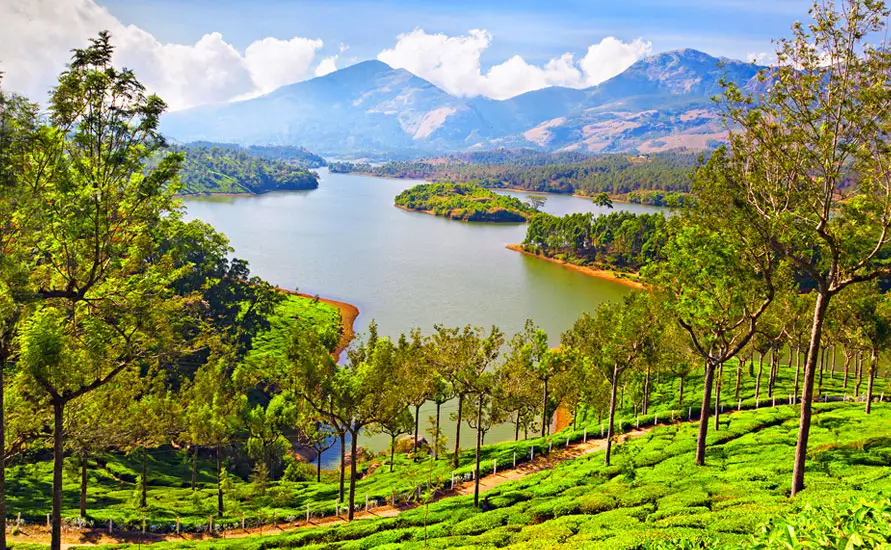
Crossing from Tamil Nadu into Kerala can be done two ways. The scenic option is a full-day drive west through Theni and over the Western Ghats, where the road climbs through cardamom hills and tea gardens before dropping through rubber plantations toward the coast, taking about seven hours with stops. Your driver breaks the drive with a coffee stop in the hills and a leisurely lunch at a plantation bungalow. Alternatively, we can arrange a domestic flight from Madurai to Kochi via Chennai or Bangalore, which saves road time but involves a connection.
Whichever you pick, Fort Kochi comes into view toward the end of the day, and you check in to your next heritage hotel, a converted colonial waterfront warehouse where spices were once stored before being shipped to Europe. Exposed beams, whitewashed walls and large windows facing the harbor give the rooms character, and the property often displays contemporary art from Kerala. After the long day, enjoy a quiet dinner on the terrace, watching the ferries and cargo ships pass by in the channel. Our local team briefs you on tomorrow's walking tour and leaves you to rest. Overnight in Kochi.
A morning walking tour with your heritage guide traces the layers of Portuguese, Dutch and British rule in Fort Kochi. At St. Francis Church, a gravestone marks Vasco da Gama's first resting place before Portugal reclaimed his remains, the Dutch cemetery with its weathered tombstones and the grand bungalows built by colonial merchants along the waterfront. Your guide also shows you some of the smaller details that many visitors miss: old shop signs in multiple languages, the wells and pump houses of the Dutch era, and the warehouses where pepper, ginger and cardamom were weighed and packed for shipment to Europe.
Drive a short distance to Mattancherry for the Mattancherry Palace, whose murals of the Ramayana and the Puranas are among the finest in Kerala. In Jew Town, a short walk off, stands the Paradesi Synagogue of 1568, founded by Jews who had come from Spain, Portugal and the Middle East. Its floor of blue-and-white Canton tiles is laid so that no two match, set beneath a canopy of Belgian glass chandeliers. Friday is a closed day at both, while the synagogue adds Saturday and Jewish festival closures, so your two Kochi days are arranged with those dates in mind. The surrounding streets are full of antique and craft shops, and spice merchants still trade from old warehouses with heavy wooden doors.
In the afternoon, a private session with a Kerala mural painting artist introduces you to an art form that decorates the walls of temples and palaces across the state. The artist explains how traditional painters used natural pigments made from minerals, plants and soot, and shows you the steps of sketching, filling colors and outlining the figures with fine brushes. You can try painting a small panel to take home. In the evening, attend a short Kathakali performance or relax at your waterfront hotel, where the kitchen might send out a peppery duck roast from the old Christian households or seer fish in coconut gravy. Overnight in Kochi.
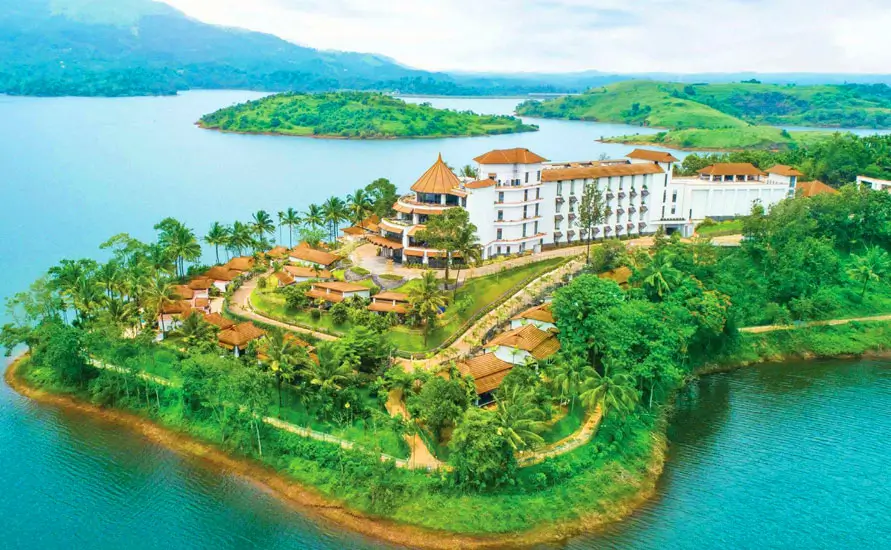
Barely two hours southeast of Kochi, Kumarakom sits where the paddy country meets Vembanad Lake. Your heritage stay here is a resort built from old Kerala homes that were dismantled in villages around the state and carefully reassembled on the lakeshore. The cottages show off traditional architecture: steep clay-tiled roofs, carved wooden pillars, polished laterite floors and courtyards that let in sun and monsoon rain alike. Many have their own garden or plunge pool, and the grounds are crossed by small canals and paths shaded by coconut palms. Staff explain the history of each building, some of which are more than a century old.
After lunch, the resort's heritage guide gives you a tour of the property, explaining the features of the traditional Kerala home, or tharavad, that housed large joint families under a matrilineal system in some communities. You learn about the nadumuttam, the central courtyard that brings in light and rainwater, the wooden granaries and the prayer rooms where lamps were lit every evening. In the late afternoon, board a private motorboat for a sunset cruise on the lake, watching fishermen and duck farmers on the water. The changing light over the lake is especially beautiful at this hour.
In the evening, the resort may stage a performance of Kerala's classical arts, perhaps Mohiniyattam, a swaying solo dance historically performed by women, or scenes from Kathakali. Dinner is served in the resort's restaurant or in your cottage courtyard, with dishes from the region's Syrian Christian and Hindu traditions, for instance karimeen pollichathu, pearl spot fish baked inside a banana leaf, or lacy appam with a mild stew. Night on the lake is hushed, broken now and then by croaking frogs or a fisherman's oar. The resort's Ayurvedic center can schedule a consultation for tomorrow if you wish. Overnight in Kumarakom.
Set an alarm for first light, when a local boatman poles a slim canoe into Kumarakom's back channels as mist peels off the water. You pass houses, temples and churches on the banks, and see villagers starting their day by washing, fishing or rowing to work. Birdlife is often active at this hour, with kingfishers, herons and egrets feeding along the edges, though sightings vary. The quiet of the morning is a good contrast to the busier lake later in the day. Return to the resort for breakfast served in a courtyard or on the lakeside lawn, with Kerala specialties such as puttu and kadala curry.
Mid-morning, cross a few kilometers of paddy to Aymanam, whose riverside setting Arundhati Roy borrowed for her Booker-winning 1997 novel. Your guide walks you through the village, picking out the riverbank, family homes and church spires that readers will recognize from the book, and explains the local belief that the apostle Thomas brought Christianity to this coast in the first century. You may visit a local home or meet villagers who make coir products or work in the paddy fields. The walk gives you a sense of everyday life away from the resorts and the houseboat routes.
The afternoon is reserved for relaxation at your heritage resort. Many guests choose an Ayurvedic treatment at the resort's center, beginning with a consultation with a doctor who recommends a therapy based on your constitution. Popular options include a herbal oil massage or a herbal steam bath, then a lazy hour by the pool or in a hammock strung between palms. For a last evening, the staff lay a private table on the lakeshore with candles and traditional lamps, and a menu featuring dishes from the trip's different regions. Few settings could close a holiday of historic houses more fittingly. Overnight in Kumarakom.
Enjoy a final breakfast at the resort and check out at a comfortable pace, depending on your flight time. Two hours of road separate Kumarakom from Cochin International Airport, and the car leaves early enough to put you at check-in three hours ahead of any international flight. Evening flyers may prefer to keep their cottage into the afternoon or rest in a day room by the airport, both available for a supplement. Spices, cashews and banana chips make easy gifts, and the driver knows reliable shops along the highway.
Over thirteen days you have stayed in colonial garden houses, a French villa, a Chettiar mansion, a hilltop bungalow, a spice warehouse and a lakeside resort made from old Kerala homes, each telling part of South India's story. Call us any time before check-in if something comes up, and when Karnataka's palaces or the Munnar tea slopes start to tempt you, we will gladly plan the sequel. Thank you for letting us share these houses with you.
Your Journey
N.S. Rathore & Mrs. Omlata Rathore · Managing Director
We still read every enquiry ourselves. Tell us the places you liked and our planners will send a day-by-day route with drive times and a clear price.
Every package can be customised and no pressure to book. A planner from our office replies within 24 hours with a route written for your group.
Fill this in and your planner will send a first draft itinerary.
Explore more
Kerala Backwaters Escape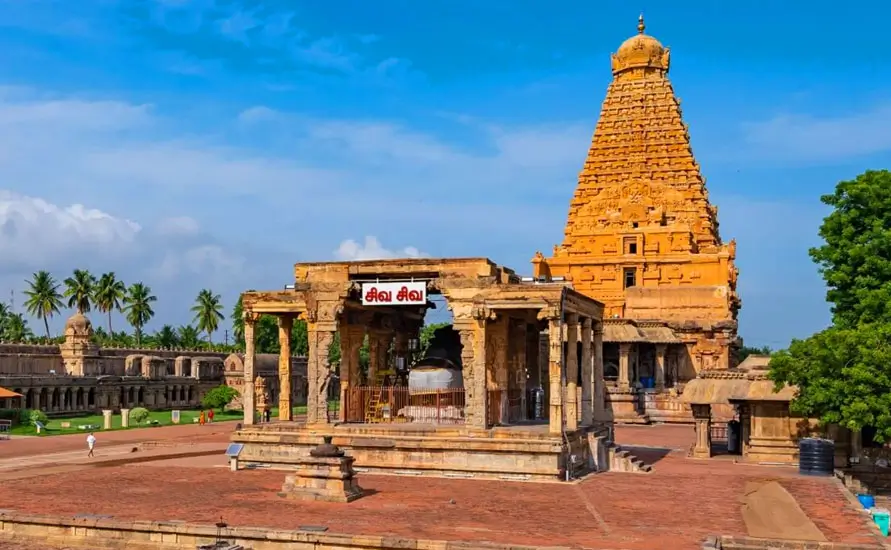 Kerala Backwaters Escape
 Kerala Backwaters Escape
 Kerala Backwaters Escape
 Kerala Backwaters Escape
 Kerala Backwaters Escape
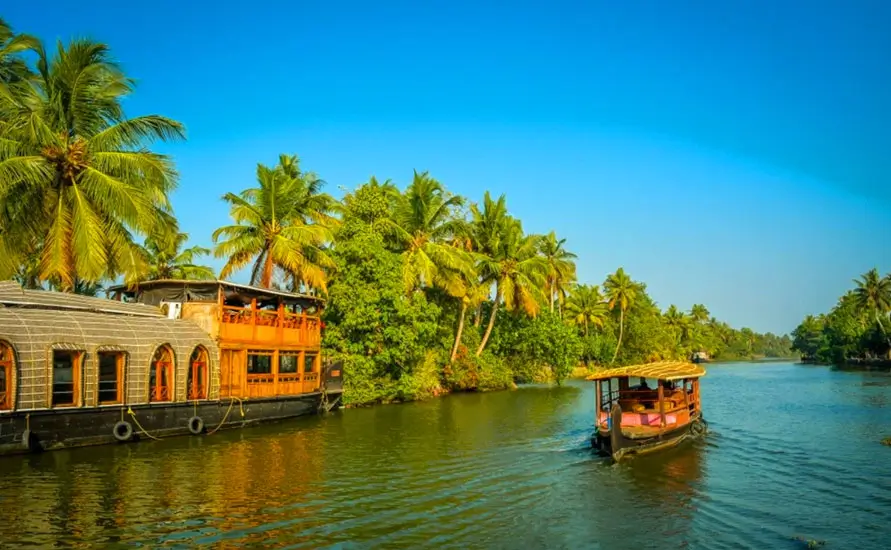 Kerala Backwaters Escape
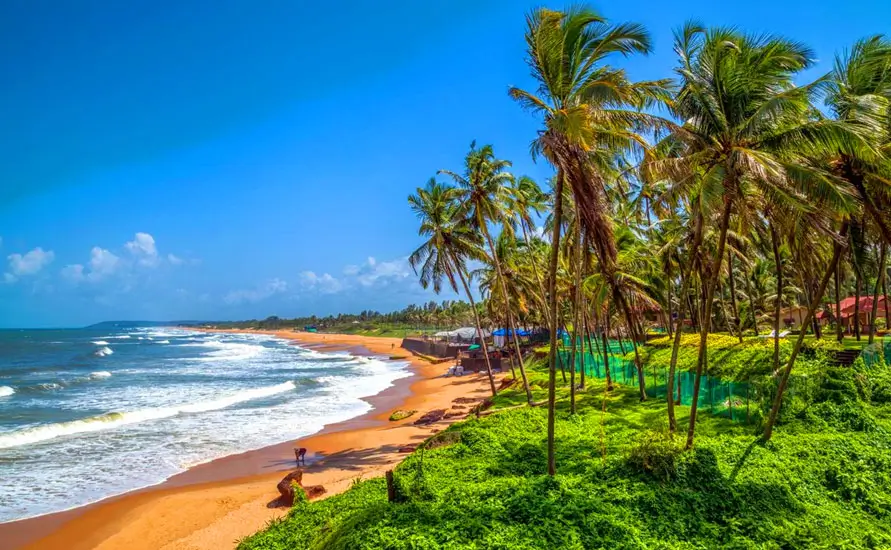 Kerala Backwaters Escape
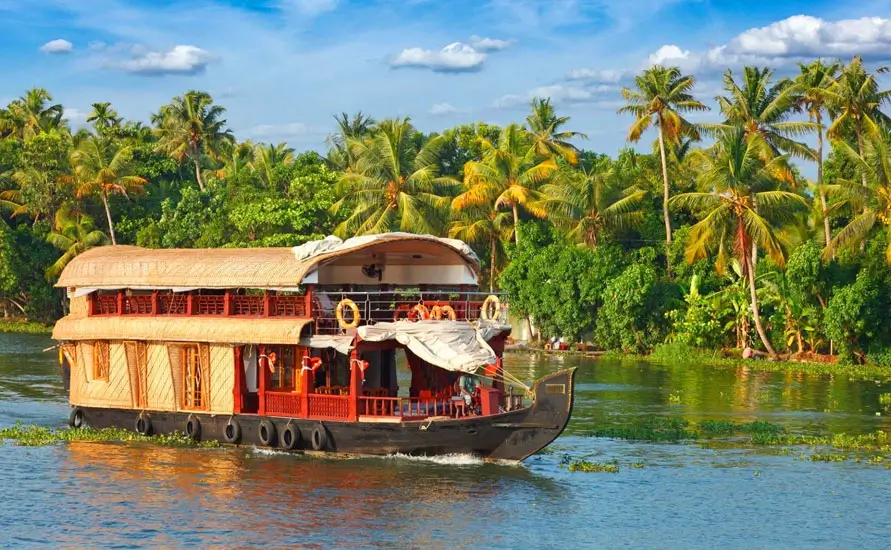 Kerala Backwaters Escape
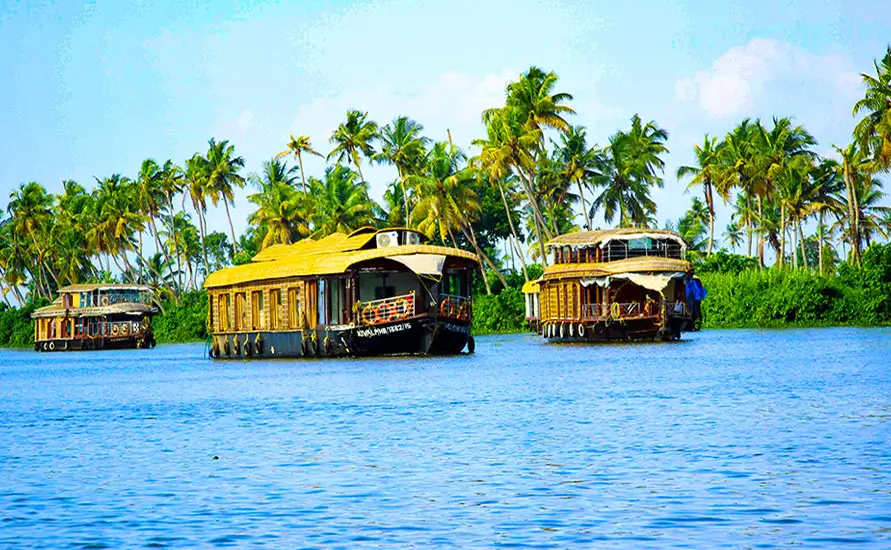 Kerala Backwaters Escape
 Kerala Backwaters Escape
 Kerala Backwaters Escape
 Kerala Backwaters Escape
 Kerala Backwaters Escape
 Kerala Backwaters Escape
 Kerala Backwaters Escape
 Kerala Backwaters Escape
 Kerala Backwaters Escape
 Kerala Backwaters Escape
 Kerala Backwaters Escape
 Kerala Backwaters Escape
 Kerala Backwaters Escape