 Kerala Backwaters Escape
Luxury South India Tours
Goa – Kochi – Kumarakom – Marari
At a glance
Two of India's best-loved coastlines sit only an hour apart by air, yet they feel like different countries. Our luxury Goa and Kerala holiday pairs the Portuguese-flavored shore of Goa, with its whitewashed churches, cashew orchards and long sandy bays, with the green water world of Kerala, where lagoons, canals and coconut groves reach almost to the Arabian Sea. Over eleven nights you stay in a South Goa beach resort, a restored heritage property in Fort Kochi, a lakeside five-star resort in Kumarakom, a private luxury houseboat and a quiet villa resort on Marari Beach.
The pacing is deliberately slow. Goa gets four nights, so the Old Goa churches and the mansions of Salcete fit around long lunches and lazy afternoons rather than the other way round. A direct domestic flight carries you south to Kochi, and from there no transfer runs longer than about two hours. A chauffeur-driven premium car meets you at every airport, private English-speaking guides lead the heritage days, and the backwater stretch includes a sunrise canoe outing, a village walk and a full night on Vembanad Lake with your own crew and cook.
Our planners shaped this Goa and Kerala tour package around travelers flying in from Boston, Birmingham, Berlin or Brisbane, plus NRI families after a polished beach-and-backwater break rather than a temple circuit. Every element is private and can be adjusted: add a night, swap a sightseeing morning for an Ayurveda program, or upgrade to a pool villa. November to March brings the driest weather on both coasts, while the monsoon months suit guests who like green landscapes, quiet resorts and traditional Kerala treatments.
Your ticket decides the pickup point: Goa runs two airfields, the older Dabolim near the port and the newer Mopa terminal in the northern hills. Someone from our Goa office greets you just beyond customs, name card raised, while your chauffeur loads the luggage into a premium air-conditioned car stocked with chilled water and cold towels. From Dabolim the drive to the southern beaches takes roughly forty-five minutes; from Mopa allow about two and a half hours, mostly on the new expressway. Before you set off, your host hands over a printed program, local SIM card advice and a 24-hour contact number.
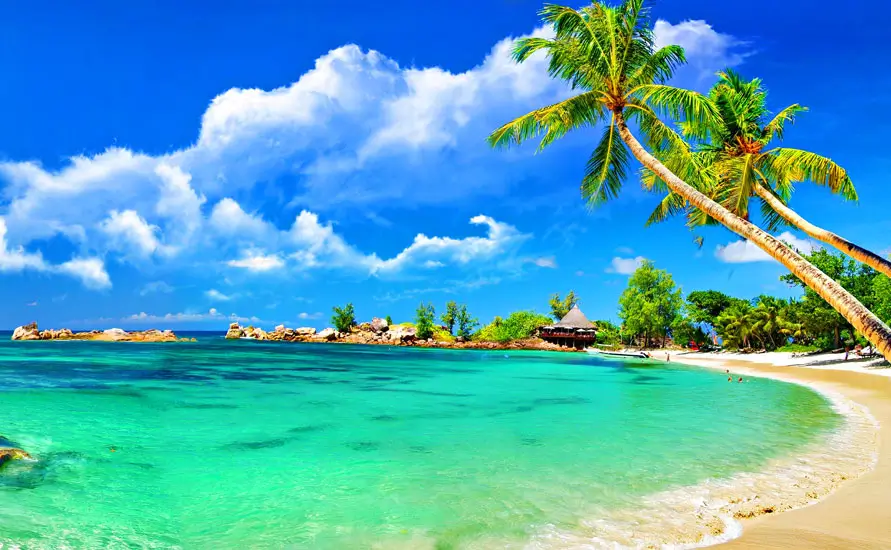
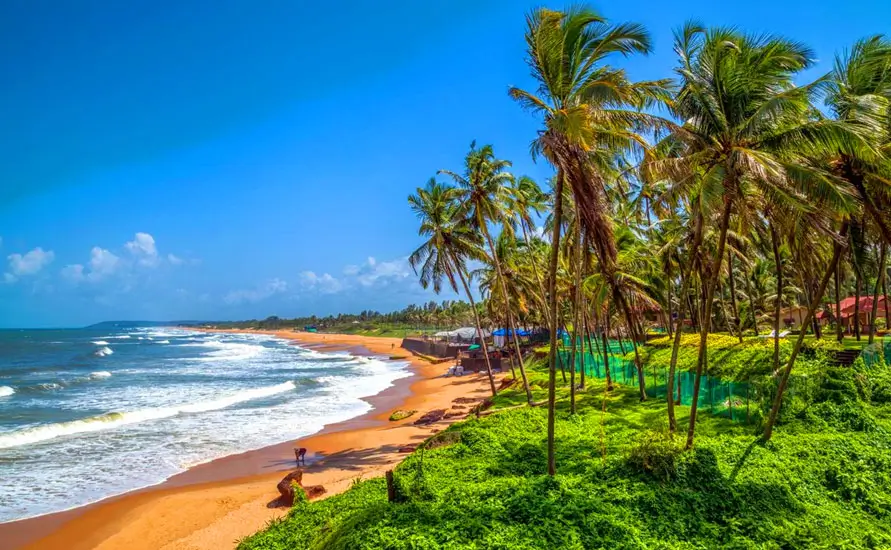
Your base for the next four nights is a five-star resort on the long, quiet sands of South Goa, where the beaches of Cavelossim, Mobor and Benaulim are far calmer than the party strips of the north. Check-in is usually from 2 pm, and early check-in can be guaranteed in advance for guests landing on overnight flights from Europe, the Gulf or North America. The resort team walks you through the facilities, from the spa menu and the pool cabanas to the private beach access, and your room or villa is ready with fresh fruit and a welcome drink made from local kokum or tender coconut.
We keep this first afternoon empty on purpose, since long-haul fatigue tends to catch up around 4 pm. A swim, a nap and a late-afternoon walk along the waterline are the best cure for jet lag, and the sunsets over the Arabian Sea here are reliably good from November to April. For dinner, the resort's Goan restaurant is a gentle introduction to the local kitchen: prawn balchão, chicken cafreal and bebinca, a sixteen-layer pudding of coconut milk, egg yolk and jaggery that grandmothers bake for Christmas. Expect a quick phone call from your guide around dinner time to fix tomorrow's start. Overnight in South Goa.
Sixteenth-century sailors called Old Goa the Rome of the East, a capital whose population once rivaled Lisbon's, until epidemics and a silting river drove almost everyone away by the 1700s. Its surviving religious buildings carry a joint UNESCO listing, usually shortened locally to the Old Goa churches. Stop one is the Jesuit-built Basilica of Bom Jesus, home to the relics of St. Francis Xavier, whose silver coffin sits high above a Florentine marble mausoleum sent from Tuscany in the 1690s. The church's laterite façade was stripped of its lime plaster long ago, which is why it looks red-brown rather than white.
Facing it over a broad green is the Se Cathedral, built over roughly eighty years for St. Catherine of Alexandria and known for its Golden Bell, whose deep tone was once used to announce the sentences of the Inquisition. Your guide then leads you to the domed Church of St. Cajetan, designed by Italian Theatine priests, and then to St. Augustine's crumbling bell tower, a lone four-story shell that is all that remains of a once-vast monastery. Modest dress is expected inside the working churches, and the morning is the coolest and quietest time to walk between them.
After lunch at a riverside restaurant you drive twenty minutes to Panaji, the state capital, and walk through Fontainhas, its old Latin quarter. Homes here wear coats of saffron, cobalt and lime wash, and many owners still fix glazed tile plaques with the family name beside the front door. Halfway along, a little white chapel to St. Sebastian holds a crucifix with open eyes, and a family bakery nearby still sells warm poi, the bran-flecked Goan bread roll. By late afternoon your chauffeur returns you to the beach, about an hour south, for a free evening at the resort. Overnight in South Goa.
The villages of Salcete in South Goa hold some of the grandest private houses in India, built by landowning families who prospered under Portuguese rule and filled their homes with Macau porcelain, Belgian mirrors and rosewood furniture. Thirty minutes inland lies Chandor, where descendants of the original families still live in parts of the long, arcaded Braganza House. A family member or caretaker usually shows visitors round the ballroom, the library and the private chapel, and a small donation toward upkeep is customary. Visits are by arrangement, so we confirm your time a day ahead.
From Chandor the road winds through paddy fields and coconut groves to Loutolim, a village of old mansions and quiet chapels, where you can visit a restored family home that is now run as a small museum of Goan domestic life. Rooms are laid out as they would have been a century ago, with kitchen pots, rice storage bins and bedroom furniture brought from Europe and China. Your guide explains how Goan Catholic families blended Konkani customs with Portuguese faith, which is why a Goan wedding can include both a church Mass and a turmeric ceremony the evening before.
Lunch is the highlight of the day: a private, home-style meal hosted by a Goan family in their ancestral house, with dishes such as sorpotel, fish curry with red rice, vegetable caldine and coconut-based sweets, served at a long dining table under slow ceiling fans. Your hosts are happy to talk about village life, the feast-day calendar and how the region has changed since 1961, when Goa joined India. Back at the beach by late afternoon, you have a free evening for the pool, the spa or simply a long drink on the terrace. Overnight in South Goa.
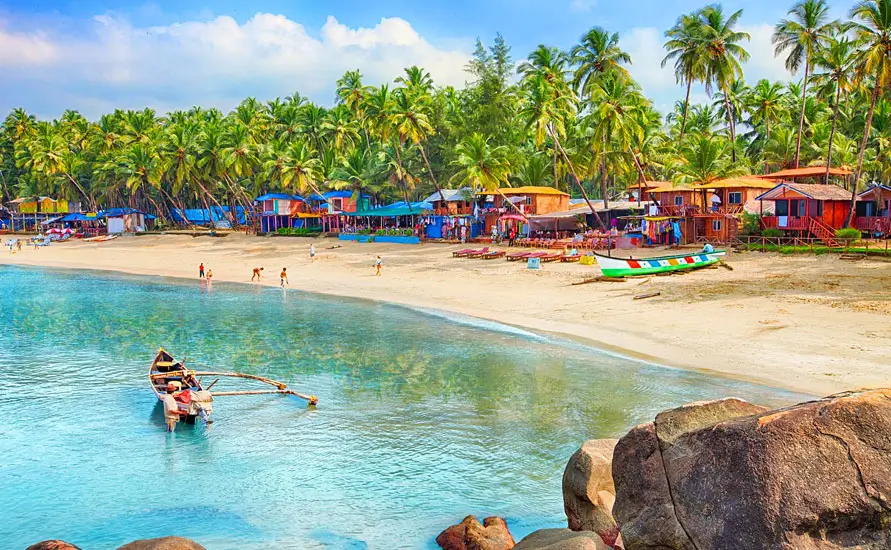
Sixty minutes of coast road deliver you to the cliffs of Cabo de Rama, where red stone ramparts guard a headland that legend links to Rama's years of exile. Inside the walls stand rusting cannons and a tiny church of St. Anthony, and the sea views from the western bastion repay the visit, especially in the softer light of mid-morning. Paths along the ramparts are uneven, so comfortable shoes help. Your chauffeur then follows the coast to Palolem, a crescent bay framed by coconut palms and rocky points, where you can walk the beach or sit at a shack for a fresh lime soda.
Lunch is at a small seafood restaurant near Agonda or Palolem, where the morning boats typically bring in kingfish, pomfret or tiger prawns, cooked in recheado masala or simply grilled with garlic butter. The far south of Goa is more relaxed than the north, with fewer crowds and more fishing boats than jet skis, and there is time to stretch out on the sand before heading back. Guests who prefer a quieter afternoon can return to the resort directly after lunch and spend a few hours by the pool before the evening outing.
Around 4:30 pm a private motor yacht picks you up at a landing on the Sal river close to Mobor and heads for the estuary mouth. The crew serves chilled drinks and light bites while the boat drifts past fishing villages, mangrove banks and the white sand spit at the river mouth. On many evenings small groups of dolphins are seen feeding offshore, but they are wild animals and sightings can never be guaranteed. You are back at the resort in time for a farewell Goan dinner, perhaps at a table set up on the sand if the weather allows. Overnight in South Goa.
Following a final beachfront breakfast, your chauffeur takes you to the airport for a nonstop hop of roughly seventy-five minutes down to Kochi. Window seats on the right side often reward you with views of river mouths, lagoons and long pale beaches along the Konkan and Malabar coast. At Cochin International Airport a second chauffeur and premium car take over, and this driver remains with you until your final departure. Getting to Fort Kochi takes about ninety minutes, crossing the mainland city of Ernakulam and then Willingdon Island to the tip of the old port.
Home for two nights is a heritage hotel carved out of an old spice trader's premises, where teak floors, a courtyard pool and lofty ceilings keep the spirit of the waterfront warehouses alive. The town itself is compact and easy to walk, and the afternoon is free to settle in. Plenty of guests spend the afternoon wandering the colonial lanes on foot, where art cafés and boutique shops now occupy buildings that once stored pepper, ginger and coir before they were shipped to Europe. Afternoon tea in the hotel courtyard, under an old rain tree, is a gentle way to adjust to Kerala's humid air.
Toward sunset your guide meets you for a private harbor cruise around the mouth of Kochi's port, one of the busiest natural harbors on India's west coast. From the water you see the cantilevered fishing nets from a new angle, with Vypeen island on one side, container cranes on another and fishing boats returning to the old quay. The cruise ends near the town, and dinner might be at a waterfront grill that lets you pick a fish from the counter and name your preferred masala, from a fiery red pollichathu wrapped in banana leaf to a mild green mango curry. Overnight in Kochi.
Kochi's story is one of merchants, and your private historian guide tells it through buildings rather than dates. The morning walk begins at the Vasco da Gama Square and moves through the old town to St. Francis Church, where the Portuguese navigator's first resting place is marked inside, and past the walled Dutch cemetery with its weathered 18th-century headstones. Your guide traces how each wave of foreign merchants, from Arab dhow captains to British shipping agents, added its own layer to this small peninsula, all for the sake of black pepper that Venetian buyers prized above almost any other spice.
Late morning brings you to Mattancherry, whose palace keeps murals of the Ramayana painted in deep reds and greens for the Kochi royal family. Nearby, in the narrow street known as Jew Town, the Paradesi Synagogue still serves the tiny local Jewish community. Mind the calendar in Mattancherry, since Friday shuts the palace and Friday, Saturday plus Jewish holy days shut the prayer hall in Jew Town, which is why the sequence of your two Kochi days can flip depending on the calendar. After the visits there is time to browse the antique godowns and spice merchants, or to stop for lunch at a café set in a former ginger warehouse.
After lunch, retreat to the hotel pool or book a massage for a couple of quiet hours. Come early evening, a compact local playhouse hosts your Kathakali show, arriving about an hour before the show to watch the performers prepare their faces with rice paste and mineral colors, a slow ritual that is half the attraction. Before the drums start, a narrator demonstrates the main mudras and eye signals, which makes the plot from the epics easy to follow. Afterwards a quiet dinner at your hotel's courtyard restaurant rounds off the city part of the trip. Overnight in Kochi.
A short morning drive takes you inland and south to Kumarakom, a low-lying group of islets where Kerala's biggest lake, Vembanad, laps at village gardens. The road passes through small towns where church bells, temple loudspeakers and shop radios compete in the morning, then narrows as the landscape turns to paddy, rubber trees and water. If you are curious, your chauffeur will pull over at a village toddy shop or a stall frying plantain chips in huge iron woks. The drive usually takes about two hours, depending on traffic leaving the city.
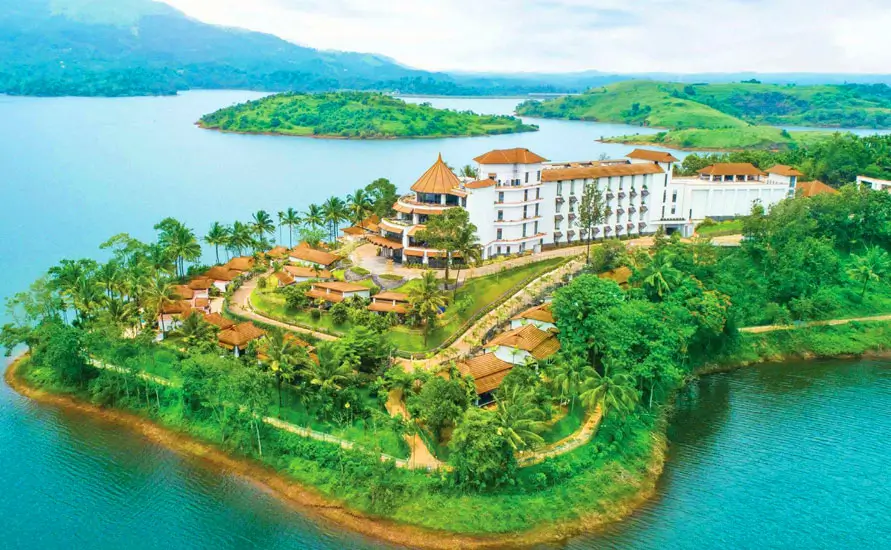
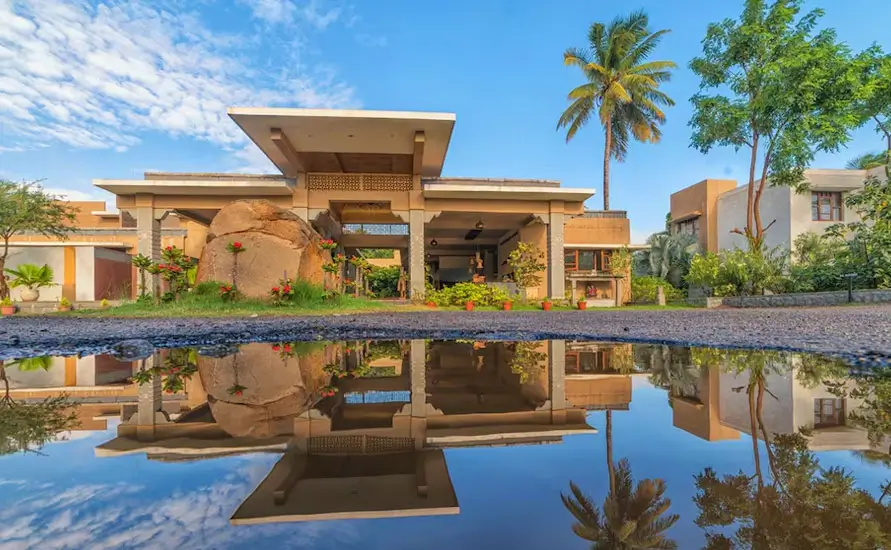
Waiting at the end of the road is a lakeside five-star resort in Kumarakom, set among coconut palms and canals, with cottages or pool villas looking straight onto the water. Many of the best properties here have rebuilt old Kerala tharavad houses or used traditional sloping tiled roofs and carved wooden pillars, so the setting fits the landscape. After check-in, lunch is served at the resort, often a lighter Kerala meal with appam, vegetable stew and grilled pearl spot fish caught in the lake itself. Spend the hottest hours by the infinity pool or in a shaded hammock by the water's edge.
Around five o'clock you board a resort launch for a sunset ride on the open water, the water turning bronze and then grey as men in narrow wooden canoes throw circular nets and flocks of egrets fly back to roost. Returning, the boat skirts the mouths of the little canals you will paddle tomorrow. In the evening, many resorts in Kumarakom offer a short cultural program, perhaps a short classical dance by a local troupe or a chenda drum recital, before dinner by the water. The silence of the lake at night is a marked change from the busy streets of Kochi. Overnight in Kumarakom.
An alarm at 5:45 am is worth it for first light at the Kumarakom Bird Sanctuary, once a rubber estate and today a shady lakeshore reserve where cormorants, darters, herons and kingfishers nest. Migratory species often arrive between November and February, while resident birds are around all year, although sightings vary from morning to morning and are never guaranteed. Your naturalist carries spare binoculars and a field guide with local bird names. Breakfast waits at the resort when you get back around eight, and the chef can fry fresh dosas to order on the lawn.
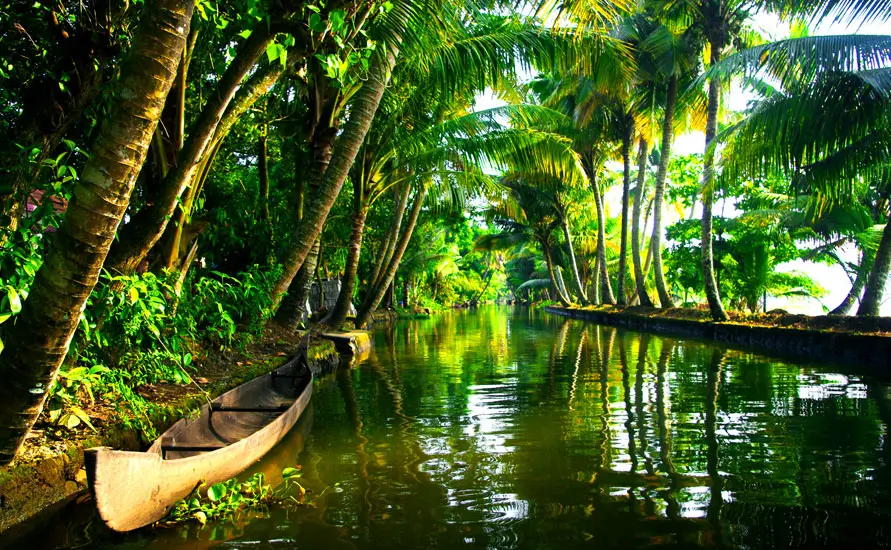
Later in the morning a local boatman paddles you through the narrow village canals in a small country canoe, the only way to reach some of the homes on these islands. You glide past coir-making sheds, small chapels and family courtyards, and stop to see how farmers manage the paddy polders that lie below lake level, held back by earth bunds and pumps. If the timing works, you can visit a family who rear ducks or tap toddy, and your guide translates as they explain their daily routine. The pace is calm, and the canoe goes where motorboats cannot.
After lunch, keep things slow with an Ayurveda session at the resort spa, where a qualified practitioner can recommend an abhyanga oil massage, a shirodhara forehead treatment or a short consultation about your diet and sleep. Longer wellness programs need several days, so ask us if you want to add nights for one. In the evening a private cooking demonstration with the resort chef shows how Kerala fish curry gets its sour depth from kudampuli, a dried fruit used across this coast, and you dine on what you have helped prepare. Overnight in Kumarakom.
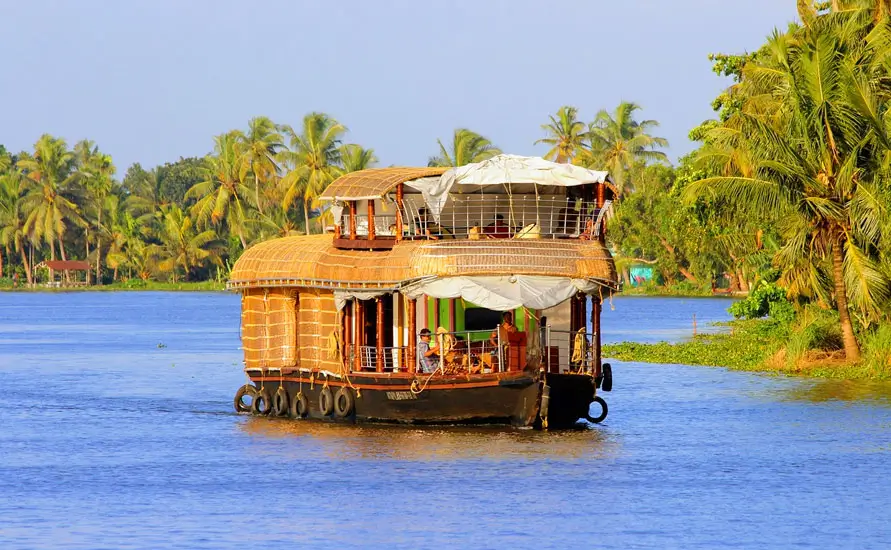
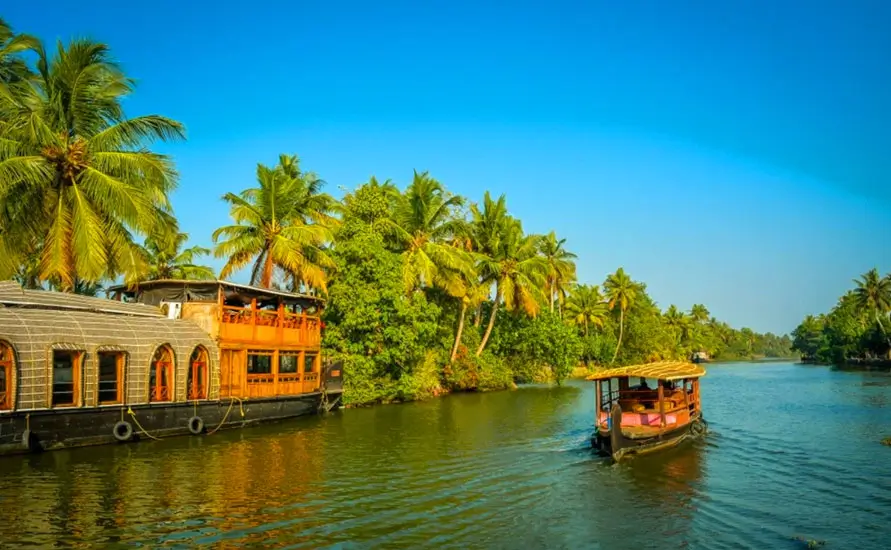
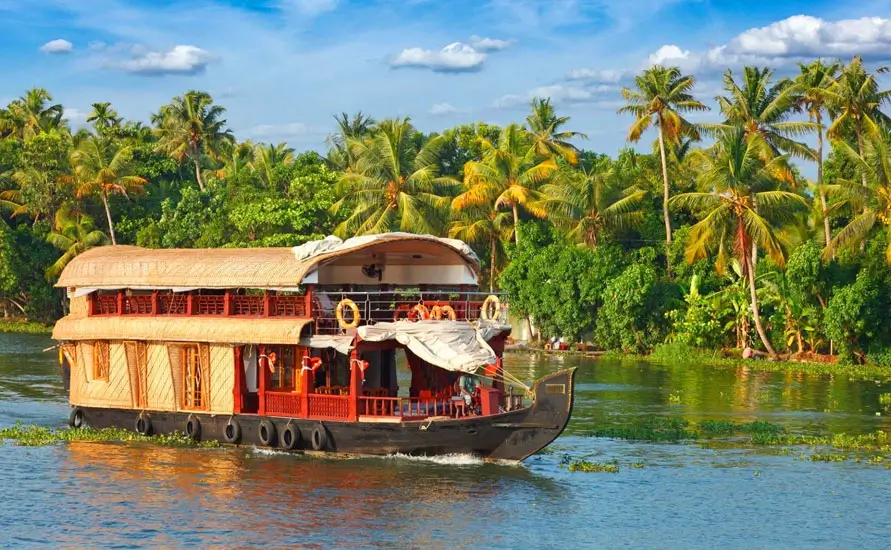
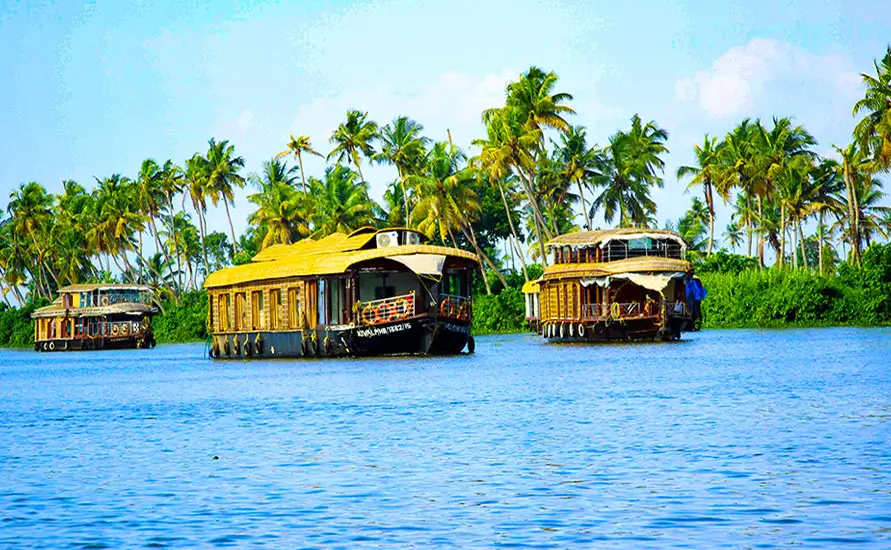
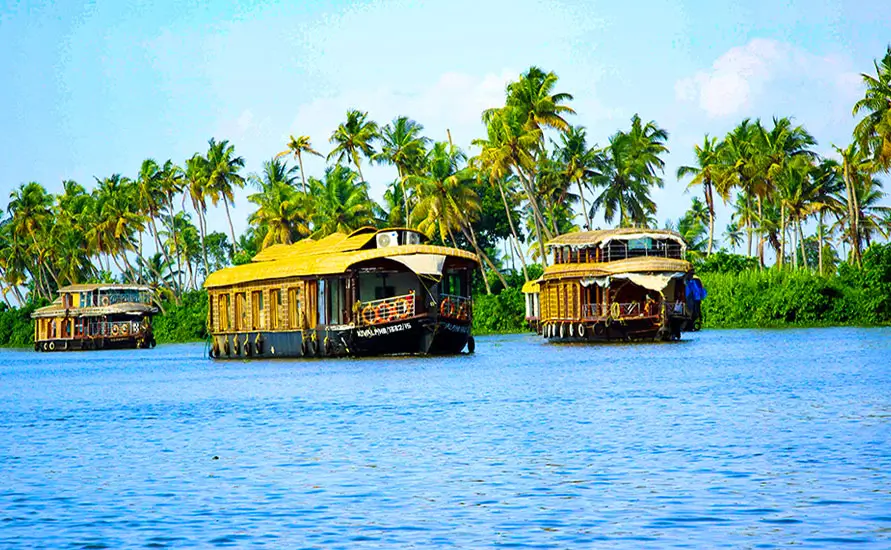
Checkout is unhurried today, because your private luxury houseboat only boards around midday from a jetty near the resort. These boats follow the design of the old kettuvallam rice barges, built with jackwood hulls and roofed in woven palm and bamboo, but the premium versions now include air-conditioned bedrooms with attached bathrooms, an open upper deck and a dining area facing the water. Your crew of three or four handles everything, from steering and mooring to cooking, so the day belongs entirely to you and your group. Only your party is on board, which means no shared decks and no fixed menu.
Lunch is served soon after departure, a full Kerala spread with rice, a coconut-based fish curry, crisp vegetable thoran, pickles and papadam, adjusted to the spice level you prefer. The boat then heads across the open water of Vembanad and into the wider canals toward the Kuttanad farmland, where rice is grown on reclaimed land below sea level. Along the way you pass small churches with painted façades, schoolchildren crossing by ferry and floating shops selling everyday goods. Ask the captain to pull in at a village landing whenever you fancy stretching your legs.
Kerala rules end every houseboat's cruising day around sunset, and the crew picks a calm spot by a paddy bank or a quiet village edge. Sweet tea and pazhampori, plantain fritters, arrive at dusk, and later the cook lays out a candle-lit dinner, perhaps a pepper chicken fry or prawns in a thick coconut gravy. Phone signals are usually good, but most guests prefer to sit outside and listen to the frogs and the occasional passing canoe. A night on the water is one of the most memorable parts of any luxury Kerala backwaters stay. Overnight on the houseboat.
Morning on the lake starts early, with mist sitting low over the water and fishermen already setting nets from their canoes. Appam with egg roast and a plate of pineapple and papaya come to the deck as the boat motors back, and you go ashore at about 9 am. We can arrange for the boat to finish on the Alleppey side of the lake, which shortens the road transfer to Marari to about an hour. The crew work long shifts, so a tip at the end is customary and gratefully received.
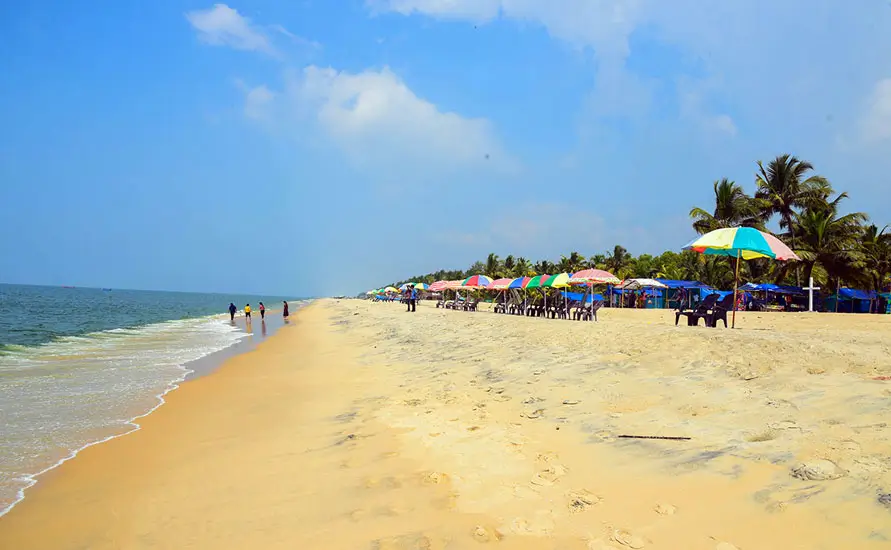
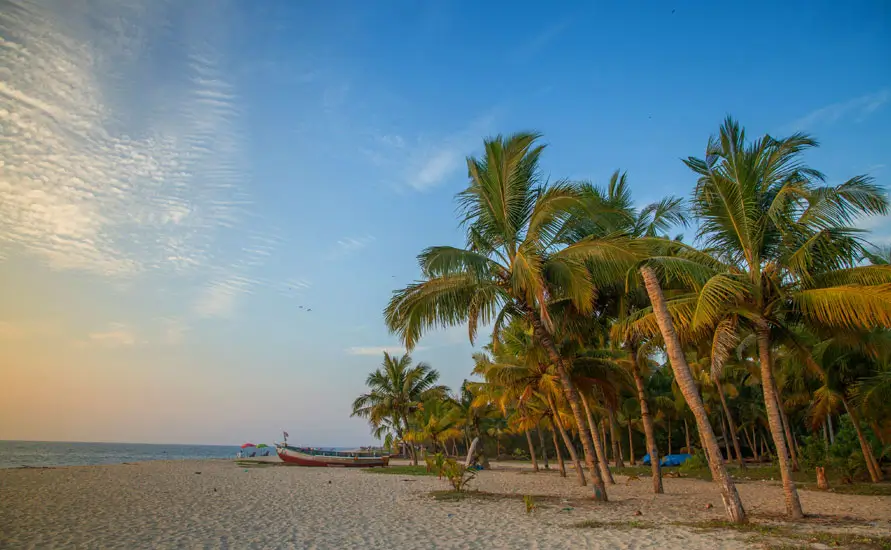
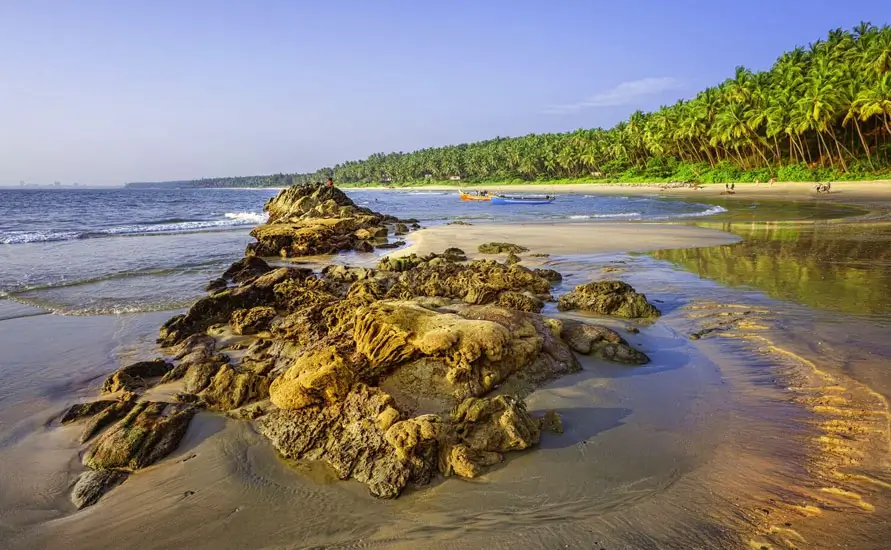
Marari Beach, near the fishing village of Mararikulam, is everything the busier Kerala resorts are not: a long golden shore with very few buildings, fishing craft resting on the beach and coconut groves running right down to the beach. For the final two nights you move into a beach villa resort with walled gardens or plunge pools, arranged as low cottages with sloping clay-tile roofs and outdoor bathrooms. Once you have checked in, the hours until late afternoon are completely free. The resort's open-sided restaurant serves light lunches of grilled fish, salads and fresh lime juice.
When the heat fades, a resort guide leads you a kilometer down the sand to the fishing settlement, where crews launch their boats through the surf and haul in nets together while singing work songs. Women sort the catch on the sand, and buyers bargain loudly for sardines, mackerel and anchovies. Do check with people before you photograph them. Dinner can be set out privately on your villa veranda or at the resort's beach restaurant, where the menu leans toward fresh seafood and organic vegetables grown on site. Overnight in Marari.
Your last full day on this Marari Beach holiday begins on two wheels, pedaling through the hamlets behind the dunes, guided by someone from the local community. The route passes small temples, family coir workshops and ponds full of water lilies, and you stop to see how coconut husks are soaked, beaten and spun into the rope and matting that Alleppey district has exported for generations. The ride is flat and unhurried, usually around two hours, and an electric bike or a car can be arranged for anyone who prefers not to pedal.
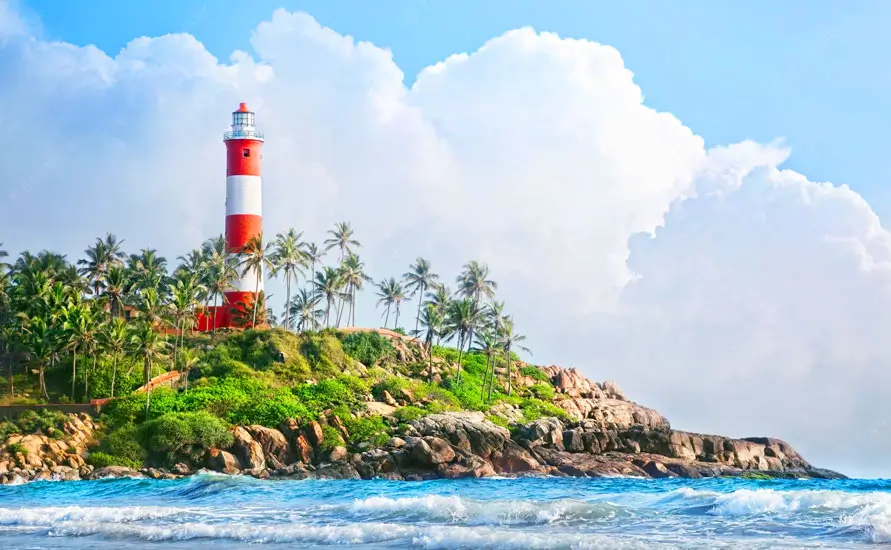
Late morning belongs to you. You might take a yoga class in an open pavilion, book a second Ayurveda treatment, or spend an hour reading in a hammock beneath the coconut trees. Sea conditions shift through the year and rip currents occur, so let the beach staff tell you where and when to go in. For a short outing, the town of Alleppey is about half an hour away, with its old canals, lighthouse and colonial-era warehouses, and your chauffeur is on standby if you would like to go. A visit to the small Revi Karunakaran Museum, known for its glass and ivory collections, fits neatly into such an outing.
In the late afternoon a private farewell picnic can be set up on the sand, with fresh juices, local snacks and a view of the sun dropping into the Arabian Sea. Over the picnic you can compare two very different coastlines, from the Portuguese churches and spice-laden mansions of Goa to the lagoons and fishing villages of Kerala. Your local coordinator will confirm your airport transfer time for tomorrow and check that your bags are within the weight limits. Dinner tonight is at the resort, and the chef is happy to prepare a special farewell meal. Overnight in Marari.
Your final morning allows for one more stroll on the beach, with checkout timed around your flight. Plan on almost two hours of highway driving to Cochin International Airport, and we always leave a generous margin because international check-in opens about three hours before departure. Guests on a midnight departure can keep their villa longer or rest at an airport hotel, at extra cost and if rooms are free.
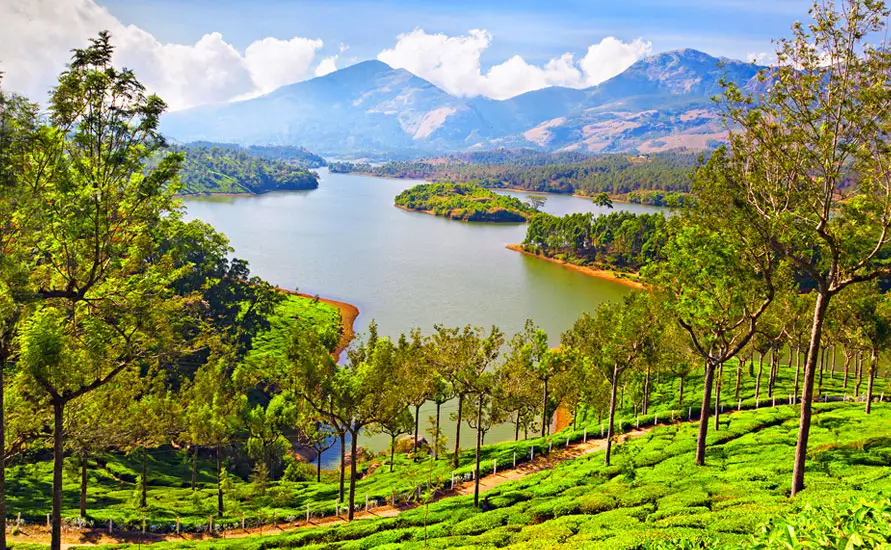
From Kochi, one-stop connections via Dubai, Doha, Abu Dhabi, Singapore or Colombo reach most cities in North America, Europe and Australia. A return visit could add the Munnar tea hills, the Thekkady spice country or the Chola temples further east, and our planners would gladly draft a route. Our local team waves you off at the terminal doors, and we look forward to seeing you on a future visit.
Your Journey
N.S. Rathore & Mrs. Omlata Rathore · Managing Director
We still read every enquiry ourselves. Tell us the places you liked and our planners will send a day-by-day route with drive times and a clear price.
Every package can be customised and no pressure to book. A planner from our office replies within 24 hours with a route written for your group.
Fill this in and your planner will send a first draft itinerary.
Explore more
Kerala Backwaters Escape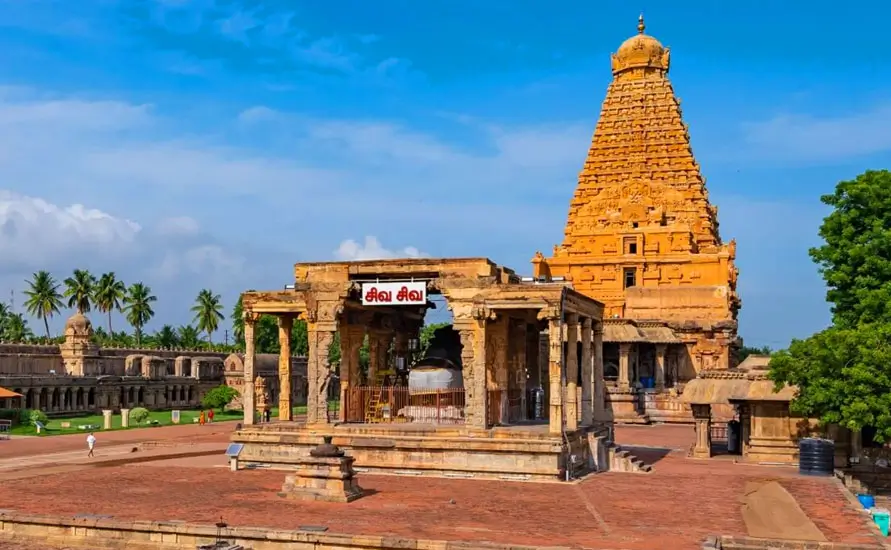 Kerala Backwaters Escape
 Kerala Backwaters Escape
 Kerala Backwaters Escape
 Kerala Backwaters Escape
 Kerala Backwaters Escape
 Kerala Backwaters Escape
 Kerala Backwaters Escape
 Kerala Backwaters Escape
 Kerala Backwaters Escape
 Kerala Backwaters Escape
 Kerala Backwaters Escape
 Kerala Backwaters Escape
 Kerala Backwaters Escape
 Kerala Backwaters Escape
 Kerala Backwaters Escape
 Kerala Backwaters Escape
 Kerala Backwaters Escape
 Kerala Backwaters Escape
 Kerala Backwaters Escape
 Kerala Backwaters Escape
 Kerala Backwaters Escape