
 Kerala Backwaters Escape

Luxury South India Tours
Bangalore – Srirangapatna – Mysore – Coorg – Wayanad – Kozhikode – Kochi – Kumarakom – Kovalam – Trivandrum
At a glance
Most luxury trips in the south settle for one good hotel and a string of ordinary ones. Our South India Luxury Tour with Taj Hotels keeps to a single brand from start to finish and picks the Taj property that fits each place best. You begin at Taj West End, a Bangalore address since the 1880s, climb into the coffee hills at the rainforest resort of Taj Madikeri, and look over a reservoir lake from Taj Wayanad. Kerala then brings a harbor-front heritage wing in Kochi, a lakeside colonial bungalow at Kumarakom and a hillside resort above the sea at Kovalam.
The route crosses two states and three landscapes: the Deccan plateau around Bangalore and Mysore, the Western Ghats of Coorg and Wayanad, and the backwaters and beaches of the Kerala coast. Road legs run from two to roughly five and a half hours, and the longer ones are broken by worthwhile halts: Tipu Sultan's river-island capital at Srirangapatna, the Wodeyar palace in Mysore and the medieval spice port of Kozhikode. A comfortable express train covers the stretch from Kozhikode to Kochi, and every hotel is booked for two or three nights so you are not living out of a suitcase.
This South India Luxury Tour with Taj Hotels suits travelers who want reliable comfort without giving up the variety of the south. A private chauffeur-driven car and expert local guides look after the sightseeing, while the resorts add their own cooking sessions, nature walks and spa therapies. It works well for couples, multi-generation families and returning visitors who already know the north. October to March brings the most pleasant weather, though Coorg and Wayanad are green and cool for most of the year. The trip ends at Trivandrum airport
Bangalore's Kempegowda airport sits some 35 km from downtown, and a member of our team waits beyond customs holding your name card and a chilled bottle of water. Reaching central Bangalore takes sixty to ninety minutes, longer at the evening rush. Your chauffeur-driven car is a spacious premium SUV, and the driver who greets you tonight stays with you through Karnataka until Kozhikode. During the ride you receive a printed fortnight plan, and your host runs through practical points: which ATMs work with foreign cards, how to get a phone connection set up, and how to dress for temple visits later in the trip. Feel free to ask anything, since the same team follows your progress all the way to Trivandrum.
Your first two nights are at Taj West End, one of the oldest hotels in South India. It began in 1887 as a ten-room boarding house run by a British couple, the Bronsons, and grew under the Spencer family before the Taj group took over its running in the 1980s. The low buildings are spread across about 20 acres of lawns and gardens, with huge rain trees, flowering creepers and covered walkways linking the wings. Many rooms open straight onto a veranda or a private patch of garden, which feels rare in a city of this size.
If you land in daylight, a slow walk through the grounds with the hotel's staff is a calm way to start. Birdwatchers often spot kingfishers, barbets and sunbirds in the old trees, and the pool sits in a quiet corner of the gardens. Supper can be at Blue Ginger, the garden pavilion known for Vietnamese plates such as banana-blossom salad and lemongrass fish, or something simpler from room service if jet lag wins. Bangalore sits about 900 meters above sea level, so evenings are pleasantly cool for most of the year. Overnight in Bangalore.
Beneath the glass office towers of India's tech capital lies a garden city of sultans, maharajas and British cantonment bungalows, and a good guide peels back those layers in a single day. First comes Lalbagh Botanical Garden, planned by Hyder Ali in the 1760s; his son Tipu later filled it with saplings shipped from Persia, Kabul and Mauritius. Twice a year, in January and August, its Victorian glass house fills with flower displays, while a bare granite-gneiss outcrop crowned by a small Kempegowda watchtower is among the oldest exposed rock on the planet. Morning is the best time, when local walkers and yoga groups fill the paths.
Then you visit Tipu's wooden summer palace near the old fort, a teak pavilion of fluted columns and cusped arches finished in 1791. Your guide explains how Tipu fought the British East India Company in four wars and why his name still divides opinion in Karnataka. In Basavanagudi, the Bull Temple shelters a monolithic Nandi, darkened to near black by layers of oil and butter rubbed on by devotees over the years. In the neighborhood around it, old bakeries and coffee houses serve filter coffee and the crisp, buttery benne dosa that Bangaloreans love.
After lunch you pass the Vidhana Soudha, the granite seat of the state legislature, and stop at the mock-Tudor Bangalore Palace, built for the Wodeyar rulers and still owned by the family. Late in the afternoon, a walk through the lanes of KR Market shows the city's flower trade at full speed, with piles of jasmine, marigold and roses sold by weight. Return to the West End gardens for a swim, then, if you like, head out to one of the microbreweries that made Bangalore India's beer capital; we reserve the table. Overnight in Bangalore.
Leave after an early breakfast to beat the city traffic, and take the new expressway south-west across the plateau. Two hours on, the road crosses a branch of the Kaveri onto Srirangapatna, the river island Tipu ruled from until British troops took it by storm in May 1799. Your guide shows you the spot in the fort walls where the breach was made and where Tipu's body was found. Nearby, inside the Daria Daulat Bagh, painted murals cover the outer verandas, the best known showing Colonel Baillie's redcoats routed by Mysore cavalry in 1780.
Thirty minutes later you are in Mysore, where the Wodeyar royal palace was rebuilt in grey granite and pink-domed Indo-Saracenic style once flames had gutted its timber predecessor in 1897. Inside, the Kalyana Mantapa wedding hall has a stained-glass ceiling and a floor of patterned tiles, and the Durbar Hall opens onto a long colonnade facing the parade ground. Footwear goes into a free locker by the gate, and cameras stay in your bag indoors. Since the palace lights are switched on only on Sunday and holiday evenings, a daytime visit suits this route best.
Lunch is at a Mysore restaurant, perhaps with a thali and the city's sweet, crumbly Mysore pak to follow. The road west then climbs gently into Coorg, also called Kodagu, passing tobacco fields, the Tibetan settlement at Bylakuppe and the first coffee plantations under tall silver oaks. You reach the Taj Madikeri Resort & Spa in the late afternoon. The resort lies inside a private 180-acre rainforest, and the welcome drink is often a local fruit cordial served beside the central courtyard. Dinner is at the resort after a long but varied day. Overnight in Coorg.
Morning light in the hills reveals what the dark hid last night: the Taj Madikeri sits on a slope of thick forest, with its cottages and villas linked by paths and wooden bridges. The architecture borrows from the Kodava ancestral house, with sloping tiled roofs, carved pillars and a central courtyard known as the mundu mane. Rooms have fireplace corners and large windows onto the trees, and the larger pool villas have heated plunge pools under a retractable roof. Expect mist in the early hours, so a light sweater is useful even in warmer months.
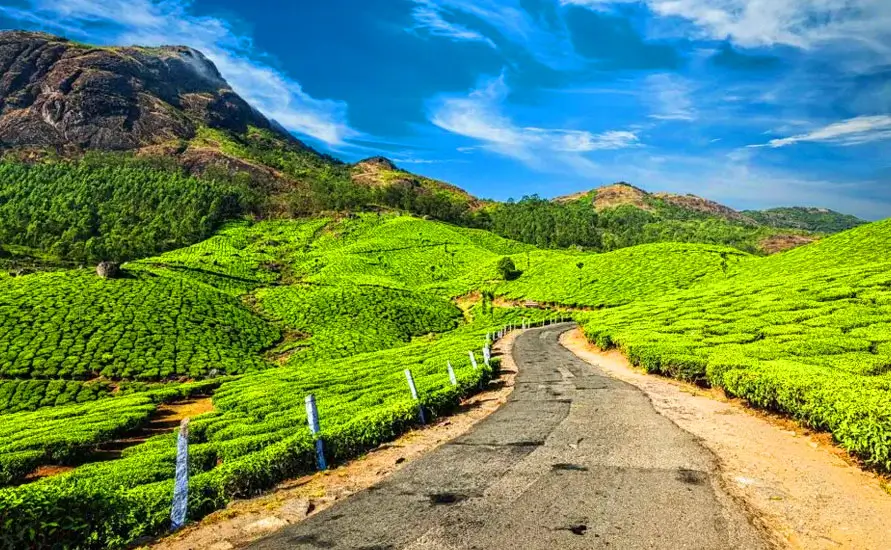
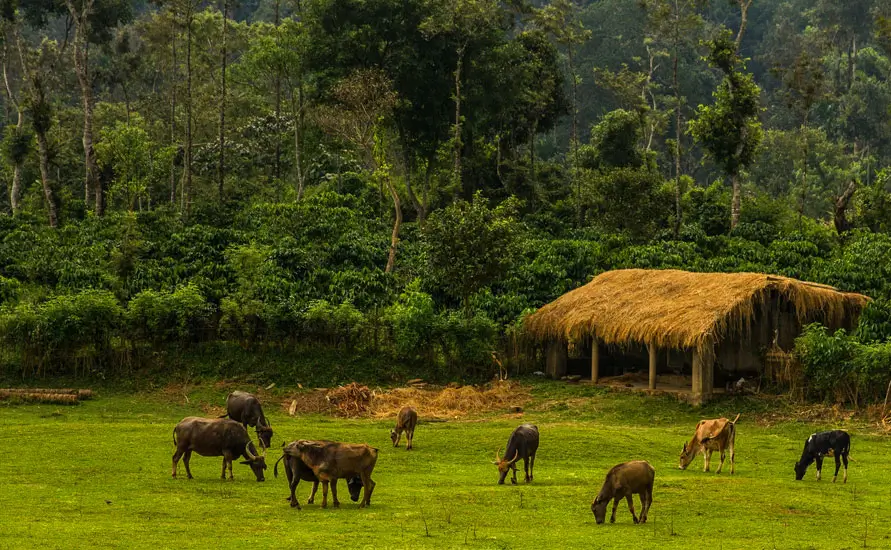
Mid-morning you are welcomed onto a family-run coffee estate, where the writer of the estate ledger, often the planter himself, leads you between arabica and robusta bushes under silver oaks wound with pepper vines. You see how the cherries are picked, pulped, dried and graded, and finish with a fresh cup in the estate bungalow. Picking peaks in the cool months around Christmas, when red cherries are raked out to dry on concrete yards beside every bungalow. Coorg grows a large share of India's coffee, and the estates also produce cardamom, oranges and honey, all sold at small stalls in town.
Later, Madikeri town shows its fort, first raised in mud by Kodava chiefs and rebuilt in stone by Tipu, now home to district offices and a modest museum in an old church. The Omkareshwara Temple nearby mixes Islamic-style domes with a Hindu temple plan, a reminder of the varied rulers of the region. Sunset is best at Raja's Seat, a small terraced garden on a ridge, where hill after hill fades blue toward the Kerala border. Back at the resort, try Kodava dishes such as pandi curry with kadambuttu rice balls at Nellaki. Overnight in Coorg.
Today mixes two very different communities. An hour east lies Bylakuppe, where the Mysore state gave land to Tibetan exiles in the early 1960s; it has grown into one of the biggest Tibetan communities anywhere beyond Tibet. At Namdroling, a Nyingma monastery of several thousand monks and nuns, the main prayer hall is guarded by three towering gilded figures: Shakyamuni flanked by Guru Rinpoche and Amitayus. If you arrive around midday, you may hear young monks chanting in the prayer hall or debating in the courtyard. Visitors may enter the main hall quietly, with shoes left outside, and photography is usually allowed; a small café nearby serves momos and butter tea.
Back in Coorg, the afternoon focuses on the Kodava people, a martial community with their own language, clan system and dress, and a long tradition of service in the Indian Army. The resort can arrange a talk with a local historian or a visit to a family ainmane, the clan house where festivals and weddings are held. You may hear about Puttari, the harvest festival, and Kailpodh, when weapons are worshipped. Kodava women wear the sari pleated behind rather than in front, a style tied by tradition to the sage Agastya and the river goddess Kaveri.
Late afternoon is best spent on the Taj Madikeri's own trails, which lead through tall evergreen trees, giant ferns and climbers. A naturalist can join you to point out Malabar giant squirrels, hornbills and the small orchids that grow on the branches. Afterward, book the Jiva Spa for its gudda bath, a traditional wood-fired bath inspired by the region's old remedies. Dinner tonight can be at Fern Tree, the all-day restaurant with an open terrace, or in a private nook in the gardens arranged by the resort. Overnight in Coorg.
After a slow breakfast, you leave the Kodagu hills and head south through Virajpet and the coffee town of Gonikoppal. After Kutta the highway slips into Kerala through deciduous jungle shared by the Nagarhole tiger reserve and the Tholpetty range of Wayanad Wildlife Sanctuary. Speed limits are strict, and chital, grey langurs and the odd elephant herd often stand right by the tarmac. Your driver will not stop in the reserve area, but the windows give good views of bamboo groves and teak forest. Morning traffic on this stretch is light, and the cool air under the trees feels very different from the plains around Mysore.
The landscape changes as you reach Mananthavady, a market town surrounded by paddy fields, banana plantations and pepper gardens. Your guide can stop for lunch at a simple Kerala restaurant, where parotta and spicy chicken roast or a vegetarian meal on a banana leaf give you a first taste of Malabar cooking. A side road climbs to Thirunelli, a granite Vishnu shrine below the Brahmagiri hills, whose Papanasini stream is believed to wash away sins and draws mourners from across Kerala. Non-Hindus can usually see the outer areas and the stone aqueduct that brings spring water to the temple.
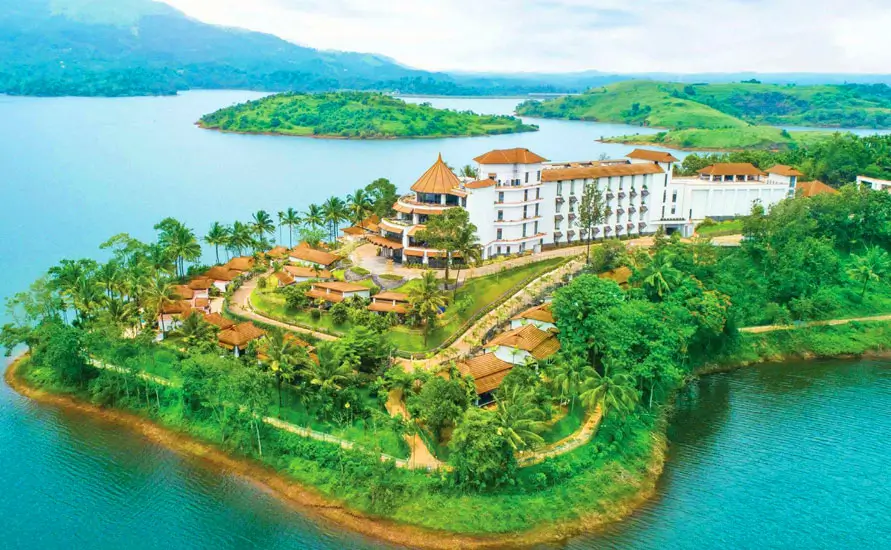
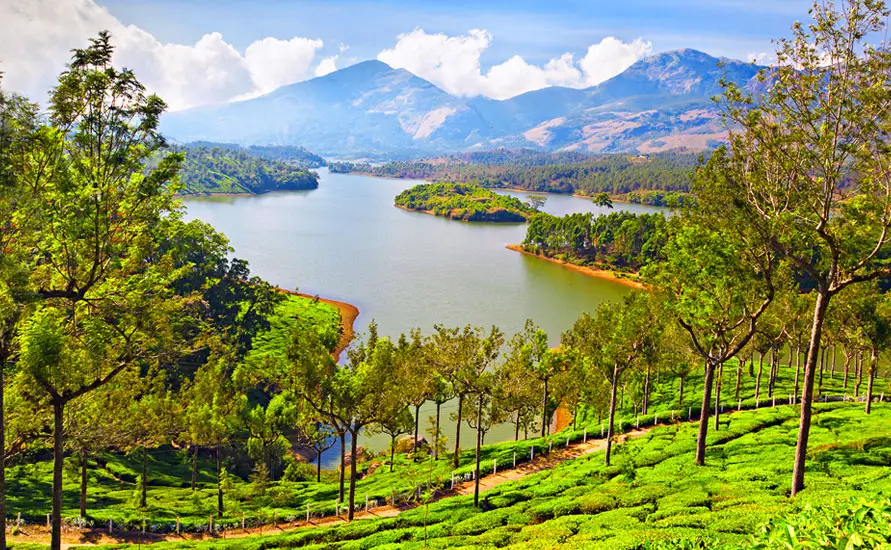
By mid-afternoon you reach the Taj Wayanad Resort & Spa, built on a small peninsula that juts into the Banasura Sagar reservoir, with water and forested hills on three sides. The resort covers about ten acres of terraced slopes, with rooms, cottages on stilts and villas set at different levels for the view. The grand villas have plunge pools and a sky deck facing the lake. Ask for a seat at Shamiana, the all-day restaurant at the water's edge, for dinner as the hills fade into darkness. Overnight in Wayanad.
Wayanad's best-known historic site is the Edakkal Caves, about an hour south of the resort near Ambalavayal. They are not true caves but a deep cleft between huge boulders, reached by a steep walk and a series of metal stairs. Inside, the rock walls carry engraved human figures, animals and symbols, some thought to date back several thousand years to the Neolithic period. Arrive early, as visitor numbers are capped each day, and note that the site is closed on Mondays. Good shoes and some fitness are needed for the climb.
On the way back, your guide stops at a spice and tea plantation, where Wayanad's mixed farming becomes clear: coffee, pepper, cardamom, arecanut and ginger often grow on the same small family holdings. Many farmers here still sell their pepper to traders who carry it down to the coast, as they have for centuries. You may also visit a tribal craft cooperative, where bamboo baskets and natural-fiber products are made by local Adivasi communities. The resort's interpretive tours can add a visit to an artisan workshop if you want more time with makers.
The Banasura Sagar Dam, close to the resort, is often described as the largest earth dam in India, and its reservoir has flooded the valleys to leave small wooded islands. An optional speedboat ride on the lake or a short hike toward Banasura Hill gives you wide views over the water. Back at the Taj Wayanad, a sunset yoga session in the pavilion is a gentle way to end the day. Dinner at Southern Spice focuses on regional South Indian dishes, with Malabar fish curries and appam among the favorites. Overnight in Wayanad.
An early start takes you down the Thamarassery Ghat, a mountain road with nine hairpin bends that drops from the Wayanad plateau to the coastal plain. The views from the upper bends are wide, with forest and rubber plantations falling away toward the sea. Allow three hours to Kozhikode, also known as Calicut, the port that gave its name to calico cloth and drew Arab, Chinese and later Portuguese traders. Your guide joins you here and explains how the Zamorin rulers made the city one of the busiest spice markets on the Malabar Coast.
Your first stop is the Mishkal Mosque in the Kuttichira quarter, a multi-storey wooden mosque from the 14th century built in the Kerala temple style with sloping tiled roofs and no domes. Visitors should dress modestly and enter only outside prayer times. A short walk through the old Muslim neighborhood shows tharavad family homes and ponds, before you visit SM Street, Sweet Meat Street, where shops sell Kozhikode halwa in dozens of colors. Lunch is a plate of Malabar biryani, cooked with short-grain kaima rice and served with a date pickle.
North of the city, a modest memorial stone at Kappad Beach records the May 1498 landing of Vasco da Gama's fleet, the first European ships to reach India round Africa. Mid-afternoon, a reserved air-conditioned carriage on a coastal express carries you south to Ernakulam Junction in under four hours. On the Ernakulam platform a Kerala colleague is waiting to guide you and the bags to a fresh car for the short run to Willingdon Island. Your Karnataka driver says goodbye in Kozhikode, so remember to settle any tips before the train. Light snacks and tea are sold on board, though a picnic box from the Taj Wayanad kitchen is a better option. Overnight in Kochi.
Your hotel, the Taj Malabar Resort & Spa, sits at the very tip of Willingdon Island, a man-made island created in the 1920s and 1930s from silt dredged out of the harbor under the engineer Robert Bristow. The original building opened in 1935 as a guest house for passengers arriving by ocean steamer, and its heritage wing still keeps the wooden floors, tall windows and teak staircase of that era. From the windows you watch tugboats, Vypeen ferries and tall cargo vessels slide past toward the open Arabian Sea. Ask for a room on the harbor side.
Breakfast done, you cross the harbor mouth by launch to Fort Kochi and begin the walk at Vasco da Gama Square, beside the seafront promenade. You walk past the bungalows of the old merchant families, the Bishop's House on its small hill and the Indo-Portuguese Museum, which holds church silver and wooden altars from the Kochi diocese. Around the Parade Ground, many old trading houses now run as art cafés. During the Kochi-Muziris Biennale season, warehouses across the area fill with contemporary art, and your guide can plan the walk around it.
In the afternoon you continue to Mattancherry, the spice-trading district, where godowns along the waterfront still store ginger, turmeric and pepper. Your guide plans visits to the Dutch Palace and the Paradesi Synagogue around their closing days, since both shut on Fridays and the synagogue also on Saturdays. Back on Willingdon Island, dinner at Rice Boat, the Taj Malabar's seafood restaurant, faces the harbor mouth and features Kerala dishes such as crab roast, prawns in coconut and grilled lobster. Book a table near the windows for the best harbor view, and ask the staff about the hotel's sunset cruise, which leaves from the jetty on some evenings. Overnight in Kochi.
A free morning in Kochi gives you time for a last walk, a session at the hotel spa or a trip to the Ernakulam side of the city for its markets and shopping streets. Shoppers often head for the weavers' cooperatives selling off-white kasavu cloth edged in gold thread, or a mural studio where students grind mineral colors by hand. After an early lunch, the car turns south-east for Kumarakom, a cluster of islets and canals on the eastern rim of Vembanad Lake, which stretches nearly 100 km from north to south. The route crosses canals, paddy fields and rubber smallholdings, passing churches whose festivals color the villages in season.
At the core of the Taj Kumarakom Resort & Spa stands the Baker bungalow, a 19th-century mission house raised by the English missionary Henry Baker Jr., whose family drained swamp to plant coconut here. Today the restored bungalow holds heritage rooms with high ceilings, wooden floors and four-poster beds. Newer villas are set around lotus ponds and canals that run through the grounds, while lagoon-view cottages face the water. Small boats pass along the canals, and egrets, herons and kingfishers fish in the shallows. Some heritage rooms open onto a lotus pond, and a few villas have their own small pool.
Around five o'clock, take a slow lap of the grounds as the low sun turns the lake to copper. Your welcome may include an oil lamp lighting ceremony, which the resort holds at dusk as part of local tradition. Tonight's table is at Currymeen, where pearl spot steamed in banana leaf, duck roast and boiled tapioca with green chili chutney make up a classic Kuttanad supper. Ask the staff to explain how the duck farms of Kuttanad supply the region, and why the birds are herded along the canals. Overnight in Kumarakom.
Early risers are rewarded here. The Kumarakom Bird Sanctuary, just next to the resort, covers about 14 acres of mangrove and woodland on the lake edge, and the first two hours after dawn are best for spotting birds. Your birder names each call along the trail: the purple heron, the snakebird drying its wings, the white-throated kingfisher and, if lucky, a brown fish owl. In winter, migratory birds from the north join the residents. Bring binoculars if you have them, wear closed shoes, and expect to stop often while the guide picks out birds in the dense canopy.
After breakfast, the resort's village cycle tour leads a small group along the canal paths of Kumarakom, past coconut groves, toddy shops, small churches and houses with lotus ponds. The guide stops so you can see coir rope making, a local school and the fishing nets set in the narrow channels. Cycling is flat and gentle, and the route takes about an hour, but it must be booked in advance. In the hottest months, the tour may run only in the early morning or late afternoon, and the team can change it to a walk if you prefer.
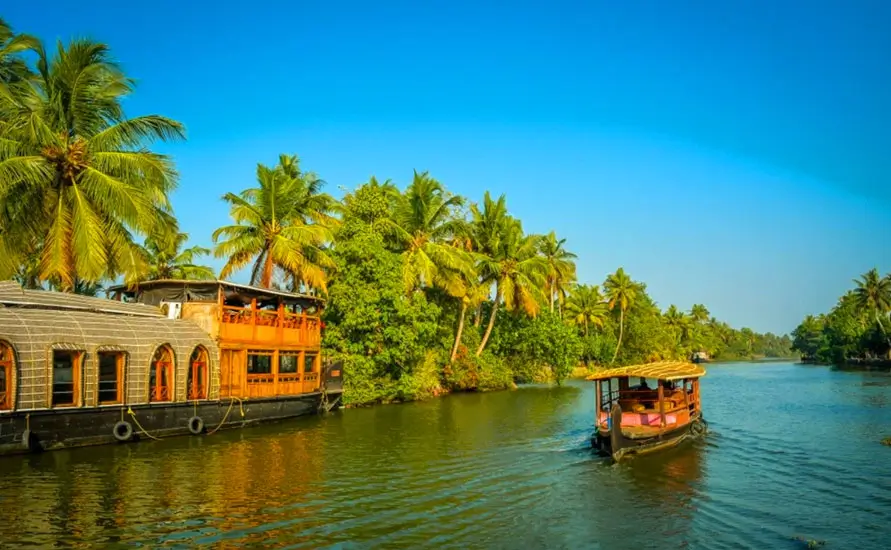
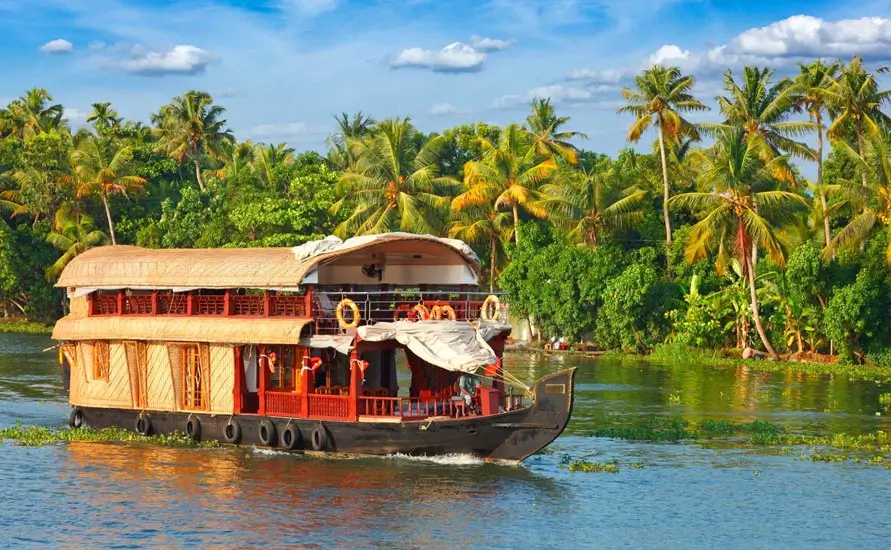
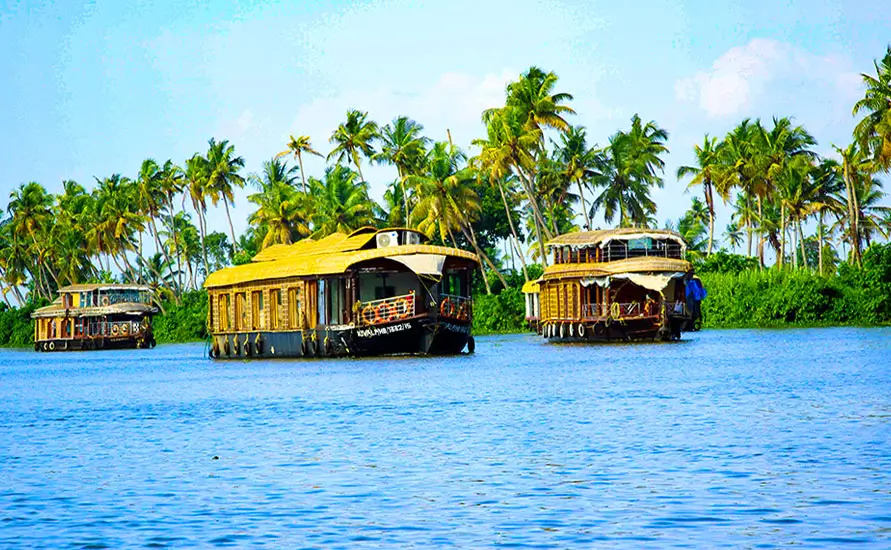
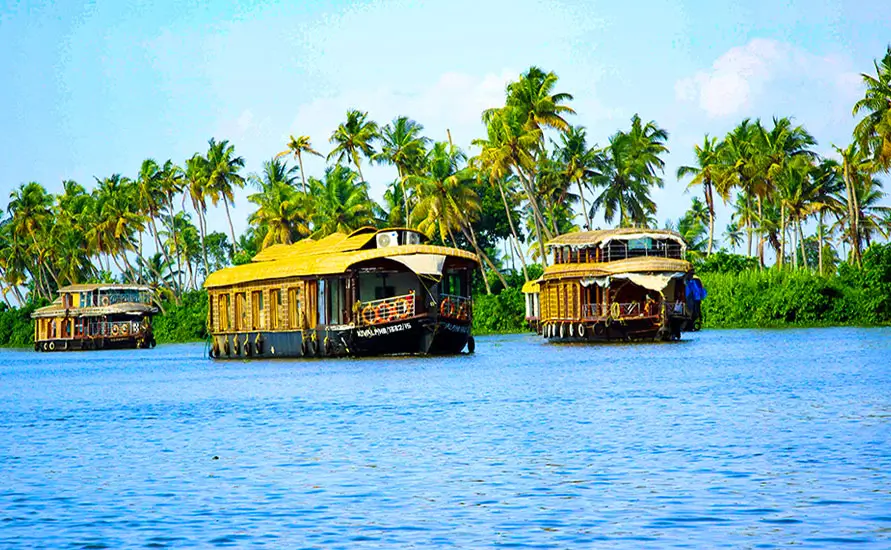
In the afternoon, a private motor boat or a covered country boat takes you onto Vembanad Lake and into the paddy canals of Kuttanad, where farmers grow rice on land below sea level. You can watch fishermen diving for black clams, which are later sold for lime production, and see how the dikes keep the water out of the fields. Back at the Taj Kumarakom, the spa's Ayurveda team can suggest a treatment based on a short consultation. Enjoy a quiet evening on the lakeside lawn as the boats head home. Overnight in Kumarakom.
The route south avoids the coastal bottleneck and runs through Chengannur, rubber country and the old cashew town of Kollam. Halfway, Aranmula on the Pampa River is worth half an hour for its kannadi, front-surface mirrors cast from a guarded bronze alloy and polished for days. Families here have made them for generations, and you can watch the process at a small workshop. Lunch can be at a restaurant on the way or a late meal once you reach the coast. Kollam's narrow bypass clogs easily, which is why the car leaves after the school-run hour and aims to reach the coast by mid-afternoon.
Your final hotel, the Taj Green Cove Resort & Spa, rises up a hillside above the sea just outside Kovalam, with about ten acres of Balinese-style gardens and a backwater lagoon behind it. The resort's cottages are built from local granite with thatched roofs and look out over gardens or the backwaters, while the suites face the Arabian Sea. Paths, steps and small bridges link the different levels. The resort does not sit directly on the beach, but buggies take you down to the sand across the road whenever you like.
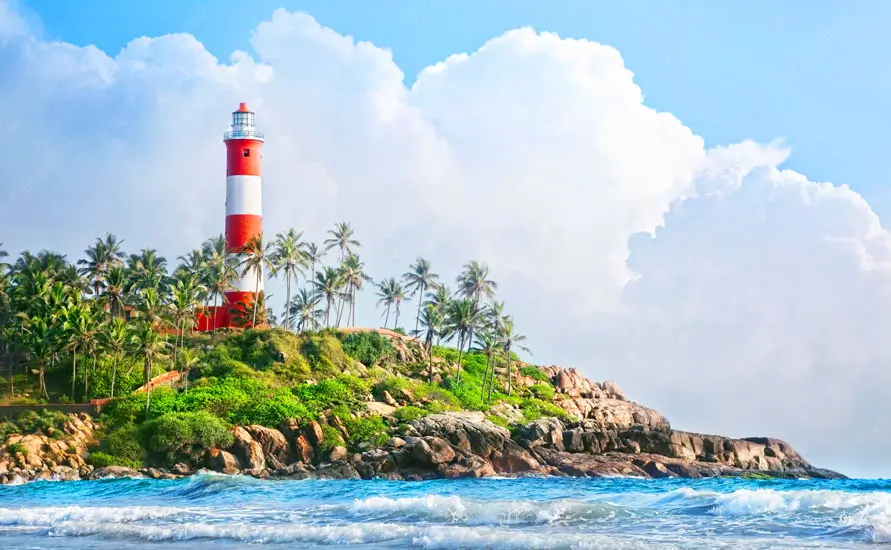
After four hours on the road, spend the evening slowly. From the edge of the pool you can pick out the striped tower of the Vizhinjam Lighthouse above the coves to the south. For dinner, Bait, the resort's seafood restaurant, cooks fresh catch from the local boats in coastal styles from Kerala, Goa and Sri Lanka. Ask the chef about the day's catch, which may include red snapper, seer fish and tiger prawns. Order a fresh tender coconut by the pool if you prefer something light, and save the heavier meals for tomorrow. Overnight in Kovalam.
The capital of Kerala, Trivandrum, officially Thiruvananthapuram, lies only half an hour from the resort, and a morning with your guide shows the old seat of the Travancore royal family. You start outside the Sree Padmanabhaswamy Temple, whose seven-storey gopuram rises over the temple tank. Only Hindus may go in, and those who do must follow a traditional dress rule (a mundu with no shirt for men, a sari or ankle-length skirt for women), so most foreign guests admire the gateway from the tank side. Your guide explains the story of the vaults found inside in 2011.
Next door, the Kuthiramalika Palace, or Puthenmalika, was built by the poet-king Swathi Thirunal in the 1840s, with carved wooden horses supporting the eaves and a small museum of royal objects. The Napier Museum, a short drive away, is housed in a striking building of red brick, sloping roofs and gables that combines Kerala and Indo-Saracenic styles. Its collections include bronze sculptures, ivory carvings and an old temple chariot. A short stroll across the lawns leads to the Sree Chitra Art Gallery, best known for oil paintings by Raja Ravi Varma, the Travancore-born artist who gave Hindu gods and epic heroines the faces familiar from calendars across India today.
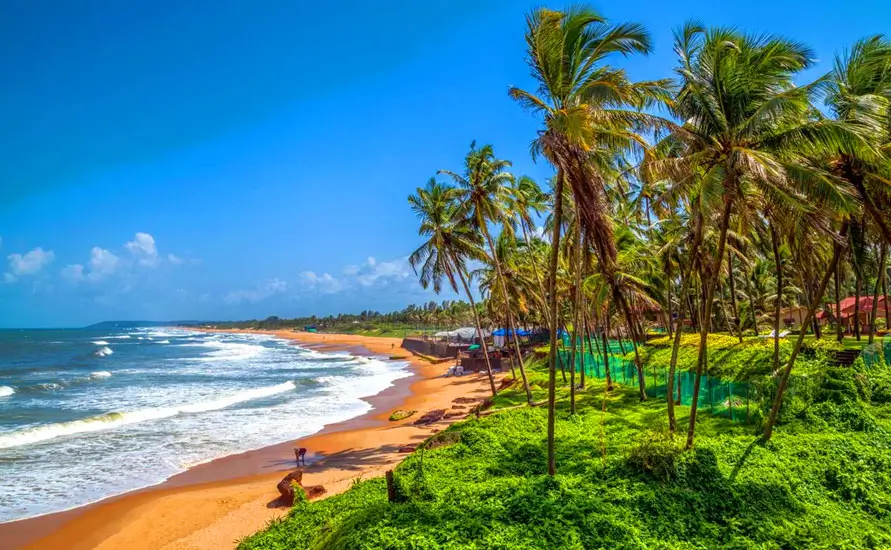
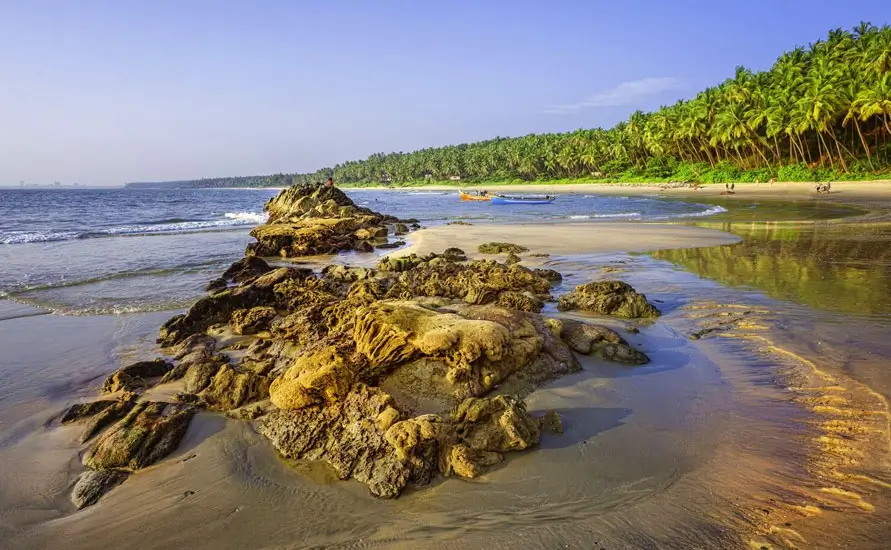
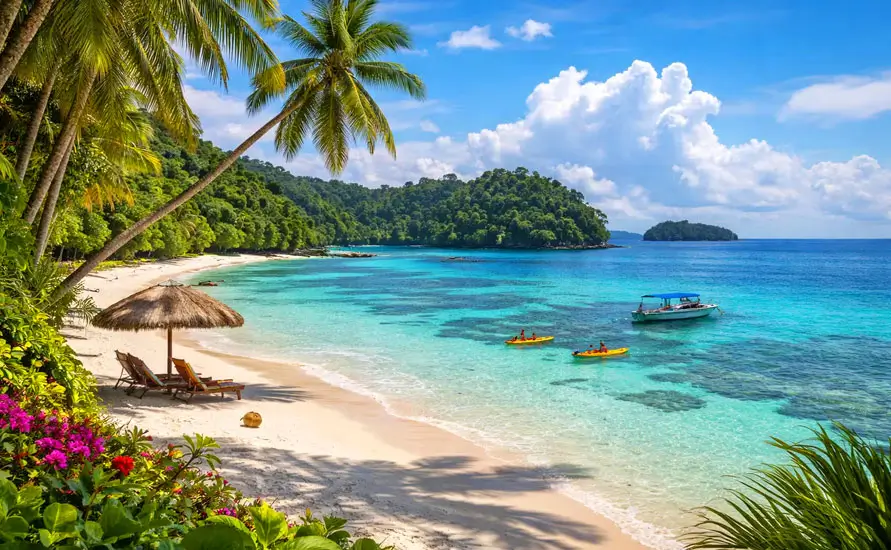
You return to Kovalam for lunch and a free afternoon. Kovalam's three crescent bays include Lighthouse Beach, with shops and cafés behind the sand, and the quieter Hawa Beach just to the north, where fishermen pull their boats ashore. Swimming is best in the marked areas only, as currents can be strong. A farewell abhyanga oil massage at J Wellness Circle followed by a candlelit table on the terrace makes a fitting last evening. Our team will confirm your flight time and airport transfer before you go to bed. Overnight in Kovalam.
The last morning is unhurried, with time for breakfast and a final walk on the resort paths. Trivandrum International Airport is only about half an hour away, so even an afternoon flight leaves plenty of time to relax. Your chauffeur collects your luggage from the room and drives you to the terminal, and our representative helps with check-in. International flights from Trivandrum connect through the Gulf hubs, Singapore and Colombo, and domestic connections via Bangalore, Delhi or Mumbai are also easy to arrange.
Thirteen nights have taken you from Bangalore's Victorian garden lodgings and Coorg's rainforest to Wayanad's lake, Kochi's harbor, a missionary's lakeside bungalow and finally the Kovalam hillside above the Arabian Sea. Extra beach nights, a day trip to Kanyakumari at the subcontinent's tip or a hop across to Sri Lanka are all easy add-ons. Our warmest thanks, and bon voyage.
Your Journey

N.S. Rathore & Mrs. Omlata Rathore · Managing Director
We still read every enquiry ourselves. Tell us the places you liked and our planners will send a day-by-day route with drive times and a clear price.
Every package can be customised and no pressure to book. A planner from our office replies within 24 hours with a route written for your group.
Fill this in and your planner will send a first draft itinerary.
Explore more
Kerala Backwaters Escape Kerala Backwaters Escape
 Kerala Backwaters Escape
 Kerala Backwaters Escape
 Kerala Backwaters Escape
 Kerala Backwaters Escape
 Kerala Backwaters Escape
 Kerala Backwaters Escape
 Kerala Backwaters Escape
 Kerala Backwaters Escape
 Kerala Backwaters Escape
 Kerala Backwaters Escape
 Kerala Backwaters Escape
 Kerala Backwaters Escape
 Kerala Backwaters Escape
 Kerala Backwaters Escape
 Kerala Backwaters Escape
 Kerala Backwaters Escape
 Kerala Backwaters Escape
 Kerala Backwaters Escape
 Kerala Backwaters Escape
 Kerala Backwaters Escape
 Kerala Backwaters Escape
 Kerala Backwaters Escape
 Kerala Backwaters Escape