
 Kerala Backwaters Escape

Luxury South India Tours
Goa – Konkan Railway – Bekal – Kannur – Kochi – Marari – Alleppey – Varkala – Kovalam – Padmanabhapuram – Trivandrum
At a glance
Grey skies over Hamburg, Manchester or Amsterdam in January make the Indian west coast look very appealing, and two weeks of warm sea is often all a winter break needs. Our Luxury Beach Resorts of South India Tour strings together four beach stays along the Arabian Sea, from the Portuguese-flavored shore of Goa to the quiet north of Kerala at Bekal, the fishing coast of Marari and the headland resort of Kovalam. Each hotel gets three to five nights, so the rhythm is closer to a long beach holiday than a touring program.
The resorts set the tone. Taj Exotica Resort & Spa in Benaulim spreads over 56 acres of lawns and palms behind a long south Goa beach. Taj Bekal Resort & Spa uses laterite villas with plunge pools between a river and Kappil Beach. Marari Beach is a low-key eco resort of thatched villas, coconut groves and a farm, and The Leela Kovalam occupies a rocky headland between two bays. Between them, this South India beach holiday offers four very different ways to spend a day by the sea.
Sightseeing is light and always optional: the churches of Old Goa and the lanes of Fontainhas, a mansion in Chandor, the great laterite fort at Bekal, a Theyyam ritual between December and March, a slow boat through the Alleppey canals and the wooden palace at Padmanabhapuram. The leg from Goa to Bekal goes by the scenic Konkan Railway, and a one-hour flight from Kannur to Kochi links north and central Kerala. This winter sun India trip is planned for November to March, when the sea is calm and the air dry.
Flights into the state now use either the old Dabolim field in the south or the Mopa airport up north, and we pick whichever fits your European routing better. A meet-and-assist host is waiting once you clear customs, and the luxury car is parked right outside. From Dabolim the drive south to Benaulim takes around forty-five minutes, while from Mopa it is closer to two hours on the coastal highway. Charter flights from the UK and Russia often arrive early in the morning, so we can arrange an early check-in on request.
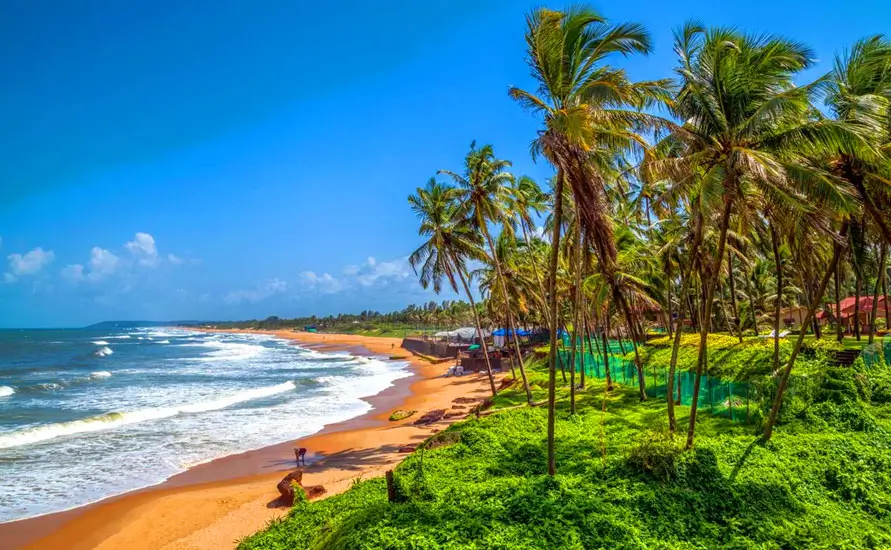
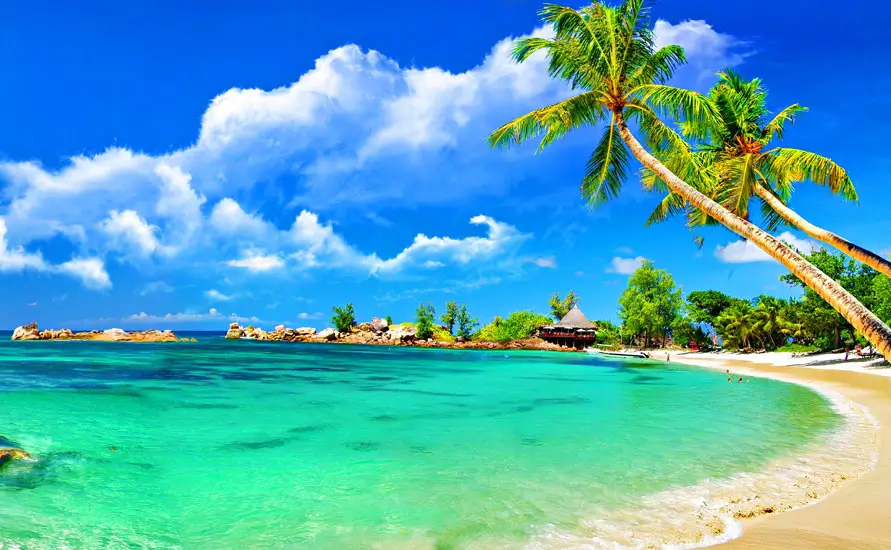
Taj Exotica Resort & Spa spreads across 56 acres of gardens in south Goa, with whitewashed buildings in a Mediterranean style, red-tiled roofs and arched verandas facing the sea. Rooms and villas are scattered among lawns, palms and frangipani, and every room has a balcony or veranda looking out to the garden, the pool or the water. The resort fronts about 700 meters of soft sand at Benaulim, one of the calmer stretches of the long beach that runs from Velsao down to Mobor. Settle in, order a fresh lime soda and let the long-haul tiredness wash off in the pool.
By late afternoon the light on the beach turns golden, and a barefoot walk along the tide line is the best way to start this long coastal holiday. Wooden canoes rest high on the beach above the waterline, and the local fishermen often sort their nets in the evening. For dinner, try Alegria, the resort's Goan restaurant, where dishes such as prawn balchão, chicken xacuti and pork vindaloo show how Portuguese and Konkani flavors met over four and a half centuries of colonial rule. Ask for mild versions if you are new to Indian spice. Overnight in Goa.
Your first full day is unscheduled on purpose. Breakfast is served on the terrace with fresh fruit, Goan sausages, poi bread and freshly made egg dishes, and afterwards the beach is yours. Benaulim is wide and flat, so it is good for long walks and gentle swimming in the calmer months between November and March. Lifeguards watch the main sections, and red flags mark unsafe areas after high winds. Loungers and umbrellas are set out for resort guests, and staff bring cold towels and drinks to your sunbed through the day.
In the late morning, if you feel like some movement, borrow a resort bicycle and ride into the village behind the beach. Benaulim keeps the feel of an old Goan settlement, with whitewashed chapels, Portuguese-style houses with oyster-shell windows and paddy fields where egrets wait for frogs. Your chauffeur can also take you to the hilltop Church of St. John the Baptist, with its white Baroque facade and long view over the coconut groves. Most roads are quiet, but Goan drivers can be fast, so stick to the lanes and keep to the left side.
After lunch at the poolside, the afternoon is ideal for a first visit to the Jiva Spa, built in a style inspired by Kerala temple architecture with treatment rooms set around a central courtyard. Between November and April the spa also uses open-air pavilions near the beach, weather permitting. Dinner tonight could be at the Lobster Shack, a thatched beachfront restaurant where the grilled catch of the day is served with garlic butter and a glass of wine. The sea breeze keeps evenings comfortable even in March, when the days begin to warm up. Overnight in Goa.
Leave the resort after breakfast for a guided half day in central Goa, roughly sixty minutes up the highway. Old Goa was the capital of Portuguese India from the 16th century until plague and malaria emptied it, and its surviving churches and convents now form a UNESCO World Heritage Site. Your guide begins at the Basilica of Bom Jesus, built of laterite in the late 1500s, which holds the remains of St. Francis Xavier in a silver casket. Across the lawn stands the vast Sé Cathedral, dedicated to St. Catherine, with a gilded altar and a famous bell in its tower.
Dress modestly for the churches, with shoulders and knees covered, and avoid visiting during Sunday morning mass. After Old Goa, the road follows the Mandovi River to Panjim, Goa's capital, where your guide leads you on foot into Fontainhas, a hillside district laid out by Portuguese-era families in the 18th and 19th centuries. Narrow lanes run between houses painted ochre, blue and green, with carved balconies, tiled roofs and hand-painted azulejo street signs. The small Chapel of St. Sebastian holds a crucifix that came from the Palace of the Inquisition. Many houses are still lived in by Goan Catholic families, so speak quietly near the windows.
Lunch is at one of the family-run restaurants in Fontainhas, where you can try a fish curry with rice, bebinca (a layered coconut dessert) or a feni cocktail made from local cashew spirit. In the afternoon, your chauffeur drives you back south, past the domed Our Lady of the Immaculate Conception Church, whose white zigzag staircase is the best-known view in Panjim. You reach the resort in time for a swim before sunset. Dinner at Miguel Arcanjo, the Mediterranean restaurant, makes a pleasant change after a day of Goan food. Overnight in Goa.
A shorter outing today takes you inland to Chandor, a village about twenty minutes from Benaulim that was once a seat of wealthy Goan landowners. The Braganza House, a long mansion built over the 17th and 18th centuries, is still divided between two branches of the same family, who open their rooms to visitors. Inside you see a ballroom with Belgian glass chandeliers and Italian marble floors, carved rosewood furniture and a private chapel. Visits are by donation, and a family member often shows you around in person, telling stories of the house and its people.
Twenty minutes on, Margao is the commercial hub of the south, and its covered municipal market sells everything from chilies and kokum to cashew nuts, Goan sausages and pottery. Your guide helps you pick out local spices and the dried red chilies used in vindaloo if you want to take some home. Then the road heads south through rolling hills and paddy fields to Cabo de Rama, whose crumbling walls guard a promontory where the land simply stops at the water. The ramparts are partly ruined, but the small chapel inside is still used, and the view along the coast is wide.
Return to Taj Exotica in the afternoon for a long swim and a rest. Those who like sport can book a round on the resort's nine-hole executive golf course or a game of tennis before the light fades. In the evening, the resort's bar is a good place for a glass of port or a cocktail before dinner at Li Bai, where Sichuan, Cantonese and Hunan dishes are prepared by a specialist chef. You still have one more full day in Goa, and nothing is planned for it. Overnight in Goa.
Today is completely free. Many guests spend it on the beach or by the main pool, alternating between swims and naps under the palms. If you would like to do something gentle, our team can arrange an optional half-day visit to a spice plantation in the Ponda area, about an hour inland, where you walk among pepper vines, nutmeg trees and cardamom bushes with a guide and then sit down to a Goan buffet lunch served on banana leaves. Some farms also offer a short walk to a natural pool or a demonstration of cashew feni distilling.
Back at the resort, book a long session at the Jiva Spa, where therapists offer Ayurvedic massages, scrubs and wraps, including treatments for couples in suites with their own garden. If you are interested in Ayurveda, the spa can create a short program over your remaining days. Others prefer to lie in a hammock in the gardens with a book or watch the dolphins that sometimes swim close to the shore in the early morning. Mornings and late afternoons are the best times to be on the sand, as the midday sun can be strong.
For your last evening in Goa, ask the resort to set up a private dinner on the beach with lanterns, a table at the edge of the sand and a menu planned with the chef. The kitchen is happy to cook whatever you would like, from a grilled lobster to a Goan seafood feast. After dinner, ask the concierge to have your bags packed and ready, as tomorrow you take a morning train south. Our team will confirm the train time and your seats with you this evening. Overnight in Goa.
Your chauffeur drives you to Madgaon station, about twenty minutes from the resort, for the train south on the Konkan Railway, one of the most scenic lines in India. The route was completed in 1998 and crosses dozens of rivers and passes through more than ninety tunnels as it hugs the coast between the Western Ghats and the sea. We book seats in the best available air-conditioned class, and a porter carries your luggage onto the train. Packed snacks from the resort and a flask of tea make the ride more comfortable, as onboard catering is basic.
Through the window you see paddy fields, rivers lined with coconut palms, red laterite cuttings and small station platforms where vendors sell bananas and tea. The train passes through Karwar, Udupi and Mangalore before crossing into Kerala, and you leave it at Kasaragod or Kanhangad, depending on the train. Your chauffeur is on the platform with a name card and takes you about half an hour to Taj Bekal Resort & Spa, on Kappil Beach. If you prefer to drive, the road via Mangalore takes around eight hours, so the train is the more relaxed choice. Overnight in Bekal.
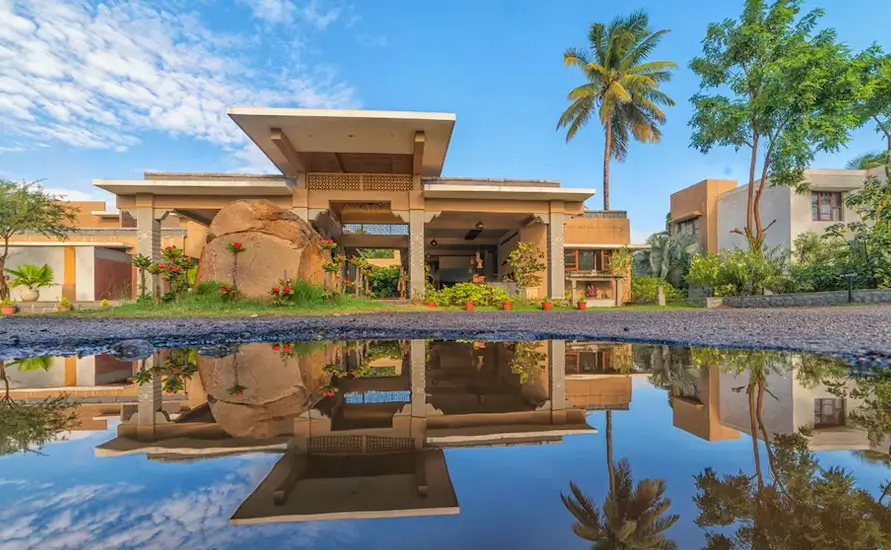
Wake up to the sound of birds in the coconut palms and step out of your villa onto a private courtyard or plunge pool. Taj Bekal Resort & Spa spreads across 26 acres between a backwater river and Kappil Beach, with 66 villas and rooms built from local laterite stone, giving the resort a warm red-brown color that blends with the landscape. Many villas have a private plunge pool and an outdoor shower, and the interiors use natural wood and Kerala textiles. Breakfast at the Backwater Café includes Malabar dishes such as puttu and kadala curry.
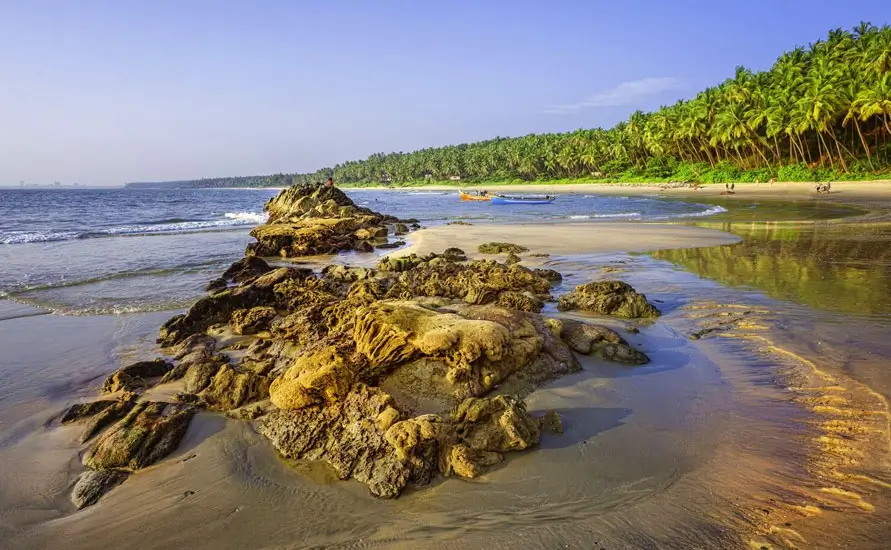
The morning is free for the beach. Kappil is a long, mostly empty stretch of golden sand, and the sea here can be rough, so check the conditions with resort staff before swimming. Many guests prefer the large main pool, which looks across to the river and the palms. After lunch, rest in your villa through the heat of the day, or ask the activity desk about kayaking on the backwater river, which runs right past the resort. The water is calm and shallow, and herons and kingfishers hunt along the banks.
Around four o'clock, your guide collects you for Bekal Fort, only minutes away by car. Raised in the 1600s by the Keladi Nayaka rulers and later held by Tipu Sultan, it is the largest fort in Kerala, with massive laterite walls curving around a headland above the sea. Walk the ramparts to the observation tower, where the view stretches along the coast in both directions, and stay for the sunset, when the walls glow orange. Dinner tonight is at By the Bay, the resort's restaurant for Kerala coastal cuisine. Overnight in Bekal.
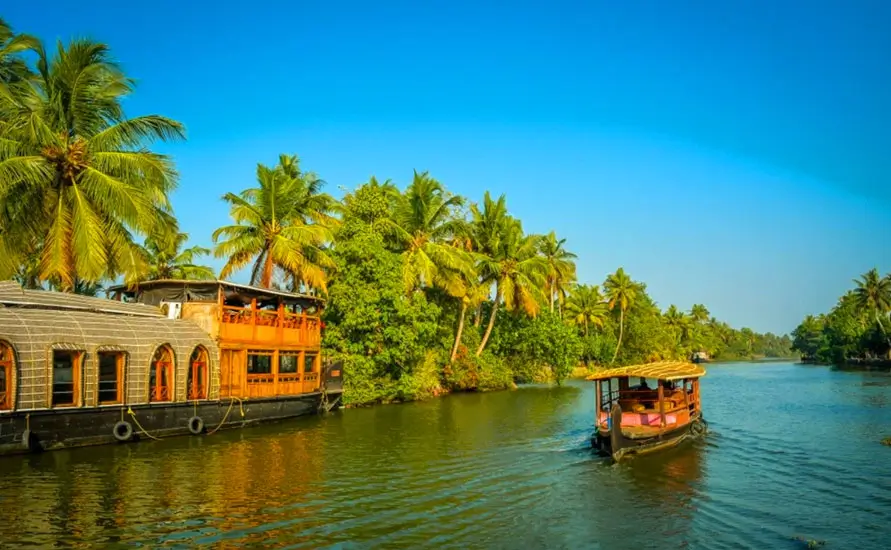
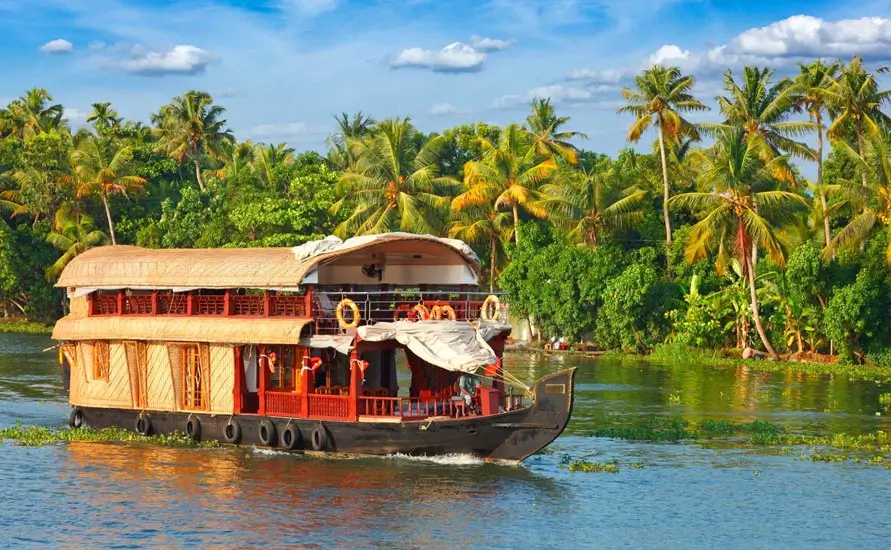
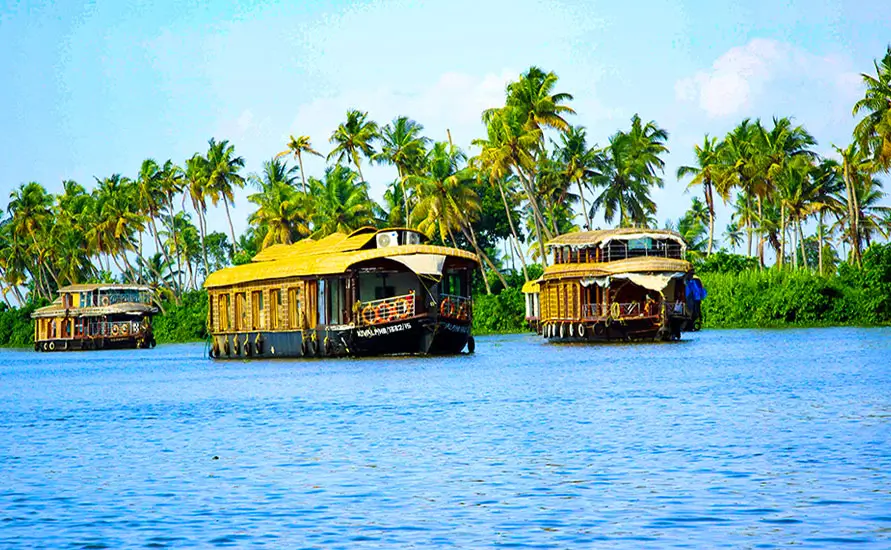
Northern Kerala has its own backwaters, and they are far quieter than those around Alleppey. After breakfast, your chauffeur drives you about an hour north to the Valiyaparamba backwaters, a long stretch of water dotted with small islands and fed by several rivers. A private houseboat or a smaller motor boat waits at the jetty, and the cruise lasts several hours. You see very few other boats, and the islands are home to fishing families, coconut farms and small mosques and temples. The crew serves fresh coconut water and Kerala snacks as you go.
Lunch is served on board, with Malabar dishes such as mussel fry, fish curry with tamarind and coconut rice, cooked by the crew in the small onboard kitchen. Between November and February, migrating birds gather in large flocks on the mudflats, and you may see ospreys and brahminy kites overhead. If you want, the boat can stop at an island for a short walk through a village, where families make coir rope or dry fish in the sun. Your guide helps you talk to the locals, most of whom speak Malayalam.
You are back by about four for a swim and some quiet time. If you would like a treatment, the Jiva Spa offers Ayurvedic massages and Indian therapies in calm rooms looking out over the gardens. In the evening, the resort's Ivory Bar, decorated with an elephant theme, serves cocktails and a good selection of wines. Dinner can be at Grills and More, where seafood and meat are barbecued outdoors with sea views. Ask the resort staff about upcoming Theyyam performances in nearby villages, as dates change from week to week. Overnight in Bekal.
Today is mostly free, so make the most of your last full day at Bekal. Start with a yoga session at the resort, then spend the morning on the beach or by the pool. If you would like to see more of the area, your chauffeur can take you to Chandragiri Fort, a smaller 17th-century fort on a hill above the Chandragiri River, about half an hour away. The view from the top looks over the river mouth and the sea. Afterwards, a stop at Kasaragod town gives a glimpse of daily life in this part of Kerala, where Malayalam, Kannada, Tulu and Konkani are all spoken.
From December to March, the villages of northern Kerala hold Theyyam rituals, a form of worship in which performers in huge headdresses and painted faces become the gods they represent. The rituals take place in small village shrines called kavus, often after dark or before sunrise, and they can last for many hours. Your guide checks the local schedule and takes you to a performance that suits your timing. Theyyam is a religious ritual, not a show, so dress modestly, sit quietly and ask before taking photographs. Families from the village will be sitting on mats around the courtyard, and there is no stage, no ticket and no fixed program, which is exactly what makes the evening feel real.
The atmosphere at a Theyyam is unlike anything else in India: drums beat for hours, oil lamps flicker, and the performer in full costume moves through the crowd, blessing people and giving advice. Your guide explains the stories and the meaning of the costumes and colors. Outside the Theyyam season, we replace this with a performance of Yakshagana, a traditional dance-drama of coastal Karnataka, or a cooking class at the resort. Bring a light shawl and some insect repellent, because the shrines are often set in groves and the air cools after midnight. Return to the resort late in the evening and pack for tomorrow's flight. Overnight in Bekal.
After breakfast, leave the resort and drive south along the coastal highway to Kannur International Airport, a drive of around two and a half hours. The road passes through small towns and fishing villages, and your driver can stop for a coffee in Payyanur or Taliparamba if you want a break. A one-hour hop to Kochi then spares you a full day of coastal traffic. Flight days vary by season, so we lock in the timing with your booking and switch to Mangalore airport if that works better.
In the Kochi arrivals hall, our Kerala host takes over for the two-hour run south to Marari Beach, a CGH Earth resort on the coast near Mararikulam. The resort is built like a fishing village, with thatched villas set among coconut groves, lily ponds and a butterfly garden. Your villa has a private garden and, in some categories, its own pool. Settle in and walk down to the beach in time for the sunset, when local fishermen bring in their boats. Dinner tonight is at Chakara, the resort's main restaurant. Overnight in Marari.
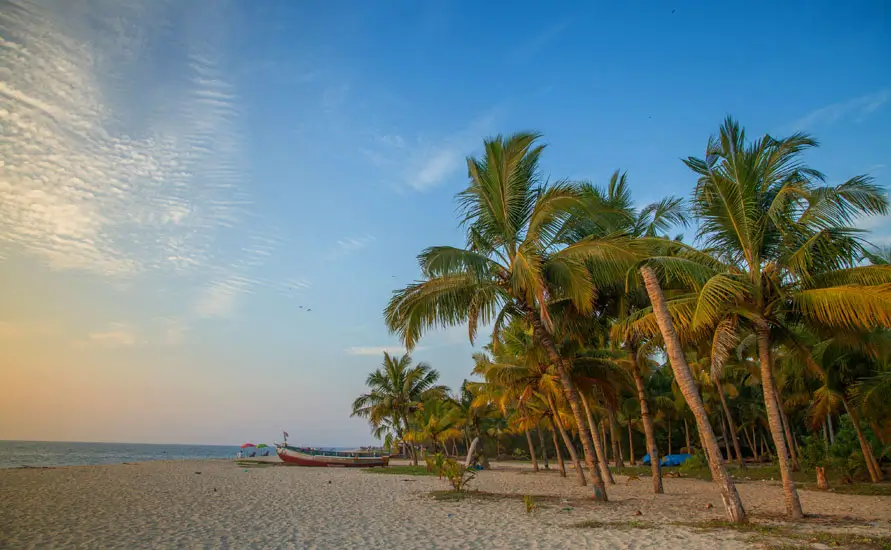
Wake up early and walk down to the beach to watch the fishermen launch their boats through the surf. Marari is still a working fishing coast, and the small wooden boats and nets on the sand are part of daily life rather than decoration. After breakfast, the morning is free on the beach, where the sand is soft and the sea is usually calm enough for swimming between November and March. Loungers are set out under the palms, and staff bring fresh coconut water and fruit throughout the day. Note that the resort keeps the beach simple, with no motorized water sports.
At lunchtime, try the Fisherman's Feast at the Beach Café, a traditional meal prepared by local women from the village. The menu changes with the catch, but often includes fried fish, a spicy fish curry, tapioca and a coconut chutney, served on banana leaves. Afterwards, take a guided walk through the resort's organic farm, where vegetables, herbs and fruit are grown for the kitchen, or visit the butterfly garden and the small nature center. The resort's naturalist explains the local plants and birds and how the resort works to reduce its impact on the environment.
In the late afternoon, take a bicycle ride through Mararikulam village, past coir workshops, small churches and houses with tiled roofs. The resort can also arrange a visit to a fish landing in the early evening, when the boats come in and the catch is auctioned on the beach. Dinner tonight is at the Beach Grill, where seafood is cooked over charcoal and served with a view of the waves. The resort's Ayurveda center offers consultations with a doctor and treatments if you would like to try Ayurveda during your stay. Overnight in Marari.
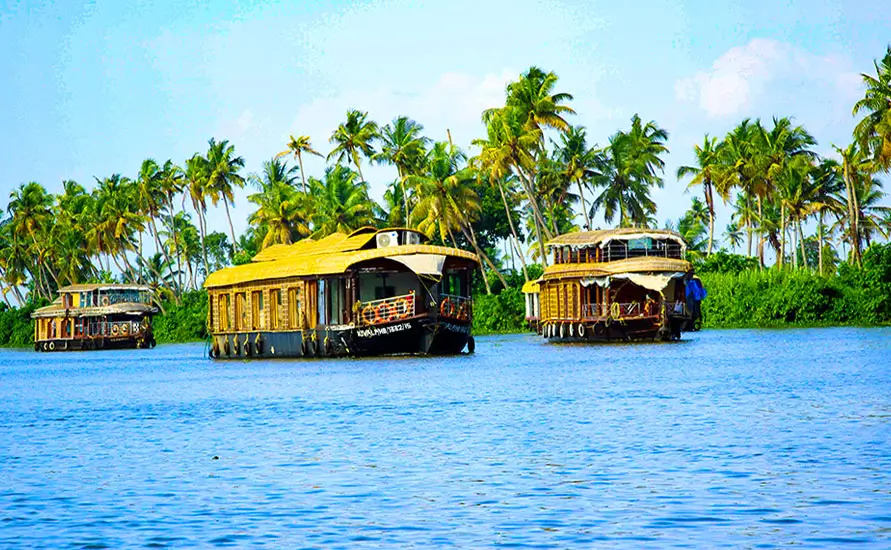
Straight after an early breakfast, the car heads half an hour south to Alleppey, where a private country boat waits at a small jetty. Unlike the large houseboats, these narrow wooden boats are pushed along with a pole and can enter the smallest canals of the Kuttanad region. The boatman takes you past village houses, small temples and churches, coconut groves and paddy fields that lie below sea level, protected by mud walls. Laundry slaps against washing stones, a postman pedals along the embankment, and a man in a canoe steers a noisy flock of ducks to new feeding water.
The ride lasts about three hours, and the boatman stops at a small toddy shop or a village house where you can try fresh coconut, tapioca or a cup of Kerala tea. Your guide explains how the backwater villages live with water all year round and how the rice farming system works. Back in Alleppey, you can visit the old Alleppey beach and its pier, or go straight back to the resort for lunch. In the late morning the sun becomes strong, so a hat, sunscreen and water are essential on the boat.
The afternoon is free at Marari Beach. Spend it on the sand, in the pool or in your villa garden. If you are interested in cooking, the resort offers an interactive cooking session where the chef shows you how to prepare Kerala dishes such as fish moilee and avial. In the evening, enjoy dinner at the resort's Beach Shack, which serves wood-fired pizzas, flatbreads and cocktails. Tomorrow you leave for Kovalam, so ask the resort to pack your bags tonight. Before bed, the evening tea cart and the small library are good reasons to stay up a little longer under the ceiling fans. Overnight in Marari.
After breakfast, leave Marari and drive south along the coastal highway through Alleppey, Kayamkulam and Kollam. The road passes through busy towns and fishing villages, with an easy halt for sliced pineapple sprinkled with chili salt or a chilled tender coconut. Around lunchtime you reach Varkala, a small town known for its red cliffs that drop straight down to a sandy beach. The cliff-top path is lined with cafés, small shops and guesthouses, and the view over the sea is one of the best on the Kerala coast. Lunch is at a cliff-top café with fresh seafood.
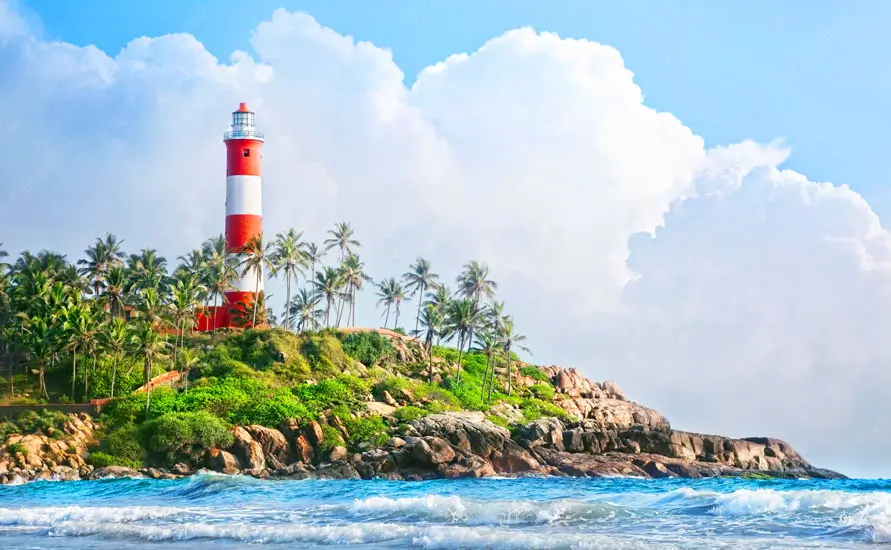
Near the cliff stands the Janardana Swamy Temple, a Vishnu shrine believed to date back many centuries, though entry to the inner shrine is only for Hindus. Below the cliff, Papanasam Beach is considered sacred, and pilgrims come here to perform rites for their ancestors, so bathers keep to the northern end and give the ritual area space. After lunch, continue the drive south for roughly ninety minutes to Kovalam, the most famous beach resort in Kerala, where three small bays are separated by rocky headlands. The lighthouse on the southern headland is visible from far away.
The Leela Kovalam stands on a cliff top above the sea, with views over the bays on both sides. The resort has two infinity pools, a large spa and several restaurants, and many rooms have private balconies facing the water. Your sea-view room faces west, so the first sunset arrives straight through the balcony doors; before that there is time for a dip in the upper pool or a walk down the steps to the sand. Dinner on the first night is at The Terrace, the all-day restaurant, where Kerala, Indian and Western dishes share the menu and tables look along the curve of the bay. Ask for a seat at the edge of the terrace and watch the fishing boats switch on their lights one by one on the horizon. Overnight in Kovalam.
Today you visit Padmanabhapuram Palace, about an hour and a half south of Kovalam, just across the border in Tamil Nadu but still managed by Kerala. The palace was the seat of the Travancore kings until the late 18th century, and it is one of the finest examples of traditional Kerala wooden architecture, with carved teak ceilings, polished black floors made from a mixture of coconut shells, egg whites and lime, and murals painted with natural colors. The palace is closed on Mondays, so we plan this day around your dates. Shoes are left at the entrance.
On the way back, stop at Trivandrum, the capital of Kerala, for a short drive past the Sri Padmanabhaswamy Temple, whose tall seven-story gopuram is a landmark of the city. Only Hindus may enter, dressed in the traditional mundu or sari, so non-Hindu guests see it from the tank and the eastern approach as the guide recounts how its sealed vaults made headlines in 2011. Nearby is the Kuthira Malika Palace, a 19th-century wooden palace with carved horses on its roof brackets, which now houses a small museum of royal objects. The streets around the temple are lined with shops selling brass lamps and Kerala sarees.
Back on the headland by five, slip into one of the infinity pools while the sun sinks toward the water. After a day of palace corridors and city traffic, an abhyanga massage at the Ayurveda and Wellness Spa loosens the shoulders nicely, and the therapists can tone down the oil for anyone who prefers a lighter touch. In the evening, have a drink at The Sky Bar, where the view runs from the lighthouse to the far end of the bay, then dinner at Pandhal, a traditional open-sided Kerala hall without air conditioning, where the menu stays close to home cooking from Travancore. Tomorrow carries no plan at all. Overnight in Kovalam.
Nothing is booked for the final full day on the coast. Early risers can join the daily class in the meditation hall above the gardens, while late sleepers might have coffee and dosa brought out to the balcony. Of the three crescents at Kovalam, the sand nearest the headland stays fairly empty until mid-morning, and in the winter months the water is usually flat enough for a proper swim between the flags. For a little exercise, follow the shoreline south to Lighthouse Beach and climb the red and white tower, which opens to visitors in the afternoon, for a long view over fishing hamlets and coconut palms.
Late morning suits a last session in the spa. Guests who have followed an Ayurveda program through Goa, Bekal and Marari often finish with shirodhara, a thin stream of warm medicated oil poured across the forehead for half an hour or more, and the resort physician can write down simple diet and routine advice for home. Lunch is a light seafood salad by the pool. In the afternoon, the small shops along the beach road sell cashews, cardamom, Kerala tea and handloom cotton, all easy to pack and much cheaper than at the airport, and your chauffeur is on call if you want a lift.
On the last night, the kitchen can set a table for you on the clifftop grass with oil lamps and a menu planned in advance with the chef, perhaps tiger prawns in a Travancore pepper masala and a coconut panna cotta. Sitting above the sea, you can trace the whole route back up the coast in your head: baroque churches in Goa, the laterite curve of Bekal Fort, the night-time drums of Theyyam, a pole-pushed canoe in Kuttanad and now these cliffs. Settle your packing before dinner, and tell the front desk your flight time so they can plan the morning around it. Overnight in Kovalam.
A final breakfast on the cliff, then the half-hour transfer to Trivandrum International Airport, timed with plenty of room for international check-in. Our representative stays with you as far as the departure doors and handles the trolley and porters. Most guests fly home through Dubai, Doha, Abu Dhabi, Muscat or Colombo, and those hubs connect onward to nearly every European city. For an evening departure we can hold your room until the afternoon or book a separate day room so you can shower before the long flight.
We hope these sixteen days of warm sea, long lunches and gentle sightseeing have given you the winter break you came for. Quite a few winter-sun guests make this coast an annual habit, swapping one resort for another or adding a week in the tea hills of Munnar or the Andaman Islands. When the grey days return at home and you start planning the next escape, write to us and we will build it around the same easy pace. Safe travels home.
Your Journey

N.S. Rathore & Mrs. Omlata Rathore · Managing Director
We still read every enquiry ourselves. Tell us the places you liked and our planners will send a day-by-day route with drive times and a clear price.
Every package can be customised and no pressure to book. A planner from our office replies within 24 hours with a route written for your group.
Fill this in and your planner will send a first draft itinerary.
Explore more
Kerala Backwaters Escape Kerala Backwaters Escape
 Kerala Backwaters Escape
 Kerala Backwaters Escape
 Kerala Backwaters Escape
 Kerala Backwaters Escape
 Kerala Backwaters Escape
 Kerala Backwaters Escape
 Kerala Backwaters Escape
 Kerala Backwaters Escape
 Kerala Backwaters Escape
 Kerala Backwaters Escape
 Kerala Backwaters Escape
 Kerala Backwaters Escape
 Kerala Backwaters Escape
 Kerala Backwaters Escape
 Kerala Backwaters Escape
 Kerala Backwaters Escape
 Kerala Backwaters Escape
 Kerala Backwaters Escape
 Kerala Backwaters Escape
 Kerala Backwaters Escape
 Kerala Backwaters Escape
 Kerala Backwaters Escape
 Kerala Backwaters Escape