
 Kerala Backwaters Escape

Luxury South India Tours
Kochi (Brunton Boatyard) – Munnar (luxury tea-estate bungalow) – Kumarakom (Kumarakom Lake Resort) – Kovalam (Taj Green Cove Resort & Spa) – Trivandrum
At a glance
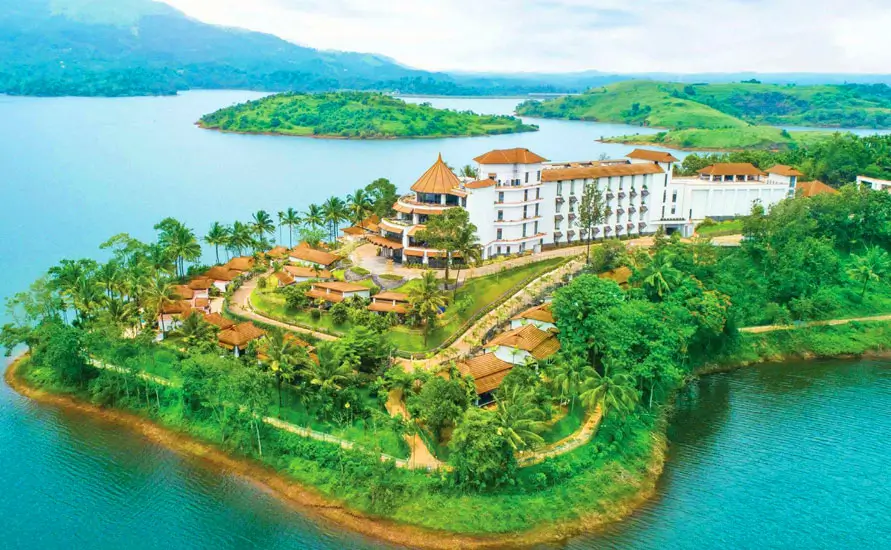
Kerala has no shortage of good hotels, but only a handful set the standard for their region. Our Kumarakom Lake Resort and Taj Kerala luxury tour links four of them in a sensible loop from north to south. You start at Brunton Boatyard, a restored Victorian boatbuilding yard on the harbor in Fort Kochi, climb to a private tea-estate bungalow in the hills of Munnar, settle into a villa at Kumarakom Lake Resort on Vembanad Lake and end with three nights in a thatched cottage on the hillside of Taj Green Cove Resort & Spa in Kovalam.
Two nights in each of the first three stops and three nights by the sea give the trip a measured pace, with no drive longer than about four and a half hours. A chauffeur-driven premium SUV carries you the whole way from Kochi airport to Trivandrum, and private English-speaking guides lead the sightseeing in Fort Kochi, Munnar and Trivandrum. Afternoons are often left open, because the hotels themselves, with their pools, spas and lakeside or ocean terraces, are a large part of what you are paying for.
The Kerala luxury tour suits couples on honeymoon or an anniversary, guests from Britain, the Continent, the Americas and Australasia who want comfort without the crowds of a group tour, and NRI families returning for a special occasion. A day cruise on a private houseboat, Ayurveda at Kumarakom Lake Resort and a Jiva spa session at Taj Green Cove Kovalam can be added or extended. The best months are October to March, while the monsoon from June to September suits travelers who come mainly for Ayurveda.
Once you are through immigration at Cochin International Airport, our airport host greets you by name, takes charge of your trolley and leads you out to a premium SUV with your chauffeur at the wheel. The drive to Fort Kochi takes roughly an hour and a half, crossing the backwater bridges of Ernakulam and Willingdon Island before the road narrows into the old port town. Your Kerala coordinator meets you at the hotel with a welcome folder and phone numbers, and can arrange a late breakfast or an early lunch if you arrive in the morning after an overnight flight.
Brunton Boatyard was rebuilt on the footprint of a 19th-century British shipyard right on the harbor mouth, and the restored building keeps its whitewashed walls, deep verandas and heavy timber rafters. The hotel has 26 rooms, all with harbor or sea views, furnished with four-poster beds and antique rattan, and the deluxe rooms come with private balconies where you can watch tugs, container ships and fishing boats pass a few hundred meters away. The pool sits beside the water, and ships slide past so close that guests often stop mid-length to watch them.
As the afternoon cools, take a short walk along the seafront path toward the Chinese fishing nets, where the crews work the giant lift-nets on the falling tide and gulls circle for scraps. Back at the hotel, sundowners are served at The Armoury, the hotel bar, before dinner. The History restaurant cooks dishes drawn from the many communities that settled in Kochi, from Syrian Christian duck roast to Jewish, Dutch and Portuguese-influenced recipes, and The Terrace Grill serves the day's seafood with a view of the fishermen landing their catch. Overnight in Kochi.
Kochi has been a trading port for centuries, and its old town is a layered record of the Portuguese, Dutch and British, as well as the Jewish, Arab, Gujarati and Konkani merchants who settled here. Your private guide meets you after breakfast and leads a walk through the shaded lanes behind the hotel, beginning with St. Francis Church, whose whitewashed nave once held the navigator's tomb, until his son had the remains returned to Portugal. You pass the Dutch cemetery, the old Bishop's House and rows of colonial bungalows now used as cafés, homestays and galleries.
Late morning you continue by car to Mattancherry, where the palace built by the Portuguese for the Raja of Kochi holds some of the best-preserved mural paintings in Kerala, with whole walls of scenes from the Ramayana. A few minutes away in Jew Town, the Paradesi Synagogue dates from 1568 and is paved with blue-and-white Canton tiles, no two painted exactly alike. Both have weekly closures, the palace every Friday and the synagogue each Friday, Saturday and Jewish holiday, which is why we plan this walk around the day of the week you land.
The lanes between the synagogue and the waterfront are lined with old spice warehouses, where traders still grade pepper, ginger and turmeric in the high-roofed godowns. Your guide can arrange a stop with a family firm that has dealt in spices for generations, followed by lunch in a converted warehouse café. Afternoon tea is served in The Quadrangle at Brunton Boatyard, and later you may watch Kathakali, Kerala's masked-looking dance-drama, in an intimate hall nearby, where the actors' face painting starts more than an hour before the drums begin. Overnight in Kochi.
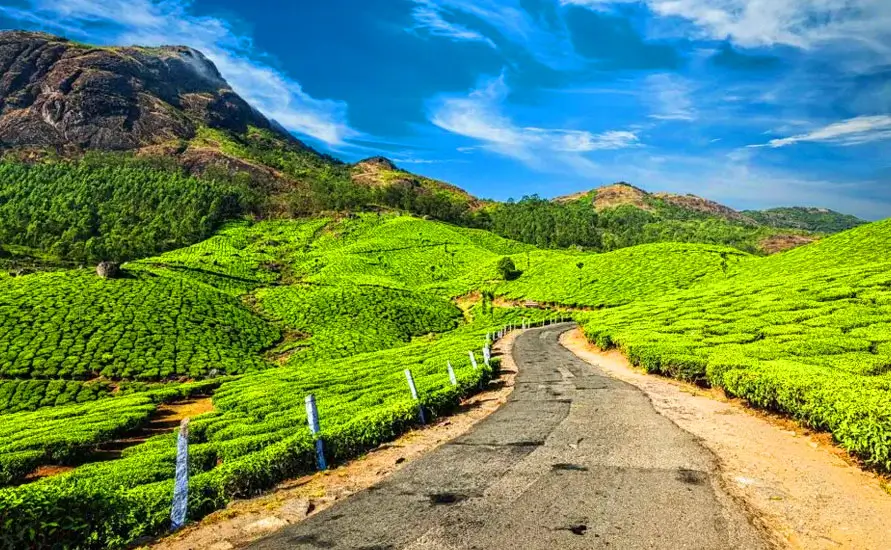
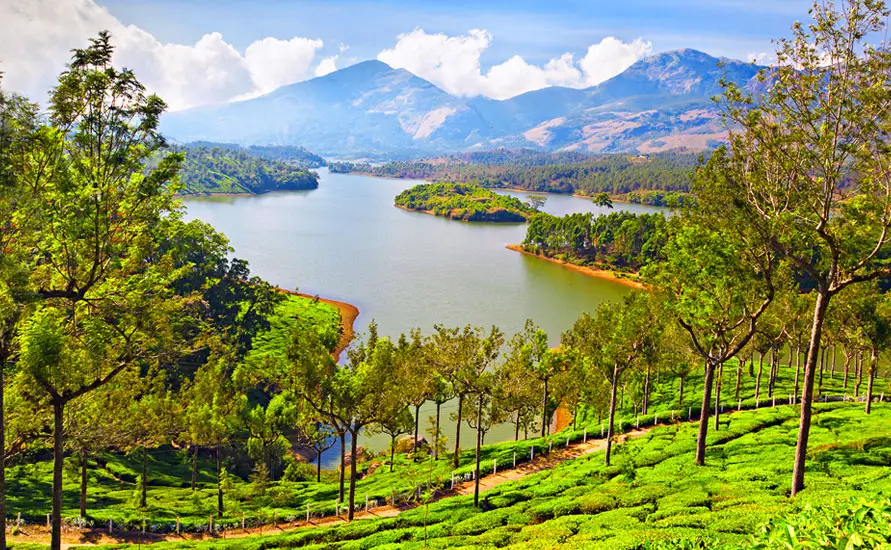
Breakfast done, your chauffeur loads the bags and turns east across the plains of Ernakulam district, where rubber plantations and pineapple fields slowly yield to the first ridges of the Western Ghats. The road begins to climb after Kothamangalam and winds up through cardamom forest, with waterfalls such as Cheeyappara and Valara tumbling down beside the road in the months after the monsoon. Your chauffeur stops wherever you would like a photograph or a cup of tea, and you reach the tea country around Munnar, at roughly 1,600 meters, in the early afternoon.
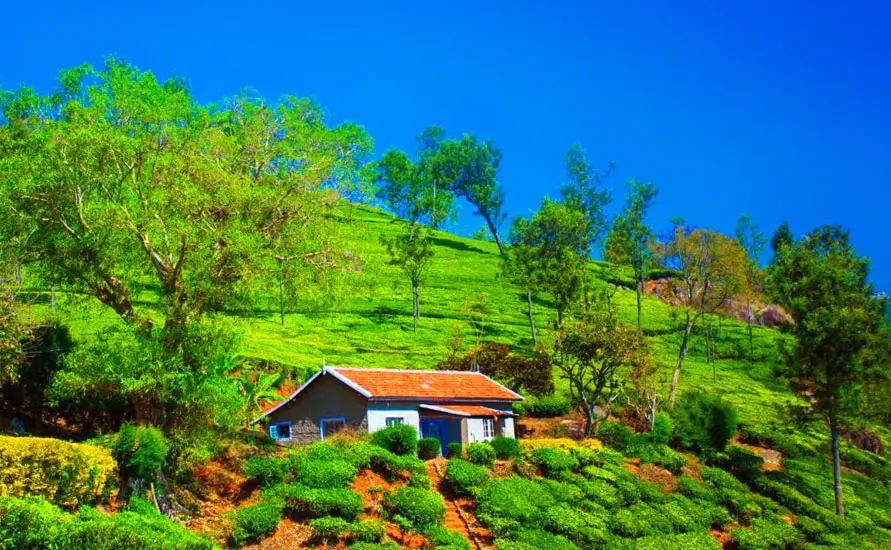
For two nights you live in a luxury tea-estate bungalow, one of the old planters' houses on a working estate that now take a small number of guests. These bungalows typically have a handful of bedrooms, fireplaces, polished wooden floors and gardens looking straight onto the tea, and a resident cook and caretaker look after you. The exact bungalow is confirmed at booking, based on availability and if you prefer a remote estate setting or a property closer to town. Meals are home-style Kerala and continental dishes, cooked to order.
Spend the rest of the afternoon on a gentle walk along the estate paths with the bungalow manager, who can explain how the bushes are pruned to waist height, how often each section is picked and why the leaf from higher slopes fetches better prices at auction. Mist often rolls up the valleys after four o'clock, and the temperature falls fast, so a light sweater or jacket is useful from October to February. In the evening, sit by the fire with a cup of the estate's own tea before a quiet dinner served in the bungalow dining room. Nights here are silent apart from crickets and the occasional dog barking in the workers' lines. Overnight in Munnar.
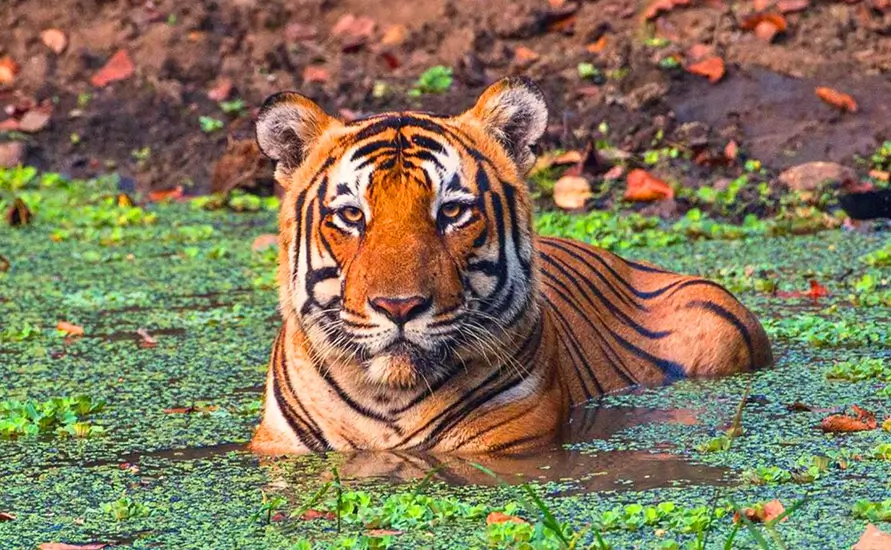
Start early for Eravikulam National Park, about 15 km from Munnar town, where forest department buses carry visitors from the entry point up to the tourist zone of Rajamalai. The park protects high rolling grasslands and shola forest, and this is where most visitors get a close look at the Nilgiri tahr, a sturdy wild goat confined to these southern mountains. Herds here are accustomed to visitors and often graze beside the path. Each year the forest department shuts Rajamalai for several weeks in February and March for the tahr calving season, and on those dates we replace the visit with a longer estate walk.
Late morning brings you back down the hill to a working tea factory, where your guide walks you through withering, rolling, fermenting and drying, the stages that turn fresh green leaf into black tea within a day. The Tata Tea Museum in Munnar also has old rolling machines and photographs of the planters who cleared these hills in the late 19th century. Afterward you can taste a range of grades, from fine whole-leaf teas to the dust grade that most Indian households use for strong, milky chai, and buy fresh packs to take home.
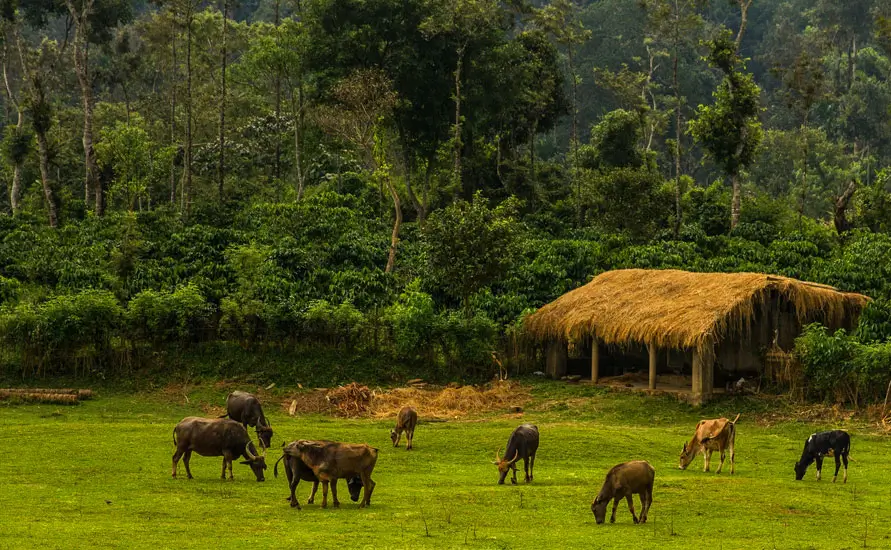
After lunch at the bungalow, drive out along the valley to Mattupetty Dam, where a reservoir is ringed by tea slopes and eucalyptus, then carry on to Top Station, perched where Kerala meets Tamil Nadu, for wide views over the plains far below, if the weather is clear. Along the way, look out for the Indo-Swiss dairy project at Mattupetty, one of the older cattle breeding farms in the region. Return to the bungalow before dark, as the hill roads are narrow, unlit and shared with the occasional wild elephant herd. Overnight in Munnar.
A slow breakfast on the bungalow veranda, with fresh fruit and a last pot of estate tea, is followed by a farewell to the cook and caretaker and the drive down from the hills. The road descends through cardamom forests and rubber plantations toward Kottayam, a town known for its churches, publishing houses and Syrian Christian families. Early afternoon brings you to Kumarakom, a string of villages, paddy and resorts where the Meenachil river empties into Vembanad Lake. The change in climate is immediate, from cool mountain air to the warm, humid breeze of the backwaters, and it is worth slipping into lighter clothes before you arrive.
Kumarakom Lake Resort spreads over about 25 acres beside the lake, and its villas were built using reassembled traditional Kerala homesteads, with carved teak, sloping tiled roofs and open-air bathrooms in private courtyards. The Meandering Pool Villas line a winding pool roughly 250 meters long, so you can step from your sit-out straight into the water, while the Heritage Villas have their own private pools and garden courtyards, some with lake views. Your room category is confirmed at booking, and we suggest a heritage villa for couples who want privacy.
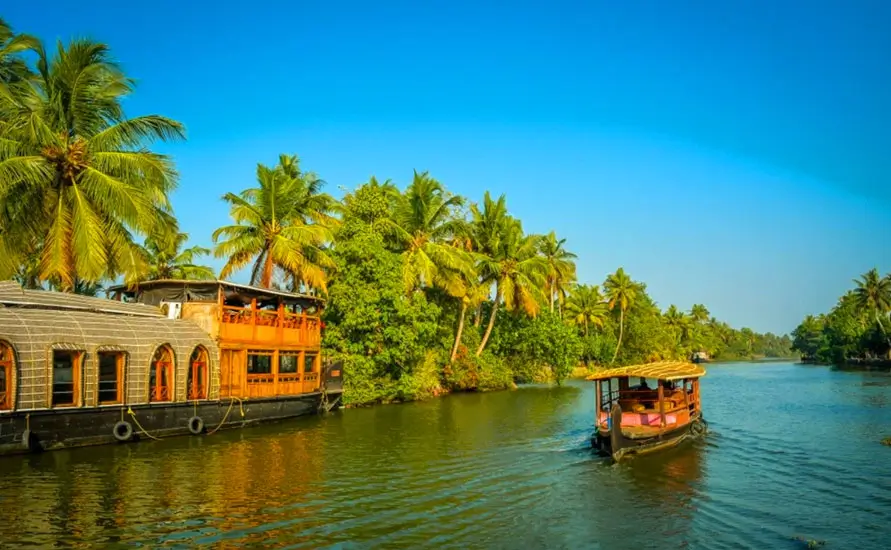
The resort has four dining venues, including Ettukettu, a multi-cuisine restaurant set in a building with two central courtyards, and Vembanad, a seafood bar on the backwaters, along with a traditional Kerala teashop where you can try sweet milky tea with banana fritters. Around five, a private motor launch leaves from the resort jetty for a sunset cruise, gliding past fishermen in dugout canoes and floating rafts of water hyacinth as the sun sinks behind the coconut palms. Supper is laid out by the water under the stars; ask for karimeen pollichathu, local pearl-spot wrapped in banana leaf and roasted with masala. Overnight in Kumarakom.
Birds are at their most active in the first two hours of daylight, so a naturalist collects you at dawn for a walk through the Kumarakom Bird Sanctuary, around fourteen acres of lakeside thicket and mangrove close to the resort. Herons, egrets, darters, kingfishers and cormorants are seen all year, and between November and February migrants such as the Siberian stork and various waders arrive. The paths are flat and short, binoculars are provided, and your naturalist carries a spotting scope and a field guide so you can match each bird to its name. Returning hungry, you take breakfast in the courtyard of Ettukettu, where appam and stew sit beside eggs to order.
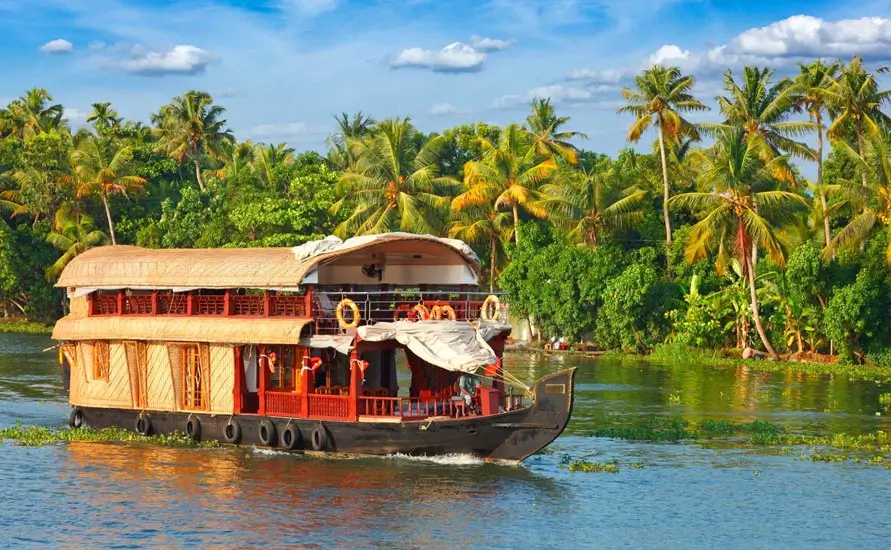
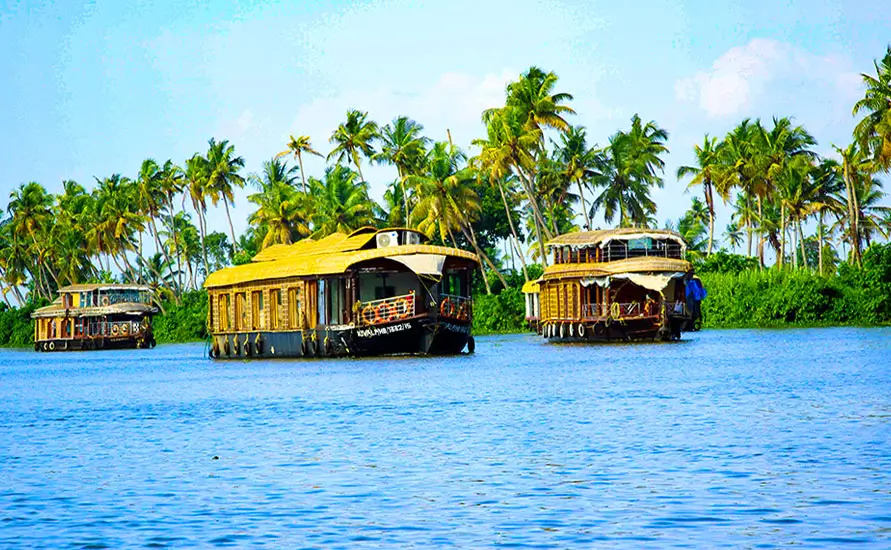
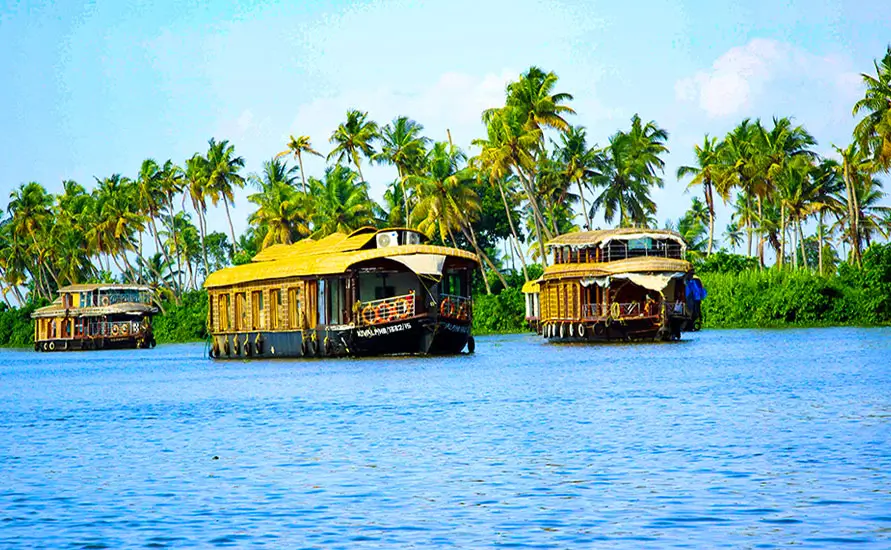
Toward eleven, a canoe-sized country boat takes you into the narrow village channels behind Kumarakom, too tight for any big rice-barge. Your boatman paddles past village homes, small churches and toddy shops, and through paddy fields lying below the level of the lake, where farmers grow rice behind earth embankments. If you would like a longer outing, a private houseboat day cruise can be arranged instead, with lunch cooked on board, returning to the resort in the late afternoon. Both options are relaxed, and the resort can provide umbrellas and drinking water.
The afternoon is set aside for the resort's Ayurvedic spa, which offers a wide range of traditional treatments from a single massage to programs lasting several days, along with daily yoga. Newcomers to Ayurveda usually start with abhyanga, in which two therapists work warm herbal oil into the body in matching strokes, then a steam. Others prefer simply to swim in the meandering pool, read in the shade of the coconut trees or cycle along the resort trails. In the evening a Kathakali or Mohiniyattam performance is held at the resort on some days. Overnight in Kumarakom.
After a last breakfast by the lake, your chauffeur drives you south toward the coast, past Changanassery, Thiruvalla and the busy town of Kollam, once a major port on the spice route. The route runs through some of Kerala's most densely settled countryside, with churches, temples, mosques and roadside fish stalls never far apart. Your chauffeur plans a lunch stop at a good restaurant along the way, perhaps for a Travancore fish curry with red rice, and you reach Kovalam, just south of Trivandrum, in the middle of the afternoon, with time to settle in before sunset.
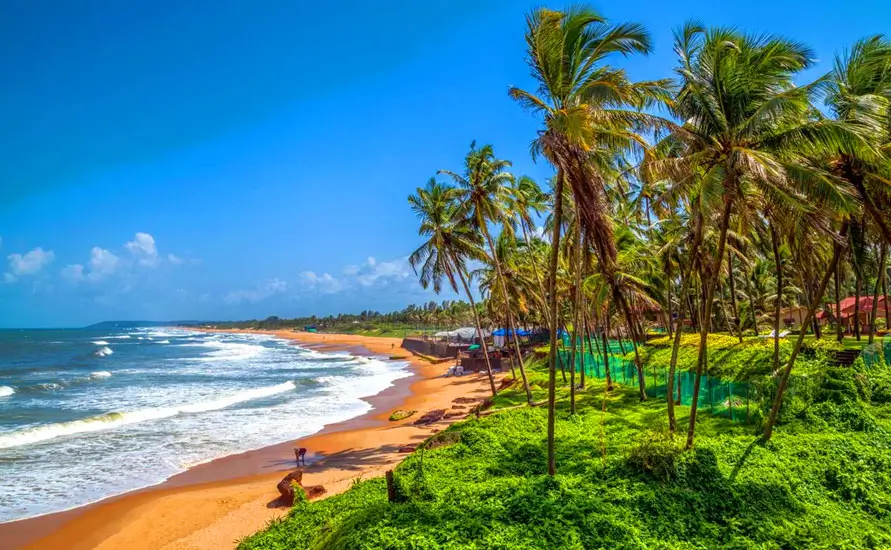
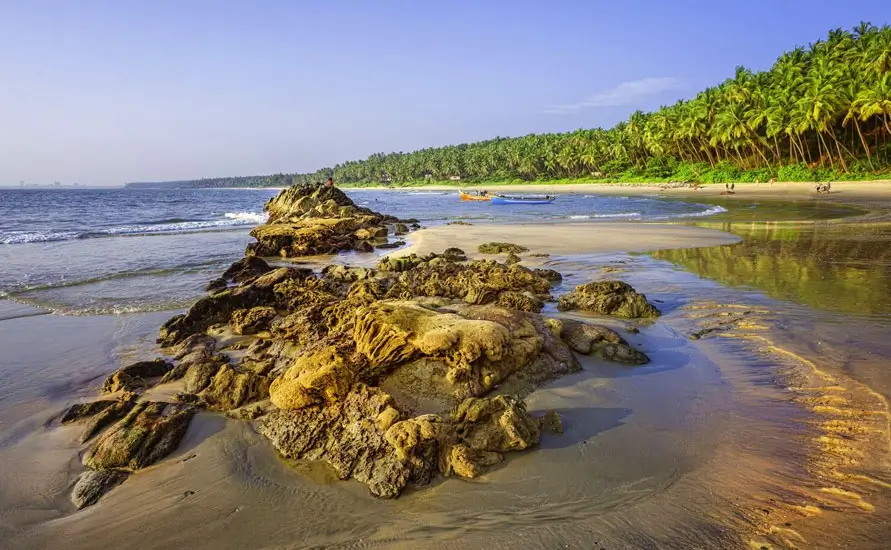
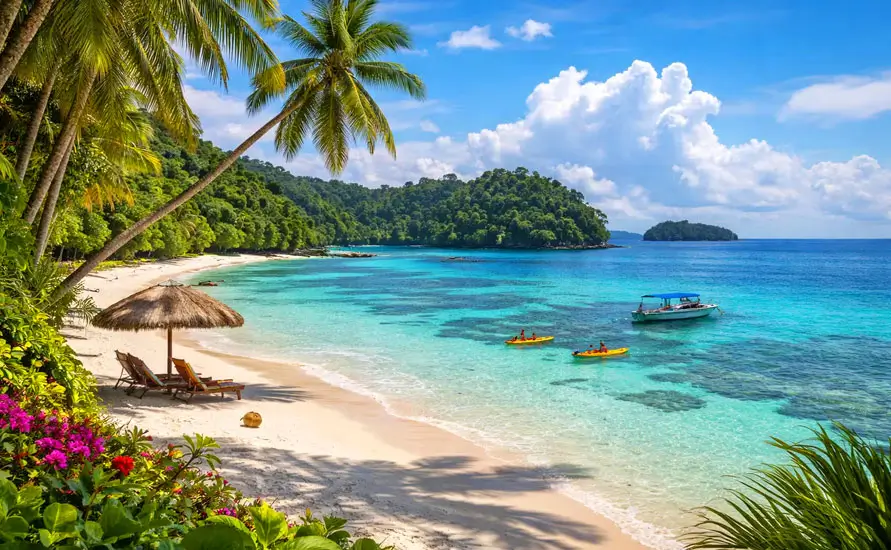
Taj Green Cove Resort & Spa sits on a hillside north of Kovalam beach, spread over about 10 acres of tropical gardens with views of palms, a backwater lagoon and the open ocean. The cottages have thatched roofs of elephant grass and private balconies reached through tall French windows, with dark wood furnishings and silk cushions inside. The beach lies a short walk downhill, and a golf buggy is available for the trip. Your sea-view cottage or room category is confirmed when you book, and we ask for one on the upper slopes for the best views.
In the evening, take a cocktail to the edge of the infinity pool as the light fades over the water, then choose between the resort's restaurants. Jasmine Bay serves multi-cuisine meals overlooking the pool and sometimes hosts cultural performances, Curries focuses on Indian dishes and has a walk-in wine cellar, and Bait is the seafood restaurant down on the beach, which grills or curries whatever the boats landed that morning. Private alfresco dinners on the lawn or the beach can be set up on request, with a menu agreed with the chef in advance and lanterns set out along the path. Overnight in Kovalam.
Trivandrum, officially Thiruvananthapuram, is the capital of Kerala and lies about half an hour from Kovalam. Your private guide begins at the Napier Museum, a red-and-black building in the Indo-Saracenic style, opened in the 1880s, which holds bronzes, temple carvings and ivory work. Within the museum grounds, the Sree Chitra Art Gallery displays canvases by Raja Ravi Varma, the 19th-century artist from a Kerala royal family who brought European oil techniques to Indian mythological subjects. The museum complex is usually closed on Mondays and on Wednesday mornings, and your guide picks the quietest hour for the galleries.
Next you drive into the old fort area, where the Sree Padmanabhaswamy Temple rises above a large temple tank. Only Hindus may enter the temple, and a strict dress code applies even to them, requiring men to wear a dhoti and go bare-chested and women to wear a sari or ankle-length skirt, so most visitors from abroad view the seven-tiered gopuram from outside. Your guide explains the temple's link to the Travancore royal family and the famous vaults opened beneath it in 2011. The streets nearby are full of brass, silk and sandalwood shops.
Beside the temple stands Kuthiramalika, also called the Puthen Malika Palace, built in the 1840s by Maharaja Swathi Thirunal, a ruler remembered as a composer of Carnatic music. The palace takes its name from the 122 carved wooden horses that support the eaves along its outer wall, and inside it holds royal furniture, weapons and musical instruments. Opening hours are limited and the palace closes on Mondays, so we set this day accordingly. Return to Taj Green Cove for a late lunch and a free afternoon by the pool. Overnight in Kovalam.
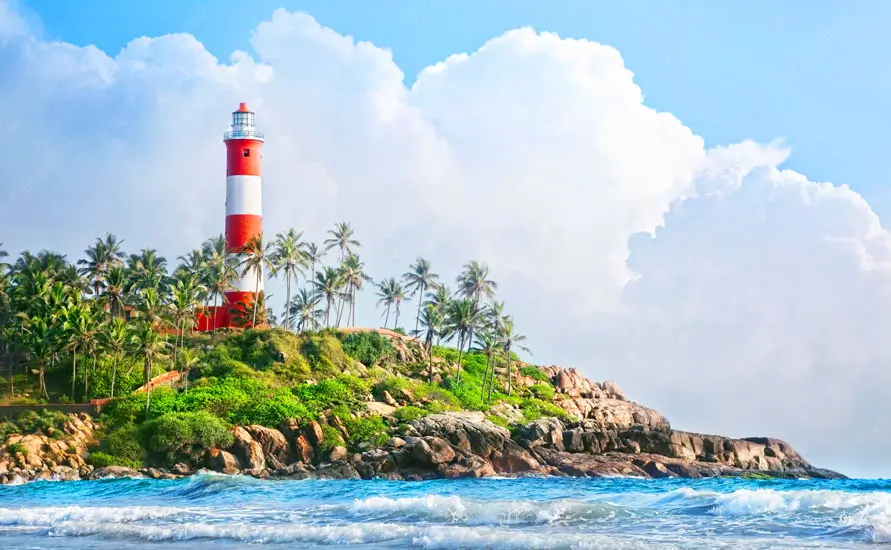
Today has no fixed plan, and many guests find a full day at the resort is the best way to close a trip like this. Begin with an early swim before the sun is high, or a walk along the sand to the red-and-white Vizhinjam Lighthouse, which stands on a rocky headland at the south end of Kovalam's beaches and can be climbed for a view along the coast. Fishermen often haul in their nets by hand along the beach in the morning, a slow process that involves the whole crew pulling in rhythm.
Before lunch, book an hour or two at the Jiva Spa, the Taj group's wellness brand, which has single and double treatment rooms and offers therapies based on Indian traditions, from Ayurvedic massages to body scrubs made with local herbs and spices. Yoga sessions can be arranged on request, and a small gym and Jacuzzi are also available. Lunch can be light, perhaps grilled fish and salads at Bait, followed by a long rest in the shade of your balcony as the sea breeze moves through the palms and the sound of the surf drifts up from below.
In the late afternoon, if you want a short outing, your chauffeur can take you to the fishing harbor at Vizhinjam, the old Pandya-era rock-cut cave shrine nearby, or the nearby backwater lagoon of Poovar, where a small boat drifts through mangroves to the point where the river meets the sea. Otherwise, stay at the resort for a farewell dinner, which we can arrange as a private table on the lawn or by the pool. Take time tonight to pack, since tomorrow's departure is timed around your flight. Overnight in Kovalam.
Breakfast is your last view of the ocean from the hillside; after that a thirty-minute ride takes you to Trivandrum International Airport. The airport has direct flights to the Gulf and to Southeast Asian hubs, from which long-haul flights continue to London, Frankfurt, New York and Sydney. For a night departure, we ask the resort to hold your cottage longer, subject to availability, or set up a short visit to the Kerala crafts center in the city before you leave.
Over ten days you have stayed in four of Kerala's finest hotels, from a harbor-side boatyard and a planter's bungalow to a lake resort and a beach retreat, with private guides at each stop. Our Kerala office stays reachable right up to boarding, and we would be pleased to plan your next visit, perhaps for a longer Ayurveda stay or a tour of the Tamil temple towns.
Your Journey

N.S. Rathore & Mrs. Omlata Rathore · Managing Director
We still read every enquiry ourselves. Tell us the places you liked and our planners will send a day-by-day route with drive times and a clear price.
Every package can be customised and no pressure to book. A planner from our office replies within 24 hours with a route written for your group.
Fill this in and your planner will send a first draft itinerary.
Explore more
Kerala Backwaters Escape Kerala Backwaters Escape
 Kerala Backwaters Escape
 Kerala Backwaters Escape
 Kerala Backwaters Escape
 Kerala Backwaters Escape
 Kerala Backwaters Escape
 Kerala Backwaters Escape
 Kerala Backwaters Escape
 Kerala Backwaters Escape
 Kerala Backwaters Escape
 Kerala Backwaters Escape
 Kerala Backwaters Escape
 Kerala Backwaters Escape
 Kerala Backwaters Escape
 Kerala Backwaters Escape
 Kerala Backwaters Escape
 Kerala Backwaters Escape
 Kerala Backwaters Escape
 Kerala Backwaters Escape
 Kerala Backwaters Escape
 Kerala Backwaters Escape
 Kerala Backwaters Escape
 Kerala Backwaters Escape
 Kerala Backwaters Escape