
 Kerala Backwaters Escape

Luxury South India Tours
Delhi – Agra – Fatehpur Sikri – Abhaneri – Jaipur – Kochi – Kumarakom – Kovalam – Trivandrum
At a glance
Our Golden Triangle with Taj Palaces and Kerala links the two halves of India that first-time luxury travelers most want to see, and keeps every night under the Taj name. The north brings Mughal and Rajput history: Old Delhi's mosques and bazaars, the Taj Mahal at first light, and the forts of Jaipur. The south slows everything down, with a colonial harbor hotel in Kochi, a lakeside estate on Vembanad and a hillside resort above the Arabian Sea. You see marble tombs and spice godowns, desert forts and paddy canals, in a single, well-paced fortnight.
The centerpiece is Rambagh Palace in Jaipur, the former home of Maharaja Sawai Man Singh II and Maharani Gayatri Devi, which became one of India's first palace hotels in the 1950s. Three nights there leave time for both sightseeing and the palace itself: its lawns, its peacocks and its long marble corridors. Before Jaipur, you stay at the Taj Palace, New Delhi in the leafy Diplomatic Enclave and at the Taj Hotel & Convention Centre in Agra, which is within walking distance of the monument and has a rooftop with views of its domes.
From Jaipur you fly to Kochi, usually with one connection in Mumbai, Delhi or Bangalore, and the second week is spent in Kerala at Taj Malabar, Taj Kumarakom and Taj Green Cove, before you fly out of Trivandrum. This Golden Triangle with Taj Palaces and Kerala tour is planned for travelers who want comfort at every stop: private chauffeur-driven cars, expert guides, airport meet-and-assist and rooms chosen for their view. Since the Taj Mahal is closed on Fridays, we set your arrival date so the sunrise visit never falls on that day.
Long-haul flights from Europe and North America tend to reach Indira Gandhi International Airport in the evening or after midnight, and we track your flight so someone is waiting whatever the hour. Past immigration and customs at Terminal 3, look for our host holding your name; your bags are wheeled straight to a waiting premium car. The drive to the Taj Palace, New Delhi takes only around 25 minutes at night, since the hotel sits in the south-west of the capital, on the road between the airport and the embassies of Chanakyapuri.
The Taj Palace is a large, modern Taj hotel set in about six acres of gardens in the Diplomatic Enclave, and it often hosts visiting heads of state and trade delegations. Its rooms are quiet and well insulated from the city, and many look over the lawns and the outdoor pool. The hotel's restaurants cover a wide range: Masala Art serves North Indian dishes cooked at an open kitchen, while other outlets offer European and Asian menus. The Jiva Spa offers treatments drawn from Indian traditions, which can help after a long flight.
Your first day is kept light. If you landed early, a late breakfast and a nap are a good start, and in the afternoon you may like a gentle walk through Lodhi Garden, about twenty minutes away, where 15th-century tombs of the Sayyid and Lodi sultans stand among lawns used by joggers and families. Back at the hotel, the evening is free for dinner and an early night, ready for a full day in the city tomorrow. Our team briefs you on the plan for the north in a short meeting before dinner. Overnight in Delhi.
Delhi has been rebuilt at least seven times, and the best way to understand it is to start with the Mughal city of Shahjahanabad, founded by Shah Jahan in the 17th century. Your private historian guide meets you after breakfast and takes you to the Jama Masjid, India's largest mosque, built in red sandstone and white marble between 1650 and 1656. Visitors remove their shoes and dress modestly, with robes provided at the gate. From the courtyard, you can see the walls of the Red Fort, the Mughal palace complex now listed by UNESCO, which you pass on your way out.
A cycle rickshaw ride through the lanes of Chandni Chowk follows, with stops at a spice market on Khari Baoli, one of the largest wholesale spice markets in Asia, and at sweet shops that have been run by the same families for generations. Your guide can arrange a short tasting of jalebi, parathas or chaat at trusted stalls. After lunch you visit Raj Ghat, the simple black marble memorial to Mahatma Gandhi, and drive past India Gate and the government buildings of Lutyens' Delhi, built by the British in the early 20th century.
In the afternoon you continue to Humayun's Tomb, the garden tomb of the second Mughal emperor, completed in the 1570s, which inspired the later design of the Taj Mahal. The Qutub Minar, a 73-meter minaret begun around 1200, is your final stop, with its carved bands of Arabic calligraphy and the iron pillar that has resisted rust for centuries. Both sites are UNESCO-listed and best seen in the late afternoon light. You return to the Taj Palace in time for a swim or a drink in the bar before dinner. Overnight in Delhi.
After breakfast you leave Delhi on the Yamuna Expressway, a fast six-lane road that has cut the drive to Agra to around three and a half hours. The route passes the outskirts of Greater Noida and flat farmland of wheat, mustard and sugarcane, with brick kilns on the horizon. If you wish, a short detour on the way can take in Sikandra, the tomb of the Mughal emperor Akbar, where the gateway has inlaid marble patterns and langur monkeys sit on the walls. Your driver will tell you when you are close to Agra, so you can look out for the first sight of the city.
You check in to the Taj Hotel & Convention Centre, Agra by lunchtime. The hotel is one of the city's newer luxury properties, set within walking distance of the eastern gate of the Taj Mahal. Its 239 rooms include some with views of the monument, and we request one of these for you. The highlight is the rooftop infinity pool, which looks across the town to the domes of the Taj, along with Infini, the rooftop lounge. For dinner, Daawat-e-Nawaab serves Mughlai and Awadhi dishes such as galouti kebabs and slow-cooked biryanis.
Mid-afternoon belongs to Agra Fort, whose two-kilometer ring of red sandstone walls Akbar raised from 1565, and inside which his grandson Shah Jahan added white marble halls. Shah Jahan spent his last years here as a prisoner of his son Aurangzeb, and the Musamman Burj tower, where he died, looks straight down the river to the Taj Mahal. You finish at Mehtab Bagh, the Mughal garden on the opposite bank, where the Taj is reflected in the water at sunset. It is a quiet and less crowded view than the one from the main complex. Overnight in Agra.
Set the alarm for well before dawn: being so close to the east gate means you are among the first in line when the Taj Mahal opens, roughly half an hour ahead of sunrise. In those first minutes the dome shifts from dove gray through peach to dazzling white as light climbs over the Yamuna. The monument is closed every Friday, and we have already planned your dates around that rule. Security checks are strict, so leave food, tripods and large bags at the hotel, and bring only a phone or camera.
Inside the main gate, your guide explains how Shah Jahan built the tomb for his wife Mumtaz Mahal, who died in 1631, and how about 20,000 artisans worked on it for more than twenty years. You can see the four minarets leaning slightly outward, a design meant to keep them from falling on the tomb in an earthquake, and the inlay of semi-precious stones known as pietra dura. Shoe covers are provided at the entrance to the main platform. The upper chamber holds replica cenotaphs, and the real graves lie in a crypt below, closed to visitors.
You return to the hotel for a late breakfast, then visit Itimad-ud-Daulah's Tomb, known as the Baby Taj, which was built for Nur Jahan's father in the 1620s and was the first Mughal tomb made entirely of white marble. In the afternoon, a visit to a marble inlay workshop shows how artisans still cut and set small pieces of stone by hand, using techniques passed down from the Taj builders. Back at the Taj Hotel & Convention Centre, end the day on the rooftop as the sun sets behind the Taj Mahal domes. Overnight in Agra.
An hour west of Agra lies Fatehpur Sikri, the city built by Akbar in the 1570s to honor the Sufi saint Sheikh Salim Chishti, who had foretold the birth of his son. The capital was abandoned only about fifteen years later, possibly because of water shortages, and its red sandstone palaces are still in remarkably good condition. Look out for the single lotus-carved column holding up the private audience hall, and the airy, five-tiered Panch Mahal where court ladies took the evening breeze. The Buland Darwaza, a 54-meter victory arch, towers over the Jama Masjid, where visitors tie threads on the marble screens of the saint's tomb.
The drive continues into Rajasthan, and halfway to Jaipur a short detour takes you to Abhaneri and the Chand Baori, one of the deepest stepwells in India. Built in the 8th or 9th century, it has around 3,500 narrow steps arranged in a geometric pattern down thirteen levels to the water. Beside it stands the Harshat Mata Temple, with fine stone carvings. Lunch is at a roadside restaurant or a heritage stop on the way. You reach Jaipur in the late afternoon, where the city's pink walls glow in the low light as you drive in.
Your home for three nights is Rambagh Palace, set in about 47 acres of gardens in the south of Jaipur. The palace began in 1835 as a garden house, became a royal hunting lodge and was made the main residence of Maharaja Sawai Man Singh II in 1925. In the 1950s it was turned into a hotel, one of the first palace hotels in India, and the Taj group has run it since 1972. Your welcome may include a shower of rose petals as you arrive under the porch, and peacocks call from the lawns at dusk. Overnight in Jaipur.
By eight you are climbing to Amber Fort, the hilltop stronghold the Kachwaha clan ruled from until Sawai Jai Singh II laid out a new city on the plain below in 1727. You can walk up the ramp or ride a jeep to the main gate, where the honey-colored walls rise above Maota Lake. Inside, the Sheesh Mahal, the Hall of Mirrors, is covered with thousands of small mirror pieces set in plaster, and a single candle once lit the whole room. Your guide also shows you the Ganesh Pol gateway and the women's quarters with their latticed windows.
Heading back, pause by Man Sagar Lake for the half-submerged Jal Mahal, then at the Hawa Mahal, the Palace of Winds, whose 953 small latticed windows let palace women watch festivals in the street below without being seen. The City Palace comes after lunch; a flag on the Chandra Mahal shows when the royal family is in residence, and the Peacock Gate in its inner courtyard is the most photographed doorway in Rajasthan. Nearby, the Jantar Mantar observatory, built in the 1720s by Sawai Jai Singh II, holds giant stone instruments that measure time and track stars.
Return to Rambagh Palace around four, when the heat drops and gardeners turn on the fountains along the Mughal-style lawns. The palace's restaurant, Suvarna Mahal, was once the royal dining hall, with gilded mirrors, painted ceilings and crystal chandeliers, and serves dishes from Rajasthan and other royal kitchens of India. Before dinner, cocktails on the veranda or in the gardens are a Rambagh tradition. Ask the staff about the palace's connection with polo, a sport the Maharaja played at an international level, and look for the old photographs and trophies displayed in the bar. Overnight in Jaipur.
Today is planned around the palace itself, with one short outing in the morning. Thirty minutes south of the palace lies Sanganer, where cotton has been hand block printed along the river for some four hundred years. In a family workshop, printers dip carved wooden blocks into natural dyes and press them onto long lengths of fabric, lining up each pattern by eye. You can try printing a scarf yourself. Your guide also explains the difference between Sanganeri and Bagru printing, and how to tell genuine handwork from screen prints when shopping.
Return to Rambagh Palace for lunch and an afternoon at leisure. The palace's spa offers treatments drawn from Indian traditions, and the indoor pool, with its arched ceiling, is one of the quietest corners of the property. If you prefer to stay active, the hotel can arrange a ride through Jaipur in a vintage car, a tour of the palace grounds with its in-house historian or a yoga session in the garden pavilion. Families can enjoy cooking demonstrations or kite flying on the lawns, which is a Jaipur tradition every January around the Makar Sankranti festival.
In the evening, your guide takes you to the Birla Mandir, a white marble temple dedicated to Lakshmi and Narayan, lit up after dark and open to visitors of all faiths. On the way back, a short stop in the bazaars of Johari Bazaar shows Jaipur's jewelry trade, with shops selling cut stones, silver and kundan pieces. Back at Rambagh, end your last evening with dinner on the terrace or at the palace's casual restaurant, followed by a drink in the bar. Pack before bed, as tomorrow's flight to Kerala leaves after breakfast. Overnight in Jaipur.
Rambagh sits close to Jaipur's airport, so the morning transfer after breakfast takes barely twenty minutes. There are few direct flights from Jaipur to Kochi, so the trip usually connects through Mumbai, Delhi or Bangalore, taking five to eight hours in total depending on the schedule. We book through-tickets so your luggage is checked to Kochi, and our team watches the connection. As the plane descends into Kerala, the dry plains of Rajasthan give way to coconut palms, rivers and the green tropical coast.
Landing at Kochi, you are greeted by our Kerala staff and driven roughly an hour to Willingdon Island, whose northern point is occupied by the Taj Malabar Resort & Spa, its lawns running right down to the harbor channel. The hotel's heritage wing dates from 1935, when it opened to welcome ocean steamer passengers. Tonight is free to rest after a long day of travel. Dine at Rice Boat on the waterfront, where Malabar prawn curry and tiger prawns tossed in pepper are a good introduction to Kerala's coast. Ask for the table closest to the channel to watch the ferry lights pass. Overnight in Kochi.
The Taj Malabar looks out over the busiest stretch of Kochi harbor, and the morning is the best time to watch the port wake up from the hotel's waterfront lawn. Container ships wait at anchor, ferries cross between Fort Kochi, Vypeen and Ernakulam, and fishermen steer small boats home after the night's catch. The hotel's heritage rooms keep the teak floors, high ceilings and arched windows of the old building, while the tower rooms offer wider views. After breakfast, a private boat takes you across the channel to Fort Kochi, which is the easiest way to get there from the island, avoiding the slow bridge traffic.
Your guide takes you through Fort Kochi by its quieter streets, starting at the old Dutch cemetery and St. Francis Church, then on to the Princess Street area with its Portuguese houses and cafés. Many old warehouses have been turned into galleries, especially around the times of the Kochi-Muziris Biennale. A short ride inland brings you to Mattancherry, where the Ramayana murals of the old royal palace and the blue-tiled floor of the 1568 synagogue are slotted into a weekday when neither is shut. A spice trader may invite you to his godown, where sacks of pepper, ginger and turmeric are weighed and stored for export.
Late in the afternoon, the Taj Malabar sunset cruise sails from the hotel's own jetty around the harbor islands, passing the shipyard, naval base and the Chinese fishing nets of Fort Kochi in golden light. Afterward, you can attend a Kathakali recital, Kerala's classical dance-drama, where performers use eye movements, hand gestures and drumming to tell stories from the epics. Your guide can arrange front-row seats at a small theater in Fort Kochi or a performance at the hotel. Dinner tonight could be at the hotel's restaurant near the water. Overnight in Kochi.
The morning is free for a last walk around Willingdon Island, a swim in the pool or a treatment at the J Wellness Spa, which offers Ayurvedic therapies. In the late morning your driver takes you south-east through Tripunithura, the old seat of the Kochi royal family, where the Hill Palace museum displays the crowns, palanquins and court costumes of the former rulers. A visit adds about an hour and is optional. The road then winds through the villages of Kottayam district, past small churches, rubber trees and canals lined with coconut palms.
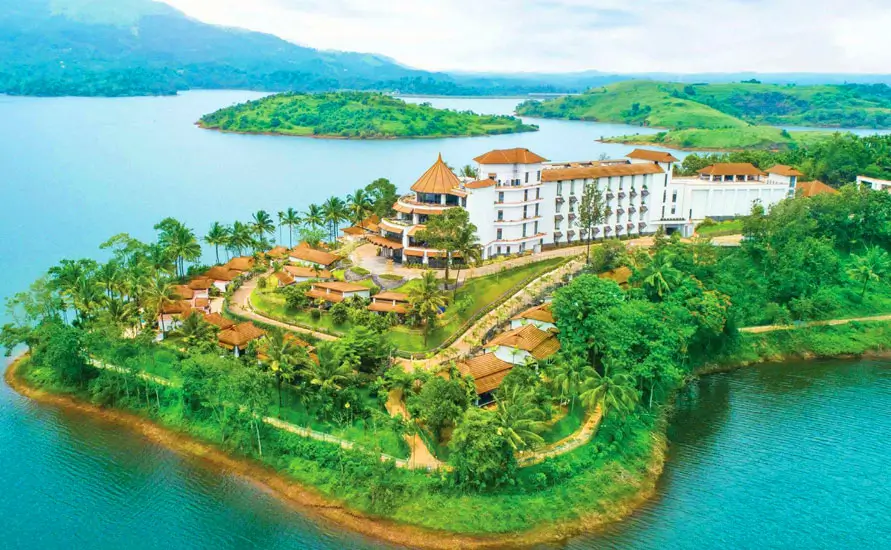
You arrive at Taj Kumarakom Resort & Spa in time for lunch. Its oldest building, a whitewashed 19th-century bungalow raised by an English missionary family named Baker, faces Vembanad Lake across a strip of lawn and coconut palms. The old house now holds heritage rooms with wooden floors, antique furniture and windows onto the lagoon, while newer villas and pool villas are spread through the gardens, some facing lotus ponds. The grounds are crossed by narrow canals, and small wooden bridges connect the different sections of the resort, so a stroll to dinner feels like a walk through a village.
Spend the afternoon relaxing by the lagoon pool, then join the resort's bamboo rafting session, a gentle guided trip on the lagoon in a raft made of lashed bamboo poles, which is popular with families and offers a close look at the water birds. At dusk, the staff light the traditional brass oil lamps across the grounds, a ritual linked to Kerala homes and temples. Dinner at the lagoon-side Vembanad Bistro, lit by oil lamps, is a fitting first evening on the backwaters, with grilled fish and Kerala curries on the menu. Request a lakeside seat, where flickering lamp flames double in the still lagoon. Overnight in Kumarakom.
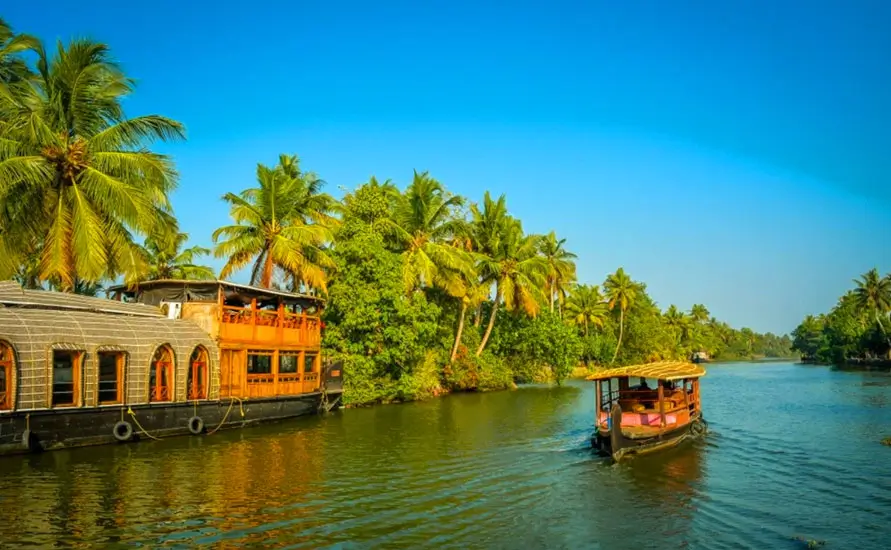
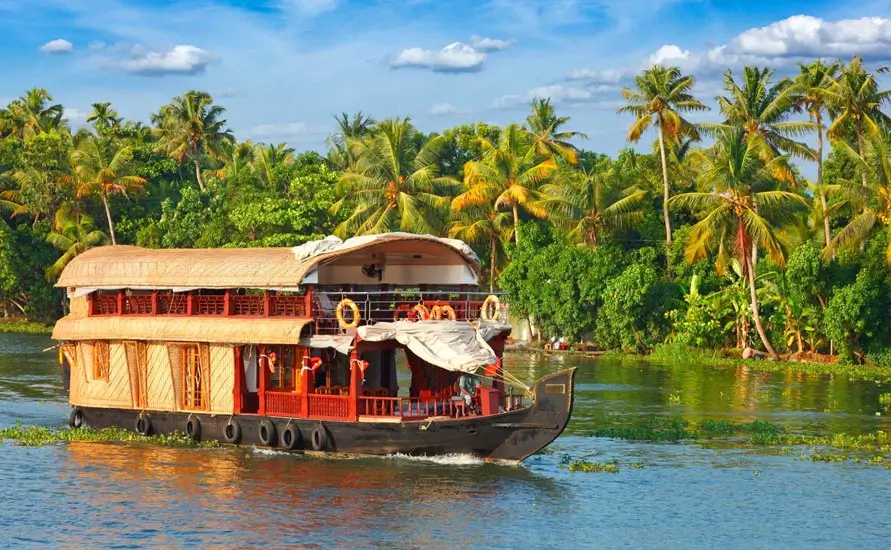
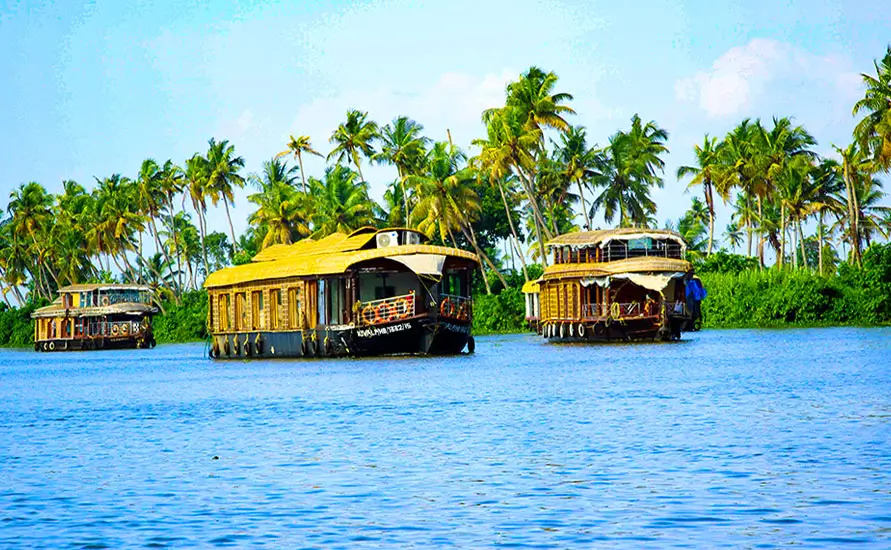
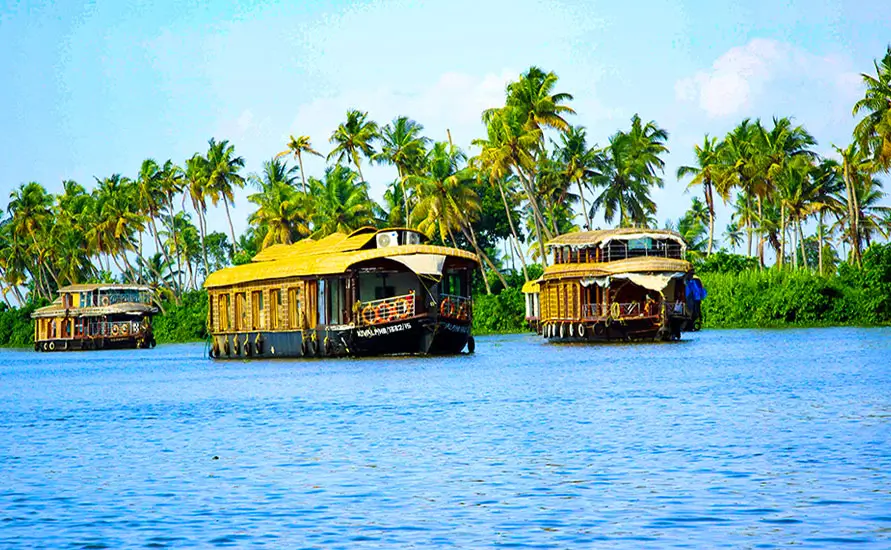
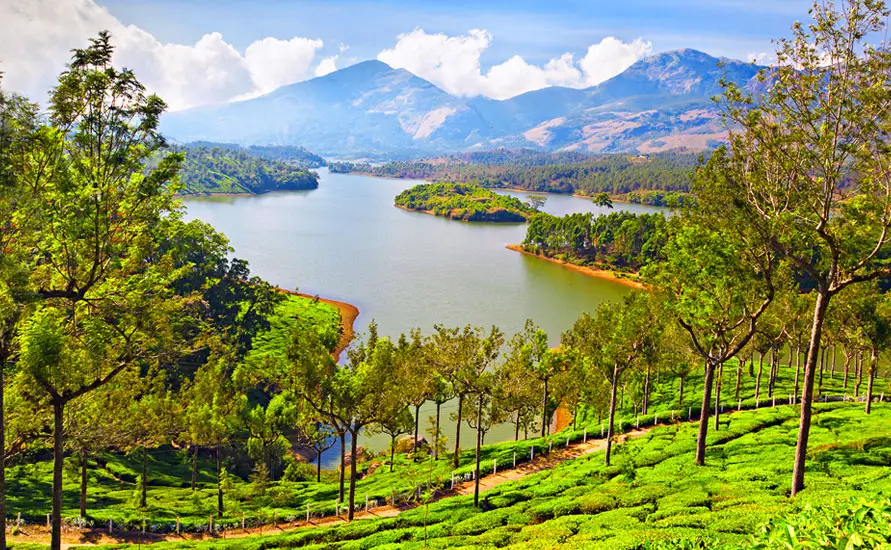
Early morning is the most peaceful time on the lake, and a private country boat, a wooden canoe poled by a boatman, takes you out from the resort jetty into the narrow canals around Kumarakom. Unlike a houseboat, the canoe can enter the smallest channels, where houses sit right on the water's edge, women wash brass pots on stone steps and kingfishers dart past. You might see a toddy tapper climbing a palm to collect the morning sap. The boatman speaks some English, but your guide joins you to explain the village life along the banks.
After breakfast, the resort's chef invites you to a Kerala cooking session, where you learn to prepare dishes such as fish moilee, a mild coconut curry, avial with mixed vegetables and fluffy appam made with fermented rice batter. As you stir and taste, the cook tells you why kudampuli, the smoky Malabar tamarind, sours a fish curry better than lime, and why Syrian Christian kitchens favor it. Lunch is whatever your own hands produced, served at a lakeside table with a glass of chilled buttermilk spiced with ginger. The session is part of your package and can also be arranged as a private class.
The afternoon is free. You can take the resort's village cycle tour, book an Ayurveda consultation at the J Wellness Circle spa, which grew from an Ayurveda center that has run here for decades, or simply rest in your villa. As the sun sets, the lake turns orange and pink, and the fishing canoes return to the villages. The resort's lounge, Baker's Lounge, is a quiet spot for a drink in the evening, with a wine cellar room inside the old bungalow. Dinner tonight is at leisure at the resort. Overnight in Kumarakom.
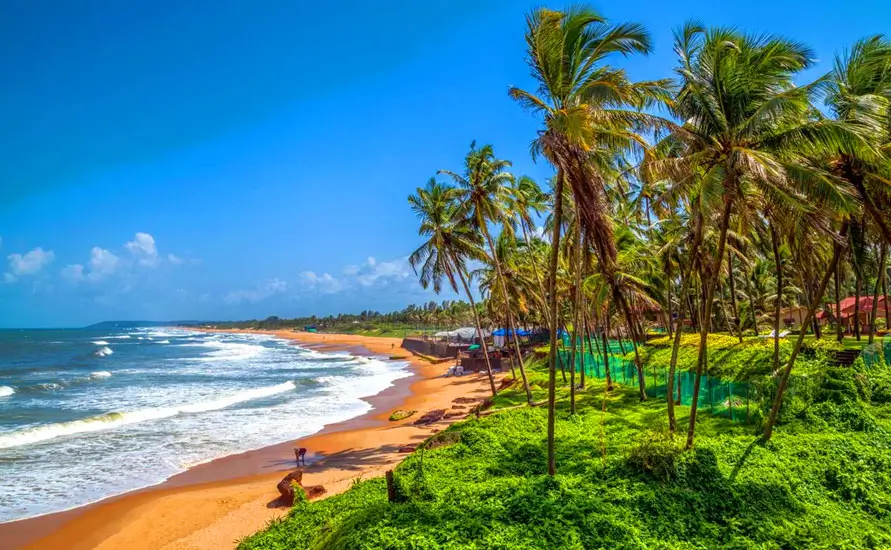
After breakfast you leave the backwaters and drive south along Kerala's central highway. A good break on the way is Varkala, a beach town about an hour north of Kovalam where red laterite cliffs drop straight to the sand. A path along the top of the cliff is lined with small cafés and shops, and on the beach below, the Papanasam stretch is believed to wash away sins. If you have time, visit the two-thousand-year-old Janardhana Swamy Temple above the beach, though only the outer parts are open to non-Hindus. Order a fresh juice and grilled fish at a café on the cliff edge, then watch paragliders drift past if the wind is right.
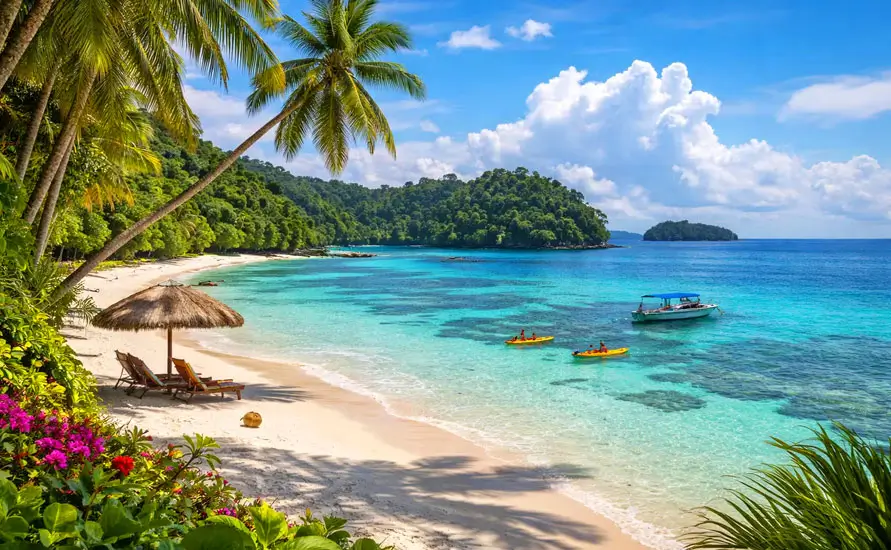
You reach Taj Green Cove Resort & Spa in the late afternoon. Terraced gardens planted in a loosely Balinese style climb from a quiet backwater inlet up the slope, so the resort feels secluded although Kovalam town is a few minutes away. Its hillside cottages are built from granite with thatched roofs and look onto the gardens or the lagoon, while the suites have balconies over the Arabian Sea. The resort is not directly on the beach, and buggies take you down to a sandy cove across the road, so you can swim in the sea and come back for lunch by the pool.
Settle in with an evening swim in the infinity pool, which overlooks the coast and the coconut palms. For dinner, the resort's Curries restaurant focuses on dishes from India's south-western coast, with Kerala, Mangalorean and Chettinad-style curries on the same menu. The staff can also arrange a private dinner on the lawn, with seafood bought that afternoon from the fishing boats at Vizhinjam harbor. Ask your waiter which fish came in that day, as the menu changes with the catch, and try it simply grilled with a squeeze of lime. Overnight in Kovalam.
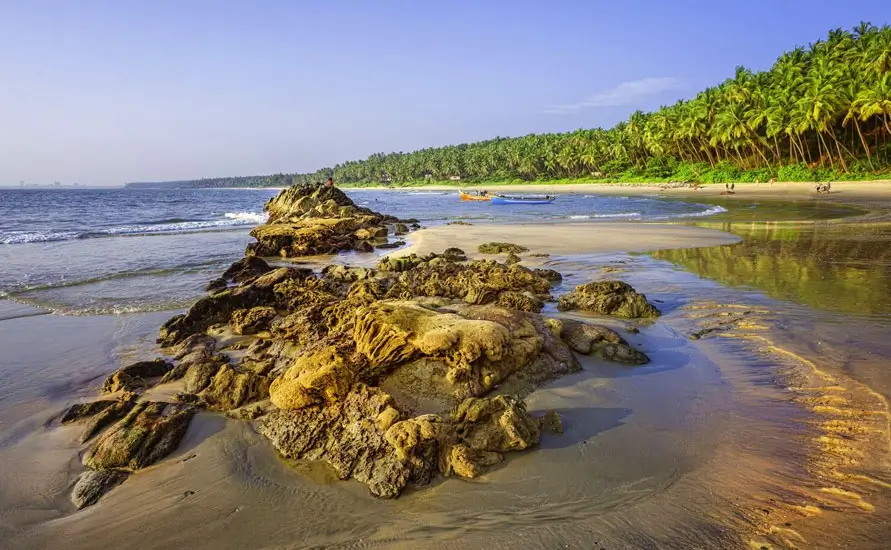
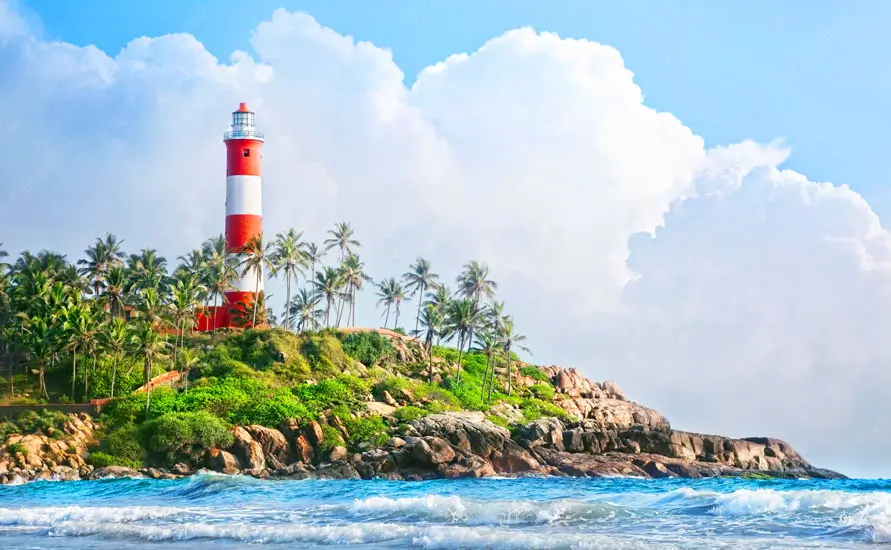
Kovalam's coast is best seen in the early morning, when fishermen haul in their long shore nets and the beaches are still quiet. Your guide takes you to Vizhinjam, a short drive south, one of Kerala's main fishing harbors, where wooden boats unload tuna, sardines and mackerel and the auctions take place on the dock. A rock-cut cave temple nearby, dating back many centuries, has carvings of Shiva and Parvati. You can also climb the Kovalam Lighthouse on Lighthouse Beach for views over the three crescent bays, though opening hours can change.
No outings are planned after this, so spend the hours as you like at the Taj Green Cove. After two weeks on the move, a long abhyanga oil massage or a herbal steam at the hillside spa is an easy way to recover. Families can join beach games or a guided nature walk through the gardens, which are full of frangipani, heliconia and hibiscus. If you want to swim in the sea, the resort's buggy takes you down to the beach, where lifeguards watch the marked areas. Currents can be strong, so swim only between the flags.
A farewell table can be laid by the lagoon at the back of the property, lit by small clay lamps, with the chef dropping by to talk you through each course. Bait, the resort's seafood restaurant, is another good option, serving fish and prawns grilled with Kerala spices. After dinner, take one last walk through the gardens as the evening breeze comes off the sea. Our team calls to confirm your departure time and the transfer to the airport tomorrow, and checks that your onward flights are on schedule. Overnight in Kovalam.
Today's excursion takes you about 55 km south-east, across the border into Tamil Nadu, to Padmanabhapuram Palace, the former seat of the rulers of Travancore before they moved the capital to Trivandrum in the late 18th century. Built mostly of teak and laterite, it ranks among Asia's largest timber palaces, and its glossy black floors are said to have been made from a paste of lime, egg white, coconut-shell ash and plant juices. Monday is its weekly closing day, and we plan your dates so the visit falls on another day.
Your guide shows you the Mantrasala, the king's council chamber, with its colored mica windows that let in soft light, and the Thai Kottaram, the oldest part of the palace, known as the mother's palace. Upstairs, the king's bedroom holds a carved medicinal bed made from 64 types of wood, each believed to have healing powers. Murals on the walls of the upper chambers show scenes from Hindu myths. The visit takes about two hours, and you can have lunch at a restaurant on the way back to Kovalam, where banana-leaf meals of rice, sambar and several vegetable dishes are the local norm.
On the drive back, you pass through Thuckalay and small villages where coconut fiber is spun into coir rope by hand, a craft that supports many families in this region. Return to the resort by mid-afternoon, with time for a final swim or a last spa treatment. Pack your luggage before dinner, and keep your passport and flight documents ready for tomorrow morning. The resort can arrange a farewell dessert on the terrace or a cake for any special occasion if you let them know in advance. Overnight in Kovalam.
Enjoy a relaxed breakfast before your chauffeur collects you for the short drive to Trivandrum International Airport. From Trivandrum you can fly via Doha, Dubai, Abu Dhabi, Singapore or Colombo to cities across the West, or route home through a major Indian hub. Our representative waits until your bags are tagged and you have cleared the entrance checks. For a night departure, ask us about holding the room into the afternoon, which the resort charges for and confirms only on the day.
In two weeks you have gone from Mughal marble and Rajput sandstone to Kerala's harbor, lake and sea, sleeping every night under the Taj flag, with a Maharaja's former home as the high point. If you would like to add Varanasi, Udaipur or the Andaman Islands before or after this trip, our team will plan the extension for you. Until next time, namaste.
Your Journey

N.S. Rathore & Mrs. Omlata Rathore · Managing Director
We still read every enquiry ourselves. Tell us the places you liked and our planners will send a day-by-day route with drive times and a clear price.
Every package can be customised and no pressure to book. A planner from our office replies within 24 hours with a route written for your group.
Fill this in and your planner will send a first draft itinerary.
Explore more
Kerala Backwaters Escape Kerala Backwaters Escape
 Kerala Backwaters Escape
 Kerala Backwaters Escape
 Kerala Backwaters Escape
 Kerala Backwaters Escape
 Kerala Backwaters Escape
 Kerala Backwaters Escape
 Kerala Backwaters Escape
 Kerala Backwaters Escape
 Kerala Backwaters Escape
 Kerala Backwaters Escape
 Kerala Backwaters Escape
 Kerala Backwaters Escape
 Kerala Backwaters Escape
 Kerala Backwaters Escape
 Kerala Backwaters Escape
 Kerala Backwaters Escape
 Kerala Backwaters Escape
 Kerala Backwaters Escape
 Kerala Backwaters Escape
 Kerala Backwaters Escape
 Kerala Backwaters Escape
 Kerala Backwaters Escape
 Kerala Backwaters Escape