
 Kerala Backwaters Escape

Luxury South India Tours
Delhi – Agra – Fatehpur Sikri – Jaipur – Kochi – Kumarakom – Marari
At a glance
Few first trips to India manage to cover both the Mughal north and the green south without feeling like a race. This Golden Triangle with Oberoi Hotels and Luxury Kerala tour does it by pairing two very different hotel styles. In Delhi, Agra and Jaipur you stay with Oberoi, the Indian group best known for polished service and palace-scale architecture, including a room at The Oberoi Amarvilas that looks straight at the Taj Mahal. Then a connecting flight carries you to Kerala, where three CGH Earth properties trade marble and chandeliers for teak, thatch and bare feet.
The contrast is the point. The first week covers the sights most visitors picture when they think of India: the Red Fort and Old Delhi lanes, a sunrise at the Taj Mahal, the abandoned Mughal capital of Fatehpur Sikri and the hilltop ramparts of Amber Fort. The second week slows right down, with Fort Kochi's colonial waterfront, the backwaters of Kumarakom and a final stretch on the sand at Marari Beach. Each hotel hosts you for two nights, so unpacking happens only six times in thirteen days.
A private chauffeur-driven car and senior English-speaking guides handle every day of this golden triangle and Kerala tour, and our airport teams meet you on each arrival. The trip suits couples, honeymooners and older travelers who want the classic highlights of North India with real comfort, then a genuine rest before the long flight home. October to March is the best window for both regions. Please note that the Taj Mahal is closed every Friday, and we build the Agra days around that rule.
A member of our airport team is waiting for you at Indira Gandhi International Airport, just beyond customs, holding a placard with your name. Porters take the bags, a cool towel and a bottle of water appear, and within minutes you are settled in the back of a private chauffeur-driven car heading toward central Delhi. The drive normally takes 40 to 60 minutes, depending on the hour you land. During the ride your host walks you through the next few days, hands over a local SIM card if you ordered one, and explains how tipping, money changing and phone data work in India.
Home for the first two nights is The Oberoi New Delhi, the group's flagship hotel on Dr. Zakir Hussain Marg, which reopened after a complete rebuild in 2018. The location is one of the best in the capital: rooms on the upper floors look out over the green fairways of the Delhi Golf Club, and from many windows you can pick out the red sandstone dome of Humayun's Tomb rising above the trees. Interiors are calm and modern, with soft lighting, walk-in rain showers and large desks, and the staff-to-guest ratio is high enough that requests are usually handled before you finish asking.
Long-haul flights tend to leave people tired and slightly hungry at odd hours, so nothing is planned for this first day. Many guests book an early check-in, sleep for a few hours and then spend the afternoon at the hotel spa or beside the outdoor pool. If you feel like stretching your legs later on, your driver can take you to Lodhi Garden for an evening walk among the 15th-century tombs, where joggers, families and couples gather when the air cools. For dinner, the Indian restaurant downstairs makes a gentle introduction to North Indian food, with tandoori breads and slow-cooked dals. Overnight in Delhi.
Seventeen centuries of capitals sit layered inside modern Delhi, and today your guide shows you the two faces that matter most to a first-time visitor. The morning belongs to Shahjahanabad, the walled city built by the Mughal emperor Shah Jahan in the 1640s and now known as Old Delhi. You start at Jama Masjid, the largest mosque in India, whose courtyard can hold some 25,000 worshippers. Visitors remove shoes at the gate and are lent robes if arms or legs are uncovered, and for a small fee you can climb the southern minaret for a view over the rooftops toward the Red Fort.
From the mosque steps you board a cycle-rickshaw for a ride through the lanes off Chandni Chowk, once an imperial parade route and now a dense web of wholesale markets. Silver jewelers, wedding-card printers and paper-kite sellers each have their own alley, and the air near Khari Baoli turns sharp with dried chili, turmeric and cardamom from the spice traders. Your guide stops at a family sweet shop that has been frying jalebis for generations, then walks you past the outer walls of the Red Fort, a UNESCO-listed citadel where India's prime minister still raises the flag every Independence Day.
After lunch the car takes you into Lutyens' Delhi, the planned capital the British laid out in the 1920s and 1930s, with its wide avenues, the domed Rashtrapati Bhavan and the war memorial arch of India Gate. The last stop of the day is Humayun's Tomb, the 16th-century garden mausoleum that inspired the design of the Taj Mahal and sits only a few minutes from your hotel. Late afternoon light turns its red sandstone almost copper, and the restored char bagh gardens are quiet at this hour. You return to The Oberoi for a free evening, perhaps with a drink on the terrace. Overnight in Delhi.
Breakfast is followed by a smooth run south on the Yamuna Expressway, a six-lane toll road that has cut the trip to Agra to around four hours. Your chauffeur makes a coffee stop at a clean highway plaza, and the road gives you glimpses of mustard and wheat fields, brick kilns and small farming villages. Agra was the seat of the Mughal empire under Akbar, Jahangir and Shah Jahan, and your guide meets you on arrival to give a short briefing on the dynasty, which makes the monuments of the next two days much easier to follow.
Check-in is at The Oberoi Amarvilas, the hotel that most people come to Agra hoping to stay in. Built in a Mughal style with terraced lawns, reflecting pools, fountains and pavilions, it stands roughly 600 meters from the Taj Mahal, and every single room and suite has an uninterrupted view of the monument. Many guests simply sit on their balcony with tea and watch the marble change color through the afternoon. The hotel's two restaurants are Esphahan, which serves North Indian and Mughlai dishes, and Bellevue, an all-day room with a terrace that faces the Taj.
Around four o'clock the car heads to Agra Fort, the red sandstone citadel on the bend of the Yamuna where Shah Jahan spent his final years as a prisoner of his own son, Aurangzeb. Inside you see the white marble Musamman Burj, the octagonal tower from which he is said to have gazed at his wife's tomb downstream. Toward sunset the car crosses the river to Mehtab Bagh, a Mughal garden directly opposite the Taj Mahal, where you can photograph the back of the monument with the light behind you and few people around. Dinner tonight is at your leisure. Overnight in Agra.
Set an alarm for about half an hour before dawn, because the gates of the Taj Mahal open at sunrise and the first visitors in get the cleanest light and the emptiest views. Staying at Amarvilas means the east gate is only a few minutes away, and the hotel can drive you to the entrance by electric buggy. Your guide handles the tickets and the security check, where food, tripods and large bags are not allowed. The monument is closed to everyone on Fridays, so if your dates fall that way we switch the Agra days around and you still see it at first light.
Shah Jahan began building the mausoleum in 1632 for his favorite wife, Mumtaz Mahal, who died giving birth to their fourteenth child, and around 20,000 workers spent more than two decades completing it. Once you climb onto the marble plinth beyond the long water channel, your guide picks out what the camera tends to miss: the calligraphy that grows larger toward the top of the arches so it looks even from the ground, the semi-precious stones set into the marble in floral patterns, and the slight outward lean of the four minarets, designed to fall away from the tomb in an earthquake.
Back at Amarvilas there is time for a late breakfast on the terrace and a rest by the pool before an afternoon visit to Itmad-ud-Daulah, often called the Baby Taj. Built by the empress Nur Jahan for her father, this small marble tomb on the far bank of the Yamuna was the first Mughal building to use stone inlay on such a scale, and it is far less crowded than its famous neighbor. A short stop at a marble workshop shows how the inlay is still cut and fitted by hand. The evening is yours, ideally at a table with a view of the floodlit dome. Overnight in Agra.
About an hour west of Agra, the car pulls up below the walls of Fatehpur Sikri, the red sandstone city Akbar built in the 1570s and abandoned after only about fourteen years, most likely because of water shortages. The palaces, audience halls and courtyards survive in remarkable condition. Your guide shows you the Diwan-i-Khas, where a single carved pillar supports a platform on which Akbar is said to have debated with scholars of many faiths, and the Panch Mahal, a five-storied pavilion that once caught the breeze for the ladies of the court.
Next door is the Jama Masjid of Fatehpur Sikri, entered through the enormous Buland Darwaza, a victory gate more than 50 meters tall. Inside the courtyard sits the white marble tomb of the Sufi saint Salim Chishti, whose blessing Akbar believed brought him a long-awaited son. Women and men of all religions still tie red threads to the carved marble screens while making a wish. After a light lunch the drive continues into Rajasthan on a good highway, and you notice the landscape turning drier and rockier, with camel carts and women in bright odhnis appearing along the roadside.
You reach The Oberoi Rajvilas on the eastern edge of Jaipur in the late afternoon. Spread across 32 acres of gardens, orchards and reflecting pools, the hotel is laid out like a small Rajasthani fort, with pink walls, domed pavilions and peacocks wandering the lawns. Rooms are divided between garden rooms, luxury tents with teak floors and carved wooden furniture under canvas roofs, and villas with their own walled gardens and private pools. In the middle of the grounds stands an old Shiva temple where a priest still performs the evening aarti, and guests are welcome to watch quietly. Overnight in Jaipur.
Rajput rulers held these hills for centuries before Maharaja Sawai Jai Singh II founded the new city of Jaipur on the plains in 1727. Your guide starts the day at their older stronghold, Amber Fort, about 11 km north of the city, arriving early to beat the heat and the tour coaches. A jeep carries you up the ramp to the main courtyard. Inside, the highlights are the Diwan-i-Am with its double row of columns, the Ganesh Pol gateway painted with frescoes, and the Sheesh Mahal, a hall whose walls and ceiling are covered in thousands of tiny convex mirrors that sparkle when a single candle is lit.
On the way back into town you pause at the edge of Man Sagar Lake to see Jal Mahal, a palace that appears to float in the water, before entering the walled old city, painted its famous shade of terracotta pink in 1876 to welcome the Prince of Wales. The City Palace is still partly home to the former royal family, and its museum displays costumes, weapons and the two huge silver urns a maharaja filled with Ganges water for a voyage to England. Across the square, the Jantar Mantar observatory holds giant masonry instruments, including a sundial accurate to within about two seconds.
Your last photo stop is the Hawa Mahal, the honeycombed façade of 953 small windows built so that royal women could watch street processions without being seen. Late afternoon is a good time to wander Johari Bazaar and Bapu Bazaar with your guide, who can point you to reliable shops for block-printed textiles, silver and enamelware if you want to buy anything. Back at Rajvilas, the spa occupies a restored haveli and specializes in Ayurvedic and Indian therapies, which suits tired legs after a day of ramps and stairs. Dinner by candlelight in the courtyard ends your stay in the north. Overnight in Jaipur.
After a slow breakfast in the garden, your chauffeur drives you to Jaipur International Airport, about 30 minutes from the hotel, for your flight south to Kochi. There is usually no non-stop service on this route, so the booking normally includes a connecting flight through Delhi, Mumbai or Bangalore, with a total travel time of around five to seven hours depending on the schedule. We choose the connection with the most comfortable layover, and our team in Jaipur stays with you until check-in is complete. Snacks on board are limited, so you may want lunch in the airport lounge.
A Kerala host is waiting in the arrivals hall at Cochin, and the road to Fort Kochi winds for roughly ninety minutes through the island suburbs. Brunton Boatyard occupies the site of a 19th-century British shipyard on the edge of Kochi harbor, and the CGH Earth team rebuilt it in the old colonial style, with whitewashed walls, wooden staircases, punkah fans and four-poster beds. Every room faces the water, and container ships, fishing boats and the local ferry pass within a stone's throw of your balcony. A late dinner of Kerala seafood at the History restaurant is a fine end to a long travel day. Overnight in Kochi.
Waking up at Brunton Boatyard is part of the stay: ferries hoot, fishermen call across the water and the breakfast terrace looks directly at the mouth of the harbor. Your guide collects you after breakfast for a walk around Fort Kochi, a port town shaped in turn by spice buyers from Arabia, China, Lisbon, Amsterdam and London. Within a few minutes you reach the waterfront line of Chinese fishing nets, which are most active in the morning when the tide is right, and you can watch a crew work the giant wooden frames with ropes and boulders.
The walk continues to St. Francis Church, the oldest European-built church in India, and along shady streets of colonial-era houses with deep verandas to the Santa Cruz Basilica. A short drive then takes you to Mattancherry, home of the Mattancherry Palace with its Ramayana murals, and the neighborhood known as Jew Town, where the 16th-century Paradesi Synagogue still stands at the end of a lane full of antique dealers. Because the palace shuts every Friday, and the synagogue on Friday, Saturday and Jewish festivals, we fix this day to suit your calendar.
The afternoon is free to rest at the hotel or browse the spice godowns and art galleries along Bazaar Road, where the warehouses still smell of pepper and ginger. Come early evening, seats are reserved for a Kathakali show in a small Fort Kochi playhouse, and you arrive in time to see the actors paint their faces with rice paste and natural colors. Our guide sits with you for the first part of the show to decode the eye movements and hand gestures. Back at the hotel, try a sundowner on the lawn as the last ferries cross the harbor. Overnight in Kochi.
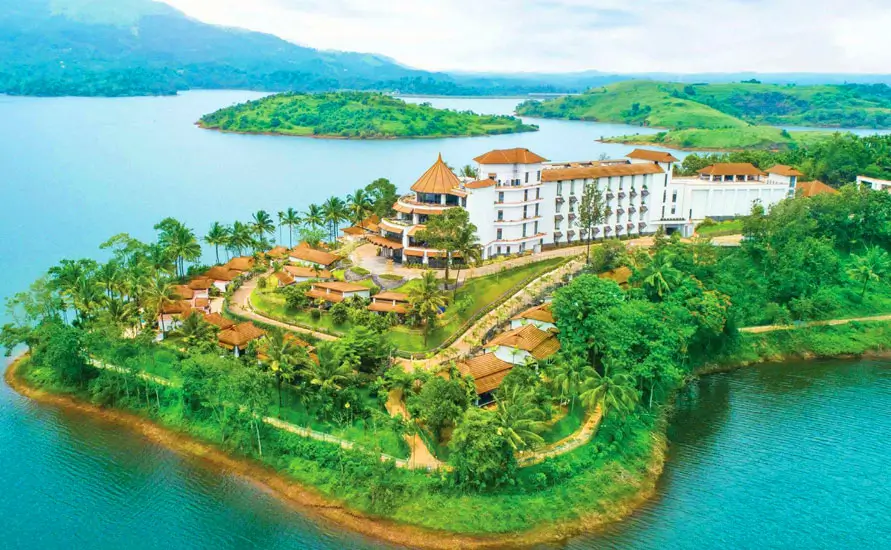
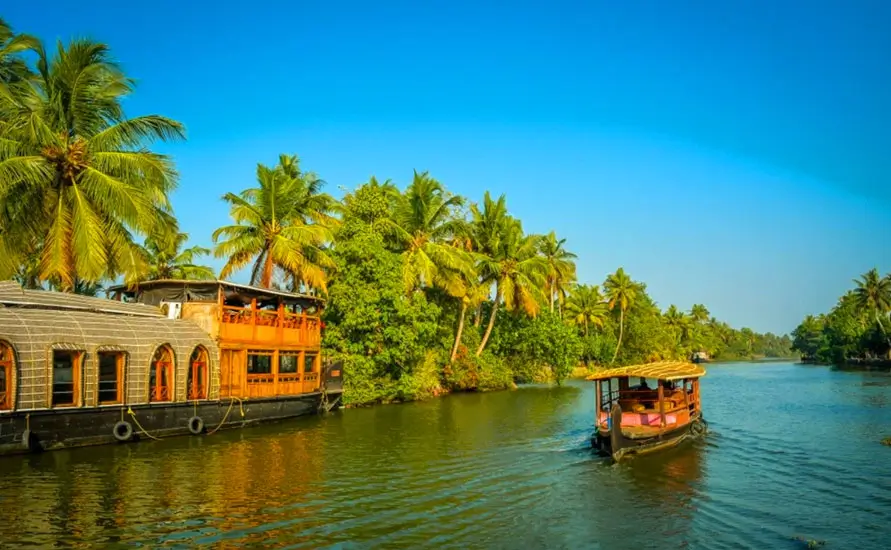
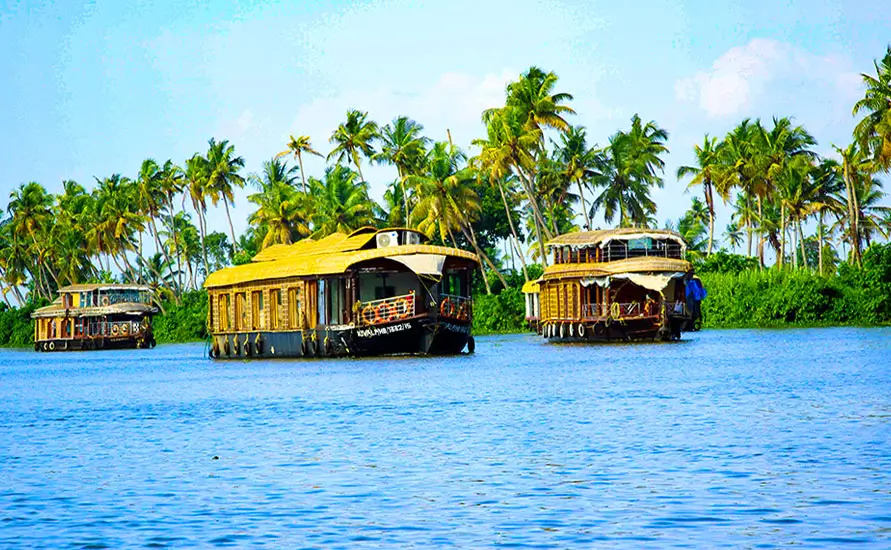
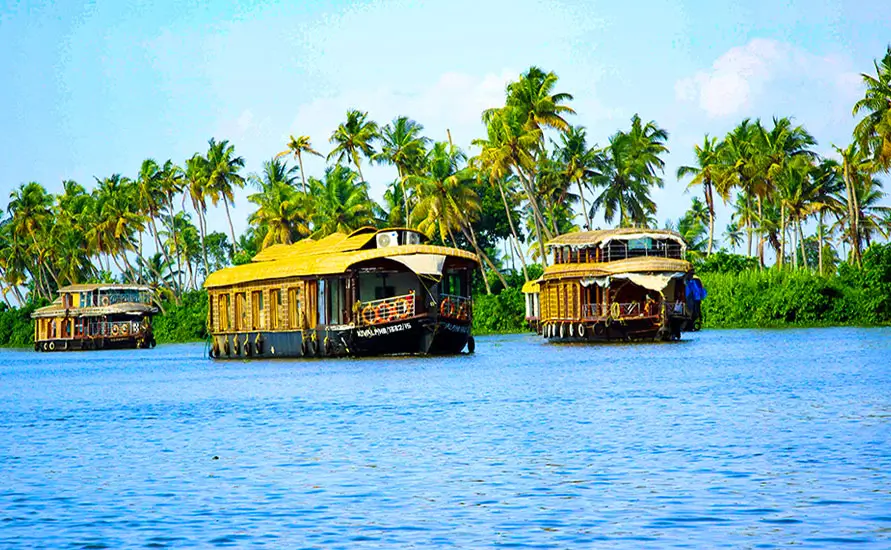
Kerala's road traffic moves at its own pace, and the drive inland to Kumarakom passes through small towns, rubber plantations and roadside churches before reaching Vembanad, Kerala's biggest body of fresh and brackish water. Your driver brings you to a jetty, and from there a boat carries you across the water to Coconut Lagoon, because the resort has no road access at all. Arriving this way, with herons lifting off the reeds and the sound of the engine fading as you come alongside, sets the tone for the next two days better than any welcome speech.
The resort is one of the oldest CGH Earth properties and is built from traditional Kerala tharavads, wooden ancestral homes that were bought, dismantled and rebuilt here plank by plank. Heritage bungalows have carved wooden ceilings, open-air bathrooms and low verandas on the canals, while the pool villas add a private plunge pool and garden. Staff suggest leaving shoes at the door and walking barefoot on the polished floors, which is exactly what most guests end up doing. Meals are served at the lakeside restaurant and lean toward Kerala home cooking, with fish curry in clay pots and fresh coconut in almost everything.
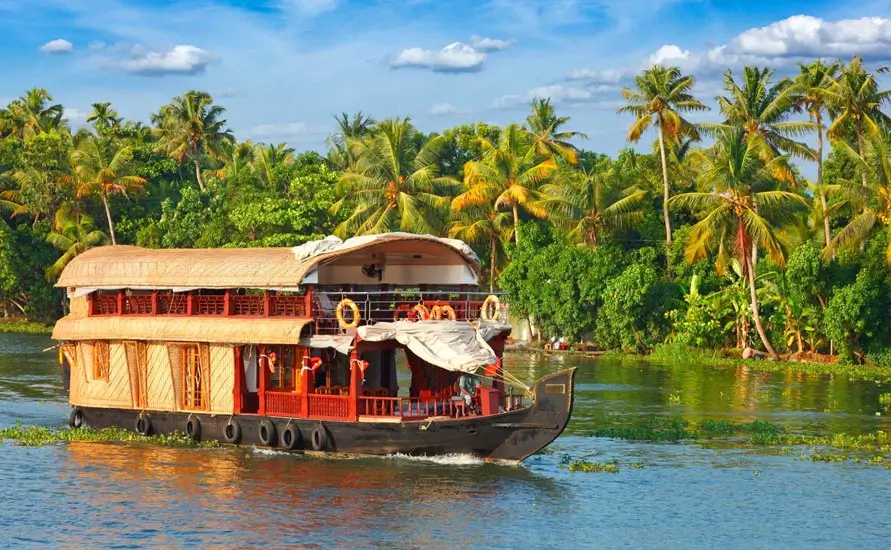
Late in the afternoon the resort's rice boat, a converted kettuvallam, takes guests out onto the lake for a sunset cruise. As the light drops, fishermen in narrow dugouts cast nets near the shore, and cormorants line up on bamboo stakes to dry their wings. Back on land, a lamp-lit path leads past the rice paddies the resort farms on its own grounds. Evening entertainment is kept low-key, often a short classical dance or a flute recital on the lawn, and the night is quiet apart from frogs and the occasional splash of a fish in the canal. Overnight in Kumarakom.
Birdwatchers will want to be out at first light, when your naturalist guide takes you by small boat or on foot along the edge of the Kumarakom Bird Sanctuary, a 14-acre patch of mangrove and woodland next to the lake. Between November and February migrant species join the residents, and on a good morning you can spot purple herons, darters, kingfishers, egrets and the occasional Siberian stork. Mosquito repellent and binoculars are worth bringing. You return to Coconut Lagoon for a late breakfast of appams and vegetable stew on the veranda while the canals slowly come to life.
Late morning is set aside for a slow canoe ride through the narrow waterways behind the resort, where a local boatman paddles you past small farms, toddy shops and village homes with their own landing steps. You see how families here live with the water: children rowing to school, women cleaning fish on the bank, and men climbing palms to tap toddy from the flower stalks. The resort also keeps a herd of Vechur cows, one of the smallest cattle breeds in the world and once close to extinction, and the staff are happy to explain why the breeding program matters.
The rest of the afternoon has nothing scheduled, which is deliberate after the busy north Indian week. You can book an Ayurvedic massage at the resort's treatment center, swim in the pool under the coconut palms, borrow a book from the small library or wander the butterfly garden. Cooking enthusiasts can ask the kitchen team for a short demonstration of a Kerala fish curry or a coconut-based thoran. After dark, dinner is served by lantern light by the water. If you want to try the local spirit, ask about fresh toddy, which is mild and slightly sour. Overnight in Kumarakom.
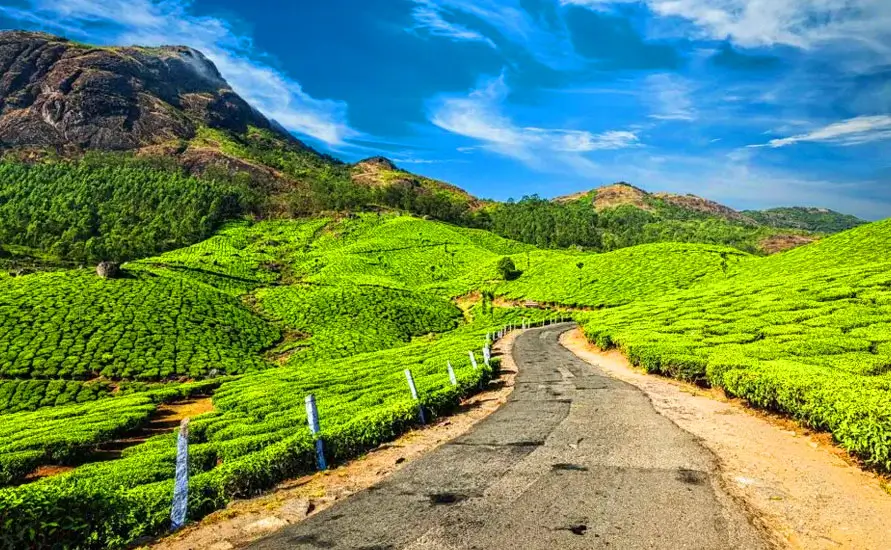
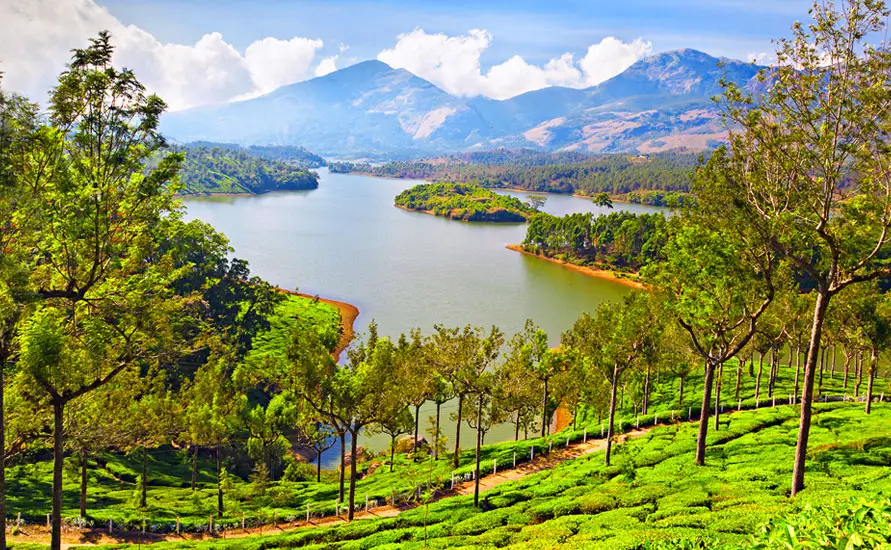
Coconut Lagoon's boat takes you back across the lake after breakfast, and your car is waiting on the far side for the short drive to the coast. The route crosses the edge of Kuttanad, Kerala's rice bowl, where farmers grow paddy on land that lies below sea level behind earthen dykes. Your driver can stop on a bridge so you can watch the long, narrow snake boats being repaired in a village shed, or at a local market for bananas and fried snacks. Before noon the car turns off toward the Arabian Sea at Mararikulam, a fishing village of palm-roofed homes.
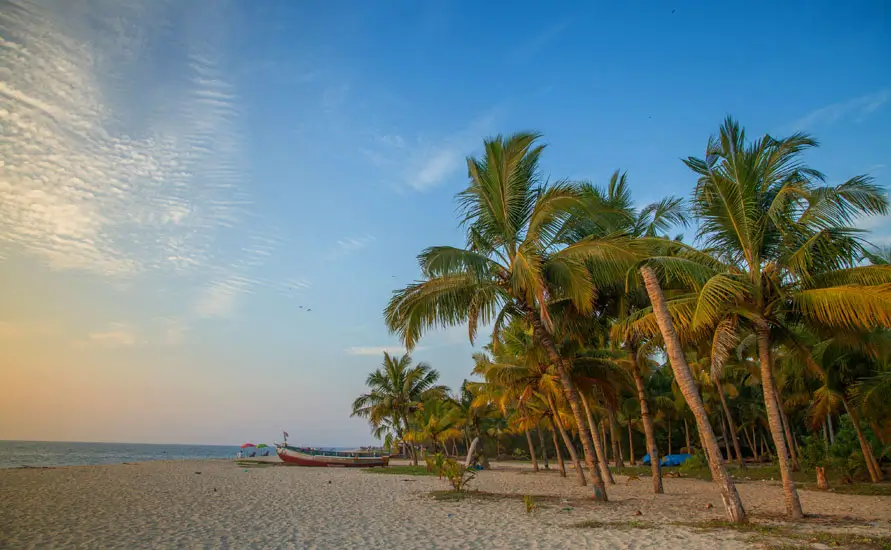
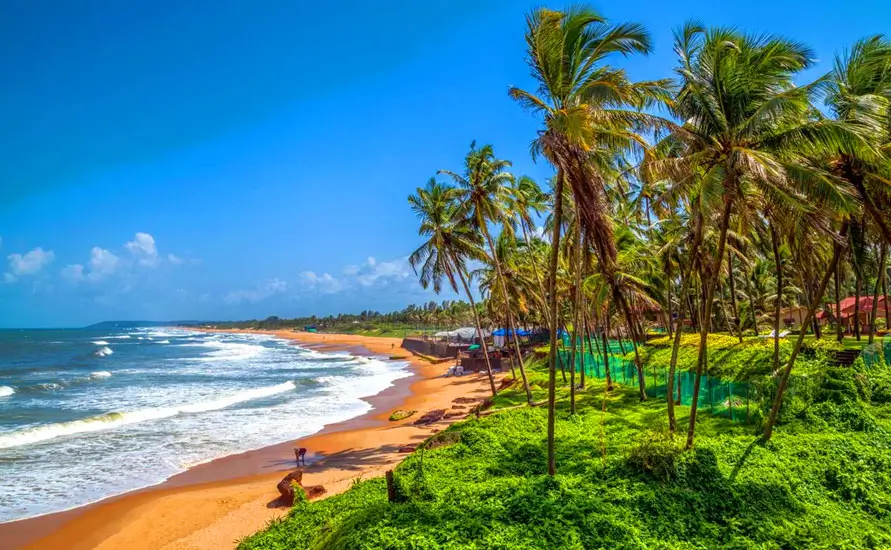
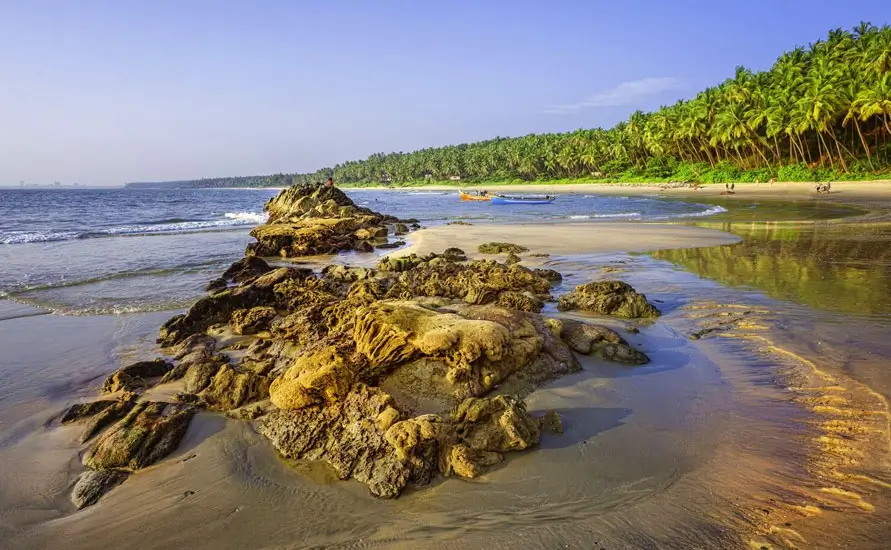
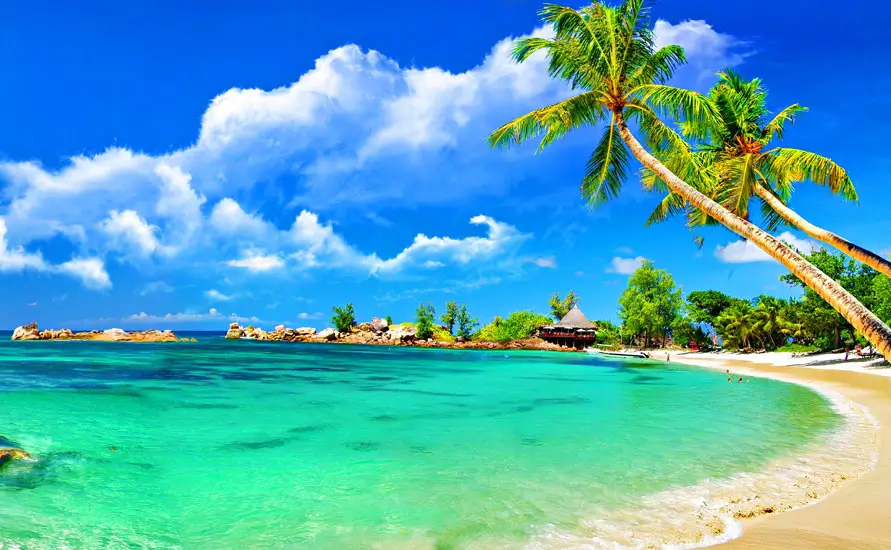
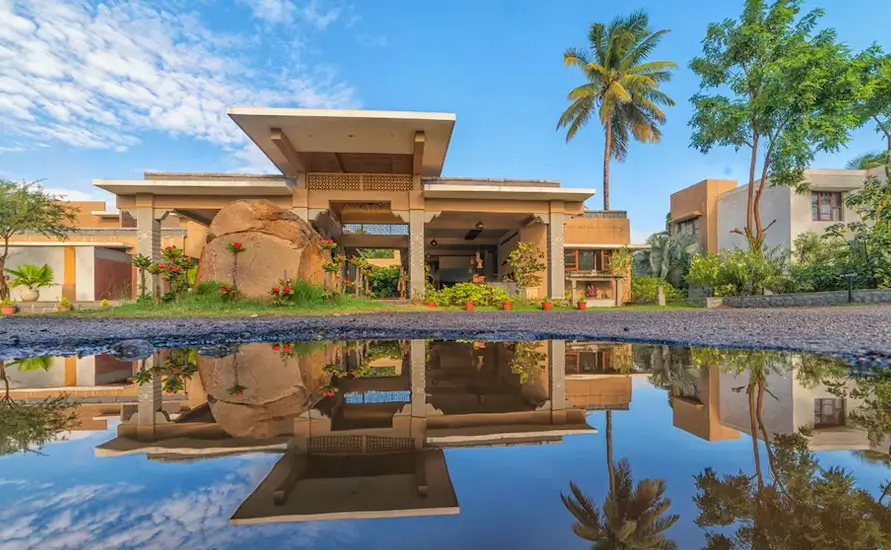
Marari Beach is the third CGH Earth property on this trip and the most relaxed of all. Its villas are built in the style of local fishermen's cottages, with thatched coconut-leaf roofs, polished red floors and garden bathrooms open to the sky, and they are scattered across a coconut grove that runs down to the sand. Pool villas add a private plunge pool. The resort runs an organic farm and a butterfly garden on its grounds, and much of what reaches the table, from greens to herbs, is grown a few steps from the kitchen.
Spend the afternoon on the beach, which stays largely undeveloped and is used mainly by the local fishing community. A walk along the tideline toward the village in the late afternoon is the best way to see daily life here: crews pushing wooden boats into the surf, nets spread out to dry, and children playing cricket on the hard sand. Swimming is possible on calm days, but currents can be strong, so follow the lifeguard flags. As the sun sets into the Arabian Sea, the resort serves drinks near the dunes, followed by dinner of grilled seafood. Overnight in Marari.
Your last full day in India has no fixed plan at all, and that is the real luxury after twelve days of movement. Early risers can join the yoga session held in the resort pavilion, or take one of the resort's bicycles for a ride along the village lanes before the heat builds. The route passes small Hindu temples, a Catholic chapel or two, coir-making yards where women twist coconut fiber into rope, and ponds full of water lilies. Your host can join you on the ride if you would like someone to translate and to explain what you see along the way.
Back at the resort, the Ayurveda center offers traditional Kerala treatments such as abhyanga, a warm oil massage, and shirodhara, in which a steady stream of herbal oil is poured across the forehead. A single session is a good introduction, while longer programs are best booked in advance. Lunch can be a simple Kerala meal on a banana leaf or fresh fish from the morning catch. If you prefer something more active, the resort can organize a guided walk through the organic farm, where the gardeners show you how they grow vegetables and herbs without chemicals.
In the late afternoon, think about a final swim and some time to sort out luggage and souvenirs before the flight home. Our team calls you during the day to confirm the airport pickup and to ask if you need any last arrangements, such as a late checkout or a packed breakfast for an early departure. The farewell evening can be a private candlelit dinner set up on the sand, which we can arrange for an extra charge. Looking back over the trip, it is easy to see why Oberoi and CGH Earth make such good partners: polish in the north, simplicity in the south. Overnight in Marari.
One more breakfast facing the waves, then your chauffeur heads north for Cochin International Airport, which takes close to 150 minutes on the coastal highway. Pickup is timed to get you to the terminal with three clear hours in hand before your international flight. For a late-evening flight, ask us about keeping your villa into the afternoon or booking a day room close to the airport, both at extra cost. Our Kerala representative meets you at the terminal, helps with the bags and stays with you until you enter the building. Thank you for traveling with us, and safe travels home.
Your Journey

N.S. Rathore & Mrs. Omlata Rathore · Managing Director
We still read every enquiry ourselves. Tell us the places you liked and our planners will send a day-by-day route with drive times and a clear price.
Every package can be customised and no pressure to book. A planner from our office replies within 24 hours with a route written for your group.
Fill this in and your planner will send a first draft itinerary.
Explore more
Kerala Backwaters Escape Kerala Backwaters Escape
 Kerala Backwaters Escape
 Kerala Backwaters Escape
 Kerala Backwaters Escape
 Kerala Backwaters Escape
 Kerala Backwaters Escape
 Kerala Backwaters Escape
 Kerala Backwaters Escape
 Kerala Backwaters Escape
 Kerala Backwaters Escape
 Kerala Backwaters Escape
 Kerala Backwaters Escape
 Kerala Backwaters Escape
 Kerala Backwaters Escape
 Kerala Backwaters Escape
 Kerala Backwaters Escape
 Kerala Backwaters Escape
 Kerala Backwaters Escape
 Kerala Backwaters Escape
 Kerala Backwaters Escape
 Kerala Backwaters Escape
 Kerala Backwaters Escape
 Kerala Backwaters Escape
 Kerala Backwaters Escape