 Kerala Backwaters Escape
Golden Triangle Tour With South India
Delhi – Agra – Fatehpur Sikri – Ranthambore – Jaipur – Kochi – Thekkady (Periyar) – Alleppey
At a glance
Tigers, langurs, hornbills and herons share this route with emperors and maharajas. The Golden Triangle with Kerala Wildlife sets the classic Delhi, Agra and Jaipur circuit beside two very different wild places: the dry deciduous jungle of Ranthambore, where tigers prowl among ruined pavilions, and the wet evergreen hills of Thekkady, around the lake at the heart of Periyar Tiger Reserve. Slotted in between come Rajput palaces, first light on the Taj Mahal, the old spice harbor of Fort Kochi and a slow night on the Kerala backwaters near Alleppey.
Nature does not run to a timetable, so we never promise a particular animal. What we do promise is good timing. You have two park safaris in Ranthambore, reserved on the Rajasthan forest department's portal the moment you confirm, and a guided forest walk and lake cruise in Periyar run by the Kerala forest department. Between July and September, rain shuts the Ranthambore core zones, and during that window we suggest buffer-zone drives or a different plan. Our Golden Triangle tour with South India is otherwise flexible in hotel choice and pace.
Most guests are nature-minded couples, families and friends from the US, Canada, Britain, Europe and Australia, plus NRI parents hoping to show their kids wild India as well as its monuments. Two nights in most places, a domestic flight from Jaipur to Kochi and drives of no more than about five and a half hours keep the Golden Triangle with Kerala Wildlife comfortable. Plan for October through April, and the Friday closure of the Taj Mahal is always planned around.
Most long-haul flights reach Delhi in the small hours, so the opening day holds nothing before the cooler part of the afternoon. A greeter from our team waits by the exit of the arrivals hall with a sign carrying your name, and your car and driver are parked just outside. On the ride in you receive a folder containing hotel and safari vouchers, flight details and an emergency number for our office. Ask us in advance if you want your room ready at dawn; Indian hotels only guarantee it if the previous night is booked as well.
Mid-afternoon your naturalist-minded guide meets you for a first walk at Sunder Nursery, a 16th-century Mughal garden that sat neglected for decades before the Aga Khan Trust for Culture restored it and reopened it to the public in 2018. Today it is a 90-acre park of lawns, ponds and avenues, with more than a dozen Mughal-era monuments, among them the restored Sunder Burj and the Lakkarwala Burj. Bird lovers come for the variety: rose-ringed parakeets, Indian gray hornbills, coppersmith barbets and kingfishers are all regulars, and your guide carries a pair of binoculars to share.
A gate leads directly from the park to Humayun's Tomb, the red-and-white mausoleum completed around 1570 and listed by UNESCO. Seen in late afternoon, its red sandstone and white marble glow warm, and the four-part garden of water channels and walkways sets the pattern that the Taj Mahal would perfect a few decades later. Squirrels race along the walls and kites wheel overhead, a reminder that this huge city keeps more wildlife than most visitors expect. Later, an early dinner and bed are all the program asks of you. Overnight in Delhi.
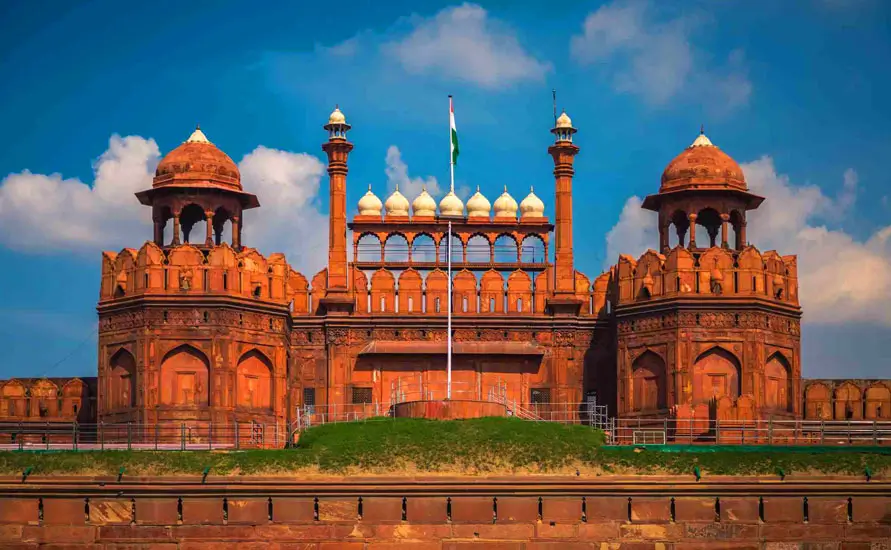
Start early in Old Delhi, before the lanes get crowded. A cycle rickshaw winds through Chandni Chowk, past wedding shops, sweet makers and a Sikh shrine, to Jama Masjid, Shah Jahan's congregational mosque of 1656. You climb the broad sandstone steps to a courtyard where pigeons settle on the pool and the call to prayer bounces off the three marble domes. Dress modestly: legs and shoulders covered, and robes are available at the entrance. Across the road, the long walls of the Red Fort run toward the river; the fort stays shut each Monday, when the ramparts are admired from the road.
Opposite the Red Fort, inside the precincts of the Digambar Jain Lal Mandir, is one of Delhi's most unusual sights: the Charity Birds Hospital, run by the Jain community since the 1920s. In keeping with the Jain principle of nonviolence, volunteer vets treat injured pigeons, parrots, sparrows and birds of prey free of charge, and released birds are set free from the roof. Next comes Gurdwara Bangla Sahib, a white marble Sikh shrine with a gilded dome, where volunteers cook simple vegetarian meals for every visitor, rich or poor. You can join the langar, sitting cross-legged on the floor, or watch the kitchen at work.
Heading south, the car rolls along Kartavya Path between India Gate and the sandstone ministries before reaching the Qutub Minar, the 73-meter tower started in the 1190s by the first sultans of Delhi. Your guide explains how successive rulers added floors of red and buff sandstone and white marble, and shows you the corridors of the mosque beside it, built with columns salvaged from older temples. Black kites and Egyptian vultures sometimes circle above the ruins, and in winter the lawns host hoopoes probing the grass for insects. Dinner is free tonight. Overnight in Delhi.
By about eight you are on the Yamuna Expressway, heading south across the flat farm country of western Uttar Pradesh. Mustard fields turn yellow in winter, and sarus cranes, gray giants with red heads that stand taller than most people, sometimes wait in pairs in the wet fields beside the road; your driver will pull over if you spot one. With one coffee stop, the run to Agra needs roughly four hours. A note on planning: Fridays are a closing day at the Taj Mahal, and your dates are arranged so that the sunrise visit falls on another day; if your Agra day falls on a Friday, we shift the order of the two Agra mornings.
After check-in and lunch, your Agra guide takes you to Agra Fort, the Mughal citadel whose red sandstone walls rise above a bend of the Yamuna. Built by Akbar from 1565 and later refitted by Shah Jahan with marble halls, it was the seat of government before the capital moved to Delhi. You see the Jahangiri Mahal with its carved brackets, the Diwan-i-Aam with its long rows of arches, and the marble balcony from which, according to tradition, the imprisoned Shah Jahan gazed at the Taj during his final years. Monkeys and palm squirrels are everywhere, so keep snacks out of sight.
As the sun begins to drop, the car crosses to Mehtab Bagh on the northern bank, a garden first planted in Babur's time that was restored by the Archaeological Survey of India. From the river wall the Taj Mahal appears across the water, and in the shallows below you may see little egrets, black-winged stilts and river lapwings feeding along the sand banks. This is the quietest view of the monument in Agra, and a good preview for tomorrow's early start. Dinner tonight can be Mughlai cooking, with kebabs and rich kormas in the city's old style. Overnight in Agra.
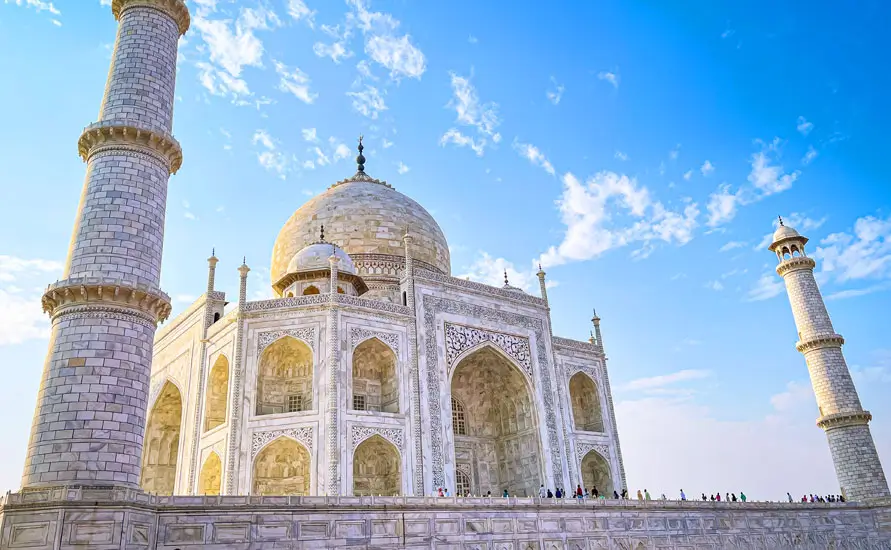
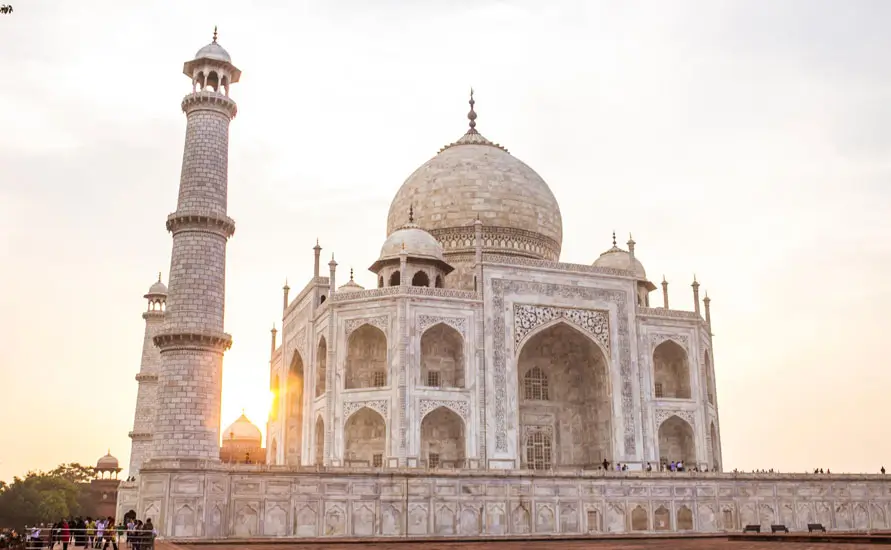
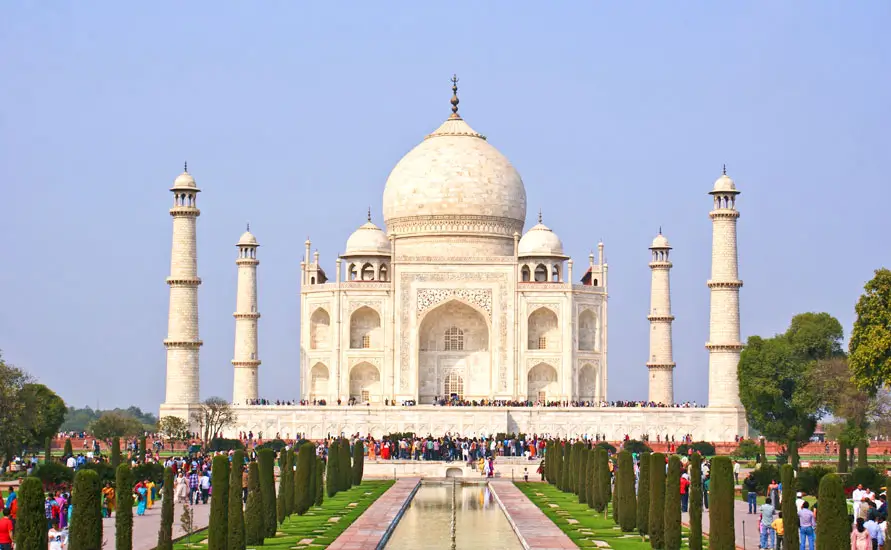
Be at the gate of the Taj Mahal before sunrise, when the crowds are small and the marble changes color by the minute, from gray to pink to white. Your guide explains how about twenty thousand workers took more than twenty years to finish the tomb for Mumtaz Mahal, and how the four minarets lean slightly outward so they would fall away from the dome in an earthquake. Tripods, food and large bags are not allowed inside, and shoe covers are handed out for the main platform. Early light also brings the parakeets out on the cypresses in the garden.
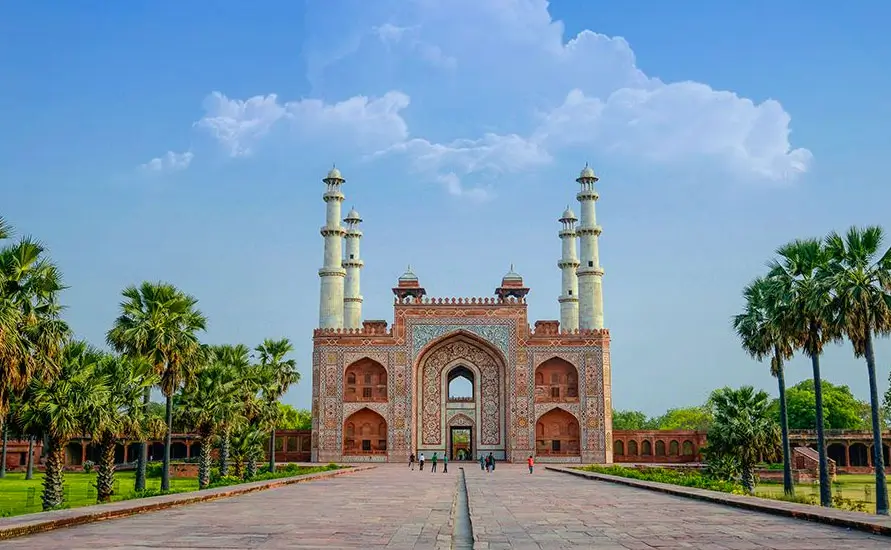
Back at the hotel for breakfast, you then leave Agra on the road to Fatehpur Sikri, about an hour away. This red sandstone city was Akbar's capital for a short time in the late 16th century, and its palaces, courtyards and pavilions have survived almost intact. Among the sights are the Panch Mahal, a five-tiered open pavilion, the courtyard laid out as a giant board for the game of pachisi, and the Buland Darwaza, the triumphal gateway at the mosque entrance. Inside the mosque courtyard, visitors tie threads to the screens of Salim Chishti's tomb when making a wish.
The afternoon drive continues southwest through Bharatpur and the farmland of eastern Rajasthan to Sawai Madhopur, the railway town beside Ranthambore National Park, reached as the shadows lengthen. Your jungle lodge stands a few minutes from the park gates, with the evening left open. If you are traveling between July and September, when the core zones of Ranthambore are closed for the monsoon, we discuss buffer-zone safaris or another plan with you before booking. Most lodges offer an evening talk or wildlife film about the reserve, a helpful briefing on safari etiquette, zones and what to wear in the open vehicle. Overnight in Ranthambore.
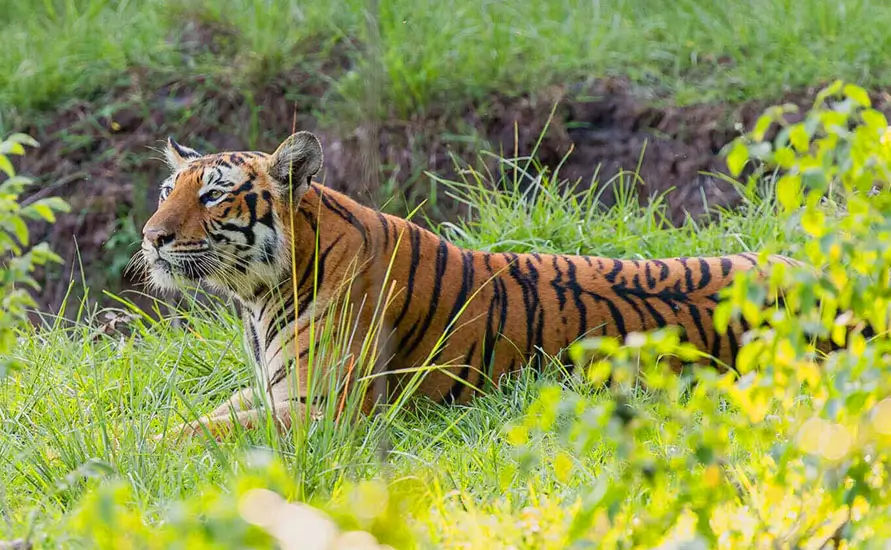
Safari vehicles leave the lodge before dawn, and on cold winter mornings you will be glad of the blankets and hot tea at the gate. Each Ranthambore safari lasts about three hours in an open jeep (gypsy) or a larger canter, with a forest department guide on board and a fixed zone assigned to you in advance. The park mixes dry deciduous forest, grassland and lakes, and its tigers are famous for being seen in the open, though sightings can never be promised. Sambar and spotted deer, nilgai, wild boar, langurs, crocodiles, and birds like the crested serpent eagle and painted stork are common sights.
Back at the lodge by about ten, you eat a late breakfast and sit out the midday heat. Late morning, an optional climb leads up to Ranthambore Fort, a UNESCO site set on a hill inside the park, with massive walls, ruined palaces and water tanks dating back more than a thousand years. Pilgrims climb the steps to the Trinetra Ganesh Temple inside the fort, and langur monkeys sit along the battlements. From the ramparts you look across the forest and lakes of the reserve, and it becomes clear why the maharajas of Jaipur kept these jungles as their private hunting ground.
The afternoon safari starts at around two or three o'clock, depending on the season, and may cover a different zone. Your guide and driver know where tigers have been seen recently, but they also keep an eye out for leopards, sloth bears, jungle cats and the many birds that make Ranthambore so rich even on a day without big cats. Dusk brings you back for a hot shower, dinner and a session with the lodge naturalist, who helps put names to every bird and animal on your camera. Many guests use the evening to share stories around a campfire under a sky full of stars. Overnight in Ranthambore.
An optional third safari can be added this morning for those who want another try at a tiger, booked in advance and subject to availability; otherwise linger over breakfast and stroll the lodge garden, where peacocks, treepies and Indian robins are easy to see. Late morning you drive north to Jaipur, about three and a half hours on a road that passes through the small town of Dausa and fields of millet and mustard. Rajasthan's villages along the way show a different side of life, with women in bright odhnis carrying water pots and camels pulling carts.
Arriving in Jaipur in the afternoon, you check in and then head into the walled old city founded by Sawai Jai Singh II in 1727. The streets were laid out on a grid of broad avenues and blocks, and since 1876 the buildings have been painted in the pink wash that gave the city its nickname. Your guide begins at Hawa Mahal, the five-story Palace of Winds, whose latticed windows allowed the royal women to watch street life without being seen. The best photos are from the rooftop cafes opposite, with the facade fully lit by the afternoon sun.
Evening is for the bazaars. Jewelers cluster in Johari Bazaar, cloth and embroidered slippers fill Bapu Bazaar, and Tripolia sells brass pots and lacquer bangles. Your guide shows you how to bargain fairly and which shops sell genuine goods. Later, the Albert Hall Museum, an Indo-Saracenic building from 1887, is lit up beautifully at night, and the pigeons that gather on the square in front of it make for a lively scene. For dinner, try Rajasthani specialties such as ker sangri, made from dried desert berries and thin bean pods, and gatte ki sabzi. Overnight in Jaipur.
Morning at Amber Fort, the old Kachwaha stronghold on the hills north of Jaipur. You ride up the cobbled ramp in a jeep or climb it on foot, never riding elephants, and enter through the main courtyard. Highlights include the pillared public hall, the frescoed Ganesh Pol and the Sheesh Mahal, whose walls and ceilings shine with thousands of tiny mirrors. Your guide shows you the zenana, the women's quarters, connected by narrow corridors so the queens could move around unseen. Beyond the walls rise the Aravalli hills, where leopards still live in the forests close to the city.
On the way back, stop briefly at Jal Mahal, the Water Palace, which appears to float on Man Sagar Lake. The lake is a winter home for ducks and waders, and the restored wetlands around it attract a number of migrating birds. Back in the city, the City Palace is a complex of courtyards, gardens and halls where the former royal family still lives in part of the building. You see the Mubarak Mahal, built as a guesthouse in 1900, the costume rooms full of royal robes and pashmina shawls, and the four painted gates of the Pritam Niwas Chowk, each representing a season.
Next door, the Jantar Mantar observatory is one of five built by Jai Singh II and the best preserved. Its huge instruments, including the world's largest stone sundial, were used to measure time, track the movement of stars and predict eclipses, and the site is now a UNESCO World Heritage Site. Your guide explains how the instruments work, and on a sunny day you can watch the shadow move along the sundial's scale. Afterward you are on your own for shopping or a siesta, and the hotel pool is welcome after the morning's walking. Overnight in Jaipur.
Today you fly south to Kochi, a routing that usually involves a short connection in Mumbai, Delhi or Bangalore, depending on the schedule. Total travel time is around four to six hours, so we try to book the earliest suitable flights to give you time on the waterfront in the evening. A light lunch can be had at the connecting airport. From the window on the final approach you see the coastline, the backwaters and thousands of coconut palms that tell you are now in Kerala, a world away from the deserts of Rajasthan.
Your Kerala driver waits outside arrivals at Cochin International; the airport lies 45 km inland, so allow ninety minutes or so to reach Fort Kochi, the harbor-mouth quarter where the city began. Since a great flood opened its harbor in 1341, Arab dhows, Chinese junks and later Portuguese, Dutch and English fleets have anchored here to load pepper and cardamom. The architecture reflects this mix: Portuguese churches, Dutch houses, British bungalows and Jewish synagogues stand side by side in narrow lanes. Once you have dropped your bags at a heritage hotel, take a stroll and get a feel for the place, where cyclists, goats and tuk-tuks share the shady lanes and every second wall carries a mural.
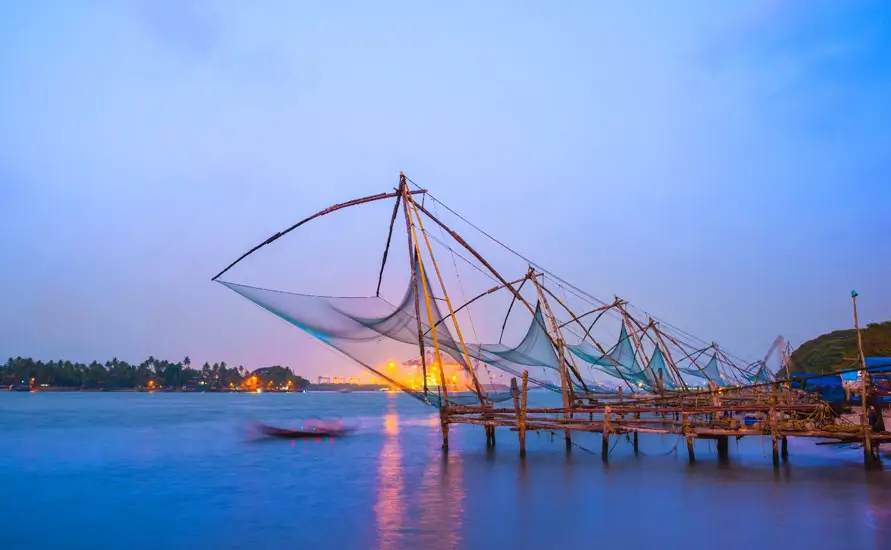
Before sunset the guide leads you down to Vasco da Gama Square and the Chinese fishing nets, huge cantilevered nets lowered into the sea by teams of fishermen. The nets were probably introduced by traders from China in the 14th century, and they still work today, though the catch is small. Brahminy kites and egrets wait on the posts for the fish that fall from the nets. Close by, stallholders lay out mackerel, crab and tiger prawns, and kitchens across the road will fry your pick for a small fee. At sunset, watch the ferries cross the harbor to Vypeen island. Overnight in Kochi.
Start the day with a walk through Fort Kochi with your guide. St. Francis Church dates from 1503, making it the first church Europeans built anywhere in India, and da Gama lay buried inside for about fifteen years before his body was shipped home to Portugal. Nearby, Santa Cruz Basilica has a white Gothic facade and painted ceilings inside. Along the way you see the Dutch Cemetery and the old houses of colonial merchants, and some of the old warehouses have now been turned into art galleries, cafes and boutique hotels, a trend that the Kochi-Muziris Biennale art festival has fueled since its first edition.
Then you drive a short way to Mattancherry, where the Portuguese presented a palace to the Raja of Kochi in 1555; the later Dutch repairs explain its popular name, the Dutch Palace. Its murals of scenes from the Ramayana are among the finest in Kerala. Timing matters here. The palace is shut every Friday, and the Paradesi Synagogue of 1568, floored with blue Cantonese tiles, opens neither on the Sabbath nor the day before it, nor on Jewish festivals, so both rules shape your Kochi dates. Jew Town Road itself is a row of antique dealers and old godowns where sacks of dried ginger still scent the air.
Around five you take seats in an intimate Fort Kochi hall for Kathakali, Kerala's dance-drama. Arrive early to watch the actors put on their makeup, a process that takes about an hour, using natural pigments made from rice paste, turmeric and indigo. The performance itself tells a story from the Hindu epics through gestures, facial expressions and eye movements, accompanied by drums and singing. Before the story begins, one actor demonstrates the mudras, the coded hand signs, so newcomers can follow the plot. Some theaters also offer Kalaripayattu, the martial art of Kerala, on the same evening. Overnight in Kochi.
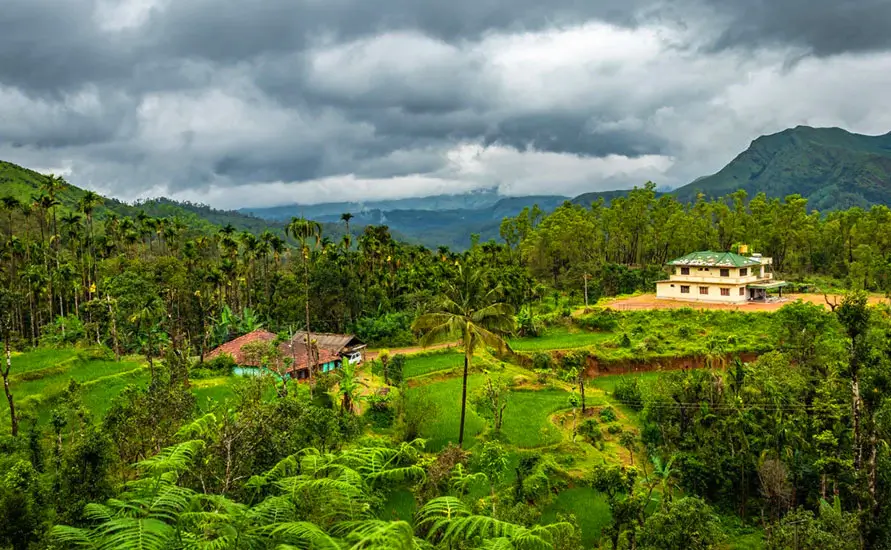
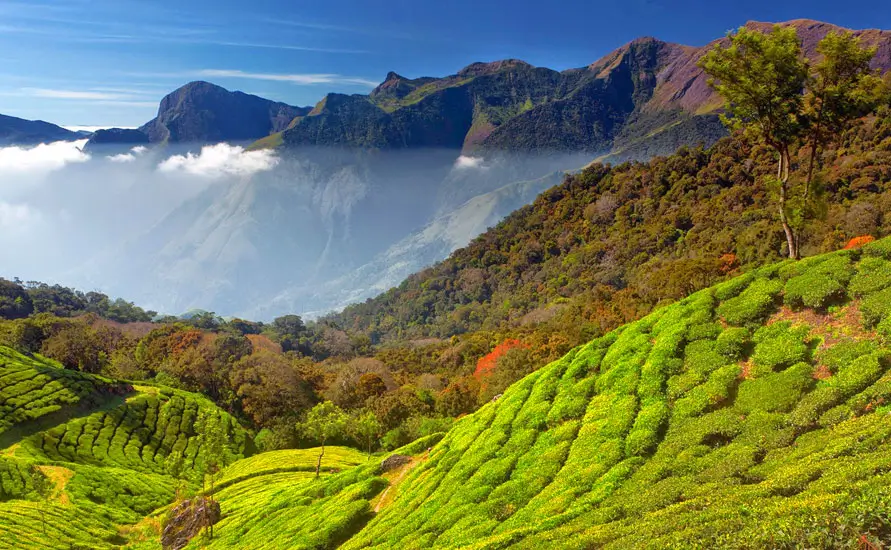
After breakfast you drive east into the Western Ghats, on a road of hairpin bends that takes most of the morning, climbing from the coast through rubber plantations, pineapple farms and small towns. Above about 800 meters the air cools, and the hills are covered with cardamom, tea and pepper. A tea stall at a valley lookout makes a natural halfway break. Thekkady, the small town by the main gate of Periyar Tiger Reserve, sits on the border with Tamil Nadu at about 900 meters, and it has a relaxed, small-town feel.
After check-in and lunch, a planter's son or daughter leads you around a family spice plantation. Cardamom pods, it turns out, sprout from runners at ground level, pepper climbs silver oak and jackfruit trunks, and how cloves, nutmeg, cinnamon, vanilla and coffee are grown and processed. Many plantations are family-run, and the owners are happy to answer questions about organic farming and the spice trade. A small farm shop sells this year's harvest at fair prices. Watch out for giant Malabar squirrels in the trees, as these large, colorful squirrels are a specialty of the Western Ghats.
Early evening is reserved for Kalaripayattu, a fighting art practiced in Kerala for many centuries. Performers demonstrate kicks, leaps, swordplay and fighting with sticks and shields in a small arena, and the speed and control of the fighters leave audiences gasping. Benches sit right at the edge of the sunken pit, so you feel the swish of the long flexible urumi sword and the heat of the oil lamps, and photography is usually allowed without flash. Dinner at the hotel, perhaps with Kerala dishes like appam and stew, finishes the day. Overnight in Thekkady.
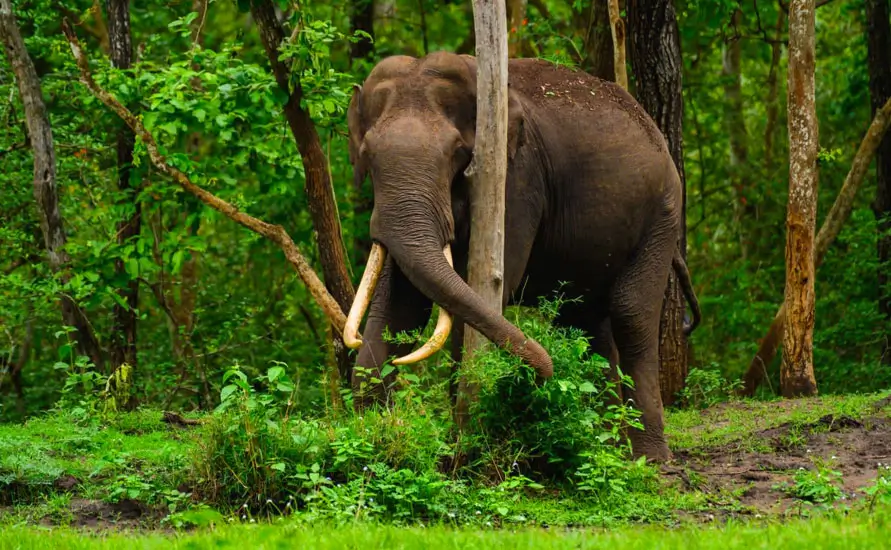
The first boat on Periyar Lake leaves early in the morning, and this is the best time to see wildlife along the shore. British engineers flooded this valley in 1895 with the Mullaperiyar dam, and bleached stumps of the old forest stand in the shallows, used as drying perches by snakebirds and cormorants. During the ninety-minute cruise you may see elephants, gaur (Indian bison), sambar deer, wild boar and otters along the banks, although no sightings are guaranteed. Boat tickets are sold by the Kerala forest department and the early slots go fast in winter, so we book early.
Before noon a small group heads out on a guided nature walk, led by trackers from Mannan and Paliyan villages whose families have known these hills for generations. Over two or three hours the trail threads moist evergreen forest, open grass and swampy hollows. Your guides point out animal tracks, birds such as hornbills and Malabar trogons, butterflies and medicinal plants, and they share stories of the forest and how their community came to work in conservation. Leech socks are provided in the wet season. Other optional activities include bamboo rafting, border hiking and night patrols in the buffer zone.
With the afternoon unplanned, you might browse the twin towns of Thekkady and Kumily, where small shops sell spices, tea, coffee and handicrafts. Ayurvedic clinics in town offer oil massages too. Periyar is home to one of India's most successful conservation programs, and the town's eco-development committees employ former poachers as forest guides and protectors. Your evening is free for dinner, and the hotel kitchen can usually prepare a Kerala sadya-style vegetarian meal if you ask in the morning. Before bed, take a moment to listen to the sounds of the jungle, with crickets, frogs and night birds calling around the hotel. Overnight in Thekkady.
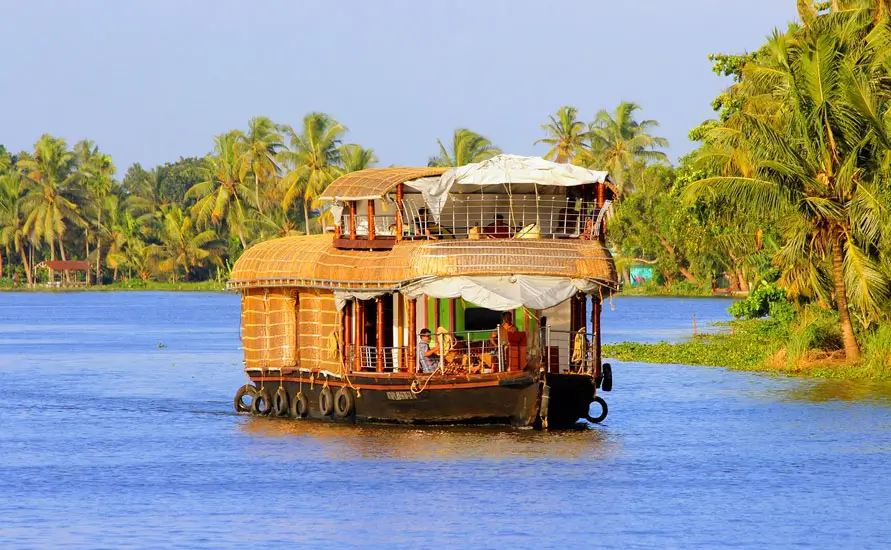
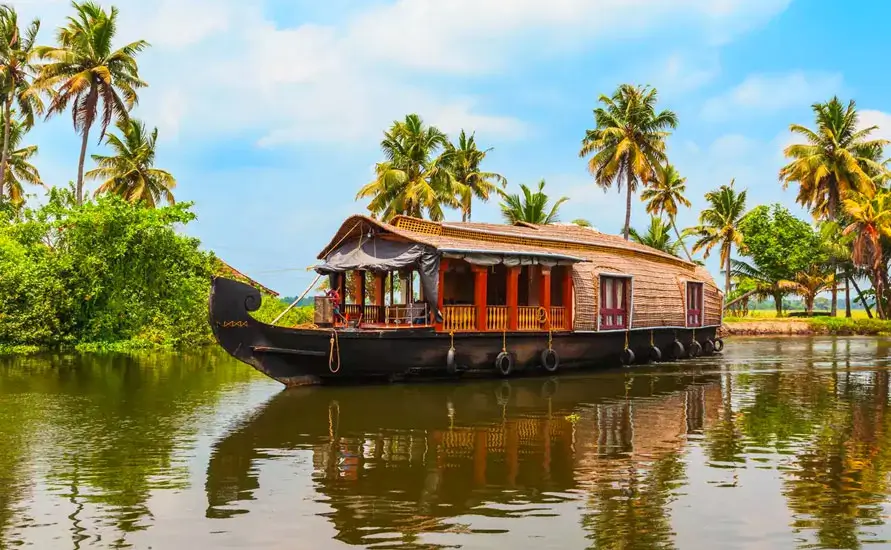
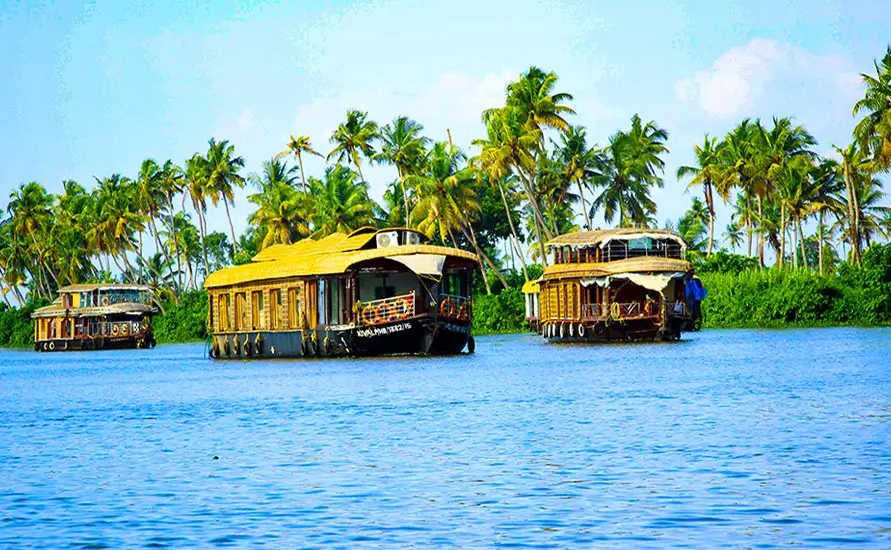
Breakfast done, the car descends from the cardamom hills toward Alleppey, around four hours west. The road passes tea estates and rubber plantations before reaching the flat paddy lands of Kuttanad, a rice bowl whose dyked fields sit a meter or two under the level of the sea. You arrive around noon and board your private houseboat, a traditional kettuvallam built of jackfruit wood and coir rope, converted with bedrooms, en-suite showers and a shaded lounge up front. Three crew members, the skipper, the cook and a deckhand, hand you tender coconuts with straws as you step aboard.
Once you are on board, the houseboat sets off slowly across the lake and into the canals. Lunch is served on deck: rice, fish curry, vegetables cooked with coconut and a crisp pappadam. During the afternoon you watch life along the banks, with villagers washing clothes, children rowing to school, ducks being herded along the water and farmers tending their rice fields. The backwaters are also excellent for birds: you may see purple herons, kingfishers, cormorants, egrets and Brahminy kites, especially in the early evening as they return to their roosts.
Houseboats must stop cruising around sunset under local rules, so the crew moors the boat at a quiet spot near a village. You can go for a short walk along the bank or linger on deck over milky tea and pazham pori, slices of ripe plantain dipped in batter and fried. Dinner is prepared by the cook, often with fresh fish or prawns bought from local fishermen during the day. At night, the sounds of the village and the frogs replace the hum of the engine, and the stars are bright away from the city lights. Overnight on the houseboat.
Set an alarm for dawn: thin mist lifts off the channels and kingfishers start hunting from the coconut fronds. Breakfast is the last meal from the galley, and by nine the boat has nosed back to its jetty. Your guide then takes you on a canoe ride in a small country boat through the narrow canals that houseboats cannot reach. A boatman with a long bamboo pole pushes you past village homes, small temples, churches and coconut groves. Without engine noise, herons let you drift within a few meters, and pond turtles slide off logs only at the last moment.
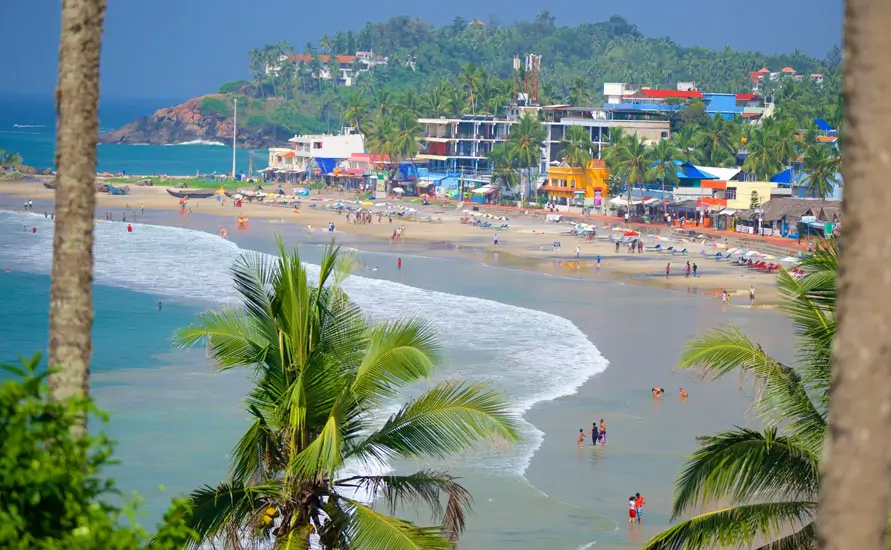
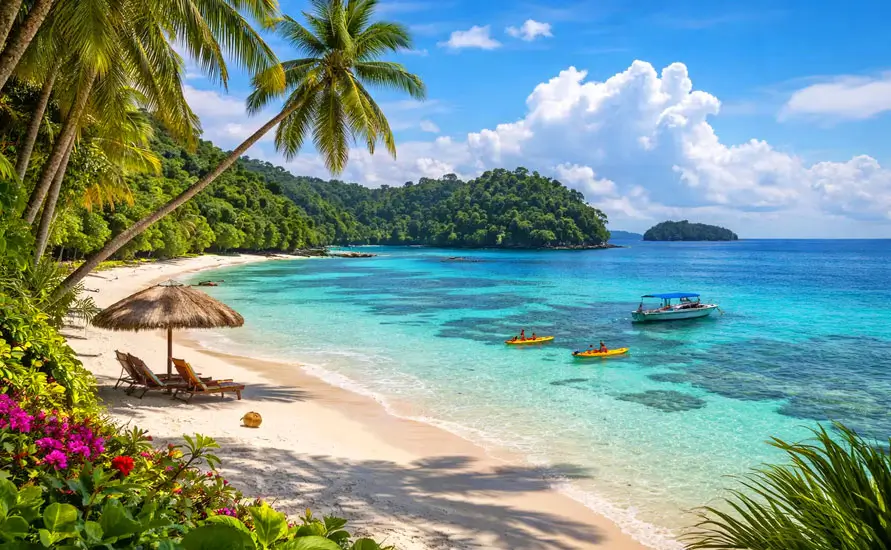
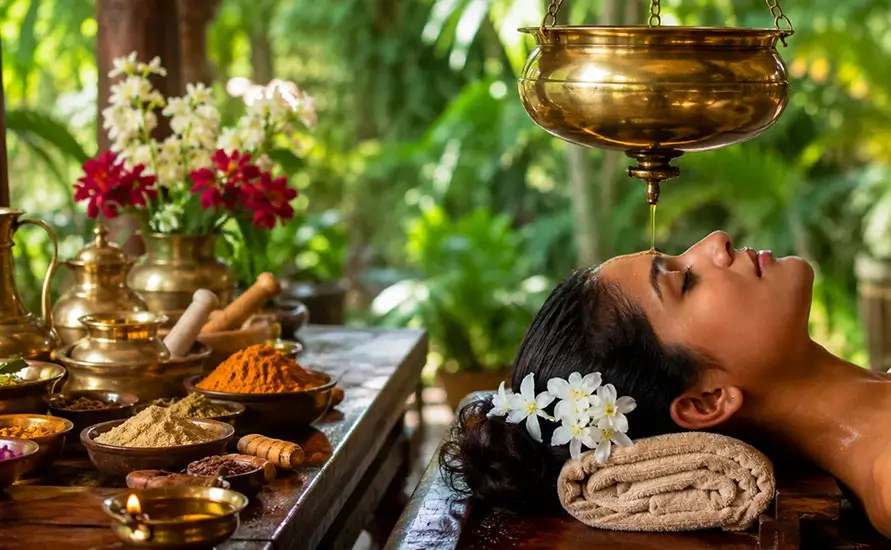
Late morning you check in at a lakeside or beach resort near Alleppey. Afternoon options are the pool, a hammock, or a short ride to Alleppey Beach, with its old lighthouse and the remains of a pier built in the 1860s. If you are interested in birds, a trip to the Kumarakom Bird Sanctuary on the other side of Vembanad Lake can be arranged as an optional excursion. The sanctuary is best in the winter months, when migratory birds from the north arrive. Alternatively, try an Ayurvedic treatment at the resort, a good way to relax after a busy trip.
Your farewell dinner at the resort can feature karimeen pollichathu, made with Vembanad pearl spot smeared with masala, parceled in banana leaf and roasted on a griddle, a dish that Kuttanad families cook for guests and special occasions. Before you sleep, your driver confirms tomorrow's pickup time and checks the flight status, so the morning starts calmly. Two weeks have spanned Mughal Delhi and Agra, the jungle of Ranthambore, Jaipur's palaces, the spice slopes of Thekkady and these quiet canals, with very different wildlife at every stage. Overnight in Alleppey.
Check-out is followed by the two-hour road trip north to Cochin International Airport. Kochi has direct international flights to the Gulf, Singapore and Kuala Lumpur, and domestic connections to Delhi, Mumbai and Bangalore for long-haul flights to Europe and North America. When your plane leaves after dark, extra hours in your resort room or a last browse in Fort Kochi on the way can fill the gap. Our office keeps checking in with you by phone until the flight is called, and if anything changes we rearrange the transfer quickly.
Your Journey
N.S. Rathore & Mrs. Omlata Rathore · Managing Director
We still read every enquiry ourselves. Tell us the places you liked and our planners will send a day-by-day route with drive times and a clear price.
Every package can be customised and no pressure to book. A planner from our office replies within 24 hours with a route written for your group.
Fill this in and your planner will send a first draft itinerary.
Explore more
Kerala Backwaters Escape Kerala Backwaters Escape
 Kerala Backwaters Escape
 Kerala Backwaters Escape
 Kerala Backwaters Escape
 Kerala Backwaters Escape
 Kerala Backwaters Escape
 Kerala Backwaters Escape
 Kerala Backwaters Escape
 Kerala Backwaters Escape
 Kerala Backwaters Escape
 Kerala Backwaters Escape
 Kerala Backwaters Escape
 Kerala Backwaters Escape
 Kerala Backwaters Escape
 Kerala Backwaters Escape
 Kerala Backwaters Escape
 Kerala Backwaters Escape
 Kerala Backwaters Escape
 Kerala Backwaters Escape