 Kerala Backwaters Escape
Golden Triangle Tour With South India
Delhi – Agra – Fatehpur Sikri – Jaipur – Goa – Kochi – Alleppey
At a glance
Forts, then feni country, then coconut backwaters: a two-week trip rarely changes scenery as completely as our Golden Triangle with Goa and Kerala route. Six nights in the north cover Delhi's two faces, a sunrise visit to the Taj Mahal and three relaxed nights in Jaipur, long enough to see the Pink City without racing. A flight south lands you on the Konkan coast for three nights of beaches, Portuguese-era churches and spice farms in Goa, before a second flight brings you to Kerala, where Fort Kochi and the waterways around Alleppey close the holiday at an easy pace.
We often hear from travelers who want the classic north, a beach and the backwaters, but who dread a trip of endless car rides. Three domestic flights, Jaipur to Goa, Goa to Kochi and nothing longer than five hours by road anywhere else, solve that problem. Each region gets at least two full days, and hotels change only seven times in fifteen days. This golden triangle Goa Kerala tour suits first-timers flying in from North America, Britain or Australia, plus NRI households hoping their kids will see both the Mughal monuments and the softer, greener south.
Your own chauffeur and car look after every road transfer and sightseeing day, with a fresh driver in each region who knows the local roads. Licensed English-speaking guides handle the monuments in Delhi, Agra, Jaipur, Old Goa and Kochi, while free afternoons are scattered through the plan for beaches, shopping or simple rest. The Kerala finish combines a private houseboat night on Vembanad's canals with two nights on the coast near Alleppey. Closing days for the Taj Mahal, the Red Fort and Kochi's Mattancherry sights shape how we sequence your dates when booking.
Greeting passengers off long-haul flights is something our Delhi crew does every night of the year, so expect a familiar face holding your name outside the terminal no matter how late you land. The car ride to your hotel in south Delhi takes forty minutes or so when the roads are quiet. Most guests arriving from the Americas or Europe want little more than a bed, which is why the day starts slowly. Breakfast is served late, the hotel gym or pool can help shake off the flight, and your guide only appears once you have rested properly.
A gentle afternoon outing begins at the Lotus Temple, the Bahá'í house of worship completed in 1986, whose twenty-seven white marble petals rise from nine reflecting pools. People of every faith may sit inside in silence, and no sermons are given; note that it closes on Mondays, when your guide shifts the plan to the nearby Garden of Five Senses. From there the car drives to Hauz Khas, where a 13th-century reservoir dug by Sultan Alauddin Khalji is lined by the domes and colonnades of a madrasa added by Firoz Shah Tughlaq about a century later.
Around the old stones, Hauz Khas Village has become a district of design stores, bookshops and rooftop cafés popular with young Delhi professionals. Walk the ramparts above the lake at dusk, when peacocks call from the deer park opposite, and then choose between a casual café dinner here or something quieter at your hotel. Your guide outlines the next two weeks over a cup of chai: what to wear at mosques and temples, how tipping works, and why the Taj is saved for sunrise rather than the middle of the day. Overnight in Delhi.
Shah Jahan's walled city is best tackled before ten, when rickshaws can still squeeze through its lanes. Your guide starts outside the Red Fort, the octagonal citadel finished in 1648, entering through the towering Lahori Gate to see the Diwan-i-Aam, where petitioners once queued to address the emperor, and the elegant Diwan-i-Khas, once home to the Peacock Throne. Mondays are a closing day here, so on a Monday we move straight to the market lanes and add the Sikh shrine of Gurdwara Sis Ganj, built where the ninth Guru was executed in 1675.
A short rickshaw ride takes you into Dariba Kalan, a narrow lane where silversmiths have worked since Mughal times, then along Kinari Bazaar, glittering with wedding ribbons, tinsel garlands and sequined turbans. Your guide halts at a sweet stall in business for over a hundred years for a hot jalebi straight out of the oil, and at a tiny attar perfumer whose glass vials hold rose, jasmine and vetiver oils. From the edge of the old city the car continues to Raj Ghat, the open riverside lawn where Gandhi's body was cremated after his assassination in January 1948, marked by a simple black stone platform and an eternal flame.
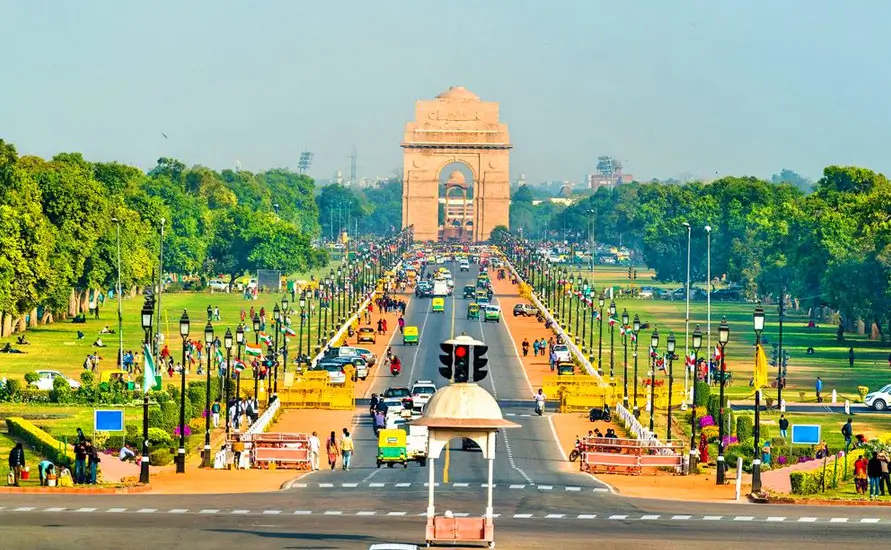
After lunch the route heads south to Mehrauli and the Qutub Minar, Delhi's oldest Islamic monument, begun in 1199 to mark the arrival of a new power from Afghanistan. Bands of Quranic calligraphy wrap its five stories, and around its base stand the ruins of the Quwwat-ul-Islam mosque, whose pillars were salvaged, as an inscription admits, from twenty-seven demolished temples. The unfinished Alai Minar stump nearby shows how much taller a later sultan wanted to go. Driving back, you pass Kartavya Path, India Gate and the domed presidential palace in the evening light. Overnight in Delhi.
Expressway driving is the rule today. After breakfast your chauffeur loads the luggage and heads for the Yamuna Expressway, which slices past sugarcane fields, brick kilns and new suburbs almost all the way to Agra. There is one break for chai and restrooms at a service plaza, and the full trip should take under four hours unless Delhi traffic is heavy. A local guide joins you at your hotel after lunch. Since the Taj Mahal is planned for tomorrow's dawn, this afternoon covers two places that most tour groups skip.
The first is the riverside tomb of Itimad-ud-Daulah, the so-called Baby Taj, completed in the 1620s for the Persian-born father of Empress Nur Jahan. It is compact, almost jewel-box sized, and its marble surfaces are covered in delicate inlay of yellow, brown and green stone that predates the Taj by some twenty years. Your guide explains how a Persian refugee rose to manage Jahangir's finances and then his government, and how his daughter became one of the most powerful women of the Mughal era. Few visitors come here, so there is time to linger in the garden.
As shadows lengthen, the car carries on along the north bank; next comes Mehtab Bagh, a moonlight garden restored by archaeologists along the same central axis as the Taj Mahal on the far side of the Yamuna. A popular story claims the emperor intended a twin mausoleum in black stone on this bank, though historians find little evidence of that. Either way, the view at sunset is lovely, with the white dome glowing pink above the river, often with buffalo wading in the shallows below. Tonight your guide confirms the morning pickup time and what to leave at the hotel. Overnight in Agra.
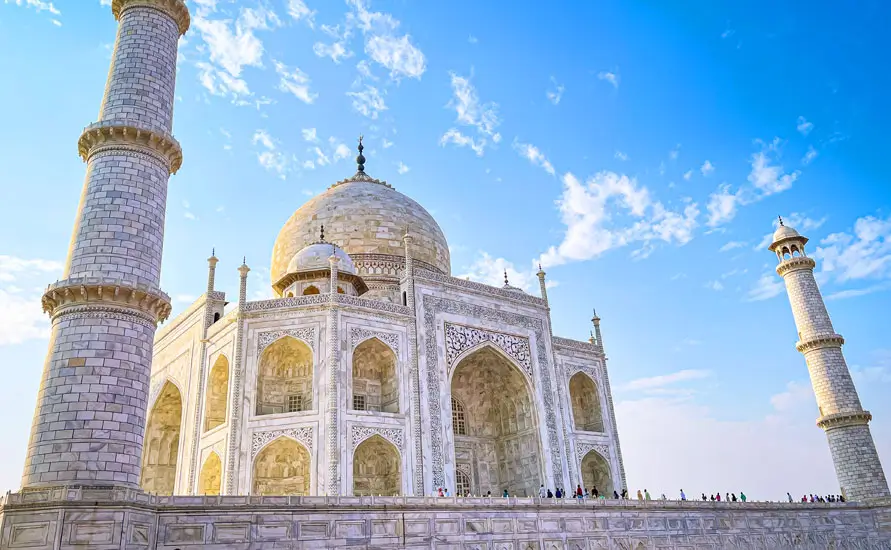
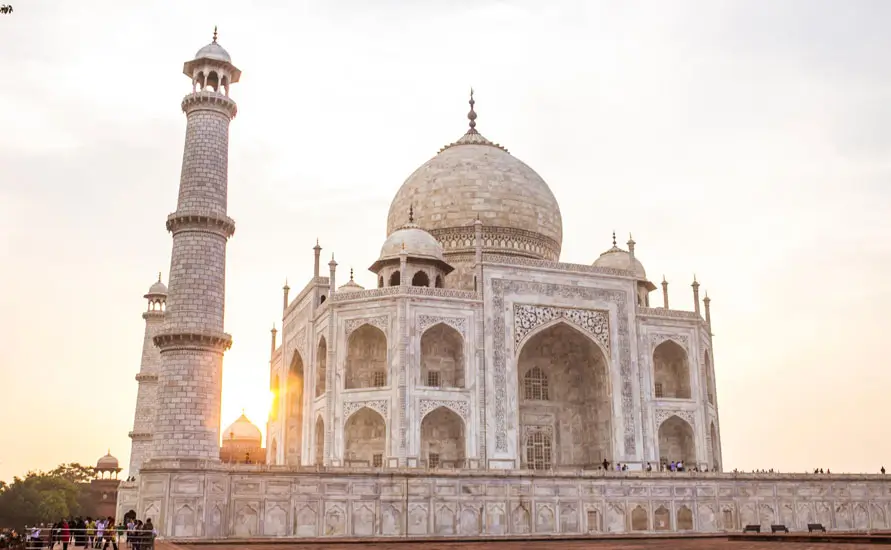
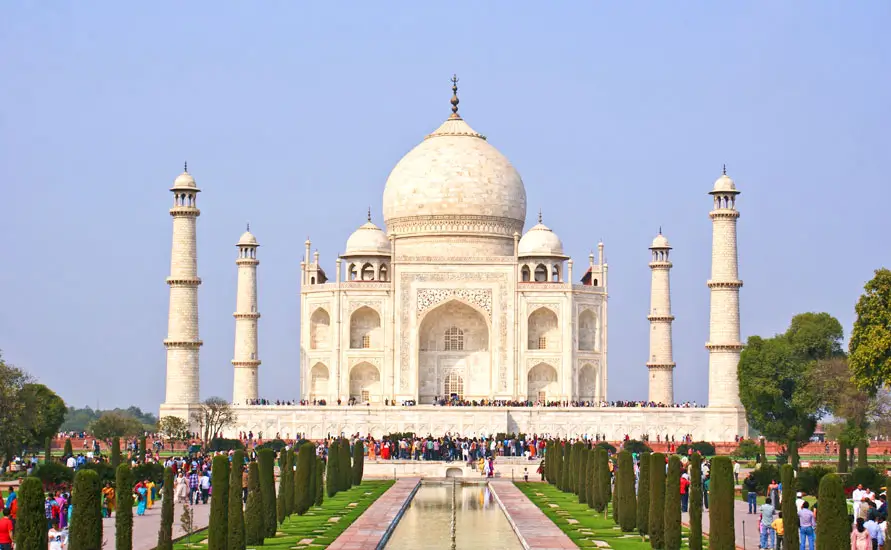
Pre-dawn alarms are part of the deal today. Your guide escorts you on foot to the east entrance of the Taj Mahal, where security staff allow little more than a phone, a camera and a water bottle past the scanners. Walk through the red darwaza and the tomb hangs at the end of the long canal, blue-grey and slightly hazy, before the first rays turn it the color of cream. Notice how the Quranic lettering around the main arch widens as it climbs, a trick that makes it look even from the ground. Fridays shut the complex, so if your calendar puts this dawn on a Friday, we schedule the visit for Day 3's sunset.
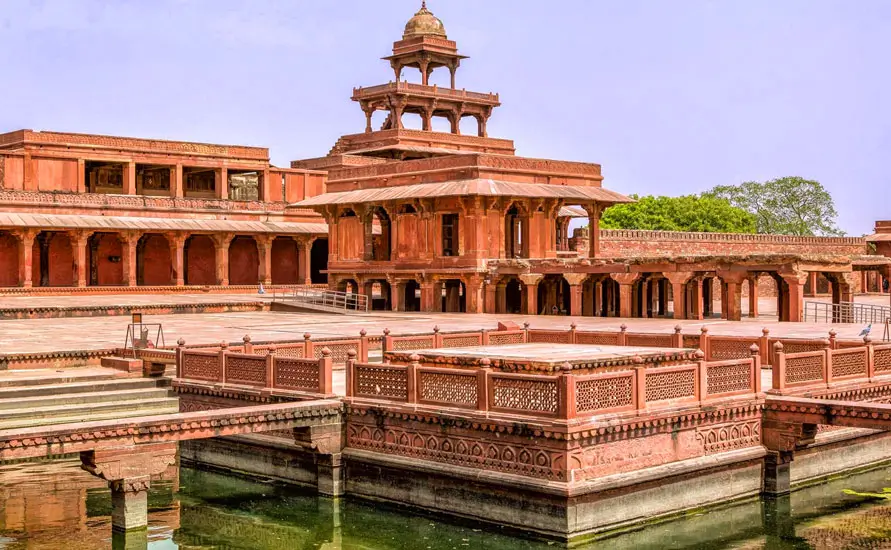
Once you are back for breakfast and the bags are in the trunk, the car takes the old Jaipur highway out of Agra. Within the hour, the ridge of Fatehpur Sikri appears, Akbar's red city of the 1570s, quickly built, quickly deserted and therefore oddly well kept. Carvings inside borrow freely from Hindu, Persian and Jain sources, an echo of the emperor's famous curiosity about other faiths. Your guide brings you to the Ibadat Khana area where Akbar hosted religious debates, under the 54-meter Buland Darwaza raised after his Gujarat campaign, and finally to Sheikh Salim Chishti's latticed white shrine.
West of the ridge, the road crosses into Rajasthan via Bharatpur and Dausa, roughly four further hours past mustard fields, stone quarries and villages where women in mirror-worked odhnis carry water pots. A one-hour optional detour reaches Abhaneri, whose Chand Baori is a deep, square stepwell from around the 9th century with stairs zigzagging down thirteen levels. Rolling into Jaipur by early evening, you settle into a heritage-style property for a three-night stay, which means proper unpacking at last. Ask the kitchen for laal maas, the fiery Rajput mutton curry, or a gentler paneer dish for supper. Overnight in Jaipur.
Early hours suit Amber Fort, a hilltop palace of pale yellow stone and pink sandstone that the Kachwaha kings ruled from before founding Jaipur. Maota Lake reflects its walls as you approach along the Delhi road, eleven kilometers out of town. A jeep climbs the service track to Jaleb Chowk; we never book elephants. Inside, your guide concentrates on the zenana, the women's wing, a maze of screened galleries and narrow stairs designed so queens could move between apartments unseen. From the upper terraces, the crenellated wall of Jaigarh Fort crawls across the hills above you like a miniature Great Wall.
Walk five minutes downhill and you reach Panna Meena ka Kund, a sixteenth-century stepwell whose diagonal flights of stairs form a pattern so neat it looks drawn with a ruler. Villagers once stored monsoon rain here and sat on the cool steps during the hot months. Close by, the Anokhi block-printing museum fills an old mansion and explains, with antique wooden blocks and finished cloth, how Rajasthan's printed textiles conquered markets across the world. A resident printer is often at work in the courtyard. Monday closures and a summer break apply, so the guide checks in advance. Lunch is in Amber village.
Afternoons in Jaipur get hot, so return to the hotel for a siesta before the car winds up the ridge road to Nahargarh Fort, completed in 1734 as a hill retreat and a lookout over the young capital. Sunset from its parapets is the best in town: the whole grid of the walled city flattens out below, the Man Sagar lake glints, and lights flicker on street by street as dusk comes. Inside the walls, a small café sells chilled lassi and pakoras. Back down in the city, dal baati churma, baked wheat balls with lentils and sweet crumble, is a Rajasthani classic worth ordering. Overnight in Jaipur.
Inside the walled city, day two begins at the City Palace, where a pennant on the roof of Chandra Mahal tells you whether the former royals are in residence. Mubarak Mahal, a guest pavilion from the 1890s, now displays royal robes, including those of a ruler said to have weighed about 250 kg. Pitam Niwas Chowk follows, its four gateways painted with peacocks, lotuses and roses to stand for the seasons. Across the lane lies the Jantar Mantar, a field of masonry instruments ordered by Sawai Jai Singh II in the 1720s and 1730s, some still used by local astrologers to read the monsoon.
Minutes on foot from the observatory rises the Hawa Mahal, whose curved pink façade with its many tiny jharokha windows works almost like a stage set, being barely a room deep at the top. Your guide leads you to a rooftop across Siredeori Bazaar for the classic photograph, then dives into the shopping streets: Tripolia for lac bangles and brass, Johari for silver and enamel jewelry, Bapu Bazaar for block-printed quilts and embroidered mojari slippers. Bargaining is normal, though your guide advises which stalls fix prices. For lunch, a Rajasthani thali brings eight or nine little bowls of curry, chutney and dessert.
Afternoon brings a 16 km run south to Sanganer, home of Jaipur's hand block printers and a handmade paper industry that recycles cotton rag. Inside a family-run workshop the craftsmen lay long bolts of cotton on padded tables, dip teak blocks carved with flowers or paisleys in vegetable dye, and stamp the cloth with a quick thump of the fist, color by color. You are invited to print a small scarf or tote bag to take home. Later, the floodlit Albert Hall Museum in Ram Niwas Garden makes a fine last image of the city. Pack tonight, since tomorrow you fly south. Overnight in Jaipur.
Flying from the desert to the tropics takes a single afternoon. Some days of the week there is a nonstop flight from Jaipur to Goa; on others we route you through Mumbai or Delhi, which stretches the trip to five or six hours. With airfields at both ends of the state, Manohar International at Mopa up north and the older Dabolim near Vasco, we choose the one nearer your beach. On arrival, a Goan driver takes charge of your bags. Expect sea air thick with humidity, red laterite soil and roadside chapels painted white, so different from Rajasthan it feels like another country.
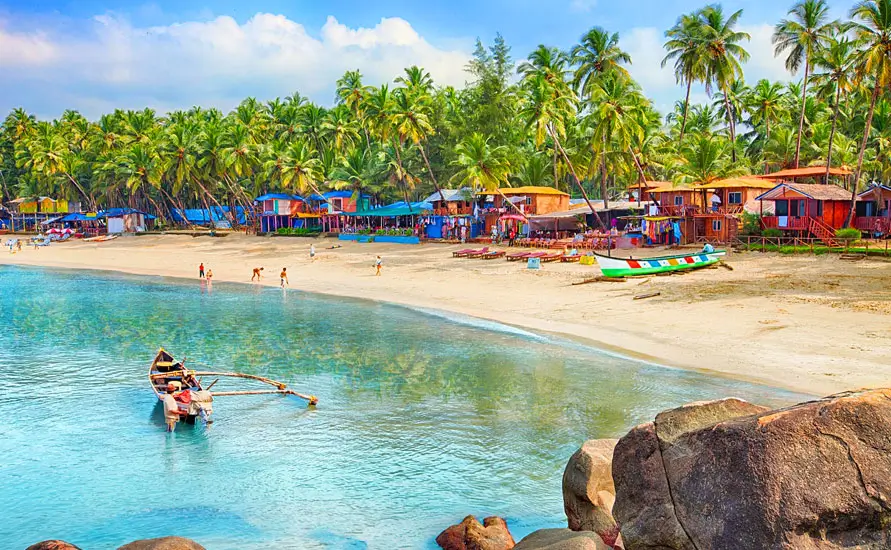
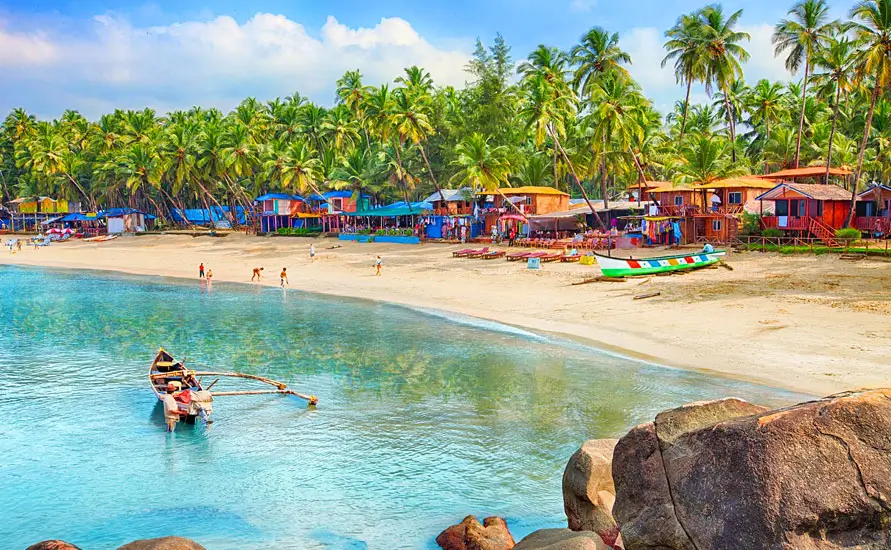
Your resort for three nights sits close to the sand on Goa's western shore, and the remaining daylight hours are yours to spend by the pool or down on the beach, where wooden outriggers rest above the tideline. Four and a half centuries of Portuguese rule, which ended only in 1961, shaped Goan cooking, so tonight is a good chance to try prawn balchão, a tangy pickle-style curry, or fish recheado stuffed with red masala. Many shacks set tables directly on the sand at sunset, with feet in the sand and lanterns on the tables. Overnight in Goa.
Velha Goa, the abandoned Portuguese capital on the Mandovi River, is the focus of the morning, and your guide meets you there after a forty-five-minute drive. Four centuries ago its markets handled horses, silk and spices, and travelers claimed it was as populous as Lisbon. Its surviving religious buildings gained World Heritage status in 1986. The Basilica of Bom Jesus, of dark laterite with granite trim, holds the body of St. Francis Xavier in a silver casket gifted by a Medici duke. Across the lawn, the whitewashed Sé Cathedral houses the Golden Bell, whose voice once carried across the river.
Plague, malaria and silting of the river emptied Old Goa in the 1600s and 1700s, which is why so many of its buildings stand alone in open fields today. Your guide adds the Church of St. Cajetan, built by Italian monks with a dome inspired by St. Peter's in Rome, and the shell of St. Augustine's, where a single 46-meter bell tower survives. Bring a wrap for bare shoulders, as Mass is still celebrated in these churches. After lunch at a Goan restaurant, the car follows the river into Panaji, the compact modern capital, with its riverfront casinos and colonial government buildings.
Climb the criss-cross steps to Panaji's main parish church, the Immaculate Conception, whose white baroque front was a landmark for sailors entering the harbor. Behind it lie the lanes of Fontainhas, Panaji's old Latin quarter, where houses painted ochre, indigo and lime green have red-tiled roofs, oyster-shell windows and carved balcões. Street names appear on blue-and-white azulejo tiles. Duck into a little bakery for a wedge of bebinca, baked in many thin strata of yolk and coconut cream, or into one of the galleries showing Goan artists. The car returns you to your resort for dinner on the beach. Overnight in Goa.
Inland Goa looks nothing like the coast. Forty minutes from the sea, around the town of Ponda, betel nut palms shade rivers and old Hindu temples moved here in the 1500s to escape Portuguese rule. At a family-run spice plantation, your guide follows narrow paths past pepper vines wrapped round areca trunks, cardamom clumps, nutmeg trees split open to show crimson mace, cinnamon bark and vanilla orchids. Many farms greet guests with a flower garland and a thimble of cashew feni. A Goan buffet lunch on banana leaves ends the visit. Some farms offer elephant activities; we leave those out deliberately.
Around an hour further south lies Chandor, a former capital of local kings and later home to some of Goa's wealthiest Catholic families. The Menezes Braganza House, a 17th-century mansion with a facade more than seventy meters wide, is still inhabited by descendants who show visitors through rooms of rosewood furniture, Chinese porcelain, Belgian chandeliers and an Italian-marble ballroom. One wing keeps a small family chapel with a relic of St. Francis Xavier. Entry works by donation rather than ticket, and rules about photography differ between the two wings, so your guide clarifies before you step inside.
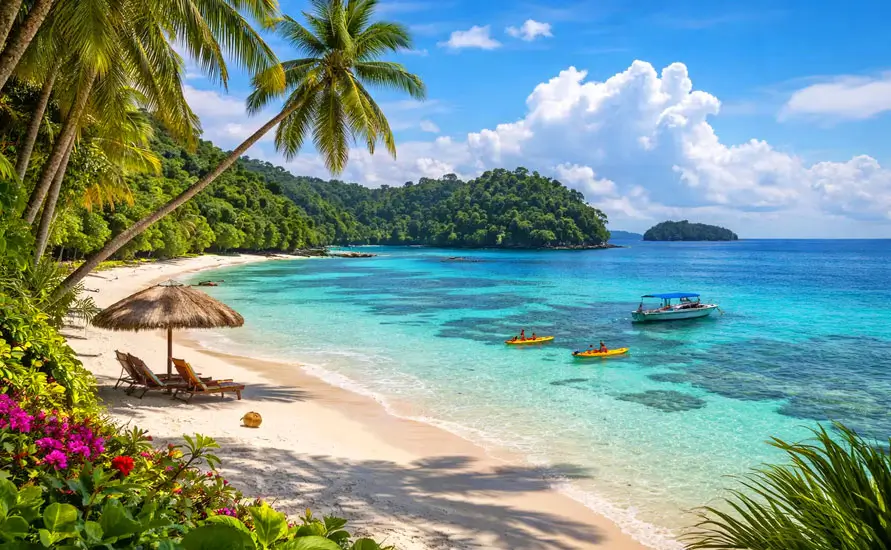
End the afternoon on the southern coast at Benaulim, Colva or Betul, beaches far sleepier than Baga or Anjuna up north, with long sweeps of pale sand and fishing canoes drawn up under the palms. Swim if the red flags are down, stroll for an hour or simply watch the light fade from a sun lounger. Supper can be taken barefoot at a shack: crab xec xec, a dark roasted-coconut curry, or a whole kingfish grilled with garlic butter. Your guide uses the drive back to brief you on tomorrow's flight to Kerala and checkout timing. Overnight in Goa.
A lazy breakfast and checkout lead to the airport and a flight of roughly seventy-five minutes down the Malabar coast to Kochi, usually without stops. From a window seat on the left you may catch glimpses of the long Karnataka beaches and estuaries before the Western Ghats crowd toward the sea. A Kerala-based driver collects you at Cochin International, then crosses Ernakulam and Willingdon Island to reach Fort Kochi, about ninety minutes away. Two nights are booked in a heritage-style hotel on the old peninsula, perhaps a former merchant's home with polished wooden floors, plantation chairs and a frangipani garden.
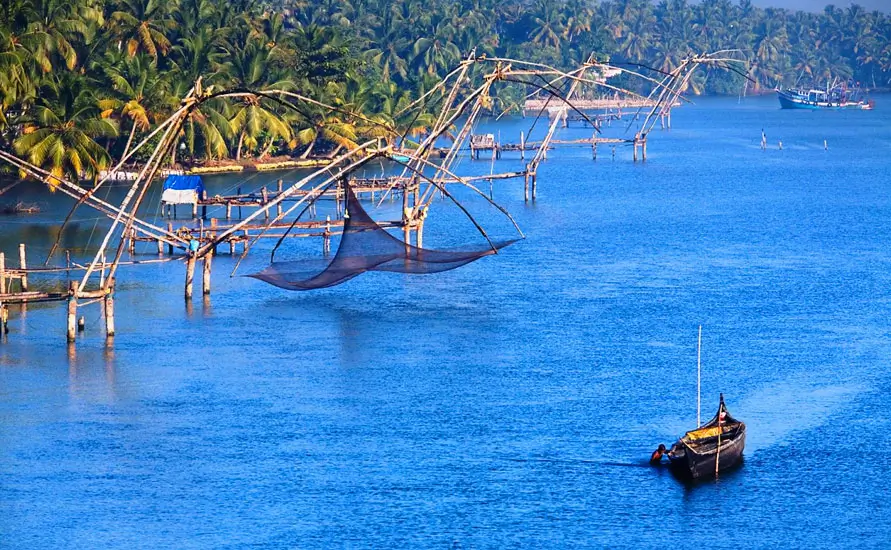
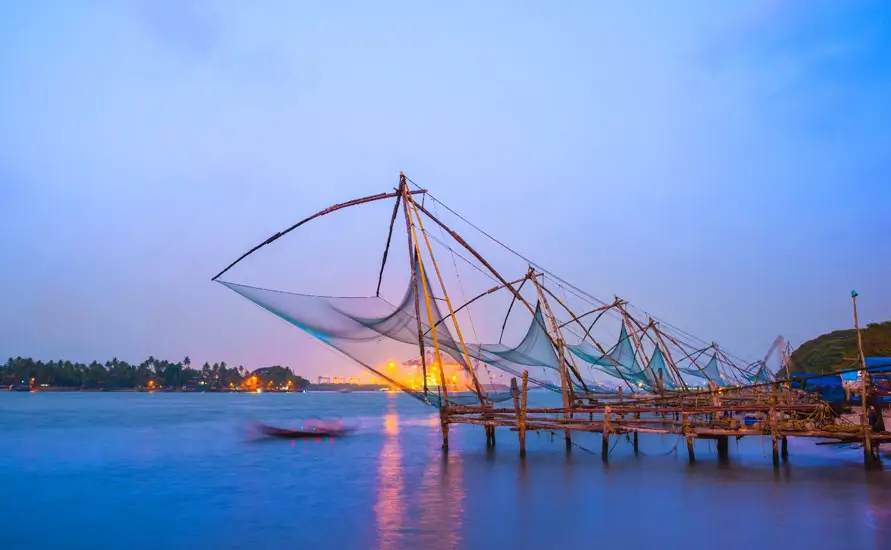
As the sun drops, you board a boat for a two-hour sunset cruise around Kochi's harbor, one of the deepest natural anchorages on the western seaboard. Out on the water you pass the cantilevered fishing nets from a fishermen's angle, then old spice warehouses along the Mattancherry waterfront, naval vessels and the container cranes of Vallarpadam. Your guide tells how a great flood of 1341 silted up the old port of Muziris and carved out the Kochi channel, drawing merchants from Arabia, China, the Jewish diaspora and later Europe, all hungry for black pepper, the so-called black gold of Malabar.
Back on land, dinner is at a seafood place facing the sea, where the menu reflects coconut, curry leaves, kokum and green chili rather than the ghee and cream of the north. Fish moilee, mild and yellow with turmeric, is an easy start; prawn roast cooked dry with shallots packs more fire. Kathakali shows run nightly in two small Fort Kochi theaters, and your guide can reserve seats if you would like to see one this evening, though tickets are paid separately. Otherwise walk back to the hotel past the lit-up colonial facades of Princess Street. Overnight in Kochi.
Pedal power suits Fort Kochi, whose streets are flat, shaded and fairly free of traffic before nine. Bikes and helmets are provided, and your guide rides ahead past St. Francis Church, under whose floor the navigator's original burial slot lies under the floor, the cream-and-blue Santa Cruz Basilica and the quiet Dutch burial ground. You pause at the fishing nets as crews swing them into the water, then at the jetty warehouses that become venues for the Kochi-Muziris Biennale whenever the two-yearly art show is on. Anyone not keen to cycle can follow the same route on foot or by car.
Your next stop, Mattancherry Palace, a Portuguese-built gift to the Kochi rajas that people still misname after the Dutch, holds murals of the Ramayana and Krishna legends painted in warm earth colors on the chamber walls. A five-minute walk leads on to Jew Town. Inside the Paradesi Synagogue, consecrated in 1568, no two of the eleven hundred-odd blue porcelain floor tiles from Canton show quite the same scene. Fridays close both the palace and the synagogue, while Saturday and every Jewish festival keep the synagogue shut too, so these visits fall on a weekday we pick once your dates are firm. Around the synagogue, antique godowns sell everything from brass oil lamps to entire carved doors.
After a lunch break, the car crosses to Thevara on the mainland for the Kerala Folklore Museum, whose three floors copy the timber styles from Kerala's north, center and south and are filled with Theyyam headdresses, temple masks, puppets and musical instruments. A small theater upstairs sometimes holds evening performances. Late in the day, you may join an optional cooking session in a Fort Kochi family home, where the hosts show you how sputtering mustard seeds and curry leaves start a vegetable thoran, simmer fish in coconut milk and ferment the batter for lacy appam. Overnight in Kochi.
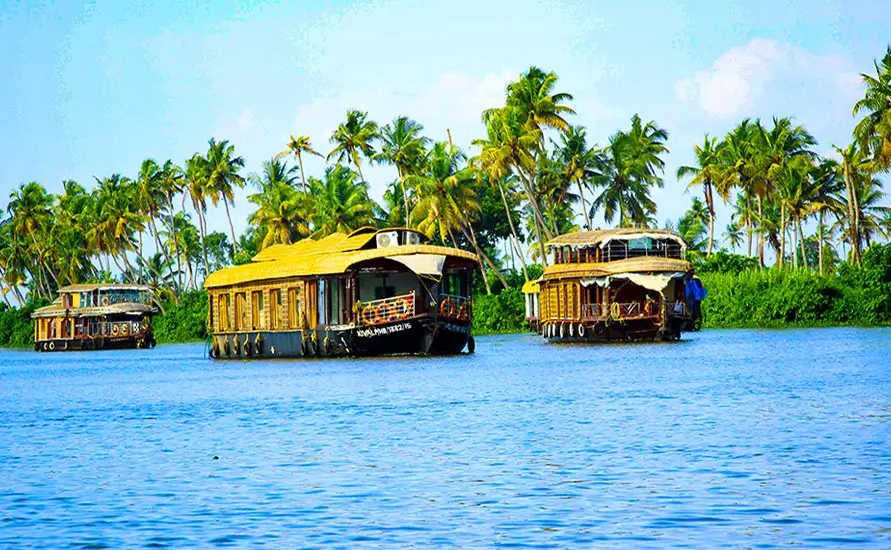
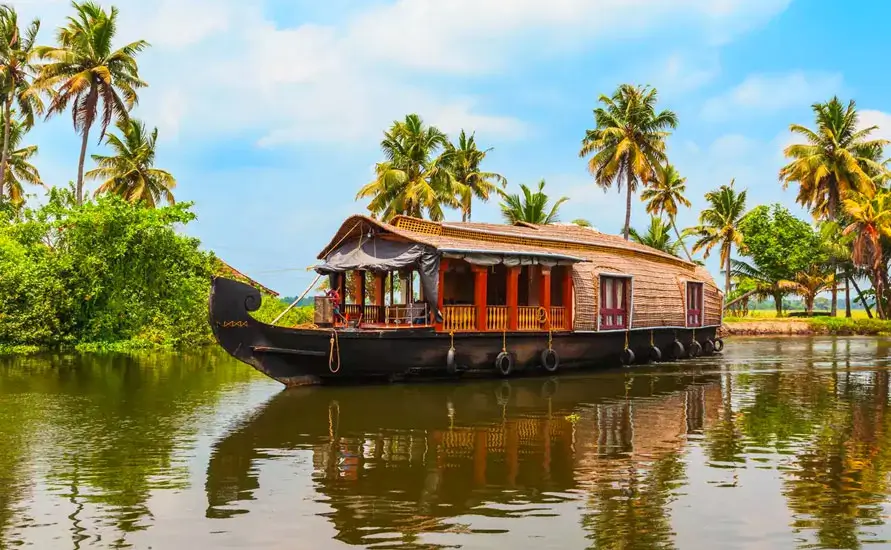
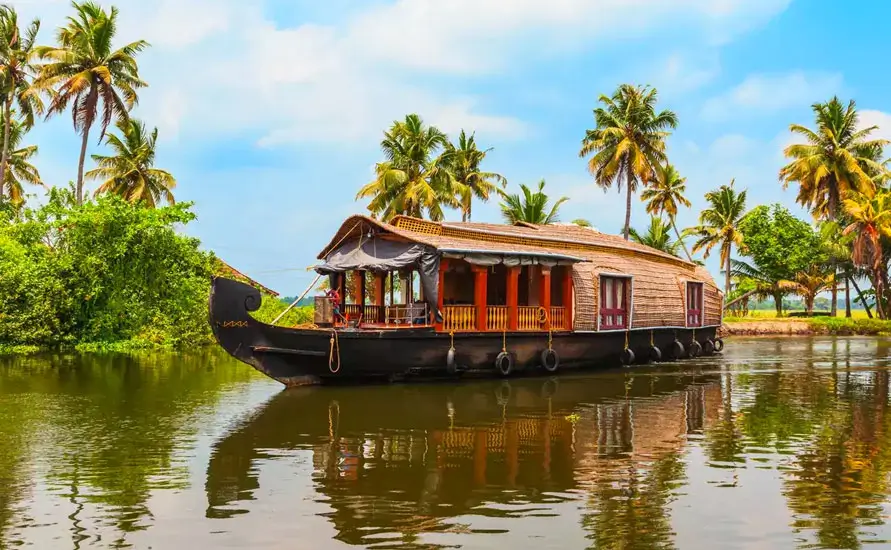
Leaving Kochi after breakfast, the driver takes the coastal highway south through towns where every second building seems to be a church, a fish stall or a gold shop. Ninety minutes later you reach a jetty outside Alleppey and step aboard a private Alleppey houseboat around midday. Modern boats copy the rounded hull of the kettuvallam, the rice barge whose planks were once stitched together with coir rope and sealed with cashew oil. Yours has a sundeck, cabins with attached bathrooms and a galley at the back. A three-person crew, skipper, cook and deckhand, looks after you until tomorrow morning.
Lunch comes on board as the boat heads across Vembanad Lake, which stretches some 80 km from end to end, before ducking into the slim waterways of the Kuttanad rice country. Afternoon scenes slide past at walking pace: a woman beating laundry on a stone step, schoolboys diving off a jetty, a duck herder steering hundreds of birds with a long stick, a white-washed shrine half hidden by palms. If you see a fisherman with a full canoe, the cook can buy prawns or a karimeen for dinner, haggling on your behalf. Short village walks along the dikes are possible whenever the crew moors briefly.
At dusk the skipper ties up for the night, since Kerala's rules keep houseboats stationary after dark so the fishermen can set their nets. The sundeck becomes the place for chai, plantain fritters and watching swallows sweep low over the paddies as the light fades. Dinner might include the prawns you bought, cooked in a coconut gravy, along with rice, a thoran and pickles. The cabin air-conditioning comes on at night, with the generator noise kept low. Once the village lamps go out, the darkness and the croaking of frogs take over. Overnight on the houseboat.
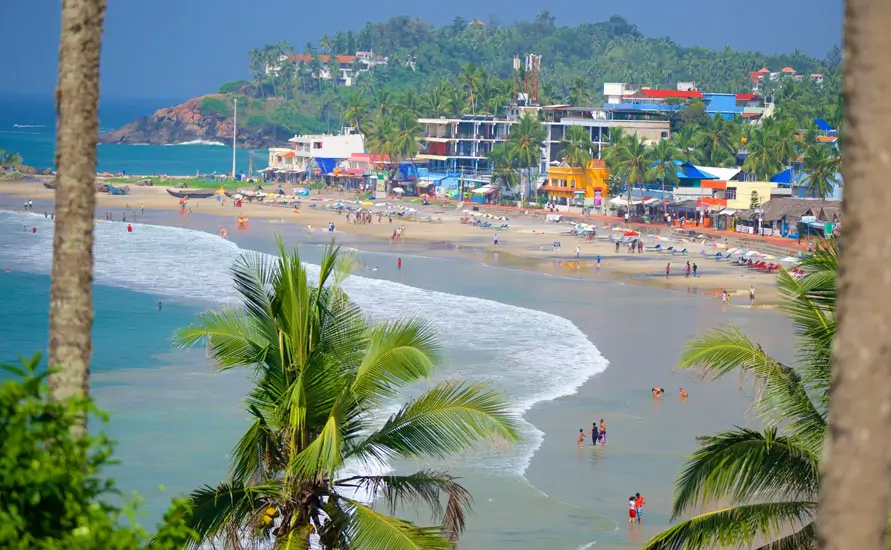
Wake to the slap of paddles as canoes head to the morning market, and take your tea on deck while mist burns off the canals. After a breakfast of puttu, steamed rice cake, with chickpea curry, the boat returns to the jetty around nine, and your deckhand lugs the suitcases ashore. A twenty-five-minute drive north brings you to Mararikulam, a fishing village on the coast of Alappuzha district with a long, quiet beach. Home for the final pair of nights is a cluster of thatched or tiled cottages set among coconut palms just behind the dunes.
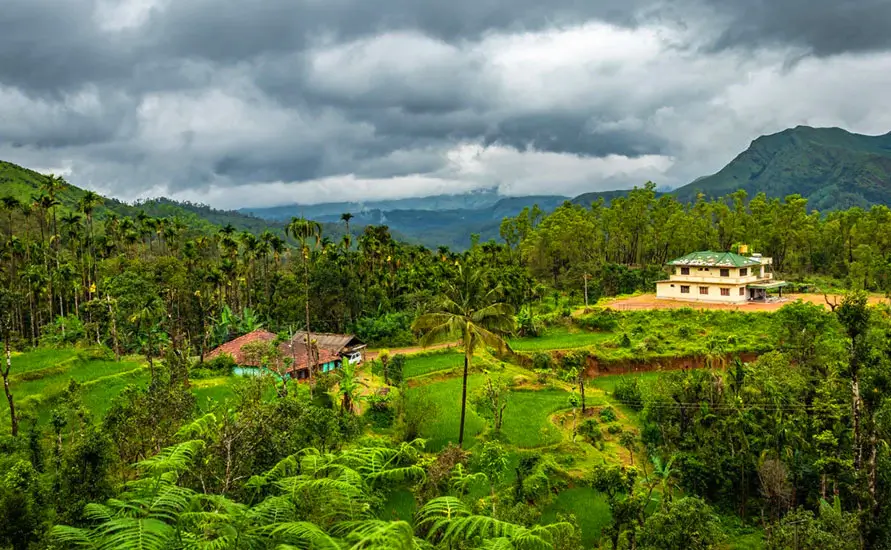
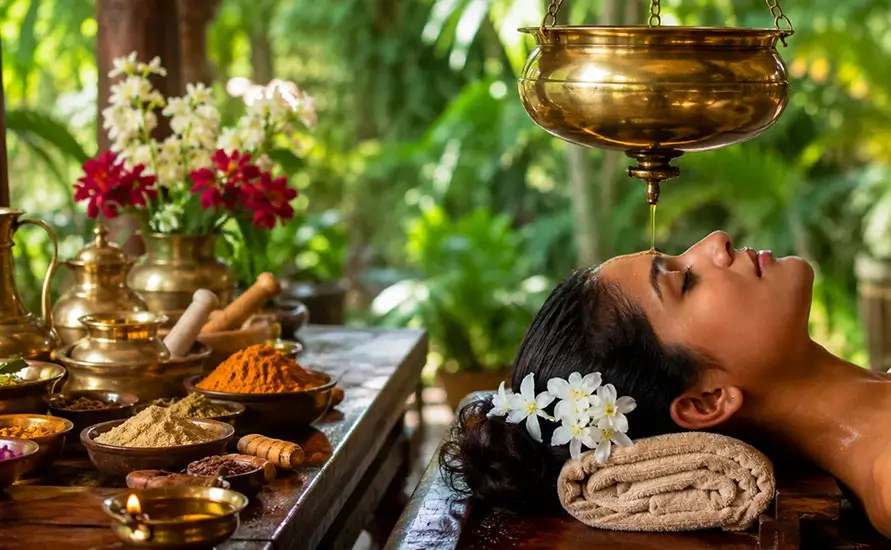
Today is open, a deliberate pause after the cities. Swim in the resort pool, doze under a palm, or stroll toward the fishing hamlet, where crews in lungis pull long net lines onto the sand and sort sardines and mackerel straight into baskets. The resort's Ayurveda center offers oil massages and herbal steam baths, an optional extra you can book on arrival. Note that the sea along this coast can have strong currents, especially during and just after the monsoon, so check with the lifeguard or front desk before wading beyond knee depth.
Marari's beach looks its best toward five o'clock, when the light turns golden and fishing families sit in groups on the sand, mending nets and chatting. Sunsets here drop directly into open water, often with a long silhouette of canoes on the horizon. Dinner at the resort usually features Kerala dishes alongside some international choices, with tender coconut water and fresh juices on the side. If the kitchen offers a beachside table, take it. Before supper your guide phones to finalize tomorrow's cycling plan and the pickup time. Overnight in Alleppey.
After breakfast a local guide meets you with bicycles for a ride along the embankments of the Kuttanad countryside, a level landscape of rice paddies, canals and footbridges where car traffic is rare. The route is easy and goes at a gentle pace, with plenty of stops for photographs of kingfishers on power lines and egrets in the fields. If you prefer, the same circuit can be done by car with short walks. Your guide explains how farmers drain fields reclaimed from the lake, grow one or two rice crops a year and then let the water back in.
Midway there is a stop at a small coir unit, where women spin coconut husk fiber into rope on hand-turned wheels and weave mats on wooden looms, a craft that made Alleppey the coir capital of India in the 19th century. Next comes St. Mary's Forane Church at Champakulam, one of the oldest parishes in Kerala, believed to have been founded in 427 AD, though the present building is later. Its interior has painted wooden ceilings and murals. Champakulam also hosts one of the oldest snake boat races in the region each year in June or July.
Lunch back at Marari leads into a quiet afternoon, or take an optional canoe ride through narrow side canals with a local boatman. As evening comes, the resort lays on a farewell meal, with dishes such as karimeen fry, appam and a last tumbler of salted lime soda. Take a moment tonight to look back over two weeks that have taken you from Mughal forts and Rajput palaces to Goan churches and Kerala's backwaters. Before bed, settle any resort extras and confirm tomorrow's departure time with your driver based on your flight schedule. Overnight in Alleppey.
Breakfast at Marari is the last meal of the trip, and the run north to the airport usually needs a couple of hours, along the coastal highway and past the outskirts of Ernakulam. Pickup is set to land you at the terminal roughly three hours before your long-haul departure. Nonstop services reach the Gulf states, Singapore and Malaysia, with easy onward links to North America, Europe and Australia. For a night departure, we can arrange a late checkout for a supplement or a stop at a spice shop on the way.
Fifteen days on this Golden Triangle with Goa and Kerala route have connected the Mughal north, the Portuguese-flavored Konkan coast and the backwaters of Kerala, three regions that feel like three different countries. If you can extend, Munnar's tea estates, the wildlife sanctuary at Thekkady or a few days at Varkala's cliffs are easy additions. Our team remains reachable by phone throughout, right up to boarding, and whenever India calls you back, we can sketch another route.
Your Journey
N.S. Rathore & Mrs. Omlata Rathore · Managing Director
We still read every enquiry ourselves. Tell us the places you liked and our planners will send a day-by-day route with drive times and a clear price.
Every package can be customised and no pressure to book. A planner from our office replies within 24 hours with a route written for your group.
Fill this in and your planner will send a first draft itinerary.
Explore more
Kerala Backwaters Escape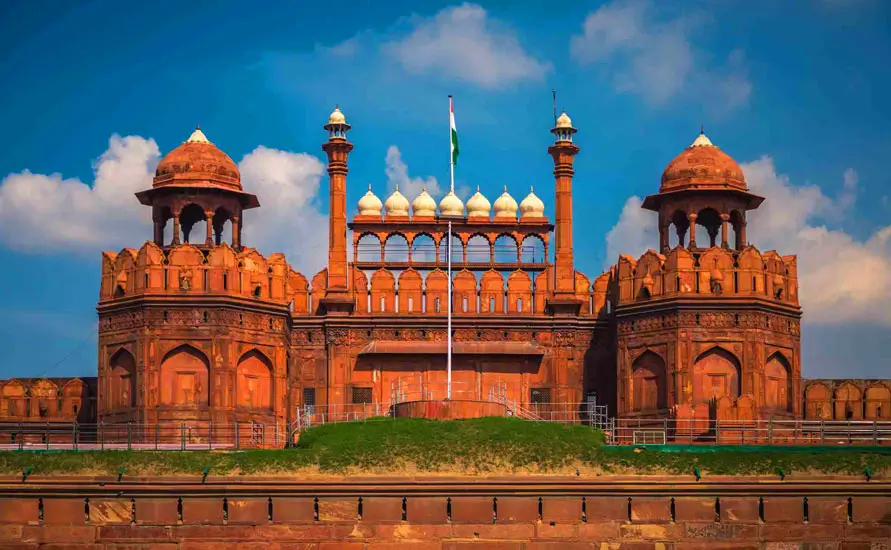 Kerala Backwaters Escape
 Kerala Backwaters Escape
 Kerala Backwaters Escape
 Kerala Backwaters Escape
 Kerala Backwaters Escape
 Kerala Backwaters Escape
 Kerala Backwaters Escape
 Kerala Backwaters Escape
 Kerala Backwaters Escape
 Kerala Backwaters Escape
 Kerala Backwaters Escape
 Kerala Backwaters Escape
 Kerala Backwaters Escape
 Kerala Backwaters Escape
 Kerala Backwaters Escape
 Kerala Backwaters Escape
 Kerala Backwaters Escape
 Kerala Backwaters Escape
 Kerala Backwaters Escape