 Kerala Backwaters Escape
Golden Triangle Tour With South India
Delhi – Agra – Abhaneri – Jaipur – Kochi – Kumarakom (Ayurveda resort)
At a glance
Sightseeing in North India is thrilling, and it is also tiring, which is exactly why this itinerary ends with a week of slow mornings beside Kerala's largest lake. Our Golden Triangle with Ayurveda in Kerala gives five busy days to the Mughal and Rajput landmarks of Delhi, Agra and Jaipur, after which a plane carries you down to Kochi, the old pepper harbor, and a short drive delivers you to a lakeside Kumarakom Ayurveda resort. There, a resort physician designs a daily routine of oil massages, yoga and vegetarian meals, and the only fixed appointment most afternoons is a pot of herbal tea.
Pacing was the starting point when we drew up the route. Delhi gets two nights so the first evening can be spent listening to Sufi singers rather than rushing to a monument. A fast train carries you to Agra, and the road to Jaipur stops at the deep Chand Baori stepwell instead of the usual sights. After one flight and two nights in Kochi, you stay put for six nights in Kumarakom. Road legs in this Kerala-ending Golden Triangle tour with South India run in a chauffeured, cooled vehicle reserved for your group alone, while government-licensed city guides handle the storytelling and every pickup is timed around flights and spa slots.
A word on what Ayurveda means within the Golden Triangle with Ayurveda in Kerala. It is a traditional Indian system of wellbeing, offered at resorts as massages, steam, diet and gentle movement, and it is not a replacement for medical care. The resort physician asks about your health on arrival and adapts the sessions, so please tell us in advance about any condition or medication. Travelers from the US, Canada, Europe and Australia, and NRIs wanting a calm week at home, often book this Kerala Ayurveda retreat between October and April, while some prefer the monsoon months that Kerala tradition links with Ayurveda.
Landing in Delhi after a long-haul flight can feel like stepping into a warm room full of noise, so the plan for today is deliberately light. One of our Delhi staff stands at the exit barrier holding a sign with your name, steers your trolley to the parking bay and keeps you company for the ride downtown, usually forty minutes when the roads are clear. Standard check-in is 2 pm; for a sunrise touchdown we simply reserve the previous night too. Use the first hours for sleep, a shower and a simple lunch, because the evening outing is worth staying awake for.
At dusk you follow your guide on foot into Nizamuddin Basti, a medieval settlement of crooked alleys that grew up around the grave of Hazrat Nizamuddin, the Chishti mystic revered across North India since the fourteenth century. The path to the dargah is lined with stalls selling rose petals, sheets of green and gold cloth and attar, a perfume oil. Cover your head, leave shoes with a stallholder for a few rupees and note that the innermost grave room admits men only, while the marble forecourt welcomes everyone. Your guide also points out the grave of the poet Amir Khusrau, the saint's disciple, close by.
After the evening prayer, singers known as qawwals sit down in the courtyard with harmonium and hand drums and begin the devotional songs called qawwali, many of them written by Amir Khusrau seven centuries ago. Thursday evenings usually bring the biggest crowds and longest sessions, though music is often heard on other nights as well. You can sit on the floor among local families for as long as you like, and a donation to the musicians is welcome but never demanded. Dinner follows at a kebab house nearby or back at the hotel, where milder North Indian food is easy to find. Overnight in Delhi.
South Delhi holds the oldest layer of the city, and your guide starts there while the morning is cool. The Qutub Minar, a fluted tower of red and buff sandstone about 73 meters tall, was begun around 1199 by Qutb-ud-din Aibak to mark the arrival of Muslim rule in Delhi. Around its base you wander among the colonnades of Delhi's first mosque, assembled from pillars taken from older temples, and reach the Iron Pillar, a Gupta-era column of almost rustless iron standing for around sixteen centuries. Your guide explains why metallurgists still study it. The complex is a UNESCO World Heritage Site.
A short walk away, the Mehrauli Archaeological Park is a large wooded area dotted with tombs, stepwells and mosques from several dynasties, and few visitors make time for it. You follow a dirt path to the Jamali Kamali mosque and tomb and to Rajon ki Baoli, a stepwell with arched galleries, hearing only parakeets and the odd jogger. Later you drive to the Lotus Temple of the Bahá'í faith, a white building shaped like a half-open flower, where people of every religion sit together in silence. It is closed on Mondays, so on that weekday we swap it for Humayun's Tomb or the Sunder Nursery gardens.
Next stop is Gurdwara Bangla Sahib, the white-marble Sikh shrine near Connaught Place, whose gilded onion dome glows in the sarovar, its sacred tank. Visitors cover their heads with a scarf, wash their feet at the entrance and walk barefoot around the water, listening to hymns sung inside. Best of all is the langar hall, where volunteers feed anyone who walks in, thousands of plates of lentils and flatbread a day, and guests may lend a hand at the rolling boards or join the rows of diners seated cross-legged. You return to the hotel through New Delhi, passing India Gate and the President's residence. Overnight in Delhi.
Rail replaces road this morning: the Gatimaan Express, rated for 160 km/h, leaves Hazrat Nizamuddin and pulls into Agra Cantt about 100 minutes later. Your car and driver leave Delhi early with the main luggage, so you only carry a small day bag on board. Your reserved chair-car seats recline a little, and attendants generally bring a tray of tea and snacks. Through the window you see wheat fields, village ponds and small brick-built temples sliding past. The train runs on most days of the week, and on the rare days it does not, we drive you on the Yamuna Expressway instead.
Guide and car wait on the Agra platform, and you start across the river at Itimad-ud-Daulah, which Agra residents call the Baby Taj. Nur Jahan, Jahangir's formidable queen, raised it in the 1620s over her father, a Persian immigrant who rose to run the imperial finances, and its white cladding predates the Taj by a generation. Its surfaces carry inlaid goblets, slender cypresses and vases of flowers in semi-precious stone, and the marble screens let in soft, filtered light. Because few tour groups come here, you can study the details at leisure, sitting by the river terrace at the back of the garden.
Later you visit a family workshop that still practices pietra dura, the craft of cutting tiny pieces of stone and setting them into marble that you will see on the Taj Mahal tomorrow. Artisans shape each fragment of jasper or lapis against a bow-driven grinding wheel, and a dining tabletop may occupy a team for half a year. Buying is optional; a pair of inlaid coasters weighs almost nothing in a suitcase. Your hotel lies within easy reach of the Taj, so eat early and sleep early, because pickup comes in the dark. If your Agra morning would fall on a Friday, we swap the order of the days. Overnight in Agra.
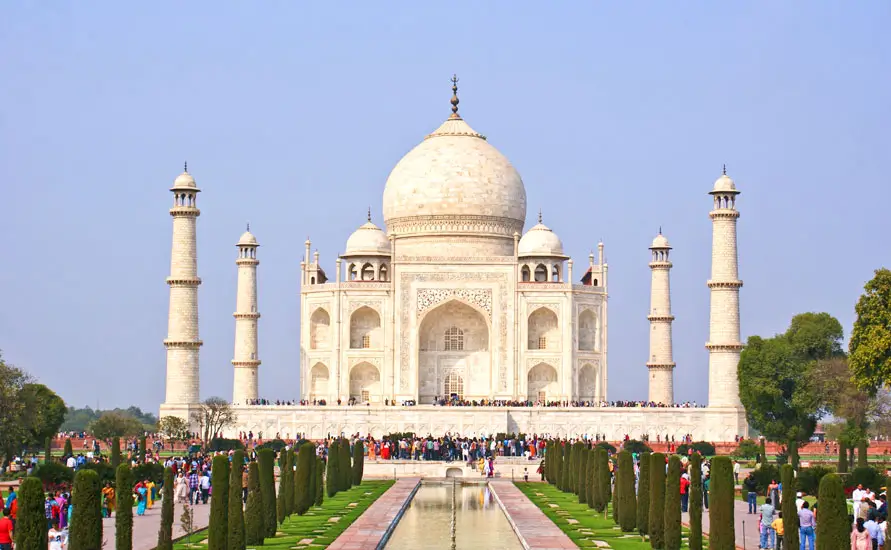
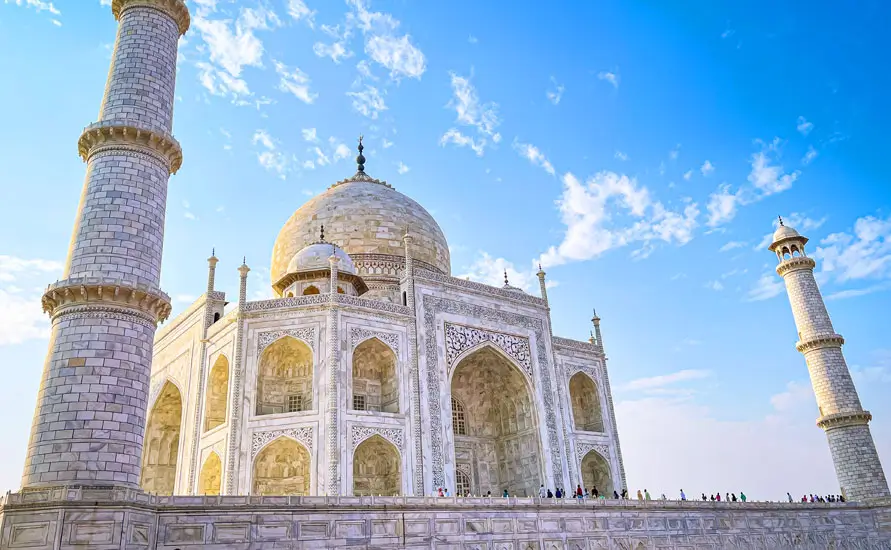
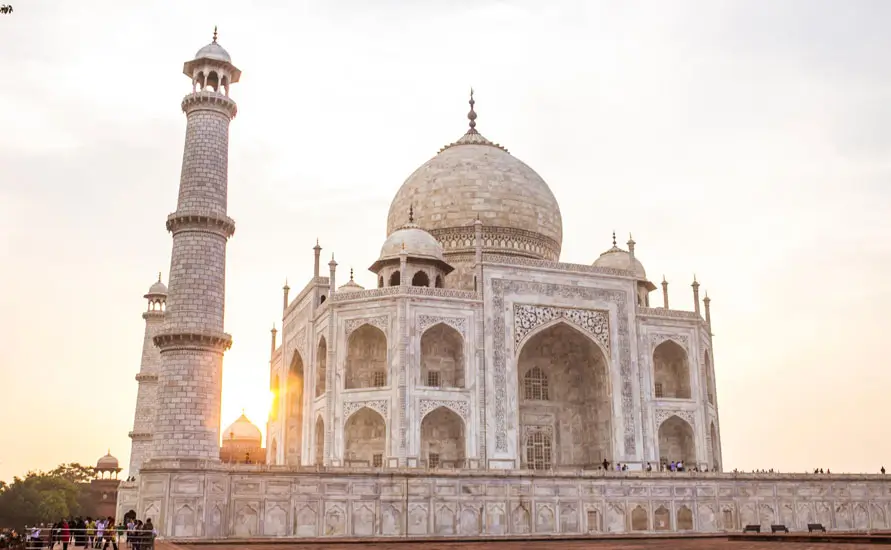
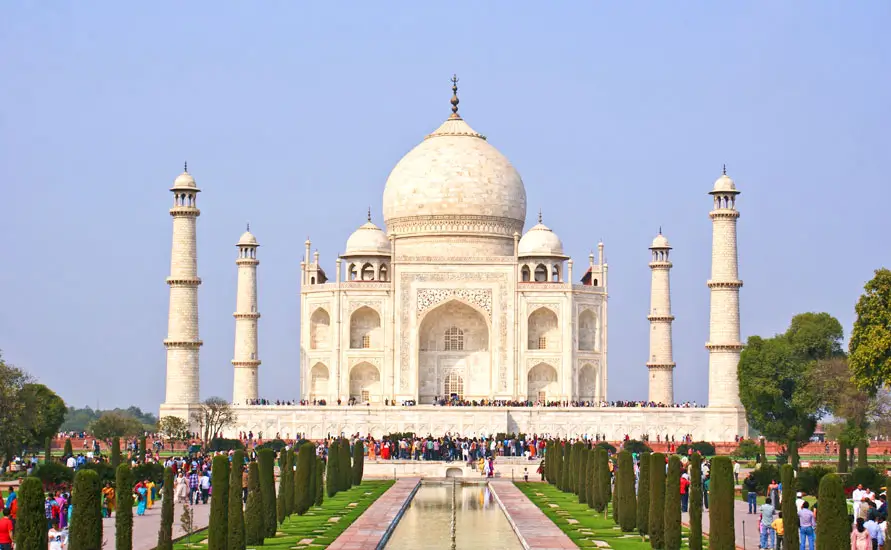
Dawn is the gentlest hour at the Taj Mahal, and you are in the line at the eastern gate well before the ticket windows open. Once inside, the mausoleum shifts from grey to rose to bright white within half an hour, and the reflecting pools in the garden are usually still. Your guide talks about Mumtaz Mahal, who died in 1631 while giving birth to her fourteenth child, and about the twenty thousand workers who spent more than two decades on the complex. The monument is closed on Fridays, which is why the order of your days is fixed only once we know your arrival date.
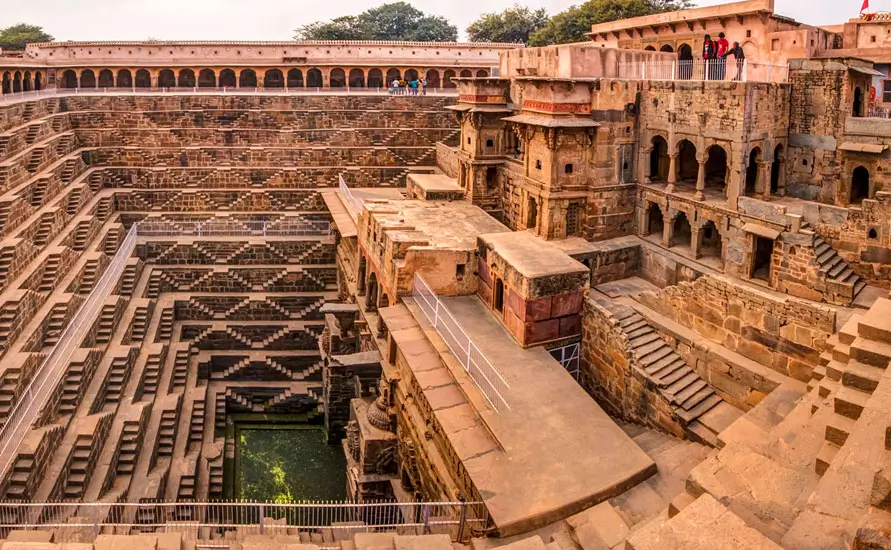
Breakfast back at the hotel precedes the westbound drive into Rajasthan, where the land turns flatter, drier and dotted with acacia. Roughly 90 km short of Jaipur you turn off for Abhaneri, home of the Chand Baori, a ninth-century water tank and among India's deepest stepwells. Thousands of narrow steps descend in a zigzag pattern over thirteen levels to a pool of green water, and the bottom stays noticeably cooler than the surface. Next to it stands the partly ruined Harshat Mata temple, whose broken carvings of musicians and dancers are scattered around the courtyard.
From Abhaneri, Jaipur lies ninety minutes away, so you arrive while it is still light. Your hotel can be a converted haveli, a mansion built around a courtyard, or a modern property outside the old walls, depending on your choice. Later, rest or shop: Bapu Bazaar, inside the old walls, sells embroidered mojari slippers, bandhani scarves and stacks of lac bangles. Haggling is expected, so ask your guide for ballpark prices first. Dinner can be a Rajasthani thali, a steel platter holding a dozen small bowls of curries, lentils, pickles and breads, refilled until you wave the server away. Overnight in Jaipur.
Your first stop is Amber Fort, in the hills north of town, seat of the Kachhwaha clan until 1727, when Sawai Jai Singh II moved his court to a new grid-plan capital below. Elephant rides are not part of our tours, so a jeep takes you up to the Suraj Pol or you climb the ramp on foot. Inside you pass from the public audience hall to the private quarters of the maharaja, where the Jas Mandir glitters with mirror mosaics and the marble Sukh Niwas was cooled by water running through a channel in the floor. From the ramparts you can trace the line of walls running over the ridges.
Next you head to Galta Ji, a group of temples built into a rocky gorge east of the city, where natural springs feed a series of bathing tanks used by pilgrims for centuries. Many people call it the Monkey Temple, because large troops of rhesus macaques and langurs live on the cliffs, so keep food and loose items in the car. Following lunch you stroll among the masonry sundials and star-sighting bowls of Jantar Mantar, the same astronomer-king's open-air observatory, where your guide shows how shadows tell local time. You also stop for photos of Hawa Mahal, the Palace of Winds.
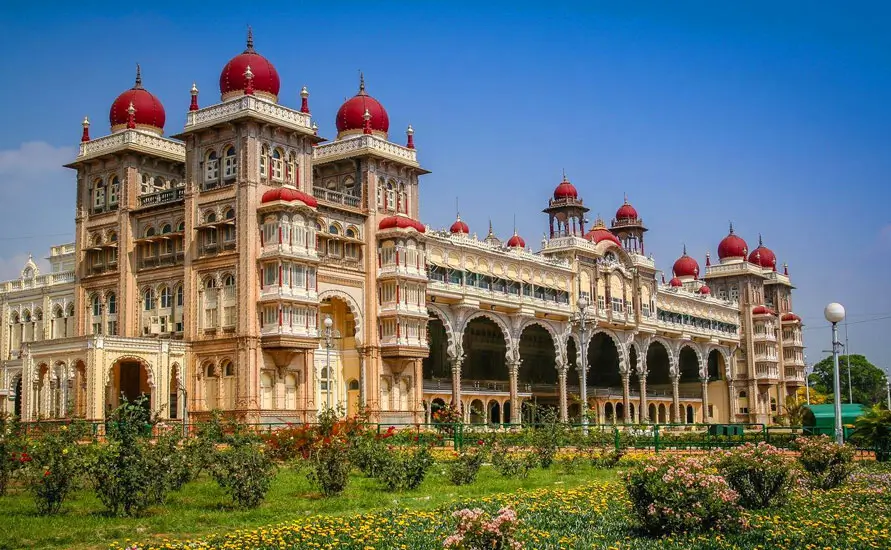
As the day cools, a twisting hill road climbs to Nahargarh Fort on the Aravalli crest overlooking town. Founded in 1734 as a hilltop guard post, it later gained a palace of nine matching apartments for royal wives, linked by private passages so the ruler could visit each one discreetly. The real reason to come, though, is the view: as the sun sets, the pink old city below lights up house by house, and on clear evenings you can pick out the City Palace, the Jal Mahal and the long line of the city walls. Dinner is back in town. Overnight in Jaipur.
Today is mostly a travel day, so breakfast is relaxed before your driver takes you to Jaipur International Airport. Depending on the season's timetable, the hop to Kochi is either nonstop or routed via Mumbai, Bangalore or Delhi, and door to door it generally fills four to six hours. We book economy seats with standard baggage and choose connections with sensible layovers. Kerala colleagues collect you at Cochin International and cover the ninety-odd minutes to Fort Kochi, a heritage quarter on a sandy spit beside the channel that ships use to reach the port.
The change is obvious the moment you step out of the terminal: humid air, coconut palms and the green of rice fields instead of the dry browns of Rajasthan. If you arrive with energy left, stroll the seafront walkway, where carts fry mussels, vendors squeeze lime soda and container ships glide in toward Willingdon Island. Dinner could be your first Kerala meal of appam, a soft lace-edged rice pancake, with a mild coconut stew. Keep the evening quiet, because tomorrow is your last full sightseeing day before the resort. Overnight in Kochi.
Kochi wakes early, and one of its least-known sights is busiest at dawn. The Dhobi Khana in Fort Kochi is a communal laundry where families of washermen, many with family roots in Tamil Nadu, still scrub and slap clothes on stone slabs, then dry them on long lines of rope without clothes pegs, twisting the fabric into the rope itself. Your guide arranges a short, respectful visit. Next you pass the weathered Dutch graveyard and St. Francis Church (look for the gravestone slab inside that recalls the Portuguese navigator), and through lanes of colonial bungalows that now house art cafés and homestays.
Mid-morning you reach Mattancherry, where the Mattancherry Palace, a mid-sixteenth-century Portuguese present for Kochi's ruler, later patched up by Dutch engineers, keeps vivid wall paintings of epic scenes in earthy reds and greens. Nearby, the Paradesi Synagogue of 1568 serves the small community that remains of Kochi's Jewish population, and its floor of hand-painted blue Chinese tiles is unlike any other. Both sites keep their own calendars, the palace dark every Friday and the synagogue dark Fridays, Saturdays and Jewish holy days, so your guide juggles the sequence to suit. Modest clothing is expected in both places.
Afterwards the walk continues among the spice godowns on Bazaar Road, old warehouses where ginger is spread out to dry in courtyards and sacks of black pepper and cardamom are weighed on iron scales. This is where Kochi's fortune was made, as Arab, Chinese, Portuguese and Dutch traders all came for pepper. In years when the Kochi-Muziris Biennale is running, roughly December to March, some of these warehouses double as galleries for contemporary art. The evening is free; you could watch a short Kalaripayattu martial arts demonstration or a Kathakali performance at a cultural center, both optional. Overnight in Kochi.
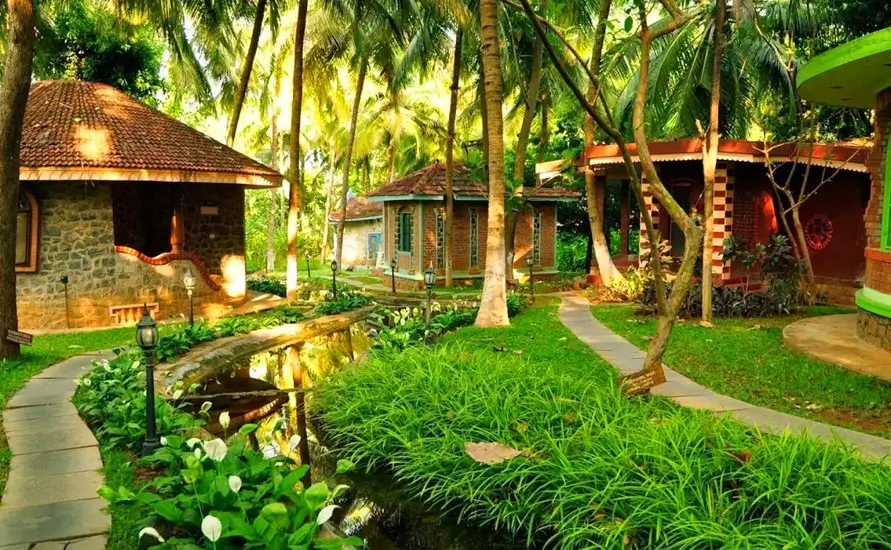
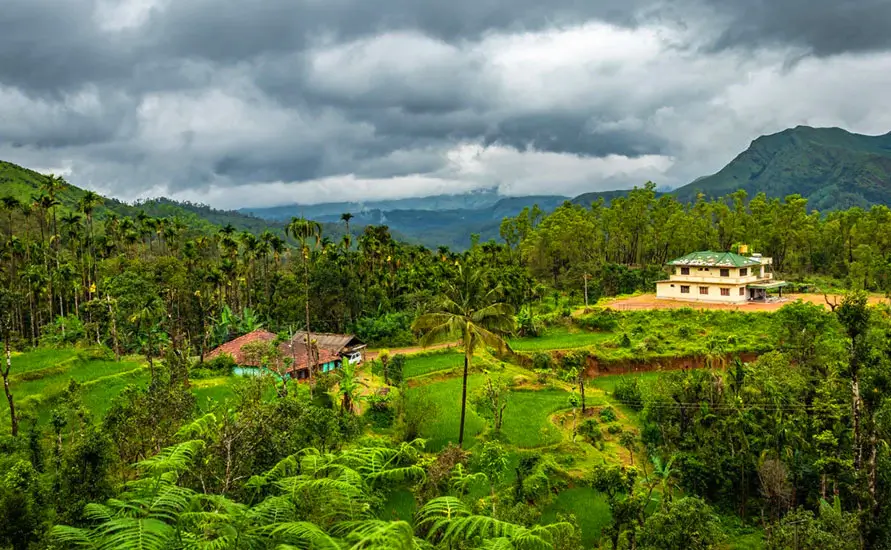
With breakfast finished in Fort Kochi, the car crosses Ernakulam and skirts the temple town of Vaikom on the way to Kumarakom, a string of lakeside hamlets on Vembanad Lake, the longest body of water in Kerala. The road passes paddy fields, small churches and roadside stalls selling tapioca chips and bananas. Lunchtime brings you to your Kumarakom Ayurveda resort, where a jasmine garland and chilled coconut water mark the welcome. Rooms are usually cottages or villas set among gardens and canals, and the resort is designed around quiet, so phones on silent are appreciated in the common areas.
Mid-afternoon is reserved for an initial consultation with the in-house vaidya, as Ayurvedic doctors are called. The doctor asks about your sleep, diet, digestion and daily routine, checks the pulse at your wrist in the classical manner, and asks you to share any medical conditions, allergies or medicines. Based on this, the doctor puts together a personal plan for the coming days, usually one or two sessions daily plus yoga and dietary guidance. Ayurveda describes three doshas, or body types, called vata, pitta and kapha, and your physician will explain which one you lean toward. None of this replaces advice from your own doctor, and you can pause any session at any time.
The opening session is typically abhyanga, in which two therapists move in mirrored strokes using warmed medicated oil, followed by a short steam in a wooden cabinet. Men are treated by male therapists and women by female therapists, which is standard at Kerala resorts. Afterwards you may feel drowsy, which is why the evening program is simply a slow walk along the lakeshore and an early vegetarian dinner of rice, vegetable curry, lentils and buttermilk. Alcohol is usually discouraged during a program, and the kitchen can explain which ingredients suit your plan. Overnight in Kumarakom.
Herons start feeding around six, so set the alarm for the Kumarakom Bird Sanctuary, a swampy lakeside trail a few minutes from most resorts. A local naturalist guides you along the trail at first light, when herons, egrets, kingfishers, darters and cormorants are most active, and migratory birds can arrive from the north in winter. Sightings vary with the season and water level, and nothing is guaranteed, but the walk itself, in the cool mist with the lake glinting through the trees, is a calm way to start the day. Binoculars can usually be borrowed from the resort.
Back at the resort you join a yoga session with the resident instructor in an open pavilion facing the water. Classes are paced for beginners, focusing on breathing, gentle stretches and sun salutations, and the instructor can adapt positions for stiff backs or knees. Breakfast follows, often red rice puttu with steamed banana, fresh fruit and a cup of spiced herbal water that the kitchen keeps warm throughout the day. Until lunch nothing is booked: try a hammock and a paperback, some lengths of the pool, or a chat with other guests about where they have traveled in India.
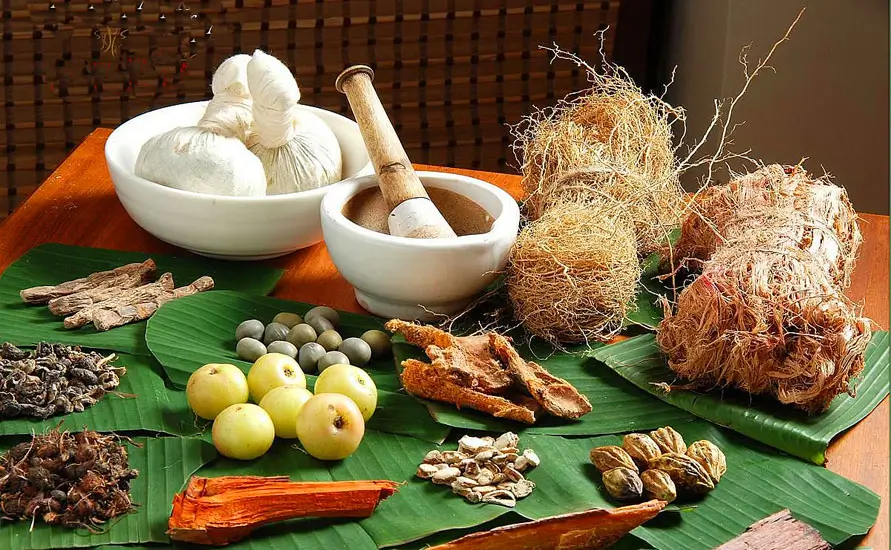
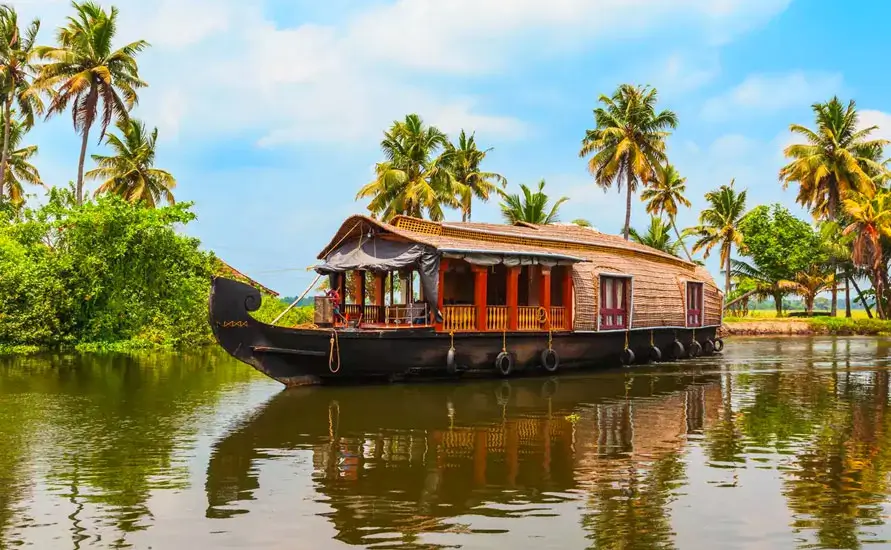
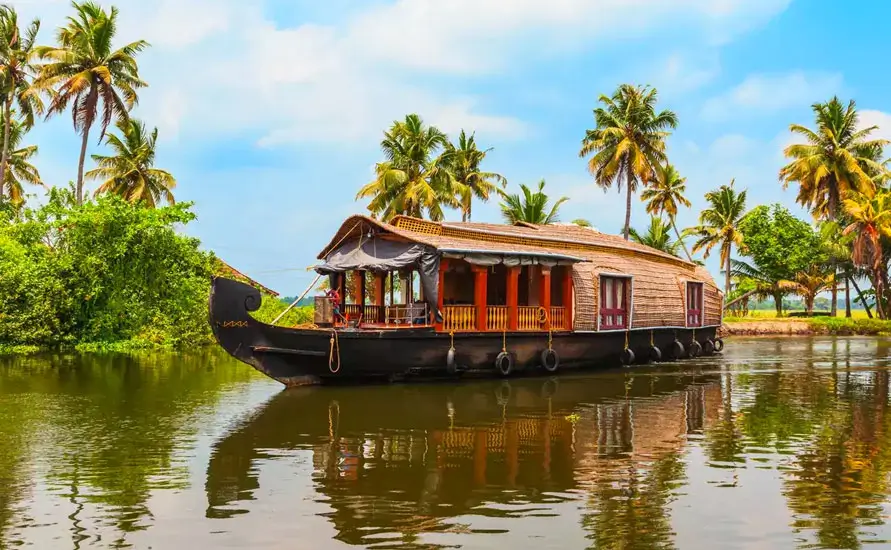
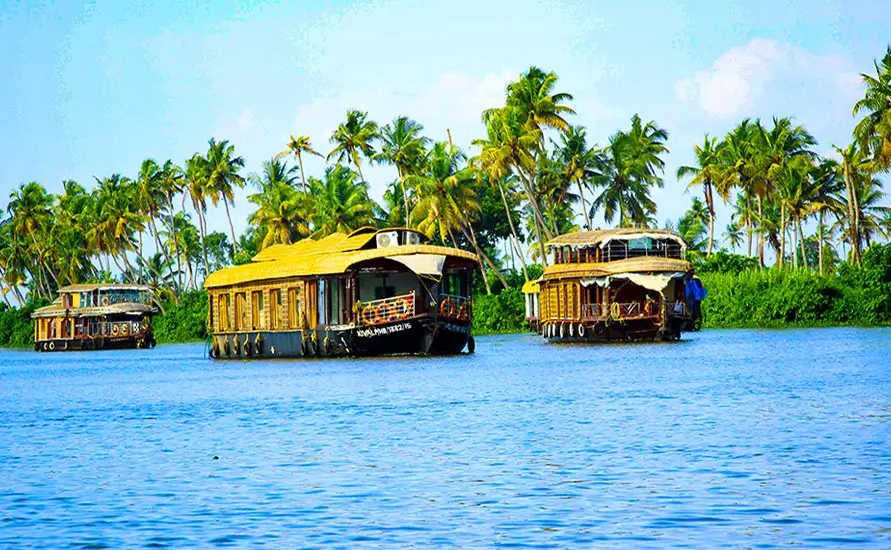
Your afternoon session is guided by the physician's plan and might include elakizhi, a massage using warm cotton pouches filled with herbs and leaves that are dipped in oil and pressed rhythmically along the body. A herbal steam bath and a warm shower complete the session. Late in the day the light over Vembanad turns gold, and many guests head to the lakeside jetty to watch fishing canoes and the occasional houseboat glide past. Dinner tonight is again vegetarian and freshly prepared, with portions that fit your plan, and the kitchen is happy to explain the purpose of each spice used. Overnight in Kumarakom.
Today a country canoe, a narrow hand-paddled craft, slips out of the resort into channels too tight for any houseboat. These waterways cut between palm-fringed plots and polders, rice land reclaimed from the lake and guarded by mud bunds. You glide past homes where women scrub pots at the water's edge, children walk to school along the dykes and ducks paddle in neat flocks. Your guide explains how families here make a living from fishing, coconuts and rice, and how the yearly monsoon floods, sometimes reaching doorsteps, shape the farming calendar and village life.
The canoe stops at a small village workshop where you can watch coir being made, as coconut husks are soaked, beaten into fiber and spun into rope on a simple wheel. Kerala has been famous for coir doormats and ropes for over a century. With luck you also meet a toddy tapper, who shins up a coconut trunk with his feet bound in a fiber ring and taps the flower stalk for sap that ferments into mild palm wine. Tasting toddy is optional and not part of an Ayurveda program, so many guests simply watch. A light lunch awaits on your return.
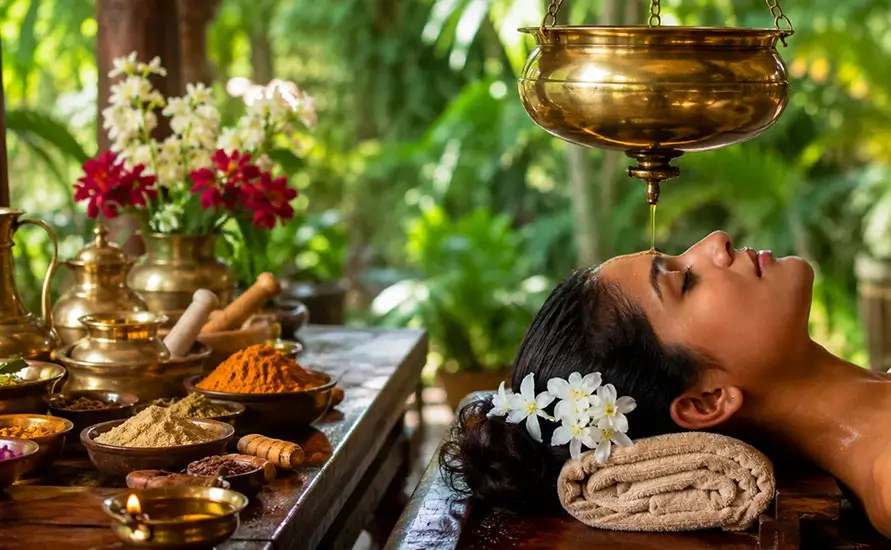
Later you may receive shirodhara, perhaps the best-known Kerala therapy: lukewarm oil trickles from a suspended pot, swaying gently, back and forth over your brow for roughly half an hour or a little longer. Most guests describe it as deeply relaxing, and it is usually done after a short head and shoulder massage. Your hair will be oily afterwards, so plan a gentle evening with no hairdryer in a hurry. The resort may offer a short meditation or a talk on Ayurvedic daily routine before dinner, and both are optional. Overnight in Kumarakom.
A slower start today: after morning yoga and breakfast you join the resort's cooking session with one of the kitchen team. The menu follows Ayurvedic principles, using fresh vegetables, coconut, curry leaves, turmeric, ginger and cumin, with very little chili. You might prepare a thoran, a dry stir-fry of grated coconut and chopped beans or cabbage, an avial of mixed vegetables in yogurt and coconut, or a simple moong dal. The chef explains how Kerala cooks balance flavors and why certain spices are believed to suit particular body types in Ayurvedic thinking, and you eat the results for lunch.
Before eating, wander the herb garden, whose labeled beds supply much of what goes into your oils and teas. Gardeners can show you holy basil, aloe, gotu kola, lemongrass and several kinds of ginger, and explain how the leaves are boiled down into the medicated oils used by the therapists. You may also see the large pots and slow fires where some resorts still prepare their own preparations. Your afternoon session is a lighter one today, perhaps a foot massage or a face treatment, so you feel fresh for the evening on the water.
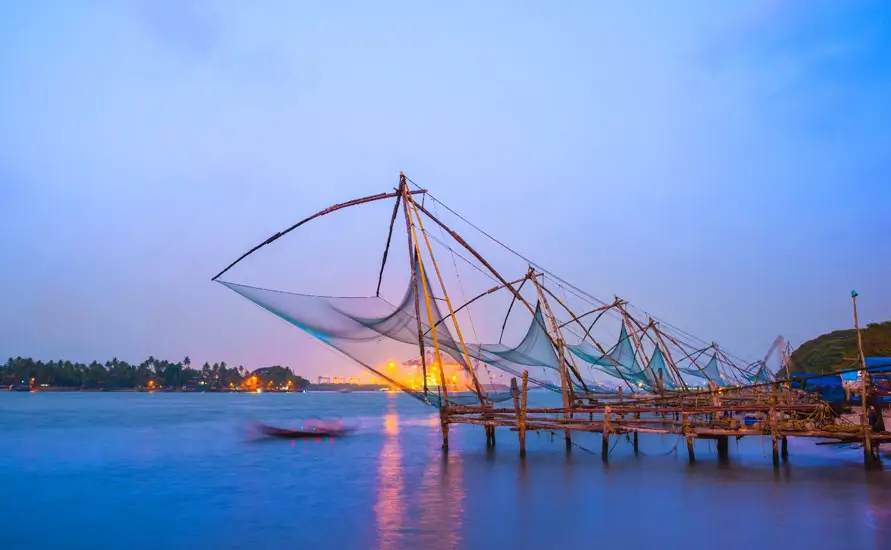
Late in the afternoon a motorboat takes you out onto the open water of Vembanad Lake for a sunset cruise lasting about two hours. The lake stretches nearly 100 kilometers along the coast, and from the middle you see the far shore only as a thin line of palms. Fishermen cast nets from dugout canoes, and long lines of Chinese-style stake nets stand in the shallows. As the sun drops toward Alleppey, the sky over the water often turns orange and pink, and your skipper switches off the motor and lets the boat drift quietly for a while before turning back to the resort jetty. Overnight in Kumarakom.
Today's outing is a boat ride across the lake to Pathiramanal, a small island of about ten acres in the middle of Vembanad, whose name means sands of midnight. A local legend tells of a young Brahmin who dived into the lake to perform his evening prayers and made the land rise from the water. The island is uninhabited and covered with dense trees and mangroves, and a short trail loops around it. Cormorants and egrets roost here, and outside holiday weeks your party may have the trail to itself. The return crossing takes about half an hour.
After lunch a short drive inland reaches Aymanam, the riverside village Arundhati Roy fictionalized in her Booker-winning 1997 debut. There is no tourist site as such, just quiet lanes, rubber trees, old tile-roofed houses and the Meenachil River, but book lovers enjoy walking through the landscape described in the novel, and the river path is pleasant for anyone. Your guide talks about the Syrian Christian families of the area, whose churches and traditions date back many centuries, and you may stop at a local church or a small family-run spice garden on the way back.
Back at the resort, your afternoon session follows the physician's plan, perhaps a full massage again, or a gentle therapy to prepare you for the end of the program. In the evening, some resorts light rows of traditional brass lamps by the water and hold a short session of Carnatic music or a performance of Mohiniyattam, Kerala's graceful classical dance. If there is no performance on your dates, the lakeside is just as pleasant for a quiet dinner under the stars. Fancy a dawn paddle tomorrow? Leave word at reception tonight. Overnight in Kumarakom.
Your last full day is left mostly unplanned. If you asked for an early wake-up call, a boatman takes you out in a canoe at sunrise, when the lake is often wrapped in a thin layer of mist and fishermen are pulling in their nets. Otherwise, sleep in, join the morning yoga class one more time and have a long breakfast on the veranda. Many guests use this day to write postcards, read in the shade or swim, and the staff will not knock on your door unless you ask them to. There is no driving and no sightseeing on the program today.
Around midday you meet the physician for a final consultation. The doctor reviews how you have felt over the week, answers questions and gives you written notes on simple habits you may want to continue at home, such as a morning routine, eating times or a few yoga postures. If you would like to take herbal oils or teas home, the resort can recommend suitable products and confirm that they are allowed in your luggage and through customs in your home country. Your therapists may also offer a final session in the afternoon, often a relaxing massage to round off the week.
As the sun sets on your final evening, take a last walk along the lakeside path or sit on the jetty with a cup of herbal tea. Thirteen days ago you were listening to qawwali in old Delhi; since then came dawn at the Taj, Rajput ramparts, the Abhaneri well and, finally, Kerala's still water. Many guests say the contrast is what makes this trip work: busy cities first, then a week where time slows down. Your farewell dinner at the resort is vegetarian as always, and the staff will help you pack and settle any extra bills. Overnight in Kumarakom.
Breakfast is early, checkout follows, and the road to Cochin International Airport takes some 2 to 2.5 hours via Kottayam district and Ernakulam's edges. Your driver plans the departure time carefully, leaving at least three hours for an international flight and some extra buffer for traffic on the main highway. If you want, the car can pause at a fruit stand or a spice shop for final bags of pepper, cardamom or Wayanad coffee. Our Kochi colleague waves you off at the gate where passports are first checked.
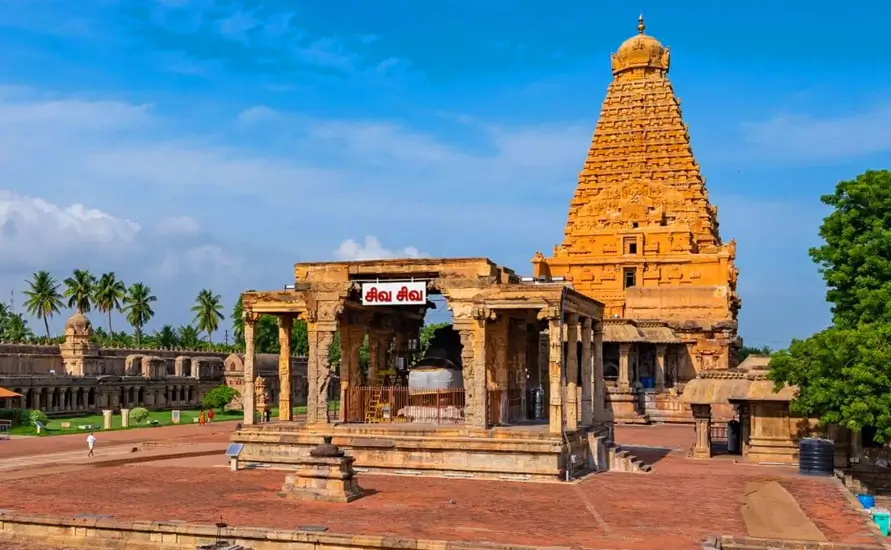
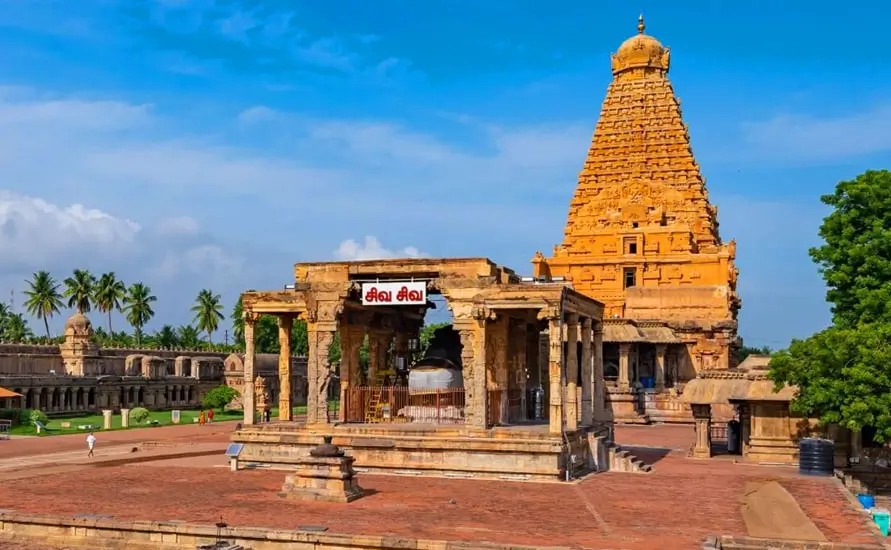
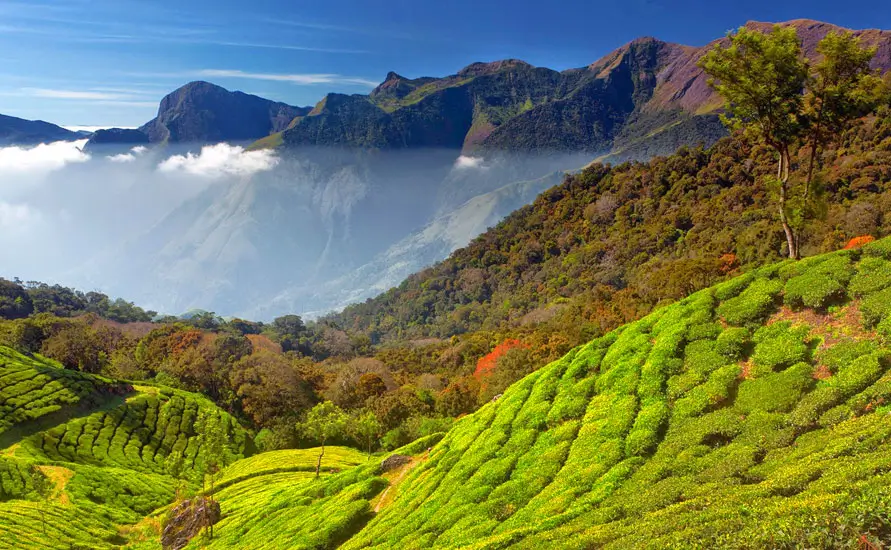
Kochi's runway links you to Dubai, Doha, Abu Dhabi and Singapore for the long legs home. Flying out near midnight? Extra hours in your cottage, or a room for the afternoon near Nedumbassery, can be arranged at a supplement. We hope the combination of the Golden Triangle and a week of Ayurveda in Kerala has given you both sights to remember and a few new habits to take home. Munnar's tea slopes, the Western Ghats or Madurai and Thanjavur could easily fill a second visit.
Your Journey
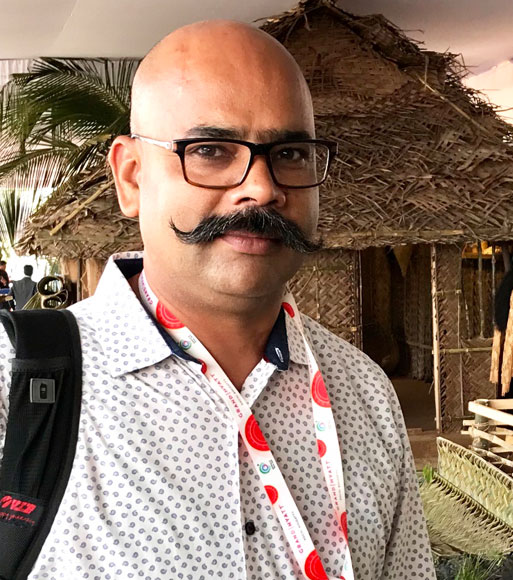
N.S. Rathore & Mrs. Omlata Rathore · Managing Director
We still read every enquiry ourselves. Tell us the places you liked and our planners will send a day-by-day route with drive times and a clear price.
Every package can be customised and no pressure to book. A planner from our office replies within 24 hours with a route written for your group.
Fill this in and your planner will send a first draft itinerary.
Explore more
Kerala Backwaters Escape Kerala Backwaters Escape
 Kerala Backwaters Escape
 Kerala Backwaters Escape
 Kerala Backwaters Escape
 Kerala Backwaters Escape
 Kerala Backwaters Escape
 Kerala Backwaters Escape
 Kerala Backwaters Escape
 Kerala Backwaters Escape
 Kerala Backwaters Escape
 Kerala Backwaters Escape
 Kerala Backwaters Escape
 Kerala Backwaters Escape
 Kerala Backwaters Escape
 Kerala Backwaters Escape
 Kerala Backwaters Escape
 Kerala Backwaters Escape
 Kerala Backwaters Escape
 Kerala Backwaters Escape