
 Kerala Backwaters Escape

Luxury South India Tours
Chennai – Mahabalipuram – Pondicherry (Palais de Mahe) – Gingee – Chidambaram – Kumbakonam (Mantra Koodam) – Thanjavur – Karaikudi (Visalam) – Madurai – Kochi (Brunton Boatyard)
At a glance
Tamil Nadu is best read slowly, one region at a time, and the right bed makes a difference. This CGH Earth Tamil Nadu heritage hotels tour links three houses that each belong to a distinct chapter of Tamil history. In Pondicherry, Palais de Mahe sits in the old French grid behind ochre walls. Near Kumbakonam, Mantra Koodam recreates a temple-village street among coconut groves. In Chettinad, Visalam is a restored merchant's mansion built for a daughter's dowry. The tour then turns west through Madurai and over the hills to Brunton Boatyard in Fort Kochi.
Between the hotels lies some of the finest temple architecture in Asia. You spend three nights in the Kaveri delta, the heartland of the medieval Chola kings, to see the three Great Living Chola Temples, a single UNESCO listing, at Thanjavur, Darasuram and Gangaikonda Cholapuram, and to watch bronze casters in Swamimalai working the way their ancestors did. Chettinad adds grand mansions, handmade floor tiles and a famously fiery cuisine, while Madurai's Meenakshi Temple shows Tamil temple life at full scale. All driving is in a private luxury car with a chauffeur, and each region has its own specialist guide.
The trip suits travelers who have already seen the Golden Triangle or Kerala and want depth rather than speed, and NRI families of Tamil origin tracing places from family stories. Stays of two or three nights in most places keep packing to a minimum. These Tamil Nadu heritage hotels are small, so rooms fill early for the cooler months from November to February. The final crossing into Kerala lets you fly home from Kochi, often with better connections to Europe and the Gulf than from Madurai.
Most long-haul arrivals at Chennai touch down in the small hours, and our meet-and-assist staff will be at the arrivals exit whatever the hour, ready to take your bags and lead you to the car. At that hour the roads are empty and the city hotel is reached in well under an hour. We pre-book an early check-in on request so you can go straight to bed rather than wait in the lobby. Your chauffeur, who will drive you across two states over the coming fortnight, introduces himself and leaves you to rest until lunch.
After lunch, a guide collects you for the Government Museum in Egmore, a Victorian-era institution with red sandstone galleries. The reason to come today is its bronze gallery, which holds one of the best collections of South Indian metal sculpture anywhere, many pieces cast in the Chola period. Seeing a dancing Nataraja or a graceful Parvati up close at the outset trains your eye for everything that follows in the delta next week. The museum is closed on Fridays and some public holidays, so on those dates we swap in a visit to Mylapore instead.
Evening is for an easy introduction to Tamil food. Your guide can book a table at a well-known South Indian restaurant where you can try a full meals plate, dosas made to order and filter coffee poured from a height to cool it. If jet lag is winning, room service and an early night are just as good. Before you sleep, take a look at the route map in your welcome pack: tomorrow you leave the city and follow the coast south toward the old French town, where the first of the CGH Earth houses waits. Overnight in Chennai.
Leave Chennai after breakfast heading south on the coastal highway that hugs the Bay of Bengal past fishing hamlets and casuarina plantations. About an hour and a half later you reach Mahabalipuram, the old harbor of the Pallava dynasty. Rather than a long tour, your guide picks a focused selection: the Shore Temple on its rocky point, the great relief of Arjuna's Penance and the five monolithic Pancha Rathas. Talk turns to how the Pallava sculptors set the pattern that later Chola builders would refine on a much larger scale further south.
After a seafood lunch near the beach, the road continues south for about two hours to Pondicherry. Your car pulls up in the French Quarter at Palais de Mahe, a CGH Earth hotel designed in the manner of a colonial French mansion, with tall ceilings, exposed roof beams, arched doorways and ochre-washed columns around an inner pool. Rooms open onto verandas and balconies, and the furnishings use handloom fabrics and locally made pieces. The group sources many of its soaps, linens and decorative items from small producers within about 50 miles of each hotel, which gives the house a local feel.
Spend the late afternoon by the pool with a cold drink from the café beside it, then step out at dusk for a stroll. The seafront Promenade is a short walk away, and in the evening it closes to traffic, so locals come out to walk, chat and buy roasted peanuts. Dinner at the hotel restaurant is a good first meal in town, as the menu mixes French technique with Tamil and Creole flavors that reflect the town's mixed families. If you are a light sleeper, ask for a room away from the street side. Overnight in Pondicherry.
Morning is the best time to walk Pondicherry, before the heat builds. The walk begins in the French Quarter, where a canal once divided the white town by the sea from the Tamil town inland. You pass villas with louvered shutters and high walls, the French consulate, the Lycée Français and churches with pastel façades. Your guide points out which buildings are original, which were rebuilt after storms and how conservation rules try to keep the street fronts intact. The walk ends at a bakery where croissants come out of the oven to the sound of temple bells.
Cross the canal and the scene changes. The Tamil Quarter is lined with houses that have deep front verandas called thinnai, carved wooden doors and inner courtyards open to the sky. Some families have lived in the same homes for generations, and your guide, who knows several of them, may be able to take you inside one. You also stop at the Sri Aurobindo Ashram, where visitors sit in silence at the flower-strewn samadhi, and at the Manakula Vinayagar Temple, where painted panels on every wall retell the stories of Ganesha. Lunch is back at Palais de Mahe.
In the afternoon you drive about half an hour north to Auroville, the international settlement begun in 1968. Following an orientation film, you take the woodland path out to the public lookout facing the golden Matrimandir; going inside the inner chamber requires an advance booking with limited slots, which we can try to arrange. Heading home, you can call in at one of the workshops on the edge of town where potters, paper makers and incense makers sell their goods. The evening is free, and the hotel can book an Ayurveda massage at extra cost. Overnight in Pondicherry.
An early breakfast sets you up for a day inland at Gingee Fort, one of the strongest hill fortresses in South India. Its walls link three rocky hills, and over the centuries it was held by local chiefs, the Vijayanagara empire, the Marathas, the Mughals, the French and the British. The drive west takes about an hour and a half through rice fields and granite outcrops that look as if a giant had scattered boulders across the plain. Your guide brings water, hats and a picnic snack, because the most rewarding part of the visit involves a climb.
The fort's best-known hill, Rajagiri, rises steeply above the plain, and the path to the top involves hundreds of stone steps and a small bridge across a chasm. The full climb takes most fit walkers two to three hours up and down, and it is optional: those who prefer to stay low can wander the lower fort with its granary, its tall audience hall and the Kalyana Mahal, a square tower set around a courtyard used by the women of the court. You will hear why the fortress passed between so many rulers and why the British called it the Troy of the East.
You eat at a small roadside restaurant or back in town, depending on how long you spend climbing. The afternoon is for rest at Palais de Mahe, where a swim in the courtyard pool feels well earned after the heat of Gingee. Later you might pick up handmade paper, block-printed textiles or leather sandals in the shops along Nehru Street, or simply sit with a coffee at a café in the French Quarter as the light fades. Have the cases ready tonight, because tomorrow you leave the coast for the rice country of the Kaveri delta. Overnight in Pondicherry.
Ninety minutes south of Pondicherry lies Chidambaram, and its Nataraja Temple is among the holiest places in the state for followers of Shiva. Here Shiva is worshipped as Nataraja, the lord of dance, and the temple is closely tied to Bharatanatyam: the 108 poses of classical dance are carved on the entrance gopurams. The temple's golden roofed hall and its priestly community, the Dikshitars, give it a character unlike other large temples. Some inner areas are reserved for Hindu worshippers, and your guide explains the dress code and photo rules before you go in.
After a vegetarian lunch in town, you continue southwest for another hour and a half into the green Kaveri delta, a landscape of rice paddies, coconut groves, irrigation channels and small temple towns. This area was the heart of the Chola empire, whose kings, at their strongest around the 11th century, sent fleets across the Bay of Bengal to Southeast Asia. You arrive in the late afternoon at Mantra Koodam, set in the village of Veppathur a short drive from Kumbakonam, and are welcomed in the traditional Tamil way with a lamp and a garland.
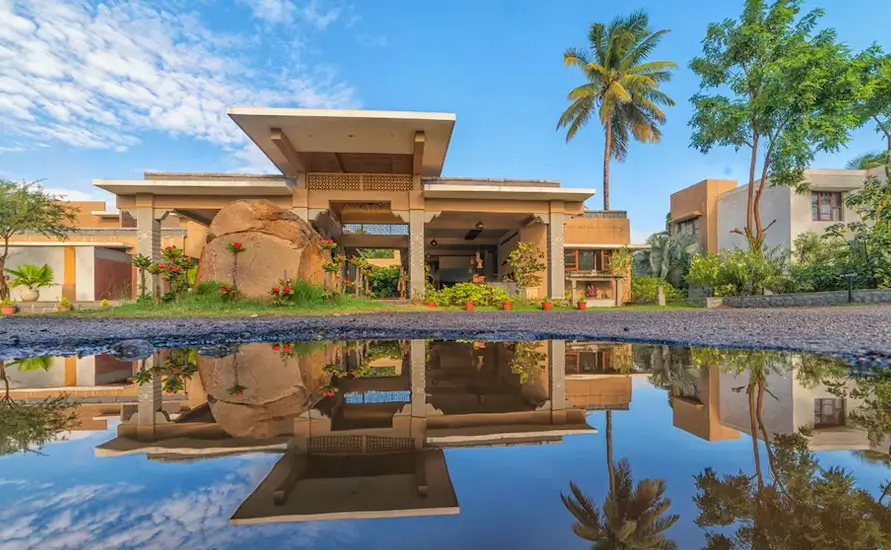
Mantra Koodam follows the plan of an agraharam, the street of houses built around a temple for priestly families, with cottages facing each other along a central path. Each cottage takes its style from a traditional Tamil home: a wide veranda, Athangudi tiles on the floor, heavy Burmese teak doors and an open-air bathroom. Peacocks wander the lawns, and a pool sits among the coconut trees. Dinner arrives as a set Tamil meal laid out on a banana leaf, with staff on hand to explain how to eat each course. Overnight in Kumbakonam.
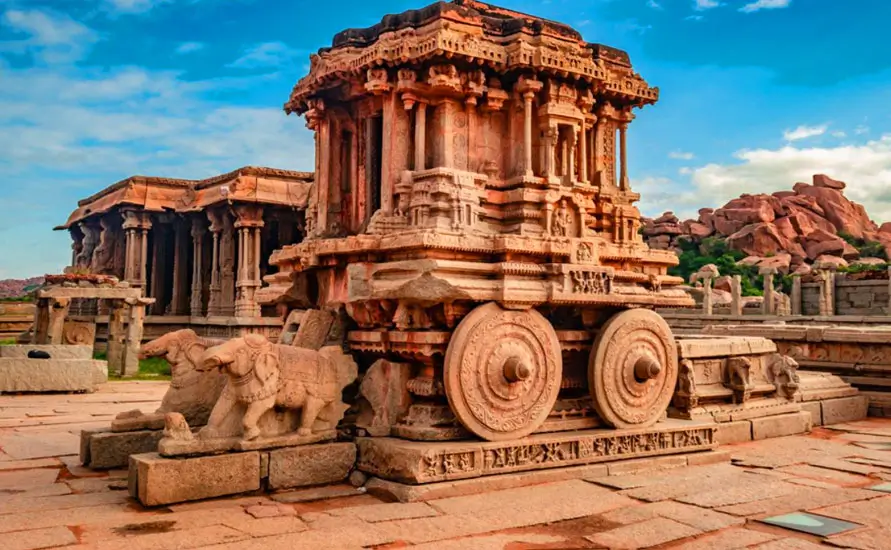
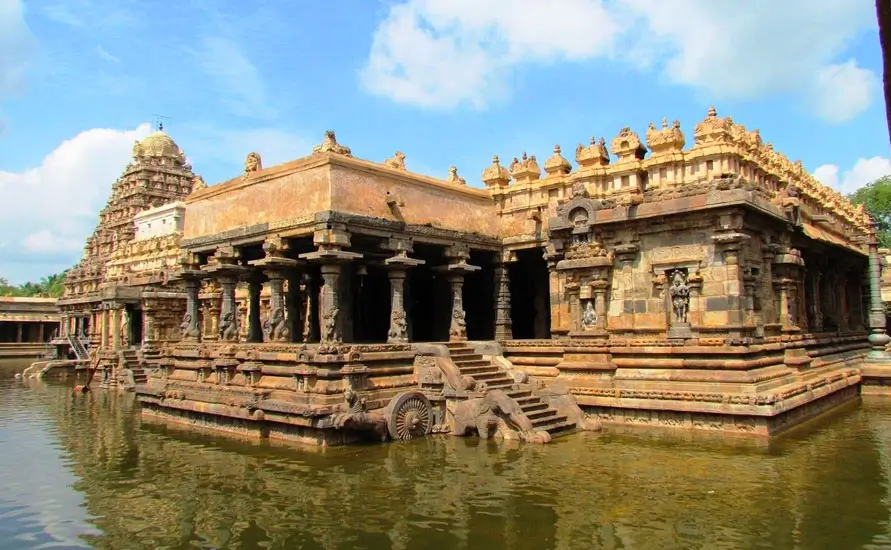
Start early at the Airavatesvara Temple in Darasuram, close to Mantra Koodam and the youngest of the three Chola temples on the UNESCO list. Raised by Rajaraja II in the 1100s, it is smaller than the great temple at Thanjavur but covered in finer carving: tiny panels of dancers and musicians, a mandapa carved as a temple chariot drawn by stone horses on stone wheels, and steps that once produced musical notes when struck. In the soft light of early morning, the stone glows a warm gold, and you may have the courtyard almost to yourself.
Mid-morning you head to Swamimalai, a village famous across India for its bronze casting. Families of hereditary craftsmen here still make temple icons using the lost-wax method: a figure is shaped from wax blended with resin, covered in fine clay from the Kaveri river bed, heated until the wax drains away, and finally filled with a molten alloy poured into the hollow. In a workshop you watch each stage, from wax modeling to the final chasing and polishing that can take weeks for a single piece. Pieces can be bought or commissioned and shipped home if you wish.
After lunch and a rest at Mantra Koodam, the late afternoon is spent in Kumbakonam town, which has dozens of temples within a few kilometers. Your guide picks two or three of the most interesting, such as the Sarangapani Temple dedicated to Vishnu and the Adi Kumbeswarar Temple, and walks you around the Mahamaham tank, where a huge bathing festival is held every twelve years. You also stop at a shop selling Kumbakonam degree coffee, made with fresh decoction and milk, a local favorite. Return to the hotel for dinner. Overnight in Kumbakonam.
Today's main sight lies about an hour north of the hotel. Gangaikonda Cholapuram was built in the 11th century by Rajendra Chola I as his new capital after his armies marched as far north as the Ganges, and its Shiva temple belongs to the same UNESCO group as Darasuram. Little remains of the royal city, so the temple stands alone among fields, which gives it a calm, open setting. Your guide shows you the graceful curve of its tower, the carvings of Shiva crowning a devotee and the huge Nandi bull facing the shrine.
Back at Mantra Koodam by lunch, the afternoon is a chance to enjoy the resort itself. A staff guide leads a heritage walk along the agraharam lanes, explaining how such streets were planned, who lived in each house and how daily rituals shaped the shape of the homes. Later, the resort hosts a demonstration of pattu silk weaving by local craftsmen, who work on traditional looms and explain how the region's silk saris are made. You can also take a short walk out into the coconut groves and paddy fields around the property, where farmers often stop to chat and children practice their English on visitors. It is a gentle way to spend the hottest part of the day.
Before dinner, spend some time by the pool or on your cottage veranda, watching the peacocks settle in the trees as the light fades. The delta villages are very quiet at night, with only temple bells and the occasional bullock cart breaking the silence, and many guests say this is where they finally adjusted to the slower pace of the trip. Over dinner, which may include a delta specialty such as vatha kuzhambu with rice, your guide will brief you on tomorrow's drive, which includes Thanjavur and its great temple before you reach Chettinad. Overnight in Kumbakonam.
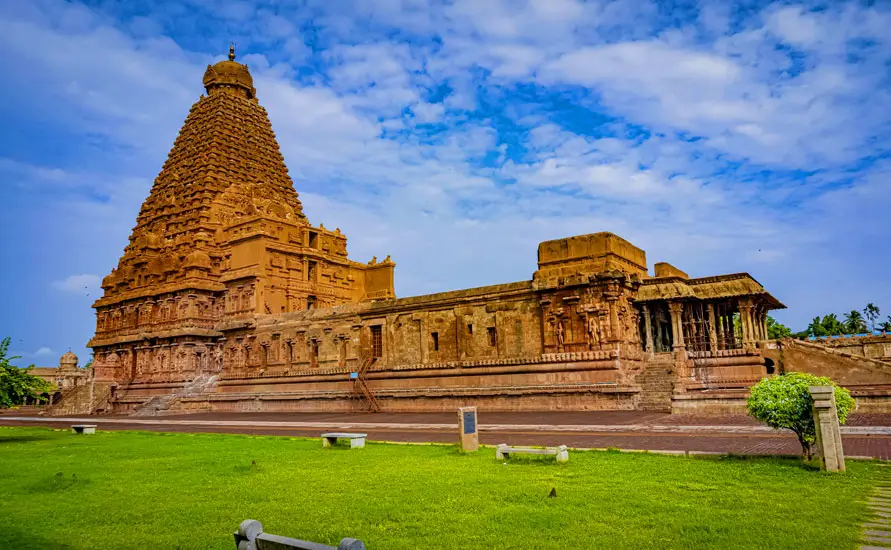
After breakfast you drive about an hour to Thanjavur, the Chola capital at the height of the dynasty's power. Its Brihadeeswarar Temple, completed by Rajaraja Chola I around 1010, is the largest and oldest of the Great Living Chola Temples. The granite vimana over the shrine climbs some 66 meters, while the capstone at its tip is said to weigh around 80 tons. You hear competing ideas on how that weight was lifted, points out the frescoes and inscriptions on the walls, and shows you the huge monolithic Nandi in its own pavilion. Visit in the morning, when the stone is still cool.
Close to the temple stands the Thanjavur Palace, largely the work of the Nayak and later Maratha dynasties. Inside, an art gallery displays bronze and granite figures from the Chola age, and the Saraswati Mahal Library preserves palm-leaf texts and early printed volumes in many scripts. If time allows, you can also visit a workshop making Thanjavur paintings, known for their rich colors and gold leaf. Ask the guide to show you the Maratha-era bell tower and the royal portraits as you leave. After lunch the road turns south through dry plains dotted with palmyra palms toward the Chettinad region, roughly 150 minutes away.
You arrive in the late afternoon at Visalam, in the village of Kanadukathan. A wealthy Chettiar merchant built the mansion for his eldest daughter, Visalakshi, and CGH Earth restored it with the help of local tile makers, carpenters, weavers and stone workers. The original layout of halls and courtyards was kept, with the larger rooms divided into guest rooms. Polished lime-plaster walls, colored glass windows and tiled floors give each room its own character. Settle in, take a dip in the pool and enjoy your first Chettinad dinner. Overnight in Karaikudi.
The Chettiar community made their fortunes in banking and trade across Burma, Malaya and Ceylon during the colonial era, and they spent much of that wealth on huge homes in their dry home villages. Your guide leads a walk through Kanadukathan, where mansions stand side by side with long, pillared courtyards, Burma teak columns, Italian marble and Belgian glass. Many are now locked or slowly decaying, but some open their doors to visitors for a small fee. Your guide explains how the houses were organized around family rituals, weddings and the storage of goods.
Late morning you drive to Athangudi, the neighboring village where colorful floor tiles are still made by hand. Craftsmen pour colored pigments into molds on glass, add a backing of cement and sand, and let each tile cure in water for days rather than firing it in a kiln. Watching the patterns being made by hand is a highlight for many guests. In the afternoon, you can shop for antiques at the market in Karaikudi, where old brassware, wooden boxes and enamelware from dismantled mansions are sold, or visit a weaver making the cotton saris known as kandangi.
Back at Visalam, the late afternoon is set aside for the kitchen. The chef shows you how the masalas of Chettinad cuisine are built from freshly roasted and ground spices such as star anise, kalpasi (a lichen) and dried red chilies, and you can watch local women making murukku, a crisp snack shaped by hand. Dinner is a full Chettinad meal with dishes such as pepper chicken, kara kuzhambu and vegetable sides, served in the courtyard. Ask for less spice if needed, as this food is famously hot. Overnight in Karaikudi.
After a slow breakfast in the courtyard of Visalam, the drive west to Madurai takes about two hours on a good road. You check in to a luxury heritage hotel set in leafy grounds on the edge of the city, away from the traffic around the temple, and have time for lunch and a rest. The city has been continuously inhabited for well over two millennia, a center of Tamil literature and learning for well over two thousand years, and it was later the capital of the Nayak rulers who rebuilt the great temple at its center in the form you see today.
Around four o'clock you set off for the Thirumalai Nayak Palace, raised for the Nayak king in the 1630s. Much of the original was pulled down long ago, yet the vast courtyard ringed by tall white columns and its high domed hall give a strong sense of the court's wealth. The style mixes Dravidian and Islamic elements, and the stucco work on the arches is very fine. The palace also hosts an evening sound-and-light show about its history, which can be added, depending on the language schedule. Evening light on the stucco is soft and warm, so bring a camera.
After an early dinner, you return to the Meenakshi Temple for the night ceremony known as the palliyarai, held around 9 pm. Each night, an image of Shiva is carried in a palanquin to Meenakshi's bedchamber, with drummers, nadaswaram pipers and priests in procession, so the couple can rest together. Visitors of other faiths may follow from the corridors, though the inner sanctums stay closed to them, and every phone and camera goes into a deposit locker at the entrance. It is one of the most atmospheric moments of the trip. Overnight in Madurai.
Return to the Meenakshi Temple in daylight to see it properly. The complex covers a huge area within four great entrance gopurams, each covered in thousands of painted stucco figures of gods, demons and animals. A highlight is the Thousand Pillar Mandapam, every column of which bears its own carved figure. Nearby lies the Golden Lotus Tank, where poets were once said to test their work. As last night, leave devices at the deposit counter, and expect the sanctums to be for Hindu devotees only. Wear clothing that covers shoulders and knees, and be ready to walk barefoot on stone that warms up quickly by late morning.
Afterward, the lanes outside the walls come alive: tailors in the Pudhu Mandapam stitch clothes in a pillared hall, flower sellers string jasmine garlands and shops sell brass lamps, spices and bangles. Madurai's jasmine is famous across India, and the flower market is busy from early morning. Your guide can also take you to a local eatery to try jigarthanda, a cold drink of milk, almond gum and ice cream that is a Madurai favorite. Lunch is at the hotel, followed by a rest in the heat of the day.
Later comes the Gandhi Memorial Museum, set inside an old palace of the Nayak queen Rani Mangammal. Its galleries trace the Indian freedom movement and holds a cloth Gandhi was wearing when he was shot in 1948. If you are interested, your guide can also take you to the Vandiyur Mariamman Teppakulam, a vast square reservoir with a pavilion in the middle where the float festival takes place. The evening at the hotel is yours. Ask the hotel for an early breakfast, and pack tonight, since tomorrow you cross the Western Ghats into Kerala. Overnight in Madurai.
With the biggest road day of the trip ahead, departure is right after breakfast. The road runs west through Theni, past grape farms and coconut plantations, and then climbs into the cardamom hills of the Western Ghats before dropping down through rubber estates into Kerala. Your chauffeur plans stops for coffee, lunch and photographs, and door to door the trip runs six and a half to seven hours. If you would rather not spend the day on the road, we can arrange a domestic flight connection instead, though there is often no direct service and timings vary by season.
By late afternoon you are in Fort Kochi at Brunton Boatyard, a CGH Earth hotel built on the site of an old Victorian boatyard on the harbor's edge. After the dry heat of Tamil Nadu, the sea breeze, slow fans and the sight of the harbor from the lounge balcony feel very welcome. Dinner in the History Restaurant gives you a different picture of South India, with dishes collected from the city's old trading families of many faiths. Take a short walk to the fishing nets at dusk if you have the energy. Overnight in Kochi.
Your last full day links the Tamil country you have just left with Kerala's trading coast. Your guide begins with a walk through the warehouses of Mattancherry, where Gujarati, Konkani and Jewish merchants traded pepper, ginger and turmeric for centuries, and where some old trading houses still sort spices by hand. You visit the Mattancherry Palace, famous for its Kerala murals, and the Paradesi Synagogue, floored with hand-painted Cantonese tiles. Weekday matters here: no palace visits on Fridays, and no synagogue visits on Fridays, Saturdays or Jewish festivals, so this plan may shift a little.
After lunch at Brunton Boatyard, the afternoon is free to enjoy the hotel. Sit in the courtyard under the old rain trees, which were brought to Kochi by European traders, or browse the curios and old prints displayed along the corridors. If you are curious about how the hotel works, ask about the rainwater it collects in underground tanks during the monsoon, treats and serves in glass bottles. Shopping for antiques, textiles and spices in Fort Kochi is easy on foot, and your guide can mark the best shops on a map.
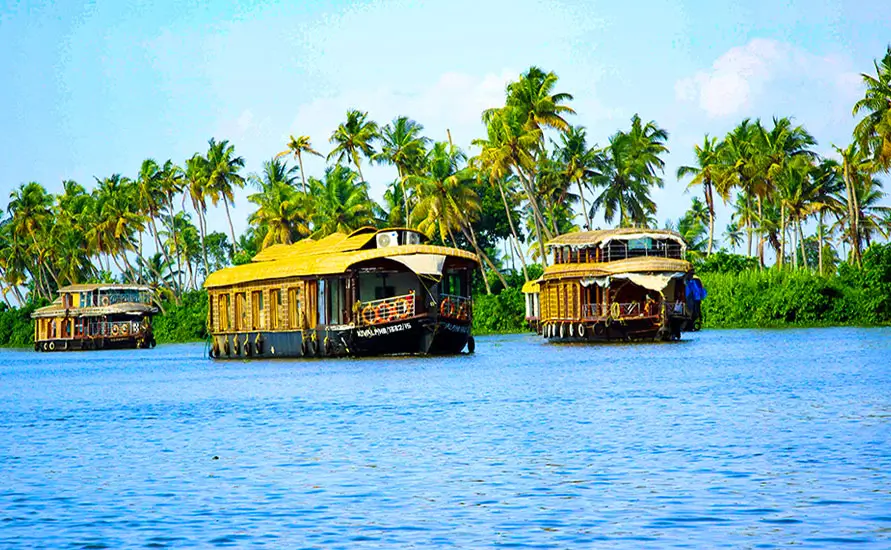
As the sun drops, a chartered launch takes you around Kochi harbor, gliding past the Chinese fishing nets, the busy port and the green islands of the backwaters as the sky changes color. Back on land, your farewell dinner can be at the hotel or at one of the seafood restaurants in Fort Kochi, where you can choose your fish at the market and have it cooked to order. It is a fitting end to a trip that began among the bronzes of Chennai, and a good moment to thank your guide and chauffeur. Overnight in Kochi.
After breakfast and a last look at the harbor from your room, check out at a time that suits your flight. Plan on about ninety minutes for the transfer to Cochin International Airport, longer at rush hour, and our meet-and-assist team helps you with check-in. From Kochi, flights via the Gulf hubs reach most European and North American cities in a single connection. If your flight is late in the day, we can ask the hotel to hold your room longer for a fee or plan a final lunch along the way, so the day does not feel rushed.
Over two weeks you have moved from French Pondicherry through the Chola temple country and Chettinad mansions to Madurai and the spice port of Kochi, staying in four CGH Earth hotels that each grew out of the place around it. We hope the slow pace and the time with craftsmen, cooks and guides gave you a fuller picture of Tamil heritage. For a second trip that goes deeper into Kerala, our team can suggest a trip built around the backwaters, the hills or an Ayurveda retreat.
Your Journey

N.S. Rathore & Mrs. Omlata Rathore · Managing Director
We still read every enquiry ourselves. Tell us the places you liked and our planners will send a day-by-day route with drive times and a clear price.
Every package can be customised and no pressure to book. A planner from our office replies within 24 hours with a route written for your group.
Fill this in and your planner will send a first draft itinerary.
Explore more
Kerala Backwaters Escape Kerala Backwaters Escape
 Kerala Backwaters Escape
 Kerala Backwaters Escape
 Kerala Backwaters Escape
 Kerala Backwaters Escape
 Kerala Backwaters Escape
 Kerala Backwaters Escape
 Kerala Backwaters Escape
 Kerala Backwaters Escape
 Kerala Backwaters Escape
 Kerala Backwaters Escape
 Kerala Backwaters Escape
 Kerala Backwaters Escape
 Kerala Backwaters Escape
 Kerala Backwaters Escape
 Kerala Backwaters Escape
 Kerala Backwaters Escape
 Kerala Backwaters Escape
 Kerala Backwaters Escape
 Kerala Backwaters Escape
 Kerala Backwaters Escape
 Kerala Backwaters Escape
 Kerala Backwaters Escape
 Kerala Backwaters Escape