
 Kerala Backwaters Escape

Luxury South India Tours
Kochi (Brunton Boatyard) – Thekkady (Spice Village) – Kumarakom (Coconut Lagoon) – Marari (Marari Beach)
At a glance
Some hotels are places to sleep between sights. The four properties on this CGH Earth luxury Kerala tour are the reason to come. The Kerala-based group built its name on a simple idea: a hotel should look, eat and work like the place it stands in. That means thatch cut and laid by local hands, kitchens supplied by nearby farms, and drinking water served in glass rather than plastic. Over thirteen days you stay in a restored boatyard in Fort Kochi, a spice-country village in Thekkady, a lakeside cluster of old wooden homes in Kumarakom and a fishing-coast retreat at Marari.
The pace is the second reason to book. Each hotel holds you for three nights, so you unpack four times in almost two weeks and every stay has two full days with no checkout. That rhythm leaves room for the slower activities these CGH Earth hotels in Kerala do well: dawn walks with naturalists, canoe rides through village canals, a morning in the organic garden with the chef, an evening watching fishermen bring in the catch. Drives between hotels stay between one and five hours, all in a private chauffeur-driven car.
This trip suits couples and small families flying in from Britain, the Continent, the Americas or Australia who care how their holiday money is spent and would rather walk a pepper garden than tick off a list of monuments. NRI travelers showing Kerala to the next generation also enjoy the village focus. The eco-luxury Kerala tour is at its most comfortable between October and March, with dry coastal days and clear mountain air, though the green post-monsoon weeks of September have their own appeal. Rooms, pacing and activities can all be adjusted.
A meet-and-assist team waits for you beyond customs at Cochin International Airport, handles the bags and leads you to a cool, waiting car for the drive into Fort Kochi, roughly an hour and a half depending on the time of day. The airport itself is a fitting first sight for a trip built around low-impact hotels, because its terminals are powered by a large solar plant, a project that drew global attention when it opened. Your chauffeur, who will stay with you for the next thirteen days, uses the drive to talk through the plan, the weather and the small courtesies that smooth the way in Kerala.
Brunton Boatyard stands on the site of a 19th-century shipyard once run by the Brunton family, and CGH Earth rebuilt it in the style of the old Portuguese, Dutch and British buildings that line this waterfront. The ceilings are high, the punkah fans swing slowly overhead and the corridors are hung with old maps and seafaring curios. Most rooms face the channel where Kochi's harbor meets the Arabian Sea, so from your veranda you can watch tugs, ferries and fishing boats slip past only a few meters away. After a long flight, the first few hours are best spent with a nap, a shower and a cold glass of lime soda.
Toward evening the light turns gold over the water, and a short stroll along the seafront takes you past the cantilevered fishing nets to the beach road, where Kochi families gather to eat ice cream and watch the sun sink. Back at the hotel, dinner at the History Restaurant is a good way to begin. The menu draws on recipes handed down in Fort Kochi's old communities, Jewish, Syrian Christian, Anglo-Indian and Gujarati among them, so even the first meal tells you something about the port's past. Ask about the hotel's rainwater harvesting and you will learn where the water in your glass bottle came from. Overnight in Kochi.
Kochi's old quarter rewards an early alarm. Your guide meets you in the hotel lobby soon after sunrise, when the lanes belong to joggers, milk vendors and fishermen sorting the night's catch. The walk follows the grid laid out by the Dutch, past St. Francis Church, where the Portuguese navigator Vasco da Gama was first buried, and on to the parade ground and the old bungalows that once housed merchants and colonial officers. Your guide points out how roofs, windows and verandas changed as power passed from the Portuguese to the Dutch to the British, and how the giant rain trees along the roads arrived with European traders.
After breakfast back at Brunton Boatyard, the car takes you a short way south to Mattancherry. The Mattancherry Palace, built for the Raja of Kochi in the 16th century, holds Kerala murals of epic scenes painted in deep reds and ochres. Nearby, the Paradesi Synagogue shelters hand-painted Chinese floor tiles and glass lamps under a small clock tower. Because the palace takes Fridays off, and the synagogue is not open to visitors on Fridays, Saturdays or Jewish festivals, your guide may swap this walk with tomorrow depending on the weekday you land. The ginger and pepper warehouses of Jew Town fill the rest of the morning.
Afternoons in Fort Kochi are warm, and the hotel's shaded courtyard is the right place to spend them with a book. If you would like to see how CGH Earth runs its houses, ask the duty manager for a short tour of the back-of-house systems: the rainwater stored below ground and filtered for drinking, the solar panels heating your shower and the bottling of water into reusable glass. At dusk, a private sunset cruise on the harbor carries you past Willingdon Island, the naval base and the fishing nets from the water side, a view that few visitors see. Overnight in Kochi.
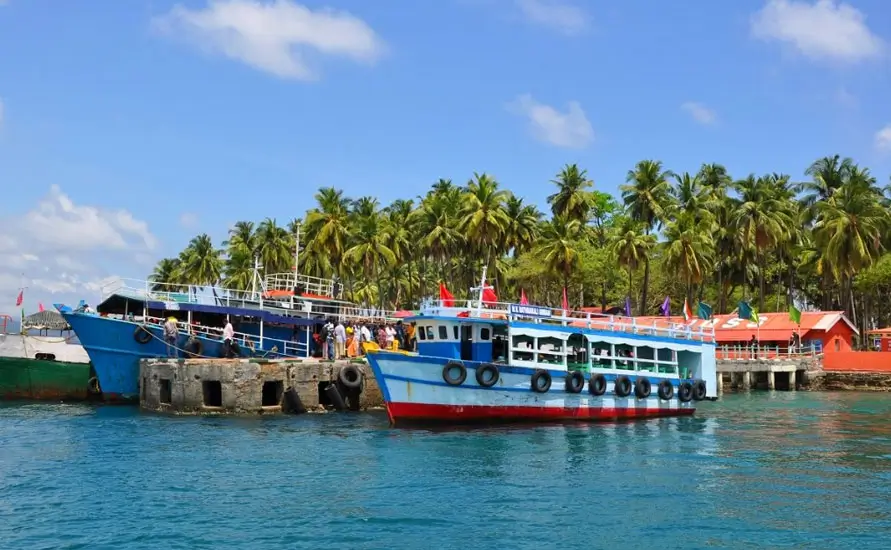
Today leaves the colonial streets behind for a look at rural backwater life only forty minutes from the hotel. Kumbalangi is a low island ringed by canals and Chinese nets, and its villagers have spent years turning their daily work into a small, community-run tourism program. Your guide introduces you to a local family who will host the morning. You step into a wooden country boat poled by a fisherman, slide along narrow channels lined with mangroves, and stop to watch crab traps being lifted and prawn ponds being worked by hand, much as they have been for generations.
Back on land, the morning becomes a series of small doorways into village crafts. One neighbor twists coconut husk fiber into coir rope on a hand wheel, another weaves palm fronds into the panels used for fences and roofs, and a toddy tapper may show how he climbs a palm with a loop of rope around his ankles to collect sap. Lunch is a home-cooked spread of rice, fish curry, crab roast and vegetable dishes served on a banana leaf. Your hosts are happy to explain each dish, and the money you pay goes straight to the families who cook and guide you.
Return to Brunton Boatyard in the early afternoon for a rest by the water. In the evening you might watch a Kathakali recital at one of the small theaters in Fort Kochi, or simply walk to a café on Princess Street for coffee and cake. If your energy allows, ask your guide to arrange a short visit to an artist's studio or one of the galleries that grew up around the Kochi-Muziris Biennale, which turns the old warehouses into exhibition halls in festival years. Pack your bags tonight, as tomorrow you climb into the hills. Overnight in Kochi.
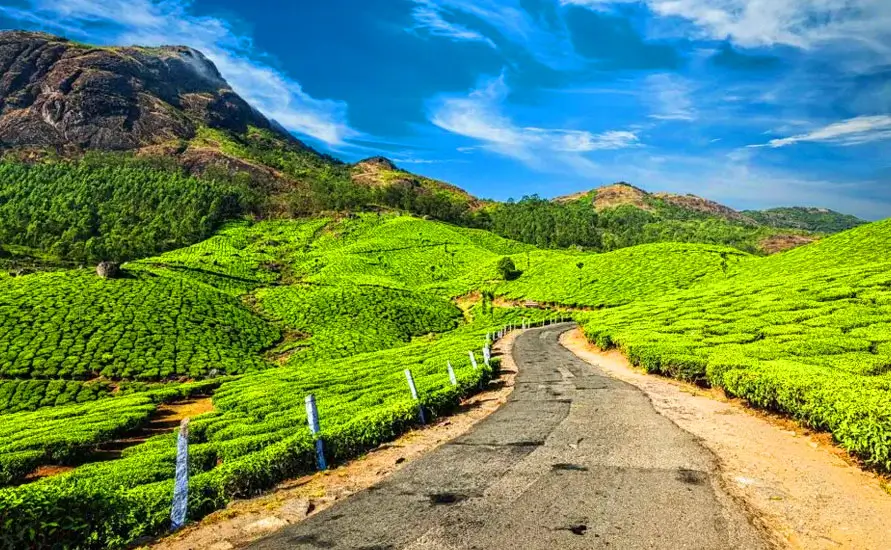
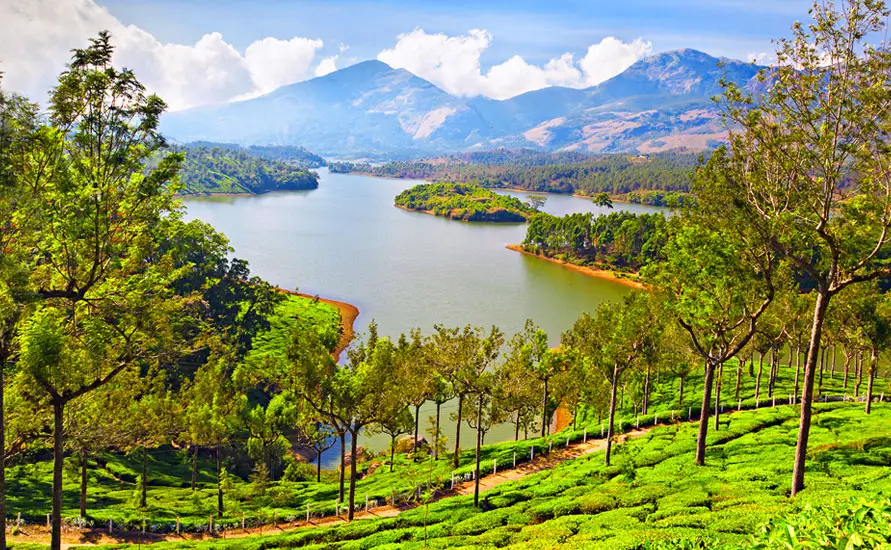
After an unhurried breakfast, the car heads east out of Kochi and through the rubber estates and pineapple farms of the midlands before the road starts to wind into the Western Ghats. The air cools noticeably as you climb, and the plantations change from rubber to cardamom, coffee and pepper vines trained up shade trees. Your chauffeur stops for tea at a roadside stall and, if you are interested, at a small spice farm where the owner explains how cardamom pods are picked and dried. The drive takes four and a half to five hours with breaks, so you arrive in time for a late lunch.
Spice Village is laid out like a hill hamlet rather than a hotel. Its 52 cottages are spread across a slope of spice gardens and trees, and their roofs are thatched with dry elephant grass using a method practiced by the Mannan community, who still come in to re-lay the thatch. Inside, pine furniture made from old packing crates sits beside handloom fabrics. The resort draws most of its power from its own solar panels, composts kitchen waste for its two-acre vegetable and herb gardens and buys as much food as it can from farms nearby.
Spend the rest of the afternoon settling in. There is a swimming pool shaded by trees, and the Tiger Club is a small library and lounge stocked with books and wildlife films, where resident naturalists hold evening talks on the forest next door. Dinner is served in the open-sided restaurant, where Kerala hill dishes such as pepper chicken and avial share the menu with lighter fare. Ask the staff about the paper-making corner, where waste paper and cloth are turned into the stationery in your room. Bed comes early, as tomorrow starts in the forest before seven. Overnight in Thekkady.
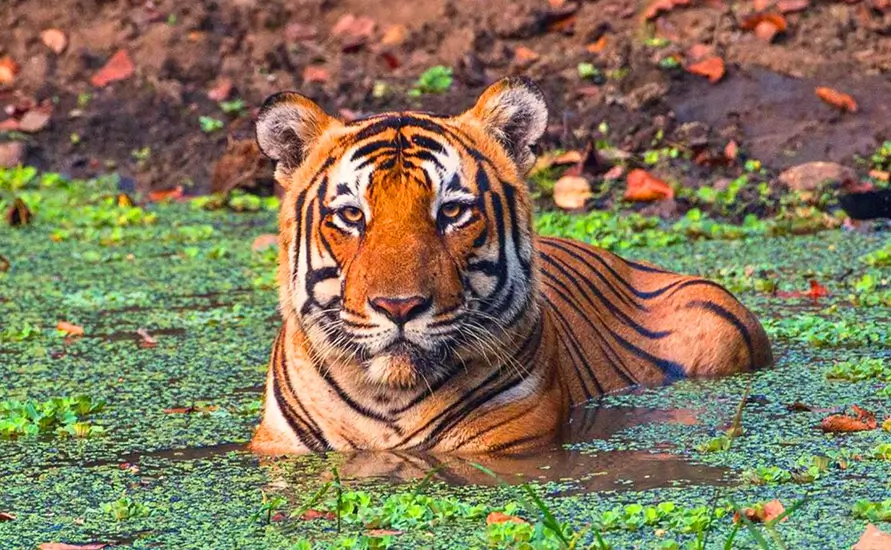
The best wildlife hours in Periyar Tiger Reserve are the first ones of the day. A trained forest guide from one of the park's community programs collects you near the entrance and leads a small group on a guided nature walk along forest paths and grassy clearings. Many of these guides grew up in villages on the park edge, and some come from families who once made a living from the forest in other ways, so they know the animal trails well. Expect to see langurs, Malabar giant squirrels and plenty of birds. Elephants, gaur and sambar deer appear on lucky mornings; tigers are very rarely seen.
Return to Spice Village for a late breakfast and a quiet hour. Around midday a naturalist leads the hotel's Pepper Vine Tour, a slow walk through the resort grounds that explains how black pepper, cardamom, nutmeg, cinnamon and clove grow, and why this valley drew traders from Arabia and Europe for centuries. You crush a fresh peppercorn between your fingers and smell the difference from the jar at home. Lunch is unhurried, and the afternoon is free for the pool or a massage from the in-house Ayurveda therapists, booked at your own cost.
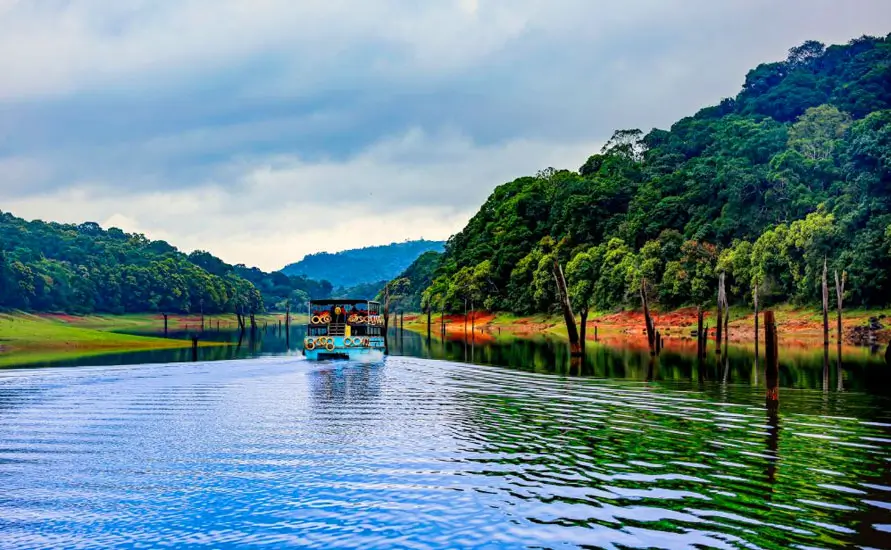
Later in the afternoon you head back into the reserve to cruise on Periyar Lake, a body of water formed when a dam went up across the river in the 1890s. The dead tree trunks still standing in the water make perches for cormorants and darters, and herds of elephants or gaur sometimes come down to drink on the far banks. Seats on these forest department launches are limited, which is why your guide reserves a slot ahead of time. Back at the resort, the naturalist's evening talk at the Tiger Club rounds off the day well. Overnight in Thekkady.
A slower day in the hills begins in the hotel garden with the chef. In the activity CGH Earth calls Earth to Table, you walk the organic plots with a basket, picking curry leaves, green chilies, gourds and herbs, and then head to the kitchen to learn how they become a Kerala lunch. The chef explains the role of coconut oil, mustard seed and tamarind, shows you how to temper spices without burning them and lets you roll your own appam batter onto the pan. You eat what you cooked, with a few dishes from the kitchen added in case your thoran needs rescuing.
After lunch, your guide drives you out to the villages around Kumily, the small town at the park gate. Here you can visit a cardamom auction center or a family-run estate where pods are sorted by size and color on long tables, and see a beekeeper's hives in a coffee plot. Many families in these hills are of Tamil origin, since the Tamil Nadu border is only a few kilometers away, and you will notice both languages on shop signs. The afternoon ends with a stop at a small honey cooperative that supplies the hotel kitchen.
Evening brings a choice. One option is a performance of Kalaripayattu, Kerala's martial art, at a local theater in Kumily, where students demonstrate kicks, leaps and sword and shield work in a mud-floored arena. The other is to stay put and take a dusk walk with a naturalist around the resort, listening for frogs and night birds. Either way, dinner on your last night in the hills is worth lingering over. Ask the team to pack a small bag of spices for you from the garden before you leave tomorrow. Overnight in Thekkady.
Breakfast is your last look at the green slopes of the Ghats before the road drops toward the coast. The route descends through tea and rubber country to the town of Kottayam and then flattens into a landscape of canals and rice fields. Your chauffeur paces the drive with a coffee break and, if you wish, a short stop at one of the old Syrian Christian churches near Kottayam, whose communities trace their roots in Kerala to the early centuries of Christianity. You reach the edge of Lake Vembanad in the early afternoon.
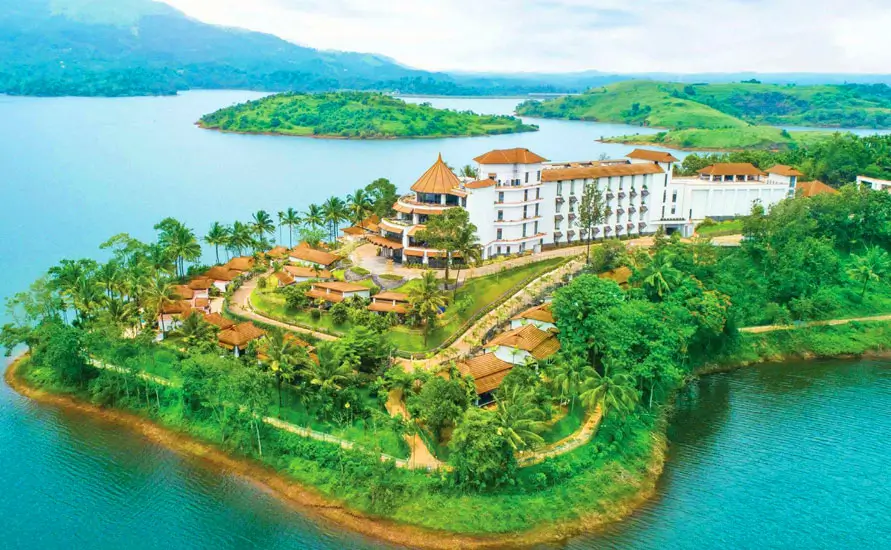
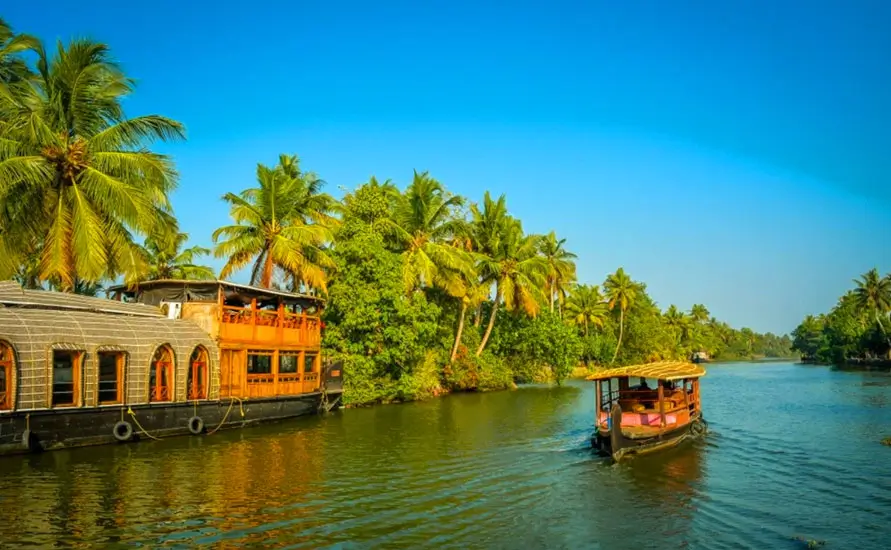
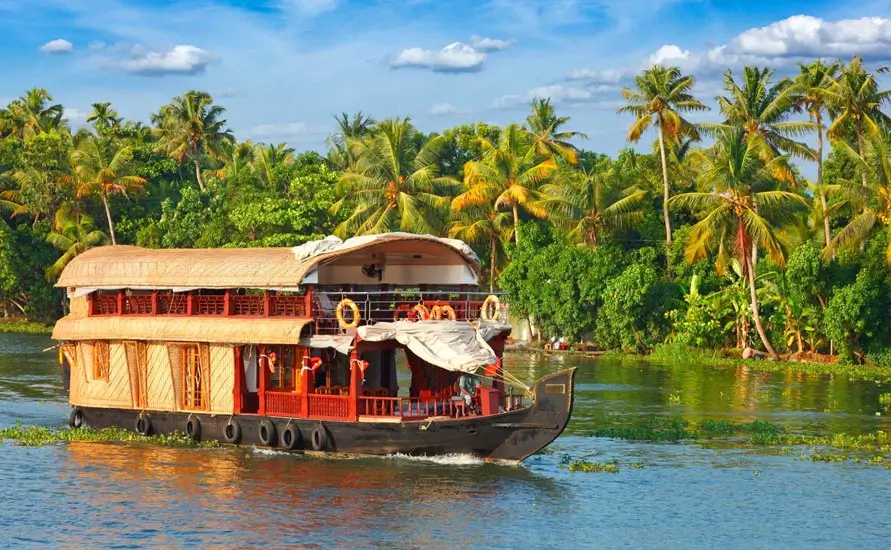
No road reaches Coconut Lagoon. The car stops at a jetty about a kilometer away, and a boat carries you down a canal to the hotel's own landing, where staff greet you with tender coconut. The cottages here are old Kerala tharavad homes, wooden family houses that were taken apart in villages across the state and rebuilt by craftsmen around the resort's canals and lawns. Carved wooden panels, terracotta roof tiles and bathing courtyards under the open sky give each cottage the feel of a family home. Some heritage bungalows have their own plunge pools, while the mansions are larger and suit families.
Settle in, then join the evening lighting of the kalvilakku, the stone lamp that staff light at dusk as Kerala households traditionally did. Some evenings a local artist performs Ottan Thullal, a satirical solo art form in which a performer in bright costume sings and dances stories that poke fun at the powerful. Dinner is in the open restaurant overlooking the lake, with fish from the backwaters cooked in coconut and kokum. As the lights come on along the water, it is hard to believe the nearest road is so close. Overnight in Kumarakom.
An early walk through Kumarakom Bird Sanctuary, on the lake shore close to the hotel, is the best way to start. A naturalist leads you along a path through mangroves and rubber trees, pointing out egrets, herons, cormorants, kingfishers and, in winter, migrants from further north. The hour after sunrise is when birds are most active and the heat least troublesome, so this outing runs before breakfast. Bring binoculars if you have them; the hotel can lend a pair. Keep an eye out for the darters drying their wings on low branches.
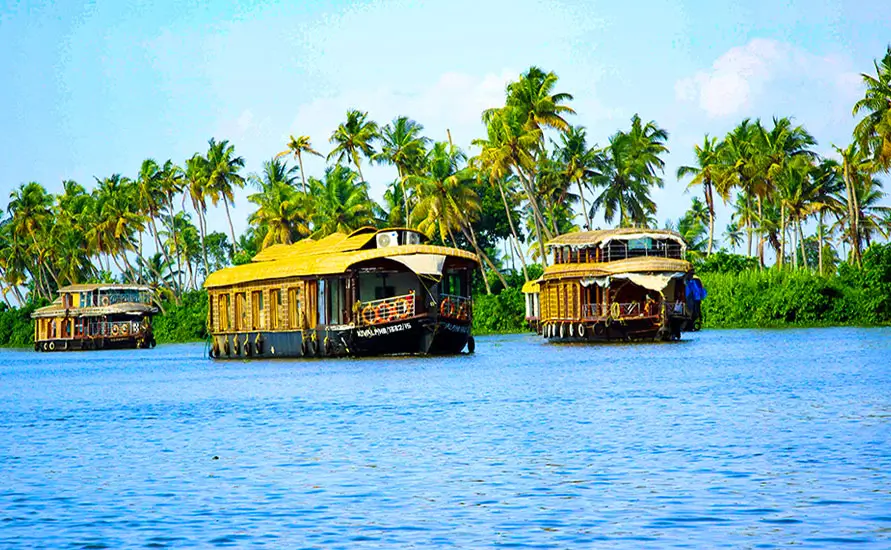
Later in the morning you settle into a slim canoe paddled by a villager and head into the Kuttanad region, where farmers grow rice on land that sits below sea level behind earth embankments. Coconut Lagoon's guided canoe rides follow narrow channels that larger boats cannot enter, past homes where women clean fish on the steps and children wave from footbridges. The boatman explains how the water is pumped out before planting and how the salt barrier at Thanneermukkom shapes the lake. Back at the hotel, lunch is served after you dry off.
The afternoon belongs to the resort itself. Spend time with the rare Vechur cows, a short Kerala breed the hotel helps protect, then walk through the butterfly garden and the small sacred grove. A beginner's yoga session by the lake is offered in the late afternoon. For dinner, the team can arrange a candlelit meal laid out on the edge of the paddy fields, one of the resort's signature evenings. The night sky is wide here, and with little light from roads, the stars come out well on clear nights. Overnight in Kumarakom.
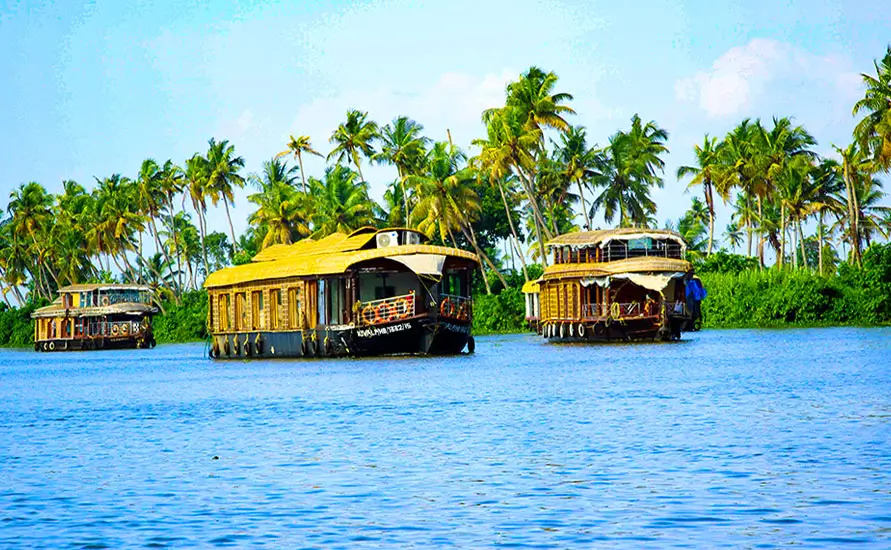
Kerala's largest lake gives you a full day of slow movement. In the morning a private motorboat takes you out across Vembanad to Pathiramanal, an islet of trees and birdlife set out on the open water, whose name translates roughly as 'sands of midnight'. A footpath loops through the trees, and the island is a quiet place to look for water birds without the crowds of larger sites. Your naturalist talks about the lake's clams, the fishing families who dive for them and how dredging and weeds have changed the water in recent decades.
After lunch at the hotel, you head out on bicycles with a guide along the quiet lanes and embankments of Kumarakom village. The route takes in a coir-making unit, a small Hindu temple with a carved wooden roof, fishermen mending nets and a shop selling toddy, the mildly fermented palm sap that many locals drink with spicy fish. If cycling is not for you, the same route can be walked or done by car. The village work you see today is the same work that supplies much of the hotel's fish, rice and coconuts.
Back at Coconut Lagoon, the last evening on the lake is best spent on a sunset cruise in a traditional covered boat, sipping tea while fishing canoes head home. Many guests book an Ayurveda massage on this final afternoon, since the hotel's therapy center is well regarded and treatments are offered at extra cost. Dinner can be à la carte by the lake or a set Kerala meal served on banana leaves. Settle your bills tonight, as tomorrow morning the boat collects you for the short ride back to the car. Overnight in Kumarakom.
The boat ride back to the jetty is a gentle goodbye to the lake, and the car then follows the eastern shore of Vembanad through small towns and paddy land to Alleppey. On the way your guide can add a short stop at Alleppey town to look at the old canals and warehouses that earned it the nickname of the Venice of the East, or at a coir factory where mats are woven on wooden looms. Without detours the road time is about ninety minutes, and you arrive on the coast in time for lunch by the sea.
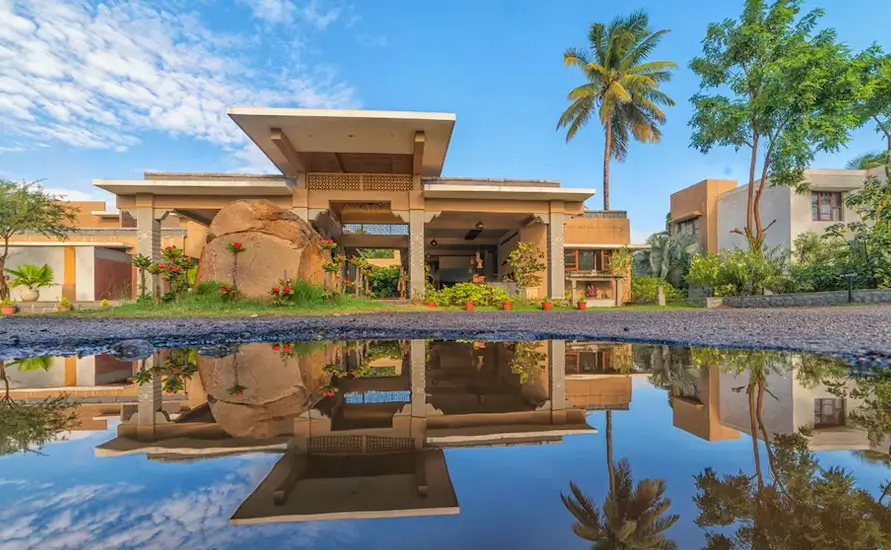
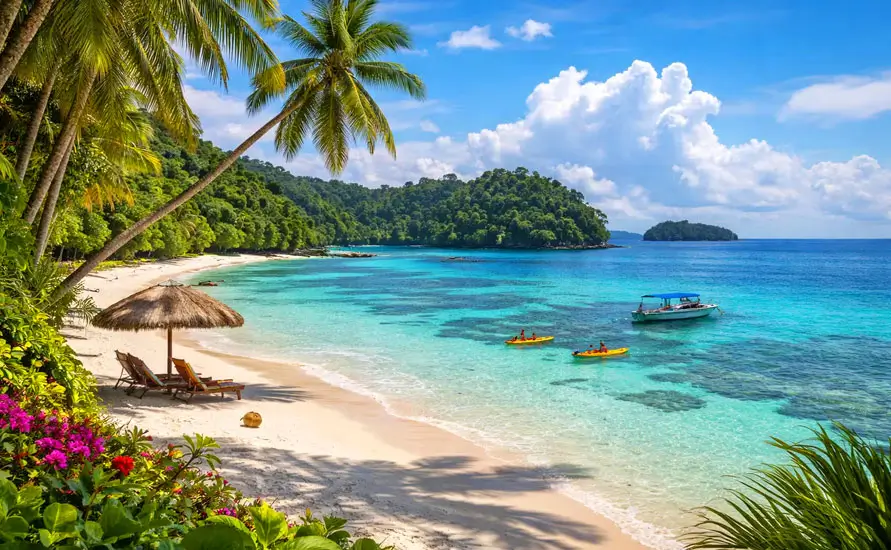
Marari Beach calls itself a village by the sea, and it is built to feel like one. Thatched villas sit in palm groves and gardens, and each year women from the nearby fishing village re-thatch the roofs and make the coir mats you walk on. Garden villas have shaded verandas and open bathrooms, and the pool villas come with their own small pool. A large swimming pool lies close to the beach. The resort runs a working organic farm of about four acres, and its kitchen uses biogas made from food scraps.
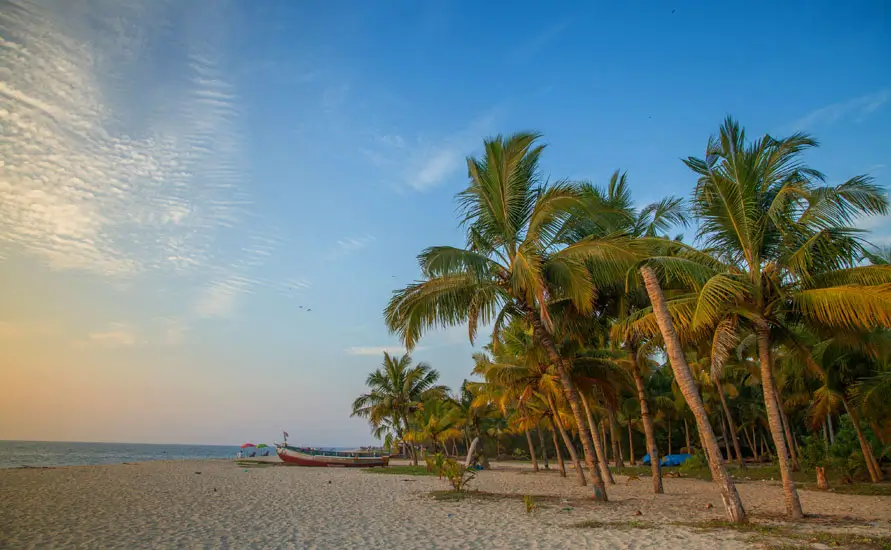
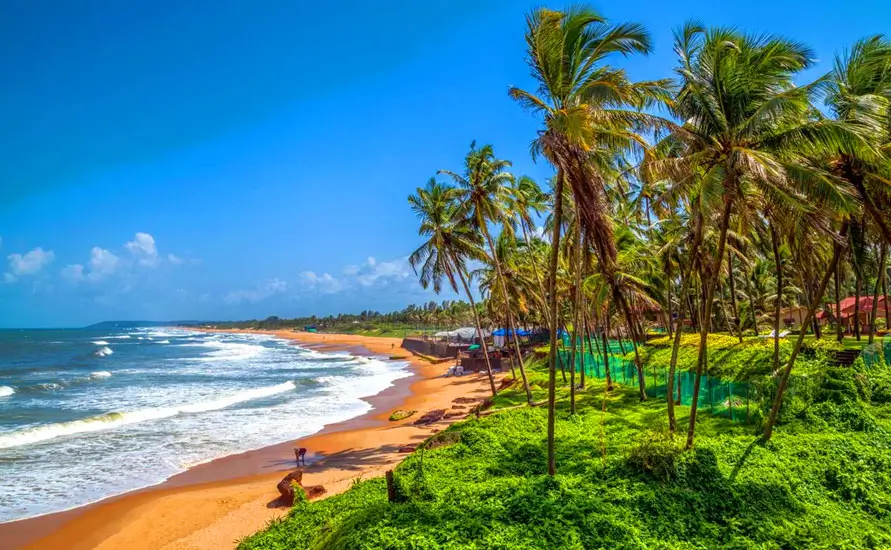
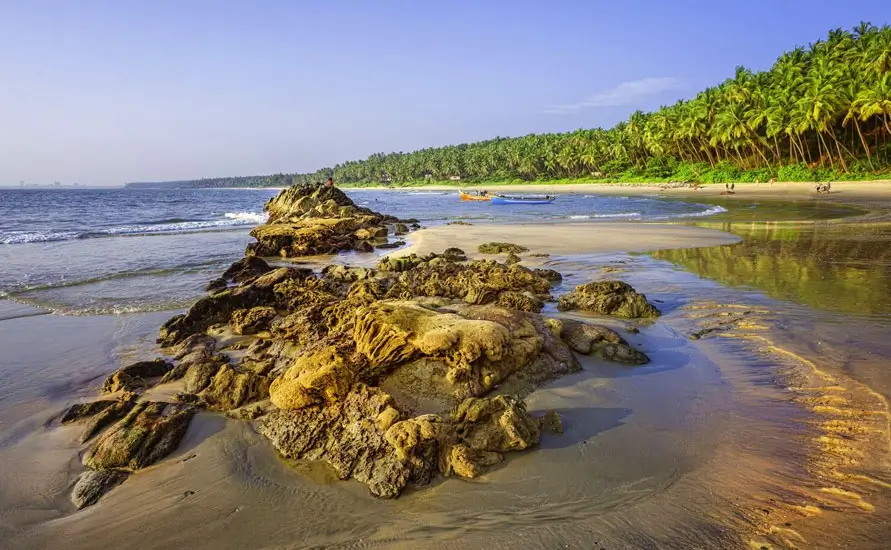
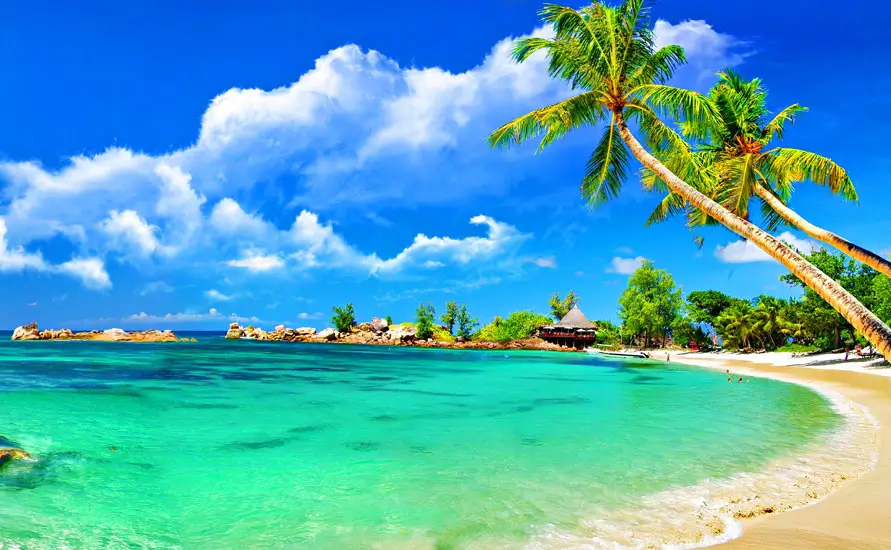
Give the afternoon to the beach, a long, wide strip of sand shared mostly with fishermen and a handful of guests. The sea here can have strong currents, so swim only where the lifeguards advise. Before sunset, a naturalist leads a stroll through the resort's butterfly garden and around some of its natural ponds, where frogs, turtles and water birds can be seen. The seafood grill on the beach is the obvious dinner choice: choose fish, prawns or squid caught that day and have them cooked over coals with Kerala spices. Overnight in Marari.
Rise before dawn for the resort's walk to the fish-landing beach, a short stroll along the sand to where fishing boats come ashore after a night at sea. Crews haul nets onto the beach, women sort sardines and mackerel into baskets, and buyers bid on the catch in loud bursts of Malayalam. Your guide explains how the fishing families of Mararikulam organize their work, share the catch and cope with changing seas. The scene is busy and real, and photography is usually welcome if you ask first. Return to the resort for breakfast.
After breakfast and a rest, the next stop is the resort's organic farm. A member of the farm team walks you through rows of vegetables, bananas and tubers, explaining how the farm works with local growers and why the resort grows so much of its own food. You see the composting beds and the ponds that collect rain, and learn how the hotel serves treated drinking water in reusable glass bottles instead of plastic. Many guests find this the most interesting hour of the stay, since it shows how the CGH Earth approach works in practice rather than in a brochure.
The afternoon is yours. Read under the palms, swim in the pool or book an Ayurveda treatment at the resort's wellness center. Toward sunset a teacher leads a yoga session on the beach, suited to all levels and focused on breathing and gentle stretching rather than difficult poses. Evening chai with banana fritters is served afterward. Dinner can be at the main restaurant, where Kerala classics such as karimeen pollichathu, pearl spot wrapped in a banana leaf with masala and cooked slowly on the pan, sit beside lighter continental dishes. Wine and cocktails are available at the bar for those who want them. Overnight in Marari.
Your last full day in Kerala keeps plans light. In the morning a guide takes you cycling through the sandy village tracks inland from the shore, where homes are shaded by coconut palms and small canals carry duck flocks between ponds. Along the way you stop at a coir-spinning yard, a village school if it is a weekday and a small temple whose festival calendar your guide can explain. The ride is flat and short, around an hour and a half with stops, and the resort provides bicycles and helmets. Those who prefer not to cycle can do the same loop on foot.
Back at Marari Beach, the hours before lunch are a good time for a last swim. If you have kept a long list of questions about the group's approach to responsible travel, ask the resident naturalist for a chat; staff are happy to talk about the butterfly census, the ponds and the community nutrition program that encourages local families to grow vegetables at home. The resort's small shop sells coir goods, handloom textiles and spices made by local suppliers, which make useful gifts that support the same village economy you saw this week.
Late afternoon is ideal for a final walk along the shore as the fishing boats head out for the night. For your farewell dinner, the team can set a private table on the sand with lanterns, and the chef can cook a Kerala feast of your favorite dishes from the trip. Your guide or our local manager will stop by during the day to confirm tomorrow's departure time and check that everything has met your expectations. Pack the bags tonight so tomorrow morning is calm, and leave out anything you want to hand-carry on the plane. Overnight in Marari.
Enjoy a final breakfast in the garden before checking out. The drive north to Cochin International Airport usually needs a little over two hours, though Kochi traffic can stretch that, and your chauffeur sets the departure time to give you a calm margin before your international flight. For an evening flight, we can hold the villa for a late check-out at extra cost, subject to availability, or arrange a lunch stop in Fort Kochi on the way. A meet-and-assist representative escorts you to the terminal door.
Over twelve nights you have stayed in four very different houses, each built and run around the land and people around it: a harbor boatyard, a spice-hill hamlet, a lakeside village of old homes and a fishing-coast retreat. We hope the slower pace and the time spent with naturalists, farmers and fishermen gave you a deeper view of Kerala than a busy circuit could. If you would like to return, CGH Earth also runs heritage hotels in Tamil Nadu and an Ayurveda retreat in a palace near Palakkad, and our team can shape a second trip around either.
Your Journey

N.S. Rathore & Mrs. Omlata Rathore · Managing Director
We still read every enquiry ourselves. Tell us the places you liked and our planners will send a day-by-day route with drive times and a clear price.
Every package can be customised and no pressure to book. A planner from our office replies within 24 hours with a route written for your group.
Fill this in and your planner will send a first draft itinerary.
Explore more
Kerala Backwaters Escape Kerala Backwaters Escape
 Kerala Backwaters Escape
 Kerala Backwaters Escape
 Kerala Backwaters Escape
 Kerala Backwaters Escape
 Kerala Backwaters Escape
 Kerala Backwaters Escape
 Kerala Backwaters Escape
 Kerala Backwaters Escape
 Kerala Backwaters Escape
 Kerala Backwaters Escape
 Kerala Backwaters Escape
 Kerala Backwaters Escape
 Kerala Backwaters Escape
 Kerala Backwaters Escape
 Kerala Backwaters Escape
 Kerala Backwaters Escape
 Kerala Backwaters Escape
 Kerala Backwaters Escape
 Kerala Backwaters Escape
 Kerala Backwaters Escape
 Kerala Backwaters Escape
 Kerala Backwaters Escape
 Kerala Backwaters Escape