
 Kerala Backwaters Escape

Ayurvedic Tour Packages
Bangalore – Mysore (yoga shala)
At a glance
Ashtanga practitioners from Sydney to Seattle talk about Mysore the way musicians talk about a conservatory: a place you go to learn at the source rather than from a video. Our yoga retreat in Mysore gives you two weeks in the leafy Gokulam neighborhood, where the Mysore-style Ashtanga method of quiet, self-paced practice under a teacher's eye still sets the rhythm of each morning. We handle the shala registration, the accommodation within walking distance of class, the airport pickup in Bangalore and the small details that eat up time when you arrive alone in a new city.
Mornings belong to the mat. Afternoons are kept light, with pranayama, chanting, a talk on the Yoga Sutras, a sattvic cooking demonstration and four Ayurveda treatments that a qualified Ayurveda doctor (BAMS) selects for you at the first meeting. Two rest days follow the custom of many Ashtanga teachers, and we use them for gentle outings to Chamundi Hill, Srirangapatna and the Hoysala carvings of Somanathapura. Your guesthouse serves a simple vegetarian breakfast and lunch, leaving long, empty hours to read, nap and let the practice sink into your body.
We built this Mysore yoga retreat for overseas students of yoga, mostly Americans, Canadians, Britons, Europeans and Australians, plus NRIs who saw grandparents practice at home and now want proper study. Beginners are welcome, though a few months of regular practice beforehand makes the first week far easier. Many shalas fill months ahead, so we suggest booking early; the cooler, drier months from October to February suit early starts best. Nothing here replaces your own doctor's advice, so please share any injuries or health conditions before you travel.
Landing at Kempegowda International, well north of Bangalore, you will find our driver beside the exit doors with your surname printed on a placard. Overnight flights from the Gulf, Frankfurt or Singapore tend to land between midnight and early morning, so we keep the first hours empty on purpose. Reaching your hotel normally needs sixty minutes or so on the airport road, and the room is held for you so that sleep comes first. Our coordinator calls once you have rested to go over the plan, explain the Indian SIM card options and answer any questions about the shala and its rules.
Once the afternoon heat drops, your guide leads an easy stroll through Cubbon Park, a wooded public garden created by colonial engineers during the 1870s that still cools the center of town. Bamboo groves, flowering trees and long shaded avenues make it popular with joggers and dog walkers, while the brick-red State Central Library, with its pointed arches, peeks out from among the trunks. Facing the park gates is the Vidhana Soudha, a grey granite home for the state legislature, which you can photograph from the pavement. The idea today is gentle movement after a long flight, not a full city tour.
For supper, try a busy vegetarian canteen where your guide shows you how to eat a dosa properly and which chutney goes with what. Bangalore is also a good place to pick up anything you forgot, such as a lightweight yoga mat, loose cotton clothes or a refillable water bottle, and your driver can stop at a mall or market on the way back. Go to bed early if you can, even if the hotel bar or the city lights tempt you to stay up, because your body clock will be shifting toward the dawn routine that begins in Mysore. Overnight in Bangalore.
You take breakfast slowly and set off once rush hour on the city roads has eased. The Bangalore–Mysore expressway has cut the drive to roughly three and a half hours, passing sugarcane fields, coconut groves and the town of Mandya, known for its jaggery. Tender coconut and filter coffee stalls line the road if you want a pause. You reach Mysore by early afternoon and settle into your guesthouse in Gokulam, a calm residential area of tree-lined streets that has drawn students of Ashtanga yoga in Mysore from abroad for decades.
Later in the afternoon a qualified Ayurveda doctor (BAMS) visits for your first consultation. Expect questions about your sleep, appetite, digestion, past injuries and current medicines, followed by a pulse reading and a short discussion of your constitution, or prakriti, in Ayurvedic terms. Based on this, the doctor suggests which four treatments to schedule over the next two weeks and how to time them around your practice. Carry a written note of your prescriptions and tell the doctor about every health condition, because the treatments are meant to support your wellbeing and never replace the care of your own doctor.
Before dark, our local coordinator walks you to the shala so you know the route and the gate you will use at dawn. This is when you complete registration, show your passport and visa if asked, and learn the house rules on timing, silence and what to bring. Most shalas expect you to arrive clean, with an empty stomach, and to wait quietly until called. The rest of the evening is for unpacking and an early, light dinner at a modest Gokulam café a few minutes away. Overnight in Mysore.
Your alarm goes off before first light, and the streets of Gokulam are dark and quiet as you walk to class. In a Mysore-style Ashtanga room, there is no group instruction: each student moves through the sequence at their own breath-led pace while the teacher walks the room, adjusting, correcting and adding new postures only when the previous ones are steady. On day one, you will likely be taught the two sun salutations and the standing postures, then asked to stop. That can feel short, but it is how the method has always been passed on.
Back at the guesthouse, breakfast of fruit, upma or idli is waiting, and a nap is entirely normal at this stage. Before lunch our coordinator goes through the coming fortnight with you, including the two rest days and the afternoon sessions. If you are new to early practice, keep the rest of the morning simple: read, stretch lightly and drink plenty of water. The heat in Mysore is moderate compared with the coast, but the sun is strong at midday, so a hat and sunscreen help whenever you step out.
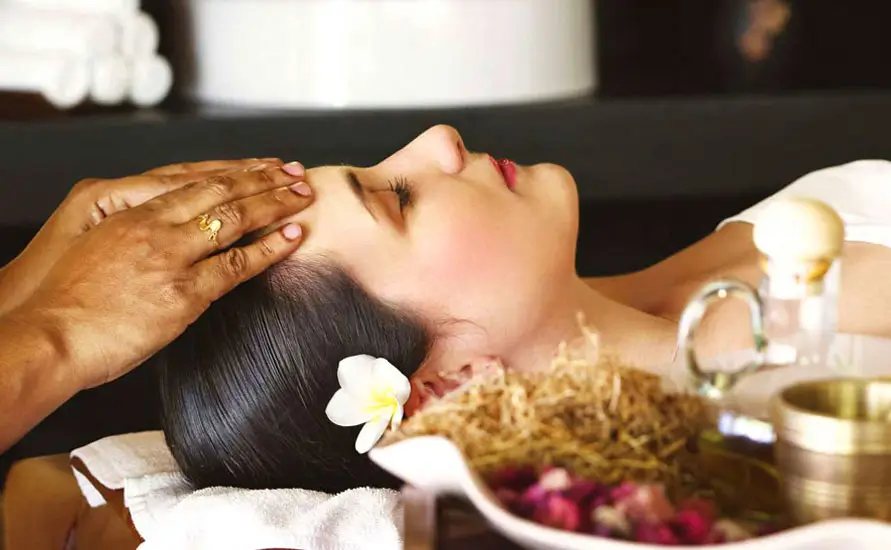
Your first Ayurveda treatment is abhyanga, for which two therapists move in matching strokes over the whole body using warmed herbal oil. It is traditionally used to ease tired muscles and calm the nervous system, and many guests report deeper sleep on the nights that follow. The oil stays on the skin for a while afterward, followed by a warm herbal steam or a shower with gram flour paste to lift it off. Wear old clothes to the treatment room and plan nothing for the evening except an early dinner and bed. Overnight in Mysore.
By the second morning the walk to class feels familiar, and your teacher may add a few seated postures if your standing sequence looked steady. Pay attention to the ujjayi breath, the slow audible breathing that links every movement in Ashtanga, because teachers watch it more closely than flexibility. Sweat is part of the practice, so a small towel and a mat rug are useful. After closing postures, rest quietly in savasana for longer than you think you need, then walk back slowly through Gokulam as the milk vendors and flower sellers start their rounds.
Late morning brings a pranayama session with a certified teacher who explains why breathwork is taught separately from asana in this tradition. You start with simple observation of the natural breath, then learn nadi shodhana, alternate-nostril breathing, and a gentle form of kapalabhati, with clear guidance on when to stop and who should avoid stronger techniques. The teacher also covers sitting posture, the use of a cushion or block and how to fit ten minutes of breathwork into a busy day at home. Questions are welcome, and notes are encouraged.
As the light softens, your guide walks you into Devaraja Market, the covered bazaar that has supplied the city since the time of the Wadiyar kings. Pyramids of kumkum powder in red, yellow and violet sit beside heaps of jasmine, marigold and rose, and vendors string garlands for temples and weddings with remarkable speed. You can also find betel leaves, local bananas, sandalwood soap and the incense Mysore is famous for. Hold your bag close in the narrow aisles, and save your energy, because tomorrow's alarm is just as early. Overnight in Mysore.
Progress in the shala is rarely a straight line, and on the third or fourth morning many students find their hamstrings or shoulders protesting. Tell your teacher about any pain rather than pushing through it, since a good teacher will modify a posture or hold you back for a few days. The goal here is a steady daily habit, not a full sequence by the end of the second week. Breakfast after class is a good time to compare notes with other students at your guesthouse, who often come from a dozen different countries.
After a rest, a teacher joins you for an hour on Patanjali's Yoga Sutras, the short Sanskrit text that most schools treat as the foundation of classical yoga. The talk focuses on the eight limbs, from the ethical guidelines of yama and niyama through posture, breath and the inward stages of concentration and meditation. Rather than a lecture, it is a conversation about how these ideas apply to modern life, work stress and relationships. You receive a short reading list and a translation recommended by the teacher, so you can continue studying after you fly home.
Late afternoon is for Mysore Palace, home of the Wadiyar rulers and the building every visitor to the city wants to see. Your guide shows how Hindu, Islamic and Gothic ideas were combined in its design, picks out the carved wooden doors and the paintings of the Dasara procession inside, and explains the rules on shoes and photography before you enter. If your stay includes a Sunday or public holiday, you can come back after dark to see the facade lit by thousands of bulbs for about 45 minutes, a sight that draws big local crowds. Overnight in Mysore.
Many Ashtanga teachers keep one day a week free of practice, and some also pause on new moon and full moon days, so your schedule follows the shala's own calendar. We use the first rest day for a dawn climb up Chamundi Hill, which rises behind the city with a stone stairway of roughly a thousand steps. The climb takes about an hour at a steady pace, with shrines, monkeys and pilgrims along the way, some of them marking each step with turmeric and kumkum as an act of devotion. Carry water and wear proper shoes.
Well past the halfway mark, a giant black granite Nandi, the bull of Shiva, sits on a platform with a view over the city and the lakes below. Early risers from nearby homes leave flowers and broken coconuts at its hooves, and your guide tells you what each small offering means. At the top stands the Chamundeshwari Temple, where long queues form on Tuesdays, Fridays and festival days. Your car waits at the summit, so there is no need to walk back down on legs that have been in class all week.
Breakfast is at a small local eatery on the way back, where crisp Mysore masala dosa comes with a red chutney spread inside. After that, nothing is scheduled, and we strongly suggest using the hours to sleep, write and do very little. A few guests add a paid treatment or drift between the cafés of Gokulam to meet other students, while others simply sit in the garden with a book. Light stretching is fine, but give your body a genuine break before the next block of practice. Overnight in Mysore.
Returning to the mat after a day off often feels easier than expected, and your teacher may start adding seated forward bends from the primary series. Focus on the vinyasa between postures, the jump-back and jump-through that build heat, but do not worry if they look clumsy for now. Everyone in the room is working on something, and the quiet discipline of the space tends to keep competition out. The walk home is a good time to notice how your breathing changes as you move from the sweaty room into the cool morning air.
Late in the morning a home cook hosts a sattvic cooking demonstration at the guesthouse kitchen. Sattvic food in the yogic and Ayurvedic tradition is fresh, lightly spiced and vegetarian, made without onion and garlic in stricter households. You watch a one-pot kitchari of rice and moong dal come together with ghee, cumin and turmeric, then a quick poriyal of beans tossed with fresh coconut, plus chilled buttermilk flavored with ginger and curry leaves. You eat what is cooked for lunch and leave with written recipes that work with ingredients found in Western supermarkets.
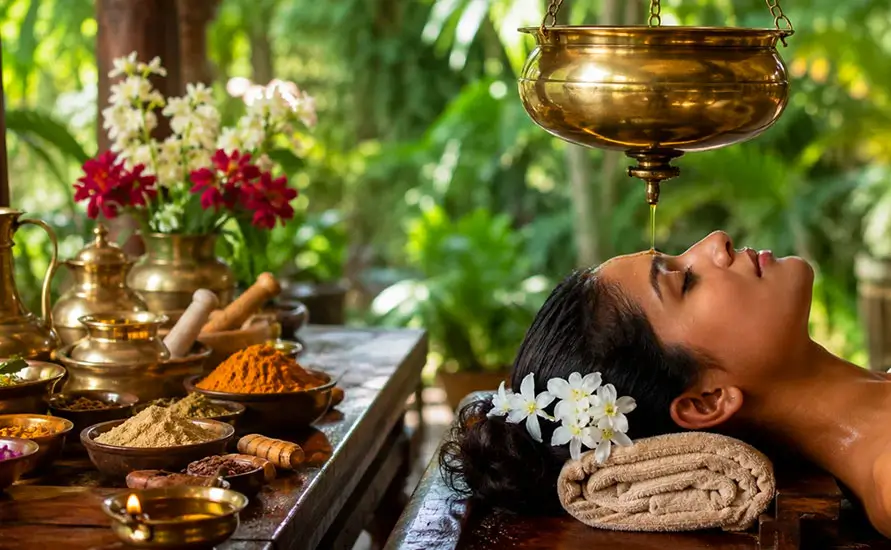
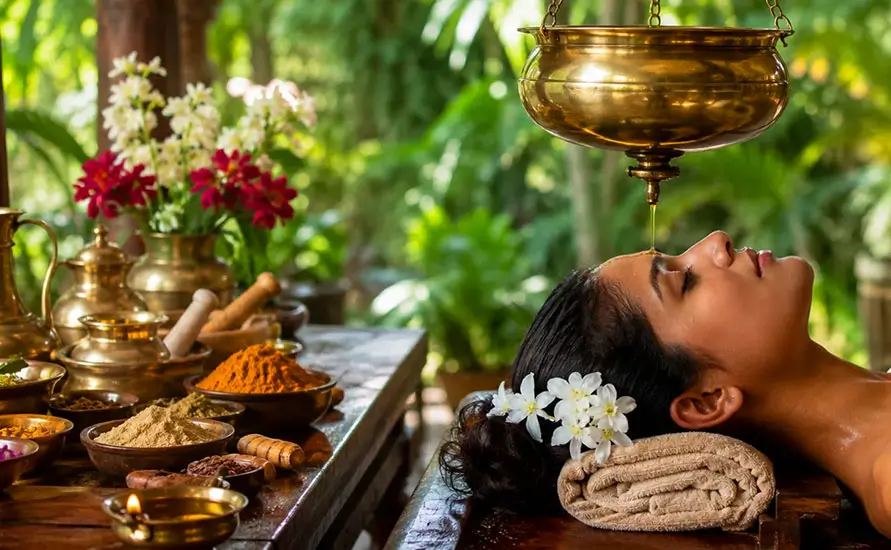
In the afternoon you have a shirodhara session, where warm medicated oil flows in a slow, unbroken thread over your forehead as you lie on a wooden table. The treatment is traditionally used to quiet the mind, and guests often describe it as one of the most restful hours of their trip. Your hair will be oily afterward, so skip any plans to go out and wash it the next morning instead, as the doctor may advise. Dinner is light and early, and most people find they sleep long and deeply tonight. Overnight in Mysore.
One week in, your body has usually adjusted to waking before dawn, and the practice begins to feel like part of the day rather than an ordeal. Your teacher may now hold you at a particular posture for several days until it steadies, which is normal and nothing to be frustrated about. Pay attention to small changes: easier breathing in the standing sequence, less stiffness on waking, or more patience with difficult postures. Writing these down in a notebook after class helps you remember what worked once you are practicing alone at home.
Mid-morning the Ayurveda doctor returns for a follow-up consultation. You talk through how the first week has gone, how your digestion and sleep have changed and whether any muscles or joints are giving you trouble. The doctor may adjust the remaining treatments, suggest small changes to your meals or recommend a gentle home oil routine. If any herbal preparations are suggested to take home, they are optional and paid for separately, and you should check with your own doctor before combining them with prescription medicines once you are back home.
Toward sunset, your guide takes you for a walk around Kukkarahalli Lake, a large tank on the edge of the University of Mysore campus. A path of about four kilometers circles the water, used by students, retired professors and morning walkers, and the trees along the bank are often full of herons, cormorants and egrets settling for the night. It is a peaceful place to stretch your legs and talk over the week with your guide, who can also recommend a reliable tailor or bookshop in town if you need one. Overnight in Mysore.
Ashtanga practice traditionally opens and closes with a short Sanskrit invocation, and by now you have heard it chanted in the shala every morning. Today you learn what the words mean. After class and breakfast, a teacher leads a one-hour chanting session at the guesthouse, breaking down the opening mantra syllable by syllable and explaining its tribute to Patanjali and the teachers of the lineage. You also try a few simple verses with call and response, and the teacher shows how steady chanting connects naturally to the breath work you learned earlier.
Lunch is followed by a long rest. Many students find that the second week brings a quiet tiredness in the afternoons, and the guesthouse garden or a shaded verandah becomes the best spot in the house. Use the time to catch up on laundry, which the guesthouse can arrange for a small fee, and to restock fruit, nuts and coconut water from the shops along the Gokulam main road. If you want to keep a digital detox, ask the guesthouse to hold your phone during the day, a request they hear more often than you might think.
In the late afternoon your guide shows you how Mysore silk is made, a craft the city has been known for since the royal era. Where a visit to a weaving unit can be arranged, you watch the jacquard looms producing the soft, lustrous crepe silk with gold zari borders that local brides wear, and learn how to recognize the government quality mark. There is no obligation to buy, and your guide prefers fixed-price stores over commission shops. A quiet evening follows, with dinner at your guesthouse or a café nearby. Overnight in Mysore.
After the morning class, a short guided meditation and journaling session gives you space to look back on the first nine days. The teacher begins with ten minutes of silent sitting, focusing on the breath at the tip of the nose, then hands out simple prompts: what has changed in your body, what has been difficult, what you want to carry home. There is no right answer, and you keep what you write. Several students say this hour helps them see progress they had missed in the repetitive rhythm of daily practice.
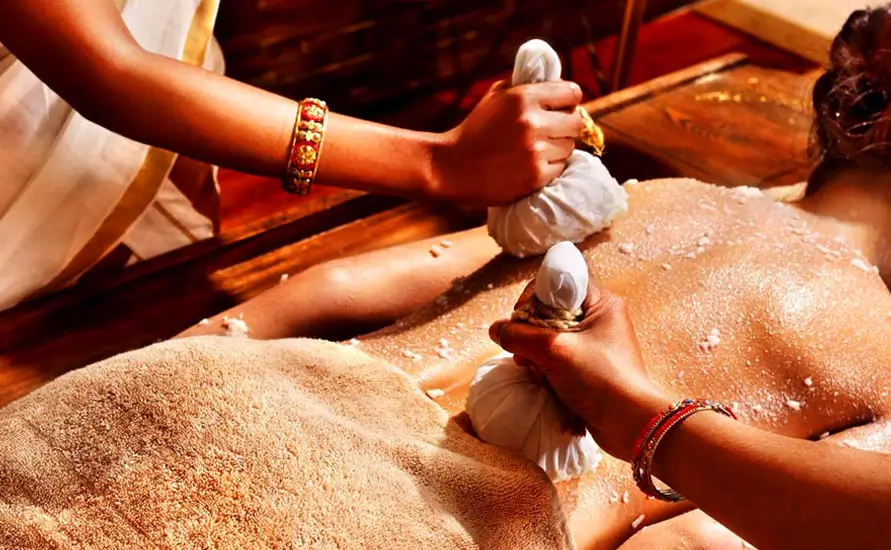
Your third treatment is elakizhi, where therapists tap and press hot muslin pouches of herbal leaves, coconut and spices over the body in a steady beat. Kerala and Karnataka practitioners traditionally use it for stiff joints and tired muscles, which makes it popular with students in the middle of an intense practice period. The bundles are heated in oil and applied in a set sequence, and the session usually lasts around an hour. Give it a full hour before showering, and sip warm water, never iced drinks, while the herbs settle.
The evening is free. When your stay touches a Sunday or a holiday, the palace lights are worth a short drive; they usually come on around 7 pm and stay lit for less than an hour. On other days, a gentle walk to a Gokulam café for a fresh lime soda and a plate of local snacks is about as active as most people want to be. Bedtime is early, because the shala doors open again before sunrise and the second half of the week tends to bring new postures. Overnight in Mysore.
Your second rest day heads roughly 20 km up the road to Srirangapatna, a river island that Tipu Sultan ruled from until 1799. You start at the Ranganathaswamy Temple, an old Vishnu shrine whose reclining image of the god on the serpent Adishesha gave the town its name. Before you go in, your guide covers dress rules and which halls are open to visitors. Nearby, the summer palace known as Daria Daulat Bagh is built mostly of teak, with wall paintings of battles between Tipu's army and the British East India Company.
Minutes away lies Ranganathittu Bird Sanctuary, a scatter of wooded islets in the river where painted storks, spoonbills, cormorants and herons nest in large numbers, mainly in the cooler months. A boatman rows you slowly between the islands, keeping a respectful distance from the nests and from the marsh crocodiles that sometimes lie on the rocks. Sightings depend on the season, so we never promise particular birds, but the morning light on the water makes the trip worthwhile in any case. Binoculars are useful, and caps protect you from the sun.
Heading home, pause at the domed Gumbaz, raised by Tipu as a tomb for his father Hyder Ali and mother and later his own resting place, with its ivory-inlaid doors and calm gardens. Lunch can be at a simple restaurant on the river or back in Gokulam, and the afternoon is again left free for rest. Some guests like to use this time for an optional extra treatment, while others prefer a long nap and an early night. Prepare your clothes and mat for the morning, because the last four days of practice begin tomorrow. Overnight in Mysore.
By the middle of the second week you have built a steady routine, and your teacher may start giving fewer adjustments and more independence. Use the class to notice if your breath stays even through the harder postures and if you can lie still without fidgeting at the end. The shala room may be more crowded now if new students have arrived, which is a good lesson in keeping your focus on your own mat. Breakfast after class is a little more leisurely, as the afternoon session today is a walk rather than a class.
Late morning, a botanist or Ayurveda practitioner leads a slow walk through a medicinal herb garden on the outskirts of Mysore. You see and smell plants such as tulsi, ashwagandha, brahmi, neem, vetiver and curry leaf, and learn how each is traditionally used in cooking, oils or home remedies. The guide talks about the difference between kitchen herbs that are safe to use freely and preparations that should only be taken on professional advice. Bring a notebook, as many guests later try to grow a few of these at home.
Your fourth and final treatment of the program is padabhyanga, warm oil worked into the feet and calves, often finished with a gentle rub using a small bronze bowl. Practitioners traditionally recommend it to help ground the body and promote restful sleep, and it is especially welcome after nearly two weeks of standing postures. The session is shorter than a full abhyanga, so you can still enjoy a slow evening walk afterward. Dinner at the guesthouse is simple, and many guests start packing early so the final days stay calm. Overnight in Mysore.
Morning class is followed by a guided yoga nidra session, a lying-down practice of deep relaxation in which the teacher talks you through the body and the breath. It is a good counterweight to the heat of Ashtanga and a useful skill to take home for evenings when stress or jet lag keeps you awake. The teacher also shows a short restorative sequence using pillows, a blanket and a wall, something you can do on days when a full practice feels like too much. You leave with an audio recording if the teacher provides one.
After lunch you drive roughly an hour southeast to the village of Somanathapura. Its Chennakeshava Temple, completed in 1268 by a Hoysala general, entered the UNESCO roll of World Heritage in 2023 with Belur and Halebidu, so it now shares its status with two far busier and better-known sites. Raised on a stellate plinth, the temple has outer walls that carry bands of carved elephants, horsemen, scrolls and scenes from the epics. Your guide explains how the soft soapstone allowed such fine detail and points out the signatures of sculptors on some of the panels.
The temple is rarely crowded, and the late afternoon light brings out the texture of the stone. Walk slowly around the cloister of small shrines that encloses the main temple, looking for the turned stone pillars and the ceilings carved like lotus flowers, then sit for a few minutes on the lawn outside before driving back. Your driver follows country roads through paddy fields and small villages, where farmers are often bringing cattle home at this time of day. Back in Gokulam, a light dinner and a final read through your notebook prepare you for the last class tomorrow, and it is worth laying out your practice clothes tonight. Overnight in Mysore.
Your last morning in the shala has the same quiet rhythm as the first, though by now you know the sequence well enough to move through it without hesitation. Many students thank their teacher personally at the end, and some leave a card or a small gift, both of which are welcome but never expected. Before leaving, ask your teacher for advice on what to practice at home and how often. Most will suggest a shorter version of the sequence for busy days and encourage you to keep the same morning habit, even if only for twenty minutes.
After breakfast the Ayurveda doctor meets you for a final consultation. Together you look back at what changed over the fortnight of practice and treatments, and the doctor writes out simple guidance on diet, daily routine and seasonal habits suited to your constitution. If you want to continue with any herbal products or oils at home, the doctor can explain what each one is for, but these are always optional and not part of the package. Remember to check with your own physician before starting anything new once you are back home.
In the evening we host a simple farewell dinner at a vegetarian restaurant in town, a chance to share stories with your guide and any fellow students you have befriended. Mysore thali is a good choice, with rice, sambar, rasam, two vegetable dishes, curd and a sweet served on a banana leaf. Afterward, settle your guesthouse extras, pack your mat, and return any borrowed props to the shala if needed. Your driver fixes the morning start to suit your flight, and our coordinator calls to check that nothing has been forgotten at the shala or guesthouse. Overnight in Mysore.
With an evening flight, you can still roll out your mat on the guesthouse terrace for a final solo practice before breakfast. Reaching Kempegowda International Airport needs about four to four and a half hours via the expressway and Bangalore's ring roads, and your driver plans the departure to leave a comfortable margin before check-in. A stop for coffee or lunch is easy to arrange along the way. Flying near midnight? For an extra charge, we reserve a day room by the terminal so you can shower and rest first.
Two weeks of early mornings, breathwork and simple food leave most students with a clearer sense of how they want to practice at home. Your yoga retreat in Mysore has given you a start in the Ashtanga method, a home-practice plan and practical Ayurveda tips to use in daily life. Many guests return to Gokulam for longer study, and we are always glad to plan the next trip, including a Kerala Ayurveda stay. We wish you a safe flight and many steady mornings on the mat.
Your Journey

N.S. Rathore & Mrs. Omlata Rathore · Managing Director
We still read every enquiry ourselves. Tell us the places you liked and our planners will send a day-by-day route with drive times and a clear price.
Every package can be customised and no pressure to book. A planner from our office replies within 24 hours with a route written for your group.
Fill this in and your planner will send a first draft itinerary.
Explore more
Kerala Backwaters Escape Kerala Backwaters Escape
 Kerala Backwaters Escape
 Kerala Backwaters Escape
 Kerala Backwaters Escape
 Kerala Backwaters Escape
 Kerala Backwaters Escape
 Kerala Backwaters Escape
 Kerala Backwaters Escape
 Kerala Backwaters Escape
 Kerala Backwaters Escape Kerala Backwaters Escape Kerala Backwaters Escape Kerala Backwaters Escape Kerala Backwaters Escape Kerala Backwaters Escape Kerala Backwaters Escape