
 Kerala Backwaters Escape

Ayurvedic Tour Packages
Kochi – Kumarakom (Ayurveda resort)
At a glance
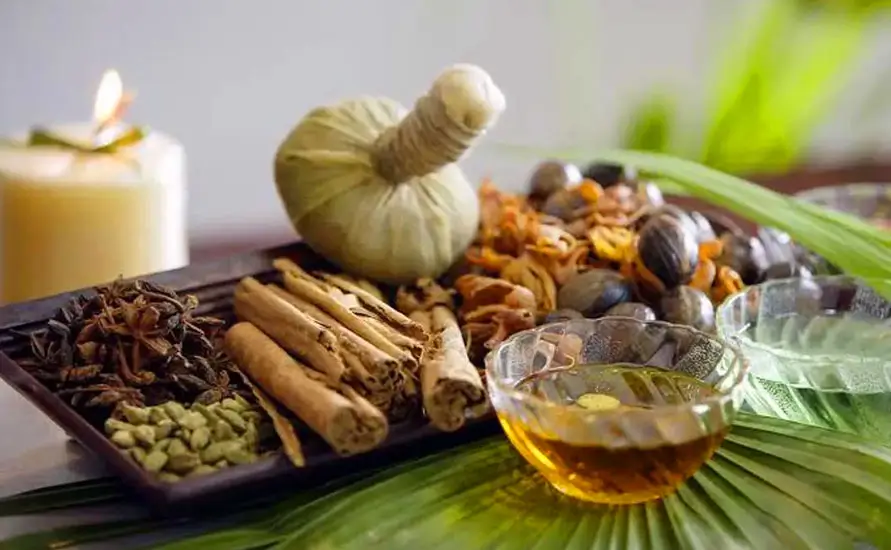
Plenty of programs abroad sell fast results; ours does the opposite. The Ayurveda weight management program Kerala guests join here is a calm, two-week reset of eating habits, movement and sleep, guided by an Ayurveda doctor and set on the shores of Vembanad Lake in Kumarakom. It starts with two easy nights in Fort Kochi so that jet lag fades before therapy begins, then moves to a lakeside Ayurveda resort for eleven nights of consultations, daily treatments such as udvartanam massage, yoga, simple outings on the backwaters and vegetarian meals planned around your constitution.
Please read this part carefully: nobody can promise how many pounds or kilos you will lose, and we do not. Ayurveda looks at weight as one sign of a wider imbalance, often linked in its texts to kapha, and the program aims to support digestion, energy and routine rather than to hit a number on a scale. Many guests report feeling lighter and sleeping better by the second week, while others mainly take home new habits. A qualified doctor (BAMS) reviews your medical history first, and the Ayurvedic weight management plan never replaces advice from your own physician.
Our guests tend to be North Americans, Britons, Europeans and Australians, along with NRIs who know Kerala food well but want a structured break from rich cooking. Expect early mornings, two treatments on most days, no alcohol, no smoking and plenty of rest in the afternoons. Sightseeing is kept short and gentle, from a dawn canoe ride to a village walk. Kerala is pleasant from October to March, while the monsoon months, especially Karkidakam from mid-July to mid-August, are traditionally favored for therapy by local families.
Most overseas guests reach Cochin International Airport on overnight connections through Dubai, Doha, Singapore or Colombo, landing at odd hours, so we track your flight number and adjust the pickup if it is delayed. Wherever you connect from, our English-speaking chauffeur stands beyond the exit with a printed name board, and the ninety-minute ride to Fort Kochi threads through Aluva, the commercial sprawl of Ernakulam and the bridges over the harbor. On the way he hands you a mobile number for our Kerala office and a folder with your schedule. Check-in at your heritage hotel is normally from 2 pm.
Spend the first hours doing very little. A shower, a nap under the ceiling fan and a pot of Kerala tea with a slice of banana will do more for jet lag than any sightseeing. In the afternoon our program coordinator drops by to go through a health form that the resort doctor will study before you meet: current medicines, blood pressure readings, thyroid or diabetes history, past operations, food allergies, typical daily meals and sleep times. Honest answers matter, because the doctor uses them to decide which therapies are suitable and which ones to leave out.
As the light turns gold, take a short stroll along the Fort Kochi seafront, where the cantilevered fishing nets swing down against a pink sky and container ships glide past toward the port. Walking at an easy pace is the only exercise needed today. Rather than a heavy hotel buffet, the coordinator can suggest a simple restaurant where you might order lacy appam with a mild coconut vegetable ishtu, a light Kerala combination you will probably meet again at the resort. Early bed helps, since tomorrow begins with a morning walk. Overnight in Kochi.
Breakfast done, a local guide sets out with you on foot over about four kilometers at a gentle speed, with plenty of shade and benches. First comes St. Francis Church, whose simple gabled front hides a quiet nave; ask the guide to point out the slab marking the first grave of the Portuguese navigator Vasco da Gama, whose bones were shipped home some years after his death here. Nearby lanes are lined with former Dutch and British trading houses now used as homestays and galleries. Your guide tells how pepper, cardamom and ginger made this little peninsula one of the busiest ports on the Malabar coast for centuries.
Next, an autorickshaw hops the short distance to Mattancherry. The Mattancherry Palace, rebuilt by the Dutch but begun by the Portuguese for the Kochi royal family, keeps its royal bedchamber murals, epic episodes and Krishna legends painted in mineral reds, yellow ochre and leaf green. Around the corner stands the Paradesi Synagogue (1568), its prayer hall floored in hand-painted Chinese tiles, no two quite alike, under clusters of glass lamps. Friday shuts both sites, Saturday and Jewish holidays also close the synagogue, and we sequence the walk around those dates.
Afternoons in Kochi are humid, so you head indoors around one for a meal and siesta. Later on, the spice warehouses of Jew Town are worth a quiet look, especially the ones where women still sort ginger by hand on the floor. Your guide also helps you buy a pair of light cotton clothes for the resort, where loose clothing makes the oil treatments easier. Dinner tonight is your last free choice before the diet plan begins, and many guests already go for something simple such as grilled fish and greens. Overnight in Kochi.
Around eleven the car crosses to the mainland and heads south-east via Tripunithura and the Vaikom road for Kumarakom, a scatter of islets and canals where the Meenachil River feeds into Vembanad, the biggest lake in the state. Allow ninety minutes to two hours; a tender-coconut break at a village stall is easy to fit in, and the driver knows a clean restroom halfway. Rice fields begin to appear on both sides, then rows of coconut palms reflected in still channels, and the noise of the city gives way to the calls of kingfishers and egrets.
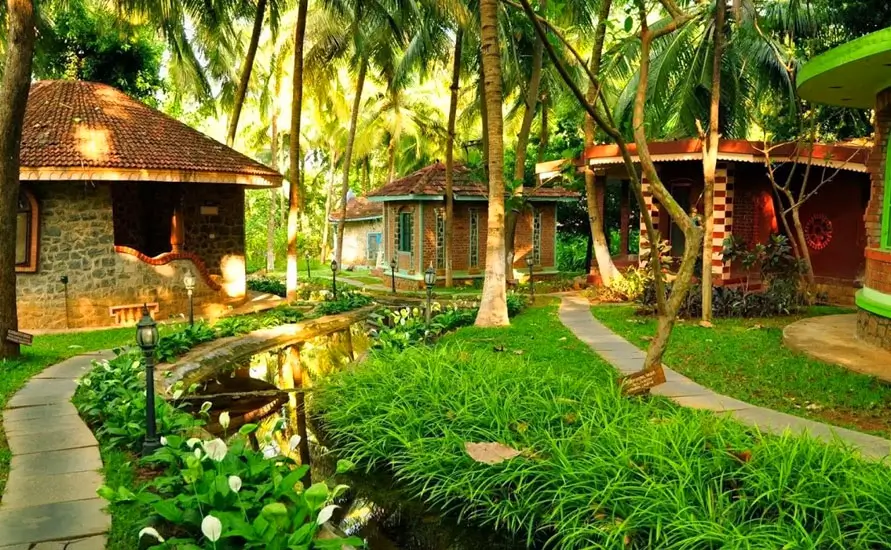
Arrival at the lakeside Ayurveda resort is relaxed: staff greet you with a garland and a warm cup of herbal water, carry your luggage to a cottage among the palms and show you the treatment rooms, an open-sided yoga shelter and the lakeside dining room. After lunch, which is already lighter than anything you have eaten in Kochi, you are free to rest. The resort asks guests to settle in without screens for a few hours, and the hammocks along the water's edge are a good place to try that.
At 4 pm the resident Ayurveda doctor meets you for the first consultation, which usually lasts close to an hour. The doctor reads your health form, takes your pulse, checks tongue and eyes, then asks about appetite, bowel habits, energy at different times of day and emotional stress, and records weight and waist measurements only as reference points. You hear which dosha balance the doctor sees in you and what the therapy plan aims to do, along with what it cannot do. A light soup and steamed vegetables make up dinner. Overnight in Kumarakom.
A soft bell at 6 am marks the start of the daily routine. The yoga teacher meets you in the open pavilion beside the lake for a slow class built on breathing, neck and shoulder release and gentle hip openers, nothing more strenuous than a beginner can manage. Afterwards you sip warm water with a pinch of dry ginger powder, a habit the doctor recommends before meals to wake up digestion. Breakfast is a small plate of steamed puttu with green gram curry and papaya, served at 8 and eaten slowly without a phone on the table.
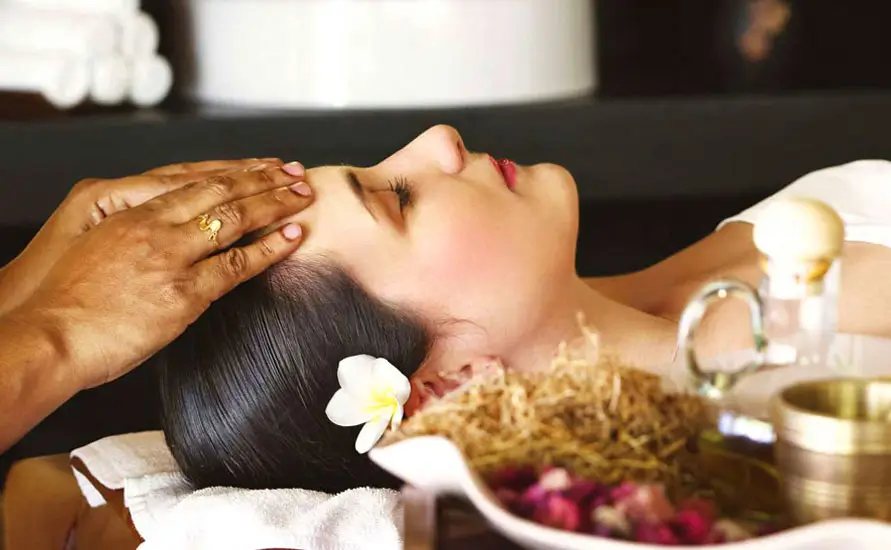
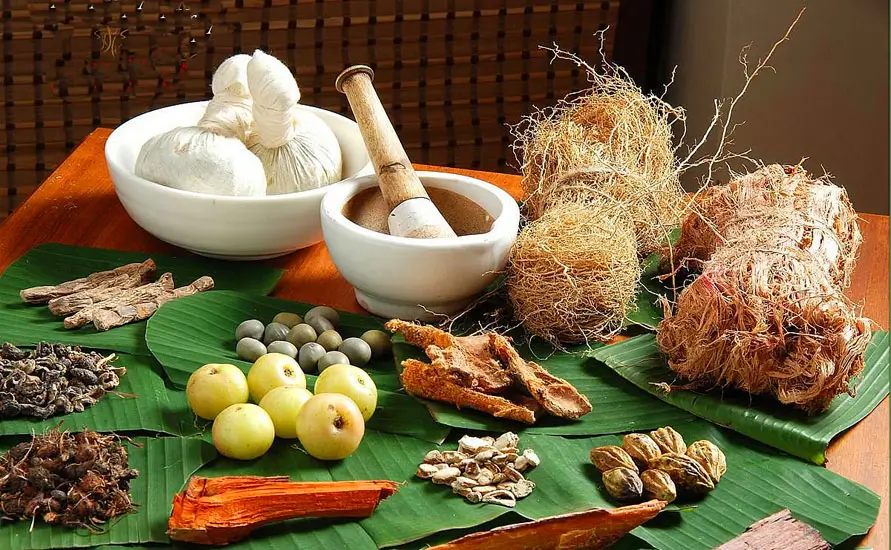
Around eleven comes your first udvartanam massage. Two therapists rub a warm powder made from ground herbs and grains, often horse gram and triphala based, over the body in brisk upward strokes, against the direction of the hair. It feels quite different from an oil massage, firmer and drier, and leaves the skin tingling. Ayurvedic texts describe udvartanam as a therapy traditionally used to reduce excess kapha and to stimulate circulation, though how anyone responds varies. A warm shower with a herbal bath powder follows after twenty minutes of rest.
Lunch is the biggest meal of the day, as Ayurveda advises when digestive fire is strongest: red rice in a modest portion, a thin lentil dal, a stir-fried vegetable with grated coconut, buttermilk spiced with curry leaves and a small salad. Around five, a forty-minute walk along the resort's lakeside path follows the resort's lakeside path, paced by a staff member. The doctor visits briefly before dinner to ask how the first therapy felt and if hunger is nagging you, which is normal on the first day. Overnight in Kumarakom.
Instead of the usual class, the day starts with an early walk to the Kumarakom Bird Sanctuary with a local naturalist, a strip of mangrove and tall trees along the lakeshore once planted as a rubber estate. Herons, cormorants, darters and kingfishers are often seen here, and in the winter months migratory species pass through, but nothing is guaranteed and some mornings are quiet. The trail stays level and shady, which suits every fitness level. Back at the cottages, breakfast is oats kanji with a little jaggery and a plate of fresh guava.
The doctor adds a second therapy from today. After udvartanam you sit in a wooden steam box, called a swedana chamber, with only your head outside, while steam from a decoction of herbs warms the body for around ten minutes. In Ayurveda, sweating is a standard part of preparing the body for deeper therapies, and the therapists watch closely so that you never feel faint. Drink the herbal water offered afterwards and lie down for thirty minutes or so. Some guests feel drowsy, others feel unexpectedly energized, and both reactions are common.
The afternoon yoga session introduces pranayama in more detail. The teacher shows you bhastrika and kapalabhati, two energizing breathing techniques, at a gentle pace suitable for beginners, and explains when to avoid them, for example with high blood pressure or during pregnancy. Before dinner, the resort's librarian points you toward a short shelf of English books on Ayurveda, so that you can read up on the terms your doctor uses. Dinner is a millet upma with vegetables followed, if the doctor permits dairy after dark, by turmeric milk. Overnight in Kumarakom.
After morning yoga, focused on standing postures and the warrior series held for a few slow breaths, you meet the doctor for a longer conversation about the doshas, the trio Ayurveda calls vata, pitta and kapha. Using your own pulse readings, the doctor explains how Ayurveda links heaviness, slow digestion and low morning energy to kapha, and why the advice for your body may differ from that for another guest. Questions are welcome, from why you are told to avoid cold drinks to what to eat when traveling for work. Bring a notebook, because many guests later wish they had written more down.
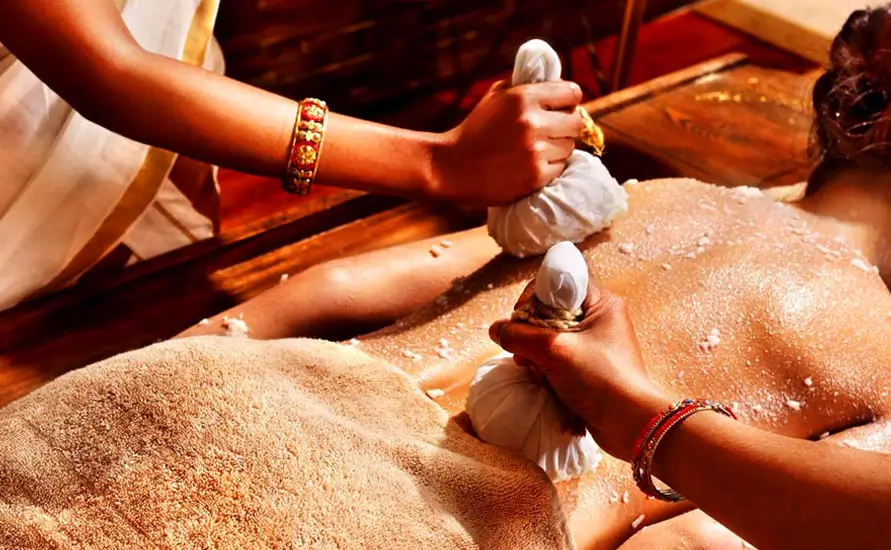
The midday therapy today is podikizhi, a massage using linen bundles filled with warm herbal powder, which the therapists dip lightly in medicated oil and press rhythmically over the body. It is often paired with udvartanam in Ayurvedic weight management plans, and the doctor decides how often you receive it. The bundles are heated on a pan beside the table and swapped every few minutes, so the warmth stays steady. Rest in your room afterwards with the curtains drawn and a jug of warm cumin water, avoiding any heavy activity for an hour.
In the evening the doctor's talk continues as a short group session in the library on meal timing. Ayurveda suggests eating the main meal around midday, keeping dinner early and small, leaving gaps of about four hours between meals and not snacking when not hungry, and the doctor shows how guests from different time zones can adapt this at home. There is also advice on sleep, since many people find that going to bed earlier helps them avoid late-night eating. Dinner is a thin vegetable soup with roti and a small serving of green gram. Overnight in Kumarakom.
Morning practice begins with twelve slow rounds of sun salutation, the teacher counting each breath aloud, followed by a short sitting meditation. After breakfast the resort gardener takes you around the herb garden, a patch of raised beds and shrubs between the cottages, pointing out plants that Kerala households use daily: curry leaf, holy basil, Indian gooseberry, turmeric, ginger, moringa and the coarse leaves of the adathoda shrub. You learn which parts are dried, which are used fresh and how the resort kitchen relies on them for both taste and digestion.
Late morning is devoted to a cooking class led by the resort chef at a demonstration counter beside the lake. You prepare three everyday dishes the low-oil way: a cabbage thoran cooked in a spoon of coconut oil, a moru curry of buttermilk and ash gourd, and a kanji of broken red rice tempered with cumin and dry ginger. The chef explains how Kerala cooks build flavor with mustard seed, curry leaf and coconut without heavy frying, and how to replace refined sugar with small amounts of jaggery. The dishes become your lunch, and printed recipes follow.
No outing is planned for the afternoon, which leaves room for an udvartanam session, a nap and time on your balcony watching the water. Toward evening the yoga teacher holds a restorative class with bolsters and blankets, focusing on the lower back and the legs after a week of new activity. Many guests notice some muscle stiffness at this stage, and the teacher shows simple stretches to ease it. Dinner is early and light, a bowl of the kanji you learned to make, with a spoonful of green chutney. Overnight in Kumarakom.
Today follows a quieter rhythm. If your doctor considers it suitable after the first days of preparation, you may be given a mild virechana, a traditional Ayurvedic purgation therapy, with a herbal preparation taken early in the morning. It is done only on the doctor's advice, never as a standard part of every program, and many guests skip it entirely. If you receive it, you stay close to your room, sip warm water and rice gruel and rest through the day while the staff check on you regularly. If not, the morning brings a light abhyanga oil massage instead.
Whichever plan applies, there is no yoga and no outing today. A staff member brings you a small journal and a list of prompts to think through over the next few hours: what you usually eat when tired, when you feel hungriest, which habits you would like to change at home and which ones feel unrealistic. Writing in the shade by the lake, with only the sound of passing boats, is a calm way to spend the late morning. Some guests prefer to listen to a recorded guided meditation from the resort library instead.
By evening most guests feel tired but settled. The doctor visits each person on the cleanse to check pulse, energy and hydration and to decide on tomorrow's diet, which usually returns gradually to normal meals over two or three days, an approach known as samsarjana krama. Others simply have their usual check-in. Dinner is either thin rice gruel or a light vegetable soup, brought to your cottage on request. A short walk along the lawn under the stars, with a staff member nearby, is the only activity before an early bedtime. Overnight in Kumarakom.
At 6:30 am, with mist still on the water, a boatman from the village paddles a slim wooden country canoe to the resort jetty. For roughly ninety minutes he steers you through narrow channels too shallow for houseboats, past homes where people brush their teeth on the steps, ducks paddle in single file and children wait for the school boat. There is no engine noise, only the dip of the paddle. Wear a hat and bring water, and leave valuables at the resort. You return in time for a late breakfast of idli and sambar.
Mid-morning the doctor checks how you feel after yesterday and, if appetite has returned, gives the go-ahead for a short udvartanam session and normal meals. After lunch, a resort guide walks you to a nearby household where women spin coconut fiber into coir yarn on a simple wheel, a craft that once employed thousands of families around Vembanad. They show you how husks are soaked, beaten and dried before spinning, and you can try the wheel yourself. Buying a small doormat or rope basket is entirely optional and helps the family directly.
The day's yoga comes late, a slow flow on the jetty while the light fades over Vembanad, with the teacher adding gentle twisting postures that are traditionally thought to help digestion. Breathing practice follows, mainly long exhalations to relax the nervous system. After dinner, which tonight includes a small portion of grilled pearl spot fish if your doctor allows it and you are not vegetarian, the resort shows a short documentary on the backwaters and their farming in the library. Most guests are asleep by half past nine. Overnight in Kumarakom.
After ten days in Kerala, it is time for a mid-program review in the doctor's consulting room. Together you look at notes on sleep, digestion, hunger, energy and mood since arrival, as well as the reference measurements taken on day three, and the doctor explains what may be helping and what to adjust. Some guests see a change on the scale and some do not, and both outcomes are common, and the doctor stresses that success here is measured by how well you can keep the new routine at home. The therapy plan for the last days is fixed at this meeting.
The morning yoga session focuses on the core: boat pose held for a few breaths, slow leg raises, bridge pose and plank variations, all modified for people with weak backs or wrists. The teacher reminds you to stop if anything hurts and links each movement to breath. Afterwards comes a longer udvartanam session, about forty-five minutes, with a firmer pressure that many guests now find more comfortable than on the first day. A herbal bath and rest in the shade follow, before a lunch of foxtail millet, beans and a bowl of rasam.
In the afternoon the doctor introduces you to lepanam, a herbal paste applied to parts of the body and left to dry before being washed off, which is sometimes used in Kerala programs alongside powder massage. Later, the resort's nutritionist meets you for half an hour to turn your meal plan into a weekly shopping list using ingredients found in Western supermarkets and Indian grocery stores. Dinner includes a vegetable soup flavored with black pepper and a small portion of steamed red rice, with herbal tea afterwards on the veranda. Overnight in Kumarakom.
After an early yoga class of balancing postures, you drive about twenty minutes to Aymanam, a village on the Meenachil River known to many readers as the riverside world that Arundhati Roy drew on for her Booker Prize novel. A villager acting as guide walks you about two kilometers along canal paths, past old tiled houses, rubber trees, small churches and a temple pond. It is an ordinary working village, not a theme park, so the guide keeps the group small and asks before anyone takes photos of people or homes.
The walk ends at a family home where the hosts serve a cup of black coffee or herbal tea and a small plate of steamed banana, in line with your diet plan. They talk about everyday life on the river, from flooding in the monsoon to the harvest calendar of the paddy fields nearby. Well before noon the car drops you at your cottage, ahead of the hottest hours, for a podikizhi session and lunch. The outing is optional, and anyone who prefers to stay can have an extra rest morning or a walk around the resort grounds instead.
The afternoon is left almost empty on purpose. The doctor encourages a long rest, reading by the lake and a gentle walk before sunset, since too much activity can work against the therapies at this stage. In the evening a meditation teacher guides a session of yoga nidra, a deep relaxation lying down with a voice leading attention through the body. Many guests report it as the most restful part of the week. Dinner is a millet roti with dal and sautéed greens, and the cottage lights go off early. Overnight in Kumarakom.
Early in the morning, the yoga teacher takes you out of the resort for a walking meditation on the mud embankments, called bunds, that divide the paddy fields of Kuttanad, some of which lie below sea level. You walk slowly and in silence for about thirty minutes, paying attention to each step, the sounds of birds and the smell of wet earth, then sit for ten minutes on a small bench above the water. It is a simple practice you can repeat on any walk at home, and the teacher explains how to adapt it to city streets.
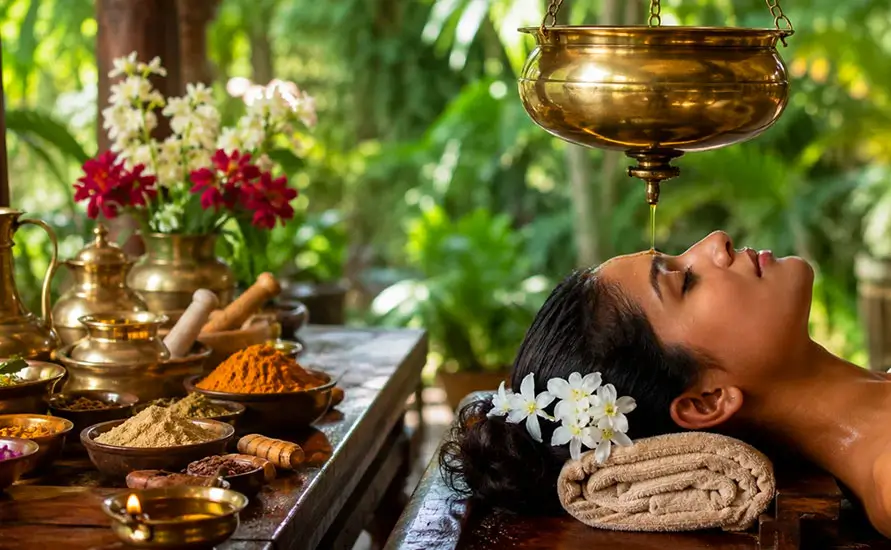
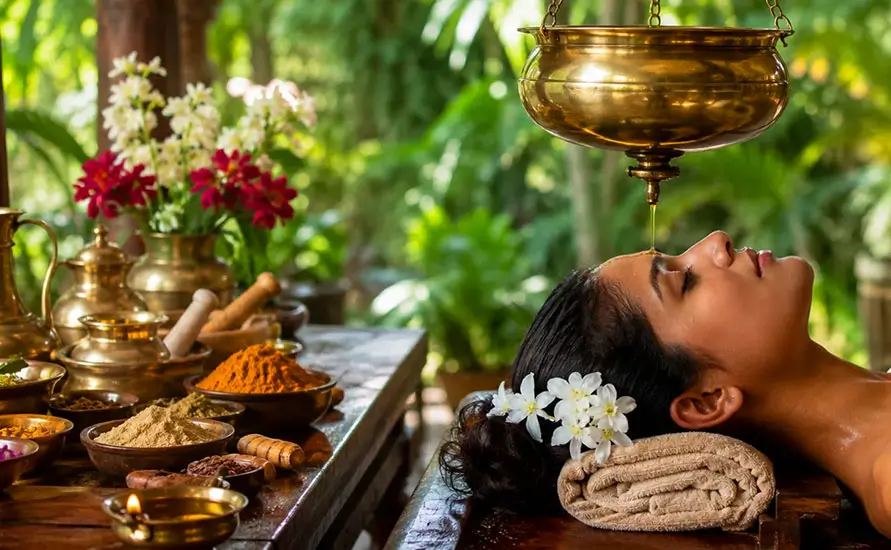
Late in the morning, the doctor schedules shirodhara, in which the therapist swings a pot so that lukewarm herbal oil, or sometimes spiced buttermilk, trickles to and fro over the forehead for about half an hour. It is not a weight-related therapy, but it is often included toward the end of programs because many guests find it calming after days of active treatment. You keep your eyes closed, breathe slowly and may feel close to sleep by the end. Afterwards the therapists ask you to rest without washing your hair for a few hours and to keep cool air away from the head.
No other treatment follows today. Lunch is light and early, and the afternoon is free for packing ideas into your journal, a short swim if the doctor agrees, or a slow walk around the herb garden. In the evening the cook prepares a small tasting of dishes you have eaten during your stay, together with tips on preparing them in a smaller kitchen, while the yoga teacher records a personal sequence for you on a printed card. Staff suggest lights out by nine so the final day can begin fresh. Overnight in Kumarakom.
The last morning class pulls together the routine you have built over ten days: joint movements, sun salutations, a few standing postures, core work, twists and breathing, about forty-five minutes in all. A final udvartanam session follows, shorter and lighter than in the middle of the program, and then a warm herbal bath. Breakfast is a small plate of ragi dosa with tomato chutney and a slice of pineapple, and the staff ask what dishes you would like to see again at lunch, which becomes a quiet farewell meal on the lakeside terrace.
Early in the afternoon comes the final consultation, an unhurried hour in the doctor's room. You go through the journal entries, the measurements and the advice from the review and receive a written plan for the next three months with meal timings, foods to favor and avoid, a daily yoga sequence and simple home remedies. If the doctor suggests Ayurvedic medicines to continue at home, these are explained clearly and charged separately, and you are free to decline them. Please show them to your own doctor before use, especially if you take prescription medicines.
At around five you board a covered motorboat for a short sunset cruise on Vembanad Lake, gliding past fishing canoes, clam collectors and the long lines of stakes that mark old fishing grounds. The boatman cuts the engine once you are far from the shore so you can sit quietly while the western sky colors behind the palms. Back at the resort, the therapists, cooks and yoga teacher come out to say goodbye, and dinner is early so you can pack and rest before the drive to the airport. Overnight in Kumarakom.
A last cup of warm ginger water and an early breakfast see you off from the lake. Pickup is timed backward from your flight: the northbound road to Cochin International Airport needs around two hours, more in traffic, plus three hours at the terminal for international check-in. If you like, a halt can be made at a government-run spice outlet if you want cardamom, black pepper or turmeric for the recipes you learned. Very late flights can be matched with a paid day-use room near the airport, and our office phone stays answered until take-off.
Your Journey

N.S. Rathore & Mrs. Omlata Rathore · Managing Director
We still read every enquiry ourselves. Tell us the places you liked and our planners will send a day-by-day route with drive times and a clear price.
Every package can be customised and no pressure to book. A planner from our office replies within 24 hours with a route written for your group.
Fill this in and your planner will send a first draft itinerary.
Explore more
Kerala Backwaters Escape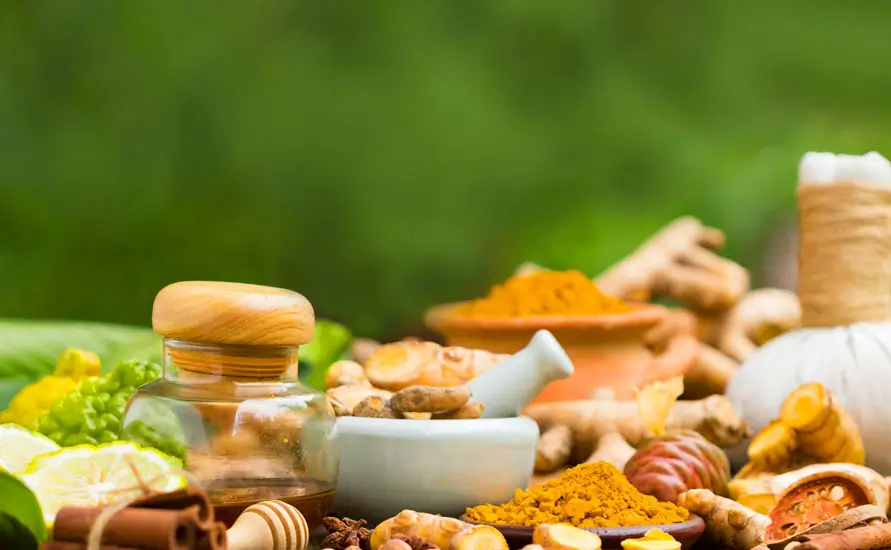 Kerala Backwaters Escape
 Kerala Backwaters Escape
 Kerala Backwaters Escape
 Kerala Backwaters Escape
 Kerala Backwaters Escape
 Kerala Backwaters Escape
 Kerala Backwaters Escape
 Kerala Backwaters Escape
 Kerala Backwaters Escape
 Kerala Backwaters Escape Kerala Backwaters Escape Kerala Backwaters Escape Kerala Backwaters Escape Kerala Backwaters Escape Kerala Backwaters Escape Kerala Backwaters Escape