
 Kerala Backwaters Escape

Ayurvedic Tour Packages
Kochi – Ayurveda centre (Thrissur / Kottakkal region)
At a glance
Kerala's old Ayurveda families have always said that the five cleansing procedures of Panchakarma need time, and four weeks is the span most traditional physicians prefer. Our Panchakarma detox program 28 days follows that classical order at a residential Ayurveda center in central Kerala, either around Thrissur or in the Kottakkal region of Malappuram district, two areas long known for their physician lineages. After one rest night in Kochi, you spend twenty-six nights at the center, moving step by step through preparation, internal oiling, the main procedures and a slow return to normal food.
A resident physician holding the BAMS degree runs your program from start to finish, examining you on admission, visiting each morning on rounds and rewriting the schedule whenever your responses call for it. Procedures such as virechana, basti and nasyam are given only when the doctor judges them suitable, and some guests follow a gentler path. The name of the program reflects the traditional aim of classical Panchakarma, which is described in the texts as cleansing and rebalancing; we do not promise any medical result, weight change or cure. Please share your full medical history, and keep your own doctor informed before and after.
Our 28-day Panchakarma is meant for international guests, whether American, Canadian, British, European or Australian, and for NRIs who can finally set aside a whole month, on the understanding that sightseeing is close to zero. Alcohol, smoking, late nights and heavy exercise stop for the whole stay, meals are simple therapeutic vegetarian food, and the main phase means resting close to your room. Short outings happen only in the first and last week. Local families have long chosen Karkidakam, the rainy Malayalam month that spans late July and early August, while visitors wanting dry weather tend to book between October and March.
Long flights and a month of treatment do not mix well on the same day, so the program begins with a full night in Kochi before you travel on to the center. Our driver stands by the arrivals exit at the Nedumbassery airport with your name on a sign, then takes you, in an air-conditioned car reserved only for you, to a comfortable hotel close to the water in Fort Kochi or Ernakulam. Landing before dawn? Book the previous night's room through us as well, and a bed will be ready the moment you arrive. There are no plans today beyond rest, water and light food.
Use the free hours to get organized for the weeks ahead. Gather any recent blood reports, scans, prescriptions and a written list of the medicines you take, with doses, because the Ayurveda doctor will ask for all of them tomorrow. Loose cotton clothes, a pair of slippers, a light shawl for oiled hair and a few books are more useful at the center than smart outfits. Should you need an Indian phone number or a couple of cotton kurtas, our local coordinator knows the right shops in town. If you are a smoker or drink regularly, now is a sensible moment to start cutting back.
Toward evening, energy permitting, a gentle stroll by the water near the old fishing nets is the one outing on today's plan. Ferries cross the harbor to Vypeen, cormorants dive between the moored boats, and local families line up along the promenade wall as the western sky over the Arabian Sea fades from gold to pink. Keep dinner simple, perhaps a vegetable stew with appam or a South Indian thali without heavy fried items, and skip the beer. An early night helps your body clock settle before the drive north, and the hotel can pack a light breakfast if you want to leave early. Overnight in Kochi.
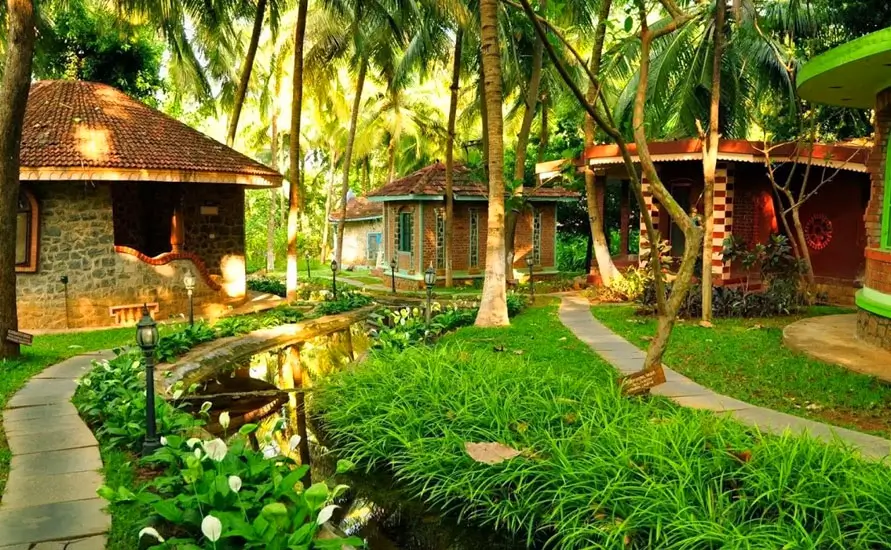
After breakfast your driver takes you north on the national highway toward the center, past Aluva, Angamaly and the rubber and banana plantations of central Kerala. A center near Thrissur is usually reached in under two hours, while one in the Kottakkal area, further north in Malappuram district, takes closer to four, with a break for chai at a roadside stall. Traditional Ayurveda centers in this belt tend to be quiet compounds of tiled-roof cottages, treatment rooms with wooden tables and a medicinal garden, and the pace inside feels closer to a village than a holiday resort.
Admission begins with paperwork and a tour of the grounds, then the first meeting with your Ayurveda doctor. This opening conversation covers your reasons for coming, your medical history, current medicines, sleep, digestion, bowel habits, stress levels and diet back home. The doctor is frank that Panchakarma is demanding, that a procedure unsuited to you will simply be dropped, and that no question is ever a bother. You are also introduced to the senior therapist who will look after you, and to the house rules about alcohol, tobacco, visitors and quiet hours.
Lunch on arrival is simple: red rice, a thin vegetable curry, buttermilk and a little pickle, served at a fixed time like every meal from now on. In the afternoon you unpack and rest, and later wander the compound, where the smell of kashayam decoctions drifts from the pharmacy and chanting may carry from a small shrine. The doctor visits once more before dinner with a short list of instructions for tonight, usually warm water only after seven and lights out by ten. Treatment proper starts tomorrow. Overnight at the Ayurveda center.
Morning rounds today are long, because the doctor completes the classical eightfold examination known as ashtavidha pariksha. This includes reading the pulse at the wrist (nadi pariksha), looking at the tongue, eyes and skin, listening to the voice and asking detailed questions about urine and stools. Your blood pressure and weight are noted, and if the doctor wants a recent blood test, a local laboratory can take a sample at the center. These findings let the doctor describe your inborn makeup (prakriti) and the current disturbance (vikriti) through the lens of vata, pitta and kapha.
Shortly before lunch you receive a written outline of the four weeks and talk it over with the doctor. It lists the phases in order: a few days to prepare digestion, then internal oiling, external oiling and steam, the main procedures, and finally a careful return to normal food. Dates are shown as approximate, since the doctor moves each step only when the body is ready. You will also receive a diet chart for the kitchen. Ask about anything that worries you, including what happens if you feel unwell, and how to reach the doctor at night.
The first light therapy follows in the afternoon, usually a light full-body abhyanga using an oil matched to your body type, so that you get used to the treatment room and the therapist's hands. Later, the yoga teacher holds a short introductory class to see how you move, asking about old injuries and adapting poses for stiff knees, weak backs or high blood pressure. Evenings here are uneventful by design; reread the printed plan, or ring family overseas. Many guests find the first proper night here deeply restful. Overnight at the Ayurveda center.
Panchakarma texts insist that digestion must be working well before oil is taken internally, so the next two days focus on deepana and pachana, two words for kindling the digestive fire and helping the body process what it has already taken in. In practice you sip warm herbal decoctions or swallow small tablets before meals, at times set by the doctor. Some taste bitter or peppery, and the therapist will show you how to take them with a little warm water. Your appetite may sharpen by evening, which is exactly what the doctor hopes to see.
Food during this short phase is light and easy to digest: rice gruel with green gram, steamed vegetables, thin lentil soups and warm water flavored with dried ginger or cumin. Raw salads, cold drinks, yogurt, sweets and fried food are left out, and portions stay moderate. The cook comes out to your table at lunch to explain what is on the plate and why, and to ask whether the spice level suits you. This is a good moment to tell the kitchen about any allergies or foods you cannot eat, so the diet chart can be adjusted early.
Yoga this morning is built around easy twists and forward bends that support digestion, with plenty of rest between poses. In the afternoon the doctor might add a short dry powder massage or a light herbal steam, depending on what was found yesterday. The rest of the day is unhurried. Guests often spend it reading on a cottage veranda, watching the sunbirds in the hibiscus or sleeping after lunch, which the center encourages. Before dinner the doctor checks your tongue and asks how your stomach feels, then confirms tomorrow's doses. Overnight at the Ayurveda center.
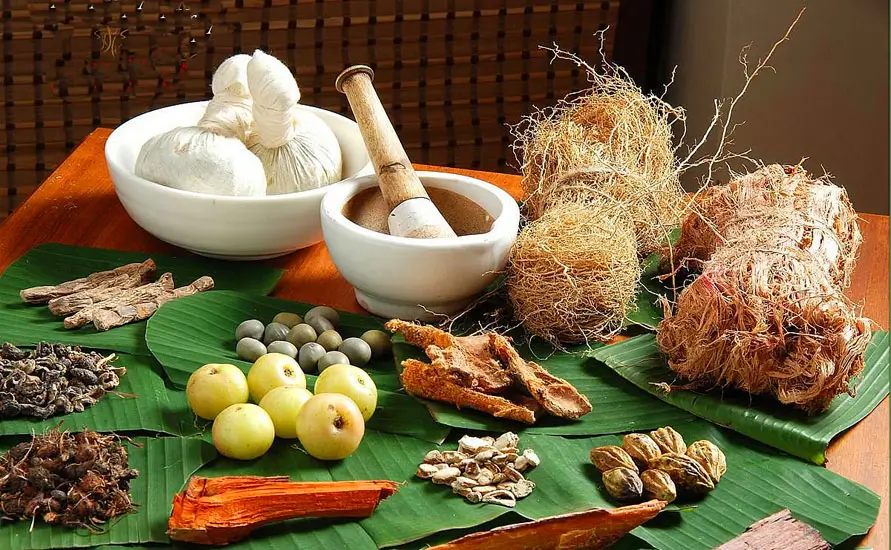
Today is the last stretch of free movement before the main phase, and the center uses it to show where your treatments come from. With one of the pharmacists you visit the medicine-making unit, where large bronze vessels simmer oils for hours over wood fires and workers grind roots and barks into pastes. The pharmacist explains how a medicated oil is cooked slowly with a herbal decoction and paste until only the oil and the plant properties remain. Photography rules vary from unit to unit, so ask before taking pictures inside the processing areas.
Back outside, a gardener leads you along the beds of the herb garden, where small boards give each plant's Malayalam, Sanskrit and Latin names. You might see the bitter leaves of neem, the climbing stems of guduchi, the spiky shatavari, the small-leaved brahmi in wet beds and the tall shrubs of adhatoda. Each one turns up later in your decoctions, oils or poultices. Your digestive herbs continue at the usual times, lunch is again light, and the doctor's afternoon visit includes a short talk about what to expect from internal oiling over the next days.
In the late afternoon, if the center is close enough, your driver takes you out to the Bharathapuzha, the long river of central Kerala whose banks have nurtured poets, musicians and physician families for centuries. The wide sandy banks fill with children playing football and cattle being bathed as the light softens. Any temple you pass is best seen from outside unless the custom welcomes visitors, and the doctor may ask you to skip the trip if your energy is low. Dinner is early, since tomorrow's ghee is taken at dawn. Overnight at the Ayurveda center.
Purvakarma, the preparation phase, now moves inside the body. Snehapanam is the drinking of herbal ghee or oil at dawn, before any food, in a dose that starts small and climbs each morning. The therapist brings your measured dose in a small cup at around six, warmed so it pours easily, along with hot water to rinse your mouth afterward. The taste is rich and herbal, and some people find it hard to swallow at first. A slice of lemon or a pinch of rock salt afterward is allowed only if the doctor says so.
After the dose, the rule is simple: sip only warm water when thirsty, avoid lying flat for a while and do not eat until you feel real hunger, which usually means a late, light lunch of thin rice gruel. The doctor visits twice today to check your pulse and ask about any nausea, headache or belching, and keeps a note of how long the ghee takes to digest. That timing guides tomorrow's dose. Morning yoga is replaced by slow walking in the shade and a few gentle stretches, since strenuous movement is discouraged during internal oiling.
Afternoons in this phase are for staying calm and warm. Avoid cold water, fans blowing directly on you, daytime naps of more than a short rest and strong sunshine. Many guests use the time to read, write letters or listen to music, and the center library usually holds books on Kerala, Ayurveda and Indian philosophy in English. Dinner is light and early, sometimes just rice gruel with a little ginger, and the doctor may advise you to go to bed sooner than usual. Do not worry if your appetite feels odd; it is expected. Overnight at the Ayurveda center.
Your second morning cup of ghee is larger than the first, measured against how quickly you digested yesterday's dose. Sit quietly for a few minutes after swallowing it, breathe slowly through the nose and keep a flask of hot water beside you, refilled by the staff through the day. The warm water rule matters more now: cold drinks are said to slow digestion of the ghee, so even brushing your teeth and washing your face are done with warm water. A therapist may give you a hot cloth to hold against your stomach if you feel uneasy.
By mid-morning the doctor checks your progress on rounds and asks several specific questions: When did hunger return? Is there any heaviness in the head? How are your stools? Answers are noted carefully, and nothing is too embarrassing to mention, because the doctor relies on these signs to plan the next steps. Some guests feel a little lazy or sleepy on day two, and others are surprisingly alert. The doctor also reminds you that there is no prize for drinking the most ghee; the right amount is the amount your body can handle.
Since activity is limited, the center offers a short session on meditation in the afternoon, sitting on a low stool or chair rather than cross-legged if your hips prefer. For ten minutes you follow the cool air entering the nostrils, for ten more you listen to the garden around you, and the session closes in plain silence. Tea is replaced by a mild herbal drink, and dinner is again a small bowl of rice gruel. Light reading in bed and a phone switched off on the far side of the room make sleep easier. Overnight at the Ayurveda center.
On the third morning of internal oiling, the doctor begins looking for what the classical texts call samyak snigdha lakshana, the signs of proper oiling. These include a soft, glossy feel to the skin, oily stools, a lightness in the body, clear hunger after the ghee digests and sometimes a mild aversion to fat. Not everyone shows all signs, and they can take anywhere from three to seven days to appear. Your dose rises once more today, and the therapist records the exact time of each cup so the doctor can track the pattern over the week.
Many guests notice the first physical changes now. Skin may feel smoother, hair a little oily even before any massage, and some people report vivid dreams or a calmer mood, while others feel briefly irritable or tired. Both reactions are discussed openly on rounds, and the doctor can lower the dose or pause if needed. A few gentle breathing exercises replace yoga postures this morning: slow abdominal breaths, a soft humming bhramari and long exhalations. They take ten minutes and can be repeated in the evening, sitting up in bed.
Lunch might be kanji with a spoon of green gram and a small serving of steamed ash gourd, kept plain so that it does not compete with the ghee. In the afternoon the doctor offers a short talk at your cottage on the reasons behind internal oiling: according to Ayurveda, the ghee is meant to loosen and gather imbalanced doshas so the main procedures can move them out. Keep the lights low after dinner and avoid screens late at night, because restful sleep supports this phase more than anything else. Overnight at the Ayurveda center.
By the fourth morning the ghee ritual feels familiar, even if the taste does not get easier. The dose may rise again or hold steady, depending on yesterday's notes. Today's plan contains almost nothing else, by design, because the body is doing a lot of quiet work. Guests sometimes worry that an empty day is wasted, but in Panchakarma the rest itself is treated as part of the medicine. Stay near your room, keep warm, avoid long conversations or phone calls that leave you tired, and drink warm water whenever thirst comes.
Midday rounds bring the doctor's assessment of your progress so far. If clear signs of proper oiling have appeared, the doctor may decide that tomorrow will be the last day of ghee; if not, the course can stretch a day or two longer. You might also have a quick weight and blood pressure check. Bring up anything practical now, whether broken sleep, constipation or simple homesickness; the staff have seen it all before. For guests who feel anxious, the doctor can suggest a calming herbal drink or simple breathing practice.
In the afternoon try the center's letter-writing habit: many long-stay guests write one letter or journal entry a day describing how body and mind feel, which later helps when talking to the doctor or to your own physician back home. The staff can lend you a notebook and pen. As the sun drops, the village grows noisy in its own way: distant temple drums, a bicycle bell, mynas squabbling as they settle in the trees beyond your veranda. Dinner is the usual light gruel, followed by early sleep. Overnight at the Ayurveda center.
For most guests this is the final morning of snehapanam, although the doctor makes the call based on your signs. The last cup is often the largest, so take it slowly and sit upright for a while afterward. Hunger may take longer to return today, and you may feel full or heavy until afternoon. The kitchen waits for your signal before sending lunch, which is usually a thin rice soup. If you feel nauseous, tell the therapist at once; a small change in posture, warm water or a short walk in the shade often helps.
Rounds today are followed by a fuller review in the doctor's room. Together you look back at the past week: the doses, the time each took to digest, sleep, mood, skin and stool changes. The doctor then explains the next phase, a few days of full-body oil massage and herbal steam, and the main procedure that will follow it. For most guests that means virechana, a supervised purgation. The doctor also talks about vamana, therapeutic emesis, which is given only if clearly indicated and is often not part of a program for overseas visitors.
The afternoon is for complete rest. Pull the curtains, lie down for an hour without screens and let the house cat or the garden squirrels keep you company on the veranda afterward. In the evening the yoga teacher may stop by with a short, guided relaxation you can do lying on the bed, moving attention slowly from the feet to the crown of the head and back. Dinner is light and early again. Before sleep, look back through the past five days of your notebook, and note any questions for tomorrow's rounds. Overnight at the Ayurveda center.
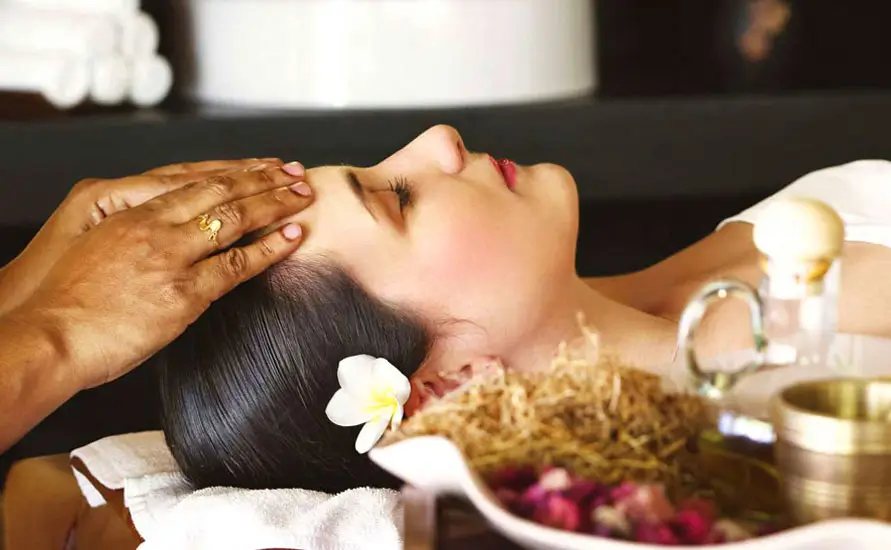
With the internal oiling finished, the next stage works from the outside in. Two therapists give you a long abhyanga, applying warm medicated oil from the scalp to the soles in steady, matched strokes, with special attention to the joints and the lower back. The oil used now is often different from the one in your first week, chosen by the doctor for this stage. After about forty-five minutes you move into a wooden steam cabinet for bashpa swedana, a sweating treatment with vapor from boiled medicinal leaves, while your head stays outside with a cool cloth on the forehead.
According to Ayurvedic theory, oil followed by heat is meant to soften and move the doshas loosened by the ghee toward the digestive tract, from where the main procedure can clear them. In simple terms, you will sweat a good deal and probably feel very relaxed afterward. Sip warm water and stay lying down a good half hour, then bathe using the green gram powder supplied, which lifts oil far better than soap. The doctor checks you before and after, watching for dizziness, since steam can drop blood pressure in some guests.
Food returns to near-normal portions today, though still simple and vegetarian, and some doctors deliberately add softer, slightly heavier dishes in the days before virechana. Lunch could include rice, a mild yellow dal, carrot and beans cooked with grated coconut, and a spoon of ghee. Steady on your feet? Then a slow circuit of the grounds is fine before dusk. The yoga class resumes in a very gentle form in the evening, mostly lying-down stretches and long, slow breathing. A hot water bottle may be offered at bedtime. Overnight at the Ayurveda center.
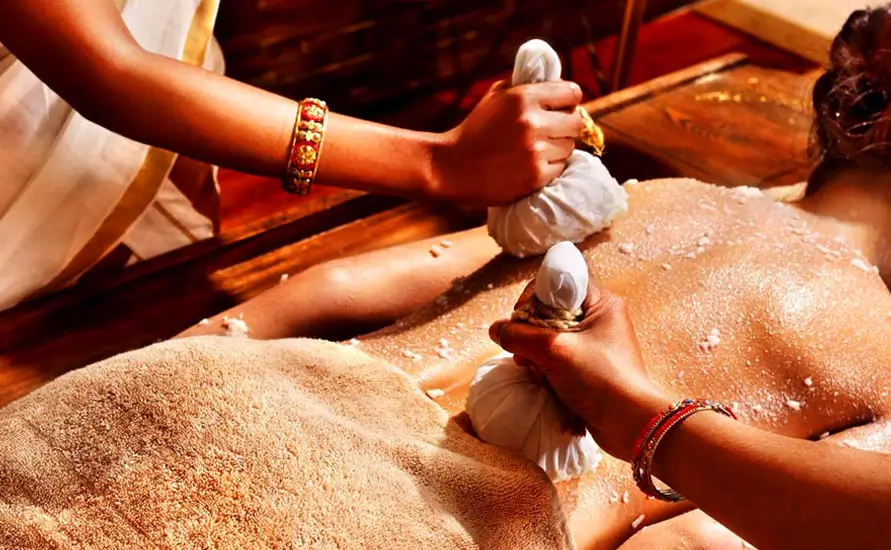
Today's massage follows the same rhythm, but the heat treatment changes. Instead of the steam cabinet, the therapists may use pinda sweda, warm cloth bundles of herbs or rice dipped in hot oil or milk and pressed in circular strokes over your body. Each therapist keeps a pan of liquid warming on a small stove and swaps the bundles often to hold the temperature steady. The pressure is firm but never painful, and you can ask for it lighter or warmer. An hour later you lie swaddled in a thin cotton sheet for a while before the usual herbal bath.
Late morning the doctor holds a longer conversation about the three doshas and how they are thought to behave in your body, using your own assessment from the first week as an example. Vata, linked with air and movement, pitta with heat and digestion, and kapha with structure and moisture are explained in everyday language, with examples from your sleep, appetite and moods. The aim is not to make you an expert but to help you understand the diet and routine advice you will take home. Questions are welcome, including skeptical ones.
The afternoon is free, and most guests sleep or read. Restless guests are sometimes welcome to watch the therapists make up tomorrow's herbal bundles, chopping leaves, grating coconut and knotting the cloth with practiced speed. Dinner tonight is a soft, slightly richer meal than usual, as the doctor prepares your system for the procedure ahead. You are asked to avoid any heavy reading, arguments or stressful calls this evening, and to tell staff about any change in sleep or digestion, however small or odd it seems to you. Overnight at the Ayurveda center.
A third day of abhyanga and swedana completes the external preparation. Many guests say this is the most relaxed they have felt so far, with muscles soft and the mind slower than in the first week. The therapists finish with a short head massage and a few drops of oil on the crown, then guide you to the steam. Afterward the doctor examines you carefully, checking pulse, tongue and abdomen, and decides whether virechana will go ahead tomorrow. If the signs are not right, it moves by a day, and the plan simply shifts.
In the afternoon the doctor briefs you on virechana in detail. You will swallow an herbal purgative soon after waking, before any food, after which you will pass several loose stools over the following hours as the medicine works. A therapist stays close by, records each movement and brings warm water and, later, rice water. The doctor explains the warning signs to report immediately, such as dizziness or cramps. Raktamokshana, the traditional bloodletting procedure, is mentioned only for completeness; it is used only for specific conditions and only if the doctor advises.
Tonight's dinner follows the doctor's instructions and is often a little softer and warmer than usual, sometimes with extra ghee or a sweet dish, to set the stage for tomorrow. Go to bed early, because the purgative is given soon after dawn. Keep a light shawl and slippers by the bed, and make sure the bathroom path is clear and the light switch easy to find. If you are anxious, the therapist on night duty is happy to talk, and a few rounds of slow breathing usually settle the nerves. Overnight at the Ayurveda center.
Shortly after sunrise the doctor arrives to check your pulse once more and then gives the virechana medicine, which may be a decoction, a paste or tablets with warm water. You are asked to stay in or near your room for the day, resting on the bed between bathroom visits and sipping warm water when thirsty. The therapist on duty notes the number and nature of the stools on a chart, because the doctor uses this to judge whether the procedure has been adequate. Most of the effect is over by early or mid-afternoon.
Expect to feel tired and a little empty, but not unwell. If you notice dizziness, a racing heart, strong cramps or any symptom that worries you, press the call bell; doctors and nurses are on site throughout this day. Reading, music and quiet conversation are fine, while television, long phone calls and work email are best left aside. A hot water bottle on the stomach can be comforting. Toward afternoon, once the doctor confirms the procedure is complete, you may be given a warm shower and fresh cotton clothes, which feels better than it sounds.
Food returns slowly this evening, guided by the doctor. The first meal is usually just peya, the thin liquid from cooked rice, served warm in a small bowl, and that is all for now. Do not be tempted by snacks or fruit, even if you feel hungry, because the gut is considered especially delicate after virechana. The doctor visits again before dark to check your pulse and energy and may give a mild herbal drink. Sleep comes easily for most people after this long day. Overnight at the Ayurveda center.
The day after virechana begins the samsarjana krama, a graded diet that Ayurveda considers just as important as the procedure itself. The idea is to rebuild digestive strength step by step, much as you would feed a small fire with twigs before adding logs. Breakfast and lunch are peya again, thin and warm, and the evening meal may move up to vilepi, a slightly thicker rice porridge. Portions are small, salt is light and spices are minimal. Your appetite will be watched closely, and the doctor adjusts the steps according to how well you digest each meal.
Treatments pause for now, so the morning has space for gentle pranayama on the veranda with the yoga teacher. You might practice slow diaphragmatic breathing, short rounds of alternate-nostril breathing and a few minutes of simple observation of the breath, all seated. Energy tends to be low, and the teacher keeps the session to twenty minutes. Later the doctor visits on rounds to hear how the night went and to examine your abdomen and pulse. Many guests feel light-headed and peaceful at the same time, and both are normal at this stage.
The afternoon belongs to rest. Read, listen to a podcast with earphones or sit in a cane chair watching the light move across the garden, but avoid sun, cold water and tiring visits. If friends or family wish to call, keep it brief. A therapist may give you a light foot massage with oil before bed to help you sleep. Look ahead in the plan and you will see the next main procedure, basti, starting in two days, which the doctor will explain tomorrow. Dinner is a small bowl of vilepi with a hint of ginger. Overnight at the Ayurveda center.
Your second day of graded diet moves a step further. Breakfast might still be vilepi, while lunch introduces akrita yusha, a light green-gram soup without fat or salt, and dinner adds a little seasoning. Portions grow only as your hunger grows, and nobody rushes you. Most guests notice by midday that energy returns quite quickly, and the color comes back to the face. Short walks around the compound are allowed again, staying in the shade and keeping a cotton shawl over the shoulders if the breeze is cool, and turning back as soon as your legs feel tired.
In the late morning the doctor sits with you to explain the basti phase, often described in the classical texts as the most important of the five procedures. A basti is a medicated enema given through a soft tube while you lie on your left side, and there are two main kinds: anuvasana, with warm medicated oil, which is held for some hours, and niruha (also called kashaya basti), with a decoction of herbs, honey, salt, oil and paste, which passes out within the hour. The schedule alternates them over roughly eight days.
Most first-timers feel nervous about basti, so the doctor answers every question directly, from privacy to what it feels like. Only one therapist of your own gender is present, and the procedure itself takes just a few minutes. After the talk you have a gentle yoga session focused on hip openers and relaxation of the lower back, which some therapists say makes basti more comfortable. The evening meal is soft rice with green gram soup, a real treat after two days of gruel. Bed early, as tomorrow begins a new phase. Overnight at the Ayurveda center.
The basti course opens gently with anuvasana, the oil version, which the therapist gives only once you have had a light meal. In the morning you receive a short abhyanga focused on the abdomen, lower back and legs, then a few minutes of warm compresses. After lunch, the therapist helps you lie on your left side with the right leg bent and gives the warm oil slowly through a soft tube. You then lie on your back with your legs raised on pillows for a while, and the therapist gently taps the soles of your feet, a traditional step.
The aim is to hold the oil for several hours, and the doctor will ask when it comes out naturally. Some guests pass it within an hour or two, others the next morning, and both can be normal. Meanwhile, rest in bed with a book, avoid lifting anything heavy and drink warm water if thirsty. The doctor visits in the late afternoon to check how you feel and to note the timing. Food stays simple and mostly rice-based, and you continue with the same diet chart, now slowly returning to full but light vegetarian meals.
Morning yoga resumes in a modified form today, with careful, low-effort poses that avoid strong twists and abdominal pressure, and a long rest at the end. In the evening the meditation teacher may lead a short sitting practice built on counting breaths from one to ten and starting again whenever the mind wanders, which is usually after three or four. Dinner is a plain vegetable curry with soft rice and a cup of herbal tea. Guests often describe this first basti day as far easier than they expected. Overnight at the Ayurveda center.
Today brings the first niruha basti, and because it must be given before food, breakfast waits until afterward. First comes a short oil massage on the abdomen and lower back and a brief steam to warm the body. Then the therapist prepares the basti mixture in front of you, beating together honey and rock salt first, then oil, then the herb paste and finally the warm kashayam, until the mixture is smooth and frothy. The amount is larger than yesterday's oil basti, and you are asked to hold it for a short while before releasing it.
Most guests feel the need to go to the bathroom within half an hour, and the decoction passes along with stools. Afterward you rest, and the therapist serves a warm, light breakfast, often rice gruel or soft rice with a mild soup. The doctor checks the timing and what was passed, then may adjust the next mixture. Some people feel tired and empty after niruha, others light and clear; either way, the day is kept quiet. A warm shower and fresh clothes help, and a short nap before lunch is fine today.
In the afternoon the yoga teacher drops by for a short, seated breathing practice focused on long, smooth exhalations, which many people find calming between procedures. You might also start a simple practice the doctor recommends for home, such as warm water first thing in the morning or a two-minute self-massage of the feet before bed. Dinner is light, and the doctor's evening visit reviews the day. Keep your notebook up to date, since the alternating pattern of oil and decoction can blur the days together. Overnight at the Ayurveda center.
The oil basti returns today, and the doctor adds pizhichil, sometimes nicknamed the oil bath by English-speaking guests. On the wide wooden droni, a team of therapists dips cotton cloths into a pot of warm herbal oil and wrings them out over your body in a continuous flow, stroking lightly with their free hands. Fresh warm oil keeps arriving from the stove so the temperature never drops. A session can last about an hour, and the sensation is quite unlike anything else, often compared to lying in a warm river of oil. Your head is protected with a cotton cap.
Pizhichil is traditionally used to nourish and calm the body during the basti phase, and the doctor may schedule a short series of sessions over the coming days. After the treatment, rest is essential, so you lie on the bed wrapped in a sheet for half an hour before the herbal bath. The oil basti follows lunch, as on day seventeen, with the same position and tapping of the feet. Some guests say the combination of warm oil outside and in leaves them sleepy all afternoon, which is perfectly in order here.
The afternoon is simple: rest, warm water and quiet reading. A brief wander before sunset is permitted, and the gardener may show you which shrubs supplied the leaves for this morning's oils, from the bitter neem by the wall to the castor plants near the gate. The kitchen prepares a small portion of payasam tonight, sweetened with jaggery and cooked with broken rice and a little ghee, as a modest treat and part of the doctor's plan to rebuild strength. Lights out early again, and let the night staff know if you wake up cold. Overnight at the Ayurveda center.
A second niruha basti is given first thing, with the same warm-up massage and steam beforehand. The mixture may be slightly different, as the doctor tweaks the herbs according to your response so far. Once the basti has passed and you have eaten a light breakfast, the day's main therapy begins: njavarakizhi, in which bundles of njavara, a medicinal Kerala rice, are boiled with milk and an herbal kashayam. The therapists dip the bundles in the warm mixture and massage you with them in rhythmic strokes, working from the shoulders down to the ankles.
Kerala physicians have long turned to njavarakizhi to build strength in muscle and tissue, and it often appears in the basti phase, when the body is thought to be at its lowest ebb. The rice paste leaves a soft, slightly sticky layer on the skin, which the therapists scrape away with coconut leaf spines before oiling you lightly again. Allow an hour for the therapy, then rest and a warm bath. Many guests notice that the skin feels very soft afterward, and some say they sleep particularly well on njavarakizhi days, though this varies between people.
With two treatments behind you, the afternoon is deliberately empty. The doctor recommends lying down for at least an hour after lunch, without falling into a long, heavy daytime sleep. You might listen to recorded Carnatic or Sopana music from the center's collection; the slow ragas of Kerala's temple tradition suit the mood. Toward evening the yoga teacher adds a short yoga nidra practice, done lying on your back with eyes closed and a blanket over you. Dinner is rice and a light vegetable curry, with a mug of milk warmed with cardamom and a pinch of turmeric. Overnight at the Ayurveda center.
Three weeks into the stay, today includes a formal review with the doctor, often joined by the senior physician of the center. Your pulse, tongue, weight, blood pressure and notes from the past days are discussed, and you are asked how sleep, mood, digestion and energy compare with your first week. If any tests were done on arrival, the doctor may suggest repeating them, at extra cost. Plans for the final week are confirmed: the remaining bastis, a short course of nasyam and the closing rasayana phase with a gentle outing.
The oil basti follows lunch as usual, and the morning brings a lighter treatment such as a head massage with oil or a short session of shiro abhyanga for the scalp, neck and shoulders. In the late morning you have an hour of guided journaling with the meditation teacher, using three prompts: what has changed since you arrived, what you miss, and what you do not miss about life at home. Many guests find the third question the most revealing. The pages stay private; you do not have to share them with anyone.
By this point the center may feel like home, and conversations with other long-stay guests over meals become part of the day. Topics range from home countries to how each person is handling the program, and the shared quiet of the dining hall creates an easy companionship. Keep the evening calm, with a slow walk around the garden if you feel steady and a herbal tea on the veranda. Dinner is light. Tomorrow brings another decoction basti and a new local therapy for the lower back. Overnight at the Ayurveda center.
Another niruha basti starts the day, with the familiar massage, steam and whisked mixture. Once breakfast is over, the therapist prepares kati vasti: a dough dam of black gram flour is pressed onto the small of your back and filled with warm herbal oil, which sits there like a little pool. Every few minutes the cooling oil is lifted out with a sponge and replaced with warmer oil, and you stay on your front for roughly forty minutes. It is commonly chosen for people who sit at a desk all day or carry stiffness in the lower back.
After kati vasti, the therapists give a short massage of the back and legs and you rest in the room for a while. The doctor visits on the noon round, asks how the back feels and checks your progress through the basti course, now in its second half. Lunch is still simple, though more varied than in earlier weeks, and may include a red rice, sambar with soft vegetables, a beetroot thoran and buttermilk with ginger and curry leaves. The kitchen continues to follow your diet chart, avoiding raw, cold and fried items.
Afternoon yoga focuses on safe, gentle movements for the spine, such as cat-cow stretches on hands and knees, supported bridge pose and lying twists with cushions, all done slowly and with long rests. The teacher explains which of these you can do at home and how to modify them on days when your back is sore. In the evening you might sit with a cup of herbal tea and watch fireflies in the garden after rain. Dinner is early, and the doctor drops by briefly before bedtime. Overnight at the Ayurveda center.
Today mirrors yesterday's local therapy but moves higher up the spine. After a morning of rest and a light breakfast, the therapist builds a dough ring around the back of your neck for greeva vasti, filling it with warm medicated oil for about half an hour. It is often chosen for people with stiffness in the neck and shoulders from long hours at a computer or phone. The therapist then gives a short, firm massage of the shoulders and upper back. The oil basti follows lunch, keeping to the established alternating pattern.
On the midday round, the doctor explains the closing phase of the program in more detail, starting with nasyam in two days and ending with rasayana, a period of nourishing medicines and diet traditionally given after cleansing. Any herbal medicines the doctor thinks you might take home are first discussed now, in principle, so that you have time to think and consult your own physician by email if you wish. Buying is entirely your choice, and a printed ingredient list comes with each product, which makes it easier for your family doctor to check.
In the late afternoon a cook from the kitchen holds a short demonstration on the veranda, showing how to prepare a simple kitchari of rice and split green gram with cumin, ginger, turmeric and a little ghee, a dish many Ayurveda doctors recommend for light days at home. You will also see how to make a basic buttermilk drink with curry leaves and ginger. Recipes are printed in English with ingredient substitutes suitable for supermarkets abroad. Dinner tonight is that same kitchari, served with a cucumber raita. Overnight at the Ayurveda center.
The final basti of the course is usually a niruha, given before breakfast after the usual massage and steam, though the doctor may end with an oil basti depending on your response. By now the procedure feels routine, and many guests are relieved and a little proud to reach the end of the most demanding phase. After it passes, a warm breakfast and a long rest follow. The doctor visits to review the whole basti course and how you have handled it, and confirms the start of nasyam tomorrow morning.
No other procedure is planned today, which leaves space for a longer session of yoga nidra in the late morning. The teacher guides you lying down through a full sequence: setting an intention, rotating awareness through each part of the body, noticing breath and sensations, and resting in stillness for several minutes before coming back. The practice takes about forty minutes, and the teacher provides an audio file you can use at home. Many guests mention it as one of the most useful practices they take away from the program.
Lunch might be a slightly fuller meal, with rice, a mild lentil curry, two vegetable dishes and a spoon of ghee, as the doctor starts to build strength for the closing phase. Afternoon hours pass slowly, watching the daily life of the center from a garden bench: therapists warming oils, gardeners watering herb beds, a pharmacist carrying fresh roots to the medicine unit, and a pair of kingfishers on the pond wall. Before dinner, take a few minutes to write down any changes you have noticed since the basti course started. Overnight at the Ayurveda center.
Nasyam is the procedure for the head and face, and it begins this morning after breakfast. It starts with an oil massage of the brow, cheeks, neck and upper back, followed by hot towels or a light facial steam. Then, lying back with the chin raised a little, you receive a few drops of herbal oil in each nostril. Breathe in gently as instructed and spit out anything that comes into your throat. Your eyes may water and your nose may run for a few minutes, which is normal and usually passes quickly.
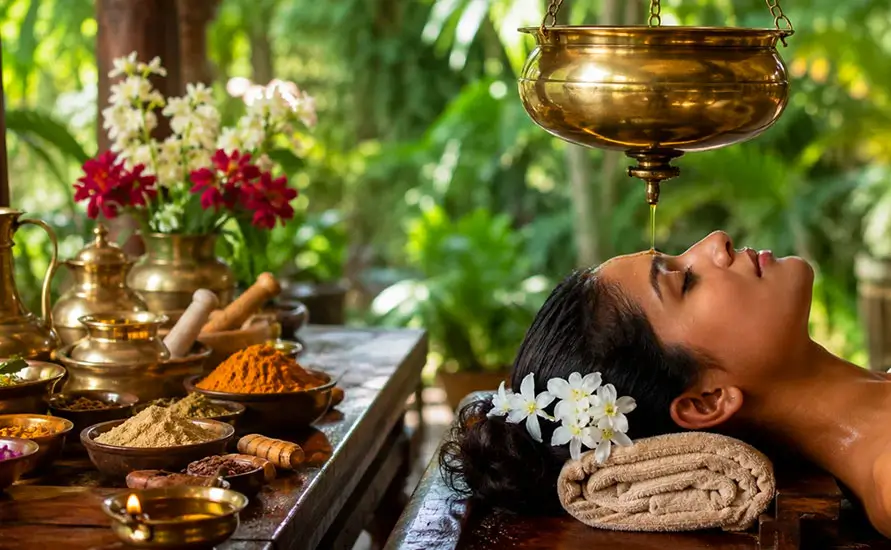
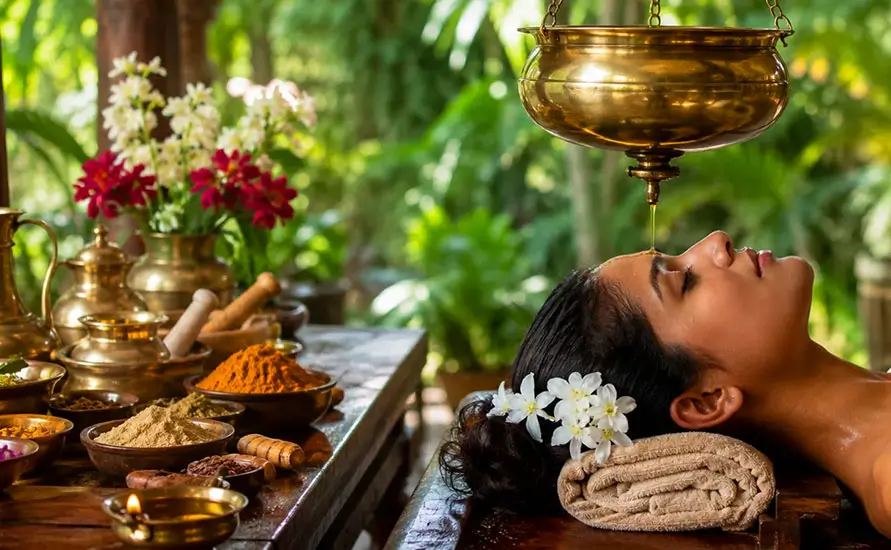
After nasyam, you rest quietly without lying flat, avoid cold air and dust, and drink only warm water. Later the doctor adds shirodhara, in which warm oil or medicated buttermilk flows in a thin line over the brow for most of an hour. In this program it is used near the end as a calming therapy after the more demanding procedures. Many guests drift into light sleep during the session. Afterward keep your head covered when outside and avoid washing your hair with cold water for the rest of the day.
The day is restful overall, and it is common to feel heavy-headed or sleepy after nasyam and shirodhara together. On the evening round the doctor asks about your sinuses and any heaviness, then fixes tomorrow's oil and number of drops. Dinner is light and warm, perhaps a vegetable soup with soft rice or chapati. In the evening, spend a few minutes reviewing your notebook and the questions you want to ask in the final consultation in two days. An early night is encouraged once more. Overnight at the Ayurveda center.
A second session of nasyam follows the same pattern as yesterday, with face massage, steam and drops, and many guests find it easier now that they know what to expect. In the late morning comes netra tarpanam for the eyes, where warm herbal ghee is held over each closed eye inside a little dough rim and you are coached to open and close the lids slowly for several minutes. It is traditionally used for tired eyes, especially in people who spend long hours on screens, and the therapist wipes the ghee away gently before you rest with a damp cotton pad over each lid.
Rasayana, the rejuvenative phase, begins today. The doctor may prescribe a nourishing herbal jam or ghee to take with warm milk or water, along with a slightly richer diet, and explains how rasayana is believed to help the body rebuild after cleansing. You are reminded once more that the program does not aim to treat or cure any disease, and that what you take home should be reviewed by your own doctor, especially if you use prescription medicines. Results from Panchakarma are personal and vary widely, and the doctor will not promise any outcome.
In the afternoon the head cook teaches a lesson on home diet: how to plan simple weekly menus around your dosha balance, what to avoid in the weeks after Panchakarma and how to cook with spices such as cumin, coriander, fennel, ginger and turmeric. The cook also demonstrates Karkidaka kanji, the medicated rice gruel made in Kerala homes during the monsoon month, and explains how a simpler version can be made with ingredients available abroad. Dinner is a small celebration meal, still vegetarian and mild. Overnight at the Ayurveda center.
For the last full day, a gentle outing is allowed if the doctor agrees. Soon after breakfast you set off for Kerala Kalamandalam at Cheruthuruthy, the arts institution beside the river where Kathakali, Mohiniyattam and Koodiyattam have been taught since the 1930s. From a center near Thrissur the drive is about an hour; from the Kottakkal side it can take a little longer. On weekday mornings visitors can often watch classes in the open-sided kalaris, where students practice eye exercises, footwork and drumming. Entry fees, if any, are paid on the spot, and photography rules should be respected.
Back at the center by noon, you eat, lie down briefly and then meet the doctor for the final consultation. Together you go over the entire four weeks: the phases, procedures, notes from your journal and any changes in sleep, digestion, energy and mood. The doctor writes a detailed plan for the next few weeks at home, including a gradual return to normal food, recommended daily routine, exercise, sleep and any herbal medicines you have decided to take. You receive a copy in English and a summary letter for your own doctor.
Evening is for packing and farewells to the therapists, cooks and fellow guests who shared these weeks with you. Many centers hold a small farewell gathering with lamp lighting or a short prayer, and guests often exchange contacts. Settle any extra bills at the office, including medicines you are taking home, extra treatments or laundry. Dinner is light so that you sleep well before the long drive and flight, and the doctor reminds you to avoid heavy meals, alcohol and late nights during the first days back home. Overnight at the Ayurveda center.
After an early breakfast and a final short check by the doctor, your driver takes you back to Cochin International Airport. From the Thrissur side the drive is usually under two hours, and from the Kottakkal area closer to four, and we time the pickup so that you reach the terminal with three hours in hand before an overseas flight. For a flight near midnight, we can reserve a day room by the airport at extra cost, giving you a place to lie down before the long haul.
The weeks after Panchakarma are considered important in Ayurveda, so follow the doctor's advice about food, rest and routine for as long as you can. Keep the written plan and summary letter in your hand luggage, and share them with your own doctor after you return home. If you have questions in the weeks ahead, our team can pass them on to the center. Several of our Panchakarma guests have come back after a couple of seasons for a shorter rejuvenation stay, and our team is happy to arrange one whenever the timing works for you.
Your Journey

N.S. Rathore & Mrs. Omlata Rathore · Managing Director
We still read every enquiry ourselves. Tell us the places you liked and our planners will send a day-by-day route with drive times and a clear price.
Every package can be customised and no pressure to book. A planner from our office replies within 24 hours with a route written for your group.
Fill this in and your planner will send a first draft itinerary.
Explore more
Kerala Backwaters Escape Kerala Backwaters Escape
 Kerala Backwaters Escape
 Kerala Backwaters Escape
 Kerala Backwaters Escape
 Kerala Backwaters Escape
 Kerala Backwaters Escape
 Kerala Backwaters Escape
 Kerala Backwaters Escape
 Kerala Backwaters Escape
 Kerala Backwaters Escape Kerala Backwaters Escape Kerala Backwaters Escape Kerala Backwaters Escape Kerala Backwaters Escape Kerala Backwaters Escape Kerala Backwaters Escape