
 Kerala Backwaters Escape

Ayurvedic Tour Packages
Chennai – Pondicherry – Auroville
At a glance
Some travelers want a holiday that leaves them calmer than when they arrived, not more tired. Our Ayurveda and Meditation Retreat Auroville is built for exactly that wish. After a night in Chennai and two slow days in Pondicherry, where the Sri Aurobindo Ashram sets the tone with silent meditation, you settle for five nights at a small wellness retreat on the green edge of Auroville. There, a qualified Ayurveda doctor plans your daily therapies, and morning yoga and evening meditation give each day a steady rhythm that is easy to keep.
The pace is deliberately gentle. Only two drives of any length are involved, the coastal road from Chennai to Pondicherry and the return to the airport on the last morning, and the short hop from Pondicherry to Auroville takes about half an hour. Sightseeing is limited to places that suit a reflective trip: the ashram, the quiet streets of the French Quarter, the Matrimandir viewing point and a few Auroville workshops and farms. Afternoons at the retreat are kept free for rest after treatment, reading and walks under the cashew and neem trees.
Guests on this Auroville Ayurveda retreat tend to be overseas visitors wanting a quiet first week in India, or NRIs adding calm days in Tamil Nadu around family visits. No earlier knowledge of yoga or meditation is needed, and every session is adapted to your body. The program is not a medical cure: therapies aim to support rest and balance, and you should share your medical history and keep following your own doctor's advice. For this meditation retreat in India, the drier, cooler months from October through March suit most guests best.
Your welcome in Chennai is simple: a smiling colleague of ours holding up a card that spells out your surname, a hand with the suitcases, and a cool private sedan for the ride into town, which rarely takes more than an hour at night. Long-haul flights from North America and Europe often land around midnight, so the morning is yours for sleep and a slow breakfast. Before saying goodnight, our representative sketches out the week, explains how the retreat portion works and hands over a form for your medical history, which is passed on to the Ayurveda doctor so that your first consultation can start from accurate information.
Once the heat softens, around four or five o'clock, a short ride south through the leafy Adyar area brings you to Besant Nagar, a residential neighborhood that most visitors never see. Locals call its shoreline Elliot's Beach, and it feels much quieter than the crowded Marina, and families walk here after work while children chase the waves. Close by stands the Ashtalakshmi Temple, a tiered shrine to the eight forms of the goddess Lakshmi that rises straight from the sand near the water. Visitors of any faith may climb its narrow stairways, and the sea breeze at the top is pleasant after a long flight.
There is no rush to see more on this first day, and that is part of the idea. Your guide suggests a simple South Indian dinner of idli, dosa and coconut chutney at a local vegetarian restaurant, which is an easy introduction to the plain, fresh food you will eat at the retreat. Tired travelers can skip the meal out and head straight back to bed instead, with a light room-service plate. Sleeping well tonight helps your body settle into Indian time before the Ayurveda program begins in a few days. Overnight in Chennai.
After an unhurried breakfast you leave Chennai on the East Coast Road, the two-lane highway that runs south beside the Bay of Bengal. Once the city traffic thins, the scenery turns to casuarina groves, fishing villages with wooden catamarans pulled up on the sand and the shallow Muttukadu backwaters, where local boats drift on calm water. Your driver stops at a clean roadside café for tender coconut or filter coffee. The road is mostly flat and easy, so treat these hours as time to doze, chat or watch coastal Tamil Nadu slide past the window rather than a rush between sights.
By lunchtime you pull into Pondicherry, where a quiet guesthouse-style hotel close to the old French streets is your base for two nights. France held on to this town as its chief Indian possession until 1954, and the effect is still clear in its grid of straight streets, mustard-yellow and white villas with tall shuttered windows, and street signs in both French and Tamil. Nothing is scheduled after lunch, so nap, read or wander as you like. Many guests like to sit in a courtyard café with a fresh lime soda and simply listen to the town, which is much quieter than Chennai.
Toward sunset, walk down to the seafront Promenade, the long boulevard along Goubert Avenue that is closed to vehicles in the evening. Locals stroll, jog and sit on the low sea wall while the waves break against the rocks below, and the statue of Gandhi and the old lighthouse make easy landmarks. Your guide meets you briefly to share a few words about tomorrow's visit to the Sri Aurobindo Ashram, including the modest dress expected and the silence kept inside. Dinner is at leisure in one of the many small restaurants nearby. Overnight in Pondicherry.
Rise early for the most important stop in Pondicherry: the Sri Aurobindo Ashram, founded around the philosopher and yogi Sri Aurobindo and his collaborator known as the Mother. In the central courtyard, under the wide branches of a shady tree, lies their shared samadhi, a white marble tomb covered every day with fresh flowers laid out in careful patterns. Visitors sit on the ground around it in complete silence, and many stay for twenty minutes or more. Footwear stays at the gate, cameras stay in your bag, and loose clothing that covers the shoulders and knees is expected. Your guide waits outside, so there is no clock on how long you stay.
Later in the morning your guide leads a slow walk through the French Quarter, pausing at the pale Church of Our Lady of Angels, the colonial-era buildings around Bharathi Park and the quiet residential lanes of Rue Romain Rolland and Rue Suffren. The canal that once divided the French and Tamil parts of town still marks the boundary. Crossing it, you enter the Tamil Quarter, where homes keep shaded front verandas, heavy teak doors and the raised stone ledges called thinnai, once used for evening gossip between families. On the way you pass Manakula Vinayagar, the Ganesha shrine most loved by townspeople, where non-Hindu guests are welcome too.
The afternoon is unplanned so that you have time to rest before the retreat begins. You might browse the ashram's handmade paper workshop and bookshop, buy incense or essential oils, or sit in a garden café with a book. Some guests return to the ashram for the collective evening meditation, held on certain days, and your guide can confirm the timing. Keep dinner light tonight, as the doctor will ask about your digestion tomorrow, and an early bedtime makes the move to Auroville in the morning feel easy and relaxed. Overnight in Pondicherry.
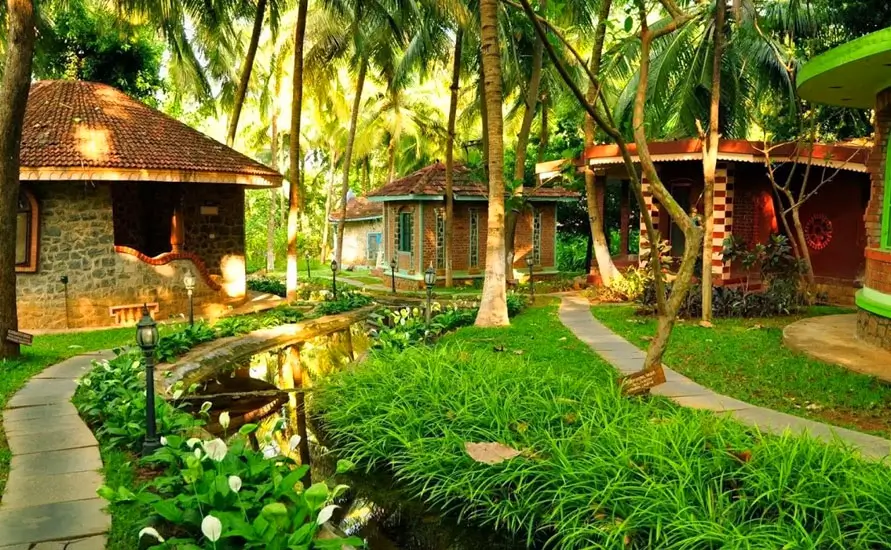
A short drive north takes you off the main road and onto red-earth lanes lined with cashew trees, neem and tall acacia, into Auroville, the experimental international township founded in 1968 around the idea of people from many countries living and working together. From now until the last morning, home is a small wellness retreat set among gardens, with simple, clean rooms, a treatment wing and an open-sided hall for yoga. A cup of warm herbal infusion and a walk round the property come first; then you have time to settle in, unpack properly for the first time since landing and take a slow walk around the garden paths.
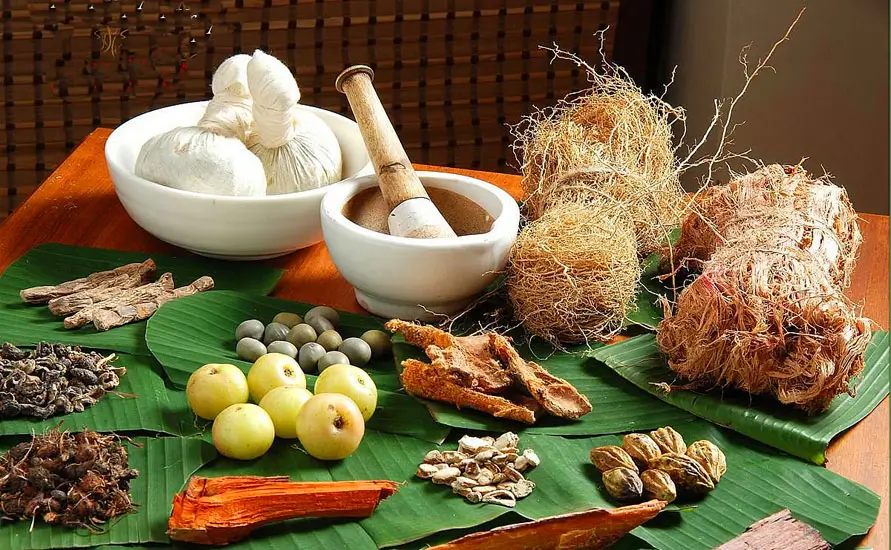
Before lunch you meet the retreat's Ayurveda doctor, a qualified BAMS physician, for a detailed consultation of about an hour. The doctor asks about your sleep, appetite, digestion, energy, stress levels and any conditions you have shared, reads your pulse with three fingertips at the wrist, as Ayurveda physicians have long done, and assesses your body type, or prakriti, in the language of Ayurveda. Based on this conversation a plan of daily therapies is written for you, together with advice on what to eat. The plan is personal and changes from day to day as the doctor sees how you respond, so tell the team openly how you are feeling.
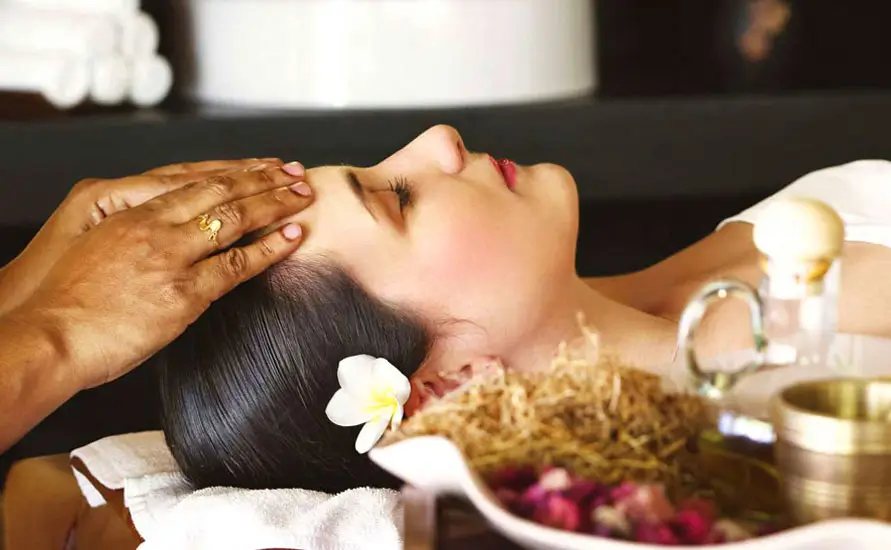
At around four o'clock comes your first therapy, abhyanga: two therapists apply warm oil prescribed by the doctor from head to toe, moving in long strokes that mirror each other. A short session in a herbal steam box often follows, and then you rest for a while before a warm shower. Many guests report a pleasant heaviness and sleep deeply on the first night. At dusk the yoga teacher leads a gentle introduction to breath awareness, simply noticing the inhale and exhale while sitting comfortably. Dinner is a light vegetarian meal of soup, steamed vegetables and rice. Overnight in Auroville.
The day begins at about 6:30 am in the open yoga hall with an hour of Hatha yoga, adapted to your fitness and flexibility. The teacher works slowly through standing postures, gentle twists and hip openers, and finishes with simple pranayama such as alternate-nostril breathing, which is traditionally used to calm a busy mind. Breakfast follows, usually stewed fruit, millet porridge or upma with fresh ginger tea. Your doctor drops by for a short check-in about last night's sleep and yesterday's oil therapy, then adjusts today's treatment if needed, a pattern that repeats every morning for the rest of your stay.
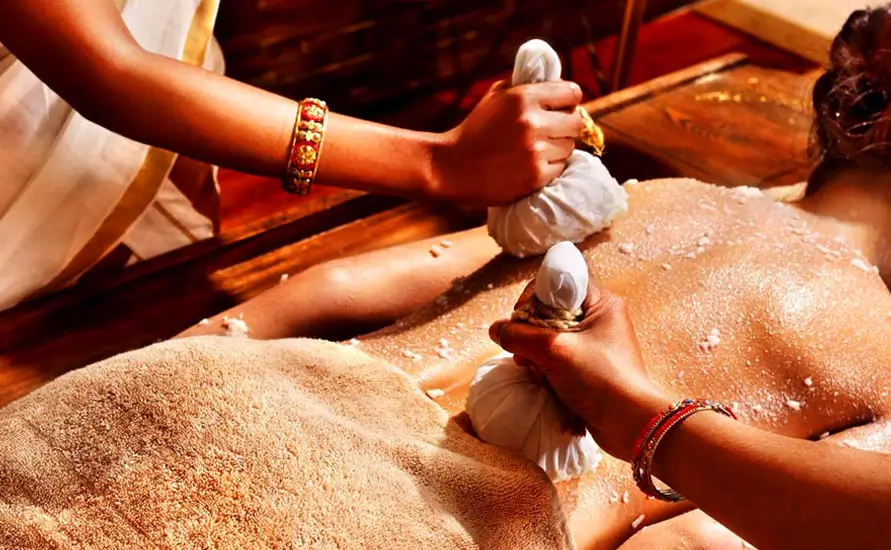
Late morning brings elakizhi: muslin pouches packed with chopped leaves of castor, tamarind and other plants, plus a little coconut, are heated in an oil pan and then dabbed along your back, arms and legs in a regular beat. It is often chosen for stiff muscles and tired joints, and a sharp green scent of warm leaves hangs in the room long after. Afterward you rest in your room for an hour or two, as the doctor advises staying out of the sun and avoiding cold drinks after an oil therapy. Ayurveda treats midday as the time for the largest meal, so lunch brings dal, seasonal vegetables, red rice and a small cup of buttermilk.
In the afternoon your driver and local guide take you to the Auroville Visitors Center, where a short film and an exhibition explain the township's ideals and history. After that, a roughly one-kilometer walk under trees takes you to the Matrimandir viewing point, where you look across the gardens to the huge golden sphere at the center of Auroville and the old banyan tree beside it. Timings and passes are handled by the visitors center, while places for the inner chamber are few and must be reserved ahead, which we try to do for you when you book. Overnight in Auroville.
Today begins in silence. From waking until after breakfast, guests are invited not to talk, read messages or check phones, a practice the meditation teacher calls an inner morning. The yoga session is slower than yesterday, with long holds, and ends with fifteen minutes of seated meditation focused on the sounds around you: birdsong, a distant bicycle bell, wind in the trees. If an inner chamber slot at the Matrimandir was confirmed, this is often the morning for it, and the visit follows a set procedure in which visitors gather, walk up in silence and sit in the white chamber around a crystal globe.
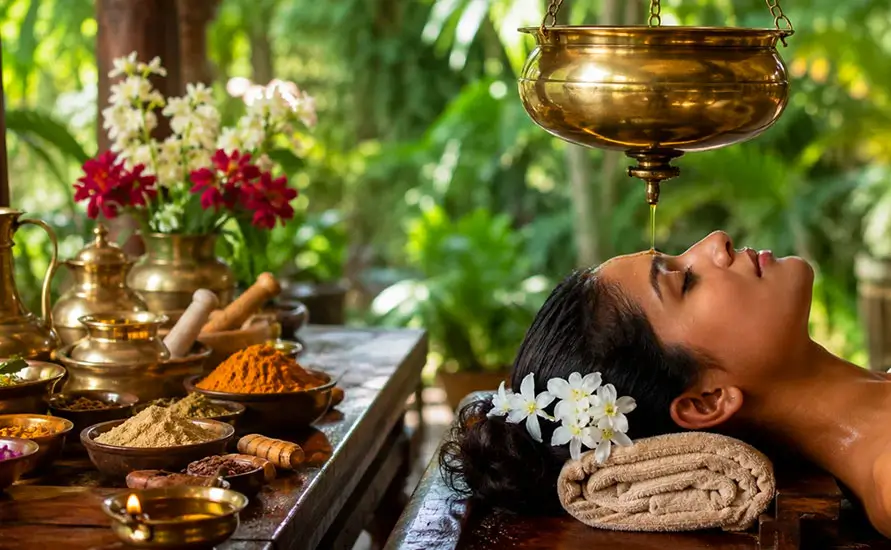
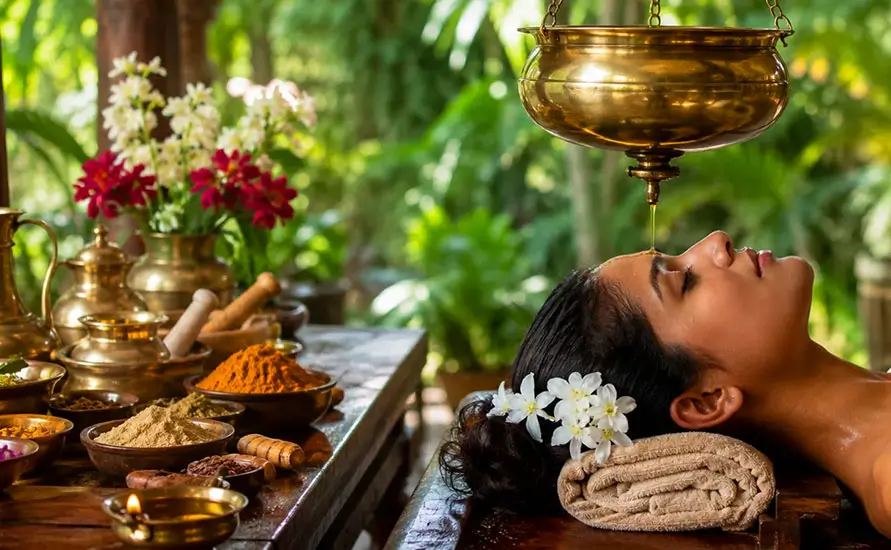
Late morning you receive shirodhara, perhaps the best known of all Ayurveda therapies. You lie on a wooden treatment table while warm herbal oil flows in a thin, steady stream across your forehead for about forty minutes, the vessel swinging gently from side to side. It is traditionally used to quiet the nervous system, and many guests describe a deep, dreamy calm afterward. Your hair stays oily for the rest of the day, so the therapist gives you a herbal powder to wash it out in the evening, and you are asked to rest rather than go out in the midday sun.
After lunch and a rest, a short drive takes you to one of the Tamil villages that border Auroville. Many of the people who keep Auroville running, from gardeners to builders, live here, and your guide introduces you to a women's self-help group that makes handmade bags and textiles, or to a small village school supported by Auroville projects. It is a quiet, respectful visit rather than a tour, and a good reminder that the township and its neighbors depend on each other. Back at the retreat, evening meditation focuses on gratitude and is followed by dinner. Overnight in Auroville.
When the township was founded in the late 1960s, much of this plateau was bare, eroded red earth with hardly a tree in sight. Decades of planting by Aurovilians have turned large parts of it into young forest, and this morning you walk through one of these areas with a naturalist who explains how native tropical dry evergreen species were brought back. The walk is slow and becomes a walking meditation, with stretches of silence in which you place each step with full attention. You return before the heat rises for breakfast and your daily check-in with the doctor.
The treatment today is chosen according to how your body has responded so far. For many guests it is padabhyanga, a careful foot and lower-leg massage with warm oil that is traditionally said to ground the body and help sleep, combined with netra tarpanam, in which a small ring of dough is placed around the eyes and filled with lukewarm medicated ghee for a few minutes. Others continue with abhyanga or a second elakizhi. As always, the doctor explains why a therapy has been chosen and what it aims to do, and you can ask questions at any time.
In the late afternoon you visit an Auroville pottery studio, where resident potters work with stoneware fired in wood kilns. Some studios offer a short hands-on session at the wheel, which many guests find meditative in its own way, and your guide arranges this where possible. Heading home, there is time for an organic farm shop that supplies vegetables to many Auroville kitchens, including, often, the retreat itself. The evening yoga session ends with chanting of the long Om sound in a group, followed by quiet time on the veranda before dinner. Overnight in Auroville.
Your last full day at the retreat starts with a longer yoga class that brings together everything you have practiced this week: the joint loosening sequence, standing postures, alternate-nostril breathing and a short guided meditation. The teacher writes down a simple twenty-minute routine for you to follow at home, with drawings of each posture, so that the habit does not end when you leave. Breakfast is followed by the final treatment of your program, often a full abhyanga or a second shirodhara, as decided by the doctor after asking how the week has felt for you.
Around midday you sit down with the Ayurveda doctor for a closing consultation. This is a calm, practical conversation about what you noticed during the week, which foods suited you, how to keep regular meal and sleep times, and which simple daily habits from Ayurveda, such as tongue scraping, oil pulling or a warm-water routine, might fit into your life at home. If the doctor suggests herbal preparations to continue, these can be bought from the retreat's pharmacy at your own cost. Any advice is meant to sit alongside, never replace, the care of your regular physician.
Around five o'clock the car drops you at a quiet stretch of beach on the Auroville coast, a few kilometers away, for a final walk on the sand as the light turns golden. Fishing boats lie on the shore and the beach is usually calm on weekdays. Currents along this coast can be dangerous, so keep to walking and sitting rather than going into the water. Back at the retreat, the evening meditation is a short closing circle with the teacher and other guests, followed by a farewell dinner with a few extra dishes from the kitchen. Overnight in Auroville.
After an early yoga session and breakfast, you say goodbye to the retreat team and set off for Chennai International Airport. Plan on close to four hours in the car, a little more if the Chennai outskirts are congested, so we time your pickup to leave comfortable margin before your flight. Most international departures from Chennai leave late at night, and if yours does, our team can hold a day room at an airport-side hotel or a gentle stop on the way so that you are not sitting in the terminal for hours. Your driver helps with luggage at the departure gate.
Before you leave, our team asks for honest feedback on the program, the doctor and the teachers, which helps us keep improving future retreats. Many guests also take home the written diet notes and yoga routine from the closing consultation, which make it easier to keep a little of the week's calm in everyday life. Should you want to come back for a longer Ayurveda program in Kerala or a quiet stay in Pondicherry, we are happy to plan it with you whenever you are ready. Have a safe flight home.
Your Journey

N.S. Rathore & Mrs. Omlata Rathore · Managing Director
We still read every enquiry ourselves. Tell us the places you liked and our planners will send a day-by-day route with drive times and a clear price.
Every package can be customised and no pressure to book. A planner from our office replies within 24 hours with a route written for your group.
Fill this in and your planner will send a first draft itinerary.
Explore more
Kerala Backwaters Escape Kerala Backwaters Escape
 Kerala Backwaters Escape
 Kerala Backwaters Escape
 Kerala Backwaters Escape
 Kerala Backwaters Escape
 Kerala Backwaters Escape
 Kerala Backwaters Escape
 Kerala Backwaters Escape
 Kerala Backwaters Escape
 Kerala Backwaters Escape Kerala Backwaters Escape Kerala Backwaters Escape Kerala Backwaters Escape Kerala Backwaters Escape Kerala Backwaters Escape Kerala Backwaters Escape