
 Kerala Backwaters Escape

Ayurvedic Tour Packages
Goa – Gokarna (Ayurveda & yoga resort)
At a glance
Gokarna is a small temple town on the Karnataka coast, three to four hours south of Goa, where a string of coves is linked by cliff paths and the loudest noise after dark is usually the sea. Our Ayurveda Retreat in Gokarna gives you eleven nights at an Ayurveda and yoga resort on the hillside above Kudle Beach, with a qualified doctor, a team of trained therapists and a yoga teacher who keeps classes small. You fly into Goa, our driver brings you down the coast, and from then on the days follow a calm pattern of practice, treatment, rest and simple food.
Everything begins with a consultation with a BAMS-qualified physician, who looks at your constitution, habits and current state and writes a program that may include abhyanga, udvartanam, shirodhara, elakizhi, njavarakizhi, padabhyanga, netra tarpanam and nasyam. The plan changes as the days go on. We do not promise results or describe any of it as medical care: the aim is rest and traditional Ayurvedic routine, and most guests simply notice they sleep and eat better. Send your medical details ahead of time, and treat the program as an addition to, never a substitute for, the care of the physician you see at home.
Twelve days is long enough for a real change of pace and brief enough for a standard vacation allowance, which makes this Gokarna yoga retreat a sensible fit for long-haul visitors, flying in from Toronto, Chicago, London, Berlin or Sydney, and for NRIs tacking it onto time with relatives. Four relaxed outings keep the week varied: the Mahabaleshwar Temple and Car Street, the beach trail to Om Beach and Half Moon Beach, Mirjan Fort and a sunset at Om Beach on the last evening. October to March is dry and pleasant; June to September brings heavy monsoon rain.
Flights into Goa use either Dabolim, close to Vasco da Gama, or the newer the newer Manohar International at Mopa in North Goa; whichever one your flight uses, our driver will be there, holding a placard with your name beyond the arrivals barrier. Dabolim to Gokarna is roughly a three-and-a-half-hour run; from Mopa allow nearer four and a half. Bottled water and a light snack ride along with you, and the driver can stop at a clean roadside cafe for a coffee or a restroom break. Let him know if you would rather sleep, and he will keep the music low.
The road runs south along National Highway 66, crossing wide river mouths at Karwar and with forested Western Ghats ridges rising on the left and occasional glimpses of the Arabian Sea on the right. Karwar's long beach and the Kali river bridge make a sensible halfway pause. Beyond Ankola the road turns toward the coast, and the last few kilometers wind through cashew trees and laterite cuttings to Gokarna. The resort sits above the cove, reached by a short private road, and the team helps carry your luggage up the final steps to the reception terrace.
Check-in includes a welcome drink of kokum, a tangy purple fruit cooler popular along this coast, and a short introduction to the timetable. You receive cotton clothing for treatments and a health questionnaire for tomorrow's consultation, which should list any medicines you take, allergies, surgeries, heart or blood pressure issues and pregnancy. A simple dinner of rice, dal and a vegetable side is served early, and the staff suggest you skip the evening session to rest after the flight. From your room you can hear the waves on Kudle Beach below, and the stars are bright with so little light around. Overnight in Gokarna.
The first yoga class is at 7 am in the open-sided shala, with mats facing the sea. The teacher spends the opening minutes asking each person about injuries, energy and practice, then guides the group through a slow sequence of joint loosening, gentle hip circles and lying twists. The goal is to wake the body after travel rather than to work hard, so nobody should feel sore afterwards. Breakfast follows on the terrace: poha, flattened rice cooked with turmeric, peanuts and curry leaves, a plate of papaya and a cup of warm water with lemon and a little honey.
Your consultation with the resort's Ayurveda doctor begins with nadi pariksha, the traditional reading of the pulse at the wrist, followed by questions about sleep, digestion, appetite, work and stress, and a look at your tongue, nails and eyes. The doctor then explains your prakriti and the imbalances noted today, and writes a plan of therapies, a diet chart and guidelines on rest and sun exposure. Expect the plan to be revised along the way. The doctor will remind you that the program supports wellbeing through routine and traditional care, and that it is not intended to diagnose or treat any disease.
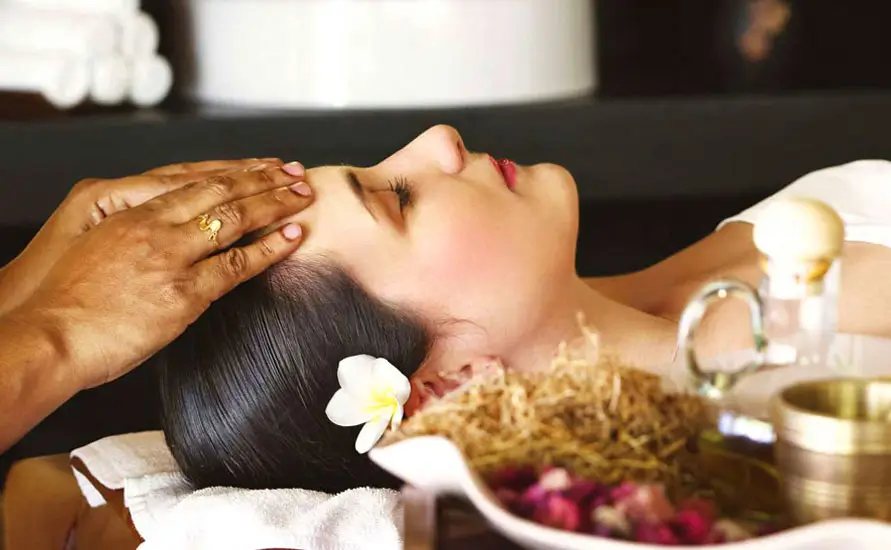
In the afternoon you have your first abhyanga, a warm-oil massage done by two therapists moving in step, which takes about forty-five minutes and is followed by a few minutes in a herbal steam chamber. Guests can always ask for a therapist of the same gender. Afterwards, rest on your balcony and stick to warm water instead of chilled drinks. At sunset the yoga teacher holds a short session of seated breathing on the shala, and dinner is a bowl of moong dal kichdi with a spoon of ghee, a dish the kitchen will serve often because it is easy to digest. Overnight in Gokarna.
Today's practice introduces a careful form of kapalabhati, the short-exhalation breath, taught at a slow count and only for those the doctor has cleared for it. The rest of the class works on standing poses: mountain, triangle and side angle, held for a few breaths each so that you notice how weight is spread through the feet. Breakfast is a set dosa with a coconut and coriander chutney and a mild sambar. The kitchen staff ask whether yesterday's meals agreed with you, since they keep notes for the doctor and adjust portions and spices from them.
The second abhyanga, in the late morning, uses an oil the doctor has chosen after reviewing how your skin and sleep responded. Swedana follows, this time for a little longer, in a wooden steam box, only your head poking out and a cool cloth on the forehead. The therapists stay with you throughout and stop if you feel too warm. A herbal paste is used instead of soap in the shower. Lunch is a Karnataka-style plate with red rice, saaru, a thin lentil and tomato broth, beans palya with coconut, and a bowl of curd with cucumber.
Late in the afternoon, when the tide is out, walk down to Kudle Beach below the resort. The bay is wide and gently curved, with a handful of shacks, a few yoga signs and cows wandering the sand in the morning and evening. Rocks at the southern end form small pools where crabs scuttle into cracks. Avoid swimming within three hours of an oil treatment and on days with red flags, because rip currents form along this shore. Back on the hill, the evening session is a twenty-minute guided meditation on the breath, then an early dinner. Overnight in Gokarna.
A slightly more active class wakes you on Day 4, with a flowing sequence of lunges, low cobras and downward dog, taken at a pace where you can still breathe through the nose. The teacher pauses often to adjust alignment and to remind the group that no one is in a race. Breakfast is ragi dosa, made with finger millet, which the kitchen uses because many guests are on a lighter, warming diet. If the doctor has asked you to fast lightly in the mornings, a cup of herbal water and a few soaked raisins are served instead.
Udvartanam, today's therapy, uses a warm herbal powder rather than oil. The therapists rub it in long upward strokes against the direction of hair growth, which feels brisk and invigorating, for around forty-five minutes. In Ayurvedic tradition the treatment is associated with kapha balance and is often included in programs for weight management, though no particular result is promised. Expect the skin to feel warm and slightly tingly afterwards. A shower with a little gram flour removes the powder, after which a cup of ginger tea waits in a shaded rest room.
At 5:30 pm the doctor gives an informal talk on shad rasa, which in Ayurvedic thinking are sweet, sour, salty, pungent, bitter and astringent. Using small bowls of jaggery, tamarind, rock salt, black pepper, bitter gourd and pomegranate peel, the doctor shows how each taste is believed to affect the doshas and why a balanced meal includes all six. Guests try each bowl and compare notes, which is usually quite funny when it comes to the bitter gourd. The talk ends with a few tips on building a meal at home, and the kitchen serves dinner to match. Overnight in Gokarna.
Yoga starts early today so that you can reach Gokarna town before the heat and the crowds. The drive takes about fifteen minutes. A local guide meets you near Car Street, the main lane lined with old tiled houses, Sanskrit schools and shops selling brass lamps, rudraksha beads and puja items, where the temple chariots are pulled during festivals. The Maha Ganapati Temple stands near the main shrine, and tradition holds that pilgrims visit it before going on to Mahabaleshwar. Clothing should hide shoulders and knees; shoes go at the stands outside.
The Mahabaleshwar Temple is one of the most sacred Shiva shrines in South India, said to hold the Atmalinga that Ravana carried from Mount Kailash before Ganesha tricked him into setting it down here. By custom, only Hindus enter the sanctum, and men are often asked to remove shirts, so non-Hindu visitors usually see the outer courtyard and the granite architecture while the guide tells the story. Photography inside is not allowed. A short walk brings you to Koti Teertha, a large stepped tank where pilgrims bathe and perform rites, ringed by small shrines and old houses.
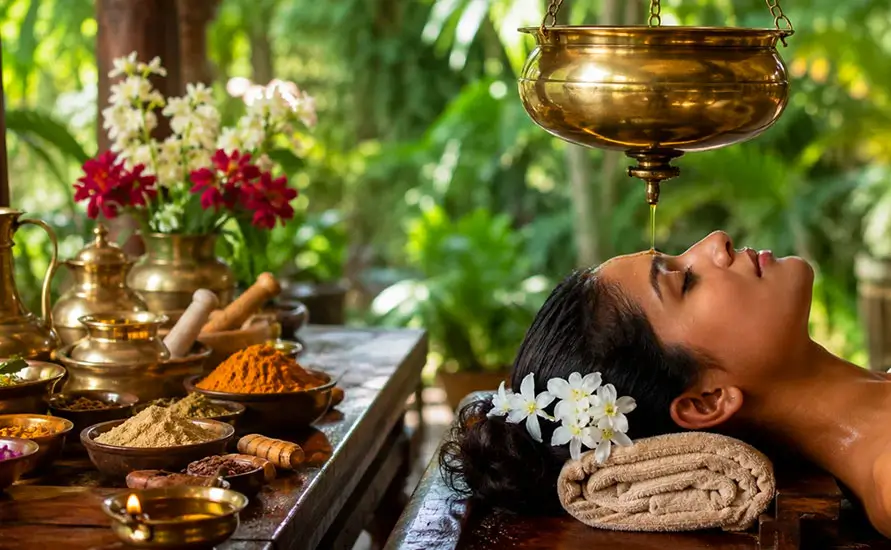
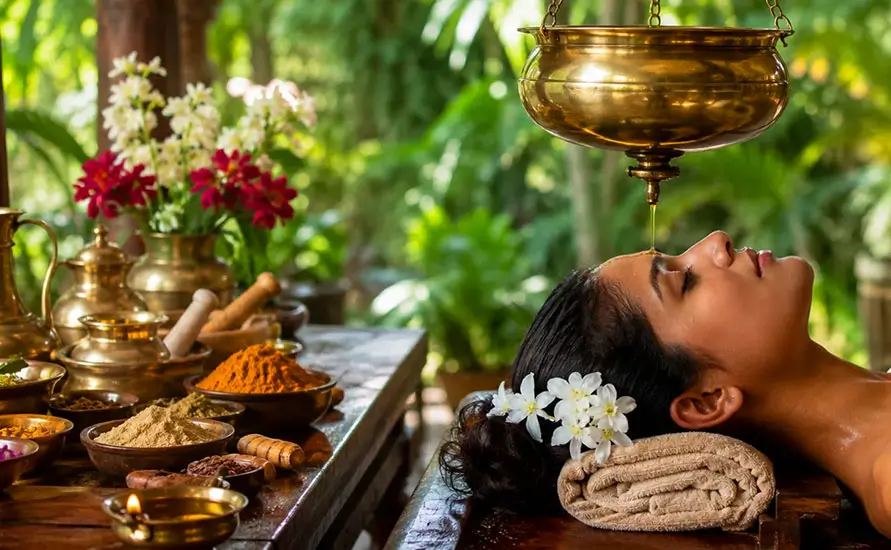
Once you are back on the hill and have eaten a late lunch, rest for an hour before your first shirodhara. A stream of warm medicated oil is poured slowly onto your forehead from a pot suspended above the treatment table, swinging gently from temple to temple for about thirty-five minutes while a therapist steadies the flow. Shirodhara has long been used in Ayurveda to settle the mind and help sleep, and many people describe drifting between waking and dreaming. You are asked to keep your head covered and stay out of the wind for the evening. A short yoga nidra replaces the usual class. Overnight in Gokarna.
In the early class, after a few rounds of gentle breathing, the teacher introduces trataka, a classical concentration practice in which you gaze steadily at a candle flame and then close your eyes to hold its image. The room is darkened with curtains for this, and it lasts only ten minutes, but many guests find it one of the most interesting sessions of the stay. The rest of the hour is slow stretching. Breakfast is a soft upma with vegetables and a glass of chaas, thin buttermilk flavored with ginger and curry leaf.
After breakfast the doctor meets you for the midpoint review. Together you go over sleep, appetite, bowel habits, energy and mood, and the doctor checks pulse and tongue again before adjusting the plan for the remaining five days. It is quite normal to feel heavy, tired or a little emotional around this point, and the doctor will explain why. Your second shirodhara follows in the late morning, often with a different oil or a slightly longer duration. Lunch is light, and the afternoon is deliberately empty so that you can sleep or sit quietly on your balcony.
Journaling is offered at 5 pm on the terrace, with the yoga teacher providing a few written prompts on paper: how your body feels compared to the first day, which part of the routine you like most, and what you would like to bring home. You write for twenty minutes and can share or keep your notes private. As the sun drops, the sky over Kudle turns pink and gold, and the shacks below light their lanterns. Dinner is a kichdi with spinach, followed by a cup of warm turmeric milk if the doctor has recommended it. Overnight in Gokarna.
Balance and focus shape the 7 am session. You work on tree pose, eagle pose and a gentle half moon against the wall, then sit for ten minutes of alternate-nostril breathing. The teacher talks about steadiness in daily life as much as on the mat. Breakfast is idli with a peanut chutney, and the cook tells you to save some appetite for the afternoon, when you will be making part of your own dinner. If you need anything from the town, the driver can do a short errand run in the morning while you are in treatment.
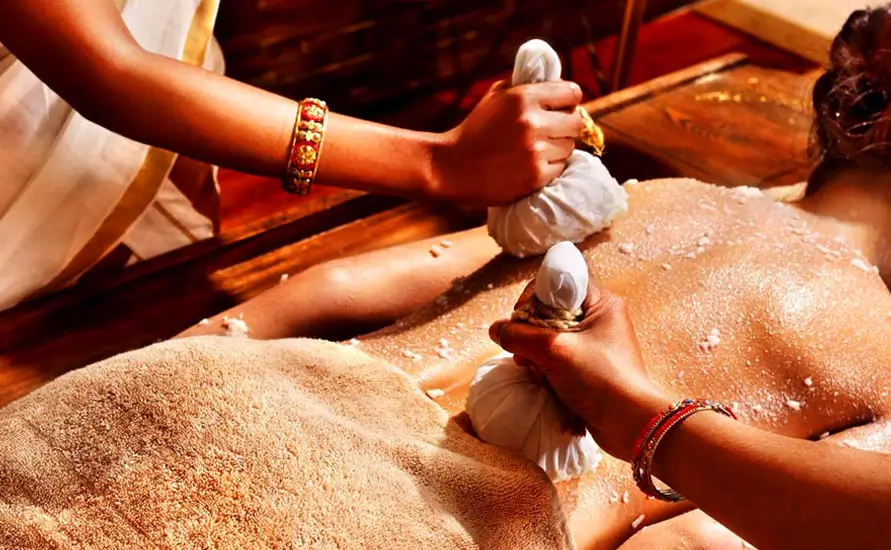
Elakizhi uses warm bundles of medicinal leaves, coconut, lemon and spices that are heated in oil and patted firmly along the limbs and back with a drumbeat regularity. The aroma is strong and herbal, and the warmth reaches deep into the muscles. Kerala practitioners have long reached for elakizhi when dealing with stiffness and aches, especially in the back, shoulders and knees, and the session, with its short oil massage first, runs close to sixty minutes. Afterwards you rest in a quiet room with the windows open to the sea breeze. Lunch is simple, with rice, rasam and a cabbage palya cooked with grated coconut.
At 4 pm the resort cook leads a cooking class in the open kitchen. You learn to make neer dosa, soft and thin rice crepes made from a runny batter, tambuli, a cooling yogurt dish blended with herbs such as brahmi or coriander that is typical of coastal Karnataka homes, and a sweet-sour gojju made with pineapple, tamarind and jaggery. The cook explains the role of coconut, curry leaves and mustard seeds in the local kitchen and how the resort keeps dishes mild during treatment. Everything you make is served at dinner, and the recipes come in a printed booklet. Overnight in Gokarna.
A very early start today: tea at 6 am and then a guided walk on the cliff path that links Gokarna's beaches. From the top of Kudle you follow a rocky trail over the headland for about twenty-five minutes to Om Beach, whose pair of linked crescents traces the shape of the sacred Om sign. The path is uneven in places, so lace up sturdy shoes and bring a full bottle. The guide sets a slow pace, with stops for the views back over Kudle and for watching the fishing boats crossing the bay below.
From Om Beach the trail continues south over a steeper, rougher stretch for another thirty to forty minutes to Half Moon Beach, a little crescent of sand with forest behind it, with only a couple of simple huts. Beyond it lies a tiny cove that is easier to reach by boat. You rest on the sand, eat a packed breakfast of fruit and idli, and then take a local boat back to Om Beach, from where the car returns you to the resort. If the sea is rough or the path is wet, the guide shortens the walk. Guests with knee or back problems can join the boat portion only.
Padabhyanga, the afternoon therapy, is a welcome reward after the trail. Warm oil is massaged into the feet, ankles and calves with firm pressure on points along the soles, and the session usually ends with a short head massage. Many guests say it is the best sleep of the week that night. The evening session is restorative yoga with bolsters, and dinner is a tomato and lentil soup with chapati and steamed greens. The doctor checks in briefly to ask how the morning went, especially if you are not used to walking on uneven ground. Overnight in Gokarna.
Once morning yoga and breakfast are done, the driver takes you about 25 km north toward Kumta to Mirjan Fort, a laterite fort on the banks of the Aghanashini river, believed to date from the 16th century and linked to the pepper trade along this coast. Its moats, double walls, watchtowers and steps are overgrown with moss and creepers, and the setting is quiet. Allow about an hour to walk around the ramparts with the guide, who explains the fort's connection to the Nayaka rulers and the queen remembered locally as the Pepper Queen. Entrance fees, where charged, are paid locally.
The return to Gokarna takes about forty minutes, along a road that passes coconut groves, salt pans and small fishing villages at the river mouth. A roadside coconut seller is a good excuse to pause, and the vendor will open a fresh nut with a few strokes of his machete. Back at the resort, a light lunch is served before your treatment, since heavy meals are avoided before therapies. The doctor sometimes takes a few minutes after lunch to look at your diet chart and suggest small changes for the last days, such as more cooked vegetables or less rice in the evening, depending on how your digestion has been.
Njavarakizhi is a Kerala-origin therapy that the resort's therapists have trained in. Cloth bags of njavara rice, first simmered with milk and a herbal decoction, are worked over the whole body while still hot, leaving a thin layer of rice paste that is gently wiped away at the end. In Kerala this therapy is traditionally linked with nourishing the tissues and supporting the muscles; allow roughly sixty minutes. Rest afterwards in your room. In the evening, the teacher leads a gentle pranayama session focused on lengthening the exhale, and dinner is light vegetable soup with rice. Overnight in Gokarna.
Silence is offered until noon on Day 10. The yoga class proceeds without conversation, breakfast is served quietly, and phones stay in the rooms. Most guests find the stillness surprisingly easy by this stage of the stay, after nine days of early nights and simple routine. After the class there is time to sit on the terrace and watch the bay, write in your journal or simply rest with your eyes closed. The kitchen prepares a breakfast of soft millet porridge with chopped fruit, and herbal tea is available all morning on a side table near the shala.
Two short therapies are scheduled for late morning, and the doctor includes them only when they suit your case. Netra tarpanam involves holding warm medicated ghee over each eye within a ring of dough for several minutes, a practice traditionally used to soothe eyes tired by screens and dry air. Nasyam follows: once your face and shoulders have been massaged and lightly steamed, the therapist places a few drops of medicated oil in each nostril and inhaled slowly. Until bedtime, keep away from strong sun, wind and chilled drinks, and the shaded reading room is kept free for guests.
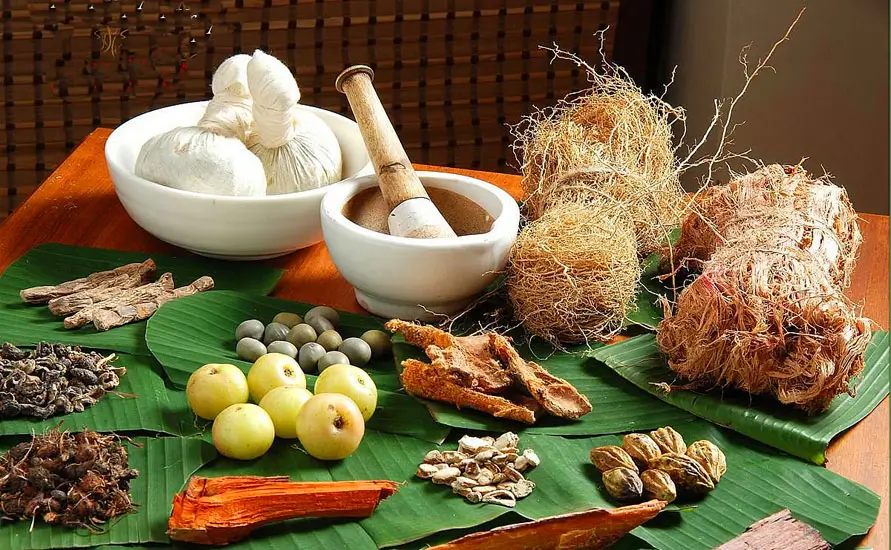
At 4:30 pm, with the silence over, the resort gardener walks you through the herb garden behind the treatment rooms. Tulsi, brahmi, neem, curry leaf, lemongrass, turmeric and Indian gooseberry grow in raised beds, and he explains which plants go into the leaf bundles, the oils and the evening herbal drinks. You are invited to pick a few leaves for tomorrow's elakizhi. The evening yoga session is short and gentle, focusing on the breath and seated forward bends, and dinner is a mild vegetable sambar with rice and a spoon of ghee. Overnight in Gokarna.
The last full day begins with the longest yoga practice of the program, around ninety minutes that combine breathing, the flowing sequence, balance work, a little trataka and a long relaxation. The teacher gives you a printed home routine of about twenty minutes with simple drawings, along with suggestions for practicing in a hotel room or on a long flight. After breakfast, your final treatment is a combined abhyanga and a short elakizhi using the leaves you picked yesterday, a gentle way to close the course of therapies and a nice link to the garden walk.
Shortly after lunch comes your closing consultation. You receive a written summary of your program, a simple daily routine to follow at home, a list of foods that suit your constitution, guidance on self-massage before bathing and advice on returning to normal diet and exercise gradually over the next two weeks. If herbal medicines are suggested, the doctor explains each one, and they can be bought separately at the resort. Before packing herbal products, confirm that customs in your country permit them, and discuss any of them with your own physician before use.
In the late afternoon, the driver takes you to the top of Om Beach for a final sunset, and you can walk down onto the sand or sit at a simple cafe with a fresh juice. The two curved bays catch the last orange light as the sun sets beyond the headland, and the fishing boats come in for the night. Back at the resort, a farewell dinner is served on the terrace with a few special dishes such as a jackfruit curry and a coconut payasam, and the doctor and therapists join the guests for a short goodbye. Pack tonight for an early start. Overnight in Gokarna.
After breakfast and checkout, the driver loads the luggage and heads north along the coast to Goa, timing the departure so you are at Dabolim or Mopa well ahead of check-in, ideally three hours before an overseas departure. The road retraces the route along NH 66 past Karwar, and a coffee stop can be made on the way. Carry the doctor's written summary in your cabin bag, and once airborne pick the lighter meal options, keep sipping warm water and allow yourself a few easy days at home before going back to heavy food, alcohol or intense workouts.
For a late flight, we can add a night in a quiet South Goa beach hotel or hold a room near the terminal for daytime rest, at extra cost. NRI guests traveling on to family homes elsewhere in India can be dropped at a railway station or another destination by arrangement. Thank you for spending twelve days with us in Gokarna. We hope the routine stays with you, and we would happily arrange your next Ayurveda stay on the Karnataka or Kerala coast whenever you are ready.
Your Journey

N.S. Rathore & Mrs. Omlata Rathore · Managing Director
We still read every enquiry ourselves. Tell us the places you liked and our planners will send a day-by-day route with drive times and a clear price.
Every package can be customised and no pressure to book. A planner from our office replies within 24 hours with a route written for your group.
Fill this in and your planner will send a first draft itinerary.
Explore more
Kerala Backwaters Escape Kerala Backwaters Escape
 Kerala Backwaters Escape
 Kerala Backwaters Escape
 Kerala Backwaters Escape
 Kerala Backwaters Escape
 Kerala Backwaters Escape
 Kerala Backwaters Escape
 Kerala Backwaters Escape
 Kerala Backwaters Escape
 Kerala Backwaters Escape Kerala Backwaters Escape Kerala Backwaters Escape Kerala Backwaters Escape Kerala Backwaters Escape Kerala Backwaters Escape Kerala Backwaters Escape