 Kerala Backwaters Escape
Ayurvedic Tour Packages
Mumbai- Chennai-Kanchipuram-Mahabalipuram-Thanjavur-Swamimalai-Trichy-Chennai
At a glance
India's western metropolis and Tamil Nadu's temple heartland create an unusual beginning and end to this fifteen-day journey. Starting in Mumbai, the tour moves to Chennai before following a heritage route through Kanchipuram, Mahabalipuram, Thanjavur, Swamimalai and Trichy. The itinerary brings together major monuments, living places of worship, traditional craftsmanship and time reserved for Ayurveda wellness.
Tamil Nadu forms the cultural core of the programme. Kanchipuram reveals some of the most significant early structural temples of the Pallava period, while Mahabalipuram presents rock-cut caves, monolithic shrines and monumental reliefs beside the Bay of Bengal. Farther south, the architectural scale changes again at Thanjavur, where the Chola legacy is represented by the monumental Brihadeeswarar Temple. Swamimalai adds traditional bronze craftsmanship, while Trichy introduces the temple landscapes of Srirangam and Rockfort.
Ayurveda is incorporated without treating every traveller as requiring the same therapy. The wellness component should begin with consultation at the confirmed centre, after which suitable therapies, rest periods and any relevant lifestyle guidance can be arranged according to professional assessment. This allows the journey to retain its strong cultural character while providing genuine time for a slower wellness routine.
Arrive in Mumbai, meet the representative and transfer to the confirmed hotel. After check-in and sufficient rest, begin with a gentle introduction to South Mumbai, where colonial-era architecture, historic commercial districts and the Arabian Sea waterfront provide a distinctive opening to the journey.
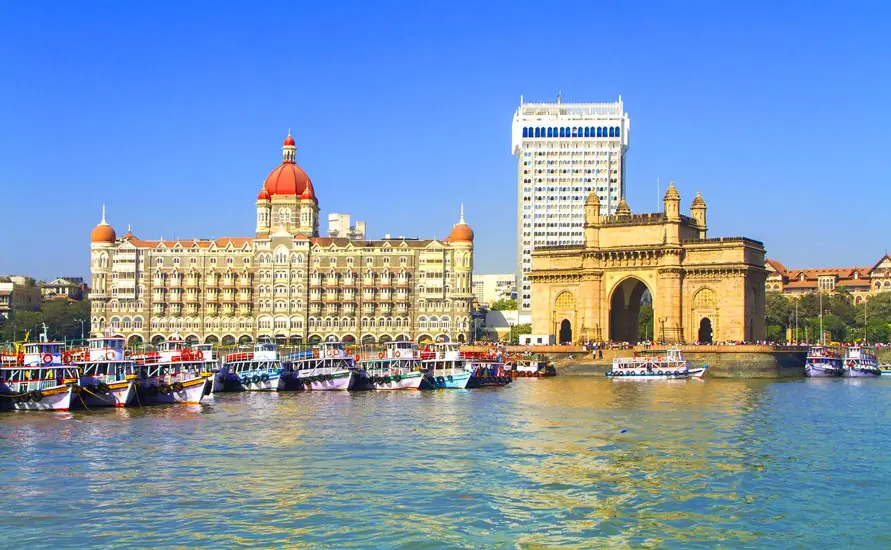
Visit the Gateway of India, built on the Mumbai waterfront and now one of the city's most recognisable monuments. From the surrounding area, view the harbour setting and the historic Taj Mahal Palace Hotel exterior, which forms an important part of the architectural character of this waterfront district.
Continue along Marine Drive if arrival time permits, observing Mumbai's coastal urban landscape as it curves around Back Bay. Keep the first evening relatively relaxed after the journey rather than attempting to cover the city's major attractions in a single session. Overnight stay in Mumbai.
After breakfast, begin with the historic South Mumbai district and see Chhatrapati Shivaji Maharaj Terminus, a UNESCO-listed railway terminus celebrated for its Victorian Gothic Revival architecture combined with Indian decorative influences. Exterior viewing can be combined with a drive through the surrounding heritage precinct.
Continue towards Chhatrapati Shivaji Maharaj Vastu Sangrahalaya, subject to official opening hours. The museum's collections cover archaeology, decorative arts, sculpture and other aspects of Indian cultural history. Later, see the colonial-era architecture around Kala Ghoda and the Mumbai High Court precinct from appropriate public areas.
Spend the later part of the day around Marine Drive or the South Mumbai waterfront. The day is intended to show more than the city's modern commercial identity, providing historical context before the tour moves south to Tamil Nadu. Return to the hotel after sightseeing. Overnight stay in Mumbai.
After breakfast, check out and transfer to Mumbai airport for the scheduled flight to Chennai, according to confirmed travel arrangements. The airfare sector should be booked separately unless specifically included in the final package confirmation.
On arrival at Chennai International Airport, meet the driver and transfer to the hotel. After check-in, allow sufficient time to rest following the inter-city journey before beginning a short introduction to Tamil Nadu's capital.
If timing permits, visit Marina Beach, Chennai's long urban coastline on the Bay of Bengal, or spend time around the historic Mylapore district. The main monuments are reserved for the following day so they can be covered without rushing around flight schedules. Overnight stay in Chennai.
After breakfast, visit Kapaleeshwarar Temple in Mylapore, an important centre of Shaivite worship and an excellent introduction to the living Dravidian temple tradition. Its colourful gateway tower and active religious surroundings contrast strongly with the colonial-era architecture found elsewhere in Chennai.
Continue to San Thome Basilica, traditionally associated with St. Thomas the Apostle. Afterwards, visit the Government Museum, Chennai, subject to official opening hours. Its archaeological and sculptural collections provide useful historical context before the tour enters Tamil Nadu's major temple centres.
Later, see Fort St. George and its historic precinct from areas accessible to visitors. Finish the day with some free time along Marina Beach or return to the hotel for rest. The combination of temple, church, museum and colonial heritage introduces Chennai's layered cultural identity. Overnight stay in Chennai.
After breakfast, leave Chennai and travel to Kanchipuram, one of Tamil Nadu's most important historic temple cities. The destination remains an active pilgrimage centre, so the monuments are experienced as functioning religious spaces rather than simply archaeological remains.
Visit Kailasanathar Temple, one of the important early structural temples associated with Pallava architecture. Continue to Ekambareswarar Temple, a major Shiva temple known for its extensive complex and monumental gateway tower.
Later, visit Varadharaja Perumal Temple, an important Vaishnavite pilgrimage centre, subject to applicable access and religious regulations. If time permits, learn about Kanchipuram's famous silk-weaving tradition through an appropriate local workshop or weaving centre. Check into the hotel and relax. Overnight stay in Kanchipuram.
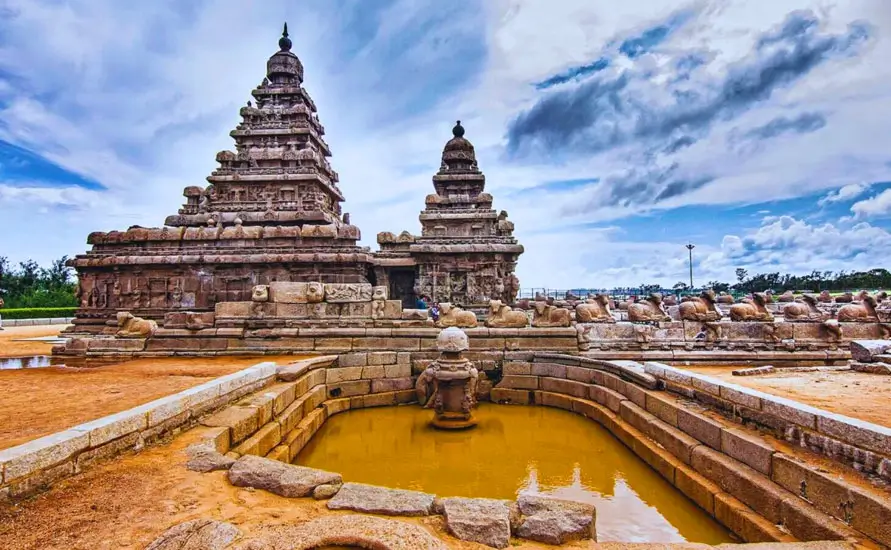
After breakfast, depart for Mahabalipuram (Mamallapuram), where the Pallava architectural legacy takes a markedly different form from the structural temples of Kanchipuram. Here, rock-cut caves, monolithic shrines and sculpted granite surfaces create one of South India's most distinctive archaeological landscapes.
Visit Arjuna's Penance, the enormous open-air relief also interpreted in connection with the Descent of the Ganges. Nearby, see Krishna's Butter Ball, the naturally balanced granite boulder that has become one of Mahabalipuram's most familiar sights.
Continue to the Pancha Rathas, a group of monolithic monuments carved from individual rock masses, followed by the coastal Shore Temple overlooking the Bay of Bengal. The combination provides an excellent overview of Pallava experimentation with different architectural forms. Check into the hotel and enjoy the evening at leisure. Overnight stay in Mahabalipuram.
Begin the morning with further exploration of Mahabalipuram's archaeological landscape. Visit important rock-cut monuments such as the Varaha Cave Temple and Mahishasuramardini Cave, subject to current visitor access. Their sculptural panels add another dimension to the better-known freestanding monuments seen the previous day.
Later, where the confirmed Ayurveda arrangements are available at the selected property or wellness centre, attend an initial Ayurvedic consultation and assessment. Relevant health history, lifestyle, medications and individual requirements should be discussed with the qualified practitioner before any therapy is selected.
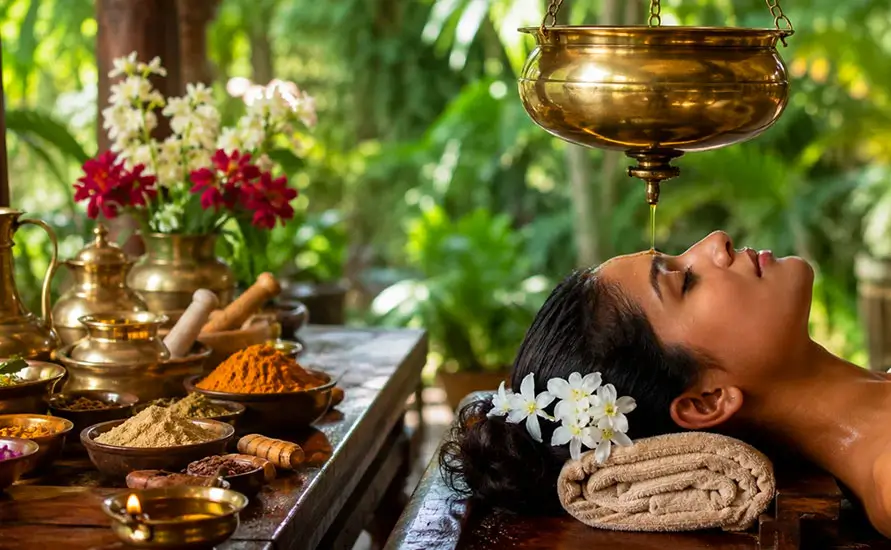
If recommended, proceed with an introductory Ayurvedic wellness therapy and allow sufficient time for rest afterwards. Follow professional instructions concerning meals, hydration, bathing and physical activity. Keep the evening unhurried beside the Bay of Bengal rather than adding another long excursion. Overnight stay in Mahabalipuram.
After breakfast, check out and begin the southward journey towards Thanjavur (Tanjore). This is an important geographical and historical transition in the itinerary, leaving the Pallava monuments of the northern Tamil coast and travelling towards the Cauvery region associated strongly with the Chola dynasty.
As this is a substantial road journey, use suitable comfort stops and avoid filling the day with unrelated sightseeing. The changing countryside gradually introduces the agricultural landscapes of central Tamil Nadu, where the Cauvery river system has played an important role in settlement, cultivation and temple patronage.
Arrive in Thanjavur and check into the hotel. Keep the evening free after the drive so that the city's major monuments can be visited properly the following day. The magnificent Brihadeeswarar Temple and Thanjavur's palace heritage form the central focus of the next stage of the tour. Overnight stay in Thanjavur.
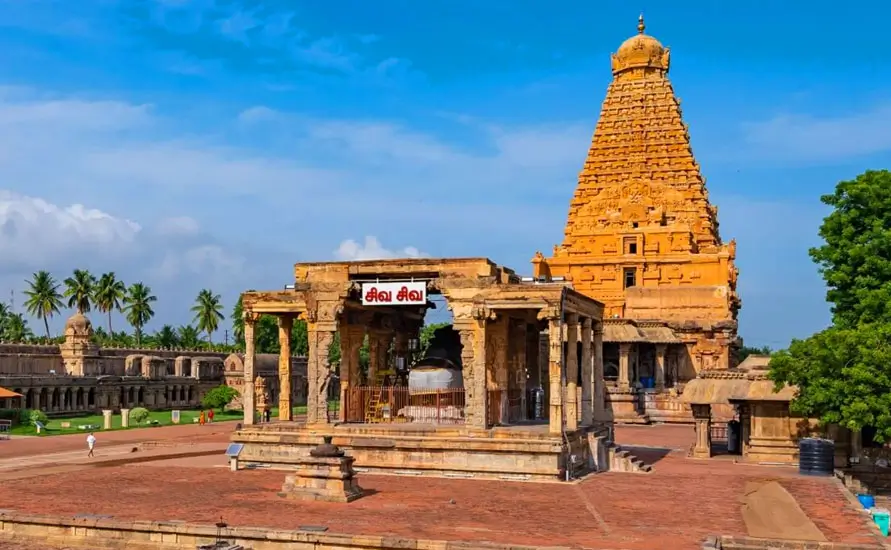
After breakfast, begin with the magnificent Brihadeeswarar Temple, the defining monument of Thanjavur and one of the great achievements of Chola architecture. Walk through the expansive temple complex to appreciate its monumental vimana, stone construction, sculptural details and the scale of a sacred complex created under imperial Chola patronage.
Continue to the Thanjavur Maratha Palace complex, subject to official opening hours and visitor access. Within the palace area, explore accessible collections and historic sections, including the Saraswathi Mahal Library and associated museum spaces where permitted. Together, they introduce later chapters of Thanjavur's royal and intellectual history beyond the Chola period.
Spend the later part of the day learning about the artistic traditions for which Thanjavur remains known, particularly classical painting and regional craftsmanship. Keep the evening free rather than adding another distant excursion, allowing the day's focus to remain on the city's architecture, court culture and artistic legacy. Overnight stay in Thanjavur.
After breakfast, leave Thanjavur and make the comparatively short journey to Swamimalai, allowing the itinerary to move from monumental Chola architecture towards the smaller-scale religious and craft traditions of the Cauvery region.
Visit Swaminatha Swamy Temple, an important Murugan shrine and one of the traditional Arupadai Veedu pilgrimage sites associated with Lord Murugan. As this is an active place of worship, appropriate dress and temple regulations should be respected, and access to particular areas may depend on religious rules.
Later, learn about Swamimalai's celebrated lost-wax bronze casting tradition at an appropriate workshop when available. The craft involves several skilled stages in creating metal icons and has deep connections with South India's sculptural heritage. Check into the accommodation and enjoy a quieter evening. Overnight stay in Swamimalai.
Begin the morning at an easier pace and attend a follow-up Ayurvedic consultation where the wellness programme is scheduled at the confirmed centre. The practitioner can review any earlier therapy, discuss individual response and determine what treatment is suitable at this stage of the journey.
Proceed with the recommended Ayurvedic wellness therapy and allow sufficient time for rest afterwards. The exact treatment, duration and sequence should remain based on professional assessment rather than a standard procedure assigned to every traveller. Follow the centre's instructions concerning food, hydration, bathing and physical activity.
Later, if suitable after therapy, spend some additional time around Swamimalai's local surroundings or its traditional craft community. Avoid adding a lengthy road excursion on this day, as the purpose is to provide genuine space for Ayurveda and recovery between the more active heritage sections of the tour. Overnight stay in Swamimalai.
After breakfast, leave Swamimalai and travel towards Trichy (Tiruchirappalli). The route continues through the culturally important Cauvery region, where major temple centres developed over centuries under different South Indian dynasties.
On arrival, visit Sri Ranganathaswamy Temple at Srirangam, one of the most important Vaishnavite temple complexes in South India. Its extensive enclosures, monumental gateway towers and active pilgrimage environment make it very different in scale and character from Swamimalai. Visitor access to particular sections is subject to current religious regulations.
Later, spend time around the Cauvery River surroundings and check into the hotel. If timing permits, explore some of Trichy's local streets and markets before returning for the evening. Keep the schedule balanced, reserving the city's other major landmark for the following day. Overnight stay in Trichy.
After breakfast, visit the prominent Rockfort Temple complex, built around a massive ancient rock formation rising above the city. The climb includes numerous steps, so travellers should undertake it according to personal fitness and weather conditions. From the upper areas, broad views extend across Trichy and the surrounding landscape.
Continue to Jambukeswarar Temple at Thiruvanaikaval, an important Shiva temple near Srirangam. The temple is traditionally associated with the water element and remains an active religious centre. Observe all applicable dress, access and photography restrictions during the visit.
Later, where the confirmed wellness programme allows, attend another Ayurvedic therapy session followed by adequate rest. The session should be scheduled according to professional advice and individual suitability rather than being forced around sightseeing. Keep the evening relaxed after the day's temple visits. Overnight stay in Trichy.
After breakfast, check out and begin the scheduled journey from Trichy to Chennai. Depending on the confirmed travel arrangements, this sector may be completed by road, rail or scheduled flight. Any airfare or train fare should be treated separately unless specifically included in the final booking.
If travelling by road, allow appropriate comfort stops during the longer transfer and avoid adding unrelated destinations that are not part of the package route. If travelling by scheduled flight or train, transfer to the relevant terminal or station with sufficient time for check-in and onward travel.
Arrive in Chennai and transfer to the confirmed hotel. After several days of temple visits and inter-city travel, keep the final evening unstructured. Travellers may rest at the hotel or spend some quiet personal time in the city according to arrival timing. Overnight stay in Chennai.
Begin the final morning according to the confirmed departure schedule. If the Ayurveda programme includes a concluding consultation, attend a final wellness review with the qualified practitioner where arrangements permit. This can be used to discuss the therapies received and any professionally recommended lifestyle guidance following the journey.
If departure time allows, spend some final time around Marina Beach or revisit the historic Mylapore area surrounding Kapaleeshwarar Temple. Any sightseeing should remain secondary to the confirmed airport or railway transfer, with sufficient time allowed for Chennai traffic and check-in formalities.
At the appropriate time, transfer to Chennai International Airport or railway station for onward travel. The fifteen-day journey concludes after connecting Mumbai's urban heritage with Chennai, the temples of Kanchipuram, UNESCO-listed Mahabalipuram, the Chola legacy of Thanjavur, Swamimalai's bronze-casting tradition, the sacred complexes of Trichy and a professionally guided Ayurveda wellness component.
Your Journey
N.S. Rathore & Mrs. Omlata Rathore · Managing Director
We still read every enquiry ourselves. Tell us the places you liked and our planners will send a day-by-day route with drive times and a clear price.
No ready-made packages and no pressure to book. A planner from our Kochi office replies within 24 hours with a route written for your group.
Fill this in and your planner will send a first draft itinerary.
Explore more
Kerala Backwaters Escape Kerala Backwaters Escape
 Kerala Backwaters Escape
 Kerala Backwaters Escape
 Kerala Backwaters Escape
 Kerala Backwaters Escape
 Kerala Backwaters Escape
 Kerala Backwaters Escape