
 Kerala Backwaters Escape

Ayurvedic Tour Packages
Kochi – Ayurveda resort (Kumarakom / Thrissur)
At a glance
Panchakarma is the deepest and slowest program in the Ayurveda tradition, and it cannot be squeezed into a long weekend. Our Panchakarma treatment Kerala 21 days gives the process the room classical texts expect: a short preparation, several days of internal and external oiling, the main cleansing procedures chosen by your doctor, and a careful rebuilding phase at the end. You spend one night in Kochi to rest after the flight, then nineteen nights at a quiet Ayurveda resort, either among the canals of Kumarakom or in the green countryside around Thrissur, Kerala's old cultural capital.
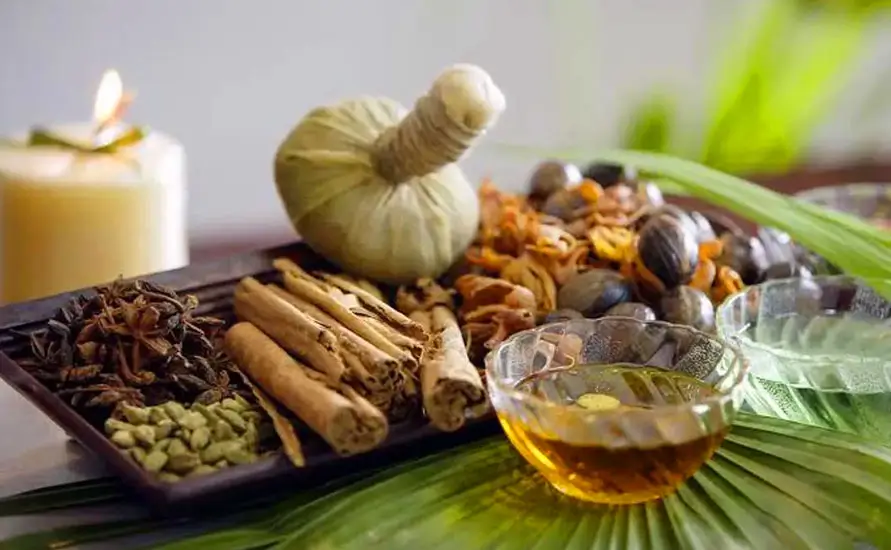
Every stage is led by a qualified Ayurveda physician holding a BAMS degree, who sees you each morning and changes the plan whenever your body asks for it. The order of days below shows a typical sequence, not a fixed timetable. Within the 21 day Panchakarma program you can expect snehapanam with medicated ghee, sweating therapies, virechana, a course of basti, nasyam and soothing therapies such as pizhichil, njavarakizhi and shirodhara. Meals are simple and vegetarian, alcohol and smoking are set aside, and sightseeing is kept to two or three short, gentle outings.
Most guests on this Panchakarma in Kerala fly in from abroad, and many are NRIs who would like to do the program properly in the state where many of these therapies took shape. Nothing here is offered as a cure for any illness, and no specific outcome is promised. Please send your medical history in advance, keep following your own doctor's guidance and list every medicine you take. Most guests pick the drier stretch between October and March, although Kerala families have long preferred Karkidakam, the rainy month that falls around late July and early August, for rejuvenation.
Connections via Doha, Dubai, Singapore or London bring you into Cochin International Airport, about 45 kilometers north of the old port. Look for our representative and a printed sign carrying your name; a cool private sedan then carries you down to Fort Kochi, the old town at the tip of the peninsula, in roughly an hour and a quarter. Your hotel is a small heritage property in a converted colonial house, chosen because it is quiet. After check-in, sleep for as long as you need. The real work of the program begins tomorrow, so today is about getting over the flight and letting your body catch up with Indian time.
Once the sun drops lower, a Kochi guide joins you for a short, level stroll by the harbor. A Chinese fishing net on the Kochi shore is lowered and raised by a crew who chant as they lean on the beam, and if you watch for a few minutes you see how rocks tied to ropes act as counterweights to lift the huge net out of the sea. A few steps inland stands St Francis Church, plain and whitewashed; a slab in its floor recalls the navigator da Gama, who died here in 1524 and rested in this church until Portugal reclaimed him. Keep the walk light, rest on a seat beneath the spreading rain trees and watch ferries cross the harbor mouth toward Vypeen island.
Over a simple dinner of steamed fish or vegetable stew with appam, your guide passes on a few notes from the resort doctor for the hours before treatment begins: eat lightly, drink warm water rather than iced drinks, and stop alcohol from tonight if you have not done so already. Use the evening as well to think about what you hope to get from three weeks of quiet, and to write down any questions for tomorrow's consultation, such as old injuries, regular medicines, sleep problems or allergies. Early to bed is the best preparation of all. Overnight in Kochi.
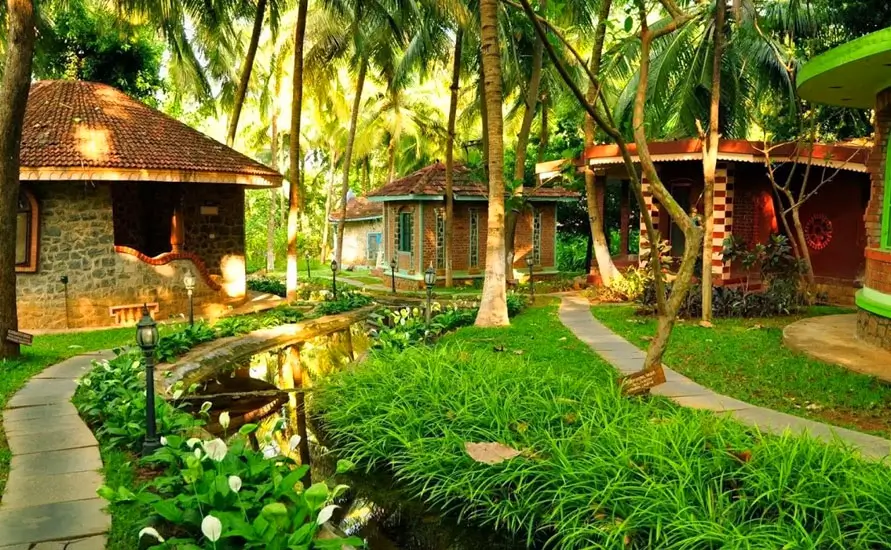
Breakfast done, you set off for the resort you picked when booking. Toward Kumarakom, a canal-laced village on the eastern rim of the great Vembanad backwater, the road passes rubber trees, small churches and paddy fields, and the drive usually takes under two hours. Heading north to the Thrissur countryside, you follow the national highway past Aluva and through busy market towns in a little over two hours. Both settings are calm and green, with coconut palms, birdsong and very little traffic. You arrive in time for a welcome drink of warm cumin water and a short look at your room, the treatment rooms and the yoga pavilion.
The afternoon is given to your opening consultation, the most important hour of the whole stay. The physician follows the traditional eightfold examination, looking at pulse, tongue, eyes, skin, voice and general build, and asks about digestion, bowel habits, sleep and emotions. Together with the history you sent, this gives the doctor a picture of your natural constitution and your present imbalance. Based on it, the doctor decides which main procedures suit you, for example whether virechana or vamana is right in your case, and how long each phase should last. Recent blood reports, if you have them, are helpful.
You leave the consultation with a written plan for the first few days, a list of foods to avoid and a timetable of treatment slots. The doctor also explains the house rules that make Panchakarma work: no alcohol or smoking, no daytime sleep unless advised, no cold baths or air-conditioning set very low, no strenuous exercise and as little screen time as you can manage. Do not hesitate to raise worries or doubts at this point, as nothing in the program should feel hidden. A short dusk walk along the garden paths ends a long day, followed by a light supper. Overnight at the Ayurveda resort.
Classical Panchakarma does not begin with oil or cleansing. It begins with the digestive fire, called agni, which Ayurveda considers the foundation of health. Today and possibly tomorrow, the doctor gives you deepana and pachana herbs, bitter or pungent preparations taken before meals that are traditionally used to wake up the appetite and clear what the texts call ama, undigested residue. You may be asked to sip hot water boiled with dry ginger through the day. Meals shrink to small bowls of rice gruel, steamed vegetables and green gram soup, served warm and lightly spiced with cumin, pepper and curry leaves.
Your first yoga class is held at sunrise in the open pavilion and is deliberately easy. The teacher starts with sukshma vyayama, small rotations of the fingers, wrists, ankles, neck and shoulders that loosen the joints without tiring you, followed by a few supported stretches lying on a mat. The idea, she explains, is to move gently throughout the program but never to strain, because the body will be busy with the treatment itself. A short session of deep belly breathing closes the class, and you stay seated for a few minutes listening to the koels and kingfishers in the garden.
Late morning brings a light abhyanga, the doctor picking a mild oil suited to these opening days. Two therapists work in unison from the scalp down to the feet, and the pressure is moderate rather than deep. A warm bath with green gram powder in place of soap removes the oil afterward. In the afternoon there is nothing to do but rest, read or sit on the veranda, and this slow pace is something many busy guests find surprisingly hard at first. The doctor visits again before dinner to ask about appetite and thirst, a good sign when both return. Overnight at the Ayurveda resort.
Before sunrise, on an empty stomach, you take your first dose of snehapanam, medicated ghee prepared with herbs and given in a small cup. The amount on this first morning is modest, and the doctor stays nearby to watch how you respond. You then sip hot water at intervals and wait for real hunger to return before eating anything, which may take until late morning or even early afternoon. Snehapanam is the internal oiling of purvakarma, the preparation phase, and classical texts describe it as loosening deep-seated imbalances so that the later procedures can move them out.
This is not an easy day for the palate. The taste of warm ghee lingers, some guests feel mildly queasy or heavy, and the hunger that eventually arrives comes with a strong craving for something simple. Lunch, when it comes, is thin rice gruel with a little salt and ginger, served hot. Yoga today is reduced to breathing only: the teacher introduces nadi shodhana, alternate-nostril breathing, practiced slowly while sitting upright against a wall. It takes about fifteen minutes and is traditionally used to calm the nervous system, which is helpful on a day when the body feels slightly unsettled.
There are no external therapies today, so the afternoon is spent quietly. The resort library is a good place for a nap-free rest, and many guests begin a journal now, noting the dose, their hunger time, sleep and mood, which the doctor finds useful during rounds. Drink only warm water, avoid sitting under a fan or in a cold draft, and go to bed early. In the evening the physician checks your pulse once more and explains that tomorrow's dose will be a little larger, based on how quickly you digested today's. Overnight at the Ayurveda resort.
Dawn brings a larger cup of ghee, and once again you wait for hunger before taking any food. The doctor uses the time it takes to digest the ghee as a guide for the next dose, which is why every guest's schedule looks a little different. Some feel lighter today than yesterday, others more sluggish. Gentle walking inside the garden is fine, and the therapist may give you a brief head and foot massage to keep you comfortable, but there is still no full-body treatment. Hot water remains your constant companion, carried in a steel flask from your room to the veranda and back.
In the late morning the physician gives a short talk to guests on agni, the concept of digestive fire at the center of Ayurveda. The talk is practical rather than abstract: why warm, freshly cooked food is preferred, why eating at regular times matters, why heavy meals late at night are discouraged, and what signs of good digestion look like in daily life. Questions are welcome, and you will find the other guests come from many countries and backgrounds. Hearing how someone else is coping with the ghee is oddly reassuring when the taste is still in your mouth.
By evening the doctor begins to look for the classical signs that internal oiling has gone deep enough, such as softness of the skin, a gentle glow, oily stools and a growing dislike of ghee itself. Most guests need three to seven days of snehapanam, and the physician alone decides when to stop. Dinner is light rice gruel again. The yoga teacher suggests an early-evening practice of simply lying on the back with knees bent and hands on the belly, watching the breath rise and fall for ten minutes before sleep. Overnight at the Ayurveda resort.
For many guests this is the last and largest dose of medicated ghee, although the doctor may continue for another day or two if the signs of oiling are not yet complete. By now the routine is familiar: wake before dawn, take the cup slowly, sip hot water, wait. Your journal entries help the physician decide whether to stop. Some guests notice they feel unusually calm, almost sleepy, at this stage, while others feel restless. Both are common and both are discussed openly during rounds. Whatever happens, the team asks you to report every unusual sensation rather than waiting for the next visit.
With little energy for activity, the day turns into one of reading, listening to music and short naps when the doctor allows them. The resort keeps a small collection of books on Indian philosophy, Kerala history and botany, and the gardener may show you the pond where water lilies and lotus grow beside medicinal reeds. A brief guided meditation, held in the shade at midday, focuses on noticing sensations in the body without judging them. The teacher keeps it to twenty minutes and lets guests lie down if sitting upright is uncomfortable after the ghee.
Late in the afternoon the doctor explains what comes next. Snehapanam is followed by two or three days of external oiling and sweating, and only then by the main cleansing. The timing is not arbitrary: the texts describe the preparation as softening and loosening, a little like warming a pot before pouring something out of it. You may receive a few small herbal tablets with dinner, and you will be asked to drink plenty of warm water. Lights out early again, with a cotton shawl over your shoulders against the night breeze. Overnight at the Ayurveda resort.
Today the program moves from inside to outside. After a breakfast of soft rice flakes with jaggery and banana, small but welcome after days of gruel, you are given a thorough abhyanga with a heavier oil than before. The two therapists follow a set sequence, working in synchrony from the shoulders to the fingertips and from the hips to the soles of the feet, and finish with firm strokes on the scalp. The session lasts close to an hour, and you are asked to lie on each side in turn so that no part of the body is left untouched by the oil.
Straight after the massage comes swedana, sweating therapy. You sit in a traditional wooden cabinet, head poking out through a padded opening, as vapor rising from a pot of boiled herbs warms everything below your chin. A therapist places a cool cloth on your forehead and stays beside you throughout. Ten to fifteen minutes is usual, and you can ask to stop at any time. Swedana is described in the classical texts as opening the channels of the body after oiling, and most guests simply find it deeply relaxing. A warm bath and a long rest in your room follow.
In the afternoon the resort's cook shows a small group how to make the kanji, or rice gruel, you have been eating, using Kerala's red-husked rice, a little ghee, cumin and salt. She also explains when Ayurveda adds herbs, coconut milk or fenugreek, and why Karkidaka kanji, the medicated gruel of the monsoon month, contains a dozen or more ingredients. Recipes are handed out in English. The evening yoga session reintroduces a few lying-down stretches, now that the ghee phase is over, and ends with a guided body scan before supper. Overnight at the Ayurveda resort.
A second day of abhyanga and swedana prepares the body for tomorrow's main procedure. The therapists use the same oil but may change the steam to a more targeted method such as nadi sweda, in which herbal steam is directed through a flexible tube onto stiff areas like the lower back or knees. Breakfast and lunch are light and warm, and the doctor asks you to stop eating early in the evening so that the stomach is empty by morning. Rounds this morning take a little longer than usual, because the physician wants to be sure you feel ready for virechana.
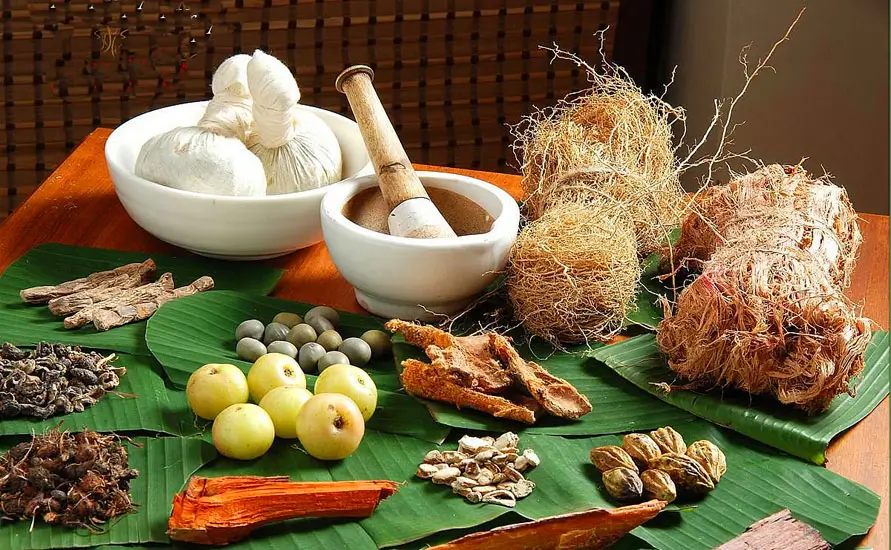
In the morning cool, the resort botanist leads a small group through the herb garden, where many of the plants used in your oils and decoctions grow in labeled beds. You see holy basil, brahmi with its small round leaves, the silver-gray stems of ashwagandha, fragrant vetiver grass, the creeping guduchi vine and tall drumstick trees. The botanist explains which parts are used, how leaves are dried or boiled, and why some oils take days to prepare in large copper vessels. Most guests are surprised how much of the pharmacy comes from just a few garden beds.
After a long rest in the afternoon, the doctor walks you through the next morning step by step: when you will take the herbal purgative, roughly how many hours it acts, what you can drink, and what signs to report. Virechana is chosen for many guests in this program, but the doctor may choose vamana, therapeutic emesis, or adjust the sequence entirely if it suits your case better. Dinner is an early, small bowl of rice gruel. Keep the evening quiet, and lay out comfortable clothes and a flask of warm water by the bed. Overnight at the Ayurveda resort.
Early in the morning, after a short abhyanga and a few minutes of steam, you take the virechana preparation, a herbal purgative prescribed and measured by the doctor. Within a few hours it starts to act, and the day is spent in or very close to your room, which has its own bathroom. A nurse or therapist checks on you at intervals, the doctor comes by more than once, and you are asked to sip warm water steadily and keep a simple count for the medical team. It is a private, slightly tiring day, and the staff handle it with calm and discretion.
There is no yoga, no outing and no other treatment today. Most guests rest on the bed or a reclining chair, read light books or listen to soft music, and doze when they feel like it. Talking little helps. The doctor stops the process with warm water or a simple remedy once enough has been achieved, and judges this by your energy and pulse as much as by anything else. You may feel weak by mid-afternoon, which is normal and passes. Should anything feel wrong, call the team at once; a physician is on the premises throughout the day.
In the evening, when the purgative has finished acting, you receive the first food of the day: a few spoonfuls of thin, watery rice gruel called peya, served warm with nothing more than a little salt. It will taste better than almost any meal you have eaten in months. The doctor checks your pulse and explains that the next few days will rebuild your digestion step by step, so you should resist the urge to eat more than is given. A warm shower, a cotton shawl and an early night close out a demanding day. Overnight at the Ayurveda resort.
The days after virechana follow a careful diet ladder called samsarjana krama. Meals climb one step at a time from thin peya to a thicker gruel called vilepi, then to soft rice with green gram soup, and only later to normal portions with vegetables. Each step depends on how well you digested the last, and the kitchen prepares your bowls separately from those of guests in other phases. Mornings start slower today, with a long sleep allowed if the doctor agrees, and many guests feel washed out and pleasantly empty, a little like the morning after a fever has broken.
Yoga is limited to breathing and a few seated stretches for the neck and shoulders. The teacher introduces bhramari, the humming bee breath, in which you close your ears gently with your thumbs and hum on each exhalation. The vibration is soothing, and the practice is traditionally used to quiet mental chatter. Meanwhile your therapist offers a short, very gentle head massage with a cooling oil. Otherwise the day belongs to rest, journaling and a slow walk around the lily pond after about five o'clock, when the sun loses its sting.
During rounds the physician reviews the virechana day with you, asks about sleep and thirst, and sketches the next phase of the program. The coming week centers on basti, the procedure many Ayurveda texts rank as the most important of all, and the doctor explains in plain terms how it is done, how privacy is protected and why it alternates oil-based and decoction-based forms. Questions are encouraged. Dinner is vilepi, a little thicker than yesterday, with a pinch of rock salt and roasted cumin, and you go to bed early again. Overnight at the Ayurveda resort.
By today most guests are back on soft rice with green gram soup, and the first lightly cooked vegetables appear by the evening. The doctor is watching for a clear appetite, a clean tongue and steady energy before the basti course begins tomorrow. A light abhyanga with a mild oil returns, without steam, to keep the body supple. The pace still feels slow, but you may notice small changes many guests report at this point, such as feeling hungry at regular hours, waking up earlier or sleeping more deeply, all of which the physician notes in your file.
In the late morning the resort chef invites guests into the open kitchen for a hands-on cooking demonstration. Guests learn to make three dishes that appear often on the Ayurveda menu: a mild moong dal with ghee and cumin, a dry thoran of shredded cabbage and carrot tossed with coconut, crackled mustard and curry leaves, and a fragrant rasam of tomato, pepper and tamarind. The chef explains which spices Ayurveda treats as warming or cooling and how dishes change with the seasons. Everything is cooked on low flames in heavy-bottomed pans, and you taste the results at lunch.
Afternoon brings a nap if you need it, then a slow yoga session that reintroduces gentle standing postures such as mountain pose and the tree balance, held for only a few breaths each. The teacher stresses that strength returns at its own pace after a cleanse and that it is better to stop early than to push. A short meditation on gratitude closes the class. The doctor's evening visit confirms when tomorrow's first basti will happen, shortly after a small breakfast, and you receive a written note on what to expect. Overnight at the Ayurveda resort.
The basti phase opens today with anuvasana, a small medicated oil enema given after a light breakfast. Basti is administered in a private treatment room by a trained therapist following the doctor's instructions, and the whole process takes only a few minutes. Before it, you receive an abhyanga on the lower body and a little steam to relax the abdomen. Afterward you lie quietly on your left side for a while, then rest in your room. The oil is meant to be retained for some hours, and the team explains what is normal so that nothing comes as a surprise.
Basti courses in Ayurveda come in set patterns, often eight or sixteen sessions in which oil-based and decoction-based forms alternate in a fixed order. Your doctor chooses the pattern and the formulas based on the opening consultation and on how you responded to virechana. Many classical texts call basti half of all treatment in Ayurveda, which explains why it takes up the longest stretch of your three weeks. If you have a stiff or painful lower back, the doctor may add kati vasti, in which a dough ring is placed on the lower spine and filled with warm oil.
With the morning taken up by treatment, the afternoon is free for rest and a short garden walk. The yoga teacher suggests avoiding twists and strong abdominal work during the basti days, and today's class is a gentle sequence of leg stretches lying on the back, followed by legs resting up the wall. Dinner is soft rice, a light vegetable curry and buttermilk spiced with ginger. Most guests report feeling warm and heavy after anuvasana, and a hot water bottle on the belly is offered by the staff if needed. Overnight at the Ayurveda resort.
Today brings the second form of basti, niruha or kashaya basti, given before you have eaten anything. Its liquid is prepared fresh in the treatment wing just before it is used, by blending honey, rock salt, medicated oil, a herbal paste and then the warm decoction, always in the same strict order, until it forms an even mixture. The therapist explains each ingredient as it goes in. Niruha is meant to be passed within a short time, usually within an hour, after which you shower, rest and then eat a light warm lunch. The doctor checks in immediately afterward and again later.
For many guests, this is the moment the program begins to feel less like a holiday and more like the serious work it is. Being honest about tiredness, emotions or discomfort helps the team adjust the plan, and the doctor may change the order of the next sessions or extend the rest periods. Some guests report vivid dreams or swings of mood during the basti days, which the physician says are commonly described. A guided meditation at midday is built around a simple phrase repeated silently with each breath, a method the teacher finds easier than trying to empty the mind.
By late afternoon you will probably feel lighter and hungrier. Take a short stroll along the water's edge if you are in Kumarakom, where egrets and cormorants stand in the shallows, or along the shaded paths between nutmeg and coconut trees if your resort lies near Thrissur. Evening yoga is replaced by yoga nidra, a guided relaxation practice done lying on the back under a light blanket, in which the teacher's voice leads your attention around the body. Many guests fall asleep during it, which is perfectly fine. Overnight at the Ayurveda resort.
The basti course continues with the next session in your pattern, followed later in the morning by pizhichil, the oil-pouring therapy for which Kerala physicians are known across India. You lie on a large wooden droni, the traditional treatment table carved from a single piece of timber, while a team of therapists wrings heated medicated oil from soaked cloths held above you, letting it run over your body in steady streams as they massage at the same time. A helper keeps rewarming the oil so it never turns cool, and a cloth band keeps it out of your eyes. The session lasts around an hour.
Pizhichil has long been regarded in Kerala as a royal therapy, because large quantities of oil were once affordable only for kings. Today many physicians include it during basti courses, following tradition, to support the nervous system and ease stiff muscles, and most guests simply call it the most comforting hour of the three weeks. You rest for at least an hour afterward, wrapped in a cotton sheet and with the fan switched off, before a warm bath with herbal powder that lifts the oil from the skin. Lunch is soft rice, a gentle sambar and stewed pumpkin.
The afternoon is free. A favorite way to pass it is on the veranda with a flask of herbal tea, coriander or cumin in water, while rain clouds build over the fields. The doctor drops by toward evening to ask about energy and appetite and to confirm whether tomorrow's short outing is suitable for you, as some guests prefer to stay inside the resort during the basti phase. Before bed the teacher leads ten minutes of sitali breathing, inhaling through a curled tongue, which is traditionally said to cool the body on warm evenings. Overnight at the Ayurveda resort.
After your morning basti and a rest, the doctor agrees to a short excursion, kept to about two hours and planned for the cooler part of the day. If you are staying in Kumarakom, a boatman with a single bamboo paddle guides a narrow wooden canoe along slim canals, past palm-shaded houses whose front steps run straight down into the water. Along the way you might see laundry being beaten on stone steps, children rowing to school and ducks being herded along the banks. There is no engine noise, and the canoe stays in sheltered water close to the resort the whole time, so you can turn back whenever you feel tired.
If your resort is near Thrissur, the outing is an early-morning walk with a local guide around the Thekkinkadu Maidan, the large open ground encircling the Vadakkunnathan Temple, where the famous Thrissur Pooram festival gathers each April or May. Entry inside is for Hindus only, a rule set by the temple that guests are asked to respect, though the outer walls, the old banyan trees and the tall entrance towers can all be seen from the grounds. Your guide shares the temple's legends and points out the Kerala style of sloping tiled roofs and granite walls.
You are back at the resort before the heat of midday, with time for a light lunch and a long rest. Outings during treatment are meant to refresh the mind rather than tire the body, and the team keeps an eye on how you feel afterward. In the afternoon your therapist gives a short padabhyanga, working warm oil into the feet and then circling a small bronze bowl over the soles. Dinner includes the first soft chapati of the stay for many guests, with a mild vegetable kurma. The evening is quiet and early. Overnight at the Ayurveda resort.
Today's basti session is followed by elakizhi, a therapy that uses warm cloth pouches stuffed with chopped medicinal leaves, grated coconut, lemon and rock salt, fried briefly in oil. The therapists press and roll the pouches rhythmically over the body, paying extra attention to the joints and the back. If your neck and shoulders hold tension, the doctor may add greeva vasti, a small well of dough shaped on the back of the neck and topped up with lukewarm oil that is refreshed every few minutes. Together the two therapies run slightly past the hour mark, and you rest afterward as usual.
In the late morning the physician speaks about dinacharya, the day-to-day rhythm Ayurveda recommends for keeping balance once you are home. The topics are concrete and doable: waking before sunrise, scraping the tongue with a metal strip, oil pulling with sesame oil, a short self-massage before the bath, eating the largest meal at noon and sleeping by ten. The doctor is honest that very few people manage all of it and suggests choosing two or three habits that fit your own life. Printed notes are handed out, and guests swap ideas over lunch.
Afternoon yoga brings back slightly more movement, including cat-cow stretches on all fours and a gentle cobra, always within comfort. A short breath-counting meditation follows, counting each exhalation from one to ten and then starting again whenever the mind wanders. The teacher admits that most people barely reach four before losing count, and that this is exactly the point of the exercise. Dinner is light and early, and some guests use the evening to write letters or postcards home, a slow habit that suits the pace of the third week. Overnight at the Ayurveda resort.
Your last basti session of the course is given this morning, and the doctor reviews the whole phase with you during rounds. Many guests report a sense of lightness and calm by now, while others mainly feel tired, and both responses are discussed without judgment. The physician explains that the effects of Panchakarma are traditionally understood to unfold over weeks after the program ends, which is why the rebuilding days and the care you take at home matter as much as the procedures. Lunch is now close to a normal meal, with rice, dal, two vegetable dishes and buttermilk.
In the afternoon you receive netra tarpanam, a quiet therapy for the eyes. You lie on your back while the therapist presses a little ring of urad flour paste around each eye socket and fills it with lukewarm medicated ghee. You are asked to blink slowly inside the ghee for several minutes, which feels strange at first and soon becomes oddly peaceful. Guests who spend long hours at screens often ask for it. Afterward your eyes are washed gently with a herbal decoction, and you are asked to keep away from bright sun and books until bedtime.
With reading set aside, the evening is a good time for the session on ritucharya, the seasonal routine of Ayurveda, which the doctor gives in the garden at dusk. The talk explains how diet, exercise and sleep can be adjusted through the year, why heavier foods suit winter and lighter, cooling foods suit summer, and how the monsoon is seen as a season for care and rest in Kerala. Guests from colder countries ask how to adapt the advice to snowy winters, and the doctor offers practical substitutes for local foods. Overnight at the Ayurveda resort.
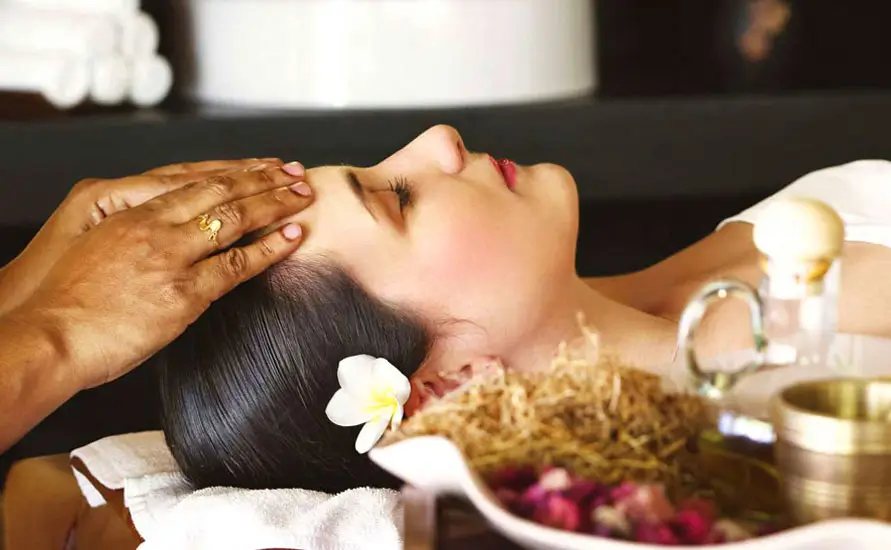
The fifth of the five classical actions, nasyam, begins today and usually runs for several days. In the morning the therapist works warm oil into your face, brow, throat and upper back, then applies gentle steam or warm towels to the face. You lie with your head tilted slightly back while a few measured drops of medicated oil are placed in each nostril, and you breathe in slowly. Afterward the therapist massages the palms, soles and shoulders, and you gargle with warm water to clear the throat. The whole session takes about forty minutes, and it is calmer than many guests expect.
Nasyam is described in classical texts as the treatment for the head and neck region, and the doctor asks you to follow a few simple rules during this phase: avoid cold wind, dust, cold water on the head and daytime sleep, and do not wash your hair until the doctor says so. A cotton cap or scarf is useful in the evenings. Yoga this morning focuses on gentle neck movements and the humming breath again, which many guests find pairs well with the feeling of open nasal passages after the therapy. Spicy and fried foods stay off the menu.
By now you know the rhythms of the resort, the staff and the other guests well, and the third week often feels like a small community. In the afternoon the resort may arrange a talk or a short performance in the garden pavilion, perhaps a demonstration of chenda drumming or a musician playing classical Carnatic pieces on the flute, depending on who is available locally. It is optional and short, and you are free to stay in your room instead. Dinner is a little more varied, and the doctor's evening round now takes only a few minutes. Overnight at the Ayurveda resort.
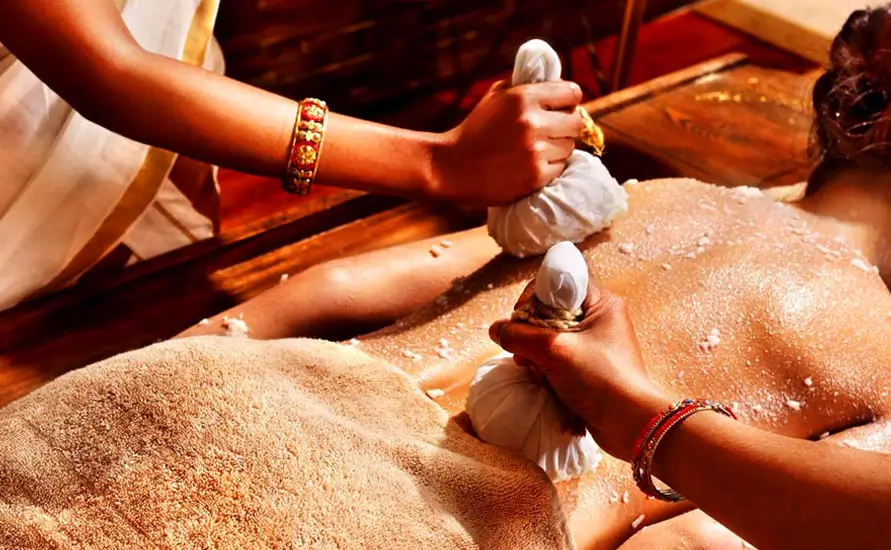
Nasyam continues this morning, and later the program turns toward rasayana, the rebuilding and nourishing phase that closes a classical Panchakarma. The signature therapy for this stage is njavarakizhi. Navara, a special Kerala medicinal rice, is simmered until soft in a mix of milk and herb water, then tied into small cotton pouches. The therapists dip the pouches into the warm milk mixture and massage the whole body with them in firm, steady strokes, coating the skin in a thin film of rice. An hour is typical, and Kerala tradition values it for feeding the muscles and tissues once the cleansing is complete.
When the session ends, the therapists scrape off the rice paste with smooth coconut-leaf spines and wipe the skin with warm oil, and you rest before a warm bath. The doctor may also prescribe a rasayana preparation, a herbal jam or a medicated milk drink, to be taken during the final days. Lunch feels almost festive: red rice, sambar, avial of mixed vegetables in coconut and curd, a cabbage thoran, papadam and a small portion of payasam, a sweet rice pudding made with jaggery, served as a sign that the hardest part of the program is over.
The afternoon is unscheduled, and many guests choose a slow walk around the grounds with a camera, noticing details they missed in the first busy days of treatment: the patterns on the wooden ceilings, the brass lamps in the treatment wing, the medicinal plants by the paths. The yoga teacher offers a longer closing sequence in the evening, bringing together the breath work, gentle stretches and relaxation practiced over three weeks, and hands out a written home routine of about twenty minutes. Meditation tonight is a guided reflection on the whole stay. Overnight at the Ayurveda resort.
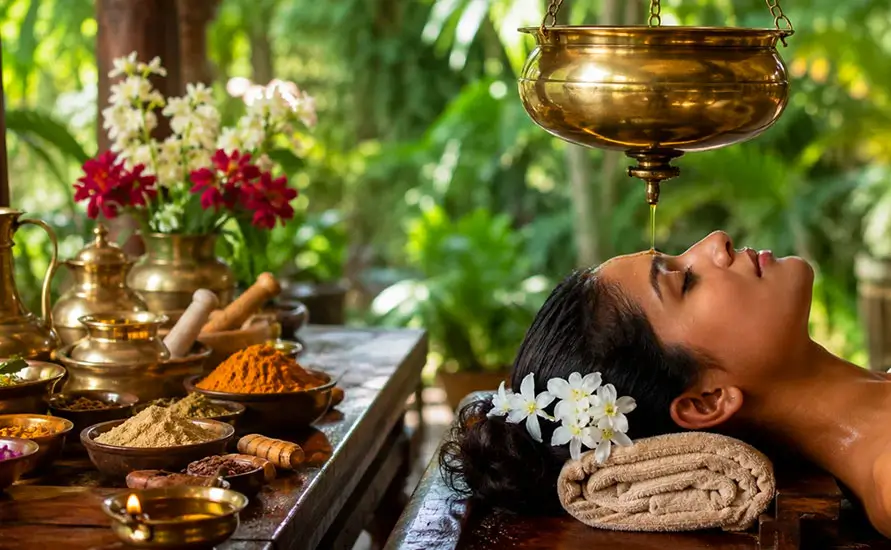
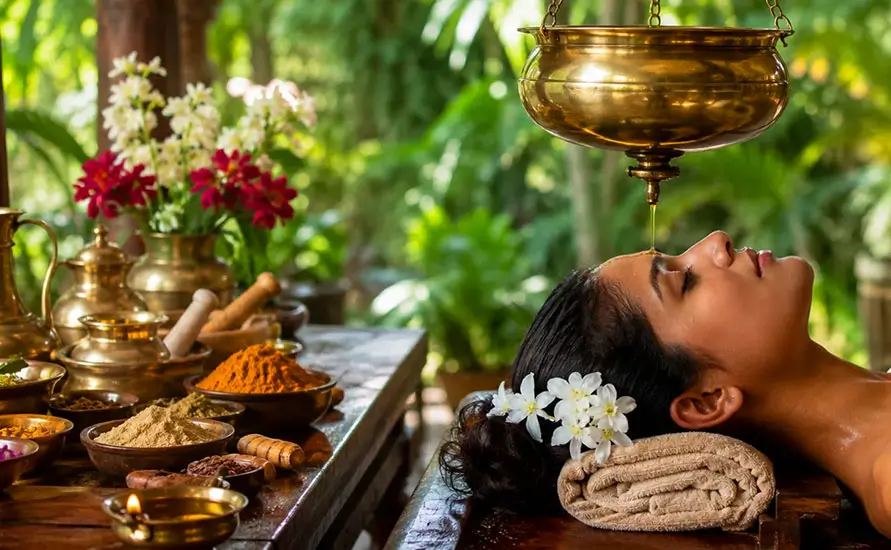
The final treatment of your program is often shirodhara, a therapy in which warm oil, or sometimes medicated buttermilk in a variant called takradhara, flows in a slow, steady stream onto the forehead from a vessel swinging above your head. The therapist moves it in a gentle arc from one temple to the other for thirty to forty-five minutes while you lie still on the droni with your eyes covered. It is widely described as one of the most relaxing therapies in Ayurveda, and it is a fitting way to close three weeks of work. Afterward you rest with the oil still in your hair.
Late morning brings your closing consultation with the physician, who reviews the full program, the notes from your journal and the changes you and the team observed. You receive a written diet chart for the next few weeks, a simple daily routine, guidance on gradually returning to normal foods, exercise and travel, and, if recommended, a list of herbal medicines to continue at home, which can be bought from the in-house pharmacy at extra cost. The doctor asks you to avoid heavy exertion, very cold food, alcohol and late nights for some time after the program, and to share these notes with your own doctor.
The afternoon is free to pack, settle any extra purchases and say goodbye to the therapists, cooks and gardeners who looked after you for nineteen days. Many guests exchange addresses with fellow guests, and some ask the botanist for seeds of holy basil to grow on a windowsill at home. The resort usually serves a slightly more elaborate farewell dinner, though still within your diet chart, followed by a short closing meditation in the pavilion as the evening insects start up. Pack your diet notes and medicines in your hand luggage. Overnight at the Ayurveda resort.
After a light breakfast and a last word with the doctor, you leave for Cochin International Airport in the same private car. Thrissur guests reach the terminal in roughly ninety minutes, Kumarakom guests in nearer to two and a half, so we schedule pickup with plenty of margin for your flight. Keep warm water with you, eat lightly on the plane and avoid alcohol and very cold drinks, as the doctor advised. With a departure close to midnight, ask us about a rest room at a hotel beside the terminal, so that you can lie flat for a while rather than wait in the lounge.
The days after Panchakarma call for gentle living rather than a rush back into deadlines, and the doctor's notes are there to help you through that transition. Our team stays in touch by email if you have questions about the diet chart or the home routine, and we can pass questions to the resort physician when needed. Should you want to return for a seasonal Karkidakam program or a shorter rejuvenation stay in a future year, simply let us know. Have a safe flight home.
Your Journey

N.S. Rathore & Mrs. Omlata Rathore · Managing Director
We still read every enquiry ourselves. Tell us the places you liked and our planners will send a day-by-day route with drive times and a clear price.
Every package can be customised and no pressure to book. A planner from our office replies within 24 hours with a route written for your group.
Fill this in and your planner will send a first draft itinerary.
Explore more
Kerala Backwaters Escape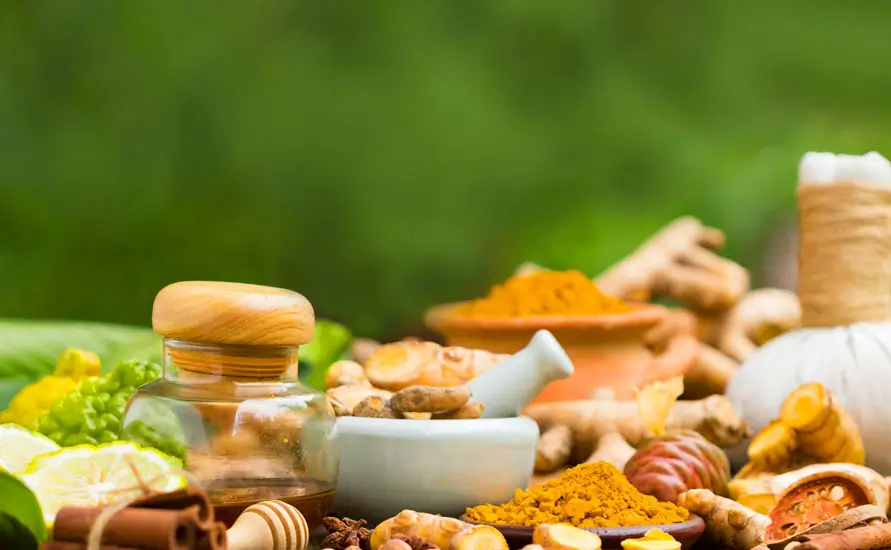 Kerala Backwaters Escape
 Kerala Backwaters Escape
 Kerala Backwaters Escape
 Kerala Backwaters Escape
 Kerala Backwaters Escape
 Kerala Backwaters Escape
 Kerala Backwaters Escape
 Kerala Backwaters Escape
 Kerala Backwaters Escape
 Kerala Backwaters Escape Kerala Backwaters Escape Kerala Backwaters Escape Kerala Backwaters Escape Kerala Backwaters Escape Kerala Backwaters Escape Kerala Backwaters Escape