
 Kerala Backwaters Escape

South India Tour with Rajasthan
Delhi – Jaipur – Ranthambore – Kochi – Munnar – Alleppey
At a glance
Children remember India through their hands and feet: the stamp of a wooden printing block, the bump of a safari jeep, the cool slap of a canal paddle. Our Rajasthan and Kerala family tour is shaped around those moments rather than around a checklist of monuments. Sixteen days take your family from the forts of Delhi and Jaipur to the dry forest of Ranthambore, then across the country by air to Kochi, the cool tea country around Munnar and finally onto a family houseboat in Alleppey. Every leg was chosen so that parents get the history and kids get something to do.
Pace matters more than anything when you travel with young ones, so no city is rushed. Jaipur gets three nights, Kochi and Munnar get three each, and the single long travel day, from Ranthambore to Kerala, is broken by a domestic flight with a connection. Road legs stay between three and five and a half hours, with snack and restroom stops planned in advance. Each road stretch is covered in your family's private air-conditioned car, its English-speaking chauffeur staying with you from city to city, and our local guides are briefed to keep the stories short, lively and aimed at younger listeners on this Rajasthan and Kerala family tour.
This 16-day India family itinerary is written for parents flying in from America, Canada, Britain, Europe or Australia, and for NRI households bringing children who were born abroad to see both ends of their heritage. Car seats can be requested, connecting hotel rooms or family suites are booked where possible, and meal times can follow your children rather than the clock. Two Ranthambore jeep safaris are included, but a tiger reserve is not a zoo, and nobody can guarantee which animals will show themselves. October to March suits both regions best, with the park open from October.
Long-haul flights with children are tiring, so the plan for your first day in India is mostly about sleep and food. A member of our Delhi office waits in the arrivals hall at Terminal 3 with a name board, helps load bags and any car seats you have requested, and travels with you to the hotel. Many flights from North America and Europe land in the small hours, and we recommend reserving your rooms from the previous night so the whole family can go straight to bed. A small welcome pack with local SIM details and a printed plan is waiting at check-in.
Later in the day, once everyone has napped and eaten, the car takes you on a short orientation drive through New Delhi. Kids usually enjoy the scale of the place: the wide lawns of Kartavya Path, the sandstone government blocks on Raisina Hill, and India Gate, the war memorial arch where Delhi families gather in the evening. Ice-cream carts, balloon sellers and toy vendors line the paths, and the arch lights up after dark. Your driver parks nearby while you stretch your legs, and there is no fixed schedule, so you can return to the hotel the moment anyone flags.
If the family still has some energy, stop at Gurdwara Bangla Sahib on the way back, a Sikh temple that welcomes everyone. Heads are covered with a scarf provided at the door, shoes go to a free counter, and small feet are washed in a shallow water channel that children often find fun. The highlight for most young visitors is the langar, a kitchen where volunteers cook dal and chapatis for thousands of people a day; older kids are sometimes invited to help roll dough. The sacred pool outside has large fish that children love to watch. Overnight in Delhi.
Breakfast comes first, and then a guide picks up the whole family for a day split between the old and new parts of the capital. Old Delhi starts at Jama Masjid, the great Mughal mosque whose courtyard opens to the sky, where visitors take off their shoes and cover arms and legs. Children can climb to the gateway steps and look out over a sea of rooftops. Nearby, the walls of the Red Fort run for more than two kilometers; because the fort shuts every Monday, we simply view it from outside if your Delhi day falls then. Short stops keep younger travelers from getting bored or overheated.
Next comes the part most kids talk about afterward: bumping along the alleys of Old Delhi in a cycle-rickshaw. The rider squeezes between porters, scooters and handcarts piled with fabric, and the guide points out shops that sell nothing but wedding hats, or kites, or brass pots. In winter the kite shops are full of paper kites ahead of the January flying season. Families who like food can stop for hot jalebi, spirals of fried batter soaked in syrup, cooked in front of you. Hand sanitizer and wet wipes are worth carrying in your day bag for this stretch of the morning.
After lunch at a family-friendly restaurant, you continue to Humayun's Tomb, a Mughal garden mausoleum in red stone trimmed with white marble, with paths and lawns where children can run safely between water channels. Your guide can turn the visit into a small game of spotting the six-pointed stars and the double dome. The final stop is the Qutub Minar, a tower so tall that kids often try to count its five stories from the ground, and the rust-resistant iron pillar beside it makes a good science puzzle for the drive back. Early dinner and bed follow. Overnight in Delhi.
An early start helps on this drive, because Delhi traffic is much lighter before eight in the morning. The hotel can pack breakfast boxes if you would rather eat in the car. Once past Gurgaon, the highway opens out into farmland where you might see camels pulling carts, women in bright saris working in mustard fields, and roadside stalls stacked with fruit. Plan to bring a few games, audiobooks or downloaded films for the children. The driver stops about halfway at a clean rest area with toilets, snacks and space for kids to stretch, and again if anyone needs a break.
You reach Jaipur, the capital of Rajasthan, in the early afternoon. Walls across the old city are washed in a soft terracotta, which is why it is called the Pink City, and children often like the story that the color was chosen to welcome a visiting British prince in 1876. After check-in, take time for lunch and a swim if your hotel has a pool. Our team chooses family hotels with garden space where possible, which matters after a morning in the car. Nothing else is planned until the late afternoon, so younger children can nap while older ones rest.
When the heat drops, the car takes you to Albert Hall Museum, a grand building in Ram Niwas Garden with a small but strange collection that kids enjoy, including an Egyptian mummy, old armor and dolls in Rajasthani costume. Pigeons crowd the square outside, and the façade lights up at dusk. For dinner, your driver can bring you to an open-air village-style venue outside town, where puppeteers, folk dancers and magicians perform while families eat thali on low tables. It runs late, so leave whenever the children are ready. Overnight in Jaipur.
Breakfast is quick today because Amber Fort comes first, about half an hour north of the city. Arriving early avoids the heat and the crowds, and jeeps carry the family up to the gate, or you can walk the stepped ramp; we do not use elephant rides. Inside, children usually head straight for the Sheesh Mahal, a hall of inlaid mirror chips where the guide lights a single candle and the walls sparkle like a night sky. The fort also has narrow passages, stairways and lookout points that are fun to climb. Keep a hand on small children near the low walls and edges.
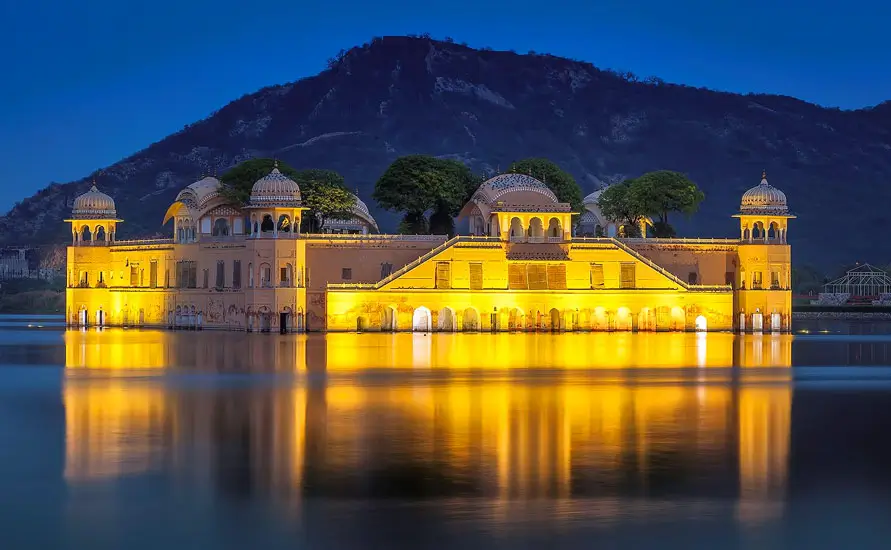
Coming back down the hill, you stop for a photo of Jal Mahal, a palace standing in the middle of a lake. Then the guide brings the family to Jantar Mantar, an 18th-century observatory that looks like a giant playground of stone shapes. It is actually a set of instruments for measuring time and tracking stars, and the guide can show children how the shadow on the largest sundial moves while they watch. Older kids with an interest in science often find this the best stop in Rajasthan. The site is open to the sky, so hats and water bottles are essential.
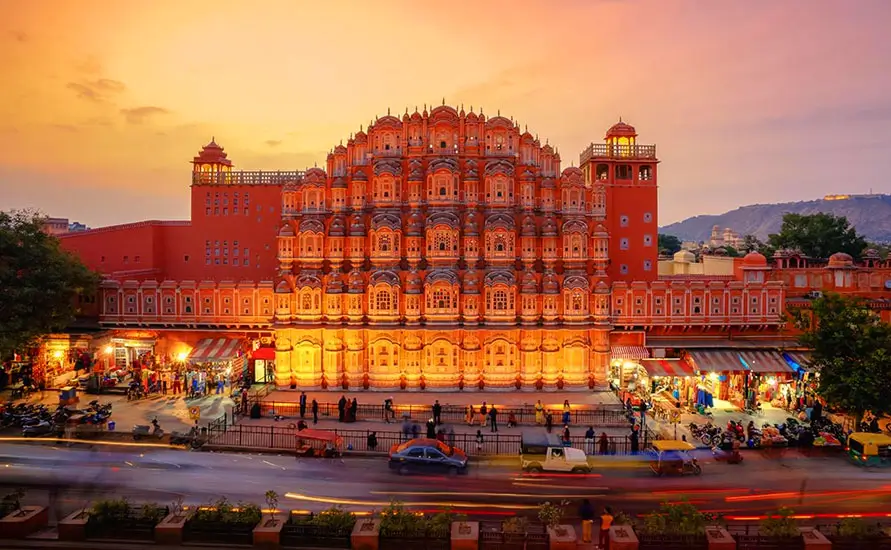
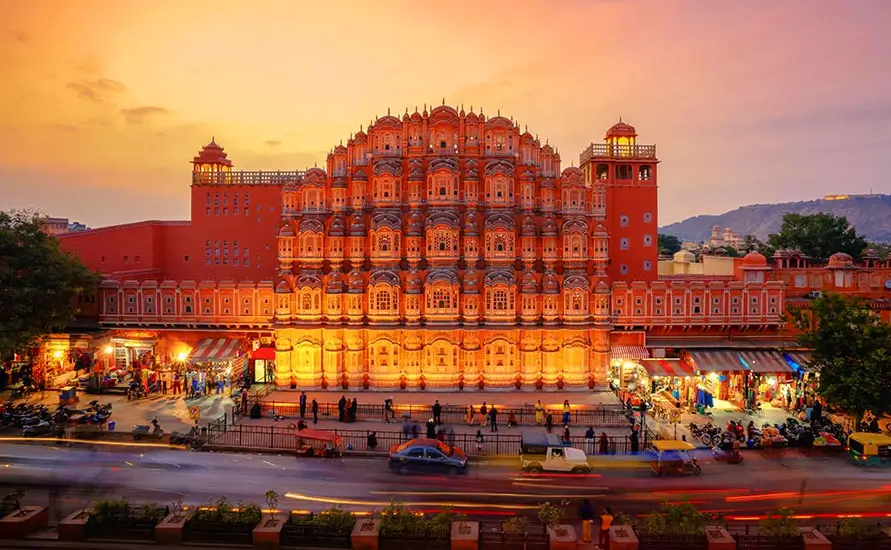
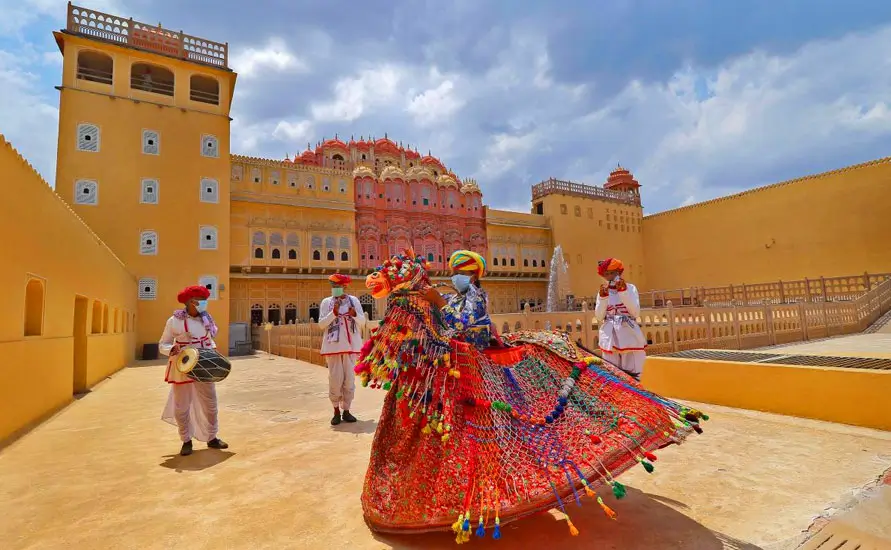
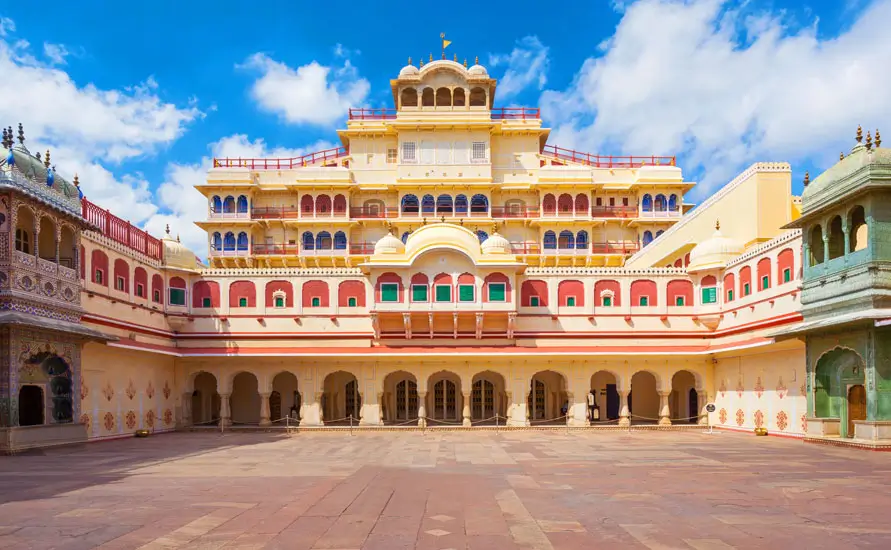
After lunch, the City Palace shows how Jaipur's rulers lived, with colorful courtyards, painted doors and a gallery of royal clothes, including robes made for a famously enormous maharaja. Children like guessing how big he must have been. Across the road, the pink front of Hawa Mahal has hundreds of little windows that let palace women look down at the street without being seen. The family can count the windows from a café on the opposite side over a mango lassi. Swimming, napping or a short bazaar stroll fill whatever is left of the day. Overnight in Jaipur.
Today is a hands-on day, built around one of the oldest crafts in Rajasthan. About an hour's drive from Jaipur, the village of Bagru has been home to families of chhipa printers for centuries. A craftsman shows the family how carved teak blocks are dipped in natural dyes made from indigo, pomegranate skin and iron rust, and then pressed onto cotton in careful rows. Each child then prints a scarf or a small piece of cloth, which is washed and dried in the sun before you leave. It is messy in a good way, so dress the kids in clothes that can take a splash of dye.
Back in Jaipur, lunch is at a family-friendly restaurant, and the early afternoon is free. Many families use it for a pool session or a quiet hour. If your children are puppet fans, our team can arrange a short private kathputli show, a traditional Rajasthani string-puppet performance with drums, a snake charmer puppet and a horseman who gallops across the stage. It costs a little extra and is entirely optional. Alternatively, a walk through Bapu Bazaar lets older kids practice bargaining for embroidered jootis, the curled-toe slippers that every Rajasthani child seems to own in several colors.
Toward sunset, the road snakes up the ridge to Nahargarh Fort, which sits above the city on the Aravalli hills. The walls give the widest view of Jaipur, and the family can watch the rooftops shift from gold to orange while the light fades over the Aravallis. The fort's palace rooms are linked by a maze of corridors and staircases, a favorite with children who like hide-and-seek. Monkeys live around the ramparts, so keep snacks inside bags. You drive back down for an early dinner, and tomorrow's departure for the tiger reserve is not too early. Overnight in Jaipur.
After breakfast you leave Jaipur for Ranthambore National Park, near the town of Sawai Madhopur in eastern Rajasthan. The road runs through villages and farmland, and the landscape grows rockier as you near the park, where the Aravalli and Vindhya hill ranges meet. Allow roughly three hours, including a juice and snack break. Lodges here line the buffer zone outside the park, and most offer pools, gardens and family rooms. Check in, eat an early lunch and get ready, because the first safari leaves in the early afternoon. Sunscreen, hats and a light jacket for the open jeep are useful.
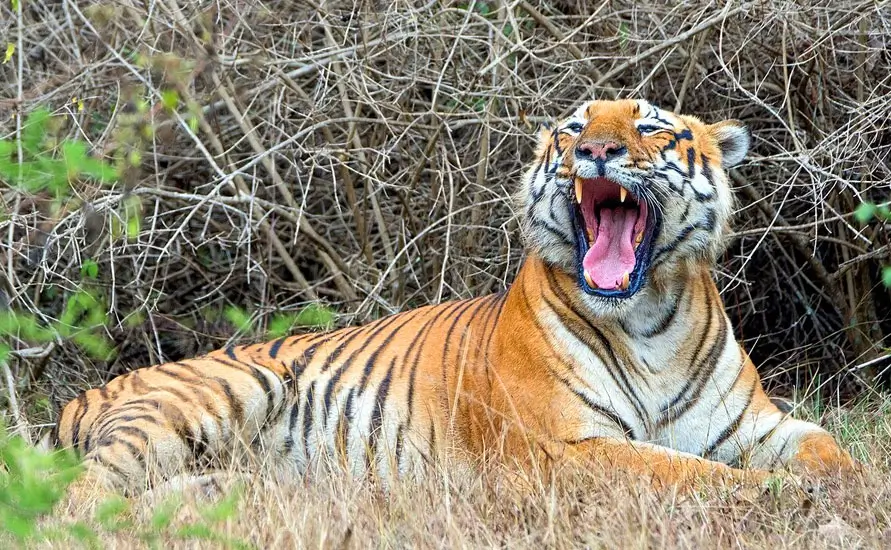
Safaris in Ranthambore are booked through the Rajasthan forest department, which assigns each vehicle to a zone. The family rides in a six-seat jeep, called a gypsy, or a larger open canter, depending on permit availability, with a trained naturalist and a forest department driver. The park has a healthy tiger population, but these are wild animals in a large forest, and no sighting can be promised. What children do see is a lot of other life: sambar and spotted deer, langur monkeys, wild boar, peacocks, crocodiles in the lakes and owls in the trees.
Park rules say everyone stays seated, talks in whispers and never offers food to any animal, which turns the drive into a game of silence for younger kids. The naturalist teaches the family to read pugmarks in the dust and listen for alarm calls from deer and monkeys, which often mean a predator is near. The jeep returns to the gate around sunset. Dinner at the lodge comes early, and many places have a campfire where staff tell stories about the forest. The core zones are closed from about July to September during the monsoon. Overnight in Ranthambore.
The alarm rings before dawn for the second Ranthambore jeep safari, which leaves the gate around sunrise. Morning in the forest has a different feel from the afternoon: the air is cool, mist lies over the lakes, and animals are moving after the night. Wrap the children in warm layers for the first hour, especially between November and February, when open jeeps can be surprisingly cold. Bring binoculars if you have them. The naturalist will stop at waterholes, old banyan trees and the ruined pavilions that dot the park, each one a good place to wait quietly and see what appears.
After the safari, the lodge serves a late breakfast, and the hot midday hours are kept clear for naps, the pool or a game of cricket on the lawn. Many lodges in Ranthambore support local art projects, and older children may enjoy a visit to a small cooperative where village artists paint tigers and birds on cloth and paper. You might also stop at a village school or women's craft project supported by local conservation groups. These visits are low-key and voluntary, and our team will only arrange them if your family is interested.
In the late afternoon you drive into the park to Ranthambore Fort, a 10th-century stronghold inside the reserve and one of six Rajasthan hill forts on the UNESCO World Heritage list. The climb up the stone steps takes around twenty minutes, and children like spotting langur monkeys on the walls. At the top stands a Ganesh temple, where local families leave wedding invitations for the elephant-headed god, a lovely tradition to explain to kids. From the walls, the forest spreads out in all directions. Dinner and an early bedtime at the lodge follow, with tomorrow's flight in mind. Overnight in Ranthambore.
No other day on the itinerary involves as much travel as this one, so it starts at a calm pace with breakfast at the lodge. The car drives back toward Jaipur and straight to the airport, where you check in for a domestic flight to Kochi. Jaipur has few direct services to Kerala, so the flight usually changes planes at Mumbai, Delhi or Bangalore, and our team chooses timings that avoid very early starts or late arrivals where possible. Pack snacks, a change of clothes for each child and something to keep them busy at the connecting airport, and keep any medicines in your hand luggage.
Landing in Kochi feels like arriving in another country: the air is warm and humid, palm trees replace thorn scrub, and the signs switch to the curly script of Malayalam. Our Kerala driver meets you at the arrivals gate for the drive of about an hour to Fort Kochi, the old seaside quarter where your hotel is located. Dinner tonight can be simple, perhaps fish and chips Kerala-style or appam with mild vegetable stew, which most children accept happily. Tomorrow starts late to give everyone a slow morning after the travel. Overnight in Kochi.
Fort Kochi is flat, compact and shaded by old rain trees, which makes it an easy, low-traffic place for a family bike ride. After a late breakfast, a local guide brings bicycles in sizes for children and adults, and the group rides slowly along quiet lanes lined with Portuguese, Dutch and British buildings. The first stop is the beach, where the giant Chinese fishing nets swing down into the water. The fishermen work them with ropes and heavy stones as counterweights, and they sometimes let visitors help pull a net up to see what is caught.
Next, the bikes halt beside St Francis Church, a simple whitewashed Portuguese chapel from the first years of the 16th century; children are often surprised to hear that Vasco da Gama's body lay here for about fourteen years before it was shipped home to Lisbon. In the afternoon the car takes the family to Mattancherry. The Mattancherry Palace has painted walls telling stories from the Ramayana, and kids like spotting the monkey army. Nearby, the narrow street of Jew Town leads to the Paradesi Synagogue, where children can hunt for differences among the hand-painted Chinese porcelain tiles, no two of which match. Neither site opens on Fridays, and the synagogue is closed to visitors on Saturdays and Jewish holy days as well, so we slot this afternoon onto a date that keeps both available.
The evening belongs to Kathakali, Kerala's classical story-dance. Arrive early at the theater to watch the performers apply their thick green, red and white make-up, which takes more than an hour and fascinates most children. The show itself is cut to about an hour for visitors, with a short explanation of hand gestures and eye movements at the start. Younger kids enjoy the noise of the drums and the dramatic faces of the demon characters. A family dinner of mild Kerala fish curry or vegetable biryani follows at a garden restaurant near the hotel. Overnight in Kochi.
Kochi rewards families who take it slowly, and today mixes activity with free time. Late morning, the family joins a Kerala cooking class in a local home, where the host shows how to make fish moilee, thoran with grated coconut and fluffy appam. Children can grind spices with a stone, crack a fresh coconut or simply taste everything, and everyone then eats what they helped cook at the host's dining table. Hosts are used to adjusting the heat level for young guests, so let our team know about allergies or mild-food preferences when you book.
After lunch, a small training school hosts the family for Kalaripayattu, a fighting art Kerala has practiced for many centuries. Performers in red loincloths leap, kick and spin with sticks, swords and shields, often in a sunken earthen arena. An hour is the usual length, and it ranks among the favorite activities with older children, who usually want to copy the moves afterward. Some centers let young visitors try basic stances with an instructor. Photography is usually allowed, though it is polite to ask before using a flash during the display.
Late in the afternoon, a public ferry ride across the harbor gives children a cheap, fun glimpse of daily life in Kochi. The boats carry commuters, schoolchildren and scooters between Fort Kochi, Vypin Island and Ernakulam, and from the deck you can watch container ships, fishing boats and sometimes dolphins in the channel. Back on shore, the beachfront promenade has vendors selling fried banana chips and fresh lime soda. Dinner tonight is your choice, and the hotel can pack a picnic breakfast for tomorrow's drive to the hills if you plan an early start. Overnight in Kochi.
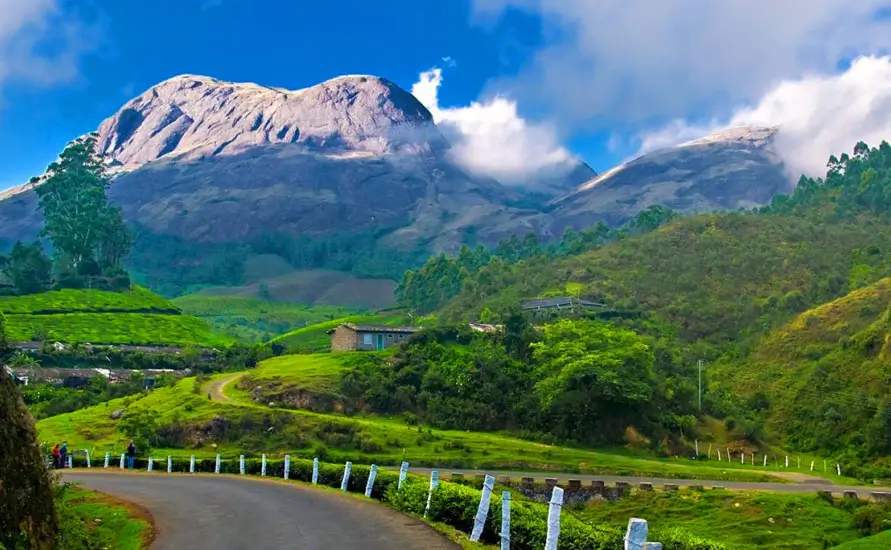
Today the family trades the coast for the Western Ghats, climbing toward Munnar, a hill town at about 1,600 meters. For the first hour or so you pass rubber and pineapple estates on level ground, before hairpin bends carry you up through forest and spice gardens. Children prone to car sickness should sit up front and take a remedy before the climb, and the driver is happy to pull over at any time. The air turns cooler with every bend, and you will soon see the first tea bushes covering the slopes like a green blanket.
On the way, the driver pulls over at Cheeyappara and Valara waterfalls, two waterfalls that drop over the rocks within a few steps of the car. Their flow peaks once the rains end, roughly August through November, but worth a short stop at any time of year. Vendors nearby offer sweet tea, corn on the cob and cut pineapple, and monkeys watch hopefully from the trees. Keep food out of sight and windows closed at these stops. A stop at a spice farm on the way lets children see pepper vines, cardamom pods and cinnamon trees growing in the shade.
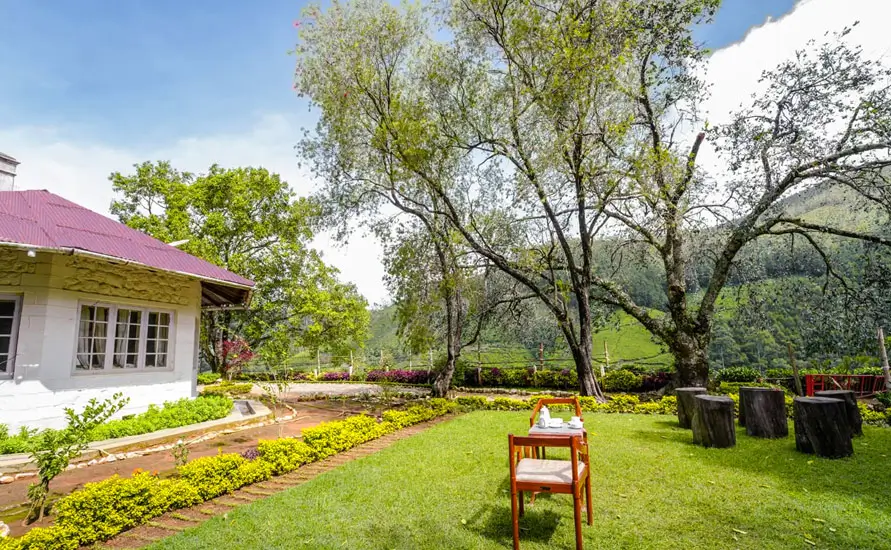
By early afternoon the family is checking in at a resort ringed by tea estates, often with family cottages and gardens. After lunch nothing is scheduled, so wander the grounds or sleep. Night temperatures up here drop sharply, especially from December to February, so pack sweaters or fleeces for everyone. Many resorts have games rooms, campfires or short nature walks with a naturalist, and our team can suggest the best fit for your children's ages. Tonight's meal is served at the resort, where the kitchen can usually prepare plain dal, rice and grilled chicken for fussy eaters alongside Kerala curries. Overnight in Munnar.
Start the morning at Eravikulam National Park, about thirty minutes from town, whose rolling grassland shelters the Nilgiri tahr, a stocky brown mountain goat that children quickly learn to spot on the rocks. Visitors board a forest department bus from the entrance to the open slopes, where these animals are often seen nibbling grass near the walkway, though as with all wildlife nothing is certain. Behind the grassland rises Anamudi, the highest point in the Western Ghats. The park shuts each year for the calving period, generally around February and March, and our team will tell you if your dates fall then.
In the afternoon, the KDHP Tea Museum explains how Munnar became one of India's great tea regions. A short film covers the British planters who cleared the forests in the late 19th century, and then a guide leads you through the factory where green leaf is wilted on long troughs, crushed by rollers, oxidized and finally dried in hot-air dryers. Children enjoy the noisy rolling machines and the smell of fresh tea. The visit ends with a tasting, and families can pick up tea and cardamom to take home. Photography inside the processing area may not be allowed, and the guide will tell you where.
As the light softens, a plantation guide takes the family along the rows of bushes. Pickers, most of them women, pluck only the tender top shoots, and the bushes are clipped flat at roughly hip level so hands can reach every part. Kids can try picking a few leaves and learn to tell young growth from old. The walk follows easy paths with good views, and it is short enough for small legs. Tea and pakoras wait at the resort before dinner, and if anyone is still curious the staff can often show how to brew a proper cup of Munnar high-grown tea. Overnight in Munnar.
A day of easy outings around Munnar, with no long drives and plenty of time outdoors. The first stop is Mattupetty Dam, a dam lake framed by tea slopes and tall eucalyptus. Along the road you may pass a dairy farm run by the state, and children often enjoy seeing the cows up close. Speedboats and rowing boats are available for hire, and life jackets are provided for all ages. Keep a close eye on younger children near the water's edge. Roadside stalls sell carrots, strawberries and homemade chocolate, a Munnar specialty.
Further along the same road, Echo Point is a lakeside spot where children shout toward the far bank and laugh when the hills answer. It is simple fun, and families usually spend more time here than planned. Beyond it, Kundala Lake has pedal boats shaped like swans and small boats called shikaras, and in some years the hillsides nearby bloom with neelakurinji, a blue flower that appears only every twelve years. If the family enjoys a longer outing, our team can arrange a gentle trek or a jeep ride to a viewpoint.
No outings are planned after lunch. Many families use it for a swim, a board game or a nap before tomorrow's early start. For those with energy, a visit to a local spice garden or a short plantation walk adds a little more of Munnar's green landscape. Our team can also book a short Kathakali or Kalaripayattu show in town if your children want to see one again. Pack the bags tonight, because tomorrow's drive to the backwaters leaves around seven to reach the houseboat by noon. Overnight in Munnar.
An early breakfast starts the day, and the car leaves Munnar around seven so the family reaches Alleppey before the houseboat check-in at about noon. The road winds down through tea estates and cardamom forests and then crosses the flat lowlands of central Kerala, where the landscape changes again to paddy fields, coconut palms and canals. The driver stops for a snack and a stretch on the way. Children who struggle with winding roads should sit in front for the first hour and look out of the front window rather than reading or watching a screen.
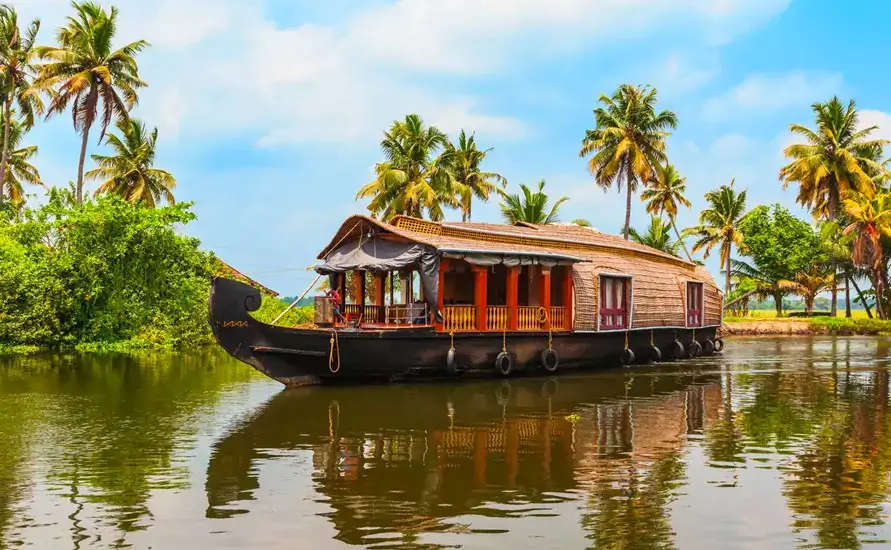
Your private Alleppey houseboat is a kettuvallam, a long wooden barge with a curved roof woven from palm leaves and bamboo, now fitted with bedrooms, bathrooms and an open deck. Most family boats carry a three-person crew who steer, cook and look after the deck, and they welcome children aboard with fresh coconut water. Family boats can have two or more bedrooms, and our team checks that railings and safety equipment are in place. Life jackets for children are available on request. Lunch comes to the table while the boat slips away from the jetty, with rice, fish fry, vegetable curries and fresh fruit.
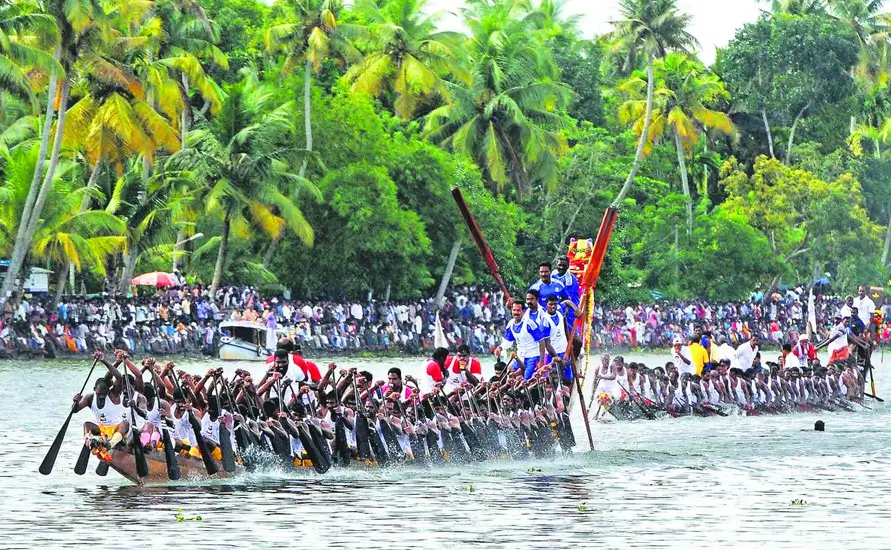
In the afternoon the boat glides slowly along the backwaters, passing village homes, small churches, ducks herded by farmers and children rowing to school. The crew can point out kingfishers, herons and cormorants, and older kids can sometimes sit with the captain at the wheel. Local rules require every houseboat to stop moving before dusk, which means the crew moors near a village, where you can stroll along the bank and watch the light fade over the paddy. Dinner is cooked on board and can be adjusted to suit children's tastes. Overnight on the houseboat.
Morning on the backwaters starts with birdsong, mist and the sound of villagers washing at the water's edge. Breakfast is served on deck, and the houseboat returns to the jetty for check-out at around nine. From there, a small country canoe takes the family into the narrow canals that the big boats cannot reach. A local boatman paddles slowly past coir-making homes, toddy tappers climbing coconut palms and tiny shops selling snacks from the bank. Children can try paddling for a few minutes, and the boatman keeps the trip short enough for young attention spans.
After the canoe ride, the car takes you to your resort near the sea or on a quiet stretch of the backwaters, where the trip's final night is spent. Many families choose a beach resort at Marari, about thirty minutes north of Alleppey, where the sand is wide and the village is quiet. Following lunch, the hours are yours for the pool, a nap or a walk on the beach, where fishermen pull their boats up the sand in the late afternoon. Sea conditions vary, and swimming is best left to calm days and supervised spots, especially during the monsoon.
On your final evening, the resort can lay a table for the family on the sand or under the palms, with Kerala dishes and simple choices for children. It is a nice time to ask the kids what they will tell their friends, and talk about their favorite days, from the rickshaw ride in Delhi to the safaris in Ranthambore and the houseboat in Alleppey. Our team will confirm tomorrow's pick-up time based on your flight, and the driver will help with luggage in the morning. Pack the printed scarves from Bagru carefully. Overnight in Alleppey.
After breakfast and check-out, the driver takes the family north to Kochi International Airport, usually reached in about two hours. We time the transfer to arrive well before your international flight, with plenty of time in hand before the counters close. For families on a late-night departure, we can try to hold a room for the afternoon so the children can shower, rest and eat before the long trip home. Remember that Kochi airport is busy in the early morning and late evening, so we plan around those peaks.
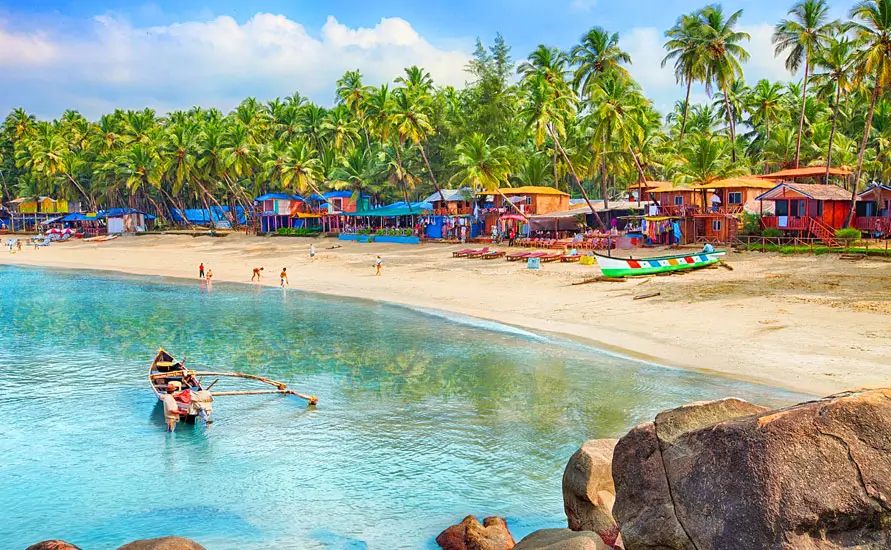
This brings the Rajasthan and Kerala family tour to a close, from the forts and bazaars of Jaipur to the jeep tracks of Ranthambore, Munnar's plantations and the slow waterways of Alleppey. We hope your children take home printed scarves, safari stories and a love of India that lasts. If you would like to return when they are older, Udaipur, Jodhpur or the Goa coast would suit a second family visit. Our team is always happy to plan the next family holiday whenever you are ready.
Your Journey

N.S. Rathore & Mrs. Omlata Rathore · Managing Director
We still read every enquiry ourselves. Tell us the places you liked and our planners will send a day-by-day route with drive times and a clear price.
Every package can be customised and no pressure to book. A planner from our office replies within 24 hours with a route written for your group.
Fill this in and your planner will send a first draft itinerary.
Explore more
Kerala Backwaters Escape Kerala Backwaters Escape
 Kerala Backwaters Escape
 Kerala Backwaters Escape
 Kerala Backwaters Escape
 Kerala Backwaters Escape
 Kerala Backwaters Escape
 Kerala Backwaters Escape
 Kerala Backwaters Escape
 Kerala Backwaters Escape
 Kerala Backwaters Escape
 Kerala Backwaters Escape
 Kerala Backwaters Escape
 Kerala Backwaters Escape
 Kerala Backwaters Escape
 Kerala Backwaters Escape
 Kerala Backwaters Escape