
 Kerala Backwaters Escape

South India Tour with Rajasthan
Delhi – Jaipur – Udaipur – Port Blair – Havelock
At a glance
Sandstone ramparts on a dusty ridge one week, coral sand and clear green water the next: very few routes in India swing between two such different worlds, and that swing is what our Rajasthan and Andaman Tour is built on. Days begin among the Mughal and colonial layers of Delhi, climb to Amber Fort above Jaipur, and slow down beside the lake palaces of Udaipur. Then a connecting flight crosses the subcontinent to Port Blair, and a fast catamaran carries you on to Havelock Island, where the final stretch is given over to swimming, snorkeling and long evenings on the beach.
Each base is booked for a pair of nights, which means five hotel changes across eleven days rather than ten. Rajasthan road legs run five to six and a half hours on good highways, broken by tea and lunch stops, and the leap from the desert state to the Bay of Bengal goes by air. In the islands, catamaran seats are reserved well ahead, which matters in the crowded winter season. Across Delhi and Rajasthan you keep the same air-conditioned vehicle and English-speaking driver throughout in Rajasthan and Delhi, a second car takes over in the Andamans, and licensed guides lead the city visits.
We designed this Rajasthan Andaman tour package for Americans, Canadians, Brits, Europeans and Australians, plus NRI families who want palaces and beaches in one holiday without juggling two separate bookings. Couples like the change of mood halfway through, and teenagers who love the water tend to count down to the island days. Plan for October through April, when Rajasthan afternoons are mild and the sea off Havelock is generally flat and clear. Hotel grade, room type and the sightseeing sequence can be reshaped around your dates and interests.
Flights from New York, Chicago, London or Frankfurt usually touch down at Indira Gandhi International Airport either well after midnight or close to noon, and in both cases someone from our Delhi office is posted outside Terminal 3 with your family name written in large letters on a board. Traffic decides how long the ride into the city takes, normally forty-odd minutes, though rush hour can stretch it past ninety. During the drive you are handed a small envelope with hotel vouchers, catamaran bookings for the Andamans and, if requested, a prepaid Indian SIM. Landing before dawn? Paying for the previous night means a made-up bed is waiting even at 4 am.
Fresh air and daylight help reset a tired body clock better than another nap does. Lodhi Garden, a short drive from most central hotels, is a public park where office workers jog, grandparents walk with grandchildren and couples sit on the lawns between the domed tombs of the Sayyid and Lodi dynasties, sultans who ruled here a century or more ahead of the Mughals. Paths are level and shaded by old neem and banyan trees. Your driver waits at the gate, so you can stay twenty minutes or two hours as you feel.
Khan Market and Lodhi Colony, both close by, are good for a relaxed first dinner, with menus ranging from tandoori kebabs and black dal to crisp dosas, Italian pasta and espresso bars. Tap water in Delhi is not safe to drink, so stick to the sealed bottles left in your room and in the car, and use them for brushing teeth too. Later in the evening our duty manager rings to confirm tomorrow's pickup time and to talk through practical points such as tipping norms, cash withdrawals and what to wear at mosques and gurdwaras. Overnight in Delhi.
Shah Jahan's walled capital, Shahjahanabad, is where the guided day begins, before its lanes become too crowded to move through comfortably. The red ramparts of the Red Fort come first; it stays shut on Mondays, and on other days you can either go inside or simply photograph the Lahori Gate from across the road. A short walk leads to Jama Masjid, a vast congregational mosque with room for thousands in its courtyard, where footwear is left at the stairs, arms and knees stay covered, and loose robes can be borrowed at the entrance. From there a cycle-rickshaw weaves you through Khari Baoli's spice wholesalers and the wedding-card printers of Chawri Bazaar.
Lunch can be butter chicken at an old family restaurant near the mosque or something lighter in Connaught Place, and then the afternoon shifts to the planned capital of New Delhi. At Gurdwara Bangla Sahib, a Sikh house of worship, volunteers run a community kitchen that feeds thousands of visitors daily, and you are welcome to watch the flatbreads being rolled and flipped on huge griddles. Everyone covers their head and leaves shoes at the entrance. Afterwards the car follows Kartavya Path, formerly Rajpath, past India Gate and the sandstone ministries that Lutyens and Baker drew up when the British moved their capital from Calcutta.
Humayun's Tomb comes next, a red and white garden mausoleum that Emperor Humayun's senior widow paid for after his death, whose double dome and raised platform set a pattern later followed at the Taj Mahal. By late afternoon the sandstone glows orange, and the charbagh gardens feel calm compared with the morning in Chandni Chowk. Last on the list is the Qutub Minar, a fluted sandstone minaret roughly 73 meters high that was begun around 1193, with a 4th-century iron pillar in the courtyard that metallurgists still study for its lack of corrosion. If Monday closures affect the plan, we simply reverse the order of the day. Overnight in Delhi.
Breakfast is early so the car can be on the road before Gurugram's office traffic builds up. Plan on five to five and a half hours to Jaipur, broken by a halt at a highway food court where hot parathas with pickle and sweet milky chai are served from about seven. Once you cross from Haryana into Rajasthan, the farmland thins into scrub and rocky Aravalli hills, and you begin to see women in red and orange veils carrying brass pots, camel carts loaded with fodder and roadside dhabas with rope beds outside. Photo stops are easy to arrange wherever there is space on the shoulder.
Arrival in Jaipur, the state capital, is usually around lunchtime, with a little time to rest at the hotel. The city was laid out in 1727 for Sawai Jai Singh II, a ruler as interested in the stars as in statecraft, on a grid of broad avenues divided into nine blocks, and its old quarter was colored terracotta pink in 1876 for a royal visit from Britain. Mid-afternoon, a local guide joins you at the Albert Hall Museum, an ornate Indo-Saracenic building opened in the 1880s, whose galleries hold Persian carpets, Rajput weapons, miniature paintings and, oddly, an Egyptian mummy acquired in Cairo.
Evenings inside the old walls are given over to shopping, and the bazaars fill with families buying bangles, lacquer jewelry and fabric for weddings. Johari Bazaar is the street for silver and colored stones, whereas Bapu Bazaar suits anyone hunting for mojari slippers stitched with thread work or soft hand-printed quilts. Hungry? Rawat Mishthan Bhandar near the Polo Victory cinema is famous for pyaaz kachori, a flaky onion pastry, and the guide can steer you to a stall selling lassi in clay cups. Nobody will take you into commission shops unless you ask. Overnight in Jaipur.
Beat the tour coaches by leaving for Amber Fort straight after breakfast; the hill palace stands roughly 11 km beyond the old city, above the waters of Maota Lake. Rather than riding an elephant, which we do not offer, you go up in a shared jeep or walk the cobbled ramp in about fifteen minutes. Inside, the guide shows how the Kachwaha rulers moved from the Diwan-i-Aam, where petitions were heard, through the painted Ganesh Pol and on into their private apartments. The Sheesh Mahal, a hall faced with countless pieces of convex mirror, was designed so that one lamp could fill the whole ceiling with light.
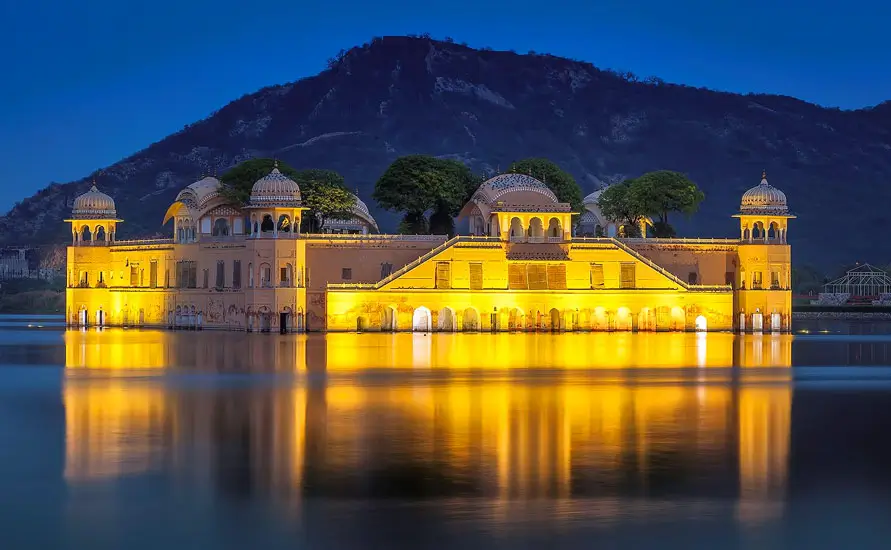
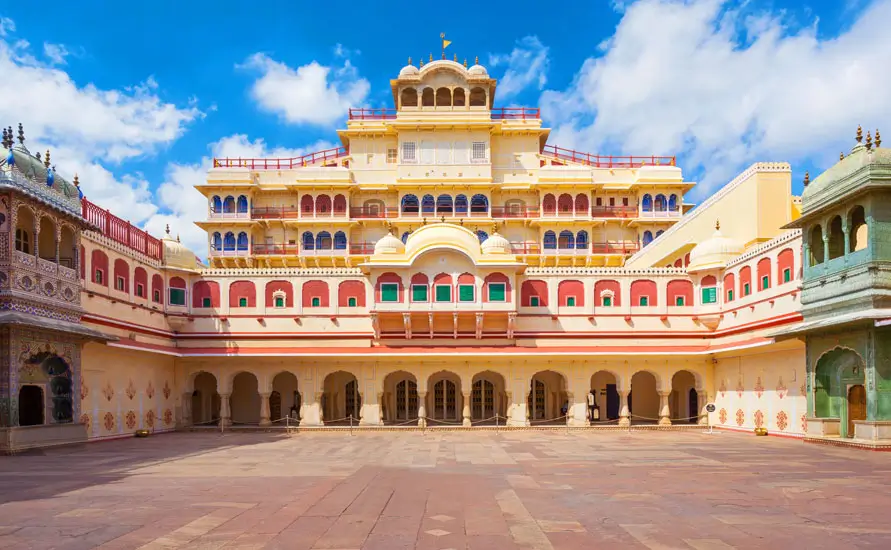
On the drive back, a quick photo halt at Jal Mahal shows a five-story palace sitting low in Man Sagar Lake, its lower floors under water. After that, the City Palace, part of which remains a home for descendants of the Jaipur royal line, and where a small courtyard has four richly painted doors, each tied to a season of the year. Look out for two enormous silver jars in the Diwan-i-Khas, made to carry Ganges water on a royal trip to England in 1902. Right beside it lies Jantar Mantar, an observatory on the UNESCO list, whose Samrat Yantra sundial reads local time to roughly two seconds of accuracy.
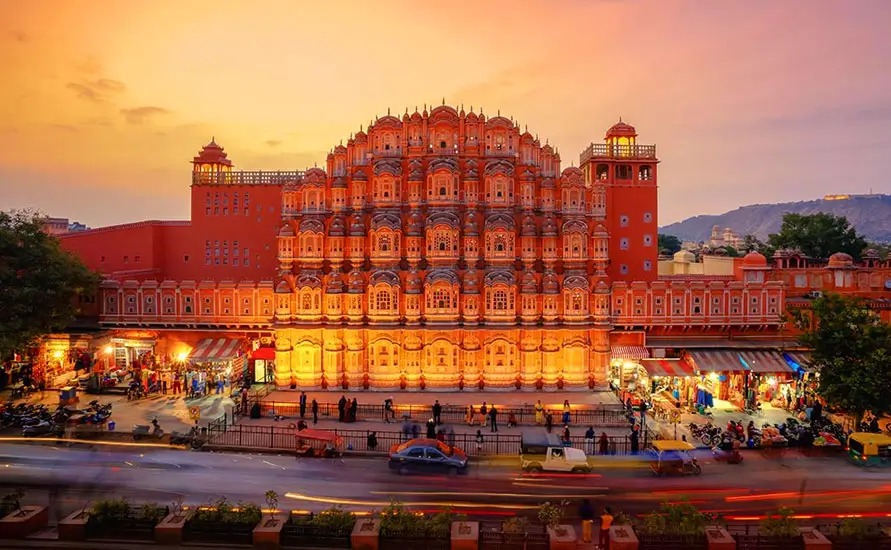
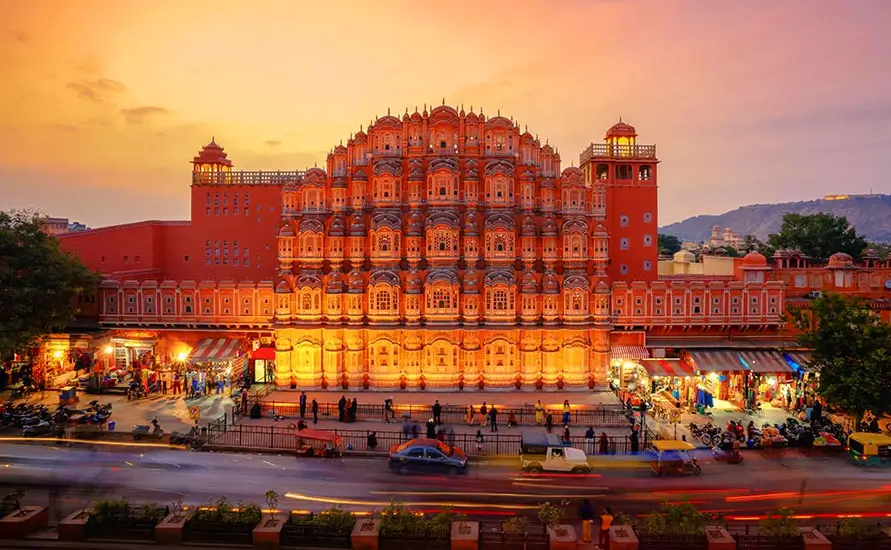
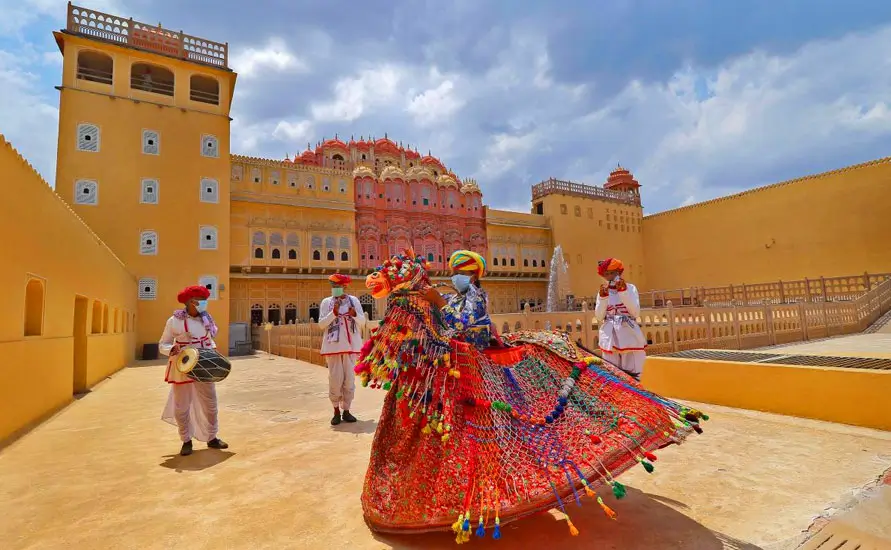
Toward evening the Hawa Mahal appears, its name meaning wind palace, a pink honeycomb of 953 little latticed windows built so that ladies of the court could watch festival parades unseen. Opposite the façade, several cafés have open terraces on their top floors, where you can sip ginger chai as the façade turns deeper pink. Rajasthani cooking makes a good dinner theme tonight: dal baati churma, gatte ki sabzi in a yogurt gravy and a bowl of ker sangri, all of which can be made milder on request. A block-printing demonstration in Sanganer can be squeezed in today or early tomorrow if you are curious. Overnight in Jaipur.
Udaipur is a long way south, so aim to be seated in the car by eight with some fruit and biscuits. National Highway 48 heads south past Ajmer and Bhilwara and is mostly a smooth divided four-lane highway, and the driver halts for a stretch every couple of hours. Lunch is taken at a reliable highway restaurant where dal, rice, paneer and fresh rotis are cooked to order, and plain food is never a problem. Winter brings yellow mustard fields, and closer to Rajsamand you pass white marble quarries and small shrines strung with saffron flags.
Beyond Bhilwara the highway runs close to Chittorgarh, whose hilltop fort ranks among the biggest in India and holds the Tower of Victory and the palace of Rani Padmini. A visit stretches the day by about two hours, so we only recommend it for early risers who do not mind arriving in Udaipur after dark. Otherwise you carry on into the Aravalli hills, where the countryside turns greener and the road bends between small reservoirs, mango groves and farming villages. Udaipur stands higher than Jaipur, and the evening air often feels a degree or two cooler.
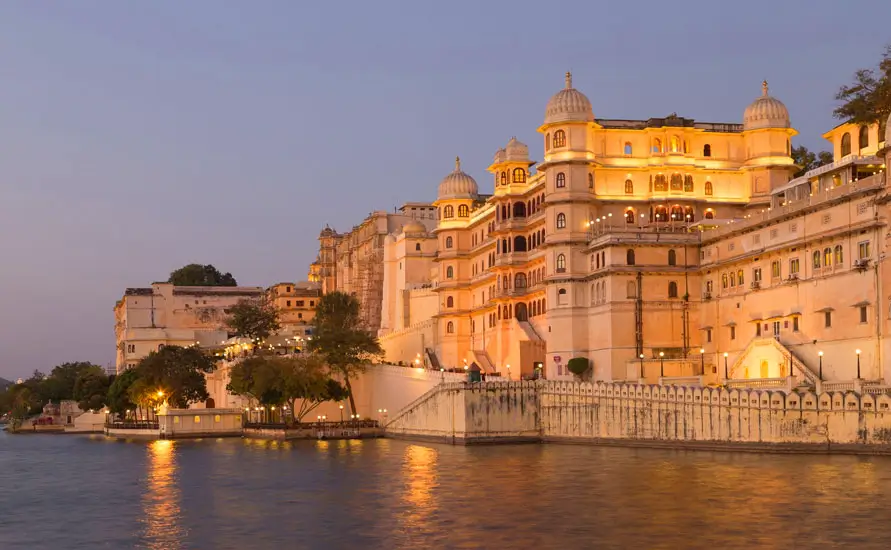
Expect to arrive in Udaipur between three and five, in time to settle into a lake-facing or old-city hotel before sunset. Maharana Udai Singh II founded the city in 1559, after Mughal pressure made the old fort of Chittor too exposed, and his successors linked a chain of man-made lakes to store monsoon water. For a first evening, stroll to one of the rooftop terraces around Lal Ghat and see the sky turn orange over the hills beyond Lake Pichola while the long white façade of the City Palace lights up beside you. Menus here mix laal maas and paneer curries with pasta and grilled fish. Overnight in Udaipur.
Mid-morning, a local guide walks you into the Udaipur City Palace, a string of eleven interlinked palaces added by Mewar rulers from the 16th century onward. Its corridors twist and narrow deliberately, a defensive trick to slow attackers, and then open suddenly onto courtyards such as the Mor Chowk, where three peacocks are set in glass mosaic. Rooms tiled in Dutch and Chinese ceramics lead to balconies hanging straight over the water. The museum displays portraits of Maharana Pratap, the 16th-century ruler who fought Akbar's army at Haldighati, along with stories of his horse Chetak. Allow at least two hours.
Down at the palace landing stage, a boat is ready to take you out on Lake Pichola, past bathing ghats, washermen beating clothes on the steps and pale old havelis rising from the water. You step ashore on Jag Mandir, a small island retreat where Prince Khurram, the future Shah Jahan, is believed to have stayed while rebelling against his father, and there is time to wander its courtyard gardens. After a free lunch, the guide leads you up the steep steps of the Jagdish Temple, a carved Vishnu shrine from 1651, and then to Saheliyon ki Bari, a garden of fountains and lotus pools laid out for the queen's companions.
Evening brings the folk dance program at Bagore ki Haveli, an 18th-century mansion on Gangaur Ghat with a small museum of costumes and household objects. The show lasts about an hour, with puppets, the swirling Gorbandh and Chari dances, and a closing number in which one dancer balances a tower of brass pots on her head. Seats are first-come, so arriving thirty minutes before the start helps. Prefer a sunset view instead? The Monsoon Palace on Sajjangarh hill, west of the city, can take the place of the show. Pack tonight, since an early airport run follows in the morning. Overnight in Udaipur.
Udaipur's Maharana Pratap Airport lies roughly 25 km east of town, and the car leaves early to reach it with time to spare. No airline flies straight from here to Port Blair, so the ticket routes you through Delhi, Mumbai, Bengaluru or Chennai, and door to door the day often adds up to six to nine hours. We pick connections with a sensible layover and, where airlines allow it, through-checked bags. Domestic baggage limits are usually lower than on your international ticket, so tell us in advance if extra kilos should be added to the booking.
Veer Savarkar International Airport lies at the southern edge of Port Blair, and our Andaman representative waits outside the arrivals hall. Hotels are mostly ten to twenty minutes away. If you land by late afternoon, you can attend the evening light and sound show at the Cellular Jail, which narrates the lives of freedom fighters jailed here by the British, with English and Hindi versions on alternate slots. Seats run out during the peak months, so we book them once your flights are confirmed. The jail is closed on Mondays. Overnight in Port Blair.
Daylight shows a different side of the Cellular Jail, a colonial prison completed in 1906 so that Indian revolutionaries could be held a thousand kilometers from home and now preserved as a national memorial. Seven three-story wings once spread out from a central tower like the spokes of a wheel, giving each prisoner a cell that faced the back of the next wing, so no one could talk to another inmate. Three of those wings still stand. A local guide walks you along the cell blocks, past the gallows and through the small museum, explaining why the islands came to be called Kala Pani, the black waters.
Check out late in the morning for the transfer to the harbor, where a private air-conditioned catamaran leaves for Havelock Island, renamed Swaraj Dweep in 2018. On a flat sea the boat docks after about two hours; reclining seats and large windows make it a pleasant ride. Departure times belong to the ferry operators and may shift in rough seas, so we leave the rest of today loosely planned. Island entry rules for foreign nationals have relaxed over recent years but are not identical for every country, so we confirm the current position for your passport during booking.
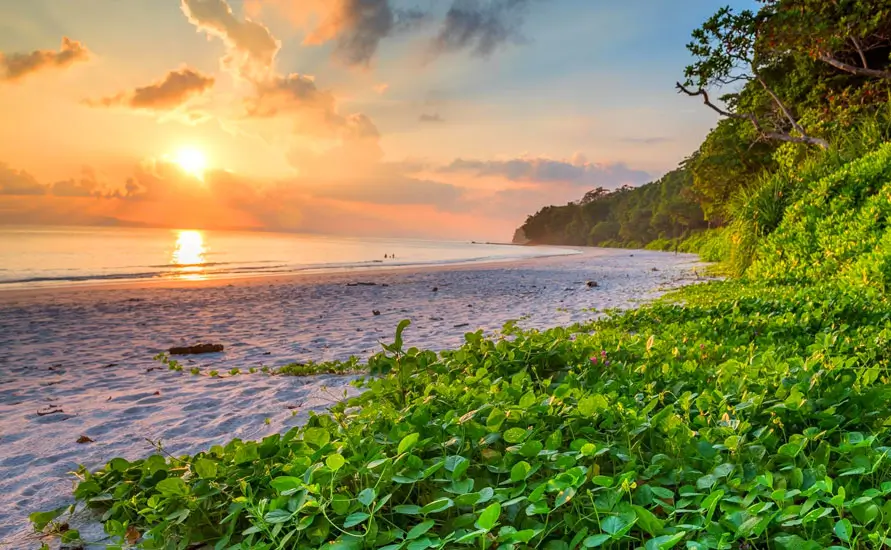
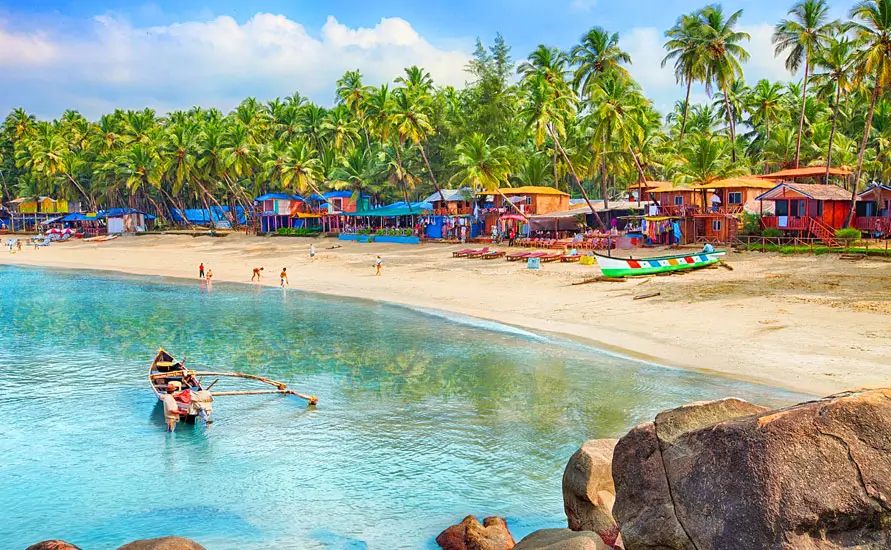
Havelock's jetty is a few minutes by road from most resorts, and our driver takes you straight to yours. Around four o'clock you head west to Radhanagar Beach, also called Beach No. 7, a wide arc of soft pale sand edged by tall mahua and padauk trees. Lifeguards supervise a flagged swimming zone, and on cloudless evenings the sun sets straight into the sea in front of you. Linger until dusk, then return for dinner, perhaps grilled red snapper with garlic butter, tiger prawns in coconut curry, or a mild vegetable stew with rice for anyone avoiding seafood. Overnight in Havelock.
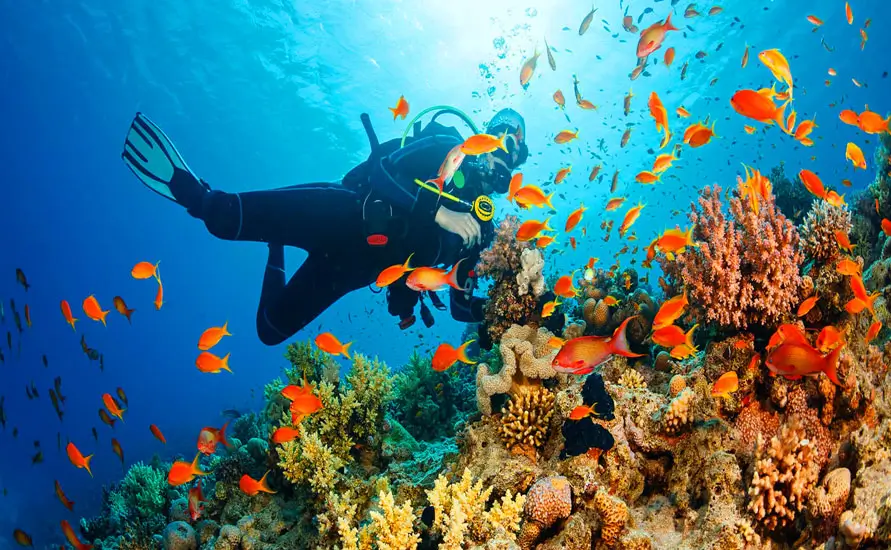
A twenty-minute speedboat ride after breakfast brings you to Elephant Beach on the north-western shore of Havelock. The reef here begins just a few meters off the sand in shallow water, which makes it a friendly spot for first-time snorkelers, and masks, fins and a short safety talk can be hired on the beach. Parrotfish, clownfish among anemones and domes of brain coral are often seen, though what turns up depends on tide, visibility and luck, and nothing is guaranteed. Anyone happier out of the water can ride a glass-bottom boat or relax under the trees above the tide line.
Licensed island operators also run sea walking, jet-ski rides and kayak trips, paid for on the spot, so you can decide once you see the conditions. Elephant Beach activities are suspended whenever the sea turns choppy, and on such days we head instead to Kalapathar Beach facing east, a calmer strip of sand with black rocks and a few simple tea stalls. By lunchtime you are back at your resort with a free afternoon for the pool, a siesta or a barefoot walk along the shore. Reef-safe sunscreen protects both you and the coral, and a full water bottle is worth carrying everywhere.
Keen divers will find several PADI-affiliated centers on Havelock offering try-dives for complete beginners and fun dives for certified divers; these are booked a day in advance and paid directly to the dive shop. Night life is low-key, limited to a few beachfront restaurants where the menus mix fresh fish, wood-fired pizza and the Bengali and Tamil home cooking brought over by mainland settlers. Fish curry with rice and a squeeze of lime is hard to beat after a day in the sun. Phone and internet signal can be weak, so tell family at home not to worry if replies are slow. Overnight in Havelock.
Early risers can catch sunrise from the east-facing beaches near the jetty, and it comes surprisingly early, because the islands keep mainland Indian time although they lie far to the east. Others may prefer a slow breakfast and a last swim before checkout. A mid-morning catamaran sails back toward Port Blair, a crossing of about two hours, and the car is waiting outside the terminal. A separate bag for wet swimwear keeps the rest of your luggage dry, and passports and ferry tickets should stay in easy reach, as staff check both before boarding.
Following a light lunch in town, a small ferry from Aberdeen jetty crosses to Ross Island, officially renamed Netaji Subhas Chandra Bose Dweep, once the seat of the British administration in the Andamans. The settlement was abandoned after an earthquake in 1941 and occupation by Japanese forces during the Second World War. Today its brick church, bakery, officers' club and commissioner's bungalow are gripped by the roots of giant ficus trees, and tame spotted deer graze between the ruins while peacocks call from the trees. Boat timings follow tides and weather and are confirmed on the day.
Back on the main island, the last hours of daylight can be spent at Corbyn's Cove, a small beach fringed with coconut palms about 7 km south of the center, or at a harbor viewpoint watching ferries come and go. If you want souvenirs, coconut-shell craft and cane work are good choices; coral and shells taken from the reef cannot legally be bought or exported. Dinner might be a spicy Andaman fish curry in town or something simple at the hotel, and our team calls in the evening to fix the airport pickup time for tomorrow. Overnight in Port Blair.
Your flight time decides how long the morning is, though most guests have time for breakfast and an easy stroll along the Marina Park promenade facing the harbor. The car then collects you for the short run to Veer Savarkar International Airport, where flights leave for Chennai, Kolkata, Delhi and other hubs that link to international departures. With a tight onward connection, a night in the hub city is the safer choice, and we can reserve one for you. Guests on late-night long-haul flights can also ask for a day-use hotel room in the connecting city.
Mughal tombs, Rajput hill forts, the lakes of Udaipur and the clear water around Havelock make an unusual pairing for a single trip, and we hope the switch from desert to sea felt like two holidays folded into one. Should Kerala's canals, Tamil temple towns or the western deserts of Rajasthan tempt you next time, our planners would be glad to put together a fresh route. We wish you a smooth trip back.
Your Journey

N.S. Rathore & Mrs. Omlata Rathore · Managing Director
We still read every enquiry ourselves. Tell us the places you liked and our planners will send a day-by-day route with drive times and a clear price.
Every package can be customised and no pressure to book. A planner from our office replies within 24 hours with a route written for your group.
Fill this in and your planner will send a first draft itinerary.
Explore more
Kerala Backwaters Escape Kerala Backwaters Escape
 Kerala Backwaters Escape
 Kerala Backwaters Escape
 Kerala Backwaters Escape
 Kerala Backwaters Escape
 Kerala Backwaters Escape
 Kerala Backwaters Escape
 Kerala Backwaters Escape
 Kerala Backwaters Escape
 Kerala Backwaters Escape
 Kerala Backwaters Escape
 Kerala Backwaters Escape
 Kerala Backwaters Escape
 Kerala Backwaters Escape
 Kerala Backwaters Escape
 Kerala Backwaters Escape