
 Kerala Backwaters Escape

South India Tour with Rajasthan
Delhi – Jaipur – Udaipur – Kochi – Kumarakom (Ayurveda resort)
At a glance
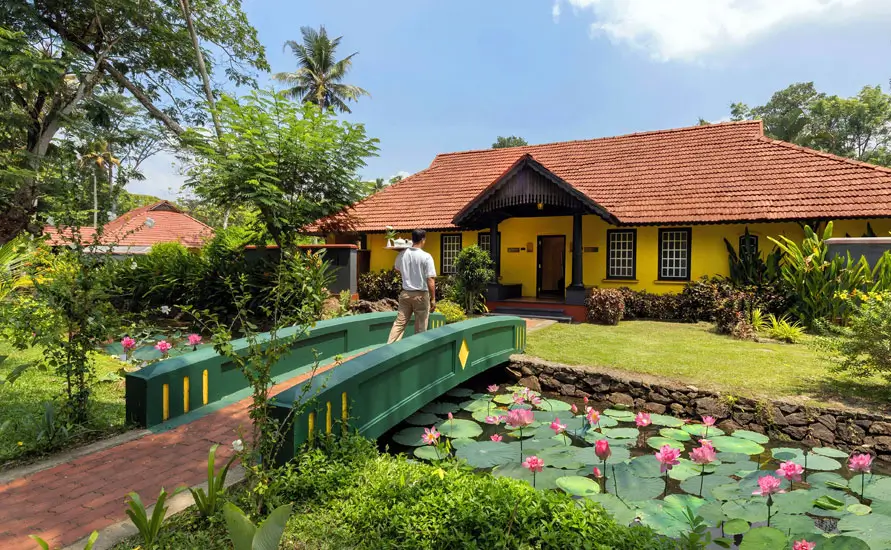
Sightseeing first, stillness afterward: that sequence shapes this Rajasthan and Kerala Ayurveda tour. During the opening eight days you climb Amber Fort by jeep, ride a rickshaw through Old Delhi, watch Udaipur's palaces turn pink at dusk and wander the spice lanes of Fort Kochi. Then the pace drops completely. Ten nights follow at a waterside resort in Kumarakom, facing Vembanad Lake from its eastern bank, where a qualified Ayurveda physician plans a daily schedule of oil therapies, yoga, breathing practice and simple vegetarian food built around your own constitution.
Ordering the trip this way is deliberate. Rajasthan involves early starts, long drives and plenty of walking on uneven palace floors, and arriving in Kerala with tired legs makes the slower rhythm of a Kerala Ayurveda retreat feel welcome rather than restless. Roads in the north stay between five and six and a half hours, Udaipur to Kochi is covered by a connecting flight, and the transfer into Kumarakom takes under two hours. Once at the resort, your car stands down except for a few gentle outings, such as a dawn visit to the bird sanctuary or a canoe trip along village canals.
Guests choosing this Rajasthan and Kerala Ayurveda tour are mostly grown-ups flying in from North America, Britain, mainland Europe or Australia, together with NRI families whose grandparents swore by Ayurvedic oils and who now want a properly supervised program of their own. Ten days is a rejuvenation-style stay, not classical Panchakarma, which normally requires three to four weeks. The doctor adjusts every treatment as you go, and nothing here replaces care from your own physician; please share your medical history with us before booking. October to March suits Rajasthan best, while the Kerala monsoon months suit those who prefer the traditional Karkidakam season.
Long-haul arrivals into Delhi tend to bunch up late at night or before dawn, so day one is deliberately light. After passport control and the luggage carousel, walk through the green customs channel and find our airport host holding a card bearing your name in the meeting area. Within an hour or so, sometimes more if the ring road is jammed, the car pulls up at your hotel in south or central Delhi. Your coordinator hands over printed vouchers, explains how the Rajasthan and Kerala halves fit together, and saves our emergency number in your phone before letting you rest.
Toward late afternoon you reach Lodhi Garden, roughly ninety acres of lawns where office workers jog, practice yoga and play cricket among tombs left by the Sayyid and Lodi sultans of the fifteenth and sixteenth centuries. The domed tomb of Muhammad Shah, the arched Bara Gumbad and the rubble-walled Sheesh Gumbad, once decorated with blue glazed tiles, stand between lawns and old trees full of parakeets. Walking here is gentle and flat, a sensible way to loosen up after many hours of sitting in a plane. Your guide explains which dynasty built what, long before the Mughals arrived.
Khan Market lies five minutes away, a compact block of bookshops, tea merchants, small fashion labels and cafes favored by diplomats and Delhi families alike. Choosing a first dinner there is simple, with everything from North Indian thalis to wood-fired pizza, and it gives you a chance to buy a local SIM card or exchange money before the trip gets busy. If jet lag is winning, the hotel restaurant is just as good, and tomorrow's start can be pushed back slightly. Remember to drink plenty of bottled water during the first days, as Delhi's dry air dehydrates quickly. Overnight in Delhi.
Today covers both of Delhi's personalities, the walled Mughal city of Shahjahanabad and the leafy capital the British laid out beside it. Your guide starts in the north, with a pause facing the sandstone battlements of the Red Fort, a UNESCO World Heritage Site built in the 1640s; it is closed on Mondays, but on other days a walk through its audience halls is included. Across the road rise the minarets of Jama Masjid, where you climb the steps, leave your shoes and borrow a robe if needed, then look across the huge courtyard to the domes and the rooftops of the old city.
From the mosque a cycle rickshaw takes you on a bumpy, noisy and very memorable ride through Chandni Chowk, once a royal promenade with a canal running down its center and now a maze of wholesale lanes. Brides' families shop here for embroidered fabric, jewelers weigh silver on tiny scales and the spice dealers of Khari Baoli measure out cardamom, cumin and dried red chilies by the kilo. After about forty minutes the rickshaw returns you to the car. Lunch might mean a steel platter of vegetarian curries at an old family-run eatery, or something gentler at a cafe in the newer part of the city.
Afterward the car heads to Mehrauli for Qutub Minar, whose ribbed sandstone shaft climbs some 73 meters, started by Qutb-ud-din Aibak and completed by later sultans, with Quranic verses carved in bands around each story. Nearby, a Gupta-era iron column shows almost no corrosion after some 1,600 years, which still fascinates scientists. On the way back, stop at Gurdwara Bangla Sahib, a gold-domed Sikh house of worship faced in white marble, where volunteers in the kitchen prepare lentils and chapatis for anyone who comes. Cover your head with a scarf and walk barefoot around the sacred pool. Overnight in Delhi.
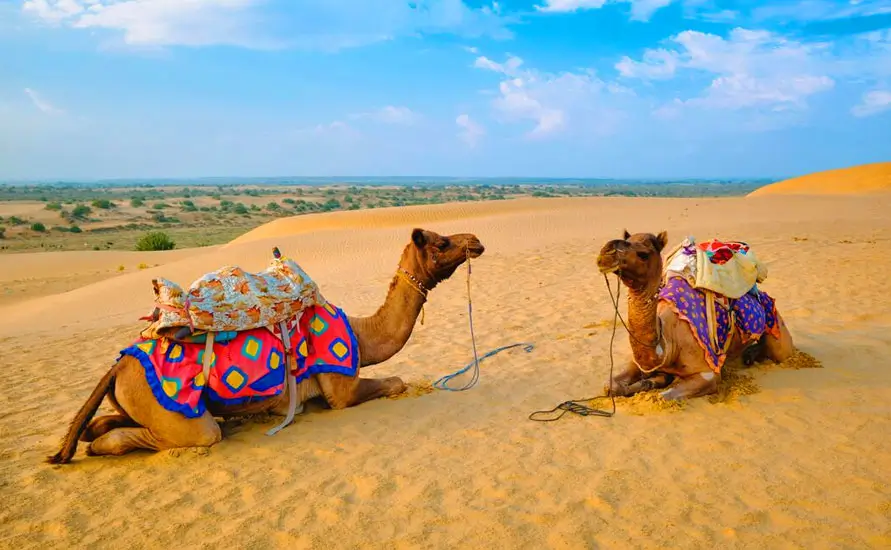
Leaving Delhi straight after breakfast saves you from the worst of the morning commute. The highway runs southwest past the glass offices of Gurgaon, then through the farmland and mustard fields of Haryana and northern Rajasthan, with camel carts and tractors sharing the slow lane. Midway there is a tea break at a tidy roadside dhaba, and the drive of just over five hours passes with views of Aravalli ridges and village forts on hilltops. Rajasthan announces itself quickly: women in bright odhni scarves, men in turbans of saffron and red, and stone walls replacing brick as you cross the state border.
Jaipur dates from 1727, when the star-gazing ruler Sawai Jai Singh II mapped out a capital of broad avenues crossing at right angles, an unusual idea in India at that time. The old city's walls and buildings were coated in terracotta pink in 1876 ahead of a royal visit by the Prince of Wales, and the color has been required by law there ever since. You check in at a heritage haveli or a modern hotel by early afternoon. Following lunch and a siesta, your Jaipur guide comes by to show you a little of the city once the light softens.
The evening plan is relaxed. Albert Hall, an Indo-Saracenic showpiece now used as the state museum, at the center of Ram Niwas Garden, is lit in warm colors after dark and makes a good photo stop, and its collection of carpets, armor and a small Egyptian mummy can be visited before closing. Afterward, the white marble Birla Mandir on a low hill to the south shows a modern Hindu temple, with stained glass and carvings of saints and philosophers from different faiths. Dinner can include Rajasthani specialties like dal baati churma, hard-baked dough rounds dunked in ghee and served with dal and a sugary crumble, gram-flour dumplings in a tangy curry, or ker sangri, a dry dish of desert berries and pods. Overnight in Jaipur.
Setting out early helps at Amber Fort, on a ridge about 11 km beyond the old city walls, since the crowds and heat build up by late morning. You go up by jeep along the back road or walk the ramp from the lake, and our guides never use the elephant rides offered at the bottom. Raja Man Singh, a general in Akbar's army, began the fort in the late sixteenth century, and his successors added the painted Ganesh Pol gateway, the Diwan-i-Aam with its double row of columns and the Sheesh Mahal, its vaulted rooms studded with thousands of small convex mirrors that glitter when a single candle is lit.
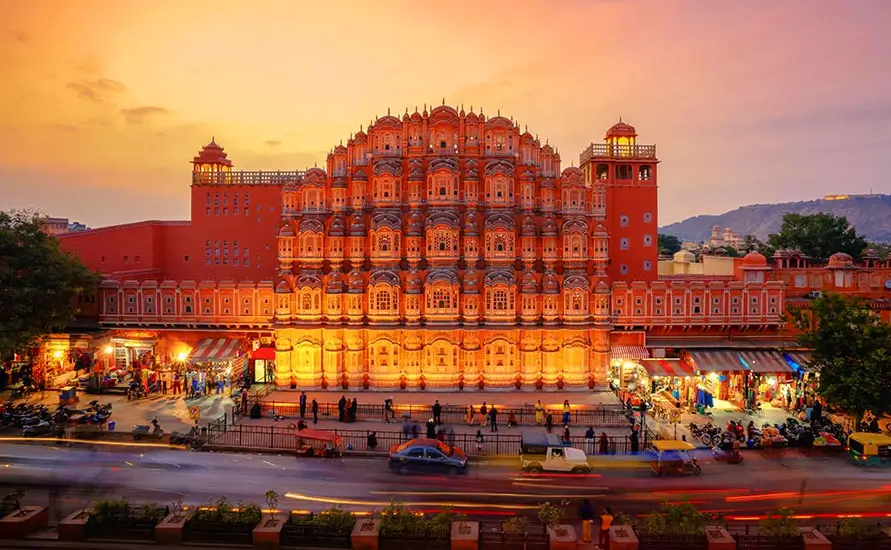
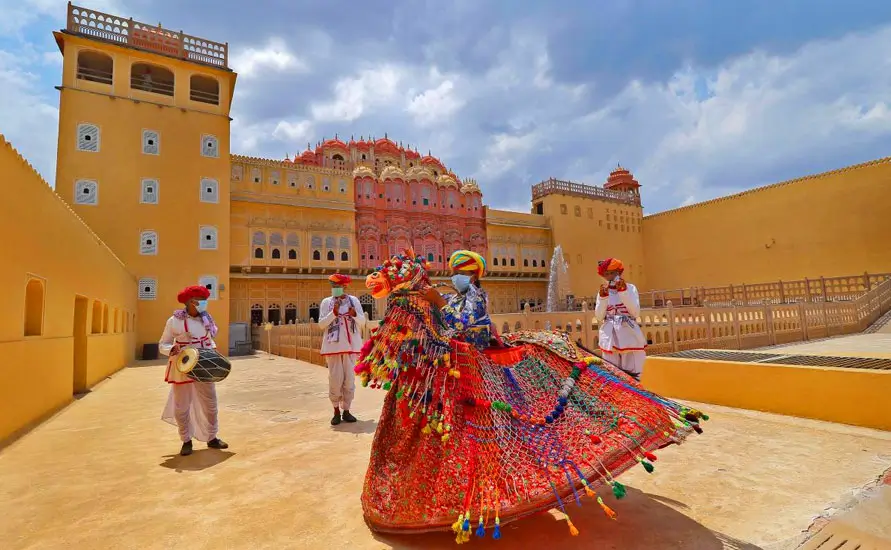
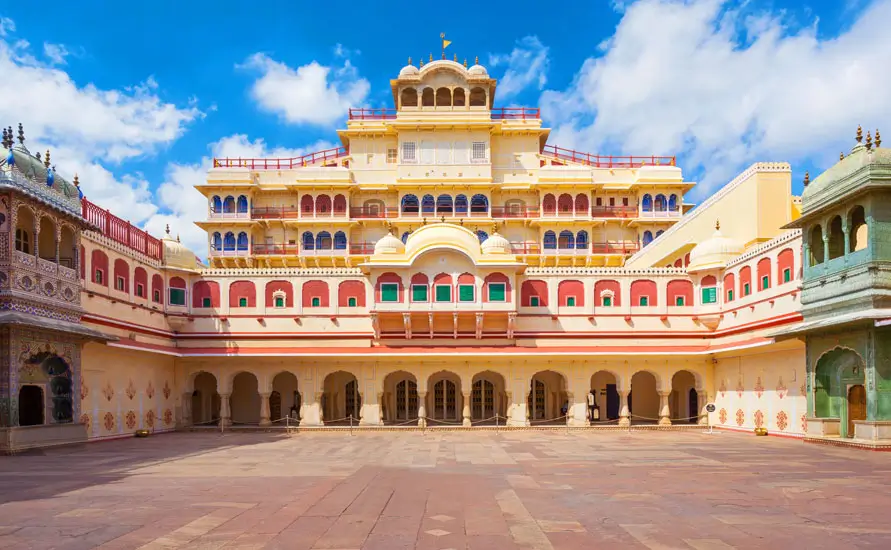
Returning downhill, the car pauses opposite the Hawa Mahal, whose honey-pink facade of 953 latticed windows went up in 1799 and let royal women follow festival parades unseen. Its honeycomb front is only one room deep, a fact that surprises most people who walk around to the back. Nearby, the City Palace is still partly occupied by descendants of the Kachwaha rulers and displays textiles, weapons and two enormous silver urns filled with Ganges water when Maharaja Madho Singh II sailed to London in 1902. Lunch is at a cafe inside the palace or a nearby restaurant.
Next comes Jantar Mantar, a UNESCO-listed yard of nineteen stone and brass astronomical devices that Jai Singh II had constructed between about 1728 and 1734. The Samrat Yantra sundial, about 27 meters high, tells local time to within roughly two seconds, and your guide shows how the zodiac instruments were used to plot star positions. With energy left, end the day in the bazaars of Johari and Bapu Bazaar for jewelry, block-printed cotton, juttis and blue pottery, or choose an optional stop at a Sanganer printing unit, where craftsmen press dye-loaded wooden stamps onto long lengths of cotton. Overnight in Jaipur.
Today's road stretch is the biggest of the trip, so departure from Jaipur is around 8 am with snacks, water and a playlist if you want one. The expressway heads southwest toward Ajmer, then swings south through Bhilwara, a textile town, over wide plains dotted with acacia trees, mustard and wheat fields and the occasional roadside temple painted bright orange. Your driver breaks the trip every two hours or so, with a proper lunch stop at a highway restaurant serving fresh rotis, dal and seasonal vegetables. Total driving time is about six and a half hours, longer if there are road works or trucks on the narrower stretches.
Chittorgarh lies close to the route roughly two hours short of Udaipur. Its huge hilltop fort, a UNESCO World Heritage Site, is the scene of famous sieges and of the legends of Rani Padmini and Meera Bai, and its Victory Tower rises nine stories above the ramparts. A visit adds about two hours to the day and turns it into a long one, so we offer it only as an option for guests who start early and feel energetic. Most travelers on this program prefer to save their legs for Udaipur and simply view the fort walls from the highway as they pass.
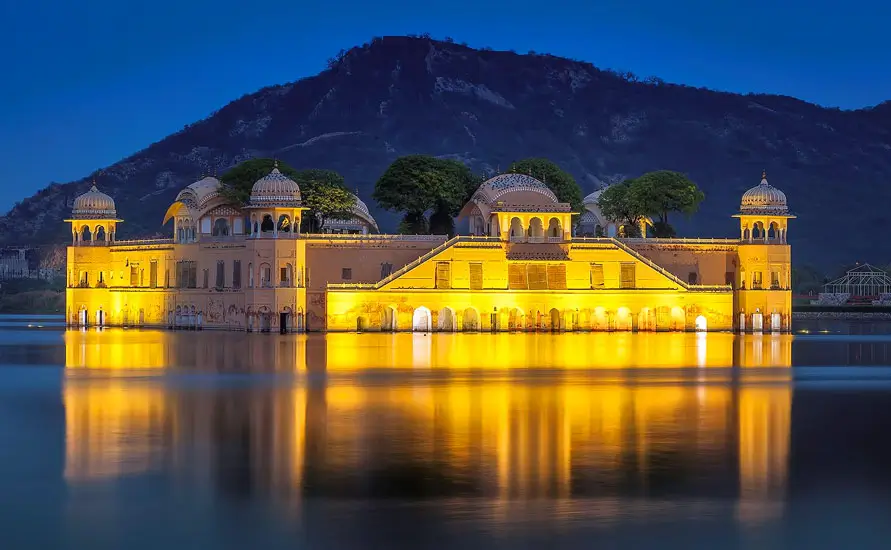
The landscape changes as you near Udaipur: the Aravalli hills close in, the soil turns reddish and marble quarries cut white scars into the slopes. Arrival comes around five, followed by check-in at a lakeside hotel, many of them former havelis with courtyards and rooftop terraces. After a long road day, there is nothing else planned, but a gentle stroll along the lake shore at Ambrai or Hanuman Ghat lets you see the City Palace lit up across the water. Dinner on a rooftop with views of the floodlit Lake Palace is a classic first evening here. Overnight in Udaipur.
Udaipur's royal story begins on the hill above Lake Pichola, where the City Palace grew piece by piece over four centuries of Mewar rule. Your guide explains how Maharana Udai Singh II chose this site after the fall of Chittorgarh, and how the Sisodia dynasty kept its independence from the Mughals far longer than most Rajput houses. Inside, look for the inlaid glass peacocks of Mor Chowk, the blue and white tiles of the Chini Chitrashala and the arms gallery with the armor of Maharana Pratap. The rooftop gardens, built on solid rock, offer the best view over the lake toward Jag Mandir and the hills.
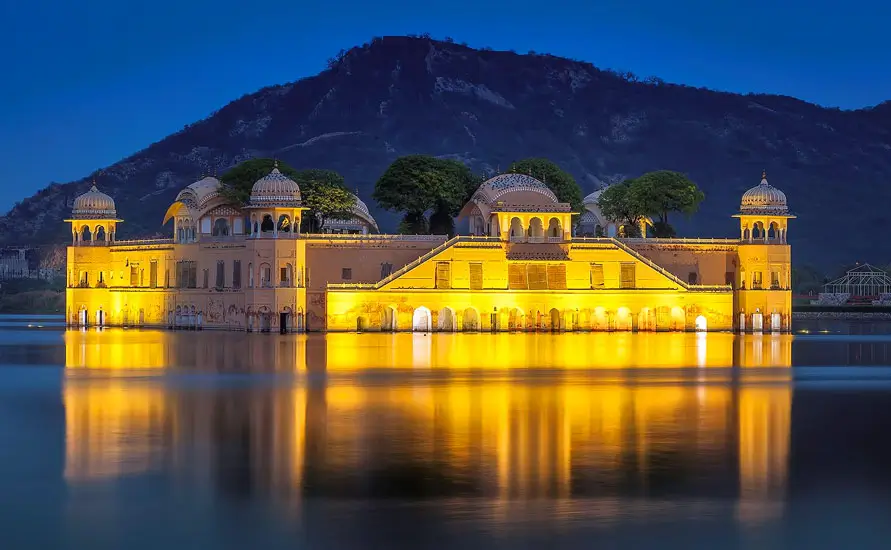
After a pause for lunch and a short rest, you board a boat for an hour on Lake Pichola. The launch slips past washing steps, small shrines and the marble Lake Palace hotel before stopping on the island of Jag Mandir, where you can walk among its gardens and pavilions decorated with stone elephants. A quick visit to the nearby Jagdish Temple on the way back shows richly carved walls and a large bronze Garuda facing the shrine. If you prefer, swap the temple for the fountains of Saheliyon ki Bari, a royal garden with marble elephants and lotus pools north of the old city.
As the sun sinks, your driver takes you up the winding road to Sajjangarh, the Monsoon Palace, built in the 1880s on a hilltop west of the city so the Maharana could watch the rain clouds roll in. Inside, the rooms hold little to see, yet the terrace gives a sweeping view over the lakes, the old city and the Aravalli range turning purple at dusk. The hill lies inside a wildlife sanctuary, and the gates close soon after sunset. Back in town, a light meal and early bedtime make sense ahead of tomorrow's flights. Overnight in Udaipur.
There are no nonstop flights between Udaipur and Kerala, so today's route south uses a connection, usually through Mumbai, Bengaluru or Delhi. Departure times vary with the season, and most pairings need between five and seven hours in all. Pickup from the hotel is timed to the flight and helps with check-in at Maharana Pratap Airport. Should the first sector depart after lunch, use the morning for one more stroll through the old bazaars or a cooking lesson with a local family, which can be arranged at extra cost on request.
On landing in Kerala, a local driver waits outside arrivals; ninety minutes of driving then bring you into Fort Kochi, the colonial-era district on a spit of land beside the harbor mouth. The air here is warm and humid, and the scenery changes from dry Rajasthan to coconut palms, canals and churches. Your room is in a heritage property or a family homestay, and no activities are scheduled tonight. A walk along the seafront at dusk, when the giant nets turn to silhouettes and stall owners grill your choice of the day's catch, rounds off the flights nicely. Overnight in Kochi.
Two thousand years of seaborne trade left layers all over Kochi, and today is spent on foot reading them. Your guide begins at the seafront with the Chinese fishing nets, explaining the counterweights and the teamwork that keep these great wooden frames working, then walks you past colonial bungalows to St. Francis Church, whose first wooden version went up in 1503, and on toward the Santa Cruz Basilica and its pastel painted ceiling. En route, notice the Dutch cemetery's weathered headstones, the old harbor house and the Parade Ground, busy with schoolboy cricket matches after classes. The streets are flat and shaded, though the humidity means a slow pace and frequent water stops.
Later the car takes you to the spice district for Mattancherry Palace, where bedchamber walls carry dense Ramayana murals worked in earthy reds, yellows and greens. Around the corner, the Paradesi Synagogue of 1568 is paved with willow-pattern Canton tiles, no two said to be identical, and lit by Belgian chandeliers. Timing is everything in Mattancherry, because Friday shuts both monuments, Saturday shuts the synagogue too, and Jewish festivals add further closed days; we fix the order of your Kochi visits once your dates are known. Afterward, the warehouses of Jew Town still smell of ginger and pepper, and antique dealers sell everything from temple doors to spice boxes.
Around five, take your seat for Kathakali inside a modest local playhouse where perhaps fifty chairs face a bare stage. Arrive sixty minutes early and see performers painting their own faces, a slow process using rice paste, natural pigments and a seed placed under the eyelid to turn the eyes red. The performance begins with a demonstration of the hand gestures, eye movements and facial expressions that tell the story, followed by a short episode from an epic, accompanied by drums and singers. Dinner afterward can be fresh seafood or a simple Kerala vegetarian meal in one of the many cafes nearby. Overnight in Kochi.
After a final Fort Kochi breakfast, the car heads southeast through Ernakulam and the low green country around Vaikom toward Kumarakom, a scatter of island-like villages where Kottayam district meets Vembanad's open water. The drive takes ninety minutes to two hours, past rice fields, small churches and canals lined with coconut palms. Check-in at your Kumarakom Ayurveda resort comes before lunch, followed by a short tour of the treatment rooms, yoga pavilion and lake-facing gardens. Many guests are struck by how quiet it becomes once the car leaves: only birds, the slap of water and the occasional canoe paddle.
At around three o'clock comes your first appointment with the in-house physician, who holds a BAMS degree in Ayurvedic medicine and surgery. The doctor asks about your health history, sleep, digestion, stress and daily routine, feels the pulse at three fingertips on the wrist, as Ayurvedic training teaches, then studies tongue and eyes to understand your constitution or prakriti, expressed through vata, pitta and kapha, the three doshas, and how they mix in you. Please bring a list of any medicines and tell the doctor about any conditions or recent surgery. Based on this conversation, the doctor writes a personal plan for the coming nine days and explains it to you clearly.
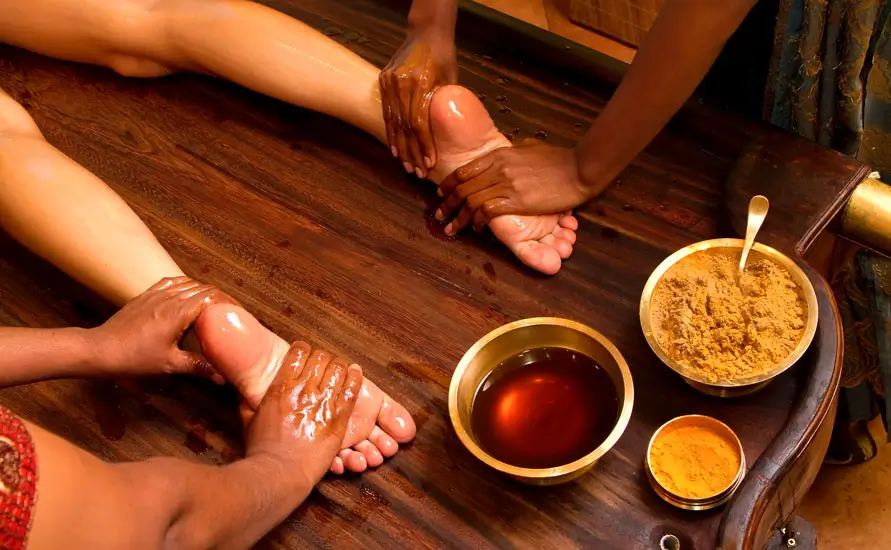
The first treatment is usually a gentle abhyanga, a full-body oil massage performed by two therapists working in rhythm, followed by a warm shower with herbal powder to remove the oil. Dinner is simple and vegetarian, prepared according to your doctor's notes, with soups, rice, vegetables and herbal water served warm. During the treatment period, alcohol and smoking are not allowed, and guests are asked to go to bed early and rest after therapies. Before sleeping, take a few minutes at the lakefront to watch the light fade over Vembanad, a calm start to the program. Overnight in Kumarakom.
Your daily rhythm takes shape today. Class starts soon after half past six beneath a thatched pavilion, where the instructor leads a slow class of joint loosening, gentle sun salutations and breathing awareness, adapted for beginners and anyone with stiff backs. Herbal tea or warm water with ginger follows, then breakfast of upma, steamed idli or rice porridge, depending on what the doctor has advised for you. Most programs space treatments carefully, with one main therapy in the morning and sometimes a second in the late afternoon, leaving plenty of time to rest, read or walk in between.
The morning treatment again centers on abhyanga, this time followed by swedana, a herbal steam bath for which you sit inside a teak box, head poking out through a hole, as vapor from boiled medicinal leaves warms the body. Swedana is traditionally used to help the oils penetrate and to loosen stiffness after travel; your therapist keeps a close eye throughout and limits the first sessions to a few minutes. A lie-down with a glass of herbal water follows. In Ayurvedic thinking digestion peaks around noon, so lunch is substantial: rice, dal, two or three vegetable dishes and a gentle buttermilk.
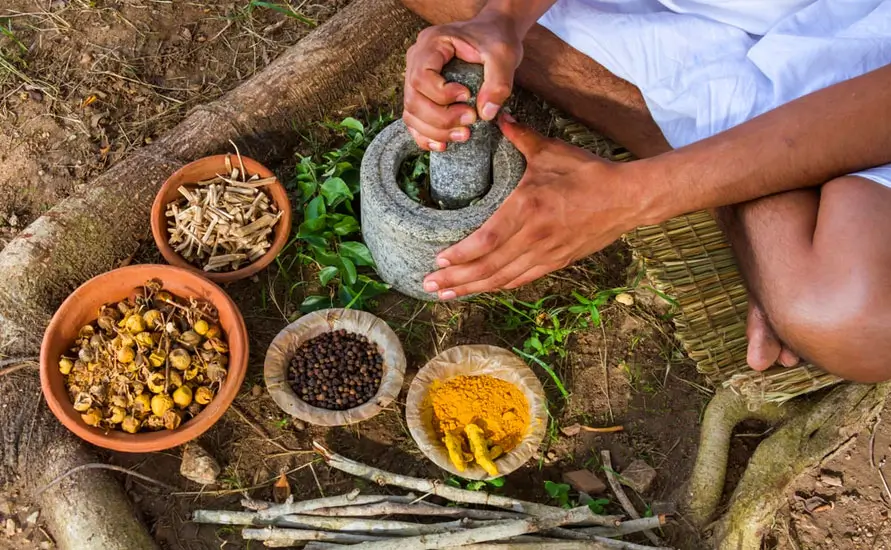
Late afternoon brings a walk around the resort's herb garden with the gardener or one of the doctors, who points out plants used in the oils and medicines: holy basil, brahmi, ashwagandha, neem, turmeric, aloe, vetiver and the curry leaf trees used in daily cooking. He shows which leaves end up in the kizhi bundles you will meet later in the program and how some herbs are dried and powdered on site. The walk is slow and shaded, ending at the lakeside in time for sunset. Supper is modest and served early, leaving the evening for books or bed. Overnight in Kumarakom.
After two days of body treatments, the doctor may introduce shirodhara this morning, one of the best known Ayurvedic therapies. Resting face up on a wooden droni, you feel lukewarm medicated oil, or on some days spiced buttermilk, trickle in an unbroken thread across the brow from a suspended vessel, rocked slowly side to side for thirty to forty-five minutes. Classical texts link it with a quieter mind and better sleep, and many guests report feeling deeply relaxed and a little drowsy afterward. The therapists keep the room dim and quiet. Expect to rest for an hour or so after the session, with a cotton cap on to keep the head warm.
The yoga session today focuses on pranayama, especially nadi shodhana or alternate-nostril breathing, where thumb and ring finger take turns closing each side of the nose. The teacher explains how slow breathing practices fit into the yoga tradition and shows two or three other gentle techniques, such as humming bee breath. Everything is done seated and at your own pace. Guests with conditions such as high blood pressure or asthma should mention them first, so the teacher can adapt. A short guided relaxation lying on the mat ends the class, and breakfast follows on the terrace beside the lake.
Afternoons in the program are kept deliberately empty. Use the time to read in the shade, sleep, write postcards or sit by the water watching kingfishers and egrets work the shallows. Phones and laptops are not forbidden, but the doctor will probably suggest keeping screens to a minimum after shirodhara. In the early evening, many resorts hold a short talk in which the doctor or a senior therapist explains the doshas and how food, seasons and daily habits are viewed in Ayurveda. Questions are welcome, and the conversation is usually informal, held in a garden pavilion with herbal tea. Overnight in Kumarakom.
Today starts before sunrise with a short and gentle outing. The Kumarakom Bird Sanctuary lies only a few minutes from most resorts, on land that was once a rubber estate owned by a British planter family, and at first light a shaded trail runs along the lake edge under mangroves and old trees. With a local naturalist and binoculars, you may spot cormorants, herons, darters, kingfishers and egrets, and from about November to February migratory birds join them, though nature sets its own timetable and nothing can be promised. The walk is flat and slow, with breakfast waiting on your return around eight.
Late morning, the treatment of the day is elakizhi, sometimes called patra pinda sweda. Fresh medicinal leaves, grated coconut, lemon and herbs are fried in oil and tied into cotton bundles, which the therapists warm repeatedly in a pan and press rhythmically over the body after a light oil massage. The warm, aromatic bundles are traditionally used for muscle and joint stiffness, and the smell of the leaves fills the room. A session lasts about forty-five minutes. Afterward you shower with warm water, and the doctor drops by during lunch to ask how you feel and whether anything should be adjusted.
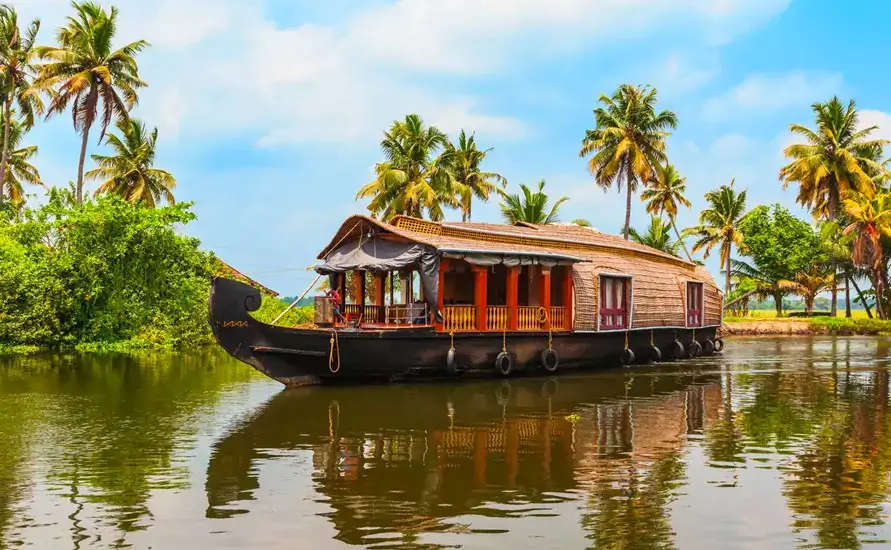
After the early start, a long afternoon rest is part of the plan. Some guests take a nap in a hammock, others swim slowly in the resort pool if the doctor has allowed it, and a few simply sit on the jetty and watch the water traffic on Vembanad: country boats piled with sand, fishermen in narrow canoes and the occasional houseboat moving past toward Alleppey. Dinner tonight might include a clear vegetable soup, red rice and a mild coconut-based curry. The evening yoga nidra session, a guided relaxation lying down, is optional but popular before bed. Overnight in Kumarakom.
Food is half of any Ayurveda program, and this morning you spend time in the kitchen with the resort chef. The cooking class focuses on simple sattvic Kerala dishes suited to the treatment diet: a vegetable thoran with coconut and mustard seeds, a mild avial, where drumstick, carrot and plantain simmer with curd and ground coconut, a lentil rasam with pepper and cumin, and kanji, the rice gruel served in many Kerala homes. The chef explains which spices are used in moderation and why, and you take home written recipes. Cooking and tasting together usually lasts a little over an hour and is fun even for non-cooks.
Later, the therapy of the day is njavarakizhi, a treatment unique to Kerala. Njavara rice, a local medicinal variety, is simmered with milk plus a brew of medicinal roots, then knotted into muslin pouches and massaged over the body while still warm, after which the therapists wipe away the starchy residue with coconut leaf strips. This therapy is traditionally used to nourish and strengthen the body, and many guests find it unusually soothing. Allow roughly sixty minutes with the oil massage that comes first. The doctor decides the exact length and herbs based on your progress, and nothing else is booked before lunch.
In the late afternoon, the yoga instructor leads a slow class focusing on hip-opening postures and gentle twists, useful for those who sit for long hours at desks or on planes. Each posture is held for several breaths, with props such as blocks and straps for support. Before dinner, take time to walk along the lake path as the light softens, or sit in the garden and listen to the evening calls from the temples and churches across the water. By now, most guests notice they are sleeping more deeply, eating more slowly and thinking less about email. Overnight in Kumarakom.
Halfway through the program, the doctor sits down with you for a longer review consultation. Topics include how you are sleeping, appetite, daytime energy and the way each therapy has felt, and the doctor checks your pulse again. The rest of the plan may change: perhaps a therapy is repeated, another is added, or the diet is adjusted with a little more or less spice. Bring any questions you have been saving up, however small. Expect frank answers on the limits of Ayurveda, along with a reminder to keep your physician back home informed.
Today's treatment, if advised, is pizhichil, sometimes described as the royal treatment because it was once reserved for the kings of Kerala. Two or more therapists squeeze warm oil from soaked cotton pads in a continuous flow along the limbs and back, their hands massaging all the while and keeping a steady temperature throughout. Sessions run close to sixty minutes, and the oil chosen varies according to your constitution. Pizhichil is traditionally used to soothe the nervous system and the joints. Afterward you rest wrapped in a sheet before a warm shower, and lunch is served a little later than usual.
The afternoon includes a quiet journaling session, guided by the resort's wellness coordinator or simply done on your own on a shaded veranda. A few prompts help you reflect on what you have learned about your habits, what you would like to keep after going home and what has surprised you so far. For a number of guests, those quiet pages end up being what they value most. In the evening, many resorts arrange a short classical performance, such as Mohiniyattam dance or a Carnatic music recital with veena or flute, in a garden pavilion lit with oil lamps. Overnight in Kumarakom.
Long flights, long drives and years of desk work often leave the lower back and neck stiff, and the doctor may suggest kati vasti or greeva vasti today. A ring of black gram dough is shaped on the lower back or the base of the neck and poured full of heated herbal oil; therapists ladle some out and top it up again so the warmth holds steady for half an hour or more. The therapy is traditionally used for back and neck stiffness. A gentle massage of the area follows. The morning yoga class matches the theme, with slow spine movements, cat and cow stretches and supported backbends.
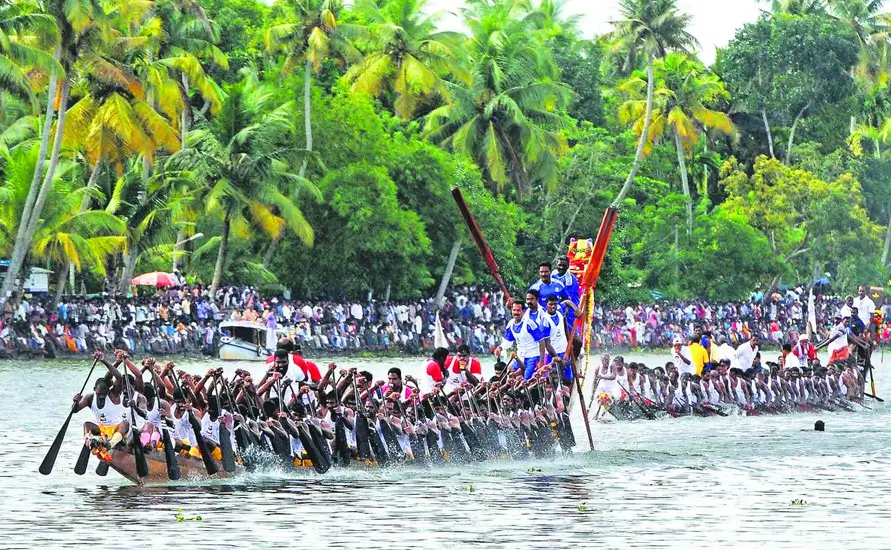
In the late afternoon, once the heat has gone, you set out in a small country canoe with a local boatman for a quiet trip through the slim waterways threading past the village houses. Without engines, you can hear the birds and village sounds clearly: children calling, women chatting while washing clothes, a radio playing film songs and the rhythmic beating of coconut husks being turned into coir. The boatman points out toddy tappers' notched palm trunks, duck farms and small shrines at the water's edge. After roughly ninety minutes the canoe noses back to the jetty as dusk settles.
Dinner this evening is in the garden, still simple and vegetarian, but the cook may add a special herbal soup or a dish of jackfruit or raw banana depending on the season. Guests are encouraged to eat slowly and finish dinner early, at least two hours before sleep, as is advised in Ayurveda. You will probably feel physically tired after the outing, and many guests go to bed soon after nine. The sounds of the backwaters at night, frogs, crickets and occasional bells from passing boats, are a far cry from the traffic of Delhi only two weeks ago. Overnight in Kumarakom.
Screens, dry airplane cabins and long hours of reading strain the eyes, and today's main treatment, if the doctor advises it, is netra tarpanam. Two little walls of black gram paste are built around the eye sockets and filled with lukewarm medicated ghee; you then blink slowly inside this little pool for several minutes. The process feels strange at first but soon becomes calming, and the therapist explains each step. It is followed by a light face and head massage. Your vision may be a little blurry for an hour afterward, so books and phones stay put away until lunch.
Morning yoga today ends with a longer yoga nidra session, sometimes called yogic sleep, a guided relaxation in which you lie on your back and follow the teacher's voice through the body, the breath and simple images. It is easy for beginners because it asks nothing physical, and many guests report that it helps them relax more deeply than ordinary rest. The teacher may also introduce a few minutes of silent sitting meditation, focusing on the breath, which you can practice at home in the mornings. Breakfast follows in the garden, with fresh fruit and herbal tea.
After lunch and rest, a villager leads a short coir village walk to show husks retted for months in the canal mud, pounded into fiber, twisted into yarn on a spinning wheel and finally woven into mats and ropes on simple wooden looms. Families in these villages also make toddy, fish in the lake and grow rice in polders below water level, and the guide explains how the seasons shape their work. The walk is flat and lasts about an hour, with stops at a small church and a local temple viewed from outside. You return in time for a quiet evening and an early dinner. Overnight in Kumarakom.
Towards the end of the program, the doctor may introduce nasyam, a therapy in which medicated oil or herbal drops are placed in the nostrils once the face, neck and shoulders have been massaged and gently steamed. It is traditionally used to clear the head and support the sinuses, and it is done only when the doctor considers it suitable for you. The process takes about thirty minutes, and you may sneeze or feel a slight warmth in the throat. After nasyam, guests are asked to avoid cold water and wind for a few hours, so the morning is spent resting indoors or on a covered veranda.
Late morning, the doctor gives a talk on dinacharya, the daily routine recommended in Ayurveda, and ritucharya, the seasonal changes in food and habits. The list covers rising before sunrise, cleaning the tongue with a copper scraper, swishing sesame oil, self-massage with oil before a bath, regular meal times and winding down before sleep. The idea is to help you choose a few small habits to keep at home rather than trying to follow everything. The talk is practical and relaxed, with time for questions about how these ideas fit with a busy life in New York, London or Sydney. You receive a written summary to take home.
In the afternoon you visit the resort's medicine kitchen or pharmacy, where some of the oils and decoctions are prepared. Here you see how herbs are cleaned, crushed and boiled in large brass or copper vessels with sesame or coconut oil for many hours, sometimes over several days, until the right consistency is reached. The pharmacist explains how each formula is matched to different needs. Photography is usually allowed. At dusk, a silent sit on the lakeshore is offered for anyone who wants it, a fitting way to take stock as the stay draws to a close. Overnight in Kumarakom.
Day eighteen's yoga session gathers everything practiced so far into one compact flow, a sequence you can repeat on your own living-room floor before work each morning. The teacher writes down a fifteen-minute routine suited to your level and suggests how to adapt it when traveling or busy. After breakfast, the final treatment is usually a relaxed abhyanga or a combination of therapies the doctor feels will close the program well. Many guests notice how different the same massage feels compared with the first day, though everyone's response is individual.
In the late morning, you have your final consultation with the doctor. Together you review the program, the doctor's observations and your own impressions, and the doctor gives written advice on diet, daily routine and exercise for the coming weeks. If herbal preparations are suggested, the doctor explains how to use them and whether they are allowed through customs in your home country; you are always free to decline. The doctor will also remind you that this program does not replace your regular medical care and that you should share any advice with your own physician before making changes.
Spend the afternoon packing, wandering down to the lake once more, or a farewell visit to the herb garden or pharmacy. Guests often seek out their therapists and the cooks to say goodbye in person, as they have become familiar faces over the past ten days. Your tour coordinator calls to confirm the timing of tomorrow's airport transfer and to check that everything has gone well. Dinner is a little more festive, though still within the guidelines of the diet. Try to get to bed early, as the long flight home will test the calm you have built up. Overnight in Kumarakom.
Following breakfast on the lawn, your chauffeur loads up for the roughly two-hour run north to Kochi's airport, passing the rice fields, churches and small towns of central Kerala. Departure from the resort is set so you reach the terminal no later than three hours before your long-haul flight home is due to leave. Night flights can be combined with a late checkout for a fee, or with a rest room booked close to the airport, provided we know ahead of time.
In the first days at home, the doctor's advice is to keep meals simple, avoid heavy or fried food and alcohol for a while, and return to normal routines gradually. We hope this Rajasthan and Kerala Ayurveda tour has given you both the forts and palaces of the north and the quiet rhythm of the Kerala backwaters, and that some of the habits from Kumarakom stay with you long after you leave.
Your Journey

N.S. Rathore & Mrs. Omlata Rathore · Managing Director
We still read every enquiry ourselves. Tell us the places you liked and our planners will send a day-by-day route with drive times and a clear price.
Every package can be customised and no pressure to book. A planner from our office replies within 24 hours with a route written for your group.
Fill this in and your planner will send a first draft itinerary.
Explore more
Kerala Backwaters Escape Kerala Backwaters Escape
 Kerala Backwaters Escape
 Kerala Backwaters Escape
 Kerala Backwaters Escape
 Kerala Backwaters Escape
 Kerala Backwaters Escape
 Kerala Backwaters Escape
 Kerala Backwaters Escape
 Kerala Backwaters Escape
 Kerala Backwaters Escape
 Kerala Backwaters Escape
 Kerala Backwaters Escape
 Kerala Backwaters Escape
 Kerala Backwaters Escape
 Kerala Backwaters Escape
 Kerala Backwaters Escape