 Kerala Backwaters Escape

LGBTQ+ Friendly South India Tours
Chennai – Mahabalipuram – Pondicherry – Tanjore – Madurai – Munnar – Thekkady – Kochi – Varkala – Trivandrum
At a glance
Going alone to a country as large as India raises fair questions for any queer traveler: will I be safe, will I be lonely, and what will a single room really cost? Our LGBTQ+ solo traveler South India tour answers all three before you book. Over sixteen days you travel from Chennai through the French lanes of Pondicherry, the Chola temples of Tanjore and the towers of Madurai, up to the clipped tea slopes of Munnar, the cardamom woods around Thekkady, the harbor lanes of Fort Kochi and finally the laterite cliffs of Varkala, with your flight out of Trivandrum.
Let's start with money, because single supplements are where most solo travelers feel caught out. Your quote shows one all-inclusive price for one person in a room of your own, with the full car and guide cost already built in, since those are not shared with anyone. No extra single charge appears later, and nothing is added at the hotel desk. In return you get a driver and guides who often become friendly company for the day, plus optional cooking classes and small-group meetups where you can share a table with other travelers or local hosts.
Safety deserves straight talk too. India decriminalized same-sex relations in 2018, but it does not recognize same-sex marriage, and life outside the big cities is more traditional. Chennai, Pondicherry, Kochi and Varkala are relaxed, and our team picks hotels that have welcomed LGBTQ+ guests before. In temple towns, a low profile is wise, and dating apps call for the same care you would use anywhere. This solo LGBTQ+ travel India route runs best from October to March, and our 24/7 line is always one call away.
Walking out of customs at Chennai International Airport, you will find our representative holding a sign with your first name only, a small detail many solo travelers appreciate. He or she drives with you to your hotel in the south of the city, sharing a printed plan, a list of emergency contacts and the WhatsApp number of the team member who looks after you for the next sixteen days. If you ordered an Indian SIM card or want help setting up a payment app, this is done in the car. Your room is booked in your name alone, with a bed type of your choice and nothing shared.
Once you have slept off the flight, use the softer light after four o'clock to stretch your legs. A twenty-minute ride brings you to Besant Nagar, a seaside suburb of shady streets that locals call Bessie, where Elliot's Beach is far calmer than the famous Marina further north. Joggers, couples and groups of students sit on the sand, and the promenade is lined with small cafés, juice stalls and ice-cream carts. Near the beach stands the white Ashtalakshmi Temple, and at its far end the Velankanni Church, a small shrine to Our Lady with a busy feast-day following.
Chennai is one of India's more open cities for queer people, with an active community, an annual Rainbow Pride usually held around late June and a mix of bookshops, theaters and cafés that host community events through the year. On your first night, though, an early dinner nearby is probably all you will want. Your local contact can suggest a relaxed spot where a solo diner never feels out of place, perhaps a South Indian restaurant serving appam and stew, or a modern café with good coffee. Your driver checks that you are safely back at the hotel. Overnight in Chennai.
Your guide for the day arrives after breakfast, and many people traveling alone tell us that having a knowledgeable companion from day two changes everything. Our Chennai guides are briefed in advance that you are an LGBTQ+ guest traveling alone, so you can talk freely, ask questions and set the pace. You start in Mylapore, the old Tamil quarter, with an unhurried loop of the stepped water tank beside the Kapaleeshwarar shrine, where Brahmin households hang mango leaves above their doors, and a street-side breakfast of pongal and vada if you are still hungry. Women draw rice-flour kolam patterns on the doorsteps each morning, and your guide can explain what the shapes mean.
Late morning moves north to George Town, the trading district that grew around the British settlement of Fort St. George in the 17th century. Lanes here specialize by trade, so one street sells only paper and wedding cards, another brass vessels, another flowers by the kilo. Your guide leads you through the crowds, points out old merchant houses and the Armenian church of 1772, and keeps an eye on your bag in the busier parts. Then you visit Fort St. George itself, where St. Mary's, consecrated in 1680, holds memorials to East India Company officers and the marriage register signed by Robert Clive.
After lunch you head to the Government Museum in Egmore, where a separate gallery is given over to metal images from the Chola centuries, among them several dancing Shivas cast in the lost-wax method more than a millennium back. It is a perfect primer for the temples you will see in Tanjore and Madurai. Note that the museum shuts on Fridays, which we factor into your dates. By evening your guide may suggest a coffee in a bookshop café in Alwarpet or a tasting menu at a modern Tamil restaurant, both easy places to sit alone. Some guests ask the guide to join them for dinner, which is entirely up to you. Overnight in Chennai.
Leaving Chennai on the East Coast Road, you head south with the sea glinting beyond casuarina groves, prawn farms and small temples on your right. After about an hour and a half you reach Mahabalipuram, the ancient Pallava port whose stone carvings are listed by UNESCO. Your Mahabalipuram guide waits by the ticket office, and the visit is timed for the cooler hours. Instead of rushing everything, you focus on a few key spots: the sculpted panel known as Arjuna's Penance, the cave temples cut into the hillside behind it and the seafront Shore Temple, where the waves have smoothed the granite edges.
Mahabalipuram is still a working stone-carving town, and the street outside the monuments is lined with sculptors' workshops where young apprentices shape gods, elephants and lamps from granite and soapstone. Stopping at one is a quiet way to meet locals, and many carvers are happy to explain their work to a curious visitor. Lunch can be grilled fish at a beach restaurant. Your driver then carries on down the coast for another 100 km or so to Pondicherry, passing salt pans and fishing hamlets, and you check in to a small heritage hotel in the old French town.
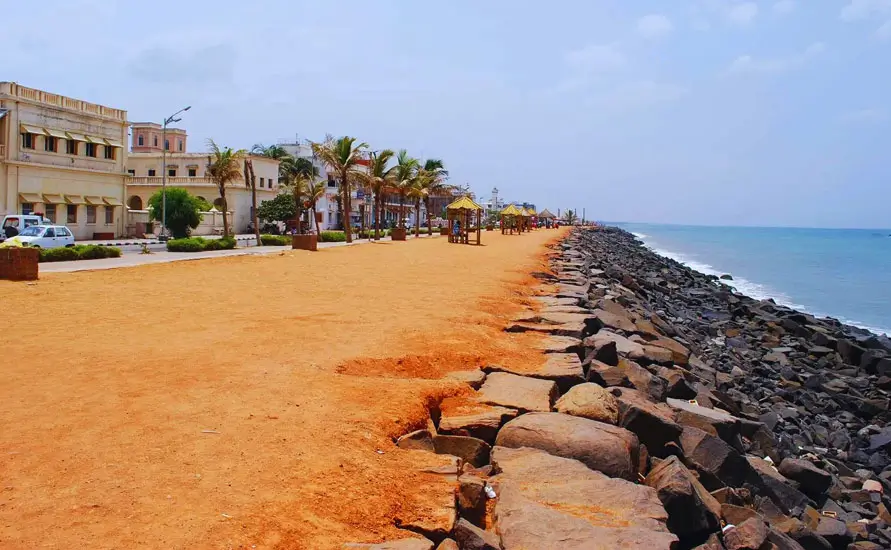
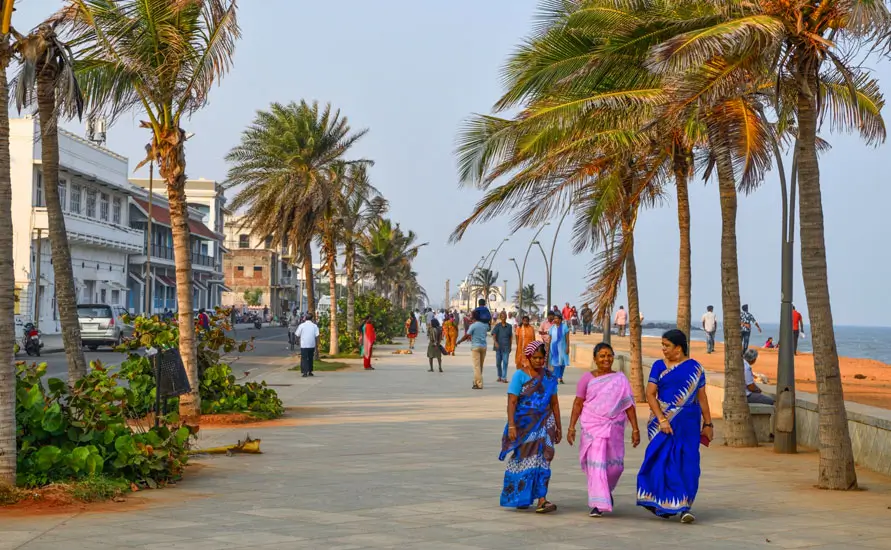
Pondicherry, now officially Puducherry, ranks among the easiest places in India to travel alone: compact, walkable, safe at night along the seafront and full of cafés where solo visitors settle in with a book. In the early evening the Goubert Avenue promenade closes to cars and fills with walkers, joggers and families. Your local contact can hand you a short list of current hangouts known for a mixed, friendly crowd, along with details of any community events or queer-friendly gatherings that week. Dinner could be Franco-Tamil fare in a garden courtyard. Overnight in Pondicherry.
Soon after seven, your guide is at the hotel gate for a walking tour, while the light is soft and the streets are quiet. Pondicherry was laid out by the French in a grid divided by a canal, with the European quarter facing the sea and the Tamil quarter inland. In White Town, you walk past the old governor's residence, French-language schools and painted villas with bougainvillea over their gates. Across the canal, Tamil houses have carved wooden pillars, raised verandas called thinnai and colorful kolam patterns on the doorsteps. You hear how the two halves of town traded, intermarried and argued, and how the French finally handed over in 1954.
Mid-walk you step quietly through the gate of the Sri Aurobindo Ashram, where a flower-heaped marble tomb under a frangipani tree is visited in complete silence. A few lanes away, the Ganesha shrine of Manakula Vinayagar has a gilded tower and painted panels of the god's many forms, and the pink and white Immaculate Conception Cathedral. Walking with a guide is also a chance to ask about everyday life here, from the local language mix of Tamil, French and English to how younger residents see LGBTQ+ issues today. It feels more like a long chat than a lecture.
The afternoon is yours, and Pondicherry is at its best for wandering. Its cafés are a natural meeting point, and many of them have communal tables, board games, bookshelves and noticeboards with yoga classes, art shows or language exchanges. If you would like company, we can arrange an optional small-group evening walk or a meetup over dinner with other travelers and a local host, which many solo guests enjoy. If you prefer to be alone, a sunset walk along the Rock Beach promenade with an early dinner suit just as well. Your driver remains on call if needed. Overnight in Pondicherry.
After breakfast, twenty minutes in the car lands you in Auroville, the planned township begun in 1968, where a few thousand residents of many nationalities now live among planted forest. Start at the visitor center with a short film about its history and goals, then walk the woodland trail to the public viewpoint, from which the gold-disc dome of the Matrimandir rises above its gardens. Getting inside the meditation chamber requires an advance booking at the visitor center, with limited places, so tell us early if this matters to you. The center also has a café and shops selling Auroville-made clothes, pottery and incense.
Many Aurovilians run small enterprises such as bakeries, organic farms, handmade paper workshops and pottery studios, and some offer guided visits or short workshops. Your driver can take you to one or two, depending on what is open. Auroville has long had an international, open-minded community, and solo travelers often find conversation easy here. You lunch at a community kitchen or a small Auroville café, where vegetables come from local farms. In the early afternoon you return to Pondicherry for some quiet time at the hotel, a swim in the pool if there is one, or a rest before the evening.
Late in the afternoon, an optional cooking class in a Tamil home is one of the best ways to share time with locals. Your host shows you how to temper mustard seeds and curry leaves, grind coconut chutney on a stone, and make a simple sambar, a fish curry or a sweet pongal, depending on the season. Classes are usually small, sometimes just you, sometimes with two or three other travelers, and you eat what you cook together at the family table. Hosts are chosen because they are relaxed with guests from all backgrounds, including LGBTQ+ visitors. Overnight in Pondicherry.
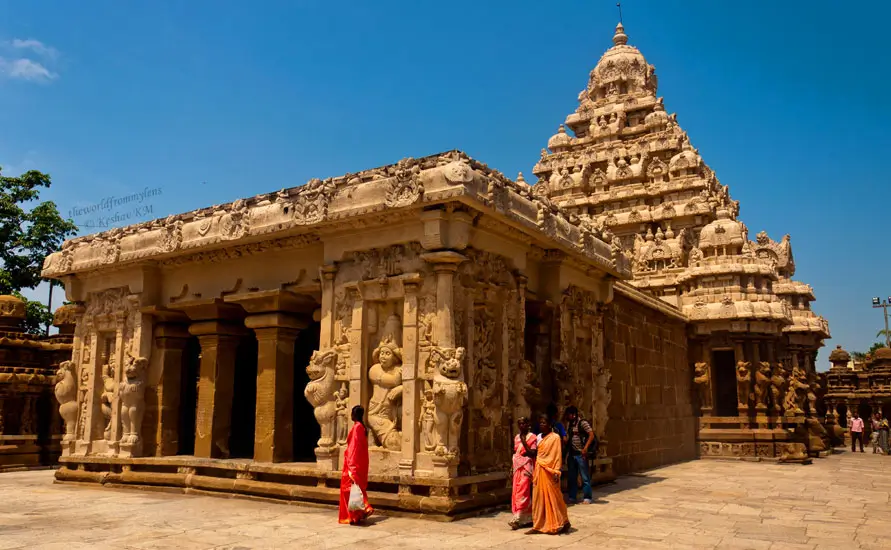
Leaving soon after breakfast, you follow the coast south and then turn into the rice bowl of Tamil Nadu, where green paddy fields stretch as far as you can see and every village has a pond and a small temple. About ninety minutes from Pondicherry you stop in Chidambaram to visit the Nataraja Temple, home of Shiva in his dancing form. Its golden-roofed inner hall is the center of a temple complex built over many centuries, whose towers carry carved panels of the karanas, the dance postures listed in the old Natya Shastra. Non-Hindus can usually walk through the outer corridors; your guide tells you where the line falls and what to wear.
The temples of Tamil Nadu are deeply traditional, so this is a good moment for a practical word. Your guide will tell you where photography is allowed, when to remove your shoes and how to behave around worshippers. As a solo traveler, a quiet and respectful style suits temple towns best, and there is no need to share personal details with strangers who ask, which happens often in rural India and is usually just curiosity. A simple answer like traveling to see temples is enough. Lunch is a vegetarian plate at a busy town eatery, then you continue for roughly two hours to Tanjore.
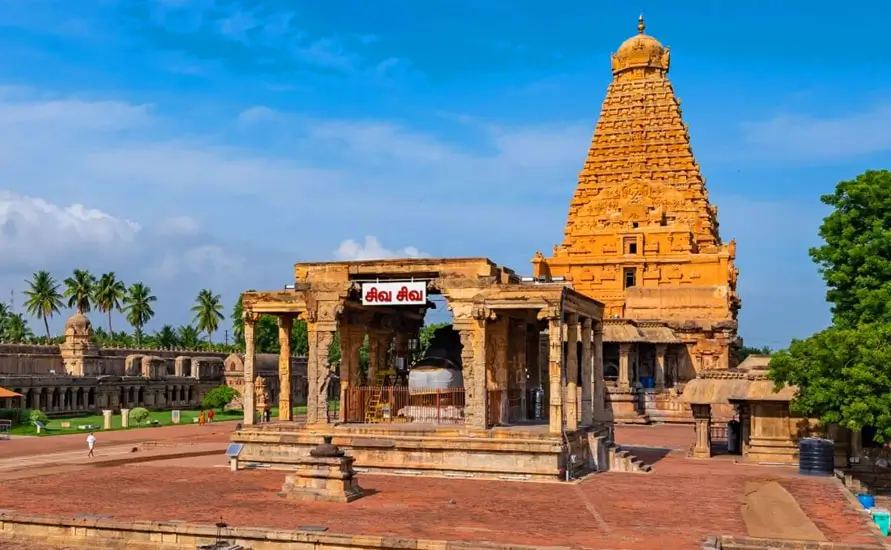
After check-in, head out in the late afternoon to the Brihadeeswarar Temple, completed for Rajaraja Chola around 1010 and part of the UNESCO Great Living Chola Temples. Its granite vimana rises about 66 meters, and the huge Nandi in the courtyard is cut from one stone. In the golden light before sunset the whole temple turns honey-colored, local families gather on the lawns and the sound of evening prayers drifts out of the shrine. Your guide shows you faint Chola-era murals in the corridor and the long Tamil inscriptions cut into the base. Dinner is at your hotel. Overnight in Tanjore.
Thanjavur, as Tanjore is officially known, was the Chola capital and later the seat of Nayak and Maratha rulers, and the morning goes to the Thanjavur Royal Palace complex. Its bell tower and arsenal tower stand over a series of courtyards and halls. Inside, the art gallery fills an old durbar hall with stone and metal sculpture, while the Maratha kings' Saraswati Mahal Library guards palm-leaf manuscripts, maps and hand-painted natural history books. Before leaving town you can visit a workshop that makes Thanjavur paintings with gold leaf or the famous bobble-headed dolls that sway from side to side.
Around eleven you set off for Madurai, four hours to the south-west, passing through Pudukkottai district with its granite hills, coconut groves and small shrines to village guardian gods with large terracotta horses outside. Your driver knows good clean places to stop for coffee or lunch, and if you want some quiet time you can simply rest in the back of the car with music. Many solo travelers say they come to enjoy these long drives, chatting with their driver about cricket, family life or Tamil films, and the drivers are generally glad of the conversation.
Tamil poets were already praising Madurai some two thousand years ago, and it still sets the tone for Tamil language, food and festivals. After check-in, your guide takes you on a short evening walk through the streets around the Meenakshi Temple, where tailors work at old sewing machines in the Pudhu Mandapam, flower sellers pile jasmine on banana leaves and stalls sell jigarthanda, a cold milk drink with almond gum and ice cream. It is a good, gentle introduction before tomorrow's full temple visit. Madurai is more conservative than Pondicherry, so modest clothes and a low profile are best here. Overnight in Madurai.
Morning is the best time for the Meenakshi Temple, before the crowds and heat build. Phones and cameras must stay behind at the deposit counters by the gates, which many visitors find surprisingly freeing. Your guide leads you through the long pillared halls with painted ceilings, the Golden Lotus tank and the great pillared mandapam, where each column carries a different carved figure. The two inner sanctums of Meenakshi and Sundareswarar are open to Hindus only, though the corridors hold more than enough to fill a morning, where priests, pilgrims and musicians come and go all day.
Late morning you visit the Tirumalai Nayak Palace, finished under Tirumalai Nayak in 1636 with domes, cusped arches and stucco work, with giant white pillars and a vast courtyard. After lunch, retreat to the hotel while the sun is fierce, or spend an hour at Madurai's museum on the life of Mahatma Gandhi, inside a 17th-century Nayak building, where one room covers the events of January 1948. Solo travelers sometimes use these afternoons to catch up on sleep or messages from home, and that is perfectly fine. Madurai tailors can also stitch a cotton shirt or kurta overnight, and your guide knows who is reliable.
Around 9 pm, the temple holds its palliyarai ceremony, when priests bear Sundareswarar's festival image on a silver litter to rest beside the goddess, accompanied by drums, nadaswaram pipes and the chanting of priests. Visitors can watch from the corridor, and your guide or driver will accompany you there and back, since it ends late. It is one of the most moving rituals in South India and a good reason to stay in Madurai for two nights. Afterwards, a late dosa at a busy local restaurant is a fine way to end the day. Overnight in Madurai.
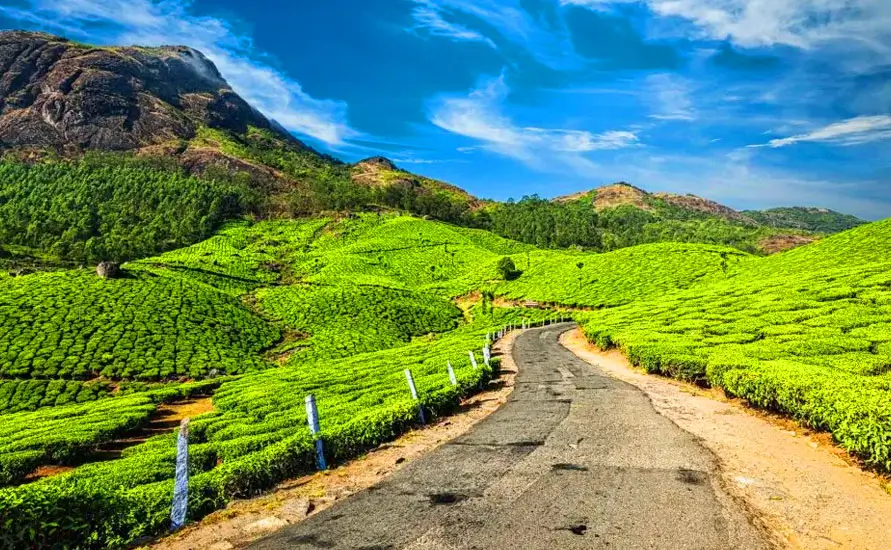
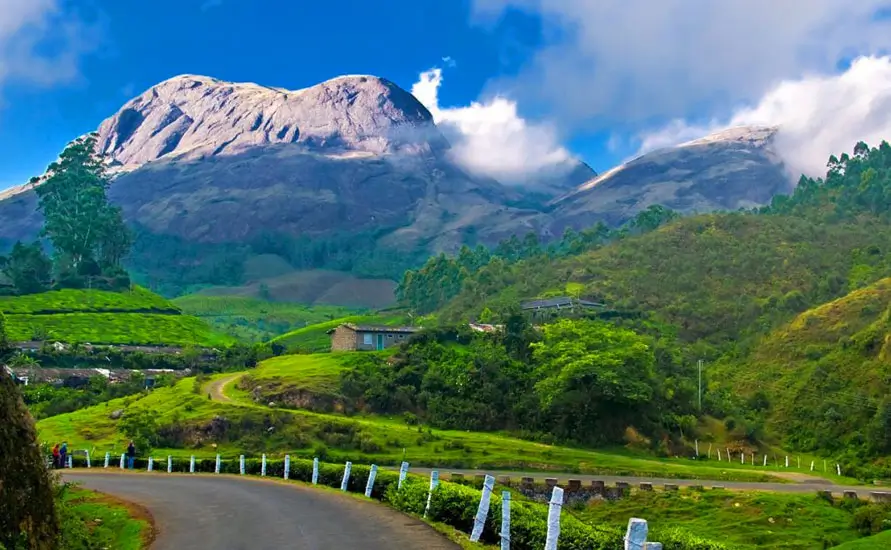
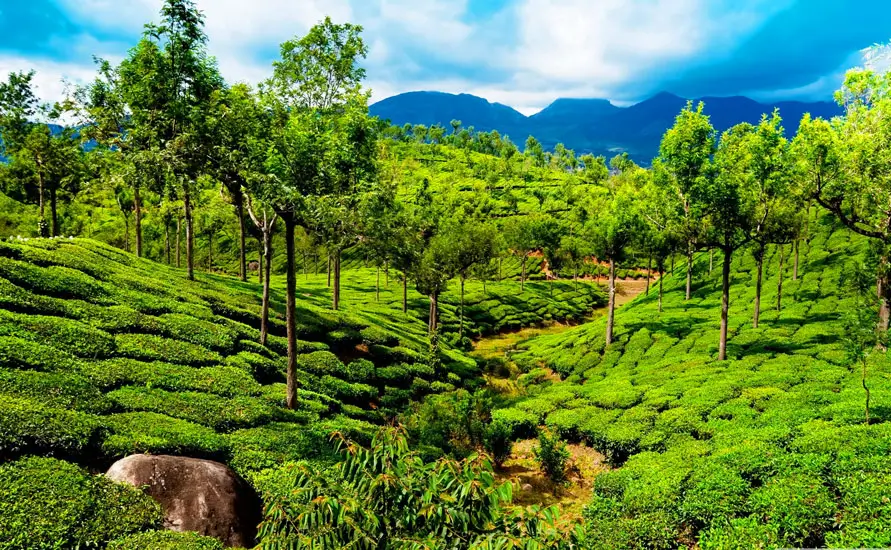
Once you are packed, the drive west begins, and the plains soon give way to the blue wall of the Western Ghats. The first part of the road passes through Theni district, a busy region of vineyards, banana plantations and cardamom auction houses, with the hills rising ahead. At Bodinayakanur the road begins to climb in hairpin bends up the Bodi Mettu ghat, crossing into Kerala, and the temperature drops steadily. By the time you reach the top, the hillsides are covered with neat, clipped tea bushes, and the air smells of eucalyptus. Your driver stops at viewpoints where the valleys fall away far below.
Munnar means three rivers in Malayalam, after the streams that meet in town, and Scottish-run companies turned its forested slopes into tea gardens from the 1880s on. Around two o'clock you reach a hotel or homestay overlooking the estates, where the staff are used to solo guests from all over the world. With the rest of the day free, sit with a book on the balcony or take a short walk on the quiet estate roads, where tea pickers pass with baskets on their backs and plantation buses take workers home. Wear layers, as it can get cold after sunset.
In the evening, Munnar town is small and quiet, so most travelers stay at their hotel, sit by the fire and chat with other guests over dinner. Many homestays serve home-style Kerala meals at a shared table, which makes it very easy to meet people when you are on your own. This is also a good moment to take stock of how the trip is going: if you want more company, we can add a small-group trek or a guided walk; if you want more time alone, we can lighten the schedule. Just tell your local contact. Overnight in Munnar.
An early drive takes you to Eravikulam National Park, refuge of the Nilgiri tahr, a stocky, curved-horned climber that lives only on these southern ridges. Your car parks at the lower checkpoint, and a park shuttle climbs to the Rajamalai visitor zone, where you can walk along a paved path among grasslands and rocky slopes, with Anamudi, at 2,695 meters, looming close by. Each year the park shuts for a spell in late winter and early spring while the tahr give birth, and on busy days queues can be long, so we book an early slot when online booking is open.
Back in town, the Tea Museum run by the main plantation company traces the planting era through sepia photographs and an early rolling machine, then shows how a fresh leaf becomes black tea in a working mini-factory. It is a good place to taste different grades and buy a few packets to take home. After lunch, a Munnar-born guide takes you on an easy walk through the estates and nearby villages, stopping at a spice garden and perhaps the small Mount Carmel church, one of the oldest Catholic churches in the region.
The estate walk is also one of those moments where your guide becomes good company rather than just a source of information. Our Munnar guides are local, often from planter or worker families, and can talk about wages, schooling and the changing life of the hills as easily as about birds and flowers. Many solo travelers say these conversations are their favorite memories of the trip. In the evening, you might enjoy a Kathakali or Kalaripayattu show in town, both short and easy to attend alone, or simply have dinner and an early night by the fire. Overnight in Munnar.
The road from Munnar to Thekkady winds south through cardamom country, where the bushes grow under tall forest trees in shady valleys, and and the road needs about three hours including pauses. In the small towns, church spires, temple towers and mosque domes share the same main street, and stalls selling spices, honey and homemade chocolate. Thekkady grew up beside the gate of Periyar Tiger Reserve, and its main road is lined with cardamom shops, massage clinics and small cafés. You check in around lunchtime to a hotel with a garden setting.
In the afternoon, a guided walk through a spice plantation introduces you to pepper vines, cardamom bushes, cinnamon trees, nutmeg, cloves, vanilla and coffee growing side by side. You learn to tell the plants apart by leaf and smell, explains which parts are used and how they are dried and sold. The walk is relaxed and suits all fitness levels. The farm owner usually finishes with cardamom tea and a table of spices you can buy direct. For solo travelers, these small group walks are often a chance to meet other visitors in a low-key way.
As evening falls, you can choose between a Kalaripayattu performance, Kerala's ancient martial art with leaps, sword fights and fire, or a Kathakali show with its famous facial expressions. Both take around an hour, and your driver drops you off and picks you up. Thekkady is a small, safe town where many travelers walk between their hotel and nearby restaurants after dark, though, as anywhere, it is wise to stick to well-lit roads. Dinner could be a simple Kerala thali or fresh trout and fish from the hills. Overnight in Thekkady.
If you are an early riser, start the day with a boat trip on Periyar Lake, an artificial reservoir created in 1895, where drowned trees still poke up from the water and elephants, gaur and wild boar come down to drink on the banks. The forest department runs these trips from a jetty inside the reserve, with a limited number of seats per sailing, so we try to book the first one. Alternatively, a guided nature walk or bamboo rafting tour with forest staff gives a closer look at the jungle. After breakfast, you check out and set off for Kochi.
The drive from the hills down to the coast takes around five hours, passing through rubber plantations and pineapple farms before reaching the flat, green country near Kochi. Your driver can stop for lunch at a roadside restaurant serving Kerala meals or fried fish. By late afternoon you are unpacking in a heritage hotel in old Fort Kochi. Later, wander down to the water as the fishing boats return and stop for coffee at one of the many art cafés nearby. Overnight in Kochi.
Today's guided walk through Fort Kochi and Mattancherry covers the town's long history as a spice port. You start at St. Francis Church, whose floor still marks the Portuguese navigator's original grave, then pass Dutch-era houses and old warehouses converted into galleries. In Mattancherry, the Dutch Palace has some of Kerala's finest murals, and the Paradesi Synagogue is famous for its Chinese floor tiles. Remember that neither opens on Fridays, with Saturdays and Jewish festivals off the synagogue's calendar as well, so we slot this tour on a suitable weekday. Your guide also points out spice traders and antique dealers at work.
Fort Kochi is one of the most relaxed places in Kerala for LGBTQ+ travelers, with a creative crowd, artists, students and visitors from across India and abroad. Thanks to the biennale held here every second winter, many old warehouses have become exhibition spaces, and even in non-biennale years there is plenty of contemporary art to see. In the afternoon, the town's cafés are a natural place to rest, read and meet people, with many of them run by young owners who are open and welcoming to everyone. We keep a short, updated list of the ones popular with LGBTQ+ locals and travelers.
For the evening, there are several options for a solo traveler. You could join an optional small-group food walk through the lanes of Fort Kochi, tasting street snacks, toddy-shop fish curry and local sweets with a handful of other travelers. You could attend a Kathakali performance, or learn to make fish molee in a Syrian Christian kitchen. If you prefer something quiet, a walk along the beach road at sunset to watch the Chinese fishing nets being lowered is just as rewarding. Your driver and our 24/7 line are always available if you need a ride or help. Overnight in Kochi.
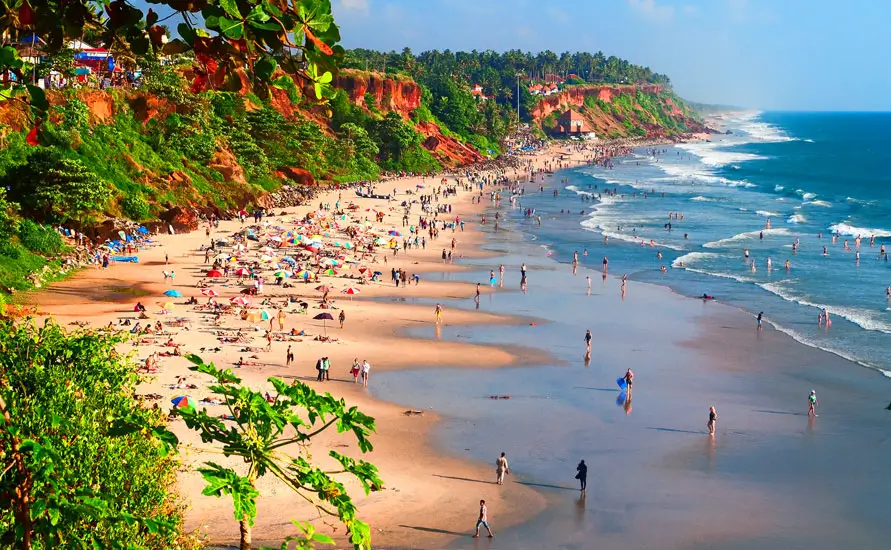
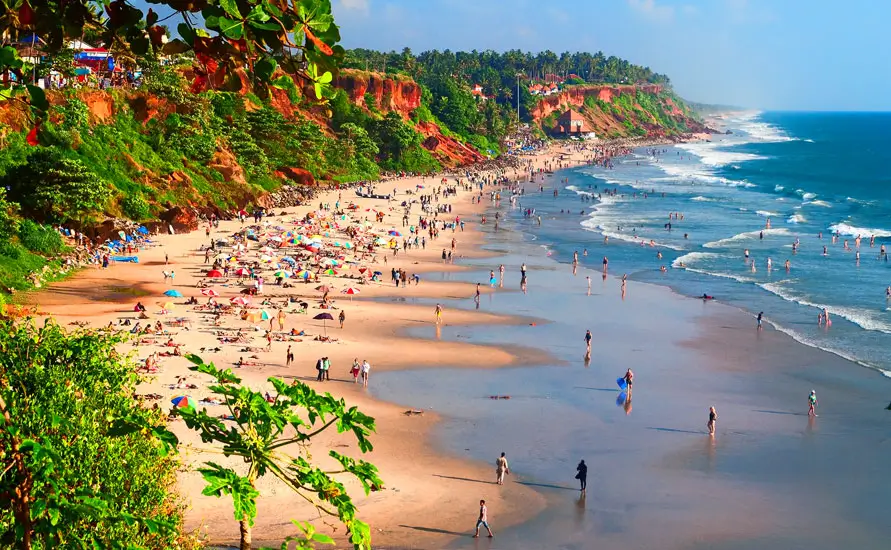
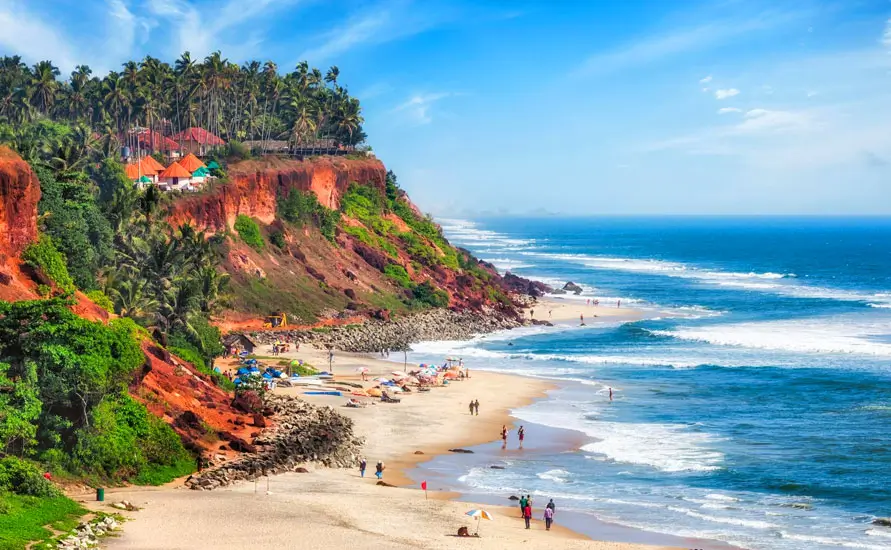
After a slow breakfast in Fort Kochi, you set off for Varkala, about four hours down the coastal highway through towns, churches and coconut groves, with a stop for lunch along the way. Varkala's ochre cliffs drop thirty meters to the water, with natural springs running down the rock face and a long, sandy beach below. It is the only place in southern Kerala where cliffs meet the sea like this, and it has long been popular with independent travelers, yoga students and backpackers from all over the world. You check in to a cliff-side or garden hotel by mid-afternoon.
A footpath along the North Cliff threads past cafés, guesthouses, yoga schools and small shops, and it is the social center of Varkala. Solo travelers find it very easy to meet people here, whether over coffee, during a yoga class or watching the sunset from a café terrace. Many visitors are from Europe and Australia, and the atmosphere is relaxed and international. Varkala is also generally comfortable for LGBTQ+ travelers, although it is still a small Kerala town with traditional families nearby, so modest dress away from the beach is appreciated.
In the late afternoon, find a seat on the cliff to watch the sun set over the sea, a daily ritual for many visitors. The beach below, Papanasam, is considered sacred by Hindus, and in the mornings priests sit on the sand helping families offer rice balls to departed relatives. After dark, the cliff cafés switch on their lights and serve fresh seafood, wood-fired pizza and Kerala curries. Walking back to your hotel along the cliff path is usually safe, but bring a small torch, since some sections are dark and close to the edge. Overnight in Varkala.
Your final full day is free, so you can shape it however you like. Many solo guests start with an early class at one of the rooftop yoga shalas, which welcome drop-in students of all levels. Others prefer a swim in the sea, though the currents can be strong, so always check with the lifeguards and swim only where flags show it is safe. After breakfast, you might walk to the Janardana Swamy Temple, a 2,000-year-old Vishnu shrine on a hill above the town. Visitors of other faiths may generally walk the outer courtyard, and the climb up passes old houses and banyan trees.
Varkala is also a good place for gentle wellness treatments, and many centers offer Ayurvedic massages or short courses. Alternatively, a half-day outing by car goes to the nearby backwaters of Kappil, where a quiet lake meets the sea, or to the small fishing harbor at Varkala to watch the boats come in. For solo travelers who want company, this is also a good day for an optional small-group meetup, such as a sunset beach walk or a dinner with a few other travelers and a local host, arranged in advance through our team.
Your farewell meal is up on the cliffs, perhaps with grilled fish, prawns or a vegetarian Kerala thali, and a final look at the sea. Over these two weeks you have traveled from the temple towns of Tamil Nadu to the hills and coast of Kerala, often on your own but rarely alone, thanks to your guides, drivers and the people you met along the way. If you would like to share feedback on how we handled your solo trip as an LGBTQ+ traveler, our team would value it. Pack your bags tonight for tomorrow's drive to the airport. Overnight in Varkala.
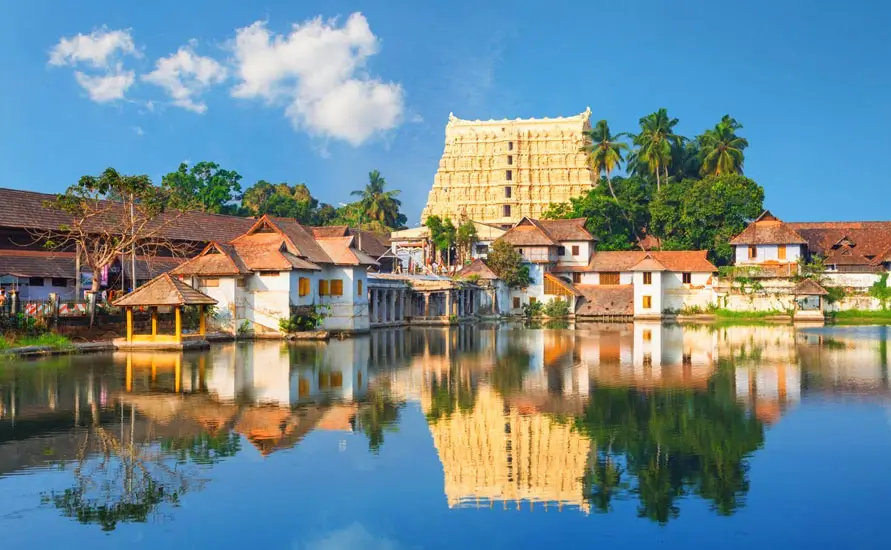
After breakfast and a last walk along the cliff, you leave for Trivandrum International Airport, roughly 55 km to the south. We plan the pickup with a generous buffer before your check-in closes, and Trivandrum has good connections through the Gulf, Colombo, Singapore and major Indian cities. With an evening flight, a late check-out in Varkala can be requested or a stop at the Padmanabhaswamy Temple area or Napier Museum in Trivandrum on the way. Your driver helps with your bags at the terminal.
Thank you for trusting us with your solo trip through South India. We hope the clear pricing, the company of your guides and drivers and the social cafés and meetups made traveling alone as an LGBTQ+ guest feel easy and enjoyable. Chennai Pride, Namma Pride in Bangalore or Kerala Queer Pride would each make a fine excuse to come back, and so would a slower trip with no plan at all; just send us a message. Have a safe flight home.
Your Journey

N.S. Rathore & Mrs. Omlata Rathore · Managing Director
We still read every enquiry ourselves. Tell us the places you liked and our planners will send a day-by-day route with drive times and a clear price.
Every package can be customised and no pressure to book. A planner from our office replies within 24 hours with a route written for your group.
Fill this in and your planner will send a first draft itinerary.
Explore more
Kerala Backwaters Escape Kerala Backwaters Escape
 Kerala Backwaters Escape
 Kerala Backwaters Escape
 Kerala Backwaters Escape
 Kerala Backwaters Escape
 Kerala Backwaters Escape
 Kerala Backwaters Escape
 Kerala Backwaters Escape
 Kerala Backwaters Escape
 Kerala Backwaters Escape
 Kerala Backwaters Escape
 Kerala Backwaters Escape
 Kerala Backwaters Escape
 Kerala Backwaters Escape
 Kerala Backwaters Escape
 Kerala Backwaters Escape
 Kerala Backwaters Escape
 Kerala Backwaters Escape
 Kerala Backwaters Escape