 Kerala Backwaters Escape

LGBTQ+ Friendly South India Tours
Kochi – Kumarakom – Varkala (Ayurveda & yoga resort) – Trivandrum
At a glance
Plenty of travelers come to Kerala for Ayurveda, but LGBTQ+ guests often wonder how a traditional wellness resort will greet a same-sex couple, a trans traveler or a queer solo guest. Our LGBTQ+ Ayurveda and Yoga Retreat Kerala answers that before you leave home. After two easy nights in Kochi and two by the lake in Kumarakom, you settle for nine nights at a cliff-top Ayurveda and yoga resort in Varkala, chosen because the doctors, therapists and teachers there welcome LGBTQ+ guests as a matter of course. The aim is rest, routine and good food, not a crowded sightseeing list.
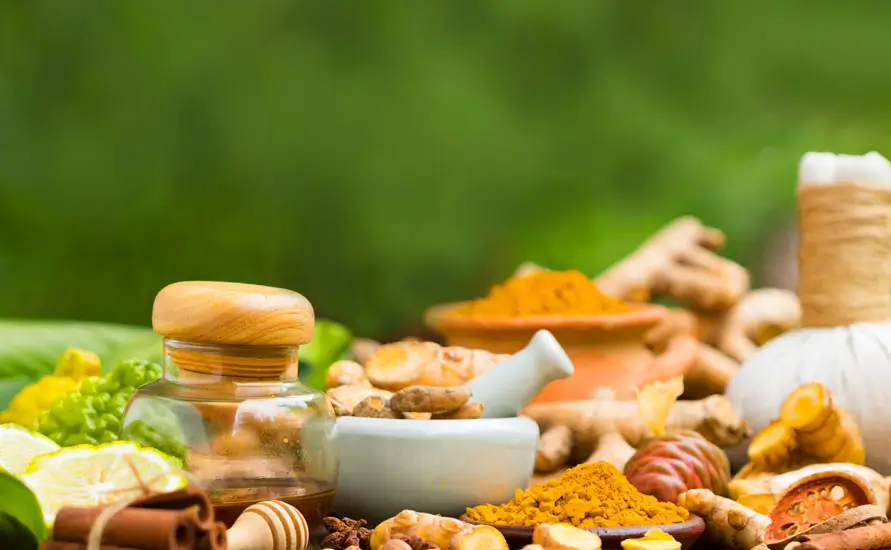
At the heart of this LGBTQ+ Ayurveda retreat sits a consultation with a qualified Ayurvedic doctor, who asks about your sleep, digestion, energy and daily habits and then plans a set of treatments and a diet for your stay. Ayurveda is a traditional system of care focused on balance and well-being; it is no substitute for your own doctor, and we make no promises of cures. Alongside the massages and herbal therapies come daily yoga, breathing practice and guided meditation, all taught at your level, with afternoons left open for the beach, reading or a short outing with your driver.
A few honest notes. Back in 2018 the country's top court threw out the old criminal ban on gay relationships, while marriage for same-sex couples still lacks legal standing, and attitudes outside cities and tourist areas remain traditional, so discretion in villages and temples is wise. Varkala, a beach town used to international visitors, is relaxed. Therapists at the resort work same-gender by default, and you can state preferences for any treatment. October to March brings sunny, dry days on the coast, while the wet months from June onward are when many Keralites traditionally take their own Ayurvedic treatments, and rates drop. Travelers from abroad and LGBTQ+ NRIs can shorten or extend the Varkala stay.
Long-haul flights usually reach Cochin International Airport before sunrise, which is why day one of this wellness trip is deliberately slow. Our host is at the arrivals exit with your name on a card and drives you, in your own air-conditioned vehicle, to a heritage property in the old quarter of Fort Kochi, roughly ninety minutes away. For a same-sex couple, a group of friends or a solo guest alike, the room has been booked exactly as you asked, and the front desk knows to expect you. You receive a printed plan for the fortnight and a phone number that our Kerala office answers day and night.
Sleep for as long as your body asks. Jet lag is often the first thing an Ayurvedic doctor will talk about later in the trip, and starting gently gives your system a head start. When you wake, the hotel kitchen can bring a light lunch of steamed rice, dal and vegetables, and a pot of ginger tea or fresh lime with salt, an old local cure for travel fatigue. If you feel like moving, a short walk under the rain trees of the old parade ground, where boys play cricket in the late afternoon, is enough exercise for today. Avoid heavy meals and alcohol on the first night if you can.
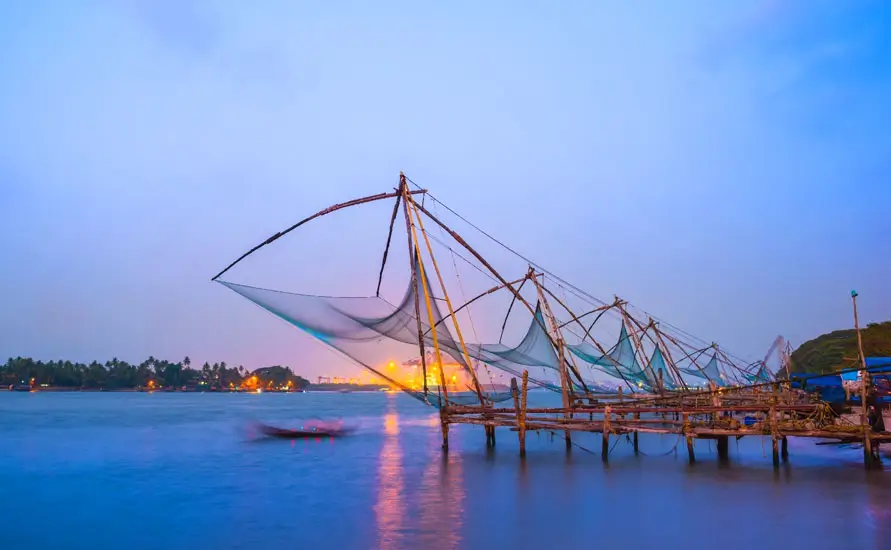
Around sunset your guide joins you for a relaxed amble down to the harbor mouth, where the old cantilevered fishing nets dip in and out of the water and ferries chug across to Vypin island. There is no lecture, just an introduction to the town and a few tips on dress, customs and the shape of the fortnight ahead. Kochi feels open-minded by Indian standards, thanks partly to an arts scene that draws visitors from around the world, and you will find it easy to settle in here. Dinner can be a simple fish curry or vegetable stew at a courtyard restaurant close to the hotel. Overnight in Kochi.
Start the day the way you will start most mornings on this trip: with stretching and a few minutes of quiet breathing, either in your room or on the hotel's garden terrace. After breakfast your guide leads a gentle walk through Fort Kochi, pacing it to suit anyone still tired from the flight. The route takes in the whitewashed St. Francis Church, the Dutch cemetery and quiet streets of old merchant houses with red tiled roofs. Many of the old warehouses near the water now hold galleries and cafés tied to the Kochi-Muziris Biennale, a big contemporary art show staged roughly every two years over the winter.
Late in the morning the car carries you a couple of kilometers inland to Mattancherry. The palace here, renovated by the Dutch and often called the Dutch Palace, holds murals of Hindu epics painted in red, yellow and green pigments, and a small display of royal palanquins and robes. Close by, the Paradesi Synagogue in Jew Town has a floor of blue and white porcelain tiles and a quiet prayer hall lit by hanging glass lamps. Friday closes both sites, and the synagogue also keeps its doors shut on Saturdays and Jewish holidays, so we fit these visits to your arrival day. Spice traders still weigh out pepper and dried ginger in the surrounding godowns.
After lunch the afternoon is unscheduled; a nap, a swim or a browse through the antique and textile shops of Jew Town are all good choices. In the evening you watch a Kathakali show at a small theater, a story-telling art form where every movement of the eyes and fingers carries meaning. Performers train for years and many begin their day with oil massages and stretches drawn from the same tradition you are about to follow in Varkala, which your guide can explain. Afterward, a plain meal and lights out by ten set you up for tomorrow's drive to the lake. Overnight in Kochi.
The drive to Kumarakom takes about two hours, heading south-east through towns where shops sell gold jewelry, plastic buckets and rubber sheets side by side, past churches, temples and mosques. A roadside halt for tender coconut water is easy to arrange, the most refreshing drink in Kerala on a warm morning. Gradually the land flattens and waterways begin running parallel to the highway, lined with coconut palms and small homes painted in bright colors. You reach your lakeside resort before lunch, and check-in has been arranged in advance so that the room and bed type match exactly what you requested.
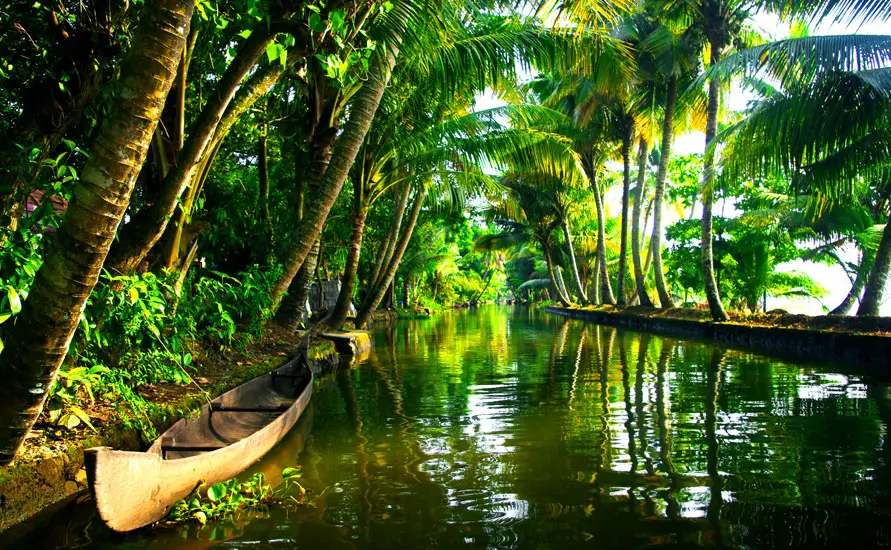
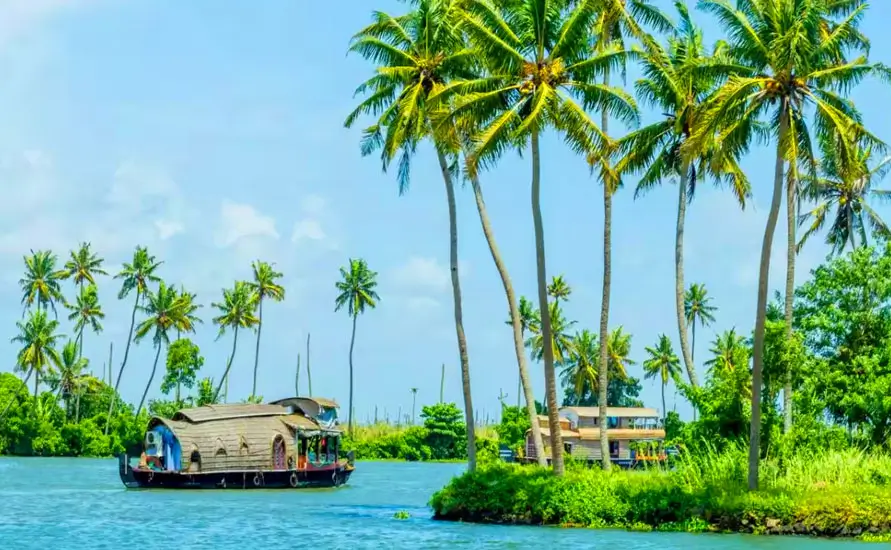
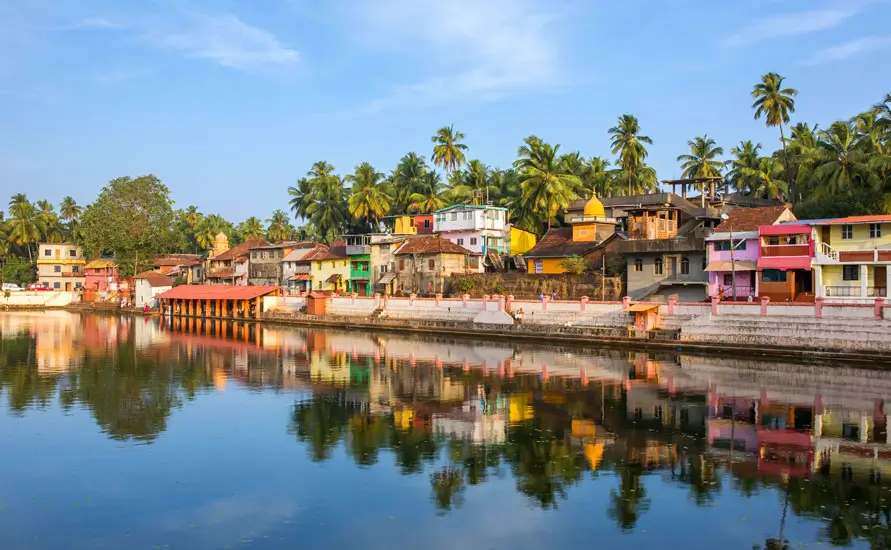
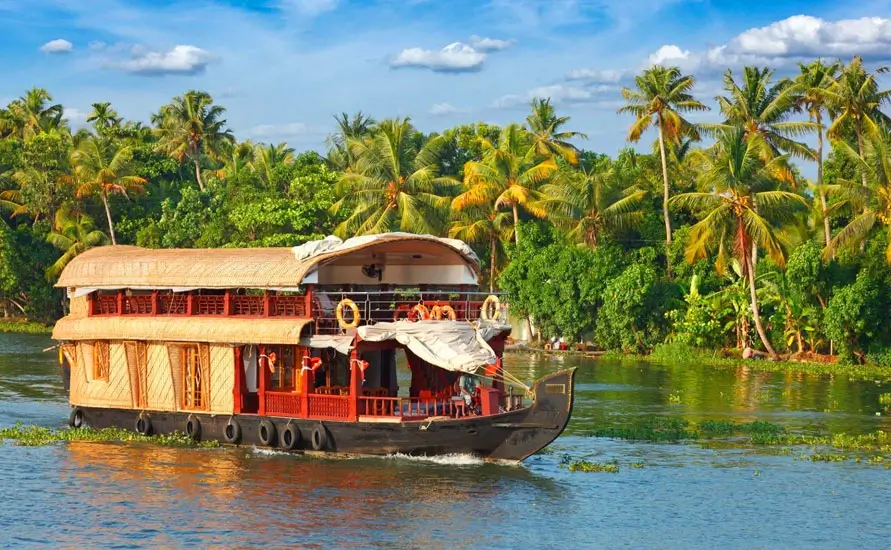
Kumarakom faces west across Vembanad Lake, a huge body of water fed by rivers flowing down from the Western Ghats. It is a slower, quieter place than the busy houseboat hub of Alleppey, and that suits the purpose of this trip. Your resort sits among coconut groves with cottages facing the water, and its own spa offers a taste of Ayurvedic massage if you would like to begin gently. Nothing is planned this afternoon, and many guests spend it in a hammock or by the pool, watching kingfishers dart over the lake and boatmen paddle past in narrow canoes.
Toward evening, a short guided walk along the lakeshore and through the nearby village gives you a feel for life on the water. Your guide shows you how coconut husks are soaked in the canals to make coir fiber, how farmers keep the water out of their paddy fields with mud walls, and how ducks are herded along the banks to feed on insects and fallen grain. Dinner tonight could be karimeen, the prized local fish, grilled in banana leaf, or a light vegetarian meal if you prefer to start following an Ayurvedic diet early. The resort is very quiet after dark. Overnight in Kumarakom.
Wake at first light for a short canoe trip through the narrow canals around the resort, paddled by a local boatman. At this hour the water is perfectly still, mist hangs low over the paddy fields and the only sounds are birdsong and the soft splash of the paddle. You pass women washing clothes on stone steps, men casting nets from their boats and small shrines decorated with marigolds. The canoe is too small for the open lake, which means you see the parts of Kumarakom that houseboats never reach. Back at the resort, a light breakfast of fruit, idli and coconut chutney is waiting.
Mid-morning, a naturalist walks you through the Kumarakom Bird Sanctuary, a compact patch of lakeside woodland and mangrove once laid out as a rubber estate. Herons, egrets, cormorants and darters nest in the trees, and in the cooler months they are joined by migratory species from northern India and beyond. The path is flat and shaded, so the walk is easy for all fitness levels. Afterward you have the rest of the morning to rest, read or swim, and lunch at the resort can be as light as you like. Kerala's food is naturally full of fresh vegetables, coconut and spices, so it is easy to eat well here.
In the late afternoon, a yoga teacher from the resort leads a private session on a deck facing the water, a first introduction to the daily practice you will follow in Varkala. The class focuses on simple stretches, breathing and relaxation, and your teacher adjusts everything to your level, from complete beginner to long-time practitioner. Teachers here are used to working with guests of every gender and background, and the session is about comfort rather than performance. As the sun sets over the lake, you finish with a short guided meditation before dinner. Overnight in Kumarakom.
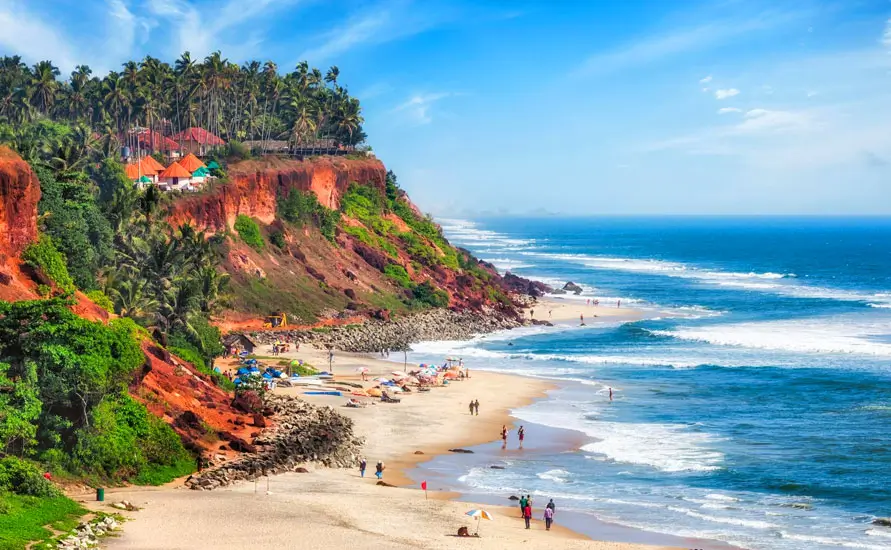
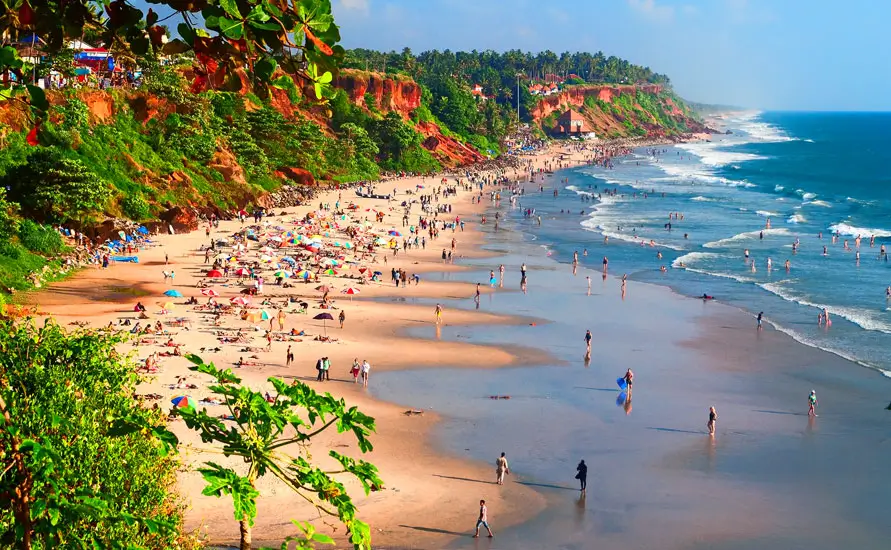
After breakfast you leave the lake and drive south toward Varkala, a drive of about four hours through Kottayam, Kollam and a string of coastal towns. A coffee halt breaks the drive, and if traffic allows, a short stop at the Ashtamudi Lake near Kollam gives you a view of another of Kerala's great backwaters. As you near the coast, the land begins to rise, and you arrive at the red laterite cliffs of Varkala in the early afternoon. Your Ayurveda and yoga resort sits on the cliffs above the Arabian Sea, with views out over the water.
Check-in has been arranged in advance, and the resort team welcomes you with a glass of herbal drink and a short tour of the grounds, including the yoga hall, the treatment rooms and the restaurant. The resort works with LGBTQ+ guests regularly, and the staff are friendly, professional and discreet. Treatments are given by therapists of the same gender by default, as is traditional in Ayurveda, but you can discuss your preferences openly with the doctor. The room is quiet and simply furnished, designed for rest rather than luxury, though it has everything you need for a comfortable stay.
Toward five o'clock comes your first sitting with the Ayurvedic doctor, who reads your pulse at the wrist using nadi pariksha, asks about your health, sleep, digestion and stress levels, and discusses what you hope to gain from the retreat. Based on this, they suggest a treatment plan for the coming days, along with diet and lifestyle advice. This is not a medical diagnosis or a replacement for your own doctor's care, and you should tell the doctor about any medication or health conditions. After the consultation, a light dinner prepared according to your plan is served in the restaurant. Overnight in Varkala.
Each morning begins with a yoga session in the open-sided hall overlooking the sea, usually starting around seven. The teacher leads the group or private class through gentle postures, breathing exercises and a short meditation, adapting each pose to your level. Classes are small and relaxed, and nobody expects you to touch your toes on day one. Afterward, breakfast is served in the restaurant, often a mix of fresh fruit, herbal porridge and South Indian dishes such as upma or dosa, prepared according to Ayurvedic principles and the advice of your doctor. Coffee and tea are available, though many guests switch to herbal infusions.
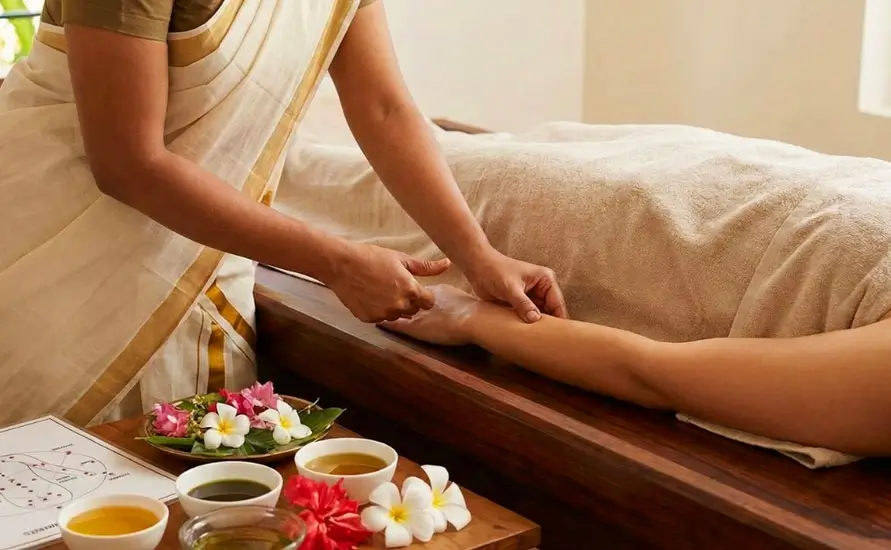
Your first treatment is scheduled for the late morning, usually an abhyanga, a full-body massage using warm herbal oils chosen for your body type. Two therapists often work together, using long, synchronized strokes that are meant to relax the muscles and calm the mind. The treatment lasts about an hour and is followed by a steam bath or a herbal bath to help the skin absorb the oils. Many guests find the first session surprisingly intense, and you are encouraged to rest afterward. Lunch is a light vegetarian meal, and the afternoon is left free for reading, sleeping or a walk along the cliff.
In the late afternoon, a second yoga session focuses on relaxation and breathing, helping to release tension built up during the day. As daylight fades over the water, you can join a guided meditation on the terrace or simply sit quietly and watch the sky change color. Dinner is early and light, and the resort encourages guests to go to bed early to follow the natural rhythm of the day. There are no televisions in the rooms, and most guests find that early nights come naturally after a day of oil and stretching. Overnight in Varkala.
Mornings now follow a familiar pattern, and once yoga and breakfast are over, your second treatment of the stay begins. Depending on your doctor's advice, this might be another abhyanga or a different therapy such as shirodhara, in which a thin stream of warm herbal oil is poured slowly across the forehead for around forty-five minutes. Shirodhara is traditionally used to calm the mind and is one of the best-known treatments in Kerala Ayurveda. The therapists work in silence, and the room is kept dim and warm. Afterward, rest is strongly encouraged, and you may want to spend an hour lying quietly before lunch.
In the afternoon, once the heat has eased, you can take a gentle walk along the North Cliff of Varkala, a footpath edged by cafés, bookshops and guesthouses on the rim of the cliff. The views out over the Arabian Sea are wide and clear, and the red laterite cliffs glow in the late afternoon light. Varkala is a relaxed, international town, and LGBTQ+ travelers generally feel comfortable here, though it is still sensible to be discreet with public affection. Many of the cafés serve fresh juices, herbal teas and light meals, and some host live music or yoga workshops in the evenings.
The sunset from the cliff is one of the most beautiful in Kerala, with the sun sinking into the sea behind fishing boats returning to shore. A light café supper is possible if it fits your diet plan; otherwise the resort kitchen is expecting you. If walking back in the dark does not appeal, a phone call brings the car. Many guests find that by this point in the retreat, the daily routine of yoga, treatments and rest has started to feel natural, and the stress of everyday life has begun to fade. Overnight in Varkala.
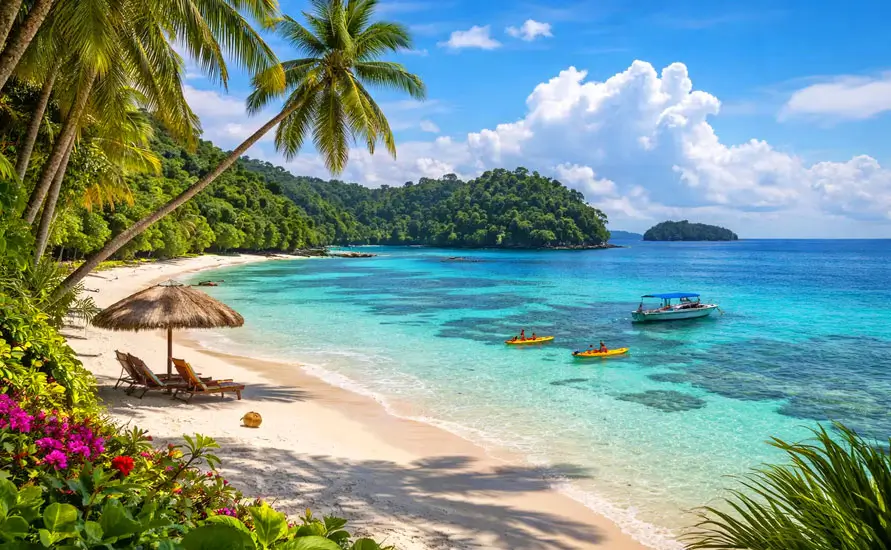
Following morning yoga and breakfast, a short drive or walk takes you down to Papanasam Beach, the main beach of Varkala, at the foot of the cliffs. The name means washing away of sins, and Hindu families come here to perform rituals for departed relatives, especially at certain times of the year. Your guide explains the customs and helps you watch respectfully from a distance. The beach is a good place for a gentle swim when the sea is calm, though currents can be strong and you should always check with the lifeguards. Many guests simply enjoy a walk along the sand before the midday heat.
Above the beach stands the Janardhana Swamy Temple, an ancient temple dedicated to Vishnu and one of the most important pilgrimage sites in southern Kerala. Non-Hindus are generally not permitted inside the main shrine, but your guide can show you around the outer areas and explain the temple's history and legends, along with the local stories tied to its founding. Modest dress is required, with shoulders and knees covered, and shoes must be removed. The temple is busiest in the early morning and evening, so a mid-morning visit is usually quieter and easier.
Your treatment today is scheduled for the afternoon, after a light lunch and a rest. Your doctor may suggest a different therapy, such as pizhichil, where streams of lukewarm medicated oil run continuously over you as two therapists work in rhythm, or a herbal powder massage known as udvartana. The resort's treatments are adjusted day by day according to how you respond, and you can raise any concerns with the doctor or therapists at any time. In the evening, a gentle yoga session and a short meditation help you settle before dinner. Overnight in Varkala.
Today is designed as a rest day, with morning yoga followed by a free day to enjoy the resort at your own pace. Rest days are an important part of any Ayurvedic program, because the effects of oil therapies and diet need quiet days to settle. You might spend the morning reading in the garden, swimming in the pool or simply sitting on your balcony watching the sea. The resort's library has books on yoga, Ayurveda and Indian philosophy, as well as novels, and there is plenty of shade for lazy hours. Lunch is served at the usual time, prepared according to your doctor's plan.
In the afternoon, you can join an optional Ayurvedic cooking class run by the kitchen team, learning how to prepare simple, healthy Kerala dishes using local vegetables, coconut and spices. The chef explains how different ingredients are believed to affect the body according to Ayurvedic tradition, and how to balance flavors in a meal. You cook a few dishes together and then sit down to enjoy them. Recipes are provided to take home, so you can continue eating some of the same food after your trip. The class is relaxed and informal, and suits anyone from nervous beginners to keen home cooks.
The evening is free, and many guests take the chance to walk along the cliff or sit quietly by the sea. If you prefer, the resort can arrange a session with a yoga teacher to discuss your practice and how to continue it at home. Alternatively, a short talk on Ayurvedic principles by the doctor or a senior therapist is often held in the evenings, covering topics such as daily routines, seasonal diets and the three doshas. Dinner is light and early as usual, and you can go to bed knowing that tomorrow brings another day of treatments and yoga. Overnight in Varkala.
Today brings a change of scenery: straight after morning yoga you set off on a light excursion to the north of Varkala. A short drive brings you to Kappil, where the backwaters meet the sea at a narrow sandbar. The lake is calm and quiet, surrounded by coconut palms and small villages, and a small motorboat can take you out across the water. It is a peaceful place, far from the busier parts of Varkala, and a good chance to see another side of the Kerala backwaters. Your guide points out the birdlife, the fishing nets and the traditional boats used by local families.
Turning south again past Varkala, you continue to Ponnumthuruthu, an islet in the backwaters south of Varkala, reached by a short boat crossing. The island is home to an old Shiva-Parvati temple surrounded by thick coconut groves, and the boat ride there is calm and scenic. Visitors are asked to dress modestly, and your guide will advise which areas are open to non-Hindus. The island is quiet and rarely crowded, and the boatmen are happy to take you around the lake before returning to the shore. Lunch and your afternoon treatment are waiting back at the resort.
Your treatment today is scheduled according to your doctor's plan, and might include a facial treatment, a foot massage or a continuation of your main therapy. The resort's therapists are skilled and gentle, and they check regularly that you are comfortable. In the evening, a gentle yoga session focuses on stretching and relaxing the body after the day's activities. After dinner, you can join a guided meditation or simply sit quietly on your balcony, listening to the waves below. Many guests say that by this point in the retreat, they feel more rested and relaxed than they have in a long time. Overnight in Varkala.
The day begins as usual with morning yoga and a light breakfast. Your treatment is scheduled for the late morning, and might include a combination of therapies chosen by your doctor, such as a herbal steam bath, a head massage or a session of abhyanga with a different oil. The doctor checks in with you regularly during the retreat, adjusting the treatments and diet according to how you feel. If you have any questions or concerns, this is a good time to raise them. After the treatment, rest is encouraged before lunch, which is served at the usual time.
In the afternoon, a short drive takes you to Sivagiri, a hill just outside Varkala that is home to the samadhi of Sree Narayana Guru, a social reformer and philosopher who campaigned against caste discrimination in the late nineteenth and early twentieth centuries. His teachings of one caste, one religion and one god for all people are still widely followed in Kerala. The site is peaceful and visitors of all backgrounds are welcome, though modest dress is required. Your guide explains the guru's life and influence, and the place he holds in Kerala's history and society.
Back at the resort, the evening yoga session focuses on breathing and relaxation, and is followed by a guided meditation at sunset. Dinner is served early, and you have the rest of the evening to read, write or simply rest. Many guests keep a journal during their retreat, noting how they feel each day and what they have learned about yoga and Ayurveda. The resort can provide a notebook if you would like to start one. The routine of the retreat is now well established, and the days have taken on a calm, steady rhythm. Overnight in Varkala.
A little colonial history fills the morning, with a short drive south to Anjengo, a small fishing village where the British East India Company built a fort in the late seventeenth century. The fort is small and partly ruined, but its walls and the old English cemetery inside give a sense of the early days of British trade on this coast. A lighthouse nearby offers views over the coastline and the fishing boats on the beach. The village is quiet and traditional, and your guide can explain its history and the role it played in the early spice trade.
You return to the resort for lunch and your afternoon treatment, which might include a final session of your main therapy or a new treatment chosen by your doctor. As the retreat nears its end, the doctor may begin to reduce the intensity of the treatments, preparing you for your return home. You may also receive advice on how to continue some of the practices at home, such as a simple yoga routine, dietary tips or a daily self-massage with oil. The afternoon is otherwise free to rest, swim or walk along the cliff.
In the evening, the yoga session is followed by a group or private meditation, and dinner is served as usual. Many guests use this evening to reflect on their time at the retreat and what they would like to take home with them. The resort staff are happy to hear how the stay has gone and answer any questions about Ayurveda or yoga. If you would like to buy herbal oils, teas or books to take home, the resort shop has a good selection. The evening is quiet and peaceful, a good chance to enjoy the sea view and the sounds of the night. Overnight in Varkala.
Your final morning yoga session at the resort is followed by breakfast and a last treatment, usually a gentle massage to complete your program. Afterward, you meet the doctor for a final consultation, reviewing how you have felt during the retreat and discussing any changes in your sleep, energy or digestion. The doctor gives you written advice on diet, exercise and daily routines to follow at home, and may suggest herbal supplements if appropriate. Remember that any supplements should be discussed with your own doctor before you take them, especially if you are on regular medication.
The afternoon is free for a last walk along the cliff, a swim or some shopping in the cafés and shops of Varkala. The town has a good choice of handicrafts, textiles, spices and books, and many shops sell Ayurvedic products such as oils, soaps and teas. Your driver is available if you would like to go further afield, perhaps to a quiet beach or a viewpoint along the coast. Many guests choose simply to rest at the resort, enjoying the last hours of the routine they have built up over the past days, and packing slowly for home.
For your final night, a farewell dinner is laid out on the terrace, with a menu of light Kerala dishes prepared according to your Ayurvedic diet. The staff, therapists and yoga teachers often join guests to say goodbye, and it is a warm and friendly occasion. With the last sunset of the trip glowing over the water, take a moment to reflect on the past two weeks, from the streets of Kochi and the lakes of Kumarakom to the quiet routine of Varkala. Pack early, as tomorrow brings the drive to the airport. Overnight in Varkala.
One last yoga class and breakfast, then you check out and head south to Trivandrum International Airport, around ninety minutes by car. The car collects you early enough for an unhurried check-in, and a quick halt for spices or last gifts is easy to fit in on the way. Night-time flights can be paired with a resort late check-out or an airport-area day room for an extra charge. A member of our team accompanies you right up to the departures entrance.
Over fourteen days you have moved from the heritage streets of Kochi to the lakes of Kumarakom and the cliffs of Varkala, with daily yoga, Ayurvedic treatments and plenty of time to rest. We hope you return home feeling refreshed and relaxed, and that the practices you learned stay with you. Plenty of guests return for a second retreat a year or two later, often in the monsoon, and our team can set that up whenever you are ready. Go well, and travel home safely.
Your Journey

N.S. Rathore & Mrs. Omlata Rathore · Managing Director
We still read every enquiry ourselves. Tell us the places you liked and our planners will send a day-by-day route with drive times and a clear price.
Every package can be customised and no pressure to book. A planner from our office replies within 24 hours with a route written for your group.
Fill this in and your planner will send a first draft itinerary.
Explore more
Kerala Backwaters Escape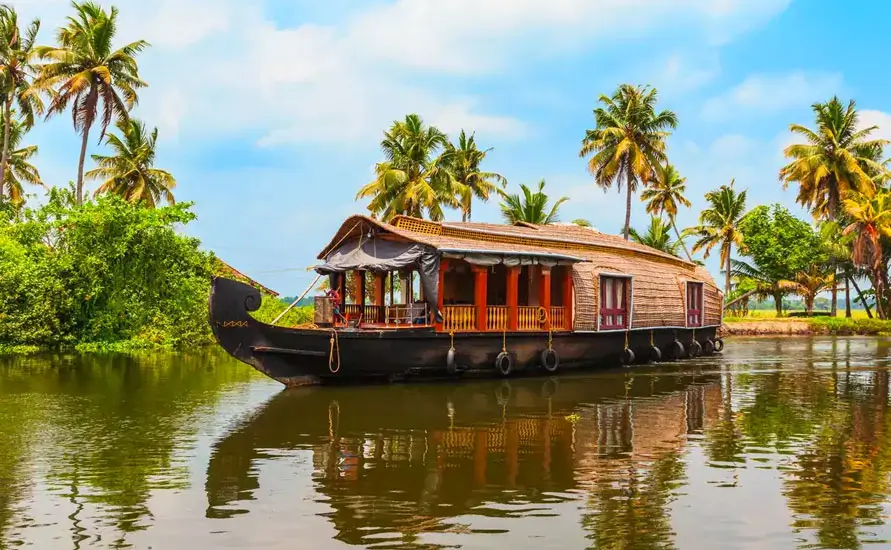 Kerala Backwaters Escape
 Kerala Backwaters Escape
 Kerala Backwaters Escape
 Kerala Backwaters Escape
 Kerala Backwaters Escape
 Kerala Backwaters Escape
 Kerala Backwaters Escape
 Kerala Backwaters Escape
 Kerala Backwaters Escape
 Kerala Backwaters Escape
 Kerala Backwaters Escape
 Kerala Backwaters Escape
 Kerala Backwaters Escape
 Kerala Backwaters Escape
 Kerala Backwaters Escape
 Kerala Backwaters Escape
 Kerala Backwaters Escape
 Kerala Backwaters Escape
 Kerala Backwaters Escape