 Kerala Backwaters Escape

LGBTQ+ Friendly South India Tours
Delhi – Agra – Fatehpur Sikri – Jaipur – Flight to Kochi – Alleppey – Alleppey Houseboat – Kumarakom – Kochi Airport
At a glance
Most first visits to India force a choice between the monuments of the north and the green water country of the south. This gay friendly Golden Triangle with Kerala route refuses to pick. Over thirteen days you walk through Mughal Delhi, watch the light change on the Taj Mahal, climb the hilltop palaces of Rajput Jaipur, then board a plane for the old pepper harbor of Kochi, the canals of Alleppey and the lakeshore of Kumarakom. Two halves of the country, two cuisines and two very different climates sit comfortably inside one private trip.
We plan this gay friendly India tour for LGBTQ+ couples, solo travelers and groups of friends, and we try to be straightforward about the country. A 2018 ruling by India's Supreme Court ended the colonial-era law against gay sex, but marriage equality was turned down by the same court in October 2023. Delhi and Kochi are fairly relaxed, while old bazaars, mosques and temples are conservative, and kissing or hand-holding in public draws stares whoever does it. On our side, we have vetted each hotel and the houseboat personally, a double bed is reserved for couples as a matter of routine, and your guides know to treat you as any other guests.
The pace mixes busy sightseeing days in the north with slower days on the water in Kerala, so the trip never feels like a marathon. In each region you have your own car and an English-speaking chauffeur, and the Jaipur to Kochi leg is a domestic flight with one connection. Weather is best from October to March, when Rajasthan is dry and mild and Kerala is green after the rains. Visitors from Europe, North America and Australia, as well as NRIs bringing a same-sex partner to India for the first time, can adjust the hotels, nights and pace of this north-plus-south Golden Triangle and Kerala tour freely.
Long-haul arrivals into Delhi cluster around midnight and dawn, and our representative is waiting outside the arrivals hall of Indira Gandhi International Airport whatever the hour. A short drive brings you to your hotel in New Delhi, where the room has been confirmed with a double bed and no explanations needed at the desk. We hand over a printed plan, a local contact number answered around the clock and some tips on cash, phone data and dress for mosques and temples. The rest of the morning is for sleep, a long shower and a slow breakfast.
Once the worst heat is over, your guide collects you for an easy first outing to Lodhi Garden, a large park dotted with the domed tombs of fifteenth-century Sayyid and Lodi rulers. Delhi residents use it as their back garden: joggers circle the paths, retired men argue over newspapers on the benches, and young people sit together on the lawns in the golden light. It is a calm, green introduction to a city of more than thirty million people, and your guide uses the walk to explain how the eight historical cities of Delhi grew one on top of another over a thousand years.
Afterward you can carry on to Khan Market or the Lodhi Colony art district, where large murals cover the walls of government housing blocks, painted by Indian and foreign street artists. Delhi has a growing LGBTQ+ scene, with queer-friendly cafés, bookshops and occasional evenings in its southern neighborhoods, and the Delhi Queer Pride march is normally held in the cooler months, on dates announced afresh each year. Your guide can suggest a relaxed place for dinner, perhaps modern Indian small plates or a classic butter chicken, before an early night to recover from the flight. Overnight in Delhi.
The morning starts in Old Delhi, the walled city that Shah Jahan built in the seventeenth century as his capital. Your guide leads you up the broad red steps of the Jama Masjid, Shah Jahan's great Friday mosque, where visitors remove shoes, cover shoulders and legs and avoid prayer times. Its courtyard looks across to the sandstone ramparts of the Red Fort, which is closed on Mondays and usually viewed from outside on this route. A cycle rickshaw then carries you through the narrow lanes of Chandni Chowk, past wholesale markets selling silver, spices, wedding cards and bolts of shimmering fabric.
Food is one of the best reasons to come to Old Delhi, and your guide stops at a few long-running stalls for crisp jalebi, stuffed parathas fried in ghee or a glass of cool lassi, all chosen with hygiene in mind. In the early afternoon you drive to New Delhi for Humayun's Tomb, raised by the widow of the second Mughal emperor and often seen as the model for the Taj Mahal. Its red sandstone and white marble dome rises above formal gardens split into quarters by water channels, and the quiet grounds are a welcome change after the crowds of the old city.
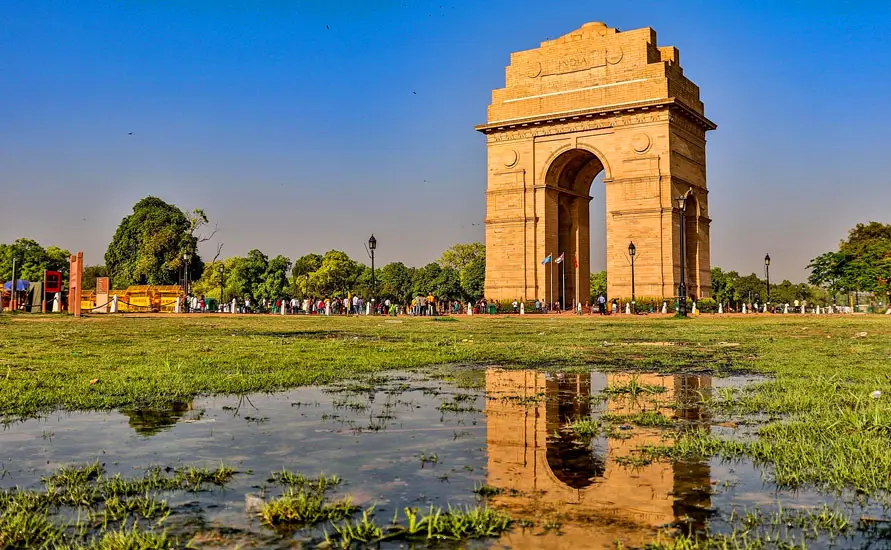
Late in the afternoon you continue south to the Qutub Minar, a soaring minaret of fluted red and buff stone begun around 1200 by the first sultans of Delhi. Around its base lie the ruins of India's earliest surviving mosque and a rust-free iron column cast some sixteen centuries ago. On the drive back, your guide points out India Gate, the President's House and the Supreme Court, where judges ruled in 2018 that consensual same-sex relations are no longer a crime. Dinner is free tonight, and your guide can recommend a restaurant with a relaxed crowd near your hotel. Overnight in Delhi.
Bags go in the car straight after breakfast, and you head south on the Yamuna Expressway, a smooth six-lane highway that brings Agra within about four hours of Delhi. The road runs through flat farmland planted with mustard, wheat and sugarcane, and your driver can pause at a clean highway rest stop for coffee. By noon you are in Agra, settling into a hotel within easy reach of the Taj Mahal, where our team has again confirmed a double room in advance. After a short break and lunch, your Agra guide joins you to begin with the city's second great monument, the massive red fortress beside the Yamuna River.
Agra Fort, a UNESCO World Heritage Site, was rebuilt by Akbar in red sandstone and then softened by his grandson Shah Jahan with white marble palaces. Inside the walls you walk through the Diwan-i-Am, where the emperor heard petitions from ordinary subjects, and the private halls overlooking the river. Your guide shows you the octagonal tower where, by tradition, Shah Jahan lived out his final years under house arrest, gazing downriver at the white mausoleum of the empress. The story of that marriage and its tragic end is one of the great love stories of Mughal history.
Before sunset you cross the river to Itimad-ud-Daulah, a small marble tomb covered in inlaid stone flowers and geometric patterns, often nicknamed the Baby Taj because it came before the larger monument. Ten minutes on lies Mehtab Bagh, a restored Mughal garden on the far bank, where you can watch the Taj Mahal turn from cream to pink to grey as the sun drops. Very few tour groups come here, so the riverbank is usually quiet, and you can take photographs together without a crowd behind you. Dinner at the hotel tonight is followed by an early night for the dawn visit. Overnight in Agra.
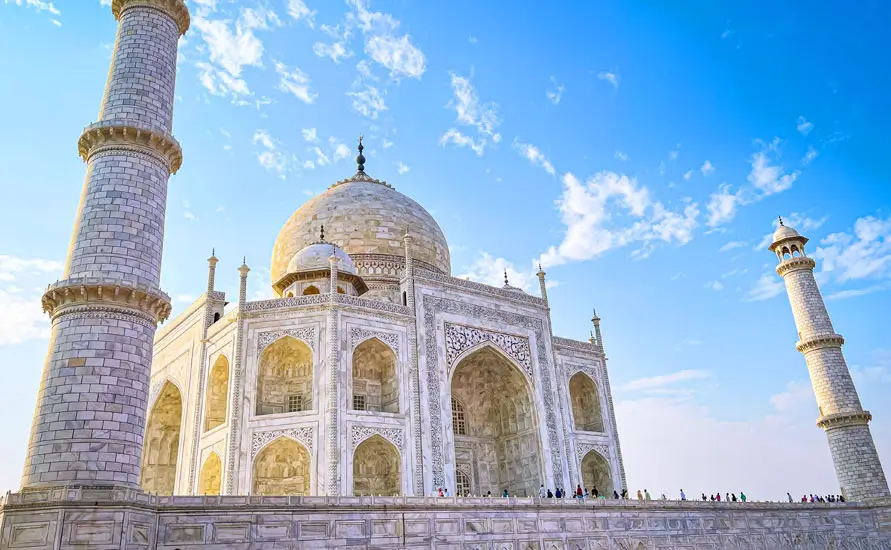
An early alarm is worth it today. The Taj Mahal opens at sunrise, and the first visitors through the gates see the white marble almost glow in the soft morning light while the gardens are still calm. Remember that the monument is closed every Friday, so this day is planned for any other day of the week. Your guide talks through the emperor's grief after Mumtaz Mahal died in childbirth in 1631, how the minarets lean slightly outward to protect the main dome, and how the precious stones inlaid into the marble were brought from across Asia. Allow about two hours inside.
After a late breakfast and checkout at the hotel, the road leads west for roughly forty kilometers to Fatehpur Sikri. Akbar raised this sandstone capital beside the hermitage of Shaikh Salim Chishti, the holy man whose blessing he credited when his son Salim was born, but the emperor moved his court away after little more than a decade, perhaps for lack of water. Your guide walks you through the royal palaces, the Panch Mahal with its five stacked colonnades and the courtyard where Akbar is said to have played a board game using courtiers as living pieces. The great mosque next door, entered through the towering Buland Darwaza, is still an active place of worship.
From Fatehpur Sikri the road continues into Rajasthan, and the landscape becomes drier, with camels pulling carts, women in bright veils carrying water and low hills on the horizon. The drive to Jaipur takes about four hours from here, with a break for tea and a stretch of the legs along the way. By late afternoon you are unpacking at a heritage hotel, a converted mansion with courtyards and painted walls, where the manager already knows to expect two partners sharing one room. The evening is free to relax by the pool or enjoy a Rajasthani dinner in the garden. Overnight in Jaipur.
Jaipur sits in a bowl of rocky hills, and the morning begins on one of them at Amber Fort, the former seat of the Kachwaha Rajput rulers before they moved down to the plains. Arriving early beats both the heat and the queues, and a jeep carries you up the steep approach to the main gate. Inside, your guide leads you through courtyards of pale yellow and pink stone to the Sheesh Mahal, a mirrored chamber set with thousands of tiny convex glass pieces. Hold up a single candle there, the guards like to say, and the whole room glitters like a night sky full of stars.
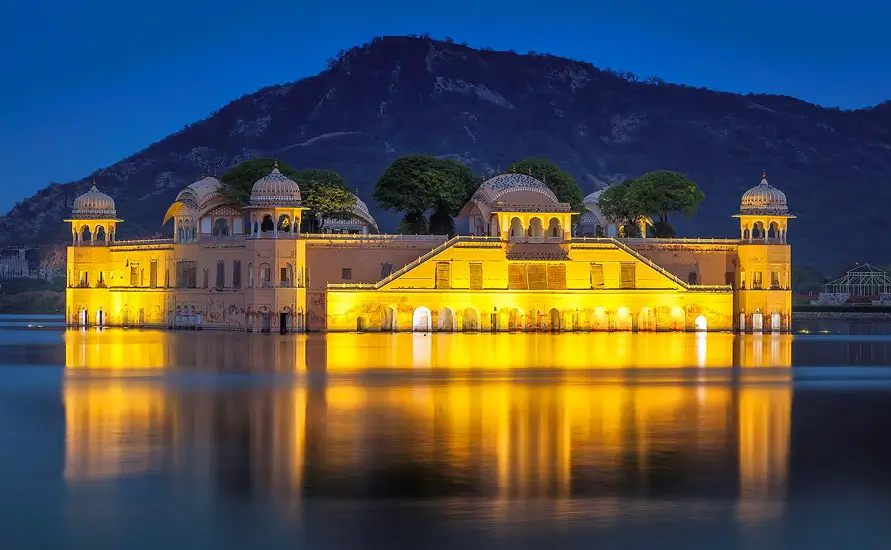
Just below the fort lies the Panna Meena ka Kund, a stepwell with criss-cross staircases running down all four sides to a pool at the bottom. It once supplied water to the town of Amber and offered villagers a cool place to gather in summer, and its symmetrical lines draw photographers from dawn onward. Heading back toward the city, you pause beside the Jal Mahal, a pleasure palace whose lower floors sit underwater in Man Sagar lake. After lunch the hours are yours: a siesta, a dip in the pool, or a visit to a block-printing unit in Sanganer where carved wooden stamps leave rows of flowers on cotton.
Toward evening the car climbs a series of hairpins to Nahargarh Fort, perched on a ridge above the city. Its walls give a sweeping view across the city just as the street lamps flicker on, with the outline of the old walled city spreading below. A café on the ramparts serves cold drinks and snacks, and the sunset here is one of the best in Rajasthan. Rajasthan is more traditional than Delhi, so a bit of discretion in public places is sensible, but your hotel and guide are both chosen to make you feel at ease. Dinner tonight could be a thali of dal baati and laal maas. Overnight in Jaipur.
Maharaja Sawai Jai Singh II laid out Jaipur in 1727 on a grid plan, unusual for its time, and the old city took on its terracotta wash in 1876, ahead of a visit by the Prince of Wales. Your guide begins at the City Palace, part of which is still a private royal residence, where courtyards lead to galleries of robes and armory, and to a pair of giant silver jars that a maharaja once filled with Ganges water for a trip to England. The four painted gates of the Pitam Niwas Chowk, each one dedicated to a season, are among the most photographed doorways in India.
Next door stands the Jantar Mantar, a UNESCO-listed observatory built by the same scientifically minded ruler, with giant stone instruments that measured time, tracked stars and predicted eclipses. The largest sundial here can tell local time to within about two seconds, and your guide shows you how it works by following the moving shadow. A few minutes on foot bring you to the Hawa Mahal, or Palace of Winds, a five-story screen of small windows from which royal women could watch street festivals without being seen. The best view of its honeycomb façade is from a rooftop café across the road, ideal for a mid-morning coffee.
The afternoon is for the bazaars of the walled city, where each street has its own trade. Johari Bazaar trades in precious stones and silver jewelry, Bapu Bazaar is full of cotton prints and leather slippers, and Tripolia Bazaar is known for brass and bangles. Your guide helps with bargaining and suggests the more honest shops, without any pressure to buy. If you would rather slow down, your hotel can arrange a cooking demonstration or a quiet evening by the pool. Dinner might be on a roof terrace looking over the lit-up walls, a fitting end to the northern part of the trip. Overnight in Jaipur.
Today is mostly spent in the air, starting with a morning transfer to Jaipur International Airport. There is usually no direct service between Jaipur and Kochi, so we route you via Mumbai, Bangalore or Delhi, so the day's travel takes roughly six to eight hours depending on the schedule. Checked bags normally travel through to Kochi when both flights are on one ticket, and we leave a comfortable margin for the change of planes. Food and water are easy to buy at both airports, and our office tracks your flights and can be reached by phone at any hour.
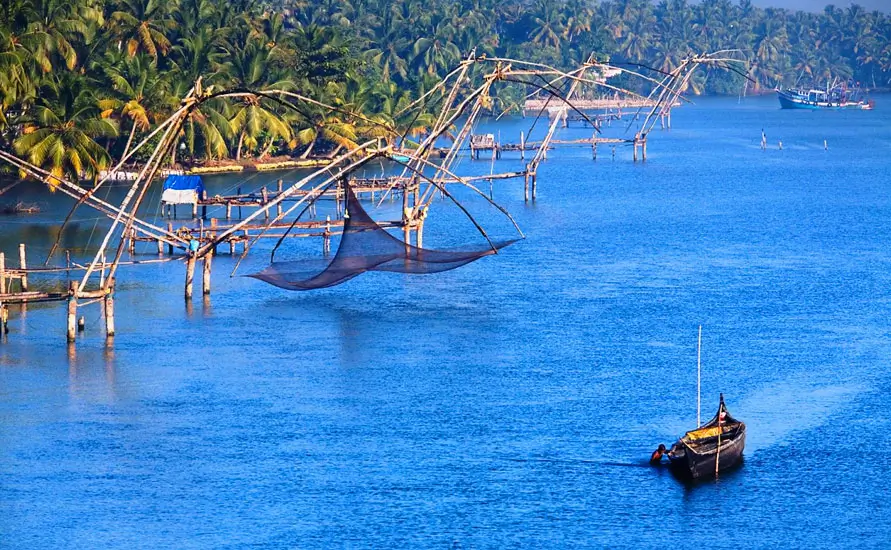
At Cochin International Airport our Kerala host welcomes you and drives an hour and a half to your hotel in Fort Kochi, where a double room is ready and waiting. The change in air is immediate: warm, humid and smelling of the sea, with coconut palms instead of desert scrub. Among Indian cities, Kochi ranks as one of the easiest for LGBTQ+ visitors, and the state's Queer Pride is held on dates fixed anew every year, often in a different town. If you arrive in time, a short evening walk along the waterfront to watch the fishermen lift their nets is a gentle way to end a long day. Overnight in Kochi.
After a slow breakfast, your Kochi guide leads a walk through Fort Kochi, a town that changed hands between Portuguese, Dutch and British merchants. First stop is St. Francis Church, dating from the early 1500s, and continue past old colonial bungalows, rain trees and the twin spires of Santa Cruz Basilica. The waterfront is busy with tourists and fishermen in the morning, and your guide explains how the cantilevered Chinese fishing nets work, using huge wooden frames balanced by stones. Fort Kochi's art cafés and galleries, many linked to the Kochi-Muziris Biennale, give the area a creative, open feel.
Next comes Mattancherry and its so-called Dutch Palace, a Portuguese gift to the local ruler whose bedchamber walls are covered in Ramayana murals in mineral and plant colors. Your Kochi days are arranged to dodge the weekly closures: none for the palace on Fridays, and none for the nearby Paradesi Synagogue from Friday to Saturday or on Jewish festivals. The synagogue dates from 1568 and keeps a floor of willow-pattern Chinese tiles and Belgian chandeliers above the reading desk. The surrounding streets of Jew Town smell of dried ginger and pepper from the warehouses that still trade spices in bulk.
In the afternoon you have time to rest or browse the antique shops before your evening at a Kathakali theater. This classical dance-drama of Kerala tells stories from the epics through hand gestures, eye movements and rhythmic drumming, with male actors traditionally playing both male and female roles. Turn up well before curtain time to see the green and red make-up go on, a slow process using rice paste and natural pigments, and to hear a short introduction to the gestures. After the show, dinner at a seafood restaurant in Fort Kochi gives you a first taste of Kerala cooking, with coconut, curry leaves and fresh fish. Overnight in Kochi.
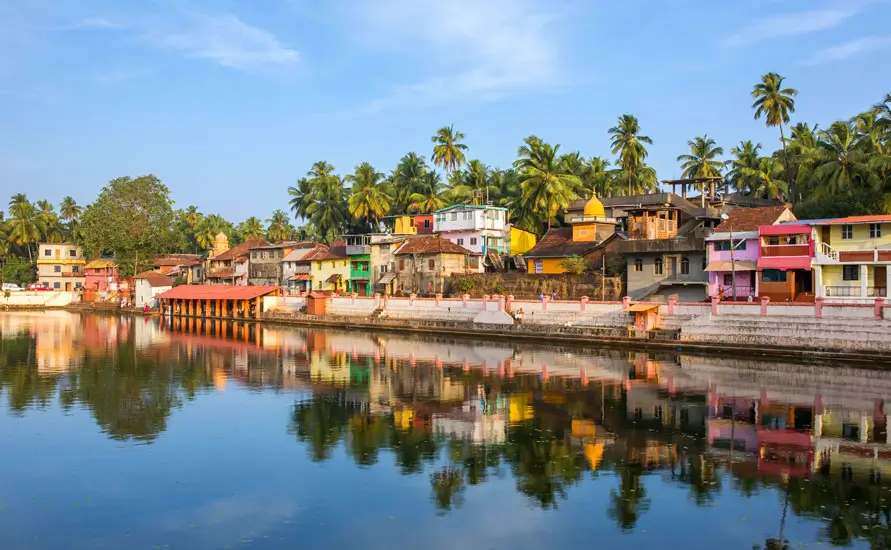
A short drive south along the coast brings you to Alleppey, also known as Alappuzha, a canal town once called the Venice of the East by British visitors. Your hotel tonight is a small heritage property or lakeside homestay, chosen because the owners welcome LGBTQ+ guests and offer a quiet, personal stay. Before lunch your guide leads an unhurried stroll around the old town, past coir warehouses, a lighthouse and colonial-era buildings along the canals. Alleppey's history as a trading port is still visible in its warehouses and the long pier stretching into the Arabian Sea.
In the afternoon you can cycle along the canal paths with a local guide, visiting small villages where families make coir rope and mats from coconut husk using simple hand tools. Life here moves at the pace of the water, as kids paddle home from lessons, laundry is slapped clean on stone steps and ducks waddle along the banks. If you prefer a quieter afternoon, your hotel can arrange a short canoe ride or simply provide hammocks under the palms. Alleppey Beach, a long stretch of sand with an old pier, makes a fine spot for sundown with a cup of tea or fresh coconut.
Dinner at your homestay is often a home-cooked Kerala meal shared with the owners, with dishes like fish moilee, cabbage thoran and rice cooked in coconut milk. Conversation tends to flow easily, and for many guests these evenings stay in the memory longer than any monument. The owners can tell you about life in Kerala, the importance of the backwaters to local farming and fishing, and what it is like hosting travelers from all over the world. The evening is calm, with the sound of crickets and the occasional boat passing on the canal. Overnight in Alleppey.
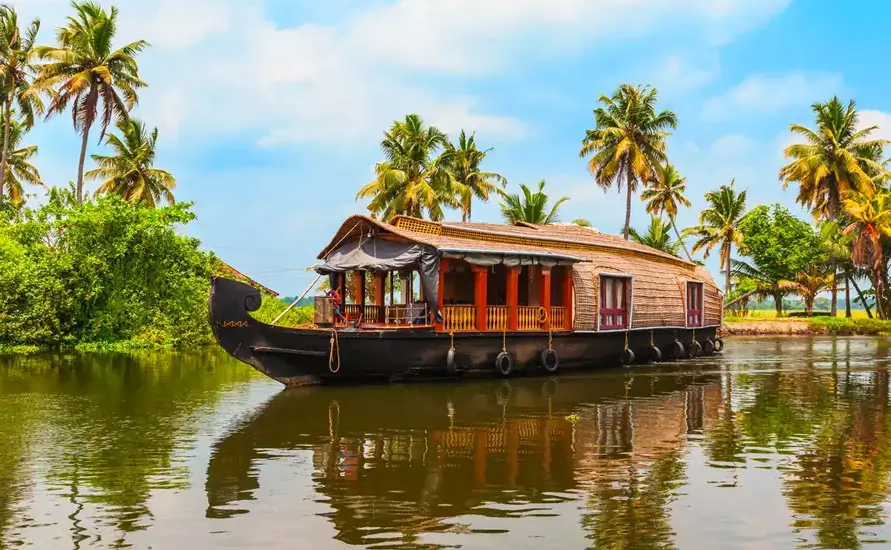
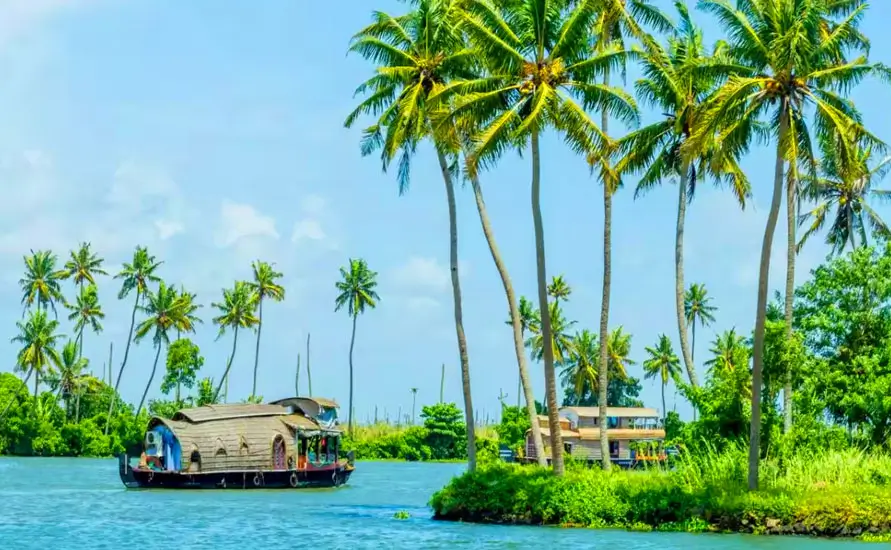
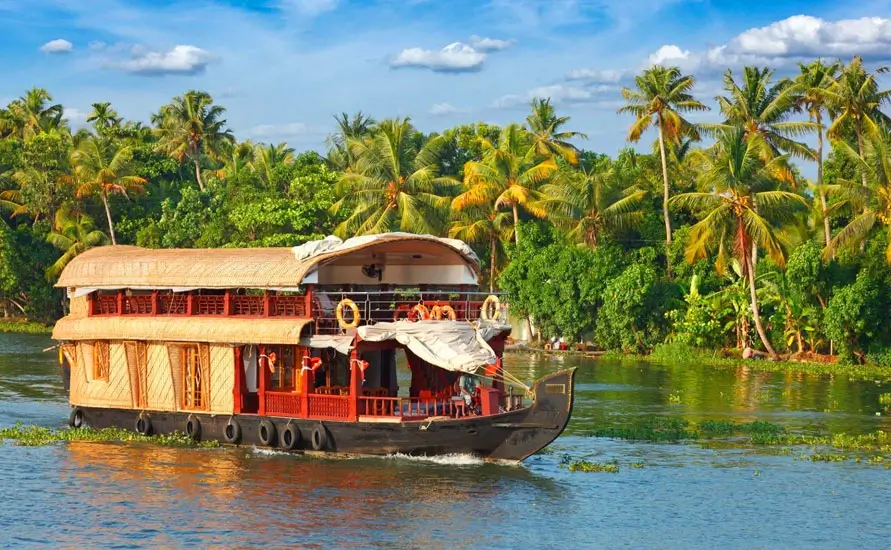
Boats take guests on board from about midday, which leaves the morning free for a late breakfast or a final walk through Alleppey. Your private houseboat is reserved for you alone, with a bedroom made up with a double bed and a crew who are used to welcoming couples of all kinds. Its hull follows the lines of the old kettuvallam cargo boats that once hauled paddy to market, now fitted with a bedroom, a bathroom and an arched roof of woven palm and bamboo. As you board, the crew greets you with fresh coconut water and shows you around your floating home for the next twenty-four hours.
As the boat pushes off into the backwaters, the cook lays out lunch on deck, with dishes like karimeen fry, sambar and a sweet payasam for dessert. The boat edges between broad open water and channels barely wider than itself, passing rice paddies that sit below sea level and villages where life revolves around the water. Along the way you pass fishermen flinging nets, pots being scrubbed on the banks and small churches and temples along the banks. In the afternoon the crew serves tea and banana fritters, and you can relax on the upper deck with a book or simply watch the scenery drift past.
As evening approaches, Kerala's rules bring the boat to a halt at a mooring, usually beside a quiet village or rice field. The crew prepares dinner on board, with fresh fish, vegetables and Kerala rice, and spice can be dialed down or meat left out on request. After dinner, the deck is yours to enjoy under the stars, broken only by croaking frogs and an occasional paddle splash. This night on the water is the most private part of the whole trip, a chance to switch off completely and enjoy each other's company. Overnight on the houseboat.
Breakfast is eaten while the captain steers for the jetty, with dishes like appam and vegetable stew or idli and chutney. Disembarkation is usually around nine in the morning, and the crew helps with your luggage. Crews appreciate a tip if they looked after you well. An hour by road takes you to Kumarakom, on the far side of Vembanad from Alleppey, where your lakeside resort has a cottage ready for you with a double bed and a private sit-out facing the water. The rest of the morning is free to settle in and relax.
Kumarakom is quieter than Alleppey, with fewer houseboats and more space along the lake. Your resort offers a pool, an Ayurvedic spa and gardens full of coconut palms and hibiscus. Later on there is a massage to book, a pool to swim in or simply a book to read on your sit-out. The resort staff are friendly and discreet, and our Kerala office briefed them before you arrived so that you feel welcome. If you feel like an outing, a nearby village can be reached in minutes to see how toddy is tapped from coconut palms.
In the late afternoon a short boat ride on the lake gives you a different view of Vembanad, with the sun setting over the water and fishermen bringing in their catch. Later, dinner can be a buffet of Kerala dishes or a quiet table for two in the garden. Many guests say the slow pace of Kumarakom is a welcome contrast to the busy days in the north, and a good way to rest before the flight home. The resort is calm at night, with only the sound of the lake and the occasional bird call. Overnight in Kumarakom.
Early risers can join a guided canoe ride at dawn through the narrow canals around Kumarakom, as herons stalk the shallows and kingfishers dive for breakfast. A local boatman paddles you past villages just waking up, with smoke rising from kitchen fires and children getting ready for school. Afterward, a short walk through the Kumarakom Bird Sanctuary gives you the chance to spot herons, egrets, kingfishers and cormorants, along with migratory birds in the winter months. The sanctuary is best visited in the early morning, when the light is soft and the birds are feeding.
No plans are fixed after that. You might book another spa treatment, take a cooking class to learn how to make Kerala fish curry, or simply relax by the pool. Curious travelers can ride into nearby Kottayam, known for its churches and its role in Kerala's printing and publishing history. Alternatively, the car can drop you in the village of Aymanam, the setting for Arundhati Roy's novel The God of Small Things, which many visitors enjoy seeing for themselves. Readers of the book will recognize the river, the old houses and the slow rhythm of village life, and a local guide can point out the places that inspired several scenes. Allow roughly thirty minutes on the road in each direction.
In the evening, the resort can arrange a private dinner by the lake, lit by candles, with dishes you agree with the kitchen in the afternoon. It is a fitting way to mark the end of a trip that has taken you from the Mughal monuments of the north to the backwaters of the south. Your guide and driver have been with you throughout, and our team has been available around the clock by phone. Tomorrow you head back to Kochi for your flight home, so pack early and save the last hours for the lake. Overnight in Kumarakom.
After a final breakfast by the lake, you check out and drive to Cochin International Airport, about two hours away. Pickup is timed so you have plenty of slack at check-in, with an optional stop on the way to buy spices, tea or cashews. For a midnight departure we can reserve an airport-area day room or a late check-out at your resort, at an additional cost. Someone from our office stays with you right to the terminal doors.
Over thirteen days you have walked through the Mughal and Rajput heritage of the north, watched the sun rise over the Taj Mahal and drifted through the backwaters of Kerala. We hope the trip has given you a sense of how varied India can be, and that you felt welcome every step of the way. Plenty of travelers come back for a second round in the south, perhaps the great Chola temples of Tamil Nadu or the cool hill stations of Coorg and Ooty. Safe travels, and come back soon.
Your Journey

N.S. Rathore & Mrs. Omlata Rathore · Managing Director
We still read every enquiry ourselves. Tell us the places you liked and our planners will send a day-by-day route with drive times and a clear price.
Every package can be customised and no pressure to book. A planner from our office replies within 24 hours with a route written for your group.
Fill this in and your planner will send a first draft itinerary.
Explore more
Kerala Backwaters Escape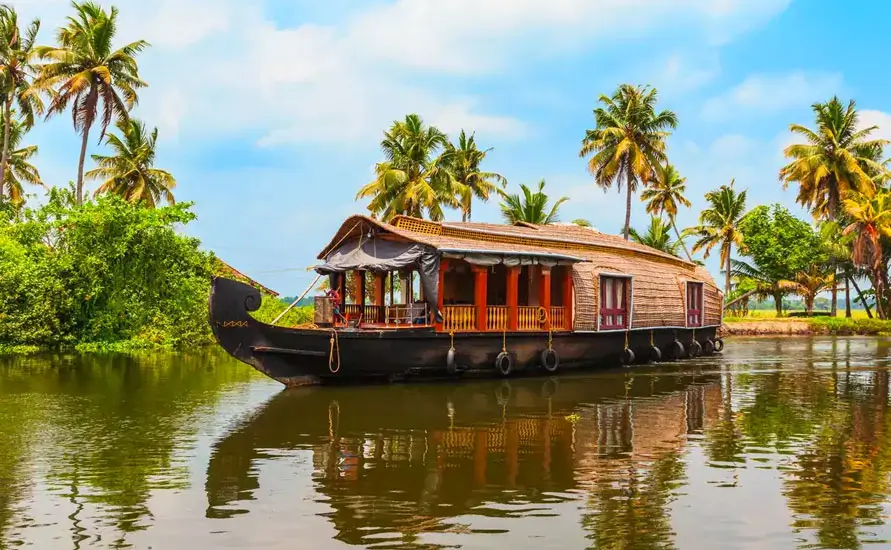 Kerala Backwaters Escape
 Kerala Backwaters Escape
 Kerala Backwaters Escape
 Kerala Backwaters Escape
 Kerala Backwaters Escape
 Kerala Backwaters Escape
 Kerala Backwaters Escape
 Kerala Backwaters Escape
 Kerala Backwaters Escape
 Kerala Backwaters Escape
 Kerala Backwaters Escape
 Kerala Backwaters Escape
 Kerala Backwaters Escape
 Kerala Backwaters Escape
 Kerala Backwaters Escape
 Kerala Backwaters Escape
 Kerala Backwaters Escape
 Kerala Backwaters Escape
 Kerala Backwaters Escape