 Kerala Backwaters Escape

LGBTQ+ Friendly South India Tours
Delhi – Agra – Fatehpur Sikri – Jaipur – Udaipur – Mumbai – Goa – Kochi – Alleppey
At a glance
India rewards anyone who gives it twenty-one days, and our LGBTQ+ friendly Grand India Tour North and South uses every one of those days. The first half belongs to the Mughal and Rajput north: Delhi's tombs and markets, the Taj Mahal at first light, the hill forts of Jaipur and the lake palaces of Udaipur. Then the trip swings to the coast and to India's two most cosmopolitan cities, starting with Mumbai, followed by four slow days on the beaches of Goa, and a finale in Kochi and on the backwaters of Alleppey.
We built this route for LGBTQ+ couples, solo travelers and friend groups who want the great monuments without missing modern India. Delhi and Mumbai are large, mixed, fast-moving cities with active queer communities, arts events and friendly evenings out, while Goa and Kochi are relaxed places used to travelers from everywhere. Villages and places of worship lean conservative, and kissing or cuddling in the street is rare for straight and gay couples alike anywhere in the country. Since 2018 same-sex relations have been legal, although same-sex marriage is still not recognized, so a celebration on this trip is a personal one rather than a legal ceremony.
For this gay friendly India tour our staff have personally vetted each property, from city hotels to the Kerala houseboat, and one shared bed is fixed on every booking. Domestic flights link the long legs so you never spend a full day in a car, and a private driver and briefed English-speaking guides look after you in every city. The LGBTQ+ India tour runs best from October to March. If you happen to be in Mumbai or Delhi for a Pride march, or in Mumbai for the Kashish Pride Film Festival, usually held in early summer, we can rework a day around it.
Whatever hour your plane lands, the first face you see after immigration and baggage belongs to our airport host, who carries a sign with your names and a bottle of cold water. Bags go straight into the boot of a private sedan, and the ride into the city through wide, tree-lined avenues gives a first glimpse of the capital's scale. Indira Gandhi International is one of the largest airports in Asia, so the walk to the car park can take ten minutes. Arriving in the small hours? Ask us to add the previous night, and your key is waiting at the desk.
Your boutique hotel in South Delhi is quiet, stylish and comfortable with LGBTQ+ guests; reception will know your booking includes a double bed and nobody will ask awkward questions. Over tea, our local coordinator walks you through the next three weeks: flights, drivers, guides, money, dress codes and the 24/7 support number. It is also when we share a frank briefing on India: big cities are relaxed and diverse, smaller towns more traditional, and in most places discretion in public is wise for any couple. We will also mention any queer events, film screenings or social evenings running in Delhi during your stay.
For the rest of the day, take things easy. Jet lag from Europe or North America can be strong, and India is a country where the senses need a little time to adjust. If you have energy in the late afternoon, ask the driver for a short trip to the Lodhi Garden, a large park scattered with 15th-century tombs, where locals jog, play cricket and picnic as the sun sets. Supper can ease you into Punjabi cooking with slow-simmered black lentils, charred cottage cheese skewers and naan straight from the clay oven. An early night will help you start fresh tomorrow. Overnight in Delhi.
Delhi has been rebuilt again and again over a thousand years, and historians count at least seven older cities beneath today's capital. A good guide turns this layering into one story, and today's tour follows it in rough order. You start in Mehrauli at the Qutub Minar, the tall tower of the first Delhi sultans, carved with verses from the Quran in bands of red and buff stone. Morning light is soft here and crowds are thin, so it is a good time for photographs of the tower and the ruined mosque at its foot, with its curious iron pillar.
Next comes Humayun's Tomb, the Mughal mausoleum whose double dome, symmetrical gardens and water channels set the template for the Taj Mahal two generations later. After a lunch break in one of Delhi's modern Indian restaurants, the guide takes you to Old Delhi. A pedal rickshaw ride through Chandni Chowk shows a side of the city that has barely changed in centuries: wholesalers of silver, saris and spices, temples squeezed between shops, and the smell of frying samosas. A short walk leads to the great Jama Masjid; modest clothes are required, and gowns are lent at the entrance.
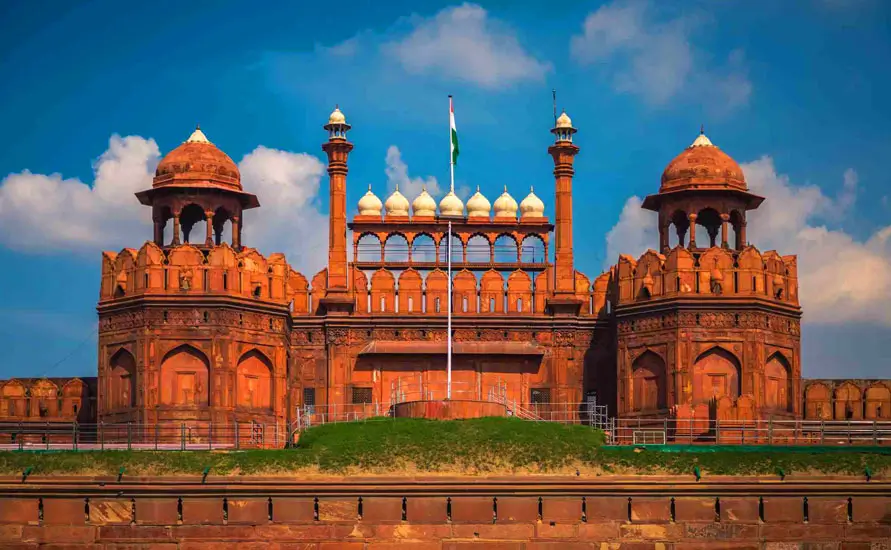
As evening falls, drive past the Red Fort, built by Shah Jahan, and the grand boulevards of New Delhi, where India Gate stands illuminated at the end of Kartavya Path. Delhi's queer community is one of the largest in India, and the city has a small but active scene of LGBTQ+ friendly bars, cafés and parties, many of them in South Delhi neighborhoods like Hauz Khas. Our coordinator can share current, safe places to go if you want a night out. Otherwise, rest at the hotel, as tomorrow involves a drive and an afternoon of sightseeing. Overnight in Delhi.
The Yamuna Expressway makes the trip to Agra quick and smooth, and you should arrive by lunchtime if you leave Delhi mid-morning. Your driver stops at a highway food court for coffee, and the flat farmland on both sides of the road shows wheat, mustard and sugarcane fields with brick kilns and small villages in between. Plan around one fixed rule: the Taj Mahal shuts to sightseers each Friday for prayers, so we set your dates to keep sunrise there on any other morning. You check in to a comfortable hotel within a short drive of the monument and rest briefly.
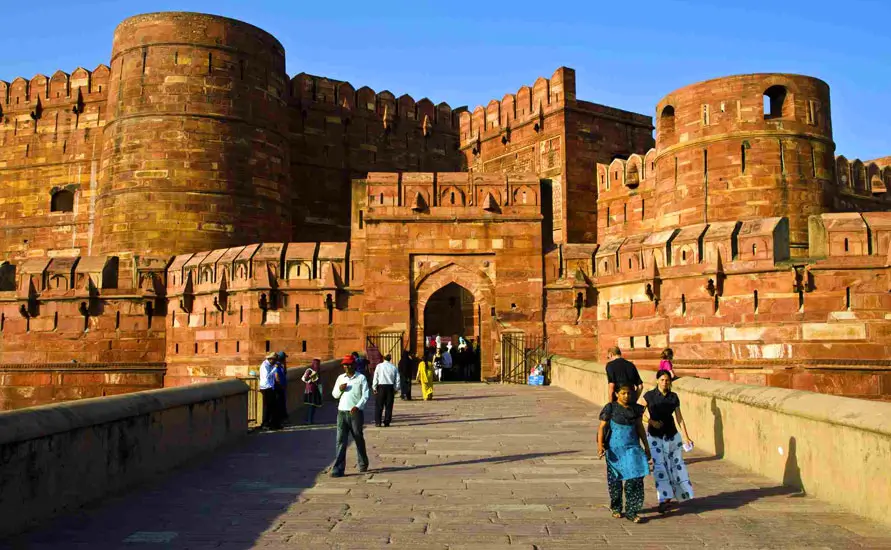
After a short rest you head to Agra Fort, a crescent-shaped red sandstone citadel beside the Yamuna that was the main seat of the Mughal emperors before they moved to Delhi. Inside its double walls are palaces of white marble added by Shah Jahan, mosques and audience halls. Most moving of all is the octagonal Musamman Burj balcony, from which the deposed emperor, held captive by Aurangzeb for eight years, could gaze downriver at his wife's white tomb. The inlaid marble pavilions of the Khas Mahal next to it show how the fort shifted from military base to palace under three emperors, and your guide points out the sloping river gate through which supplies once arrived by boat.
Before dusk the car crosses the Yamuna to Mehtab Bagh, a restored riverside garden laid out by Babur's dynasty on the north bank, facing the mausoleum. From here you see the tomb across the water as the sun sets behind it, turning the marble pale gold, then pink, then grey. Fewer people come here, the vendors stay away, and the silence makes it a private first look at the Taj before tomorrow's close-up. Eat early and turn in, since the pickup tomorrow is set for well before first light. Overnight in Agra.
Gates at the Taj Mahal open around sunrise, and your guide will have you near the front of the line. Walking through the red sandstone gateway, you see the white dome appear framed by the arch, a view designed to stop visitors in their tracks. Built by Shah Jahan between about 1632 and 1653 as a tomb for his wife, the Taj is perfectly symmetrical, apart from the emperor's own cenotaph inside. Your guide shows you the inlay work of semi-precious stones, the calligraphy that appears to grow larger as it rises, and the way the marble changes color as the morning goes on.
Back at the hotel for breakfast and checkout, you then head roughly forty kilometers west to Fatehpur Sikri. Akbar raised this royal city as thanks to the mystic Salim Chishti, whose blessing was credited with the birth of an heir, yet the court left within about fifteen years, most likely because wells and the lake ran short. Its palaces, courtyards and audience halls remain beautifully preserved. The Diwan-i-Khas, with its single carved pillar supporting a circular platform, and the Panch Mahal, a five-level pavilion with open sides, are the most striking. The mosque complex next door holds the white marble tomb of Salim Chishti.
From Fatehpur Sikri the road continues through eastern Rajasthan, past small towns and fields, and reaches Jaipur by late afternoon. Home for three nights is a converted nobleman's residence near the walled city, all painted arches and shaded courts, where the team greets two partners of the same sex as warmly as any other guests. Rest after the long day, enjoy a swim if the hotel has a pool, and have dinner in the courtyard, perhaps with a performance of Rajasthani music. Tomorrow begins with the forts on the hills around the city, so an early night will be welcome. Overnight in Jaipur.
Jaipur's grand fortress lies a short drive north, guarding a narrow pass between rugged hills. Amber Fort was the capital of the Kachhwaha Rajputs before Jaipur was founded, and its walls climb the hillside in a long line above Maota Lake. Arriving early lets you enjoy the courtyards before the crowds, and you will ride up in a jeep rather than on an elephant. Inside, your guide explains the layout: the public hall, the private hall with its mirror-studded walls and the cool quarters for the royal women, linked by narrow passages built for privacy.
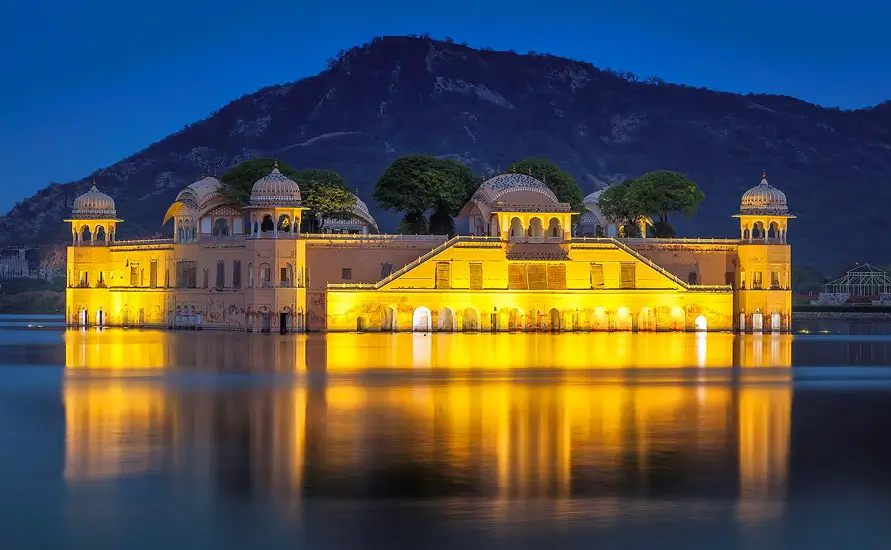
Heading back toward town, pull over at the lakeside wall for a look at Jal Mahal, the half-submerged water palace whose lower floors sit below the surface of Man Sagar. Next comes the walled city itself, its arcades washed in the terracotta shade locals call pink. Your guide leads you through the Tripolia and Johari bazaars, where you can watch artisans polish colored stones, roll lac into bangles and print fabrics. Jaipur is famous for its jewelry and textiles, and your guide knows the honest shops if you want to buy. There is never any pressure to visit shops you have not asked for.
Toward four o'clock, a small family atelier demonstrates block printing, with craftsmen pressing carved wooden blocks dipped in natural dyes onto lengths of cotton. You can even try a block yourself. In the evening, consider a show at Raj Mandir Cinema, an Art Deco movie palace where locals cheer, whistle and sing along to Bollywood hits; it is an entertaining way to see how much Indians love their films. When the credits roll, the car is parked at the curb for the short ride home and a late meal. Overnight in Jaipur.
A morning tour begins at the City Palace, whose Chandra Mahal wing is still a royal residence, while the museum rooms show embroidered robes, a hall of arms and the giant silver jars Madho Singh II filled with holy river water for a voyage to London in 1902. Next door, Jantar Mantar looks like a sculpture park of ramps, bowls and arcs, but each masonry shape was built by Jai Singh II to measure time, declination and the positions of stars. The Samrat Yantra, its tallest sundial, casts a shadow that moves visibly minute by minute. Finish with a photo stop at the Hawa Mahal, the pink honeycomb palace that lets breezes flow through its many small windows.
The afternoon is yours. After almost a week of sightseeing, many travelers enjoy a few quiet hours by the hotel pool or in a spa, with treatments using Indian oils and herbs. If you prefer to stay active, you can book an optional cooking lesson in a local home, learning the secrets of Rajasthani curries and flatbreads, or take a walk with a local photographer through the old city lanes. Jaipur also has some excellent design shops and contemporary craft stores in the C-Scheme area, where young Indian designers sell clothes, jewelry and homewares with a modern twist.
On the final Jaipur evening, the car winds up to the Tiger Fort, Nahargarh, whose rampart café overlooks the old grid as the street lamps flicker on. It is a popular spot for sunset, and the mood is friendly and relaxed. Afterward, return to the hotel and pack for a short flight to Udaipur tomorrow. Our team will confirm your pickup time and send you an e-ticket by message. If you would like a special dinner to celebrate, let us know and we will arrange a table in a quiet corner of the courtyard. Overnight in Jaipur.
Mid-morning the car runs you out to Sanganer airport for a non-stop hop of roughly sixty minutes to Udaipur. Flying saves a long drive of more than six hours and gives you an extra afternoon by the lakes. At Udaipur's Maharana Pratap Airport, a new driver meets you and drives you around half an hour into the city, through green hills and small villages. Check-in is at a restored townhouse by Lal Ghat on Lake Pichola, its roof deck lined up with the City Palace facade.
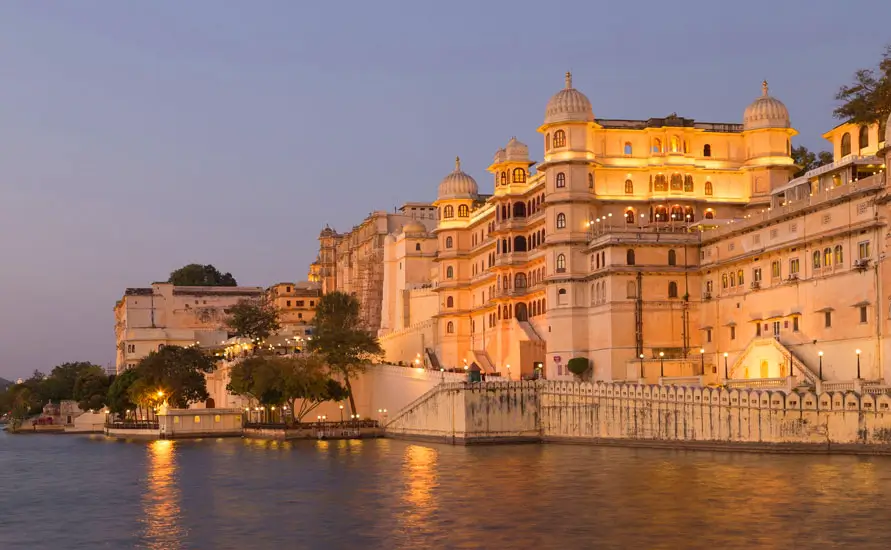
Spend the afternoon resting or wandering the old town lanes near Gangaur Ghat, where small shops sell miniature paintings, leather notebooks and silver jewelry. As the sun goes down, take a seat on your hotel roof terrace and watch the palaces and temples around the lake light up one by one, their reflections shimmering on the water. Udaipur is one of the most romantic cities in India and very used to couples of every kind, so a quiet celebratory dinner overlooking the lake is a natural way to end the day. Overnight in Udaipur.
Start the morning on foot inside the Udaipur City Palace, the largest palace complex in Rajasthan, built over several centuries by the Maharanas of Mewar. Inside, a museum of courtyards and chambers is decorated with peacock mosaics, colored glass and miniature paintings showing royal life. From the upper terraces, the views across Lake Pichola to the Lake Palace and Jag Mandir are wonderful. The palace is still home to the royal family, and part of it is used as hotels and a crystal gallery, open for an extra fee. Allow at least two hours, as the rooms are many and the stairways narrow.
Nearby is the 17th-century Jagdish Temple, a large Vishnu temple with carved elephants and dancers on its outer walls; visitors may enter respectfully during the day, and it is busiest during morning prayer. Wander back through the market lanes, where you can stop at a miniature painting studio to see artists working with very fine brushes on paper and silk. Lunch can be in a lakeside restaurant or rooftop café. After that you can swim, browse or ride out to the Saheliyon ki Bari gardens, where fountains spray among lotus ponds.
In the late afternoon, board a boat on Lake Pichola for a sunset cruise past ghats, temples and palaces, with a stop at the island palace of Jag Mandir. As the light fades, the lake turns gold and the City Palace glows across the water. Afterward, an hour of Mewari dance and puppets at Bagore ki Haveli is an easy option, or simply enjoy a candlelit dinner on a rooftop terrace. Pack your bags for tomorrow's flight to Mumbai, where a very different India is waiting for you on the Arabian Sea. Overnight in Udaipur.
Mid-morning a non-stop flight lifts you out of the Aravallis and sets you down roughly ninety minutes later in Mumbai, the home of India's stock exchange and its Hindi film industry. The approach over the sprawling suburbs and the curve of the Arabian Sea gives a sense of the city's sheer size; more than twenty million people live in the metropolitan area. A Mumbai coordinator greets you at arrivals and heads south via the coastal road and over the Bandra–Worli Sea Link, a cable-stayed bridge across the bay, to your hotel in South Mumbai, close to the old colonial heart of the city.
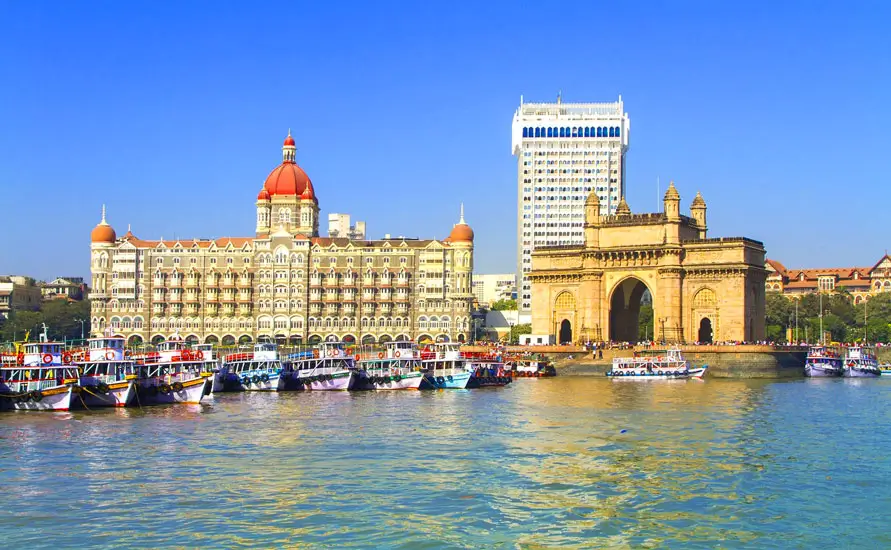
After check-in, take an afternoon walk around Colaba, the busy peninsula at the southern tip of the city. Start at the Gateway of India, a basalt arch built on the waterfront in the early 20th century to welcome King George V, and later the spot from which the last British troops left India in 1948. Behind it, the domed Taj Mahal Palace hotel faces the harbor. The nearby Colaba Causeway is lined with street stalls selling clothes, jewelry and books, and old cafés like Leopold's have served travelers for more than a century.
Mumbai is one of the most open cities in India, home to a large, visible and creative LGBTQ+ community, long-established support groups, queer-friendly cafés, regular club nights and drag and comedy performances. The city also hosts the Kashish Pride Film Festival, one of the largest queer film festivals in South Asia, usually held over a few days in early summer, with dates confirmed each year. Our coordinator can suggest current, welcoming places for a drink or a night out, and your driver can collect you afterward. For dinner, try seafood in Colaba or the nearby Fort area. Overnight in Mumbai.
Today's guided tour focuses on the architecture of South Mumbai, much of which is listed by UNESCO as the Victorian Gothic and Art Deco Ensembles of Mumbai. You begin at Chhatrapati Shivaji Maharaj Terminus, a spectacular railway station of turrets, gargoyles and stained glass that still handles millions of commuters each day and is a separate UNESCO site. From there, walk past the High Court, the Bombay University buildings and the Rajabai Clock Tower, then across the Oval Maidan, where cricket games fill the grass, to the row of Art Deco apartment blocks facing it.
In the Kala Ghoda arts district, visit the Chhatrapati Shivaji Maharaj Vastu Sangrahalaya, the city's main museum, with sculpture, miniature paintings and decorative arts from across India. The area around it has galleries, bookstores and cafés, and hosts the Kala Ghoda Arts Festival each year in early February. Lunch can be at a classic Irani café, where you can try bun maska and a cup of sweet chai, or a modern restaurant serving coastal Indian dishes. Few Indian cities eat as well, from Parsi berry pulao to Malvani crab, and the street food is just as good, with vada pav and pav bhaji sold from carts across the city.
After lunch the working city takes over. At Dhobi Ghat, a huge open-air laundry, thousands of washermen scrub and beat clothes in concrete pens, then hang them up in long lines to dry. Afterward, drive to Marine Drive, the great curved promenade along the sea, also known as the Queen's Necklace for the lights that ring it at night. Join the locals walking the seafront at sunset, sitting on the sea wall and eating roasted peanuts. In the evening, Bandra and Lower Parel have the city's liveliest bars and restaurants. Overnight in Mumbai.
A ferry from the Gateway of India takes about an hour to reach Elephanta Island in Mumbai harbor. The rock-cut caves here, carved between the 5th and 7th centuries, are dedicated to Shiva and listed by UNESCO. The highlight is the huge three-headed Shiva, the Trimurti, carved deep in the main cave, showing the god as creator, preserver and destroyer. There are about 120 steps from the jetty to the caves, with stalls along the way, and a toy train covers the first stretch. Elephanta shuts on Mondays, so this outing is always slotted on another weekday.
After returning to the mainland and having lunch, drive north to Bandra, one of the most fashionable suburbs of Mumbai. Its old Catholic villages, Chapel Road street art and seafront promenade at Bandstand are popular with young Mumbaikars, and the area has a relaxed, creative atmosphere. Many of the city's queer-friendly cafés, bars and performance spaces are in Bandra and nearby Khar, and you might find a poetry reading, an open-mic night or a drag show in the evening. Your guide can point out the Mount Mary Basilica and the homes of Bollywood stars along the coast.
Film is woven into local identity, and those curious about Bollywood can add a studio visit at Film City to watch a set being shot. Otherwise, the late afternoon is free for shopping at Linking Road, a coffee in a Bandra café or a sunset at Carter Road. Close your Mumbai stay at one of the progressive Indian kitchens in Bandra or Worli, where chefs rework regional recipes into tasting menus. Your driver will take you back to your hotel, and tomorrow a short flight takes you down the coast to the beaches of Goa. Overnight in Mumbai.
A short morning flight of just over an hour takes you south along the Konkan coast to Goa, India's smallest state and a former Portuguese colony for about 450 years. Depending on your flight, you land at Dabolim or the newer Mopa airport, where our Goa driver waits to take you to your beach resort in the quieter south of the state. The road passes through villages with whitewashed churches, red laterite walls and old Portuguese-style houses painted in bright colors, with rice fields and coconut palms on all sides.
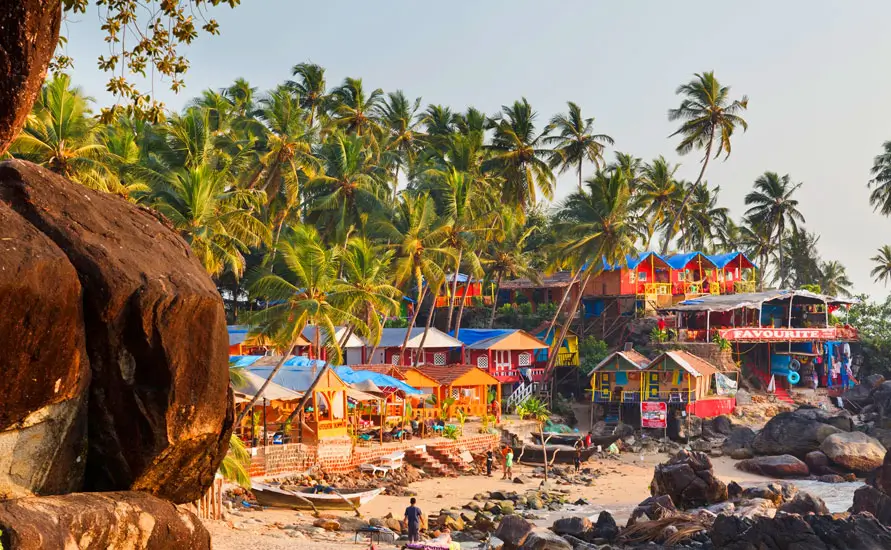
Your resort in South Goa sits close to a long sandy beach, with a pool, a spa and a relaxed atmosphere. Goa is one of the most laid-back places in India, used to travelers from around the world, and LGBTQ+ couples and friends will feel comfortable here. Between November and March the Arabian Sea here is flat and bath-warm, so the hours after lunch belong to the sun lounger. Toward dusk, stroll barefoot to a palm-thatched shack for a kingfish fillet straight off the grill and a chilled feni cocktail. Overnight in Goa.
A guided tour today shows you Goa's Portuguese past. The morning opens at Old Goa, a 16th-century colonial capital once said to rival Lisbon, today reduced to a UNESCO-listed cluster of whitewashed and laterite churches set apart on wide lawns. The Basilica of Bom Jesus, built in the late 16th century, is where the remains of Goa's patron saint, Francis Xavier, rest in a silver-plated casket above a Florentine marble tomb, while across the road the vast Se Cathedral houses the Golden Bell, the largest in Goa. Modest dress is expected inside the churches. Your guide explains how Old Goa declined after epidemics in the 17th and 18th centuries, and the capital moved to Panjim.
After lunch, drive to Panjim, Goa's small and easy-going capital on the Mandovi River. The old Latin quarter of Fontainhas is a maze of narrow lanes lined with houses painted yellow, blue and red, with tiled roofs and wrought-iron balconies. Some families here still speak Portuguese, and you will see name plates in Portuguese on many doors. Pause at a family bakery for bebinca, the sixteen-layer coconut and egg pudding, then climb the criss-cross white steps of Panjim's hilltop Immaculate Conception Church above the square. Fontainhas also has a few small galleries in restored homes, and the evening light on the colored walls makes this a pleasant place for photographs.
At five, an optional river boat on the Mandovi offers Konkani songs and folk dancers as the sun drops, or you can return south for a swim. Goa's nightlife is famous, and the north of the state has beach clubs, bars and music venues with a mixed crowd, while the south is quieter. A few venues host queer-friendly evenings from time to time, and our team can share current suggestions if you are interested. Dinner could be a Goan fish curry or pork vindaloo, both cooked with spices brought by the Portuguese. Overnight in Goa.
After a lazy breakfast, drive inland to a spice plantation near Ponda, in the forested hills of central Goa. A guide leads you through the shaded gardens of pepper, cardamom, vanilla, nutmeg and cinnamon, explaining how each spice is grown and used in Goan cooking and in traditional medicine. A traditional Goan lunch is served on banana leaves under the trees, and the farm may offer an optional elephant-free bamboo raft ride on its small lake. Heading home, Ponda's Mangueshi shrine shows a Goan Hindu temple style with a lamp tower and Portuguese-influenced domes.
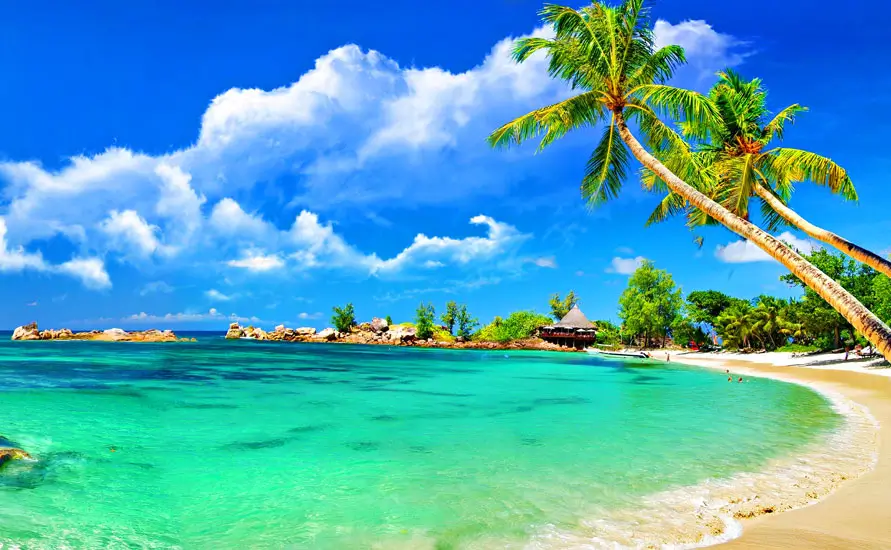
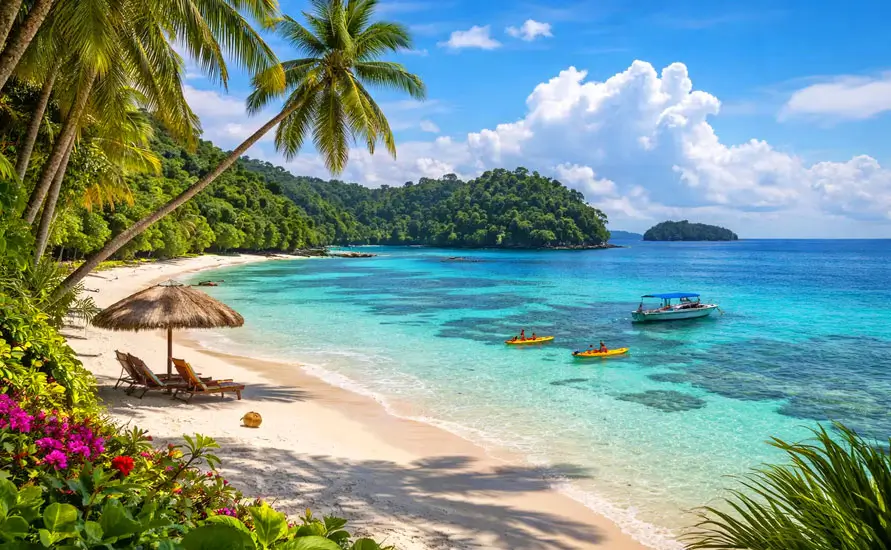
Beach time fills what remains of the day. In South Goa, beaches such as Palolem, Agonda and Cola are wide, clean and peaceful, with shacks serving fresh seafood and cold beer. Palolem is a crescent bay surrounded by palm trees, where you can rent a kayak or take a boat to see dolphins in the early morning. Agonda is even quieter, with small cafés and yoga studios. Swimming is safest between the flags in season, and lifeguards patrol the main beaches. The car remains on call if you fancy hopping between coves.
As evening falls, enjoy a sundowner at a beach shack or a bar on a clifftop. The relaxed pace of Goa makes it a good place to rest in the middle of a long tour. For something special, ask about a beachside supper for just your party, with a cook preparing Goan dishes beside you, as a paid extra; the tide, the stars and the sound of the waves provide everything else. Many LGBTQ+ couples use this part of the trip for a quiet celebration of their own, whether an anniversary, a birthday or simply being together on holiday. Overnight in Goa.
Today is completely free, a deliberate day of rest after two weeks on the move. You might spend the morning at the resort spa, booking an Ayurvedic massage or a yoga session, or simply relax by the pool with a book. If you prefer some activity, our team can arrange a guided bicycle ride through the villages and paddy fields behind the beaches, a kayaking trip on a river backwater, or a dolphin-watching boat trip at sunrise. Goa's cycling routes are flat and quiet, passing chapels, small farms and old Portuguese mansions.
Curious about the busier north? The car can run you up to the Saturday night market at Arpora or the Wednesday flea market at Anjuna, when they are running in season, or to the old fort of Aguada on the coast near Candolim, with its lighthouse and views over the Mandovi estuary. Alternatively, you can visit the Chapora Fort above Vagator beach, made famous by a Bollywood film, for sunset views. North Goa is busier and more commercial than the south, so many travelers prefer to visit for an afternoon rather than stay there.
In the evening, try one of Goa's many excellent restaurants, from Goan-Portuguese kitchens in old village houses to modern places serving fusion dishes and cocktails. The state has a strong tradition of live music, and you may find a jazz or acoustic set in a beach bar. Our team can recommend venues with a welcoming atmosphere for LGBTQ+ travelers. Tomorrow you fly to Kerala, so pack your bags tonight and enjoy your last evening on the coast of the Arabian Sea, perhaps with a final walk along the tideline after dinner. Overnight in Goa.
After breakfast, check out and drive to the airport for your flight to Kochi, either direct or with one connection depending on the schedule on your date. Air time ranges from about ninety minutes non-stop to four hours with a change, tracing the Konkan and Malabar shorelines southward. Outside Kochi arrivals, our Kerala host hands you a green coconut with a straw before the ninety-minute run to Fort Kochi, the historic port on a peninsula at the entrance to the city's harbor.
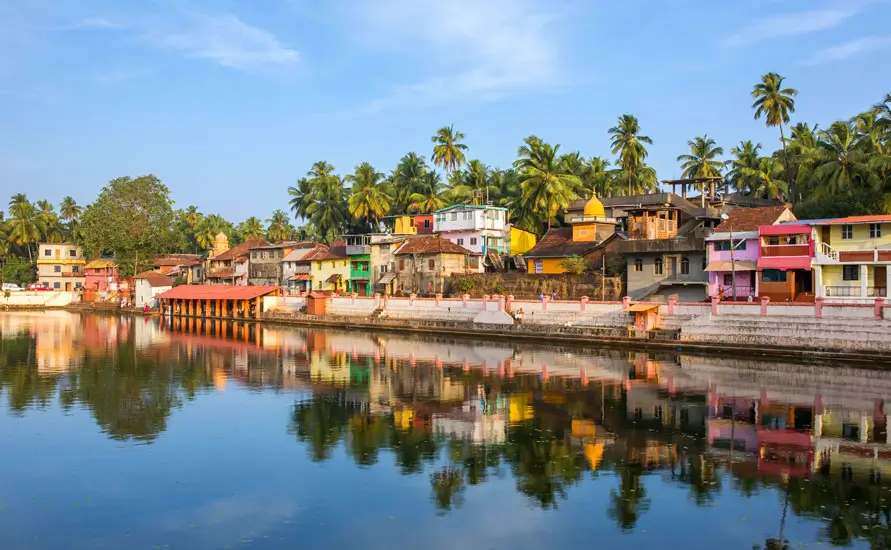
Your hotel in Fort Kochi is a restored colonial building with a garden and a pool, chosen for its friendly staff and calm atmosphere. Kochi is one of the most open cities in Kerala, with a young arts scene and a long history of welcoming traders and travelers from around the world. Once settled, wander down to the beach road where the cantilevered nets stand silhouetted against an orange sky and island ferries chug past. Dinner could be a Kerala fish curry with appam at a local restaurant. Overnight in Kochi.
A guided walking tour shows you the many layers of Kochi's past. First stop is St. Francis Church, a plain Portuguese chapel from around 1503 that briefly held Vasco da Gama's grave. From there the route passes the gated Dutch graveyard, the pastel Santa Cruz Basilica and old merchant bungalows converted into guesthouses and studios. Wall paintings from past editions of the Kochi-Muziris Biennale, South Asia's largest contemporary art show, still brighten many corners. Several old warehouses on the waterfront, such as those around Aspinwall House, become venues during the festival, and in other months many of them hold cafés, design stores and smaller exhibitions that are worth a look.
A short ride east brings you to the Mattancherry Palace, a two-story quadrangle around a temple courtyard, whose royal bedchamber walls carry vivid Ramayana frescoes in ochre, green and black. Nearby, in Jew Town, the Paradesi Synagogue, dating from 1568, is decorated with hand-painted Chinese tiles and Belgian chandeliers. With the palace locked on Fridays and the synagogue closed Fridays, Saturdays and on Jewish holidays, we juggle the order as needed. Antique dealers, ginger warehouses and small galleries line the surrounding streets for an unhurried afternoon of browsing. Look into the courtyards behind the shopfronts, where workers still spread dried ginger on the ground and sort it by hand before it is bagged for export.
In the evening, attend a performance of Kathakali, Kerala's classical dance-drama, in a small theater in Fort Kochi. Doors open about an hour before curtain so you can watch the actors build up their green faces and white ridged beards, layer by layer, in front of the audience. A short introduction explains the gestures and expressions, so you can follow the story. After the show, enjoy dinner at a waterfront restaurant. Kochi's relaxed atmosphere and café culture make it easy for LGBTQ+ travelers to feel at home, and our team can suggest welcoming places to visit in the evening. Overnight in Kochi.
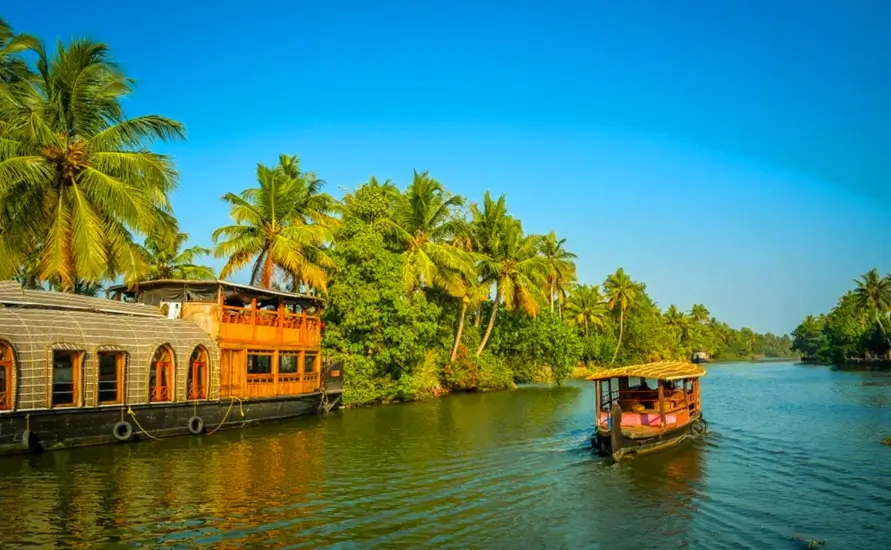
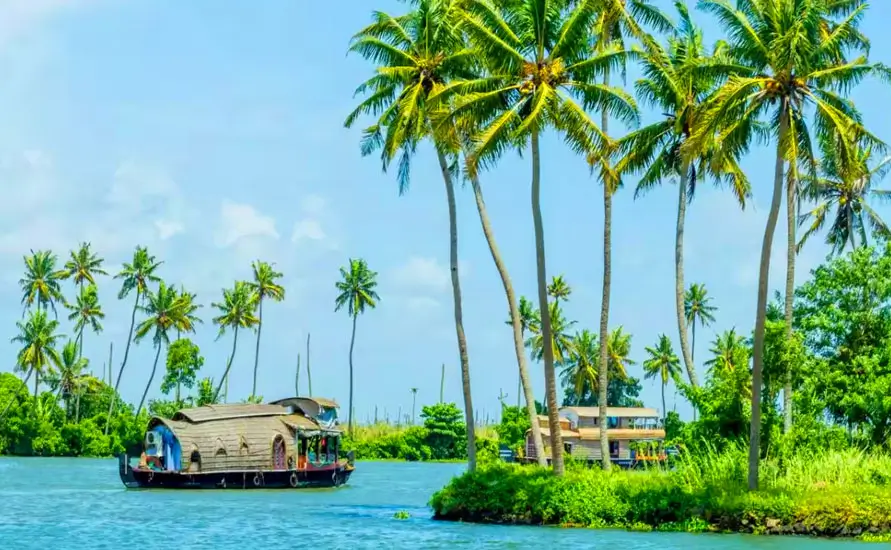
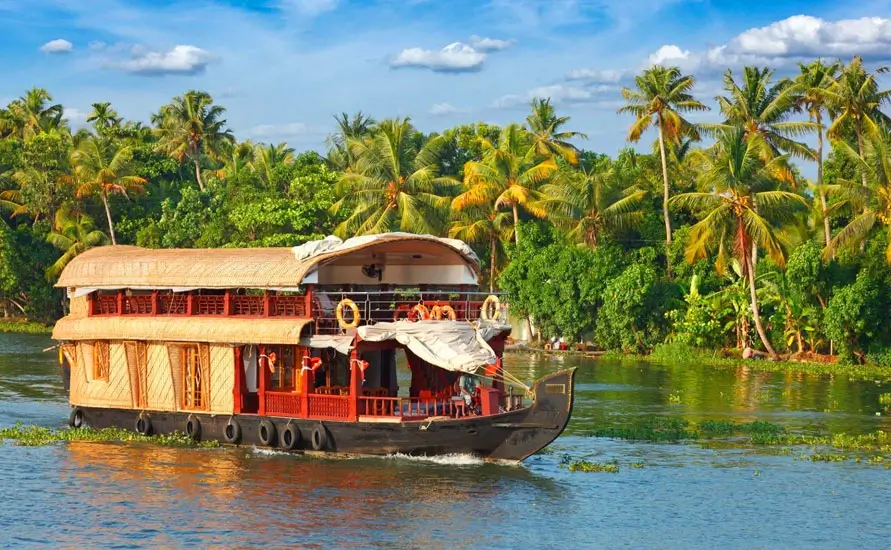
After breakfast the car follows National Highway 66 south for about ninety minutes to Alleppey, where boarding opens close to midday. Your vessel follows the design of the old kettuvallam cargo barges, its hull planks stitched with coir rope, though today it carries a bedroom, a shower room and a breezy lounge instead of rice sacks. Nobody else shares it, and the skipper, cook and deckhand have been told ahead of time exactly who is coming aboard. Your double bedroom is air-conditioned at night, and the deck has comfortable chairs for watching the scenery go by.
The first meal appears on deck while the hull pushes out onto Vembanad Lake, India's longest lake, before turning into the side channels where Kuttanad farmers grow rice on reclaimed land below sea level. You pass villages, churches, temples and schools along the water's edge, with people washing, fishing and paddling canoes. Ducks swim in large flocks, herded by farmers in small boats, and kingfishers and herons perch on the palm trees. Ask to tie up at a hamlet for a stroll, or beside a toddy bar to taste fresh coconut-palm sap. In the afternoon the light softens, and the crew will often brew a pot of tea while you watch the paddy fields slide past the open sides of the boat.
Regulations halt all cruising by early evening, so the skipper picks a sheltered bend to moor. Chai with banana fritters comes first, then a dinner of coconut curries made in the galley. Out here the dark is deep and quiet, an evening entirely unlike the honking streets of Mumbai a week earlier. For many couples it is the right moment for a private celebration, and the crew is happy to set up a special dinner with candles on the deck if you tell us in advance. Overnight on the houseboat.
Wake early to watch the mist lift over the backwaters and the first canoes of the day pass by. Breakfast is eaten as the boat heads in, you step ashore around 9 am, and a brief ride takes you to a lakeside resort on the shore of Vembanad Lake. The resort has cottages facing the water, a swimming pool and an Ayurvedic spa, and it has been checked in advance for LGBTQ+ guests. Check in, relax and enjoy a slow morning after your night on the water. Your cottage has a private veranda over the lake, ideal for an hour with a book while fishing canoes and the public ferry pass by.
Once the heat breaks, a village boatman leads a country canoe ride through the small canals around the resort, which are too narrow for houseboats. Paddled by a local boatman, the canoe glides past village homes, coir-making units and coconut groves, giving you a closer view of daily life on the backwaters. You may stop at a village home to see how coir rope is made from coconut husks, or at a small temple. The guide explains the farming methods of Kuttanad, where rice has been grown below sea level for more than a century.
Later, the spa offers abhyanga, a full-body treatment with warm medicated oils, or you can sit at the jetty as the lake turns copper. The restaurant leans on lake prawns, mussels and pearl spot, alongside pasta and salads for a change. On request the kitchen runs a short hands-on class in meen moilee, a mild turmeric and coconut fish stew. Enjoy a peaceful evening, as tomorrow is a free day before you fly home. Kerala goes to bed early, and apart from the odd temple drum, the lake is silent soon after dark. Overnight in Alleppey.
Your last full day in India is free. The resort offers yoga sessions in the morning, bicycles for rides along the lake shore and boats for fishing or birdwatching. Alleppey's beach is a short drive away, with an old pier and a lighthouse you can climb for views over the town and coast. For a final outing, our driver can take you about 15 km north to Marari Beach, a quiet fishing beach where crews haul in their nets by hand at dawn, or around the lake to the bird sanctuary at Kumarakom, best visited early in the morning when herons, cormorants and darters are most active.
In the afternoon, you might like a final shopping trip in Alleppey town for coir products, spices or Kerala handicrafts. The town was once one of the most important ports on the Malabar coast, and its canals earned it the nickname Venice of the East. You can also visit the Mullakkal Rajarajeswari Temple in the town center, one of the most important temples in Alleppey, though non-Hindus may not be allowed into the inner areas. Be back on the lawn by six for the last sunset of the trip, when the sky over Vembanad turns red and the last ferries head home across the water.
Mark the end of three weeks with a candlelit table at the water's edge and a set menu of sadya favorites, arranged with the resort. It is a good chance to look back on three weeks of travel, from the Mughal monuments of Delhi and Agra to the palaces of Rajasthan, the busy streets of Mumbai, the beaches of Goa and the quiet backwaters of Kerala. Expect a call from our office tonight confirming pickup and flight details. Pack your bags and enjoy your last night in India. Overnight in Alleppey.
Pickup is set so that the two-hour ride north lands you at Cochin International Airport three hours ahead of your overseas departure. Flying out after dark? Then a late checkout or an airport-side rest room can be booked for you at extra cost. A stop for cashews, pepper or Munnar tea on the way is easy to fit in. Our phone line stays open for you right to the departure gate.
Thank you for choosing our LGBTQ+ friendly Grand India Tour North and South. In twenty-one days you have seen the great monuments of the Mughals, the palaces of Rajasthan, the modern energy of Mumbai, the beaches of Goa and the backwaters of Kerala. We hope you leave with good memories and new friends, and that you come back soon to see more of India, perhaps the temples of Tamil Nadu or the Himalayas. Have a safe flight home.
Your Journey

N.S. Rathore & Mrs. Omlata Rathore · Managing Director
We still read every enquiry ourselves. Tell us the places you liked and our planners will send a day-by-day route with drive times and a clear price.
Every package can be customised and no pressure to book. A planner from our office replies within 24 hours with a route written for your group.
Fill this in and your planner will send a first draft itinerary.
Explore more
Kerala Backwaters Escape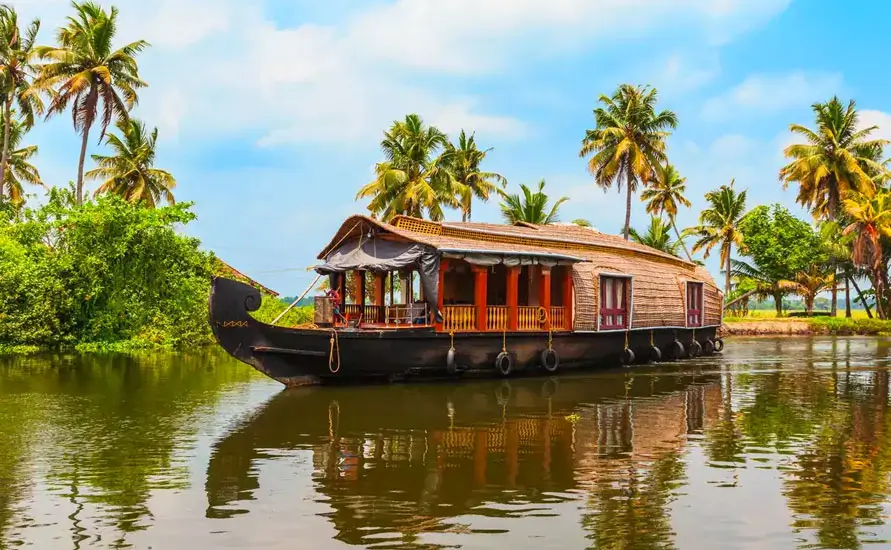 Kerala Backwaters Escape
 Kerala Backwaters Escape
 Kerala Backwaters Escape
 Kerala Backwaters Escape
 Kerala Backwaters Escape
 Kerala Backwaters Escape
 Kerala Backwaters Escape
 Kerala Backwaters Escape
 Kerala Backwaters Escape
 Kerala Backwaters Escape
 Kerala Backwaters Escape
 Kerala Backwaters Escape
 Kerala Backwaters Escape
 Kerala Backwaters Escape
 Kerala Backwaters Escape
 Kerala Backwaters Escape
 Kerala Backwaters Escape
 Kerala Backwaters Escape
 Kerala Backwaters Escape