 Kerala Backwaters Escape

LGBTQ+ Friendly South India Tours
Delhi – Jaipur – Jodhpur – Ranakpur – Udaipur – Kochi – Munnar – Alleppey
At a glance
Rajasthan and Kerala sit at opposite corners of India, and putting them in one trip gives you two countries' worth of contrast. Our LGBTQ+ friendly Rajasthan and Kerala tour starts in Delhi, then spends ten days with the hilltop forts of Jaipur, the indigo-washed old town of Jodhpur and the palace-lined lakes of Udaipur. A connecting flight then carries you south to Kochi, where the pace drops to tea hills in Munnar and a night on the backwaters of Alleppey. Desert sandstone gives way to coconut palms, and dal baati gives way to fish curry in coconut milk.
Accommodation is a big part of the pleasure here. In Rajasthan we book heritage havelis and small palace hotels, old merchant and noble homes with carved balconies, courtyards and rooftop terraces, and in Kerala a colonial bungalow, a tea estate resort and a private houseboat. Our staff visit or vet every property ahead of time, and a shared double bed is written into each reservation long before your flight. A 2018 Supreme Court ruling ended the old ban on same-sex relations, yet such unions cannot be registered as marriages in India, and village Rajasthan holds traditional views, so we house you in places that welcome you and suggest a low profile around shrines and rural homes.
Built as a gay friendly Rajasthan tour with a Kerala finale, the route suits partners, single travelers and friend groups flying in from overseas, plus LGBTQ+ NRIs keen to show someone special both ends of the country. Every element is private: the car, the driver, the guides who know in advance who they are hosting, and a 24/7 support line. October to March brings dry, sunny days in Rajasthan and post-monsoon green in Kerala. If your dates line up with Delhi's Queer Pride march or Kerala Queer Pride, dates confirmed each year, we will shape a flexible day around it.
Indira Gandhi International Airport is busy at almost any hour, so we make the first steps simple. Past customs, someone from our Delhi office holds up a board with your names, steers you and the luggage to a cool private sedan and keeps you company on the forty-minute ride, longer if the ring road is jammed. Since most transatlantic and European arrivals touch down near midnight, nothing is scheduled for this first day. Landing at dawn? Let us know and we book the previous night too, so you can head upstairs and sleep the moment you arrive.
Home for two nights is a small boutique property among the tree-lined colonies of South Delhi, chosen because reception treats two men, two women or a mixed group of friends with the same ease as anyone else. During the welcome briefing we hand over a printed itinerary, local SIM card advice and the 24/7 number you can call at any time over the next seventeen days. We also use this chat for a frank word about the country. Delhi is a large, mixed and fairly open city, but holding hands or kissing in public is rare for anyone, so most local queer couples keep affection for private spaces.
If you land in daylight and feel like stretching your legs, the neighborhood around the hotel has cafés, bookshops and small boutiques that stay open late. Khan Market, a short drive away, is where Delhi's diplomats and young professionals shop for books, coffee and good bread, and it is relaxed and easy to walk. Otherwise, rest, take a long shower and try a light dinner of dal, rice and tandoori roti at the hotel restaurant. Sightseeing begins only after a late, leisurely breakfast, so sleep as long as your body asks. Overnight in Delhi.
Old Delhi is best in the morning, before the lanes reach full volume. Your guide joins the car mid-morning, and the first halt is Jama Masjid, the huge Friday mosque that Shah Jahan completed in 1656, its courtyard able to hold some twenty-five thousand worshippers. Long sleeves and trousers or a long skirt are expected, and loose gowns can be borrowed at the entrance. Its broad steps overlook Chandni Chowk, and from there a pedal rickshaw squeezes you through wholesale alleys crowded with chili sacks, stationery dealers and printers of glittering wedding invitations. A quick stop for jalebi or parathas fried in ghee is almost compulsory.
After the noise of the old city, Humayun's Tomb feels spacious and calm. Commissioned by the widow of Emperor Humayun and finished around 1570, this mausoleum was the prototype for the Taj, pairing a high double dome with red stone, marble inlay and a quartered Persian garden cut by narrow canals. Your guide explains how Persian architects shaped it and points out the smaller tombs scattered around the grounds. Close by lies the Sufi shrine of Nizamuddin, where qawwali singers perform on Thursday evenings, an optional visit for those who enjoy music and do not mind a crowd.
After lunch you head to Mehrauli for the Qutub Minar, a 73-meter victory tower of ribbed sandstone begun around 1192 by Qutb ud-Din Aibak, founder of the Delhi Sultanate. Ruined arches and recycled temple columns stand around its foot, along with a Gupta-era iron pillar whose surface has resisted corrosion for well over a millennium. On the return, the driver loops along Rajpath, now Kartavya Path, for a look at India Gate and the sandstone ministries designed by Lutyens and Baker. Delhi also has a modest after-dark queer scene of friendly bars and occasional party nights, and our team will share what is running during your stay. Overnight in Delhi.
An early breakfast helps you beat the morning traffic out of Delhi, and the expressway to Jaipur is mostly straight and well surfaced. The same driver will handle every road day in Rajasthan, and he breaks the trip with a chai and washroom halt at a tidy roadside restaurant near Kotputli or Shahpura. The scenery shifts gradually as you leave the capital behind: mustard and wheat fields, camel carts on the service roads, then the first low ridges of the Aravalli hills. Women in bright odhnis work in the fields, and village walls start to show painted elephants and horses, a sign that you have crossed into Rajasthan.
Founded by the astronomer-king Jai Singh II on a grid drawn with help from the architect Vidyadhar Bhattacharya, Jaipur got its famous coat of pink paint for a royal visit from Britain in the 1870s. Lunchtime brings you to your heritage haveli, once the townhouse of a courtier, arranged around an open courtyard with scalloped arches and frescoed ceilings, and kept by a family that has hosted many LGBTQ+ travelers before you. Your room has a double bed confirmed, and the staff will show you the rooftop terrace, which looks over old rooftops toward the forts on the surrounding hills.
Late in the day your guide leads a short orientation walk through Johari Bazaar and Bapu Bazaar, where shops sell silver jewelry, mojari slippers, block-printed cotton and lac bangles. Prices are often flexible, and your guide can explain what fair bargaining looks like here without spoiling the fun. As the light fades, the arcades glow orange under their lamps and the evening traffic becomes a crowd of scooters, cycles and the odd cow. Back at the haveli, the cook can serve fiery laal maas mutton curry or a meat-free thali by lamplight on the roof. Overnight in Jaipur.
Reaching Amber Fort soon after the gates open makes all the difference, since this hilltop citadel a half-hour drive from the old city fills with groups by ten or eleven. Your guide times the arrival close to opening, when the sandstone walls are still cool and the reflection of the fort lies flat on Maota Lake below. A jeep or your own feet carry you up to Suraj Pol, and from there the route climbs through layered courts added by successive Kachhwaha kings from the late 1500s onward. We do not book elephant rides up the ramp, for animal welfare reasons, and most of our guests are glad we do not.
Most people linger longest in the Sheesh Mahal, where thousands of convex glass fragments are pressed into the plaster so that one flame could once make the whole chamber sparkle like a night sky. Look too for the frescoed Ganesh Pol and the zenana quarters, where screened windows let the royal women watch the courtyards unseen. From the ramparts you can see the long wall of Jaigarh Fort snaking along the hilltop above, and a short drive up brings you to its cannon foundry and the Jaivana cannon, once said to be the largest on wheels in the world.
Following lunch nothing is planned, a breather we build in on purpose after two busy days. Some guests rest by the haveli courtyard, others book an optional block-printing workshop in Sanganer, where artisans stamp patterns onto cotton with carved wooden blocks. Before sunset your driver takes you up to Nahargarh Fort, perched on the ridge above the city, where a terrace café looks straight down over the pink grid of Jaipur as the lights come on. The spot is popular with young locals, including some queer couples and friends, and the mood is relaxed. Overnight in Jaipur.
Begin facing the Hawa Mahal, the honeycomb front of 953 small windows that Maharaja Sawai Pratap Singh added in 1799, a viewing screen for court ladies looking down on festivals in the street. Morning sun strikes it directly, so your guide arranges a short stop at a rooftop café across the road for the best view with a cup of masala chai. You can also go inside and climb the narrow ramps to the upper levels, where small colored glass panes throw patches of light onto the floors and the breeze shows how the building earned the name Palace of Winds.
A few minutes' walk brings you to the City Palace, still partly home to the royal family of Jaipur. Its courtyards hold the Mubarak Mahal, a textile gallery with royal robes, and the Pritam Niwas Chowk with four painted doorways, each representing a season. Next door, the Jantar Mantar is a collection of large stone astronomical instruments built by Jai Singh II, a UNESCO site where the giant sundial still tells local time to within a couple of seconds. Your guide brings these strange shapes to life with stories of an 18th-century king who was obsessed with the sky.
From lunch on, your time is your own. Jaipur has a growing contemporary design scene, and your guide can suggest concept stores selling modern textiles, ceramics and home goods, as well as a few galleries showing Indian artists. Food lovers can book an optional session in a family kitchen in the walled city to learn gram-flour dumplings in yogurt gravy and the desert bean dish ker sangri. In the evening, enjoy a farewell dinner in the haveli courtyard with candles on the tables and a puppet show or folk musicians if the hosts have organized one. Pack lightly for an early start tomorrow. Overnight in Jaipur.
Roughly six hours of road lie ahead, the biggest stretch of the trip, so the car pulls out right after breakfast loaded with water, fruit and your own music if you bring a cable. The road west crosses the dry heart of Rajasthan through Ajmer district, past khejri trees, goat herds and small towns where tea is brewed on charcoal stoves. Your driver knows the cleanest stops along the way, and a lunch break at a highway dhaba gives you a chance to try dal baati churma, the region's hearty classic of lentils, baked wheat balls and sweet crumble. The countryside becomes sandier and flatter the further west you go.
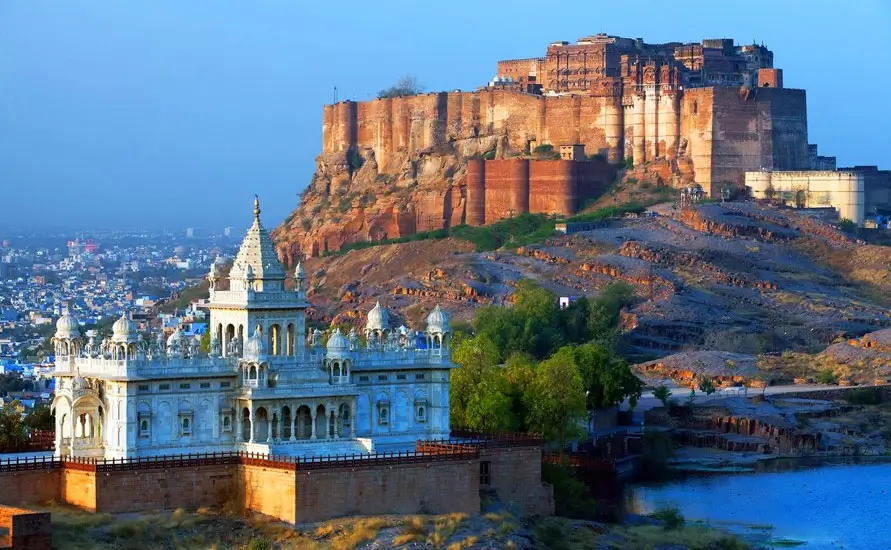
Around four o'clock the walls of Mehrangarh Fort loom into view, and your haveli in the old quarter of Jodhpur sits so close below it that the ramparts fill the sky from your terrace. The owners have welcomed many LGBTQ+ couples, and a double room is confirmed for you. As the sun drops, the stone of the fort turns from brown to gold and then rose, and swallows circle the ramparts. Dinner on the roof, with the fort floodlit above you and the old town lights below, is the simplest and best way to end a long road day. Overnight in Jodhpur.
Mehrangarh Fort rises about 120 meters above the plain on a sheer rock outcrop, and it is one of the best-kept forts in India. Founded by Rao Jodha in 1459, it is now run by a trust that has done careful restoration work, and the audio guide is excellent if you want extra detail beyond your guide's stories. Inside the walls you pass seven gates, including one still marked with cannonball scars, before reaching palaces with fine stone lattice work. The museum rooms hold royal palanquins, elephant howdahs, miniature paintings and a sparkling hall of mirrors, the Sheesh Mahal.
From the ramparts the old city below looks like a sea of blue cubes, and after the fort your guide leads you down into it on foot. Explanations for the blue paint vary: it once marked Brahmin homes, others say it keeps houses cool or repels insects, and today many families simply like the color. The lanes of the Blue City of Jodhpur are too narrow for cars, so you walk past doorways where women sort chilies, step around sleeping dogs and stop at tiny temples. Local people are friendly and curious, and a polite smile goes a long way when asking for a photograph.
Later in the afternoon visit Jaswant Thada, a white marble memorial built in 1899 for Maharaja Jaswant Singh II, set beside a small lake with views back to the fort. Its marble is thin enough to glow when the sun shines through it. Then head to the clock tower and Sardar Market, where spice dealers sell the famous Mathania chilies and shops stack bandhani tie-dyed fabrics to the ceiling. Try a makhaniya lassi, thick and saffron-flavored, at one of the stalls near the clock tower. The evening is free for a quiet dinner in the haveli. Overnight in Jodhpur.
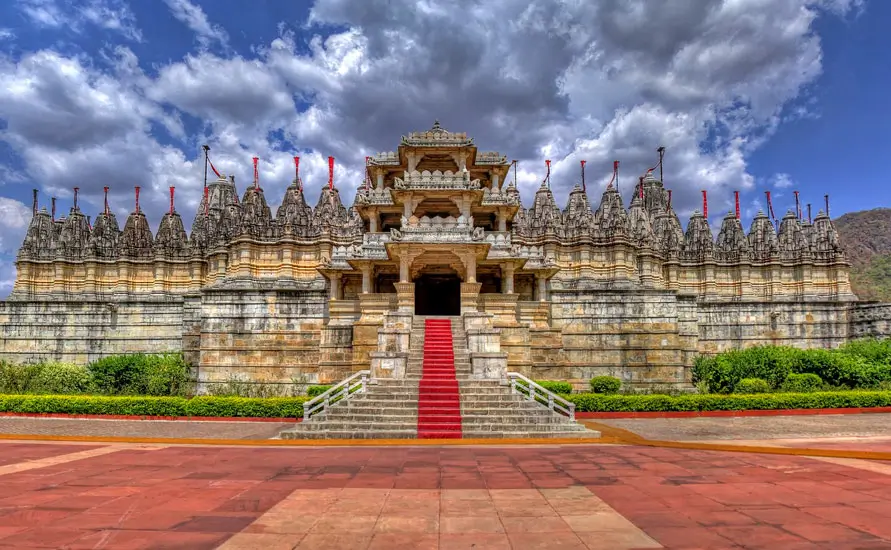
South of Jodhpur the scrubland slowly lifts into wooded Aravalli ridges, and the greenery feels fresh after the sand and stone of Marwar. Shepherds of the Rabari community, recognizable by their white clothes and red turbans, often walk their flocks along the roadside, and your driver can stop if you would like a closer look. Around midday you reach Ranakpur, a small village in a wooded valley known for one of the largest Jain temples in India. Lunch is served at a simple country resort nearby, as non-Jain visitors are usually admitted to the main temple only from around noon.
The Ranakpur Jain Temple, dedicated to Adinath and completed in the 15th century, is built entirely of pale marble and is said to have more than 1,400 carved pillars, no two of them alike. Light falls between them in shifting patterns as the afternoon moves on, and the domed ceilings are carved into lace-like circles of dancers and musicians. Leather items such as belts and wallets must be left outside, shorts and sleeveless tops are not allowed, and the temple rules are firm. Your guide explains the Jain principle of non-violence, which shapes everything from the diet of the priests to the way they sweep the floors.
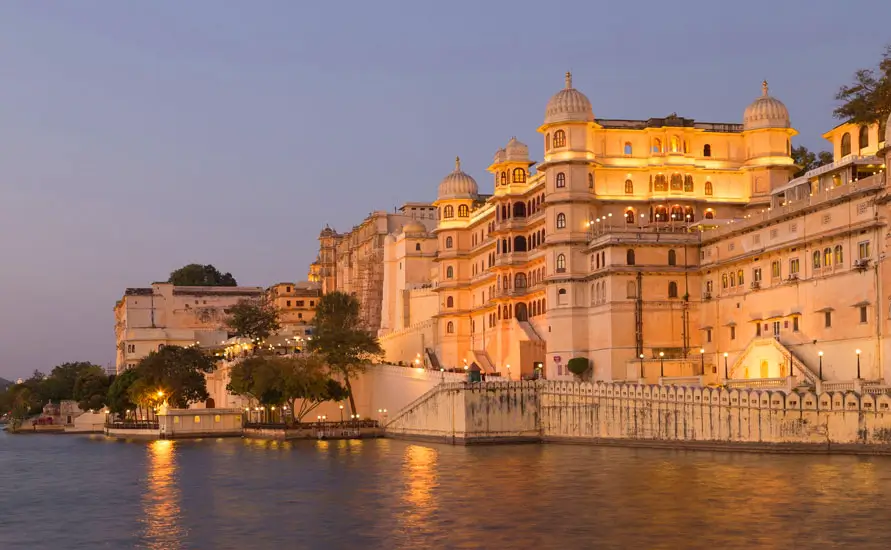
From Ranakpur it is a further two to three hours through hills and farming villages to Udaipur, which you reach by early evening. Your heritage haveli sits close to the eastern shore of Lake Pichola, with rooms looking out at the water and the white walls of the City Palace across the bay. After a long day, the staff will have a pot of tea ready on the roof terrace, and the view of the lake at dusk, with lights coming on in the palaces and temples around the shore, is a fine introduction to the city. Overnight in Udaipur.
Maharana Udai Singh II moved the Mewar court here in the mid-1500s after Chittorgarh proved too exposed, and his successors kept extending the Udaipur City Palace along the eastern shore for some three hundred years. The result is a sprawling cluster of linked wings, terraces and courts, now largely a museum with royal family apartments still in use. Your guide leads you through rooms with colored glass windows, peacock mosaics in the Mor Chowk and miniature paintings showing royal hunts and festivals. From the upper balconies you look across Lake Pichola to Jag Mandir, an island palace where a young Shah Jahan is said to have taken refuge.
Climbing a few minutes from the palace gate brings you to Jagdish Temple, a Vishnu shrine consecrated in the mid-17th century by Maharana Jagat Singh I. Its outer walls are covered with carvings of dancers, elephants and musicians, and the bell ringing during the late morning aarti is part of daily life in the old town. Studios in the surrounding alleys sell miniatures, silver and handmade-paper diaries, and in one of them a painter shows how a single-hair brush and ground-stone colors produce such fine detail. Lunch can be taken at a lakeside café with a view of the ghats.
Toward five o'clock a motor launch takes you out on Lake Pichola, slipping past laundry ghats, temple steps and the white island palace of Jag Niwas, which now operates as a hotel. The boat usually stops at Jag Mandir, where you can walk the gardens before heading back as the water turns orange and pink. Udaipur is one of the more relaxed cities in Rajasthan, used to couples from around the world, and a rooftop restaurant overlooking the lake is a lovely place for a celebratory dinner. Ask us in advance and we can reserve a table with the best view. Overnight in Udaipur.
Your last day in Rajasthan is deliberately loose. Following a slow breakfast, a short drive north reaches Saheliyon ki Bari, a royal pleasure garden of the 1700s where lotus ponds, carved elephants and gravity-fed fountains still splash with lake water. It was designed as a retreat for the ladies of the court and remains a peaceful place in the early morning. Afterward, a drive along the bank of Fateh Sagar shows a different side of Udaipur, where college students take boat rides and local families eat corn and ice cream by the water.
Around midday you may want to try one of the city's optional activities. A cooking class in a family home teaches you how to make chapati, a vegetable curry and a simple dessert, while a miniature painting workshop lets you try the fine brushwork for yourself. Couples who like to stay active can hire bicycles for a guided ride into the nearby villages, where farmers grow wheat and roses. Those who prefer to rest can book a massage at the haveli or simply read on the terrace. Our team arranges whatever you choose the evening before, so nothing needs to be decided in advance.
In the early evening head to Bagore ki Haveli, a restored 18th-century mansion on Gangaur Ghat, for its nightly show of Rajasthani folk dance. Performers balance stacks of brass pots on their heads, dance with fire and spin in long skirts, and a puppet act ends the program. Arrive early for a good seat. Afterward, take a slow walk over the pedestrian bridge between the old town and Hanuman Ghat as the lake reflects the lights of the havelis. Pack tonight, as the next stop is about 2,000 km away on the other side of India. Overnight in Udaipur.
There is no direct flight between Udaipur and Kochi, so we book a connection through Mumbai, Delhi or Bengaluru, depending on the best timings on your travel date, with a layover long enough for a relaxed change of terminal if needed. Your driver drops you at Maharana Pratap Airport, about 25 km east of the old city, two hours ahead of departure. Expect most of the day to vanish between airports, gates and the connection. Keep a light jacket handy for the cold cabins and a bottle of water for the connection.
Landing at Cochin International Airport, you step into warm, humid air that smells of rain and greenery, a big change from the dry heat of Rajasthan. Our Kerala team meets you at arrivals and drives you around ninety minutes to Fort Kochi, where you check in to a restored colonial bungalow with high ceilings, wooden shutters and a garden full of frangipani. Fort Kochi is easygoing and used to international guests, with a creative crowd that makes LGBTQ+ visitors feel at home, so the long travel day ends in comfort. Overnight in Kochi.
Starting at 8 am keeps the heat at bay, and the guide's first stop is the seafront promenade, where crews are already hauling up the Chinese fishing nets for the morning catch. Watch closely and you will see the fishermen walk along the beam to tip the net, using rocks tied on ropes as counterweights. From here the route covers St. Francis Church, where Vasco da Gama once lay buried, and the walled Dutch cemetery, before threading lanes where Portuguese, Dutch and British building styles sit side by side. Murals and art installations on the walls remain from editions of the Kochi-Muziris Biennale, the city's big contemporary art festival.
A short drive takes you to Mattancherry, the old spice trading quarter. The Mattancherry Palace, known as the Dutch Palace, holds Kerala's finest temple-style murals, painted in the 16th and 17th centuries with mineral and vegetable colors. At the end of Synagogue Lane stands the Paradesi Synagogue, still used by Kochi's tiny Jewish community, whose hand-painted Chinese floor tiles are said to show no two identical scenes. Mind the weekly closures, since the Dutch Palace locks its doors on Fridays while the synagogue welcomes no visitors on Fridays, on the Sabbath or during Jewish festivals; our team may swap your two Kochi days to fit. Shoes come off at the synagogue door.
The afternoon is free to wander Jew Town's antique shops, spice godowns and cafés in old warehouses, where you can sit with a cold coffee under a slow ceiling fan. In the evening you could see an optional Kathakali dance-drama or a demonstration of Kalaripayattu, Kerala's ancient martial art, both staged in small theaters in Fort Kochi. For supper, a courtyard restaurant on Princess Street serves prawns in coconut and kokum, appam, and cold lime soda. Kochi's café scene is relaxed and diverse, and same-sex couples having dinner together will rarely attract any attention here. Overnight in Kochi.
Leaving the coast after breakfast, you drive inland through rubber plantations, pineapple fields and small towns where every second shop seems to sell gold jewelry or fried banana chips. Past Neriamangalam bridge the gradient starts, and the Western Ghats close in with each switchback, bringing a welcome drop in temperature. Waterfalls appear beside the road, especially after the monsoon, with Cheeyappara and Valara among the best known. A lookout with a chai shack is the natural pause, and your first glass of local tea, boiled with milk and plenty of sugar, tastes better for the view.
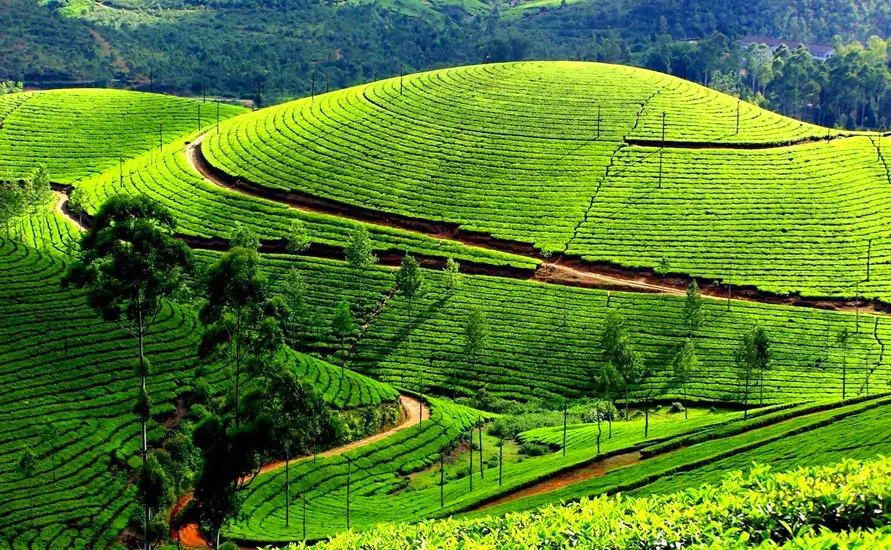
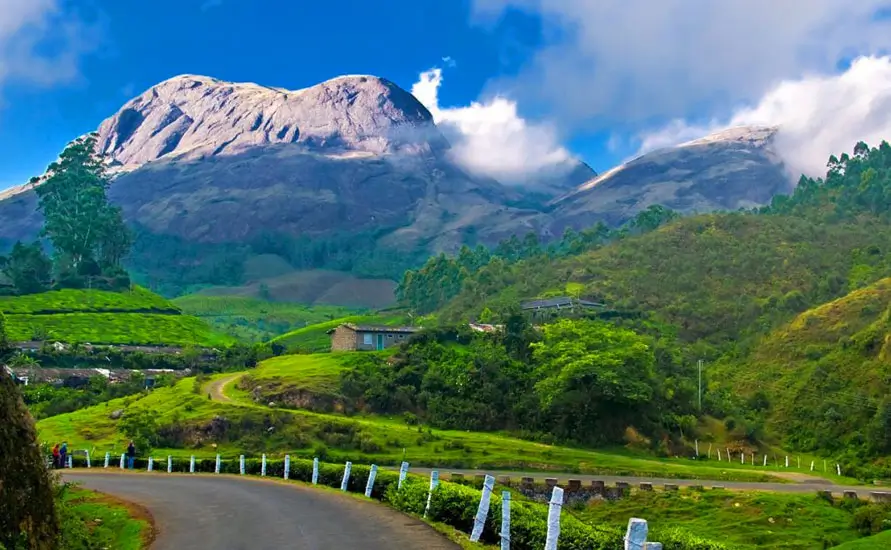
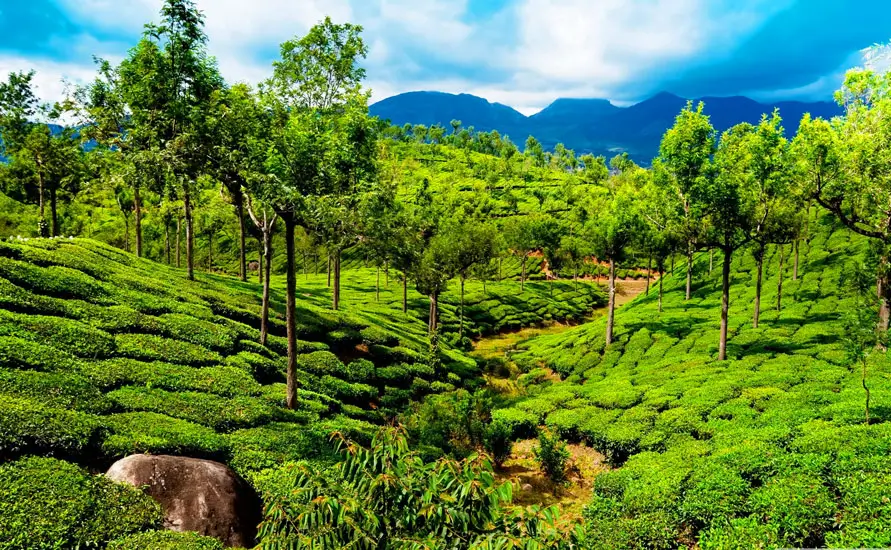
Early afternoon brings you into Munnar, a market town on a high saddle whose slopes were cleared for planting by Scottish companies in the 1880s and 1890s. Tea gardens cover nearly every slope, trimmed into neat rows so that the hills look as if they have been combed. The tea estate resort we use here has hosted plenty of same-sex couples, and your king-size bed is noted on the booking. Rooms face the hills, and the staff will light a fire on cooler evenings. Spend the rest of the afternoon resting, or ask the resort for a guided walk on estate paths.
By five, mist tends to drift up the valleys and a fleece becomes welcome. If energy allows, the Tata Tea Museum near Nullatanni explains the history of tea in the region with old machinery and a short film, though it is closed on Mondays. Or stay put on your veranda while the green rows of bushes turn grey in the dusk. The resort kitchen mixes appam and stew with paneer and naan, and will dial down the chili on request. Ask for a table near the fireplace, where the staff often bring a final cup of cardamom tea after the meal. Overnight in Munnar.
Leave by eight for Eravikulam National Park, the rolling upland reserve where the Nilgiri tahr, a sure-footed mountain ungulate unique to these hills, is protected. Arriving early means shorter queues at the ticket counter and cooler air for the climb, and mornings tend to be clearer before clouds gather around the summits. Private cars stop at the gate, and forest department minibuses run visitors up to Rajamala, where herds wander calmly near the walking trail. Calving shuts the sanctuary for roughly February to March, so if your dates clash we swap in a different hill walk. Wind sweeps the exposed slopes, so carry a windproof layer.
Back down, a guided stroll between the bushes covers the life of a leaf from the top two shoots to the drying room, and why altitude gives Munnar tea a brisk, bright cup. The pluckers, mostly Tamil-speaking women with sacks slung from their foreheads, are friendly, but always ask with a gesture before lifting a camera. After a simple meal in town, a small family spice plot introduces you to nutmeg, clove trees and green peppercorns still on the vine, and the owner usually splits a ripe nutmeg so you can see the scarlet lacy layer, sold as mace, clinging to the brown seed.
Later, the road east leads to the Mattupetty Dam reservoir and the shouting games of Echo Point, with occasional elephant sightings on the far shore near dusk. The road also passes the Kundala Lake and a cattle research farm. If you prefer something quieter, the resort can arrange a private picnic on a viewpoint above the estate. Return to the resort for an evening by the fire, with a book, a board game or simply the sound of rain on the roof. Evenings up here are early and quiet, with shops shuttered by nine, which suits a rest before the coast. Overnight in Munnar.
After a last walk in the cool morning air, you leave the hills and descend through the forest and plantation belt toward the coast. Allow five hours including a meal stop as the land falls from tea slopes through rubber and cardamom belts to the flat, watery rice country of the coast. Kothamangalam and Kottayam both make easy halts for coffee, chips fried in coconut oil or a peek inside a whitewashed church. The heat and humidity return as you approach the coast, so keep your hats and sunscreen handy.
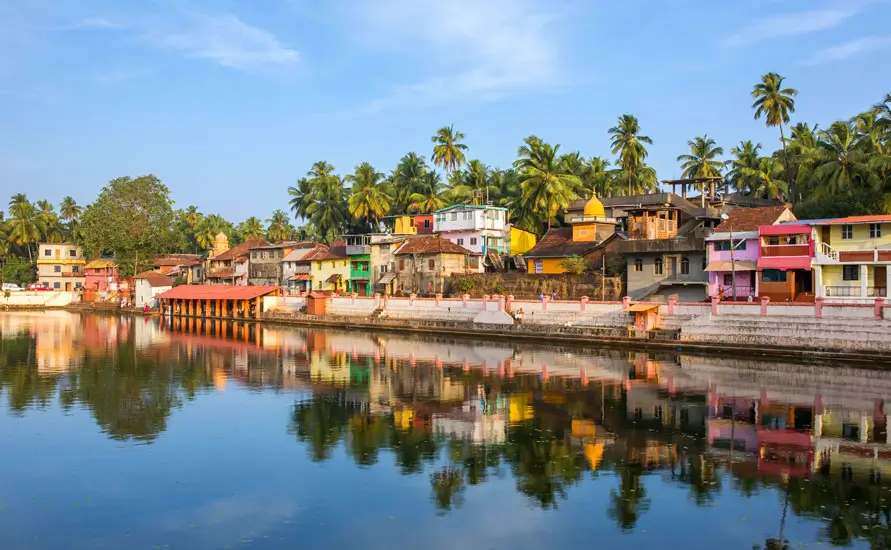
By mid-afternoon you reach Alleppey, also known as Alappuzha, and check in to a lakeside resort on the edge of Vembanad Lake. Your cottage looks over the water, where small boats and canoes pass by, and the hotel has been checked in advance so that your booking is handled with care. The resort usually offers a swimming pool, a spa and a jetty where you can watch the sunset with a cold drink. This extra night on land means you can rest after the drive and still board your houseboat fresh tomorrow.
In the late afternoon join a short guided canoe ride through the narrow canals near the resort, where the large houseboats cannot go. A villager with a long pole pushes your country boat through channels barely two meters wide, where kids row themselves to tuition classes and grandmothers rinse pots at the water steps. Kingfishers, egrets and cormorants are common sights. Afterward, the evening is free for an Ayurvedic massage at the resort spa or a quiet dinner by the water. The resort kitchen is known for its seafood, especially the prawns and crab from the lake. Overnight in Alleppey.
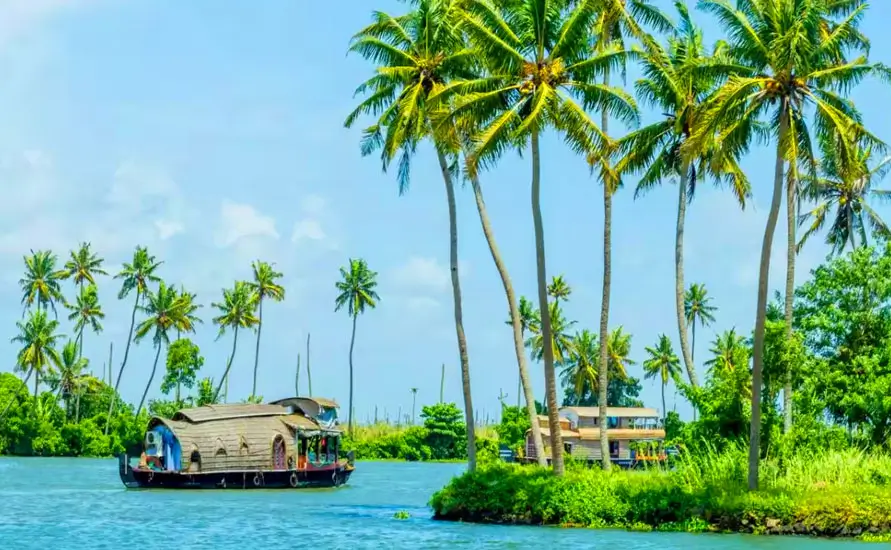
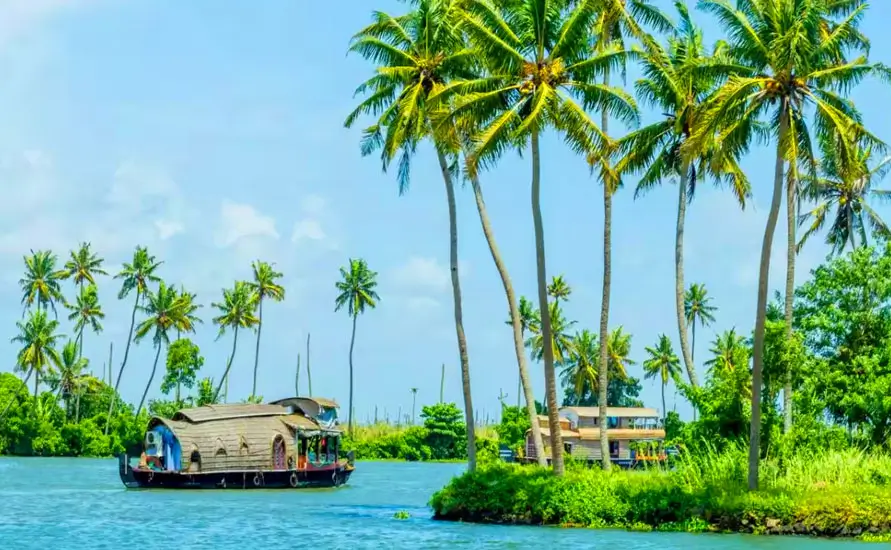
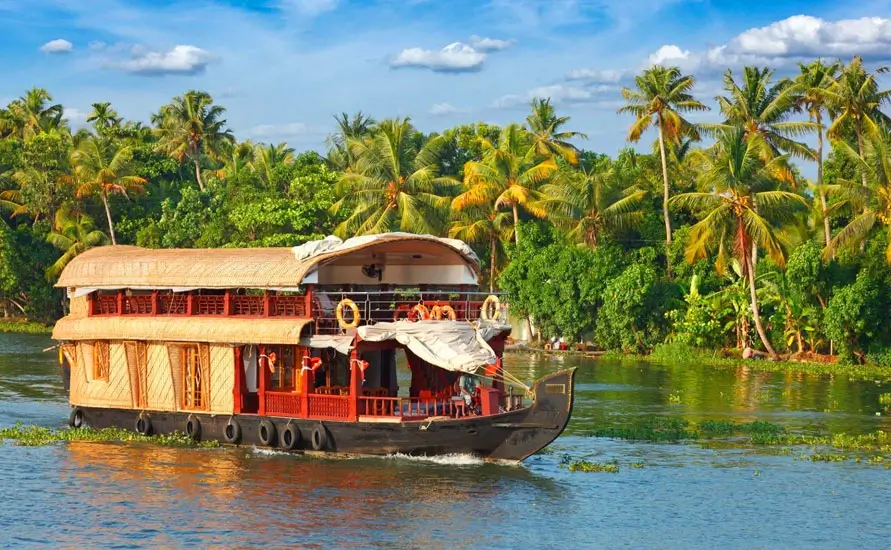
Late in the morning you move from the resort to the jetty, where your private Alleppey houseboat is waiting. This is not a shared boat: the bedroom, the open deck and the crew are for your party only, and the crew have been told in advance that they are hosting a same-sex couple or a group of friends. Check-in is usually around noon. Three crew members, usually a skipper, a cook and a deckhand, give you a tour of the cabin, the shower and the shaded front lounge with its cane chairs.
As the engine starts, the cook lays out lunch on the deck table: plump parboiled rice, pearl spot fried with chili paste, beetroot thoran and buttermilk spiced with ginger. The boat moves along the main channels and into smaller waterways of the Kuttanad region, where rice is grown on land below sea level, protected by dikes. You pass toddy shops, ferry stops, churches with tall white facades and long lines of ducks guided by herders in small boats. Ask to tie up at a toddy shop or a tiny jetty for a stroll on the dikes whenever you like.
Houseboats must stop moving in the early evening by local rules, and the crew anchors in a quiet spot along the bank. Tea and snacks such as banana fritters arrive on deck, followed by a dinner cooked fresh in the small galley at the back of the boat. Far from roads and streetlamps, the sky fills with stars, and a chorus of frogs replaces the horns of Rajasthan. For many guests this night is the highlight of the Kerala section, and it makes a quiet, private place for a celebration of your own. Overnight on the houseboat.
Dawn on the anchored boat is pale and still, with a lone fisherman flicking a throw net off his canoe; the cook serves steamed puttu, banana and black chickpea curry while the skipper motors gently back to the landing. You step off by about 9 am, and the car heads north for roughly two hours to Cochin International Airport, arriving three hours before an overseas departure. Late flyers can add a day-use room near Nedumbassery or a last shopping hour in Ernakulam. Our team stays in touch with you by phone until you are inside the terminal.
In seventeen days you have gone from Mughal tombs and desert forts to blue lanes, lake palaces, tea hills and the backwaters. We hope this LGBTQ+ friendly Rajasthan and Kerala tour showed you the warmth that exists across India, as well as its contrasts. Should India call you back, a second trip to Madurai and Chettinad, or the beaches of Goa, is something our planners would love to shape for you. Wishing you a smooth trip home.
Your Journey

N.S. Rathore & Mrs. Omlata Rathore · Managing Director
We still read every enquiry ourselves. Tell us the places you liked and our planners will send a day-by-day route with drive times and a clear price.
Every package can be customised and no pressure to book. A planner from our office replies within 24 hours with a route written for your group.
Fill this in and your planner will send a first draft itinerary.
Explore more
Kerala Backwaters Escape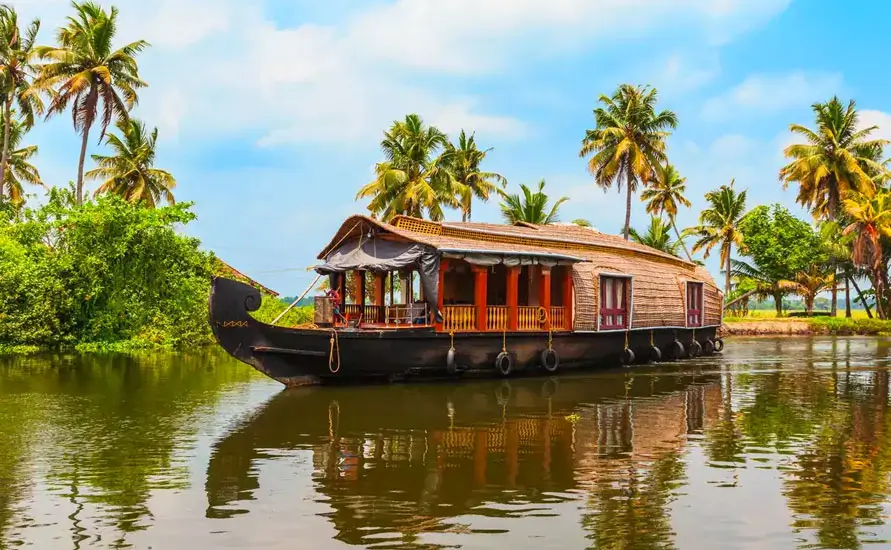 Kerala Backwaters Escape
 Kerala Backwaters Escape
 Kerala Backwaters Escape
 Kerala Backwaters Escape
 Kerala Backwaters Escape
 Kerala Backwaters Escape
 Kerala Backwaters Escape
 Kerala Backwaters Escape
 Kerala Backwaters Escape
 Kerala Backwaters Escape
 Kerala Backwaters Escape
 Kerala Backwaters Escape
 Kerala Backwaters Escape
 Kerala Backwaters Escape
 Kerala Backwaters Escape
 Kerala Backwaters Escape
 Kerala Backwaters Escape
 Kerala Backwaters Escape
 Kerala Backwaters Escape