 Kerala Backwaters Escape

LGBTQ+ Friendly South India Tours
Chennai – Kanchipuram – Mahabalipuram – Pondicherry – Gangaikonda Cholapuram – Tanjore – Trichy – Madurai – Munnar – Alleppey (private houseboat) – Kochi
At a glance
If you only make one long trip to the south, make it this one. Our Gay Friendly South India Tour is the classic fourteen-day loop that most travelers dream of, shaped for two men or two women traveling together, single queer travelers and small LGBTQ+ groups who want the full picture without the stress. It begins with the temples and silk of Chennai and Kanchipuram, follows the coast to Mahabalipuram and Pondicherry, turns inland to the Chola country around Tanjore, on to Nayak-era Madurai, then climbs to the tea hills of Munnar before a private houseboat in Alleppey and two final nights in Kochi.
We personally vet each hotel and the houseboat used on this gay friendly South India tour, a double bed is booked as standard and nobody will ask questions at reception. Since the Supreme Court's 2018 judgment, adults of the same sex can legally be together, though Indian law still does not allow same-sex couples to marry. Chennai, Pondicherry and Kochi feel relaxed, while temple towns and rural Kerala are more traditional, and public affection is uncommon for any couple there. Each guide is told beforehand who is in the car and asked to be respectful and natural about it.
Pacing is what makes a flagship route work. No drive on this LGBTQ+ friendly South India tour goes much beyond five hours, the longest legs are broken with sightseeing stops, and five stops, Chennai, Pondicherry, Madurai, Munnar and Kochi, each get two nights. One car and one English-speaking driver cover the whole route, door to door, with local guides at every major stop. Plan for the months between October and March if you can, when the coast is dry and the hills are clear.
Welcome to Tamil Nadu. Once you are through immigration at Chennai International Airport, a member of our local team steps forward with your name on a board, chilled water in hand and a car parked close by with the air conditioning on. Long-haul routes from the West usually route via the Gulf and reach Chennai after dark, often well past midnight, and the drive to your hotel along nearly empty roads takes well under an hour. The hotel knows in advance that you are arriving as a couple or as a solo LGBTQ+ guest and has the room you asked for ready. Early check-in can be added when you book.
Sleep in, then meet our host in the hotel lobby late in the morning for a short chat about the fourteen days ahead. You receive your printed itinerary, emergency numbers, an Indian SIM if you requested it and a few honest tips on traveling as an LGBTQ+ visitor in South India: where you can relax completely, where to be a little more discreet and how our guides will help. It is also a good moment to raise any changes, such as extra time at the beach or a cooking class, since a private tour can be adjusted almost anywhere along the way.
In the late afternoon a short city drive takes you to San Thome Basilica, a tall white church rebuilt in neo-Gothic style in the 1890s over the place where many Christians believe the apostle Thomas was buried. The underground chapel and small museum explain the legend of his arrival on this coast. From there you continue to the long seafront at Marina Beach to watch Chennai at play as the sun sets behind the city, with kite flyers, balloon sellers and families on the sand. Eat where you like tonight, in the hotel or at a place nearby that our host suggests. Overnight in Chennai.
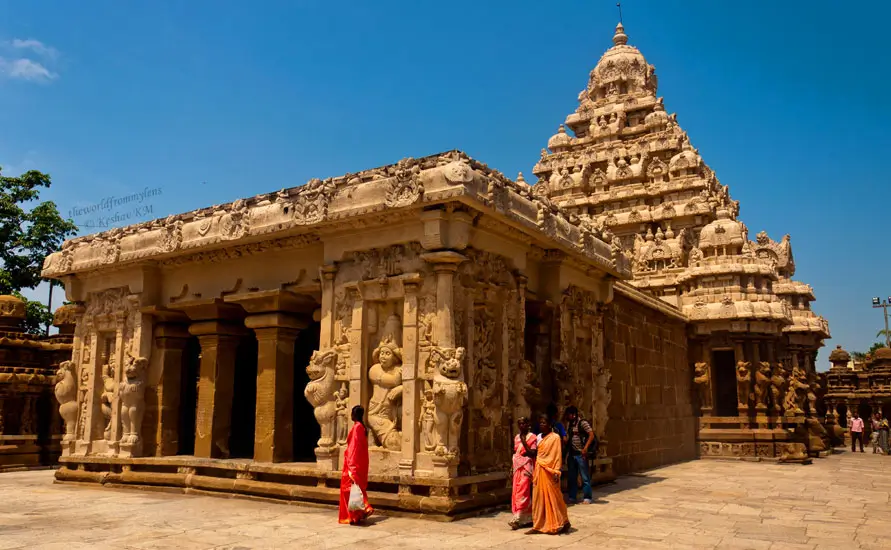
An hour or two west of Chennai, Kanchipuram was the capital of the Pallava kings and later a great center of the Chola and Vijayanagara empires, and the city still has well over a hundred temples. Leaving straight after breakfast keeps you ahead of the commuter traffic, watching the suburbs turn into paddy fields and small villages. Your guide begins at the Kailasanathar Temple, a sandstone shrine from around 700 AD that is small, quiet and lined with dozens of carved niches. Here you can see the early stages of the temple style that grows into the giant towers you will meet in Tanjore and Madurai.
You then move on to the Varadharaja Perumal Temple, one of the most sacred Vishnu shrines in the south, with a hall of beautifully carved pillars showing hunters, horses and musicians. Once in four decades, a fig-wood figure of Vishnu called Athi Varadar is lifted from the sacred tank for a few weeks of worship, and your guide tells you about the last festival in 2019. As at every temple on this tour, shoes stay outside, long trousers or skirts are best, non-Hindus are limited to certain areas, and couples of any kind keep affection for later out of respect for worshippers.
Kanchipuram silk is famous across India, and before lunch you visit a weaving family to watch a sari take shape on a handloom, the gold thread worked into borders one pass at a time. A heavy wedding sari can take a weaver several weeks, and your guide explains how to tell genuine silk from a cheaper blend if you want to buy a stole, a scarf or a length of fabric. After a South Indian lunch you drive back to Chennai in the afternoon, arriving in time to rest before dinner. The evening is free in the city. Overnight in Chennai.
Bags go in the car after a slow breakfast, and the East Coast Road carries you south past a shoreline lined with seafood shacks, temples and beach villas. Your first stop is Saluvankuppam, a few kilometers before Mahabalipuram, where the Tiger Cave sits among sand dunes close to the shore. Eleven snarling heads of tigers or mythical yalis circle its opening, and the small shrine is one of the least visited Pallava sites in the area. Nearby, archaeologists found the remains of an even older brick temple to the god Murugan after the 2004 tsunami shifted the sand.
By noon you are in Mahabalipuram, settling into a beach hotel and resting through the hottest hours. Once the sun drops a little, your guide leads you around the less famous corner of the monument zone, starting at the Trimurti Cave, which has three shrines dedicated to Brahma, Vishnu and Shiva side by side. From there you climb to the Olakkanesvara Temple and the lighthouse on the hill, where the view stretches across the temple boulders, the town and the long beach. Your guide explains how this small hilltop shrine once held a fire that guided ships to the harbor below.
As the light softens, you stroll to the carved cliff of Arjuna's Penance and the balanced rock locals call Krishna's Butter Ball, both busy with local visitors and school groups in the evening. The Shore Temple and Pancha Rathas are kept for tomorrow morning. Mahabalipuram is a small, laid-back town used to foreign visitors, with backpacker cafés, art shops and stone carving yards along the main road. Dinner could be at one of the seafood restaurants near the fishing beach, where the catch is grilled with lemon and spices. Overnight in Mahabalipuram.
First light is the best time for the Shore Temple, and your guide meets you soon after sunrise when the granite glows gold and the sea is calm. Built around 700 AD by the Pallava king Rajasimha, it is one of the oldest stone temples in South India and the only one in this group that stands right on the shore. The line of stone Nandi bulls around the outer wall and the carvings worn down by centuries of salt spray make it feel almost alive. Together with the other sites here, it is part of a UNESCO World Heritage listing for the Group of Monuments at Mahabalipuram.
After breakfast you visit the Pancha Rathas, five monolithic shrines cut from a single granite outcrop and named after the five Pandava brothers and Draupadi, the queen they shared in the Mahabharata. Each one shows a different style of roof, from a simple thatched hut shape to the stepped pyramid that later became the standard Dravidian temple tower. Stone elephants, a lion and a Nandi stand beside them, also cut from the same rock. Your guide points out how some carvings were left unfinished, offering clues to how the sculptors worked. Then you check out and set off down the coast.
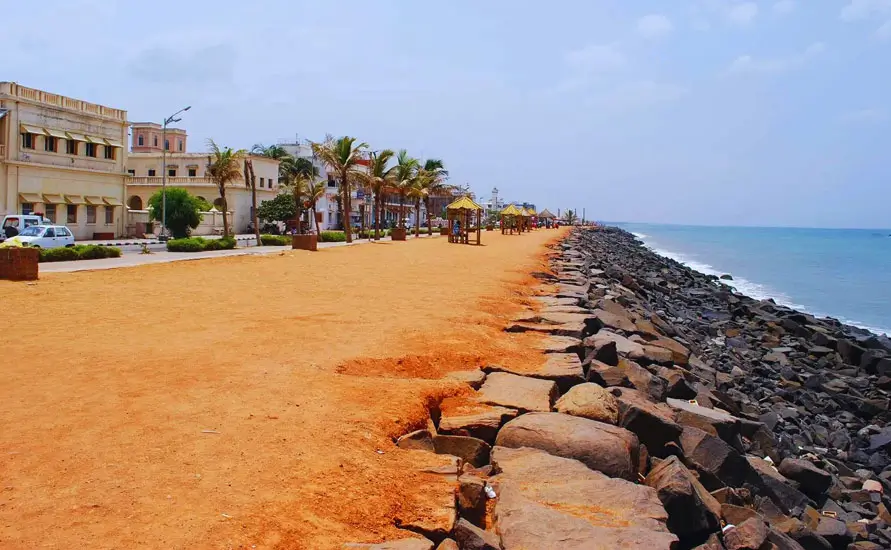
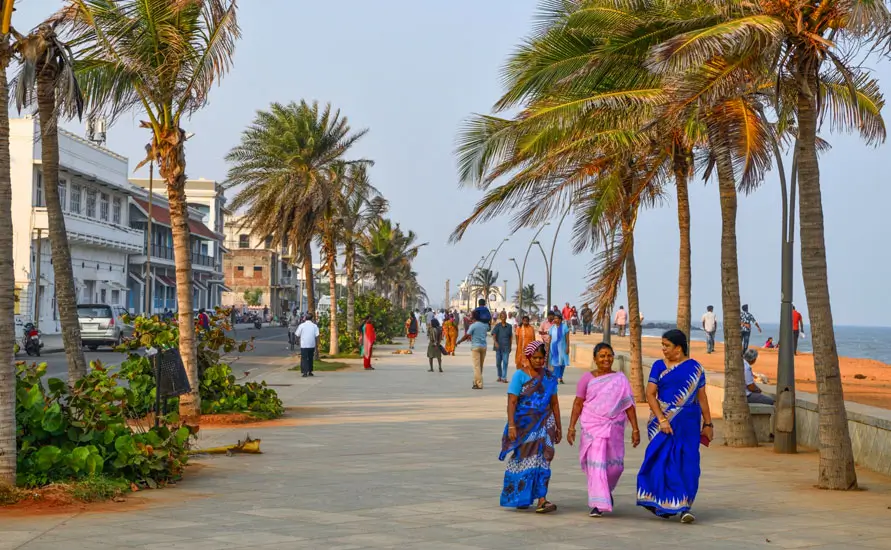
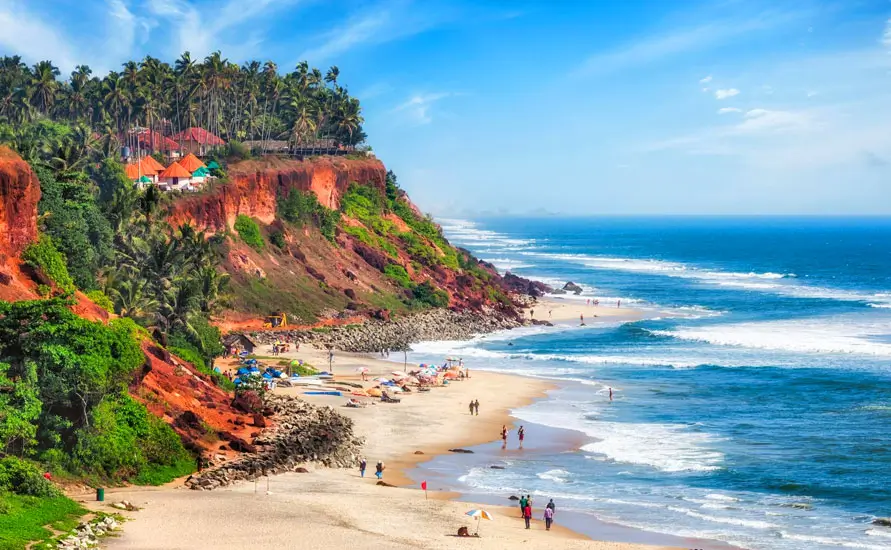
Count on roughly 150 minutes for the coastal run to Pondicherry, passing salt pans, fishing harbors and the long backwater at Muthukadu. From mid-afternoon your room in a restored old-town mansion is ready. Pondicherry's mix of French history, Tamil culture and international visitors gives it a relaxed, open feel, and it is one of the easiest places on this route to simply be yourselves. Spend the evening walking on the seafront Promenade, where the road closes to traffic at night and the breeze comes in off the sea. Dinner is at one of the many restaurants in White Town. Overnight in Pondicherry.
Your guide meets you for an early walk through White Town, the French Quarter, before the heat and the traffic rise. The route takes in Bharathi Park, the central square with its pale colonial monument, the Aayi Mandapam, built by Napoleon III in the 19th century to honor a woman who, according to legend, destroyed her own house to make way for a water reservoir. Nearby stands the white Raj Nivas, home of the Lieutenant Governor, and the old French lighthouse. Your guide explains the French administration of the town and the treaties that brought it into India.
Next, the Sri Aurobindo Ashram offers a quiet pause in the middle of town, with people sitting in silence around a marble tomb that devotees decorate with new flower patterns every day; no talking and no photos. Afterwards your guide crosses to the Tamil streets, where deep verandas front the houses and busy markets, ending at the Grand Bazaar where vegetables, flowers and fish are sold under a high roof. Lunch is in a café of your choice, and the early afternoon is free, as many shops close for a long midday break before reopening in the late afternoon.
Around four o'clock you drive to Auroville, about twelve kilometers north, an experimental township founded in 1968 with residents from many countries. An introductory video plays at the visitors' pavilion, and from there it is about a kilometer on foot through planted forest to a lookout over the golden Matrimandir, the meditation hall at its heart. Inside visits are by prior booking only and the numbers are small, so tell us before you travel if you want us to try. Back in town, the evening is yours for dinner, perhaps on a rooftop terrace in the French Quarter. Overnight in Pondicherry.
Before leaving the coast, an optional early walk on one of the quiet beaches south of town lets you see local fishermen pulling in their nets at dawn. Breakfast done, the car turns away from the sea toward the paddies and sugarcane of the Kaveri basin. Your main stop on the way is Gangaikonda Cholapuram, the city founded by the Chola emperor Rajendra I in the early 11th century after his armies reached the Ganges. The palaces and city walls have long since vanished, yet its temple still rises standing alone among fields and coconut palms, and it shares a UNESCO listing with the Chola temples of Tanjore and Darasuram.
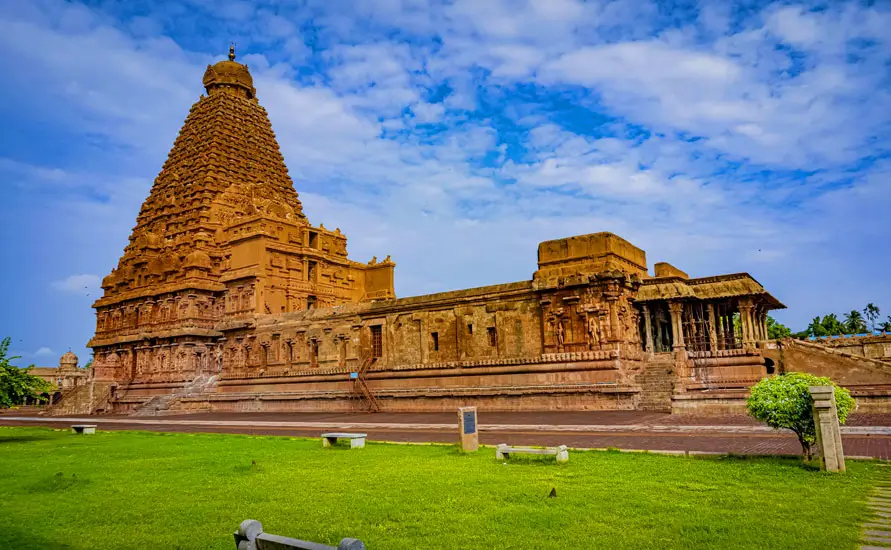
The Brihadisvara Temple here was built to rival the one his father raised in Tanjore, and its tower has a softer, more curved outline. Your guide shows you the carving of Shiva crowning the saint Chandesha, considered one of the finest Chola sculptures anywhere, and the giant Nandi in the courtyard, made of bricks and lime. Tour buses rarely stop here, and on many days only a handful of people wander the lawns. Lunch stop: nearby Kumbakonam, a temple town known for its strong coffee and sweet shops, where a meal of rice, sambar and crisp poriyal costs very little.
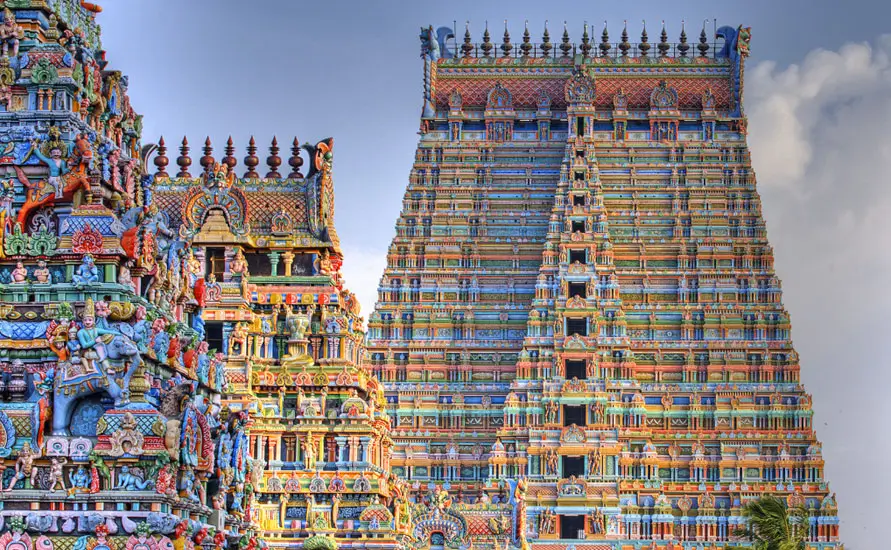
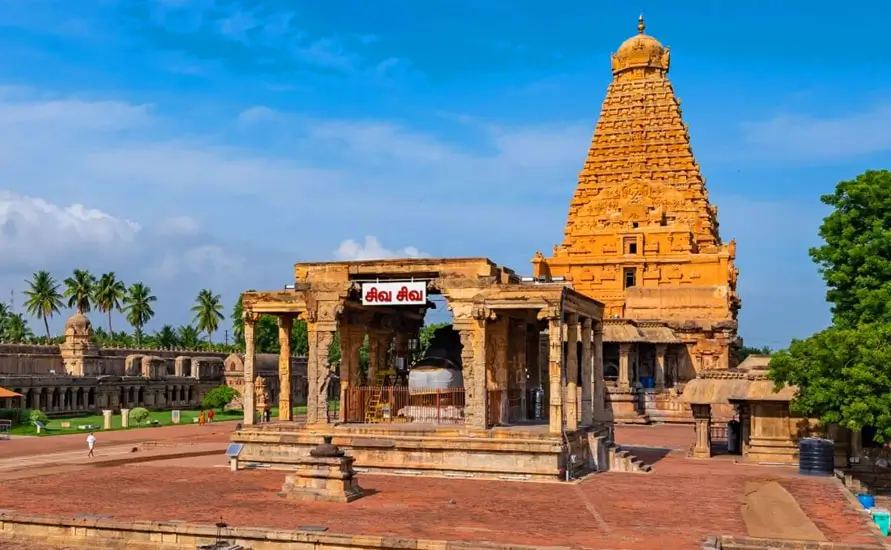
Arriving in Tanjore late in the day, you drop your bags at a heritage hotel and go straight to the Brihadeeswarar Temple for sunset. Sunset is when the tall granite tower, raised for Rajaraja I, greatest of the Chola rulers, around 1010, turns from grey to orange and then glows under floodlights after dark. Families from the town come to sit on the lawns after work, and nobody is in a hurry. Your guide explains the Chola inscriptions on the walls and the temple's role as a center of dance, music and administration a thousand years ago. Dinner tonight is at your hotel. Overnight in Tanjore.
Early risers can return to the Brihadeeswarar Temple at dawn, when priests open the shrines and the first worshippers arrive with offerings. After breakfast you visit the Thanjavur Royal Palace and its art gallery, home to some of the finest Chola bronzes outside a museum in Chennai. From the palace's tall watchtower, you can pick out the great temple's tower rising above the rooftops. You may also stop at a workshop where artisans make Tanjore paintings with gold foil and glass beads, or at a shop selling the tall bronze dancing dolls known as Thalaiyatti Bommai.
An hour's drive brings you to Trichy, also called Tiruchirappalli, where the Rockfort sits on a huge rock outcrop above the old city. A steep staircase of more than four hundred steps cut into the rock leads to the Ucchi Pillayar Temple at the summit, dedicated to Ganesha, with views over the Kaveri River and the towers of Srirangam in the distance. Shoes are left at the base, so the twenty-to-thirty-minute climb is barefoot; go slowly and take water. After a quick lunch in Trichy, you are back on the road.
The afternoon drive south to Madurai takes around three hours through dry countryside with palmyra palms and small villages. Hotel check-in is around dusk, leaving a little time to rest. If you still have energy, an optional sound and light show at the Thirumalai Nayak Palace narrates, in English, the rise and fall of the Nayak kings and their palace in English. It is a good introduction to tomorrow's full day in the city. Dinner can be at a restaurant known for South Indian vegetarian thalis or Chettinad-style dishes. Overnight in Madurai.
Madurai wakes early, and so do you, with a dawn visit to the Meenakshi Amman Temple when the courtyards are cool and filled with the sound of chanting. Phones and cameras are left behind at the gate counters, which keeps you focused on what is around you. Non-Hindus cannot go into the inner sanctums, but the outer halls, the sacred tank and the long painted corridors are full of life and detail. Your guide explains the legend of Meenakshi, the warrior princess with three breasts who married Shiva here, and how the temple has been rebuilt over centuries.
After breakfast you walk to the Puthu Mandapam, a pillared hall opposite the temple's east gate where tailors, bangle sellers and brass merchants work under carved stone columns. If you would like a shirt or a dress made, it can often be ready by the next morning. You continue through the market streets around the temple, where flower sellers, spice traders and textile shops line every lane. Lunch is a traditional Madurai meal, and your guide can suggest the famous jigarthanda, a cold drink of milk, ice cream and almond gum created in this city.
Later, your driver heads east across the river to the Vandiyur Mariamman Teppakulam, a broad stepped tank with an island pavilion at its center, where the colorful float festival is held every January or February. For much of the year the water level is low, and local young people play cricket on its grassy bed. After a rest and dinner, those still awake can head back to Meenakshi for the palliyarai ceremony at roughly 9 pm, the nightly procession that brings Shiva to his queen. Madurai is a traditional city, so a little discretion in public is wise. Overnight in Madurai.
Your road today leads into the hills, from the plains of Tamil Nadu into the Western Ghats and Kerala. After breakfast you drive west through farmland and small towns to Theni and Bodinayakanur, where the climb into the mountains begins. The road twists through hairpin bends as the air cools and the landscape turns green. At Bodimettu, near the state border, you can stop for tea and the view back down to the plains. Cardamom estates line the road, and your guide or driver can explain how the spice grows in the shade of tall forest trees.
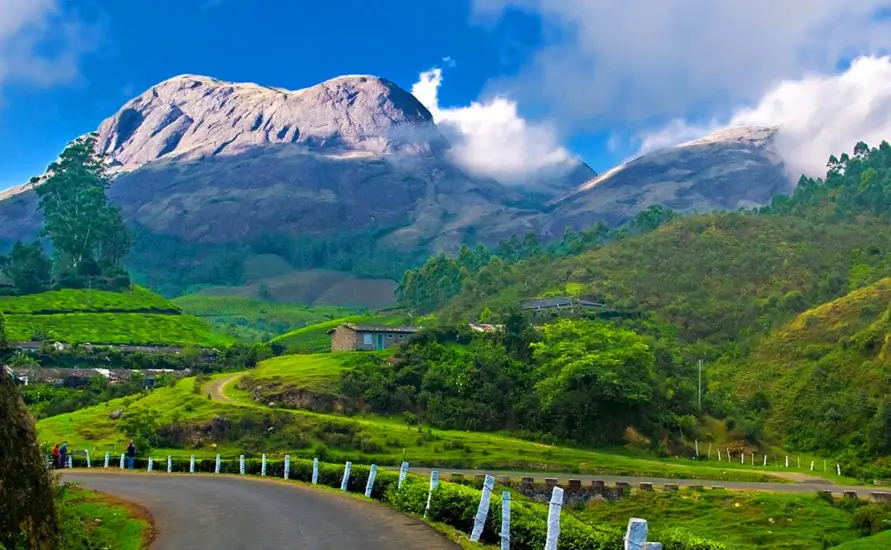
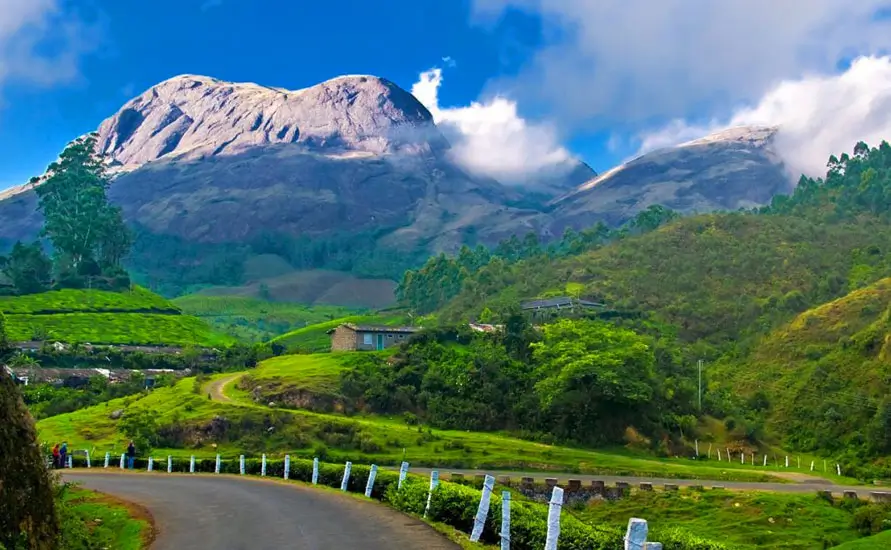
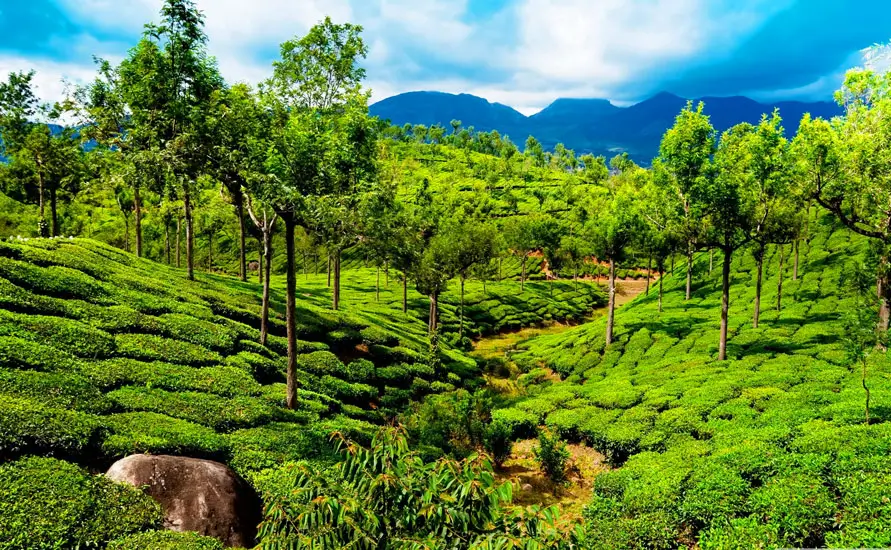
After crossing into Kerala, the hills open up into endless tea gardens, with neat rows of bushes covering every slope and tea pickers working with baskets on their backs. You stop at a viewpoint near Poopara for photos and continue past Chinnakanal and Anayirangal Lake, a large reservoir surrounded by tea estates. Lunch is at a roadside restaurant serving Kerala food, from lacy appam with vegetable stew to fish fried in red masala. The drive is long but beautiful, and your driver stops whenever you like for photos or to stretch your legs.
By mid-afternoon you reach your Munnar resort, ringed by tea gardens, with large windows looking over the valleys. After that, nothing is scheduled; relax, enjoy the cool air and perhaps book a massage at the spa. Munnar is a quiet, family-oriented hill town, and the resorts we use are welcoming to all couples. Evening temperatures can drop to 10 to 15 degrees in winter, so bring a warm layer. Dinner is at the resort, often with a fire burning in the lounge and Kerala dishes such as erachi olarthiyathu, a slow-fried beef or mutton, on the menu. Overnight in Munnar.
Start the day at Eravikulam National Park, home to the Nilgiri tahr, an endangered wild goat that lives nowhere else on earth but these southern hills. Forest department buses take you from the entrance up to the tourist zone at Rajamalai, where a tarred walkway follows the contour of the slope with views over rolling grasslands and peaks. Tahr often graze close to the path, used to visitors. Expect the park to shut for part of February, March or April, while the kids are born, and daily entry is capped, so we reserve your slot early where we can. It is cool in the morning, so bring a jacket.
Later in the morning you drive about 35 km to Top Station, one of the highest points in the area, on the border between Kerala and Tamil Nadu. On a clear day the view falls away to the plains far below, and in the past a ropeway carried tea down the mountain from here. On the way, you pass Mattupetty Dam and Echo Point, popular stops with Indian tourists. The Kundala Lake nearby has boats for hire. Depending on the weather, lunch is either a picnic box from the resort or a meal in town.
The afternoon is free to walk through the tea gardens near your resort or visit the Tata Tea Museum to learn how tea is processed from leaf to cup. You might also stop at a spice garden to see pepper vines, cardamom and vanilla plants up close. In the evening, the town has a small market with homemade chocolates, spices and tea to take home. Munnar is more conservative than the cities, so keeping affection private in public is sensible. Dinner tonight is back at your resort, where the staff can prepare a special Kerala meal if you ask. Overnight in Munnar.
An early start today gets you to the backwaters in time to board your houseboat around noon. Your route drops from cardamom hills through rubber estates to the flat lowlands, then across the flat, water-filled Kuttanad region toward Alleppey. Halfway, there is a coffee stop in a market town or buy fresh pineapples and bananas from a roadside stall. The temperature rises steadily as you descend, and by the time you reach the coast the air is warm and humid. Your driver meets the houseboat crew at the jetty and helps with your luggage.
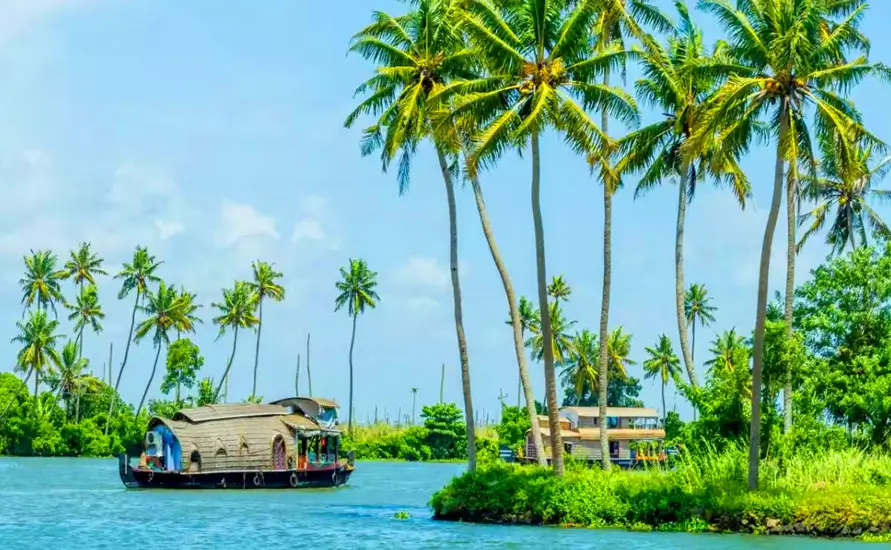
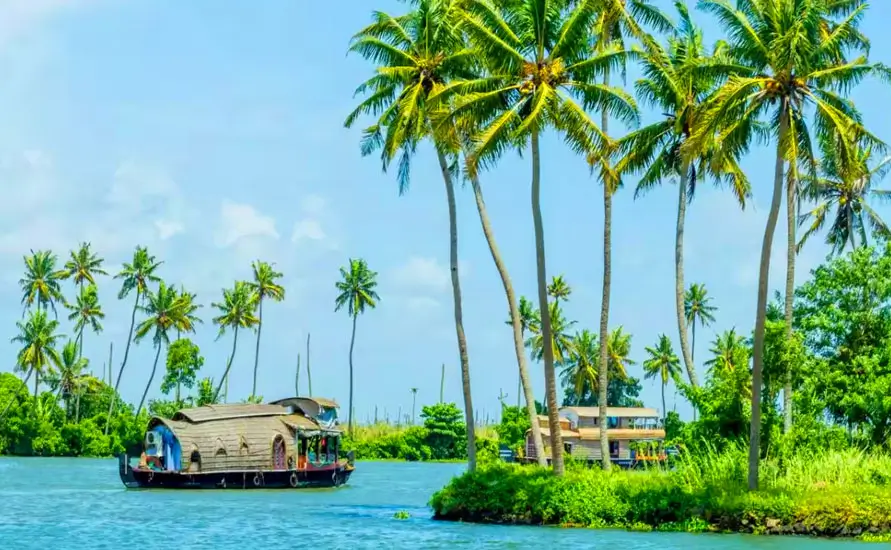
Your private Kerala houseboat has been chosen by our team after checking that owners and crew welcome gay and lesbian couples warmly, and the bedroom has a double bed with an attached bathroom. Three crew members look after you, steering, cooking and cleaning, and they give you space when you want it. After a lunch of fish curry, rice and fresh vegetables, the boat drifts from open lake into slim channels lined with villages, churches, paddy fields and coconut groves. Laundry is beaten on stone steps, schoolchildren shout hello from the banks and duck herders steer their flocks with long poles.
Kerala's rules end the day's cruising in the early evening, so before sunset the captain ties up at a quiet bank. You can sit on the upper deck as the sky turns pink and the first lamps appear in village windows. The cook prepares dinner on board, often with karimeen, the pearl spot fish of Kerala, cooked in banana leaf. After dark the canal goes still, apart from a croaking chorus and the occasional splash. Kerala is more traditional in rural areas, so a little discretion on deck when other boats pass is wise, though the crew is relaxed and friendly. Overnight on the houseboat.
Morning on the backwaters is calm and fresh, with mist rising off the water and fishermen already out in their canoes. The cook serves breakfast as the captain motors the last stretch, and you step off at the jetty by about 9 am. A tip for the three crew members is normal and much appreciated if the stay went well. Your driver then takes you north along the coast road to Kochi, passing towns with brightly painted churches, mosques and temples. Allow ninety minutes for the road, longer if traffic builds around the city edge, and your driver will stop on request for photos or for a fresh coconut at a roadside stall.
Late in the morning you reach your heritage hotel in Fort Kochi and have the rest of the day free. Few corners of Kerala are as easygoing as this old port, with a mix of locals, artists and international travelers, and LGBTQ+ visitors usually feel comfortable here. Spend the afternoon wandering the streets on foot or by bicycle, visiting art galleries, cafés and small boutiques. The Dutch Cemetery, with its weathered gravestones dating back to the 18th century, is a quiet place to stop. You can also see the Chinese fishing nets at work near the beach.
In the evening you attend a Kalaripayattu show, Kerala's ancient martial art, considered one of the oldest fighting systems in the world. The fighters show remarkable flexibility and control as they fight with sticks, swords, shields and bare hands, leaping and spinning across the small arena. Your guide can explain how Kalaripayattu was traditionally taught in special training halls and is linked to Ayurveda and healing. Afterwards, head for a seafood place near the beach, where you choose your fish from the ice and have it cooked to order with garlic, pepper or a thick coconut masala. Overnight in Kochi.
On your final full day, you begin at the Mattancherry Palace, handed by Portuguese traders to the Kochi royal family around 1555 that the Dutch later repaired, hence its nickname, the Dutch Palace. The palace houses some of the best Hindu temple murals in Kerala, with detailed scenes from the Ramayana and Hindu myths painted in rich reds, yellows and greens. It is closed on Fridays. Two minutes on foot from the palace, in Jew Town, the 1568 Paradesi Synagogue still serves a tiny community, with Chinese porcelain tiles underfoot and glass lamps hanging from the ceiling. Fridays, Saturdays and Jewish holidays are closing days, and we time today around them.
Coffee comes next, then a slow wander through Jew Town, where carved doors and old furniture spill out of antique dealers' yards and sacks of turmeric wait to be weighed. Since the first Kochi-Muziris Biennale in 2012, much of this area has filled with studios and small galleries, and the art festival returns every second winter, with some venues open between editions. In the afternoon you visit the Kerala Folklore Museum, a private collection housed in a traditional wooden building, whose three floors display ritual masks, temple jewelry, puppets and stage costumes collected from many parts of the south. The top floor has a small theater where traditional performances are sometimes staged.
Tonight, celebrate the trip over a farewell dinner. Fort Kochi has a good choice of restaurants, from simple Kerala kitchens to stylish places in restored colonial buildings. Your guide can recommend a spot for a quiet celebration, and you may want to take a final walk along the waterfront at sunset, when the fishing nets stand out against the sky. If you would like to buy spices, tea or handicrafts, the shops in Jew Town and on Princess Street stay open late. Pack your bags tonight to be ready for tomorrow's departure. Overnight in Kochi.
With an afternoon or evening flight, you may still have time for breakfast by the water or a walk through the quiet morning lanes of Fort Kochi. Next comes the ninety-minute run to Cochin International Airport, timed with a generous margin for check-in. Doha, Dubai, Abu Dhabi and Singapore are the usual hubs for flights home. For a midnight departure, we can book a room to shower and rest in, or add a last night by the sea at Cherai or Marari.
Over fourteen days you have seen temples, palaces, beaches, hills and backwaters across two very different states, and we hope you felt welcome and comfortable at every stage. This classic route is only the beginning of what South India has to offer, and many of our LGBTQ+ guests return for Goa, Karnataka or a Pride event in Bangalore or Chennai. Someone from our team tracks your flight status until the plane leaves the ground. Safe travels, and we hope to see you back in the south soon.
Your Journey

N.S. Rathore & Mrs. Omlata Rathore · Managing Director
We still read every enquiry ourselves. Tell us the places you liked and our planners will send a day-by-day route with drive times and a clear price.
Every package can be customised and no pressure to book. A planner from our office replies within 24 hours with a route written for your group.
Fill this in and your planner will send a first draft itinerary.
Explore more
Kerala Backwaters Escape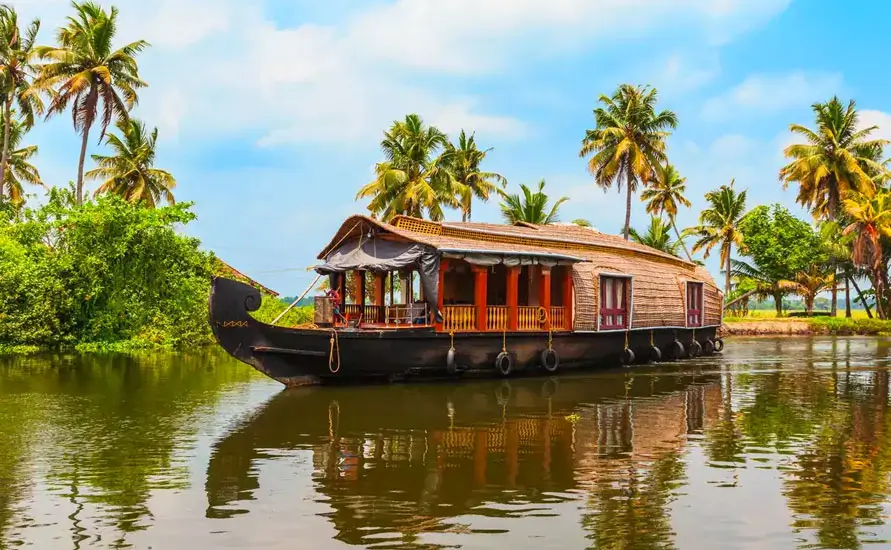 Kerala Backwaters Escape
 Kerala Backwaters Escape
 Kerala Backwaters Escape
 Kerala Backwaters Escape
 Kerala Backwaters Escape
 Kerala Backwaters Escape
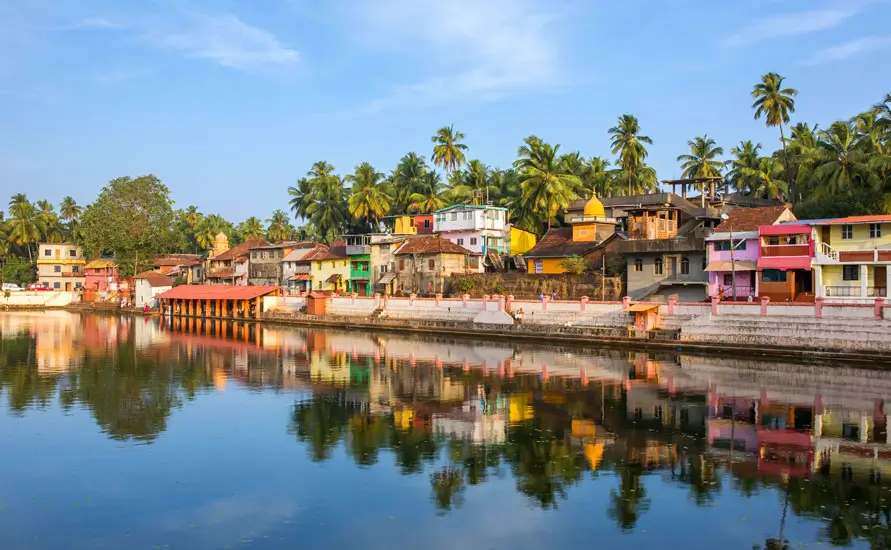 Kerala Backwaters Escape
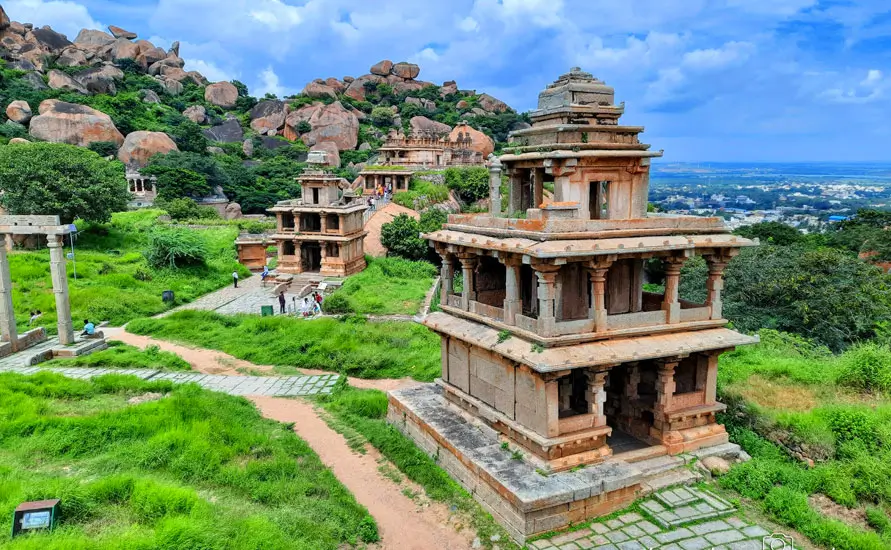 Kerala Backwaters Escape
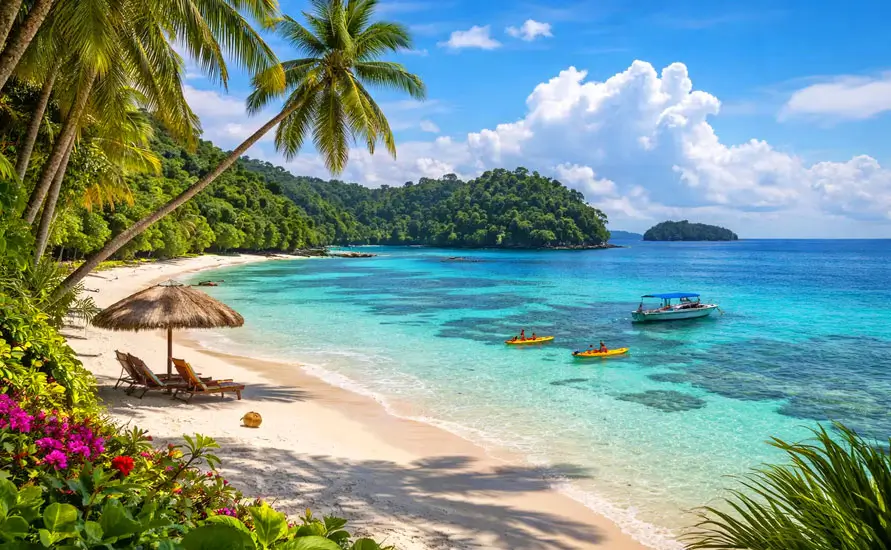 Kerala Backwaters Escape
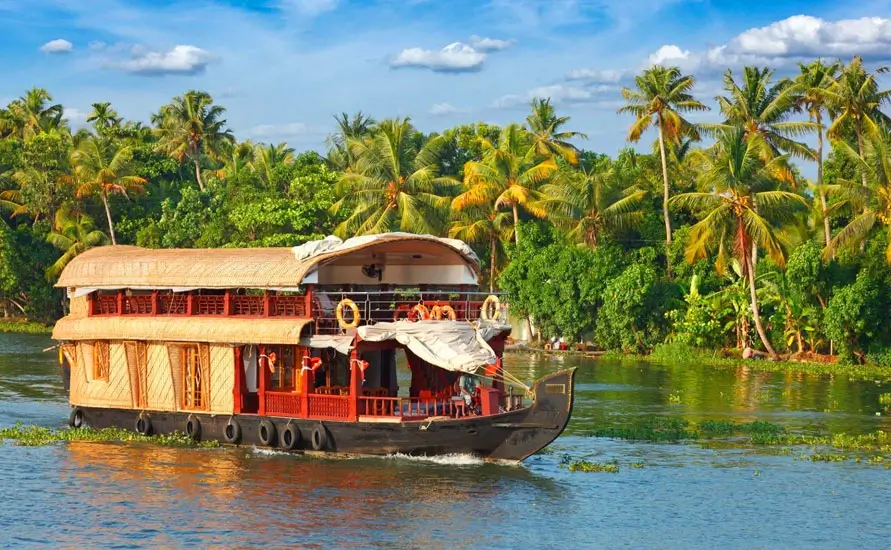 Kerala Backwaters Escape
 Kerala Backwaters Escape
 Kerala Backwaters Escape
 Kerala Backwaters Escape
 Kerala Backwaters Escape
 Kerala Backwaters Escape
 Kerala Backwaters Escape
 Kerala Backwaters Escape
 Kerala Backwaters Escape
 Kerala Backwaters Escape