 Kerala Backwaters Escape

South India Honeymoon Tours
Kochi – Munnar – Thekkady – Madurai – Chennai – Port Blair – Havelock – Port Blair
At a glance
Some couples want a hammock and a cocktail; others want to earn their sunset. Our South India adventure honeymoon tour is written for the second kind. It starts with three nights in the high tea country of Munnar, where two guided hikes take you to Meesapulimala, one of the highest peaks in the Western Ghats, and to the Kolukkumalai estate for sunrise above the clouds. In Thekkady you spend a full day bamboo rafting or trekking inside Periyar Tiger Reserve, then you fly to the Andaman Islands for four nights of diving and paddling on Havelock.
Adventure here never means discomfort. Every hike is led by licensed local guides who know the trail and the weather, and we schedule the hardest days early so your legs have time to recover before the sea. On Havelock you dive with an established dive center, choosing between a beginner try-dive and a full entry-level open water course depending on any dives you have logged before and the days available. Between activities, the adventure honeymoon still leaves room for slow mornings, a couple massage after the big trek and private rooms with a view at every stop.
You do not need to be athletes to book this South India adventure honeymoon tour; couples who walk, cycle or swim regularly at home in Britain, Germany, the States or Australia, and NRI pairs with similar habits, cope well. Plan for the window between October and March, when trails in the Ghats have dried out and underwater visibility off Havelock is usually at its best. Diving and trekking need medical self-declaration forms, and we brief you on what to bring. Because the islands apply different rules to different passports, our team confirms the position for each of your passports before anything is paid for.
Welcome to Kerala. Our driver waits in the arrivals hall of Cochin International Airport and takes you on the ninety-minute run to a small heritage hotel in Fort Kochi, a peninsula of old trading houses, churches and quiet lanes where bicycles make more sense than cars. After a long flight, use the morning to sleep, shower and eat something light, perhaps a plate of idiyappam string hoppers with coconut milk stew from the hotel kitchen. The pace of the next twelve days builds slowly, and today asks nothing more of you than to settle in and drink plenty of water.
Around four o'clock, when the sun is lower and the sea breeze picks up, a local guide meets you at the hotel with two well-maintained bicycles and helmets for a cycling tour of Fort Kochi. The route is flat and short, around ten kilometers in total, and follows back streets that cars cannot easily reach. You pass the old Dutch cemetery, Vasco da Gama Square, colonial bungalows converted into cafés and rows of godowns where ginger, turmeric and pepper are still sorted by hand. Your guide stops often to talk about the town's Portuguese, Dutch and British periods.
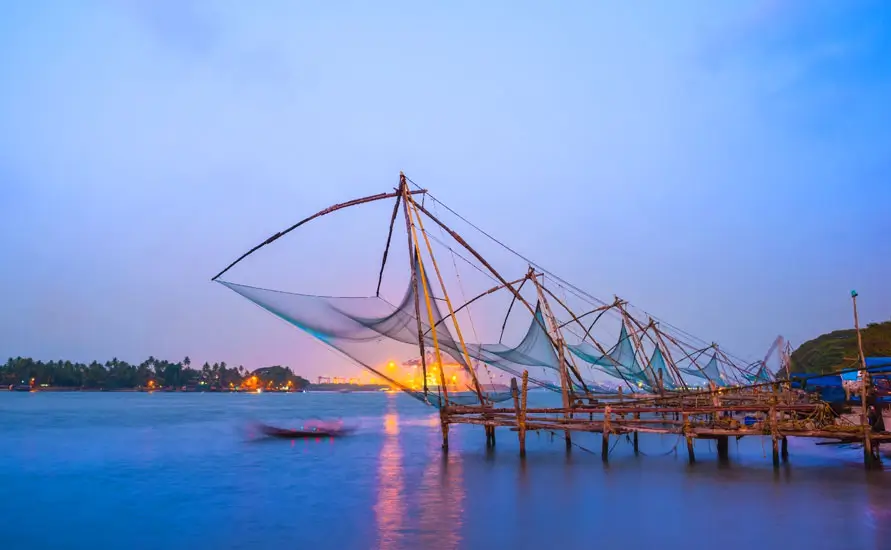
The ride ends on the waterfront near the cantilevered fishing nets, where the evening crews are hauling the nets in time with a chant and the sea glows orange behind them. Hand the bikes back, stroll the promenade, and pick a fish restaurant where the catch sits on ice by the door and the cook rubs your choice with chili, turmeric and lime before it goes on the grill. Tonight is about getting over jet lag and sleeping well, because tomorrow you head into the hills. Ask your hotel for a packed breakfast if you would like an early start on the road. Overnight in Kochi.
The drive up to Munnar is your first taste of the Western Ghats, the long mountain chain that runs down the west side of the Indian peninsula. Leaving Kochi after breakfast, the road crosses flat country of rubber, coconut and banana before it starts to climb in earnest past Neriamangalam, where an old stone bridge crosses the Periyar River. Above that the bends tighten, the air cools and the forest thickens, and on clear days you look back over the plains toward the coast. Allow around four hours with a couple of stops for tea and photos.
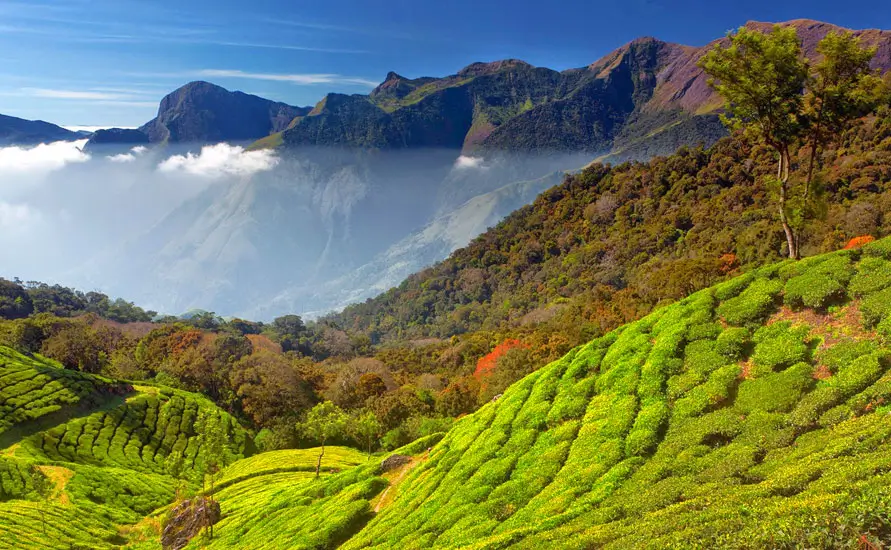
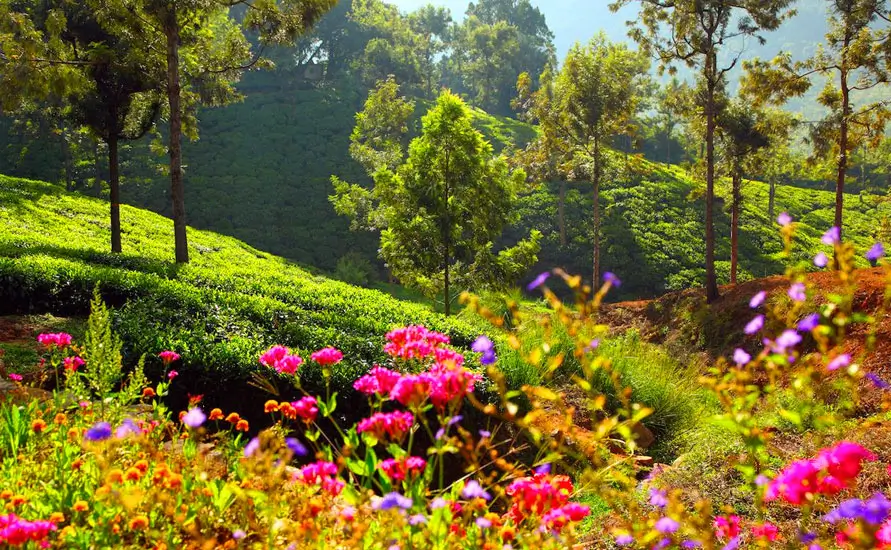
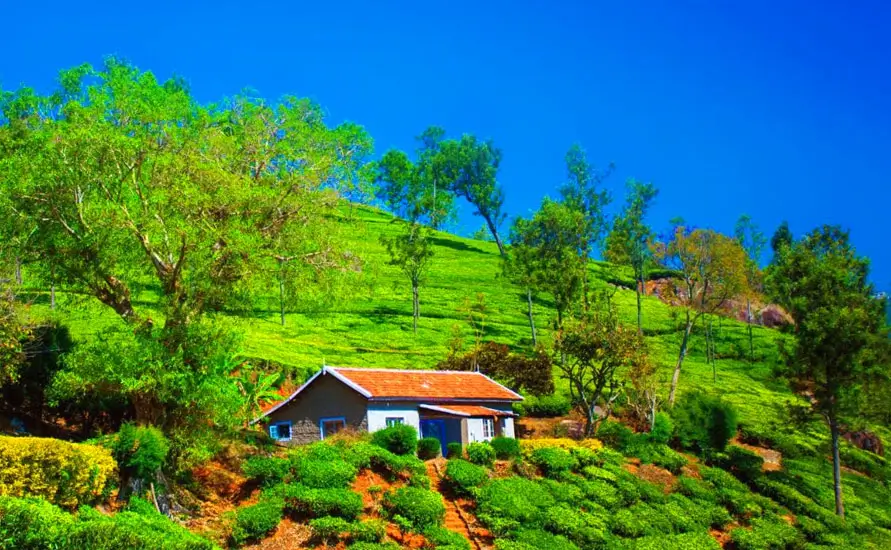
Home until Day 5 is a planter's bungalow on a hillside estate outside town, picked because it is quiet and only a short drive from where the trails begin. Check in, have lunch on the veranda and rest for an hour, because the altitude of around 1,600 meters can leave you tired on the first afternoon. Then a local guide walks you along estate paths between the tea bushes, an easy two-hour warm-up for the treks ahead. You pass women plucking with quick two-handed movements into sacks slung from their foreheads, and the guide explains why only the top bud and two leaves are taken.
The walk finishes at a viewpoint above the valley, where the tea rows look like contour lines drawn across the hills and the evening mist begins to slide in. Back at the bungalow, your guide runs through tomorrow's trek: what time you will leave, what to wear, how much water to carry and what the weather might do. Pack a small daypack with a rain jacket, a warm layer, sunscreen and snacks, and check that your shoes have good grip, as the upper slopes can be muddy even in the dry season. Dinner is early and simple. Overnight in Munnar.
Meesapulimala, at about 2,640 meters, is the second-highest peak in the Western Ghats, and the trek to its summit is the biggest physical challenge of this honeymoon. Access is controlled by the Kerala Forest Development Corporation, which issues permits, provides guides and usually runs the trek from its base camp at Rhodo Valley, about an hour's drive from town. You leave the bungalow before dawn with a packed breakfast, and the jeep ride on rough estate roads is part of the adventure. Numbers are limited each day, so we book your permit as soon as your dates are confirmed.
The trail climbs through grassland and patches of shola forest, then follows a series of ridges with drops on both sides and views over rolling hills into Tamil Nadu. Distances and times depend on the route the forest department uses that season, but expect most of the day on your feet with steady climbs, short rests and lunch on the trail. Your guide sets the pace, keeps an eye on the weather and turns back if fog or rain makes the ridges unsafe. Near the top, look out for rhododendron trees, which flower deep red early in the year, and the occasional Nilgiri tahr grazing on the slopes.
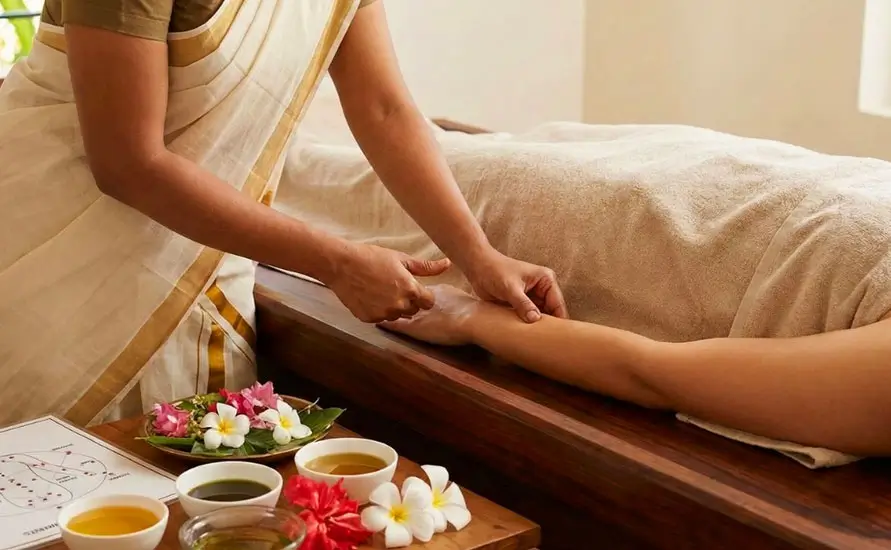
Standing on the summit with the clouds below you is the moment many couples remember most from this trip. Return to the base camp in the afternoon, then drive back to the bungalow, where a couple Ayurveda massage is waiting to loosen sore muscles. The therapists use warm medicated oils and long strokes on the legs and back, followed by a herbal steam bath. After a hot shower, dinner tonight is a hearty Kerala meal of red rice, chicken or vegetable curry and fresh chapatis, served by the fire. Most guests are asleep by nine. Overnight in Munnar.
Getting to Kolukkumalai for first light means waking around four; the estate sits at close to 2,200 meters on the Tamil Nadu side of the border, about 35 km from Munnar, and claims to grow tea higher than almost anywhere on earth. The last stretch is accessible only by local jeep on a rough, rocky track, and the ride is bumpy enough that you will want to hold on. Your driver hands you over to a jeep operator at Suryanelli, who takes you up through the dark with headlights picking out tea bushes and the odd startled hare. Bring a warm jacket, as the temperature at the top can be close to freezing in winter.
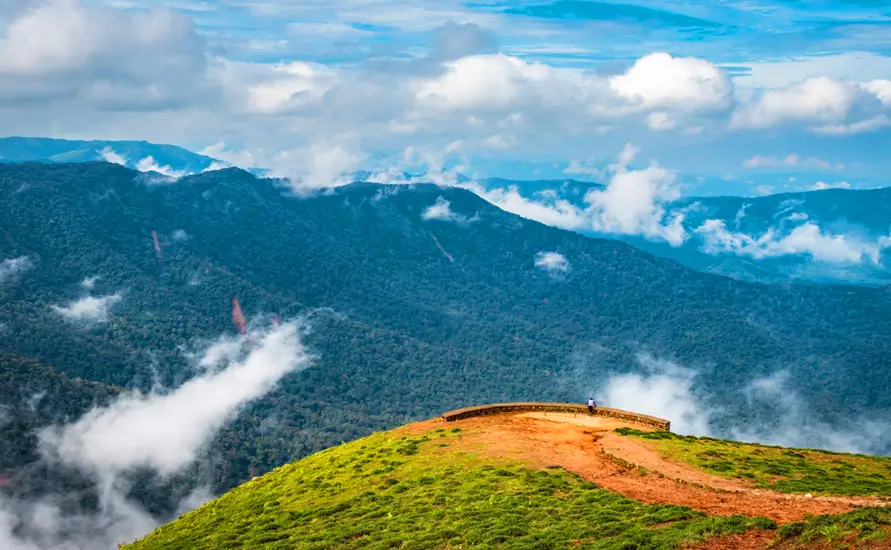
At the top, you walk a short distance to a rocky viewpoint and watch the sky change from black to purple to gold. Below you, the clouds fill the valleys, and the peaks of the Western Ghats rise above them like islands. Once the sun is up, you follow a guide for roughly two hours along the ridge, with the plains of Theni spread out far below, and finish at the estate's factory, where much of the machinery dates back to the colonial era. A short visit explains the orthodox method used here, and tea tasting is offered at the end.
You return to Munnar in time for a late breakfast and a lazy afternoon at the bungalow. If you still have energy, the estate can arrange a short guided walk to a nearby waterfall or a bird-watching session with a local naturalist, who can point out Nilgiri flycatchers, laughingthrushes and the endemic white-bellied shortwing in the shola patches. Otherwise, rest on the veranda with a book and a pot of the estate's own tea, and let your legs recover properly. After two big days in the mountains, an early night is well earned, and tomorrow's drive to Thekkady is short. Overnight in Munnar.
The road south from Munnar to Thekkady follows the Cardamom Hills, a stretch of the Western Ghats covered in spice gardens, tea estates and patches of thick forest. After a late breakfast you set off through towns such as Poopara and Rajakkad, and the road winds through cardamom plantations shaded by tall trees, with the green pods drying on mats outside village homes. The drive takes around three and a half hours, and there are viewpoints along the way over the reservoir of the Anayirangal Dam and the valleys beyond. Ask your driver to stop for fresh pineapple sold from roadside stalls.
Your base in Kumily, a short walk from the entrance to Periyar Tiger Reserve, is a resort whose cottages back onto forest where Nilgiri langurs and hornbills are regular visitors. Later, a plantation owner walks you through an organic spice farm, where you crush allspice leaves between your fingers, peel cinnamon bark, split open a nutmeg to find the red mace inside and taste raw green pepper. It is an easy walk, and the guide explains how each spice is grown, harvested and dried, with stories about Kerala's spice trade that go back centuries.
At dusk you take seats around a sunken pit for Kalaripayattu, Kerala's ancient martial art, whose training once prepared warriors for duels fought on behalf of local rulers. The performers show kicks, jumps, stick fighting and sword combat with remarkable speed and control in a small arena, and the show lasts around an hour. Afterward, dinner is at the resort, and your guide briefs you on tomorrow's full-day activity in the reserve, which involves an early start and a long day outdoors. Bring a hat and sunscreen; leech socks are usually handed out at the start, and you will be glad of them. Overnight in Thekkady.
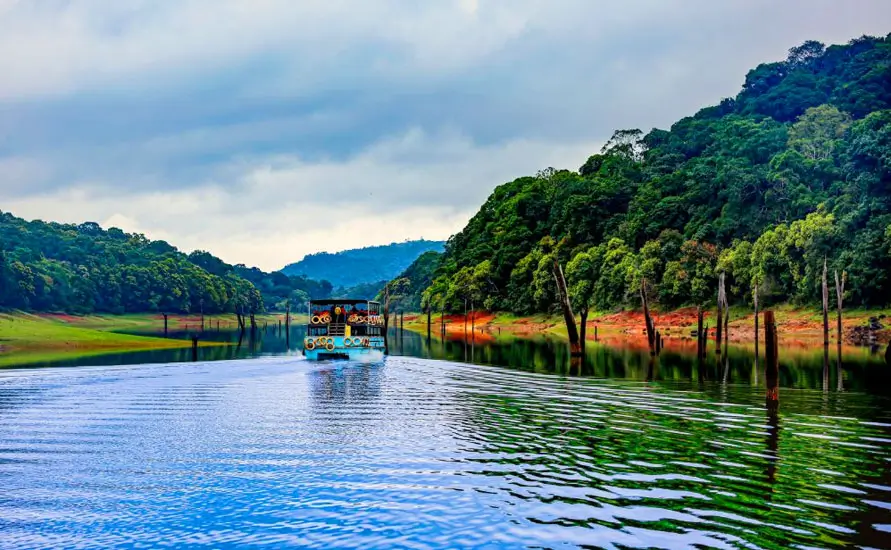
Today you go deep into Periyar Tiger Reserve on one of its eco-tourism programs, run by the forest department with local guides who once lived off the forest and now protect it. Most active couples choose bamboo rafting, which is really a long day of hiking broken up by a few hours of paddling on the reservoir, sitting on rafts made from bamboo tied together with rope. Groups are small, and you are accompanied by an armed forest guard as well as guides. You set off around eight and get back near five, with a simple packed lunch eaten beside the water.
The trek part passes through grassland, evergreen forest and swamp, and your guides point out signs of wildlife along the way: elephant dung, gaur hoofprints, scratch marks on trees from sloth bears and the calls of Malabar giant squirrels. Sightings are never guaranteed, but sambar deer, wild boar and many bird species are common, and herds of elephants are often seen near the water's edge. On the raft, you paddle with the guides across quiet stretches of the lake, watching cormorants, darters and otters while the forest stands silent around you.
Prefer to stay on dry land? The Periyar border hike follows the crest of the hills with views down into Tamil Nadu, and a three-hour nature walk is a lighter substitute; slots fill fast, so we confirm the choice when you book. Back at the resort, rest, take a long shower and enjoy a dinner of Kerala dishes under the trees. Two travel days lie ahead, so packing before bed saves a rushed morning. Separate the hiking boots and warm layers into one bag, since you will not need them again on the islands. Overnight in Thekkady.
Leaving Kumily, the road drops steeply down the Kumily ghat into Tamil Nadu, and within an hour you are among the grape arbors and coconut groves of the Cumbum Valley. The drive to Madurai Airport takes about four hours, and the landscape changes from green forest to dry plains in a short space. Madurai is the most practical airport for Thekkady, with regular flights to Chennai, the main hub for Andaman services. Your driver times the drive around your flight, with a stop for lunch on the way.
The flight from Madurai to Chennai takes about an hour, and our representative meets you at arrivals for the short transfer to a comfortable airport hotel. Stopping overnight here means you can catch an early morning flight to Port Blair tomorrow and reach Havelock the same day, instead of spending a full day connecting. The evening is free to rest and repack: move your dive gear, swimwear and reef-safe sunscreen into your hand luggage, and keep warm trekking clothes in the main bag. Overnight in Chennai.
Your morning plane covers the 1,300 or so kilometers to Port Blair in roughly two hours; ask for a seat on the right side for the best view as you come in to land. Our island team meets you at the airport and drives you straight to the harbor for the afternoon catamaran to Havelock Island (Swaraj Dweep). The crossing takes around two hours, and the boat passes small forested islands of Ritchie's Archipelago. Keep your passport handy, since ID is checked at both the port and the jetty.
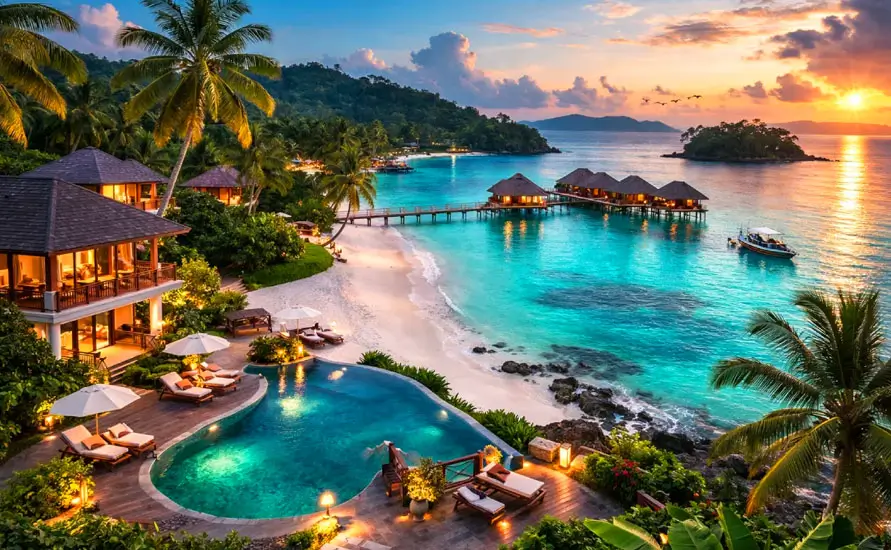
On arrival in Havelock you are taken to a beach resort close to the island's dive centers, which makes early starts for the next three days easy. Drop your bags, then in the early evening sit down with your instructor to fill in the medical form, go over the plan and try on masks, fins and wetsuits until everything fits. The instructor then settles if you will do a try-dive or start an entry-level open water course, based on any earlier diving you have done and the sea conditions. Dinner is a light meal at the resort. Overnight in Havelock.
Scuba diving in Havelock starts gently. Your first morning is spent at the dive center, where your instructor covers the basics: how the equipment works, how to breathe underwater, how to equalize pressure in your ears and how to communicate using hand signals. If you are doing a full entry-level course, there is also some theory in the form of videos and short quizzes, which you will complete over the next few days. Practice sessions follow in a pool or in shallow, sheltered water near the shore, where you learn to clear your mask, recover your regulator and control your buoyancy.
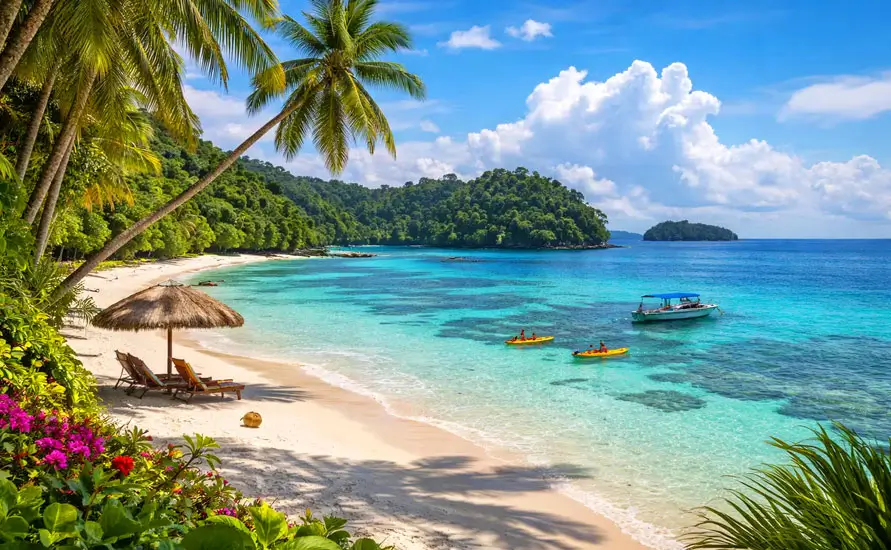
After lunch the boat takes you out to a shallow reef for your first open-water dive, usually to a depth of around 6 to 12 meters depending on your course and comfort level. Under the water the world goes quiet, apart from the sound of your own breathing, and the reef spreads out below you in shades of brown, green, purple and yellow. Expect butterflyfish, angelfish, parrotfish nibbling on coral, moray eels in the cracks and perhaps a turtle. Your instructor stays close throughout, and the dive lasts around forty-five minutes depending on air consumption and conditions.
Back on land, you will feel tired in a good way. Rinse your gear, rehydrate and rest in the shade, since diving takes more energy than you might expect. Spend the late afternoon on the sand, and if you have questions, the instructor is usually around the center to talk through what you saw. Dinner is at a beachfront restaurant in the Havelock market area, where grilled reef fish, lobster or crab is served with fried rice or chips. It is wise to avoid alcohol before diving, so a juice or a mocktail makes more sense tonight. Overnight in Havelock.
Today's dives take you a little further and a little deeper, with two boat dives to different reef sites around Havelock chosen by the dive center according to the conditions. Open water course students practice the remaining skills on these dives, such as navigation with a compass and controlled ascents, while try-dive couples can enjoy a second guided dive with more time to look around. The reefs around Havelock include coral gardens, rocky pinnacles and sandy slopes, and visibility on a good day can reach 20 meters or more. Watch for schooling fish, rays, reef sharks resting on the sand and big groupers.
Lunch is back on shore, followed by an afternoon of rest at the resort. Many couples spend these hours sleeping or sitting by the pool, and an hour of stretching or a gentle swim helps the body recover. The dive center will log your dives and, if you are on a course, confirm what is left to finish tomorrow. As the light fades, it is time to get ready for the evening activity, which is one of the more unusual things you can do on the island, depending on the moon phase and season.
Where offered by local operators, night sea kayaking takes you through the mangrove creeks after dark to see bioluminescent plankton, tiny organisms that glow blue-green when the water is disturbed. Every stroke of the paddle leaves a trail of light, and fish darting beneath the kayak show up as sparks in the water. The best displays come on dark, moonless nights, so your operator will advise on timing. Expect roughly two hours on the water in double kayaks, with a guide in front and life jackets on, before a late meal back at the resort. Overnight in Havelock.
Your last morning dive takes place early, and open water course students complete their final skills and assessment before the instructor signs off the course paperwork. The certification itself is issued by the training agency once all requirements are met, so your instructor will explain the process. Try-dive couples can do a third dive or swap it for a snorkeling trip to Elephant Beach, where the shallow reef is ideal for a relaxed swim. Diving ends today with plenty of margin before tomorrow's ferry and the flight home, in line with standard no-fly guidelines.
After lunch and a rest, you have the afternoon free to enjoy Havelock without a timetable. Hire bicycles and pedal to the fishing village near the jetty, or stay horizontal on a sun lounger with no plans at all. If you have kept energy in reserve, a short forest hike to a viewpoint with a local guide is a nice way to see the island's interior. By now you have spent three days underwater, and many couples are happy to just lie in the shade and look at the water from the outside.
Around half past four you are dropped at Radhanagar Beach on the far side of the island for your sunset. Walk along the sand, wade into the shallows and find a spot to sit as the sun sets over the Andaman Sea. Afterward the resort lays a table on the sand for the two of you, lit by lanterns, to toast your new underwater skills with grilled prawns and fresh lime soda. This is your last night on Havelock, so take your time and enjoy the stars over the water. Overnight in Havelock.
Sailing out of Havelock mid-morning, you step back onto the wharf at Port Blair in time for lunch, with a driver waiting at the gate. After four nights on Havelock, the busy roads of the capital feel quite different, but the afternoon has plenty to offer. Start with lunch at a local restaurant, then choose how you would like to spend the rest of the day. The two main options are a walk through the town's colonial history or a drive to the southern tip of the island for sunset.
Pick history, and a guide leads you around the Cellular Jail, showing the oil mill where inmates were forced to press coconut oil by hand and reading out names carved on the memorial plaques. The program finishes with the evening light and sound show in the courtyard, an hour of narration and colored lighting that is more moving than its simple staging suggests. If you prefer nature, the drive to Chidiya Tapu takes about an hour through mangroves and small villages, and a short forest walk leads to a viewpoint over the sea.
Both routes end at the same place: a table at a family-run restaurant in Port Blair for a last dinner of island fish curry. Ask the kitchen for the local amberjack or snapper if it is available, cooked mild in coconut milk with fresh green chili. Look back on the trip: the summit of Meesapulimala, sunrise at Kolukkumalai, a day on a bamboo raft in Periyar, three days of diving and a night of glowing water. Pack your bags tonight, confirm the airport pickup time with our team, and keep your dive logbook somewhere safe in your hand luggage. Overnight in Port Blair.
Your final island morning is unhurried, and the car to Veer Savarkar International Airport leaves with time to spare; by now well over a day has passed since your last dive, so flying is fine. Long-haul departures leave from mainland airports, and if the gap between flights is several hours, a room near the terminal there can be reserved for you. Our representative will help with check-in and see you to the terminal.
In thirteen days, you have climbed one of the highest peaks in South India, crossed a tiger reserve on a bamboo raft, learned to breathe underwater and paddled through glowing water at night. We hope your South India adventure honeymoon tour has given you stories to tell for years. Advanced dive training, longer Ghats treks or a slower backwater trip are all good reasons to come back, and we would like to help with the next one. Safe travels home.
Your Journey

N.S. Rathore & Mrs. Omlata Rathore · Managing Director
We still read every enquiry ourselves. Tell us the places you liked and our planners will send a day-by-day route with drive times and a clear price.
Every package can be customised and no pressure to book. A planner from our office replies within 24 hours with a route written for your group.
Fill this in and your planner will send a first draft itinerary.
Explore more
Kerala Backwaters Escape Kerala Backwaters Escape
 Kerala Backwaters Escape
 Kerala Backwaters Escape
 Kerala Backwaters Escape
 Kerala Backwaters Escape
 Kerala Backwaters Escape
 Kerala Backwaters Escape
 Kerala Backwaters Escape
 Kerala Backwaters Escape
 Kerala Backwaters Escape
 Kerala Backwaters Escape
 Kerala Backwaters Escape
 Kerala Backwaters Escape
 Kerala Backwaters Escape
 Kerala Backwaters Escape
 Kerala Backwaters Escape
 Kerala Backwaters Escape
 Kerala Backwaters Escape
 Kerala Backwaters Escape