
 Kerala Backwaters Escape

South India Honeymoon Tours
Kochi – Munnar – Alleppey – Port Blair – Havelock – Port Blair
At a glance
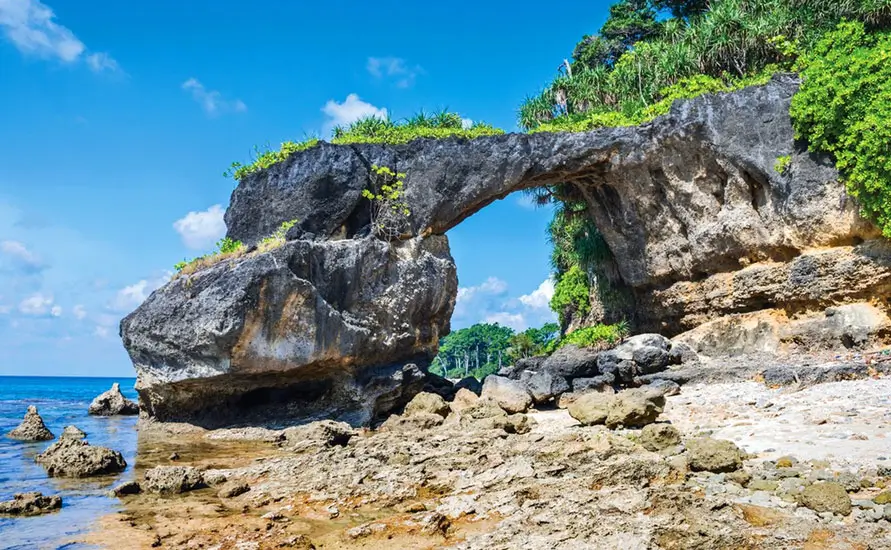
Most couples who come to South India want two things from a honeymoon: cool green hills and warm blue sea. Our Kerala and Andaman honeymoon tour gives you both, in that order. The first six nights stay on the Kerala mainland, from the old spice port of Kochi to the tea slopes of Munnar and a night afloat on a private houseboat in Alleppey. Then a connecting flight carries you east across the Bay of Bengal to Port Blair and on by catamaran to Havelock Island, where the last part of the trip moves at the speed of the tide.
Putting the hills and backwaters first is deliberate. Kerala involves road travel and a little more planning each day, so you do it while you still have the energy of arrival, and the islands then become the reward at the end. There is no direct flight between Kochi and Port Blair, so the Kerala and Andaman honeymoon package includes a connecting economy flight through Chennai or Bangalore, timed so you land in Port Blair before dark. Romantic touches are chosen for each place: a tea-country couple massage, a houseboat with only the two of you on board, and a quiet sunset table on Havelock.
The route works best from October to April, when Kerala is past the monsoon and the Andaman Sea is usually calm. Overseas couples and NRI newlyweds book it in roughly equal numbers, and because the rooms, vehicles and boats are reserved for you alone, days can be reshuffled to match whatever flights you find. For the island leg, entry requirements depend on your passport, and we check what applies to you when you confirm the booking.
Long-haul flights into Cochin International Airport often land in the early morning after a night routed through the Gulf, so your first hours in Kerala are about rest. Someone from our Kerala office waits at the exit holding a card with both your names, then rides with you on the ninety-minute drive to a boutique heritage hotel in Fort Kochi, where an early check-in has been requested. Expect warm, humid air, the smell of coconut oil from roadside kitchens and a lot of green. Sleep through the late morning if you need to, then have a light lunch in the hotel courtyard.
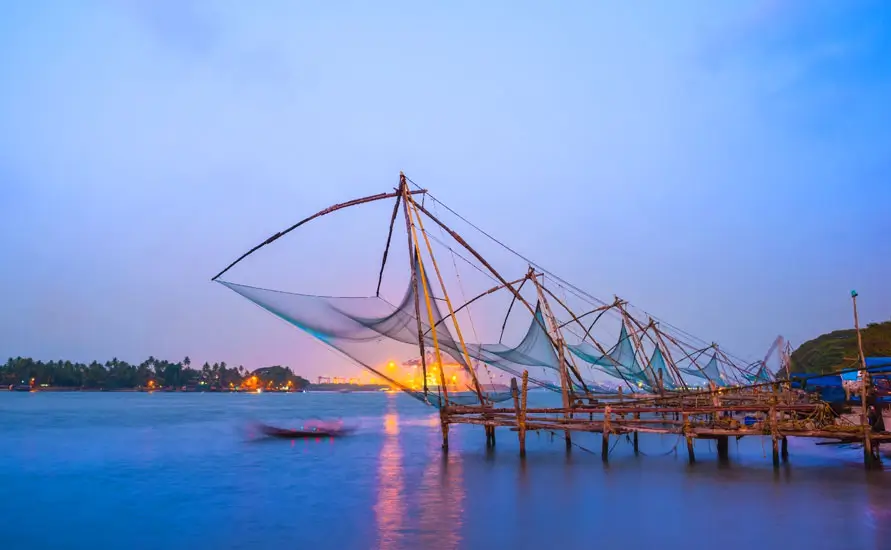
In the late afternoon your guide meets you for a gentle walk through the old town, starting at the waterfront where the cantilevered Chinese fishing nets stand against the sky. Rather than watching them in action, take a moment to look at how each one is built: a teak frame, a long main beam and a cluster of round granite stones tied to the shore end to balance the weight of the net. Your guide explains how a single net needs a crew working in rhythm, and why the catch is smaller now than it was a generation ago as boats and trawlers take more fish offshore.
Evening brings a quieter side of Fort Kochi. Walk past the old Dutch cemetery, the restored warehouses along the harbor and the shaded lanes of Princess Street, then head to a small theater for a Kathakali session. Ask to arrive early enough to sit near the dressing area, where the performers grind rice paste and mineral colors to build up their faces layer by layer. The show that follows tells a short episode from an epic, and a narrator explains the gestures in English. Dinner is at your own pace afterwards, perhaps a plate of karimeen pollichathu, fish baked in a banana leaf. Overnight in Kochi.
Kochi's history is the history of pepper, and today's tour follows the trade that once drew Arab, Chinese, Portuguese, Dutch and British ships to this harbor. You begin with St. Francis Church, a plain whitewashed building where you can still see the gravestone of Vasco da Gama, though his body was taken back to Lisbon long ago. From there it is ten minutes by car to Mattancherry, where the Mattancherry Palace keeps wall paintings in ochre, red and green that once decorated the private rooms of the Kochi rajas. Because the palace shuts every Friday, we fit this day around the calendar.
A few steps away, at the far end of Jew Town, the Paradesi Synagogue has been in use since the 1560s, and inside you will find blue willow-pattern floor tiles shipped from China and a row of glass lamps hanging from the ceiling. Its doors stay shut on Friday, Saturday and Jewish festival days, so on those dates another stop takes its slot. The surrounding street is a good place for an hour of slow browsing, with antique dealers, small textile shops and ginger warehouses where workers still dry the roots on mats in the courtyards. Your guide can help you find genuine local crafts rather than mass-produced pieces brought in from elsewhere.
Once the afternoon heat has passed, a motor launch reserved just for the two of you leaves the Fort Kochi jetty for an included sunset cruise around the harbor. The boat passes the naval base, Willingdon Island and Bolgatty, with fishing boats heading out for the night and the old town glowing in the last light. It is a calm, low-effort way to end your time on the coast before heading into the hills. Back on land, the waterfront cafés of Fort Kochi serve dinner until late, and seafood is the obvious choice here. Overnight in Kochi.
The road from Kochi to Munnar climbs from sea level to around 1,600 meters in a little under four hours, and the change in temperature is noticeable by the time you stop for tea. The first hour runs through flat towns and rubber plantations, then the hills begin near Kothamangalam, with spice gardens, pineapple farms and sharp bends that your driver takes slowly. Cheeyappara and Valara, two cascades right beside the highway, pour hardest in October and November, and the stalls at their feet fry banana fritters to order and pour sweet milky tea into small glasses.
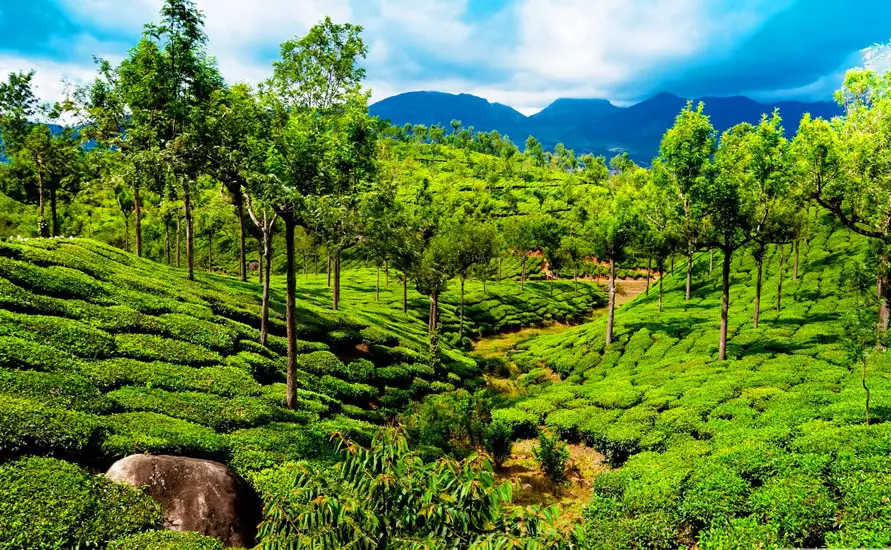
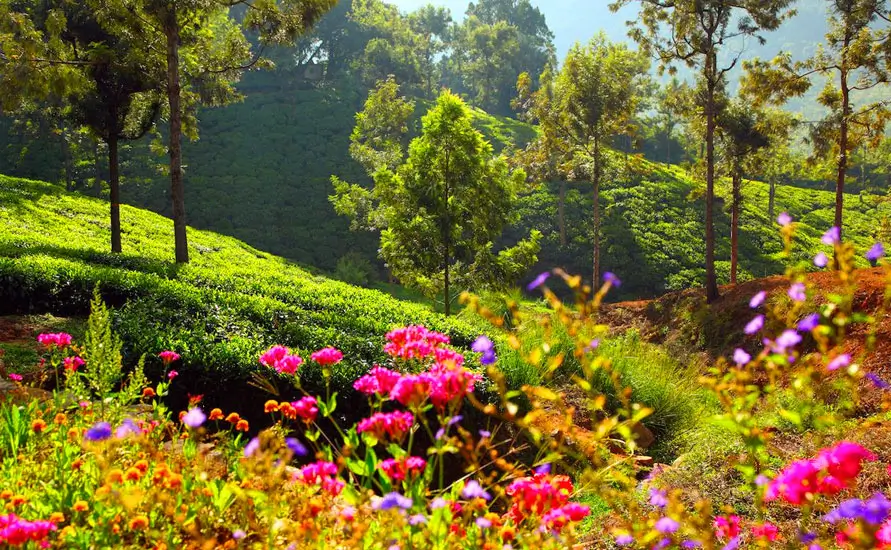
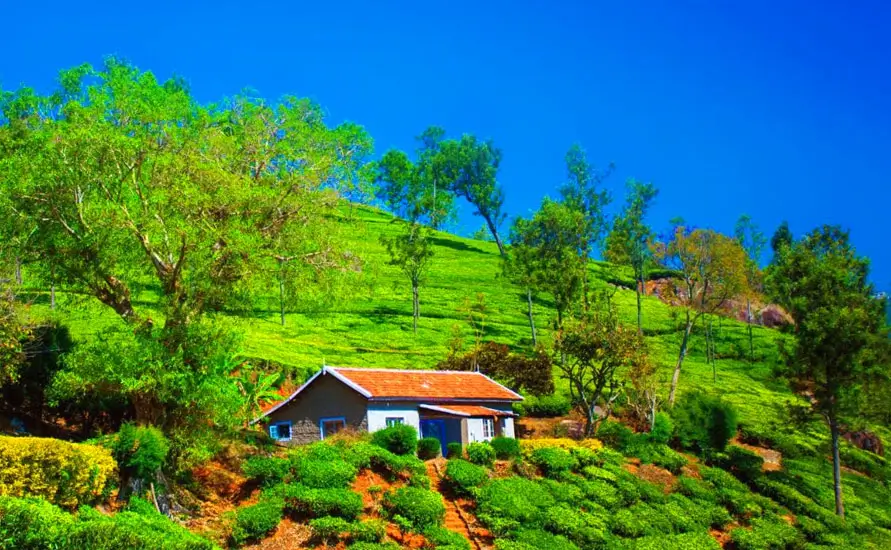
As you approach the town, the slopes on both sides turn into the neat rows of tea bushes that Munnar is known for, cut by narrow paths used by the pickers. Some couples like to stop at a spice garden for a short guided walk, where the owner shows you pepper vines climbing silver oak trees, cardamom flowers at the base of their plants and vanilla being hand-pollinated. Any purchases are entirely optional. Lunch is at a small restaurant on the outskirts of town, and then you continue to your tea estate bungalow, set above the valley on a quiet estate road.
Afternoons in Munnar are cool and often misty, which makes a slow afternoon indoors feel natural. The bungalow's sitting room usually has a fireplace for the evenings, and the staff can serve tea and homemade biscuits on the veranda overlooking the plantation. Before dinner, the couple Ayurveda massage included in your stay takes place at the property or a certified center nearby, using warm herbal oil and long, steady strokes that ease the stiffness of the drive. Dinner is a set menu of Kerala dishes, with the cook happy to adjust the spice. Overnight in Munnar.
Go early to Eravikulam National Park, because cloud tends to settle over the high grasslands by late morning. A park bus takes visitors from the entry point up the slope of Rajamala, and from there you walk a paved road with wide views over rolling shola forest and grassy hills. This is the stronghold of the Nilgiri tahr, an endangered mountain ungulate unique to these ranges, and the Rajamala herds are so relaxed around visitors that they often feed right beside the tarmac. Every year the park shuts for a short spell around February and March while the young are born, and if your honeymoon falls then, we swap in a tea-estate walk instead.
Heading down toward Munnar town, you call in at the Tea Museum, where sepia photographs, early rolling machines and a short film tell how Scottish and English planters turned forest into plantation from the 1880s onward. A guided walk through the factory floor shows the full process, from withering the leaves to rolling, drying and grading, and the tasting at the end lets you compare different grades side by side. You can buy fresh tea to take home here at fair prices. Lunch is at a local restaurant in town, followed by an hour of rest back at the bungalow.
In the afternoon your driver takes you about 13 km out of town to Mattupetty Dam, where the reservoir is surrounded by forested hills and grassland. Pedal boats and short motorboat rides are available on the lake, and the drive itself passes the Indo-Swiss dairy farm and the Echo Point, where couples traditionally shout across the water to hear their voices bounce back from the opposite slope. On the return, ask your driver to stop at a viewpoint above the tea estates to watch the valley fill with evening cloud. Dinner is by the fire at the bungalow. Overnight in Munnar.
After an early breakfast with the hills still under mist, you leave Munnar and drive down through the Western Ghats toward the coast. The descent takes you past Adimali and Kothamangalam, with occasional glimpses of the plains far below, and then flattens out into the green farmland of central Kerala. Expect around five hours on the road with stops, and your driver will suggest a break at a roadside restaurant for a South Indian breakfast of dosa and sambar or a fresh fruit plate. Carry a light shawl for the first hour, when the hill air is still cool.
By early afternoon the view outside the window turns watery: canals run alongside the highway, rice fields sit lower than the water beside them, and coconut palms bend out over every bank. You reach Alleppey and check in to a lake-facing resort on the edge of Lake Vembanad or one of the canal villages nearby. After the long drive, the rest of the afternoon is unplanned, and you can rest in the room, take a swim in the pool or sit on a jetty watching the country boats pass. Kerala's backwater towns move at a slow pace, which suits the evening ahead.
Toward sunset, take the short walk along the resort's private jetty and watch the colors change over the lake, with egrets flying low over the water and fishermen calling to each other from their canoes. Many lakeside resorts offer an evening Ayurveda session or a short yoga class, and the staff can arrange a cooking lesson in the kitchen if you would like to learn how to make a fish curry with kudampuli, the smoky tamarind used in central Kerala cooking. Dinner tonight is at the resort. Overnight in Alleppey.
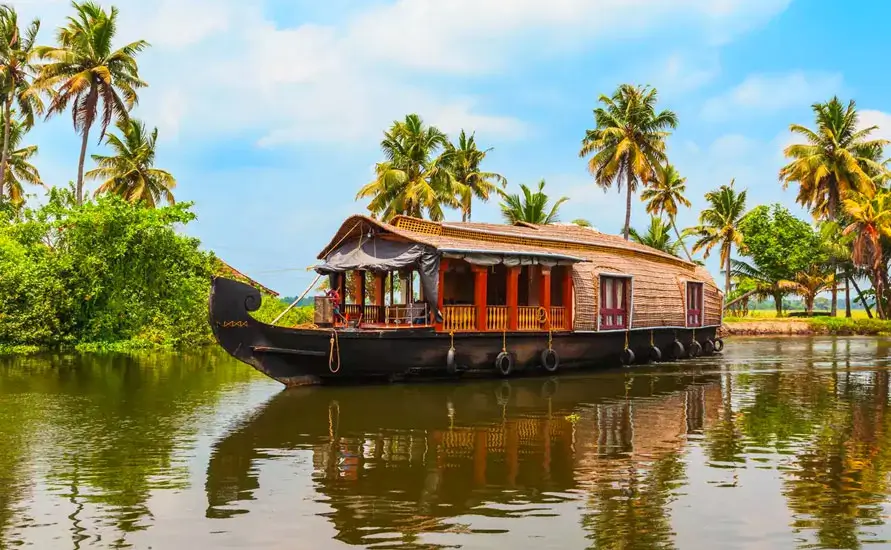
Check-in on your private Alleppey houseboat is around noon, so the morning is free for a slow breakfast and a walk around the resort. Your driver then takes you to the boat jetty, where the crew welcomes you aboard a one-bedroom kettuvallam reserved for just the two of you. Inside there is a double bedroom with its own bathroom and night-time air conditioning, and up front a shaded lounge with cane chairs that becomes your private viewing deck for the afternoon. Ask the captain about the boat's construction, as many are still put together with coir rope rather than nails.
Lunch is served soon after departure, and the menu leans on what is fresh that day from the local market: a fish fry, a vegetable curry with coconut, avial, red rice and a sweet banana dessert. As the boat moves away from the main channels, life along the banks comes into view: a school at the water's edge, a small church, a toddy shop selling fresh palm wine and farmers working in their rice fields. The crew will tie up at a village jetty if you want to step ashore, buy fresh mangoes or have a look inside a riverside temple.
Before the houseboat anchors for the night, one of the crew takes you in a small country canoe through narrow side canals that the larger boat cannot enter. With only a paddle and the birds for company, it is the quietest hour of the trip so far. When you climb back aboard, the boat is already tied up for the night, a pot of cardamom tea waits on the table, and the smell of coconut and curry leaves drifts out of the small galley. The night is cooler on the water, and the sounds of frogs and crickets take over once the generator is switched off. Overnight on the houseboat.
Disembarkation is around 9 am after a breakfast of appam and vegetable stew served on deck, and your driver takes you about two hours north to Cochin International Airport for the connecting flight to Port Blair. Kochi has no direct service to the Andamans, so we book you through Chennai or Bangalore on a single ticket where possible, which keeps your bags checked through. Total travel time is usually between five and seven hours, including the layover, and we choose a route that brings you into Port Blair in the afternoon, as most flights to the islands are scheduled during daylight hours.
At the Port Blair arrivals gate, a member of our island team is holding a sign for you, and the hotel on the seafront is barely fifteen minutes away. After a long travel day, the evening is free: sit on the balcony with a drink, watch the ships in the harbor or take a stroll along Marina Park, the town's waterfront promenade. Eat in or walk to a fish restaurant down the road, and try to sleep early, since tomorrow's boat sails soon after breakfast. Overnight in Port Blair.
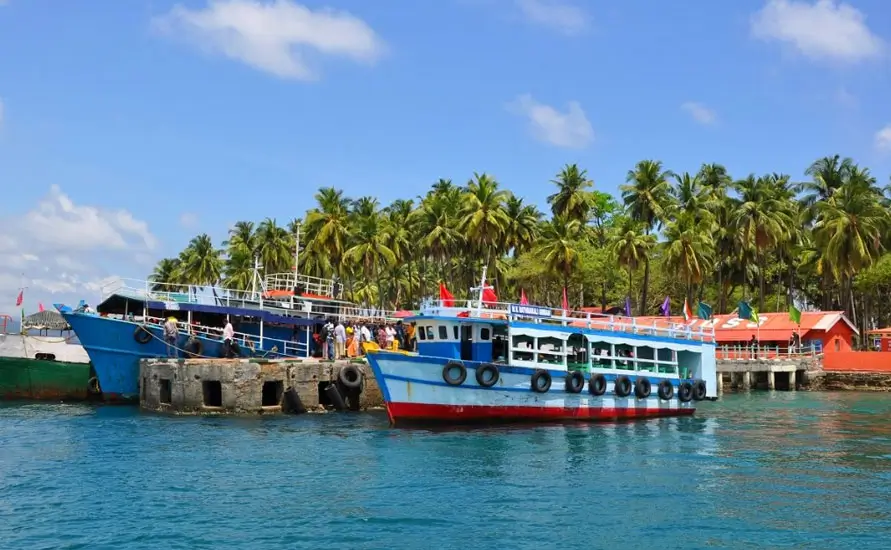
Island life starts at the ferry terminal, where our assistant handles boarding passes and luggage tags for the catamaran to Havelock Island, which appears on new maps as Swaraj Dweep. The crossing runs along the coast of Ritchie's Archipelago, a chain of small forested islands that slide past on the left of the boat, and on a clear day you may see flying fish skimming over the waves. Comfortable seating, snacks and a television in the cabin make the trip easy, but the view from the window is far more interesting than anything on the screen.
On arrival your island driver loads the luggage and drives you to a boutique beach resort set among tall trees above the sand. Check-in is around midday, and we have requested a cottage close to the water, subject to availability. Havelock is small enough to cover end to end in under an hour by car, but you will not need to rush anywhere: the beach in front of the resort is calm, the restaurant serves fresh juices and grilled fish, and a hammock is usually strung between two palms nearby. Use the afternoon to rest after yesterday's long flights.
Late in the afternoon walk the shore of Vijaynagar Beach, also known as Beach No. 5, which runs along the east coast of the island near most of the resorts. At low tide the water pulls back a long way, leaving patterned sand and shallow pools where small crabs and fish shelter until the sea returns. Lines of mahua trees grow right to the edge of the beach, and their roots hold the sand in place. When the light goes, wander back up the sand for grilled snapper at the resort and a first night falling asleep to waves a few steps from the bed. Overnight in Havelock.
Radhanagar Beach is usually photographed at sunset, but early morning is when the water is calmest and the beach is nearly empty. Your driver takes you across the island after breakfast, and you have the long curve of white sand almost to yourselves for an hour or two. Swim within the flagged area while the lifeguards are on duty, and walk to the northern end where a small creek meets the sea and the forest comes down almost to the water. A beach shack near the entrance sells fresh coconut water, which is the simplest way to stay cool before the day heats up.
Around late morning you return to the road and meet a local guide for the forest trail to Elephant Beach, a walk of around forty-five minutes to an hour each way through tropical forest. The path can be muddy after rain, so wear closed shoes or sturdy sandals and bring water. Your guide names the giant trees as you go, padauk with its buttress roots and straight gurjan trunks, and keeps an eye out for drongos, hornbills and monitor lizards. Arriving on foot rather than by speedboat gives you a different view of the beach, with the trees opening suddenly onto bright turquoise water and the shallow reef beyond.
Snorkeling at Elephant Beach is included, with equipment and a guide, and the shallow reef near the shore is home to colorful parrotfish, clownfish living in sea anemones and large brain corals. The afternoon is spent on the beach and in the water before you return to the road, either by the same forest trail or by speedboat if you prefer to save your legs. Back at the resort, take a long shower, rest and enjoy a relaxed evening, perhaps with a sundowner on the deck. Tonight you might try one of the cafés near the island market for wood-fired pizza or a Bengali-style fish curry. Overnight in Havelock.
The last full day on Havelock has no fixed timetable, so you can sleep late, have breakfast on the veranda and decide how active you want to be. One option is an early-morning mangrove kayaking trip with a local operator, paddling into the creeks near the jetty as the tide rises and the sun comes up behind the islands. The guide explains how the mangrove roots filter salt from the water and protect the coast from storms, and you may spot kingfishers, herons and mudskippers moving across the mud banks. Trips last about two to three hours and are bookable at the resort.
Those who want gentler hours can hire a scooter, as long as one of you carries an international permit, and potter along the coast road stopping at whichever café looks good. Others simply stay at the resort and enjoy the pool and the beach, with a book and a cold drink. Havelock's dive centers also offer an introductory scuba session for beginners, with a short pool briefing followed by a shallow dive with an instructor; it can be booked at short notice in good weather. If you would rather stay dry, the resort library and spa are always open.
In the evening the resort sets up a private sunset table for two on the sand, with a set menu chosen in advance and the staff on hand to serve. As the sun drops and the sky darkens, the lights of distant boats appear on the horizon, and the only noise is the gentle wash of the waves on the beach. It is a quiet way to mark the end of the island part of your honeymoon, before tomorrow's return to Port Blair. After dinner, take a short walk on the beach and look up: Havelock's night sky is often clear and full of stars. Overnight in Havelock.
Leaving Havelock on a morning sailing, you are back in Port Blair before lunch, met at the pier and taken straight to the hotel. Early in the afternoon a short ferry carries you to Ross Island, renamed after Netaji Subhas Chandra Bose, the tiny island from which British officers once ran the whole penal settlement, complete with ballroom, church and printing press, until damage in the 1941 quake and wartime occupation emptied it. The ferry takes about fifteen minutes, and the island is closed on Wednesdays, so we plan around that.
On the island, your guide leads you through the ruins of the old colonial buildings, including the church, the bakery, the chief commissioner's house and the officers' club, many of them now covered in the roots of fig trees. Tame chital deer and strutting peafowl follow visitors around, and a path along the shoreline looks back over the strait toward the town. A small museum explains the island's history, from the British settlement to the war years. Return to the main island by late afternoon in time for the evening's main event.
After dark you sit beneath an old peepal tree in the courtyard of the Cellular Jail, and the tree itself becomes the narrator of the evening program, recounting the hardships of the prisoners while colored light sweeps across the brick wings. The show lasts under an hour, and most evenings there is a Hindi session followed by an English one, so we book the English slot where possible. Before the show starts, your guide can take you up to the central tower for a view of the three remaining wings. After the show, dinner is at a seafood restaurant in town. Overnight in Port Blair.
Breakfast is at the hotel, and the morning may give you time for a last walk along the seafront or a visit to the Anthropological Museum, which describes the indigenous communities of the Andaman and Nicobar Islands. Plan to leave the hotel about two hours ahead of departure; the airport is close but the security queue can be slow. International connections go through one of the big mainland hubs, and for a long layover we can book a rest room near the terminal or a full night at an airport hotel.
At the drop-off point our team member checks your tickets one last time and waves you through the door. In twelve days you have gone from the fishing nets of Fort Kochi to the tea estates of Munnar, a night on the backwaters, and three days on the white beaches of Havelock, finishing with the history of Port Blair. If you want to come back one day for the Neil Island coral reefs, scuba diving or the temples of Tamil Nadu, our team will be happy to plan it with you. Have a smooth flight back and a happy start to married life.
Your Journey

N.S. Rathore & Mrs. Omlata Rathore · Managing Director
We still read every enquiry ourselves. Tell us the places you liked and our planners will send a day-by-day route with drive times and a clear price.
Every package can be customised and no pressure to book. A planner from our office replies within 24 hours with a route written for your group.
Fill this in and your planner will send a first draft itinerary.
Explore more
Kerala Backwaters Escape Kerala Backwaters Escape
 Kerala Backwaters Escape
 Kerala Backwaters Escape
 Kerala Backwaters Escape
 Kerala Backwaters Escape
 Kerala Backwaters Escape
 Kerala Backwaters Escape
 Kerala Backwaters Escape
 Kerala Backwaters Escape
 Kerala Backwaters Escape
 Kerala Backwaters Escape
 Kerala Backwaters Escape
 Kerala Backwaters Escape
 Kerala Backwaters Escape
 Kerala Backwaters Escape
 Kerala Backwaters Escape
 Kerala Backwaters Escape
 Kerala Backwaters Escape
 Kerala Backwaters Escape